From Artisan to Automated: The Ultimate Guide to Alfajor Production
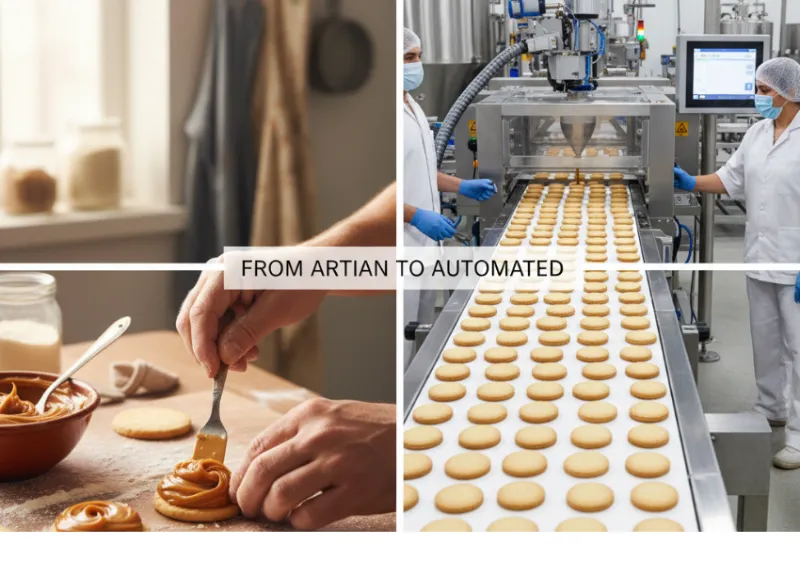
For a successful alfajor business, growth is both a goal and a challenge. The same artisanal methods that built your brand can become the very ceiling that limits your potential. When demand outpaces your capacity, turning down large orders becomes a painful necessity, and the pressure on your team mounts. This is a critical inflection point where strategic investment in automation transitions from a distant consideration to an immediate imperative. This is not about replacing the soul of your craft with machinery, but about empowering it with the tools of modern industrial efficiency.
This guide provides a comprehensive roadmap for scaling your alfajor production by implementing a solution like our high-capacity
Are Production Bottlenecks Limiting Your Growth? Identifying the Signs
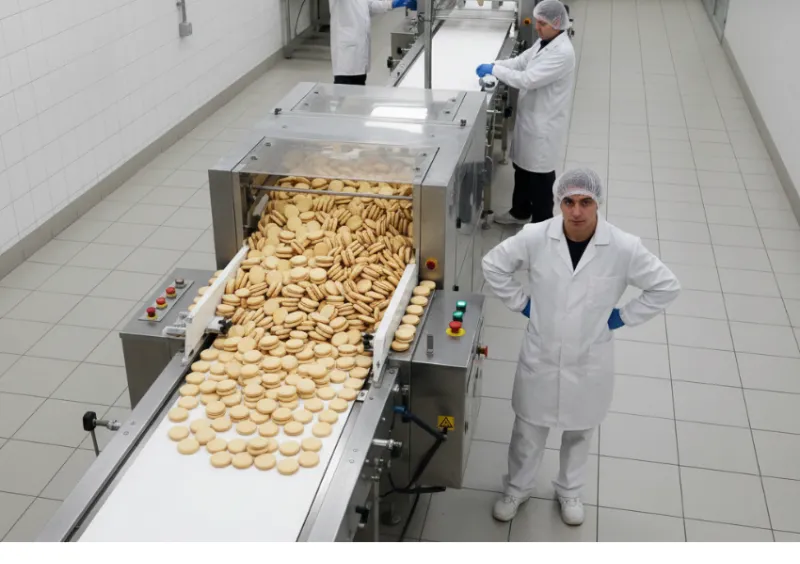
A bottleneck is any point of congestion in a production system that stops or severely slows down the entire process. These chokepoints are often the primary reason why a growing business struggles to scale. Identifying them is the first step toward unlocking your true production capacity. Bottlenecks can be short-term, caused by temporary issues like staff absences, or long-term and systemic, stemming from inefficient machinery or flawed workflows.
Common causes of production bottlenecks include equipment breakdowns, insufficient raw materials, staffing gaps, and inefficient workflows. Look for these tell-tale signs on your factory floor:
Inventory Buildup: Piles of semi-finished products waiting at one particular station while the next station sits idle is the most visible sign of a bottleneck.
Idle Time: If you see workers or machines downstream from a specific process consistently waiting for work, you've likely found your constraint.
Missed Deadlines: Consistently falling behind schedule, even with your team working at full capacity, indicates that a part of your process cannot keep up with the overall pace.
High Stress & Overtime: If one particular team or process is constantly under pressure and requires overtime to keep up, it is a clear human-centric bottleneck.
To pinpoint these issues, analyze your production process from start to finish. Gather data on cycle times, machine idle time, and worker efficiency. Often, the most valuable insights come directly from your employees on the factory floor; they have firsthand knowledge of where the slowdowns and frustrations occur.
The Core of Automation: Understanding the Alfajor Production Line
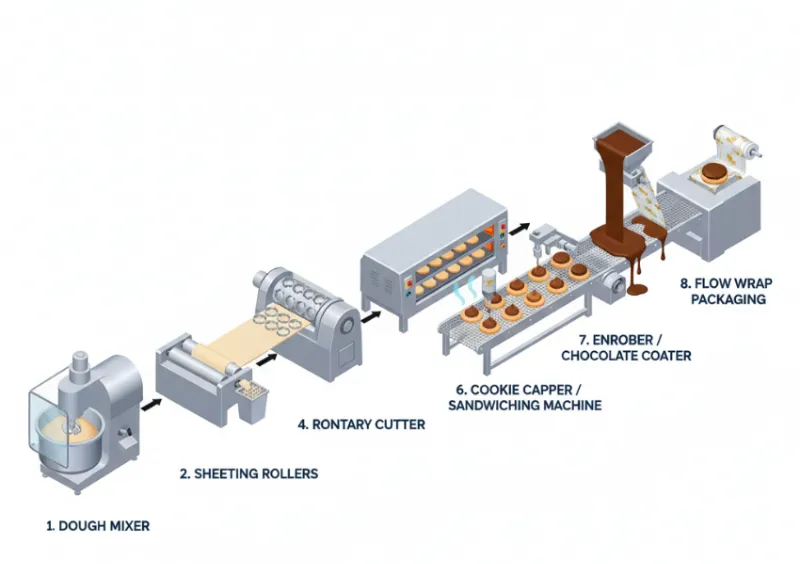
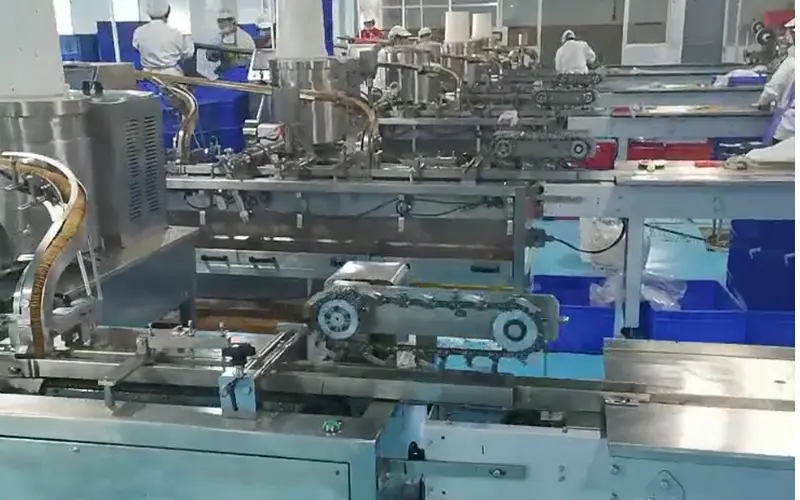
A fully automatic alfajor line is not a single machine but a sophisticated, integrated system where each component performs a specialized task in perfect sequence. Understanding these core components is key to making an informed investment. This integrated system is exactly what you'll find in our flagship
Dough Mixing & Sheeting: The Foundation of Consistency
The process begins with the automated mixer, which combines ingredients to achieve a perfectly consistent dough texture, batch after batch. This eliminates the variability of manual mixing, which is the first and most critical step in ensuring a uniform final product.
Forming the Perfect Cookie: Rotary Moulders vs. Rotary Cutters
This is a critical decision point that depends on your specific dough recipe.
Rotary Moulders are designed for soft doughs. The dough is pressed into an engraved rotating drum, creating high-definition, three-dimensional biscuits with excellent consistency. They are ideal for large-scale production due to their high speed.
Rotary Cutters are used for harder, sheeted doughs. A roller with cutting shapes accurately and continuously cuts the biscuit forms out of the moving dough sheet, minimizing scrap. This method offers great versatility for creating different shapes and sizes.
The Heart of the Line: Tunnel Ovens and Baking Precision
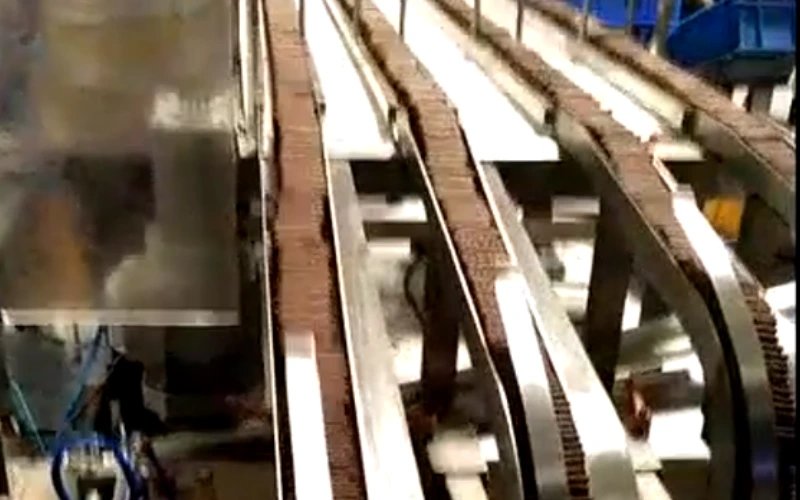
The tunnel oven is the engine of the production line. It's a long, enclosed chamber with a conveyor belt that moves the formed dough pieces through multiple, independently controlled temperature zones. This ensures a gradual and perfectly even bake, which is essential for achieving the ideal texture, color, and moisture content in every alfajor. The choice of heating method—such as direct gas-fired, indirect, or convection—influences the final product's characteristics.
Critical Cool-Down: The Role of Cooling Conveyors
After baking, the hot alfajores move onto a long cooling conveyor. This allows them to gradually cool to ambient temperature. Proper cooling is non-negotiable; it prevents condensation from forming inside the final packaging, which would compromise the product's texture, quality, and shelf life. These systems can use ambient air, forced air from fans, or even integrated air conditioning units to ensure a controlled cooling environment.
The Sandwiching Process: How a "Cookie Capper" Works
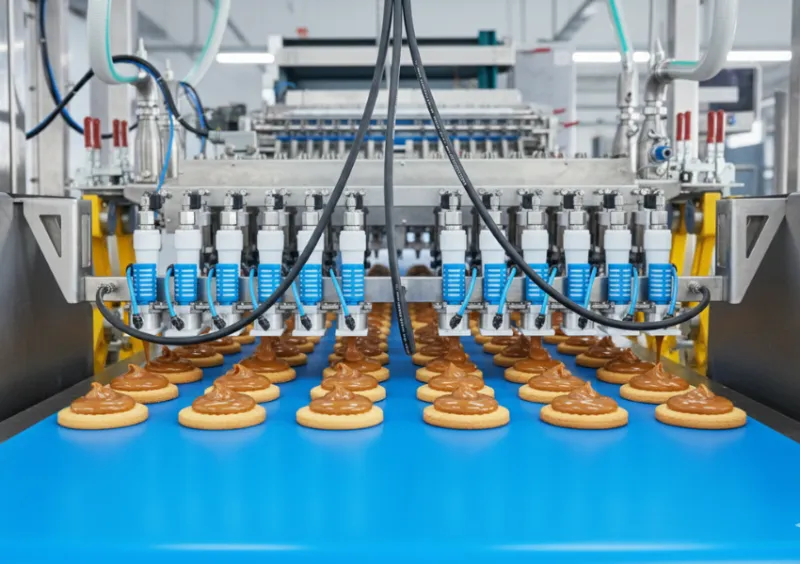
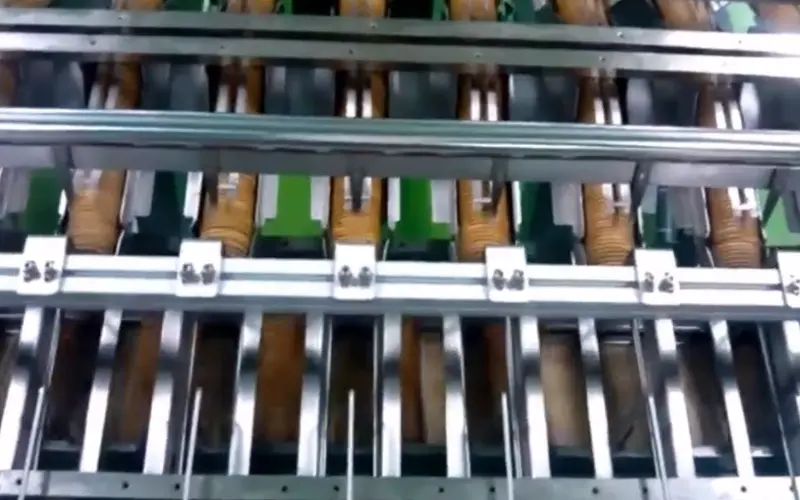
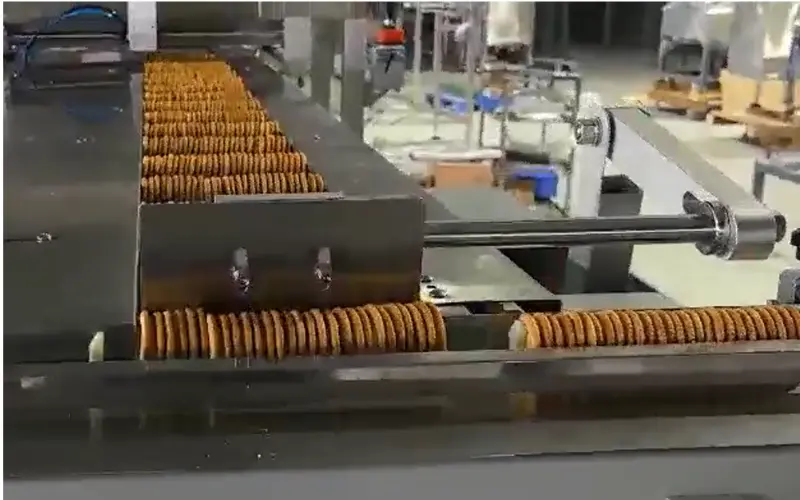
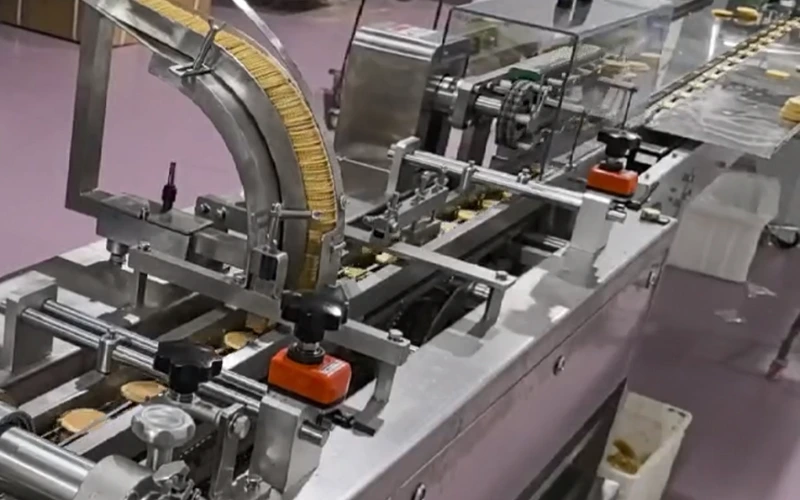
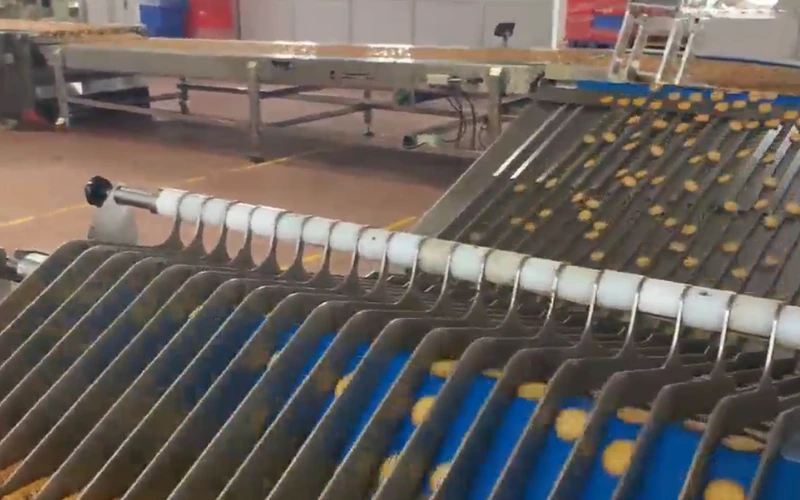
The "cookie capper," or sandwiching machine, is where the alfajor is assembled. It takes the full flow of cooled cookies directly from the oven band, flips every other row to create tops and bottoms, applies a precise deposit of filling (like dulce de leche), and then gently places the top cookie onto the bottom to create the final sandwich at speeds of up to 300 rows per minute.
Final Touches: Enrobing and Automated Packaging
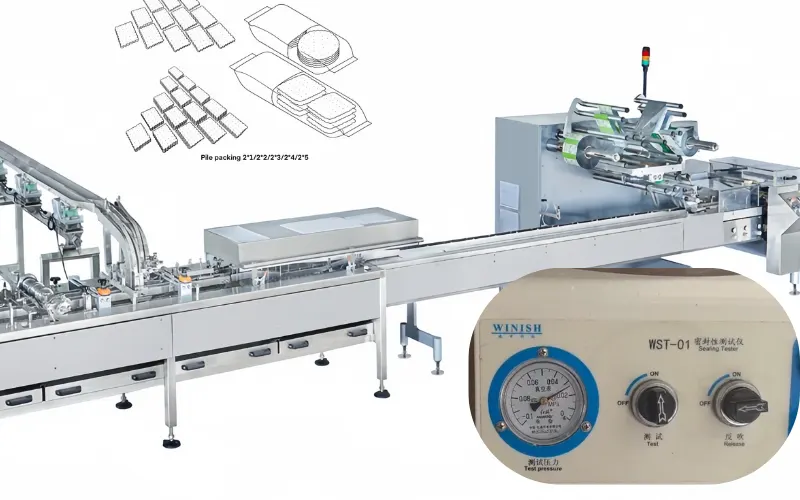
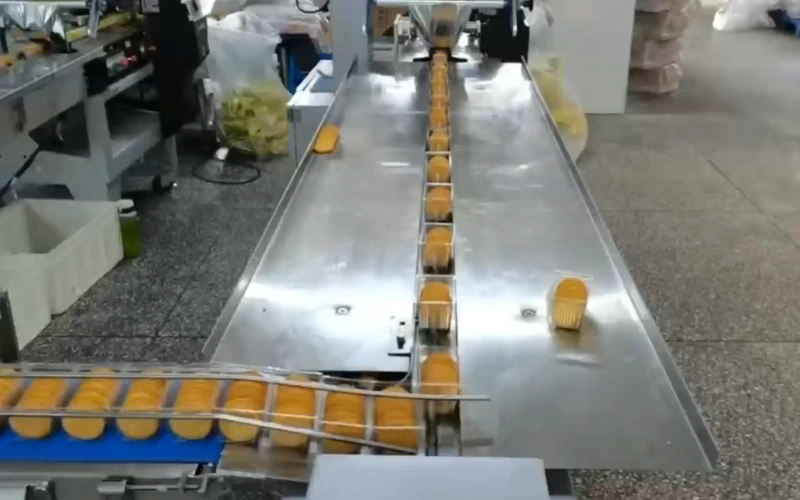
For coated alfajores, an enrobing machine applies a uniform layer of chocolate or glaze. The final stage is the packaging machine, often a flow wrapper, which individually seals each alfajor for freshness, hygiene, and a long shelf life, ready for distribution.
A Strategic Upgrade: Integrating a New Alfajor Machine into Your Existing Line
Upgrading to an automated system is a significant project that requires careful planning to minimize disruption and maximize success. A successful integration is a partnership between your team and the equipment provider, a core part of the process when installing a complete
Pre-Installation Audit: What to Prepare Before Your Equipment Arrives
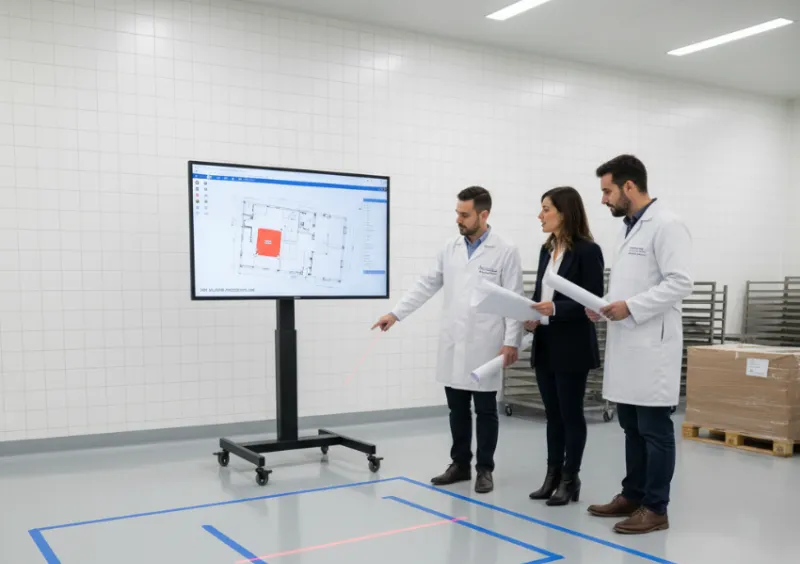
Before the first crate arrives, a thorough readiness audit is essential. This ensures a smooth installation and commissioning process. Key areas to evaluate include:
Facility Footprint: Automated lines often require 10-15% more space than manual operations. Ensure you have adequate physical space for the new equipment and for operators to work safely and efficiently, with a minimum of 3 feet of clearance from walls for cleaning and inspection.
Energy Requirements: Confirm that your facility can supply the necessary electrical power and compressed air to run the new system without straining your existing infrastructure.
Technical Talent: Automation requires a shift in skill sets. Your team will need the technical ability to operate, clean, and maintain systems with programmable controls and robotics. It is crucial to hire or train this talent in advance so they can participate in the Factory Acceptance Tests (FATs) and installation.
The Integration Process: Minimizing Downtime and Ensuring a Smooth Transition
Installing an industrial oven or a complete production line is not a DIY project; it's a complex process best handled by experienced professionals. The process involves careful planning to ensure compliance with building codes and safety standards. A professional installation team will manage the entire process, from delivery and placement to commissioning and training, ensuring that your line is operational with minimal downtime.
Addressing Upstream and Downstream Flow: Preventing New Bottlenecks
A new, high-speed machine can solve one bottleneck only to create another. If your new cookie capper can process 1,500 sandwiches per minute but your packaging machine can only handle 800, you haven't increased your overall output. A holistic analysis of your entire production flow—from raw material intake (upstream) to final packaging and palletizing (downstream)—is crucial to ensure that all components can keep pace with your new capacity.
The Financial Case: Calculating the ROI of Your Alfajor Machine Investment
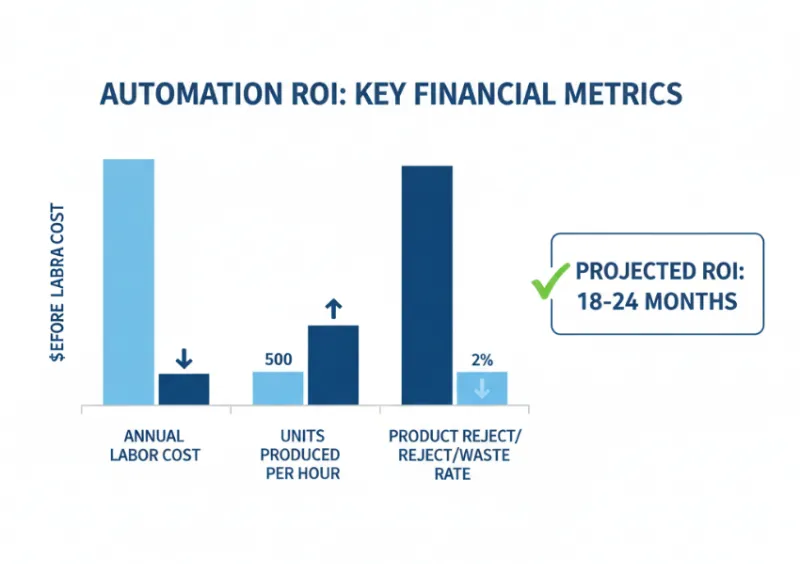
A new production line is a major capital expenditure, and the decision must be backed by a solid financial case. Calculating the Return on Investment (ROI) provides a clear picture of the financial viability of the purchase.
Quantifying Gains: Increased Throughput and Reduced Labor Costs
Automation delivers measurable improvements across several key areas:
Reduced Labor Costs: Automation can reduce direct labor costs by 40-75% by taking over repetitive tasks, allowing you to redeploy staff to higher-value roles in quality control or product development.
Increased Productivity: Automated lines can operate 24/7 without breaks or fatigue, with case studies showing productivity increases of 14-25% or more. A fully automatic line can produce up to 1,500 alfajor units per hour or process over 1,500 kg of dough per hour.
Minimized Waste: Precise, automated systems reduce ingredient overuse and minimize the number of off-spec products, directly increasing your yield and profitability.
Enhanced Safety: Automation improves both food safety by reducing human contact and workplace safety by removing employees from hazardous tasks involving extreme temperatures or sharp equipment.
Improved Quality and Consistency: Automated systems ensure every product meets the same high standard, which is crucial for brand reputation. Implementing a quality management system based on Iso 9001 provides a framework for achieving this consistency, leading to higher customer satisfaction and a stronger market position.
Factoring in the Total Cost of Ownership (TCO)
The true cost of equipment goes beyond the initial purchase price. The Total Cost of Ownership (TCO) includes all associated expenses:
Purchase Price
Freight and Installation Costs
Staff Training Expenditures
Annual Maintenance and Spare Parts
Energy Consumption
A Sample ROI Calculation for a Mid-Sized Bakery
The ROI formula is: ROI = (Net Profit from Equipment / Cost of Equipment) x 100.
Let's consider a practical example based on a real-world case study :
Current Annual Labor Cost (Manual): 8 operators across 2 shifts = £200,000/year.
Proposed Automated System Cost (TCO): £164,000.
New Annual Labor Cost (Automated): 4 operators across 2 shifts = £100,000/year.
Annual Depreciation (10-year life): £16,400.
Calculation:
Annual Savings: £200,000 (old labor) - £100,000 (new labor) = £100,000.
Annual Net Benefit: £100,000 (savings) - £16,400 (depreciation) = £83,600.
ROI: (£83,600 / £164,000) x 100 = 51%.
This calculation shows a strong positive return. The payback period—the time it takes to recoup the initial investment—would be just under two years (£164,000 / £83,600 = 1.96 years).
Frequently Asked Questions (FAQ) about Alfajor Production Line Upgrades
What production capacity can I expect from an automatic alfajor machine?
Capacities vary, but fully automated systems can produce up to 1,500 units per hour or process between 500 kg and 1,500 kg of dough per hour, with some high-capacity lines reaching up to 8 tons per hour.
How much space is required for a full production line?
Automated systems generally require a larger footprint than manual setups, often needing 10-15% more space to accommodate the machinery and allow for safe operation and maintenance access.
What are the food safety standards for bakery equipment?
Equipment should comply with recognized hygienic design standards to ensure it is easy to clean and sanitize, preventing contamination. Key standards bodies include NSF International (NSF/ANSI standards),, formerly BISSC) which uses ANSI Z50.2 standards, and the European Hygienic Engineering and Design Group (EHEDG). Manufacturers must also adhere to government regulations, such as the fda, which outline requirements for materials and cleanability. Additionally, equipment must meet workplace safety regulations, such as those from OSHA in the United States, which mandate guards for moving parts like gears and sprockets.
Can I automate production for different alfajor sizes and shapes?
Yes. Modern automated lines, particularly cookie cappers and forming machines, are designed for flexibility.29 They use interchangeable molds and quick-change parts, allowing you to switch between different product sizes and shapes with minimal downtime.
About the Author:
This guide was authored by the engineering team at EverSmart, led by John Wang, Lead Process Automation Engineer. With over 15 years of experience designing and implementing automated bakery solutions, John Wang specializes in helping artisanal producers scale their operations for national distribution.
Take the Next Step with EverSmart
You don't have to navigate this upgrade alone. With over 15 years of experience in biscuit and confectionery automation, we are your trusted partner.
Let's discuss your specific production goals and how our automatic alfajor lines can help you achieve them.
Sofia Export
Vice President | EverSmart
📞 WhatsApp: +86 137 94619343
📧 Email: [email protected]
I will personally ensure you get the right solution and the support you need to succeed.

Ready to start your journey toward a customized solution? Contact me directly on WhatsApp to begin the conversation.