Automated Alfajor Production: A Complete Technical & Operational Guide
By: [Jason Wang], Lead Engineer With 18 years of experience in food processing automation, [our team has designed and delivered complete production lines for over 150 leading confectionary brands worldwide]. This guide deconstructs the technology that turns raw ingredients into a finished, packaged product.
Introduction: Beyond the Black Box
An
However, viewing this as a single "black box" overlooks the intricate synergy of its specialized modules. An automated line is not one machine but an integrated ecosystem, engineered to work in perfect concert.
This technical guide deconstructs the "Línea Automática de Alfajores," component by component. It's designed for the production managers, engineers, and operations directors responsible for evaluating, implementing, and maximizing such a system. Understanding how each module contributes to the final product is fundamental to optimizing efficiency and ensuring quality.
Key Takeaways
It's an Ecosystem, Not a Machine: True optimization comes from understanding how each specialized module (mixing, forming, filling, enrobing, cooling) works together.
Dough is Everything: The initial stages of dough mixing and sheeting are foundational. Any errors here (temperature, density) are impossible to correct later.
Dough Dictates Forming: There is no "one-size-fits-all" forming method. The dough's properties (stiff, soft, sticky) determine if you need a Rotary Cutter, Rotary Moulder, or Wire-Cut system.
Finishing is Value: The "finishing" modules—chocolate enrobing, cooling, and decorating—create the most significant perceived value for the consumer. A glossy finish and a perfect "snap" command a higher price point.
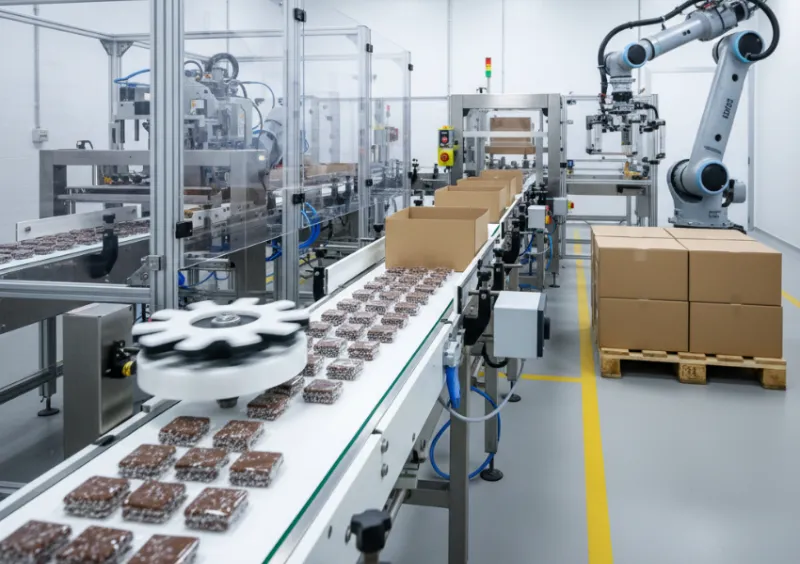
Automation is End-to-End: A modern line integrates everything from dough feeding to final robotic palletizing, minimizing manual bottlenecks and ensuring hygiene.
Part 1: The Foundation – Dough Preparation and Handling
The journey to a perfect alfajor begins here. This phase is a multi-stage process of dough conditioning. Inconsistencies introduced at this stage are nearly impossible to correct.
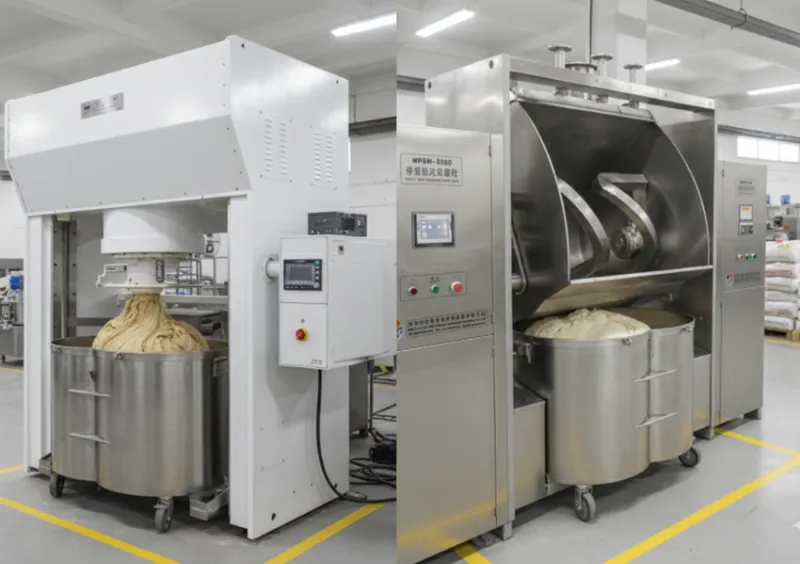
High-Capacity Mixers: The Genesis of Quality
The mixer transforms raw ingredients into a homogenous, consistent dough.
Spiral Mixers: Ideal for developing the strong gluten structure required for certain doughs.
Planetary Mixers: Essential for the delicate, crumbly texture of cornstarch-based alfajores (alfajores de maicena) due to their intensive blending and aeration.
Modern systems use PLCs to control mixing time, speed, and—critically—dough temperature. Over-mixing generates excess heat, ruining the final texture.
Automated Dough Feed Systems
Once mixed, the dough must be transferred to the forming line without interruption. An automated feeder ensures a continuous, consistent supply to the sheeter. This uninterrupted flow is fundamental for maintaining uniform dough density and preventing variations in the final product's weight and thickness.
Sheeting and Gauging Stations: Precision in Thickness
This is a delicate science, not a brute-force flattening.
3-Roll Sheeter: Takes the dough mass and generates an initial, consistent sheet.
Gauging Stations: Perform a gentle reduction in sheet thickness, often by a 2:1 ratio at each stage. This methodical process is critical for preventing stress on the dough.
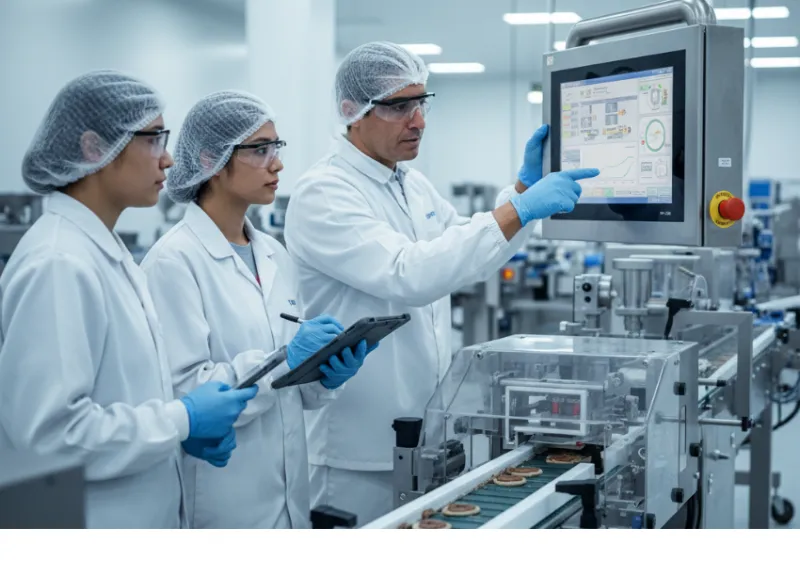
Modern lines allow operators to adjust the final biscuit thickness via the PLC touch screen, giving precise control over baking characteristics.
Part 2: Precision Forming – From Dough Sheet to Perfect Biscuit
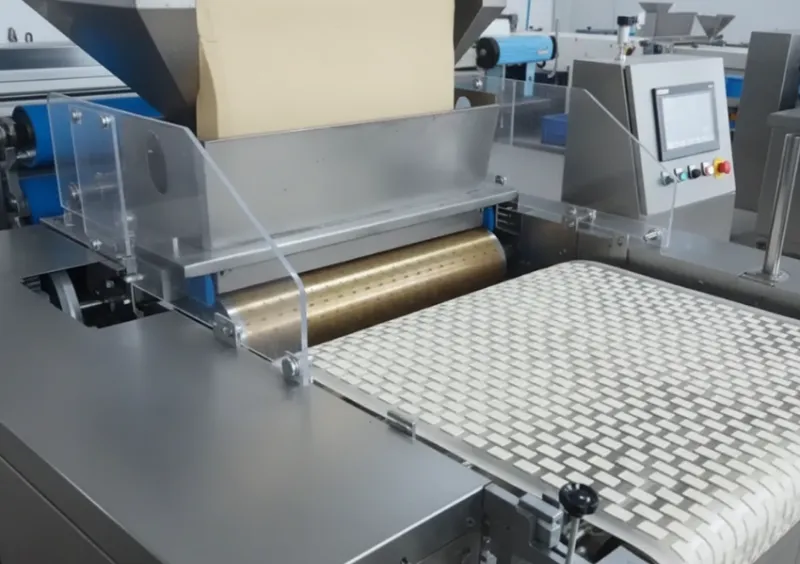
The forming technology is dictated by the dough's rheology (its flow and deformation characteristics). A versatile line must accommodate different doughs with interchangeable forming heads.
Rotary Cutting: For Crisp, Defined Shapes
This is the ideal method for tougher, more resilient dough sheets. The equipment accurately and continuously cuts distinct product shapes from the pre-sheeted dough. This ensures every biscuit has a clean, defined edge and is common for classic, sturdy alfajores.
Rotary Moulding: For Soft, Embossed Biscuits
When the goal is a softer biscuit, often with intricate patterns or branding, the Rotary Moulder is preferred. It uses an interchangeable, engraved die roll to press the soft dough into shape. This is a key advantage for creating custom-embossed products.
Wire-Cut Systems: The Solution for Delicate Doughs
Many of the most popular varieties, like alfajores de maicena, are made from a very soft, rich, and sticky dough that cannot be sheeted.
How it works: The system extrudes the dough through a die, and a wire cuts off uniform portions, depositing them directly onto the baking band.
Key Advantages: Provides excellent weight standardization and significantly reduces waste compared to sheeted dough.
Versatility: Multifunctional machines, like the Drop Top 400-450, combine depositing and wire-cutting, allowing for the production of macarons, éclairs, and other confectionery.
Part 3: The Heart of the Alfajor – Filling and Sandwiching
The defining characteristic of an alfajor is its generous filling, most traditionally dulce de leche. Precision, consistency, and versatility are the hallmarks of an advanced filling system.
High-Precision Depositing Technology
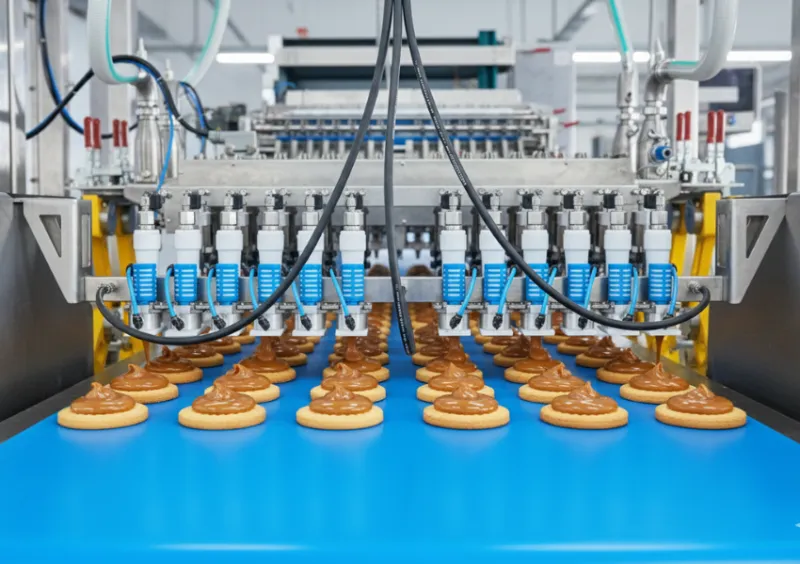
To meet consumer expectations for a "generous" filling, industrial lines use depositors designed for various viscosities.
Versatility: A flexible depositor, such as the Rondofiller, can process smooth dulce de leche or chunky fruit jams.
Application: Depositors are configured for "target" application. This ensures a precise amount of costly filling is placed in the center of the biscuit, optimizing ingredient costs.
Automated Sandwiching and Assembly
This module overcomes one of the most significant labor-intensive bottlenecks. A
Flipping: A mechanism flips every other biscuit to prepare it for filling.
Depositing: The filling is applied.
Capping: Alignment systems (often optical sensors) ensure the top biscuit is perfectly centered before it is gently placed.
Part 4: The Finishing Touches – Coating, Cooling, and Decorating
This section transforms a standard product into a premium confection. A glossy finish and a satisfying "snap" are primary indicators of quality and justify a higher price point.
Chocolate Enrobing and Tempering
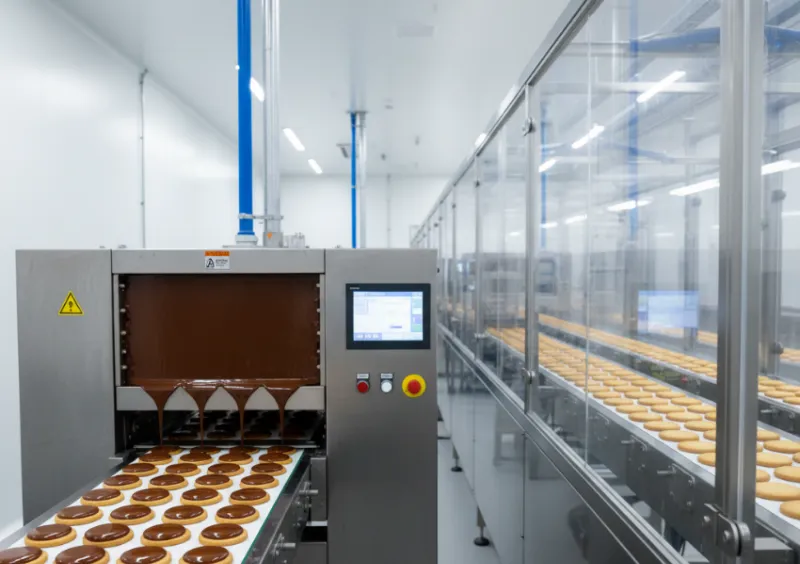
The coating is a hallmark of the classic Marplatense alfajor. An industrial enrober is an integrated system that starts with a tempering machine.
Why Temper? Tempering (heating and cooling chocolate to specific temperatures) is critical. It creates the stable fat crystals responsible for:
A glossy, attractive finish.
A smooth texture.
The characteristic "snap."
The Risk: Failure to temper results in "blooming," a defect where fat crystals migrate to the surface, creating a dull, white, or streaky appearance.
Multi-Zone Cooling Tunnels: The Science of Crystallization
After enrobing, the alfajores immediately enter a
How it works: The tunnel is divided into multiple temperature zones. This gradual reduction in temperature sets the chocolate quickly, locking in the stable crystal structure from tempering.
The Result: This controlled process guarantees a shiny surface and a long shelf life, free from defects. An inadequate cooling process can ruin perfect tempering.
Topping and Decoration Applicators
Automated lines can replicate artisanal finishes at industrial scale. This includes systems for applying shredded coconut to the sides, dusting tops with powdered sugar, or sprinkling chopped nuts. Versatile units like the Rondosprayer can be configured to evenly spray or sprinkle a wide range of toppings.
Part 5: End-of-Line Automation – From Cooling Tunnel to Pallet
This final stage ensures the finished product is prepared for distribution efficiently and hygienically.
Biscuit Stacking and Handling
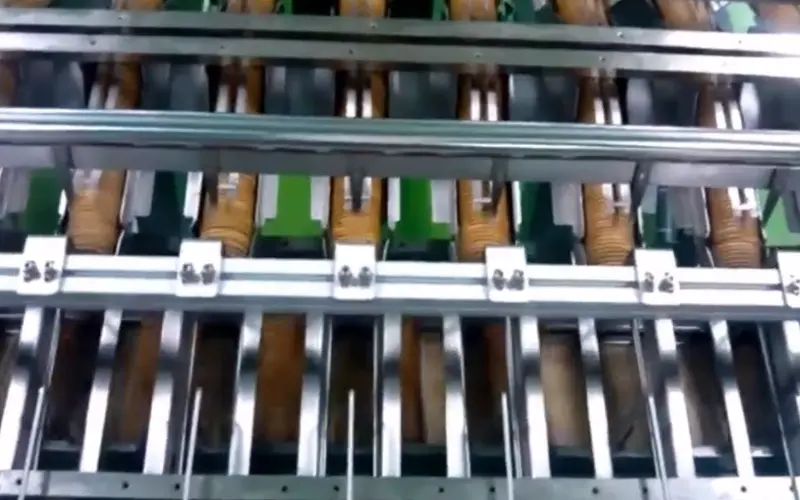
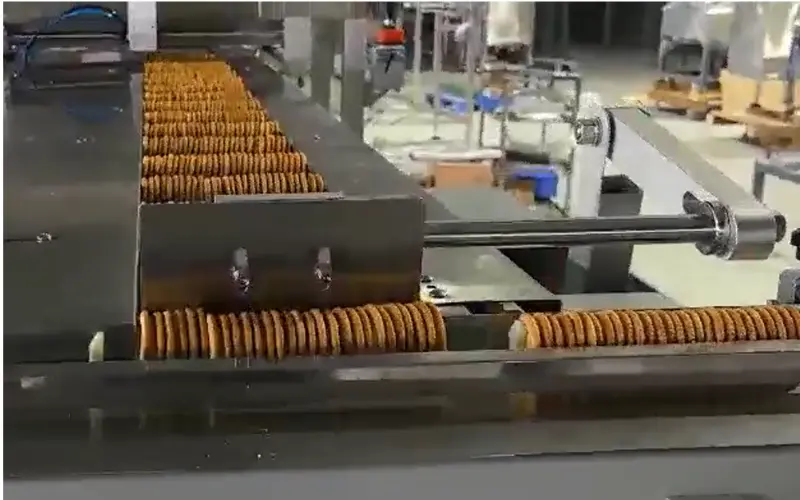
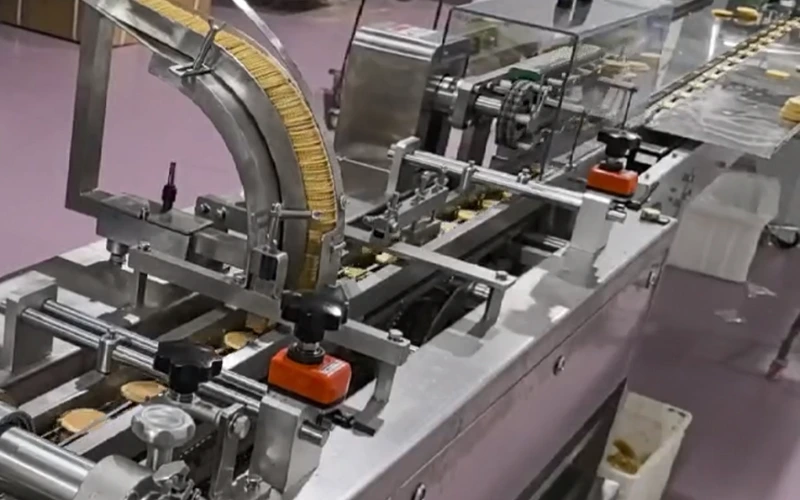
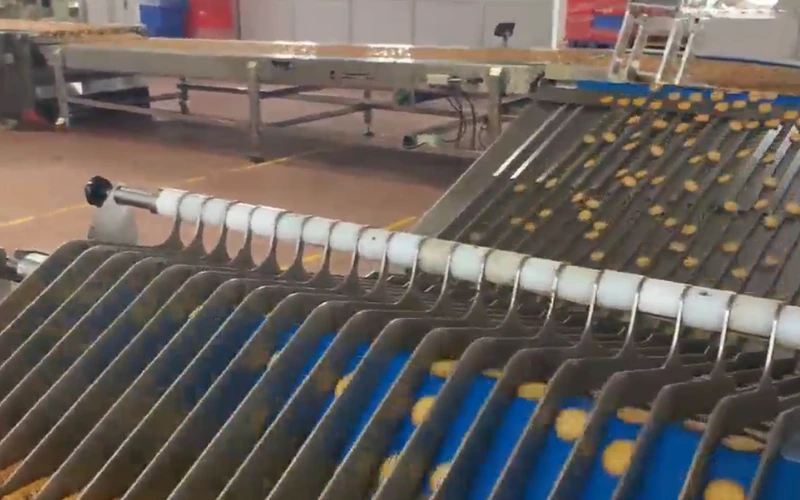
As finished alfajores exit the cooling tunnel, they must be organized. Star wheel stackers receive the biscuits and arrange them into neat, uniform rows, ready for the primary packaging machine.
Primary Packaging: Flow Wrappers
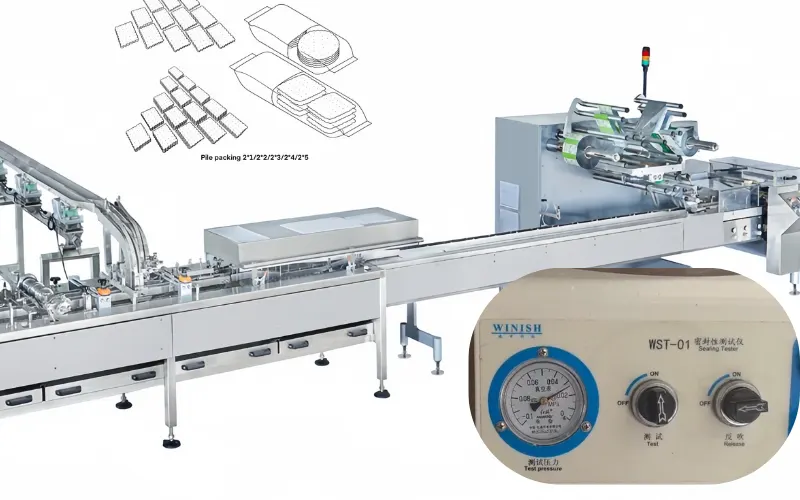
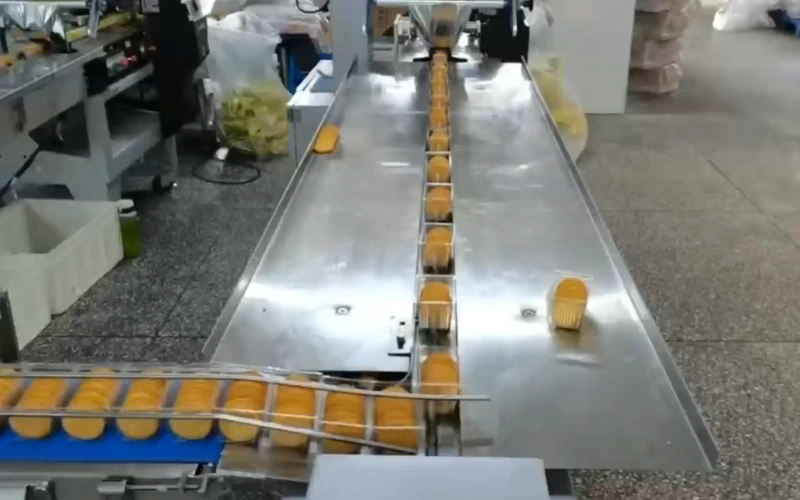
A horizontal
Function: It takes the organized rows and individually wraps each alfajor in a sealed film.
Benefit: This is crucial for maintaining freshness, ensuring hygiene, extending shelf life, and creating a retail-ready unit.
Secondary and Tertiary Packaging: Cartoners, Case Packers, and Palletizers
The final steps group the individually wrapped products for bulk shipment.
Cartoners/Formers: Automatically erect cardboard blanks into cartons.
Packers: Robotic arms place a specific count of alfajores into the cartons.
Case Packers: Sealed cartons are grouped and packed into larger shipping cases.
Palletizers: A robotic palletizer takes the finished cases and stacks them onto a pallet, ready for dispatch.
Component Summary Table
| Component/Module | Primary Function | Key Alfajor Quality Parameter Controlled |
| High-Capacity Mixer | Blends ingredients, controls temperature. | Biscuit texture, crumb structure. |
| Gauging Stations | Gently reduce dough sheet to a precise thickness. | Final biscuit weight, thickness, and baking consistency. |
| Rotary Cutter | Cuts defined shapes from a firm, sheeted dough. | Biscuit shape, size, and edge definition. |
| Rotary Moulder | Forms and often embosses soft doughs. | Biscuit shape, surface detail, and texture. |
| Wire-Cut System | Extrudes and cuts very soft, sticky doughs. | Product standardization for delicate doughs; waste reduction. |
| Filling Depositor | Accurately places a specific volume of filling. | Filling-to-biscuit ratio, flavor profile, cost control. |
| Enrober & Tempering | Applies a precisely tempered chocolate coating. | Coating gloss, "snap," texture, prevention of bloom. |
| Multi-Zone Cooling Tunnel | Sets the chocolate with controlled, gradual cooling. | Surface shine, structural stability, shelf life. |
| Flow Wrapper | Individually seals each finished alfajor. | Product hygiene, freshness, and shelf life. |
| Robotic Palletizer | Stacks finished cases for shipping. | End-of-line efficiency, labor cost reduction. |
Conclusion: Partner with the Experts
Investing in an automated alfajor line is a complex decision. Success depends on choosing the right components for your specific product and ensuring they are integrated into a seamless system.
If you are ready to explore how a fully automated production line can transform your business, our team is here to help. We provide tailored solutions and expert guidance every step of the way.
Contact us today for a technical consultation:Sofia Export Vice President | EverSmart 📞 WhatsApp: +86 137 94619343 📧 Email: [email protected]
Ready to start your journey toward a customized solution? Contact me directly on WhatsApp to begin the conversation.