Soda Cracker Challenge: Soda lover vs Soda Cracker Factory
The Cracker Conundrum: A Cracker Lover's Snack Challenge vs. a Manufacturer's Automation Challenge
You've probably heard of, or maybe even attempted, the soda cracker challenge—eat six crackers in under a minute without water. It's a fun snack challenge for cracker enthusiasts, but do you know the real challenge for a soda cracker production line? It isn't the brittleness or dryness we all think of; it's the automated challenge of filling and packaging. According to the
The demand for convenience snacks and diverse product offerings is driving this growth. For manufacturers, staying ahead means more than just a great recipe. It requires a production process that can handle the sheer volume and variety, all while maintaining strict quality control and minimizing waste.
How Smart Tech Is Cracking Production Problems
1. Automated Filling: From Manual Mess to Precise Dosing
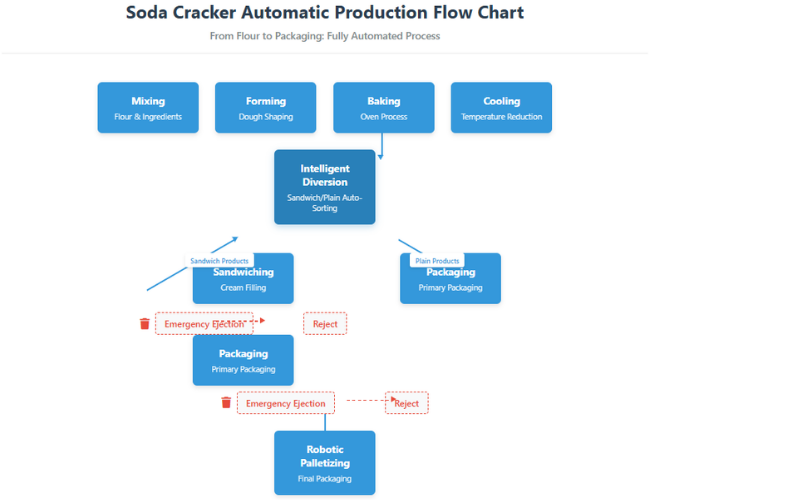
Traditional filling methods are slow and often inconsistent, which directly impacts the quality of the final product. To solve this, modern production lines rely on advanced solutions.
Before the UpgradeManual or outdated filling methods are the number one cause of uneven product quality. These systems often result in over-filling or under-filling, which not only wastes expensive ingredients but can lead to consumer complaints. They are also incredibly difficult to calibrate for different viscosities of fillings.
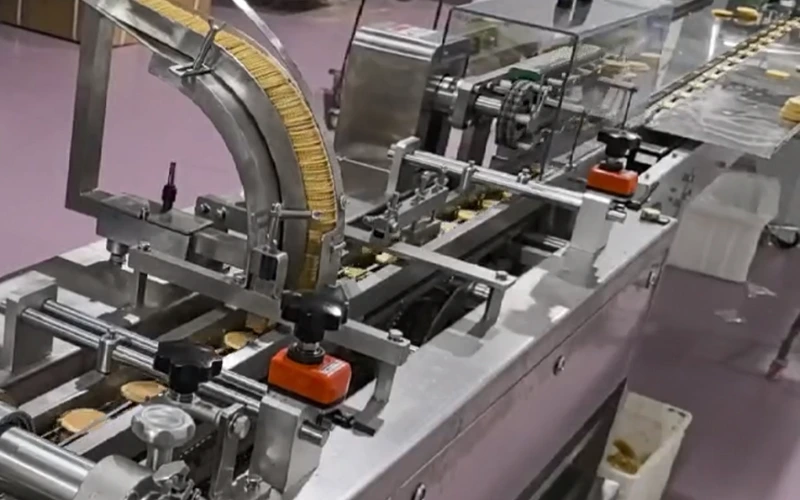
The High-Precision SolutionHigh-precision servo pump systems have replaced traditional piston-based methods. These units use finely-tuned servo motors to control the exact volume of filling with an impressive accuracy of ±0.5g. This guarantees a uniform product every time, eliminating costly waste and improving brand consistency.
Versatility for a Changing MarketModern filling systems go a step further with specialized nozzles. For products like double-stuffed or dual-flavor crackers, multi-channel or dual-color nozzles are used. Each channel is fed by an independent servo pump, allowing manufacturers to deposit two different fillings simultaneously, meeting the growing market demand for innovative product combinations.
2. Automated Packaging: Speed, Without the Breakage
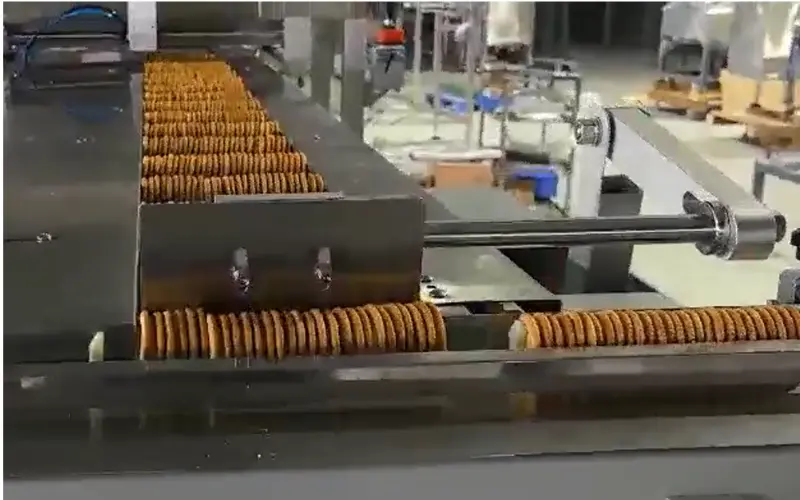
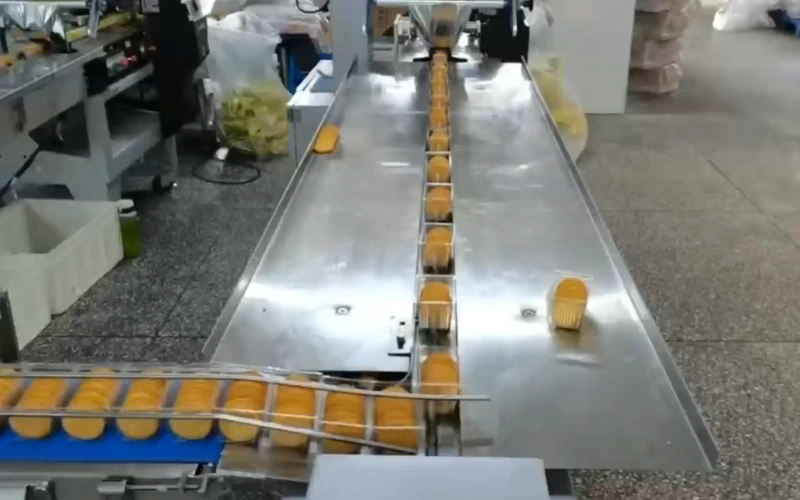
A soda cracker's delicate nature makes automated packaging tricky. Manufacturers use innovative solutions to boost speed while minimizing breakage.
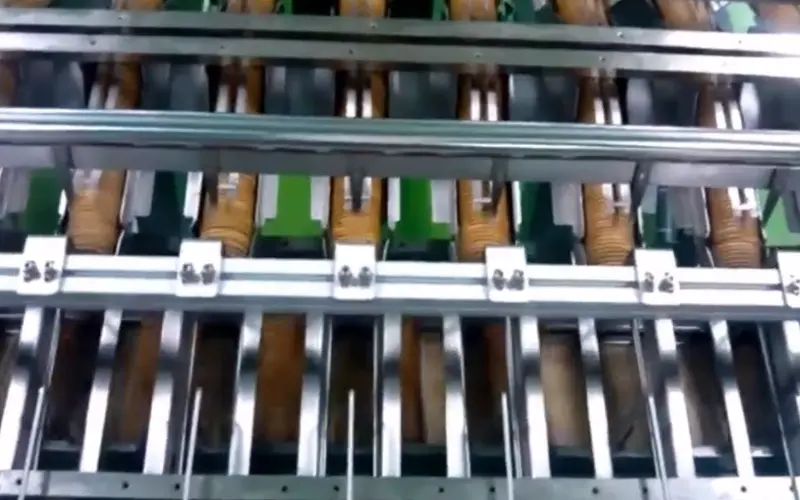
Robotic "Pick and Place" SystemsHigh-speed robots, specifically Delta robots, are the industry standard for handling delicate products. They're equipped with specialized end-of-arm-tooling (EOAT), such as vacuum suction cups or soft-grip fingers, that gently pick up crackers. These robots can handle hundreds of items per minute with a positional accuracy of ±0.1mm, dramatically reducing breakage compared to manual labor or older mechanical systems.
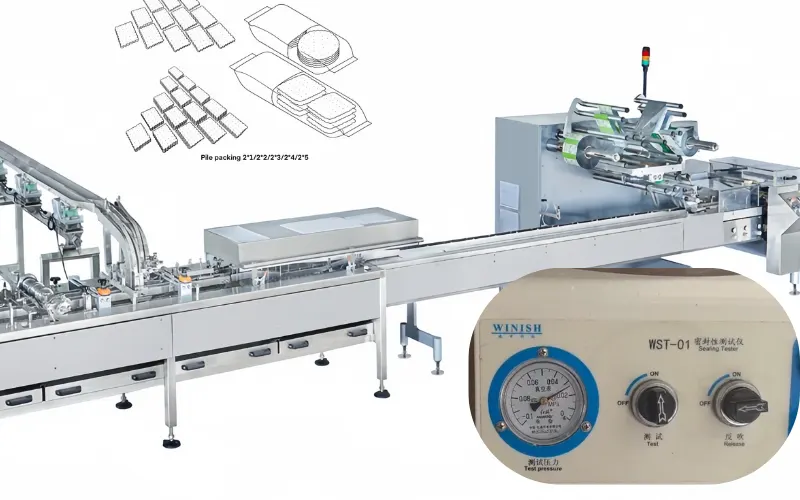
Flexible Packaging SetupsA one-size-fits-all packaging approach is no longer sustainable. Modern lines are built with a modular design. This allows for quick changeovers from individual packs to multi-pack sleeves or family-sized cartons in as little as 30 minutes. This agility lets manufacturers respond to market shifts instantly, maximizing sales opportunities.
3. Streamlining the Entire Line: Seamless, End-to-End Automation
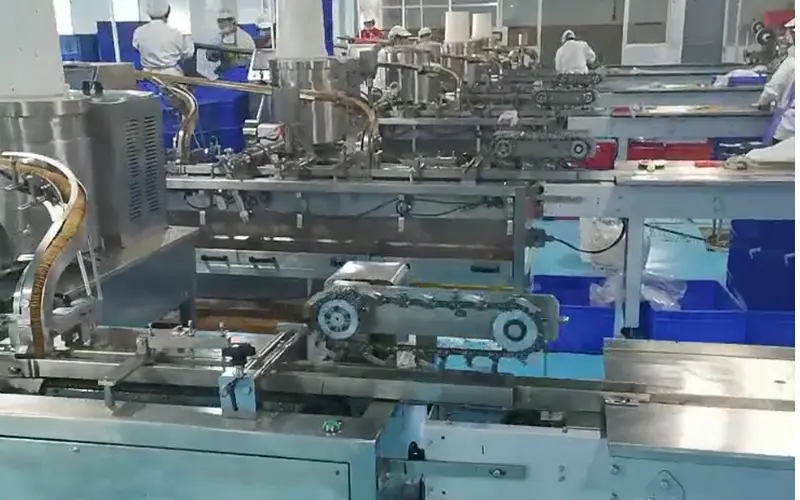
True automation is about more than just one or two smart sections. It connects the whole production line into a seamless, efficient system.
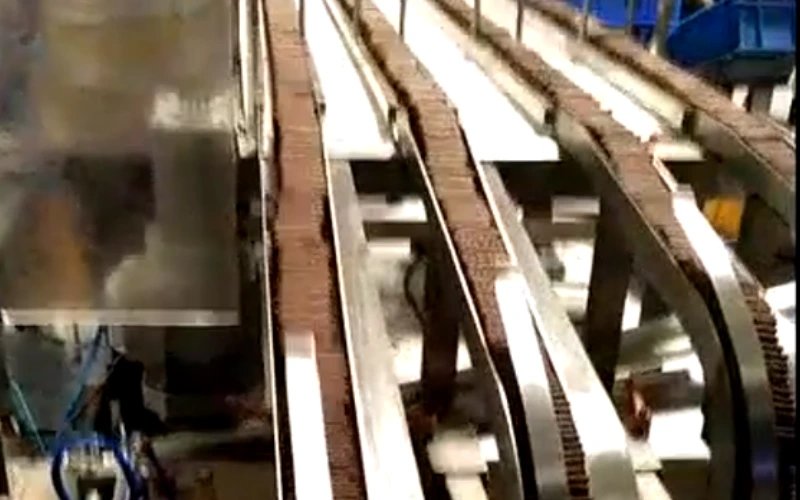
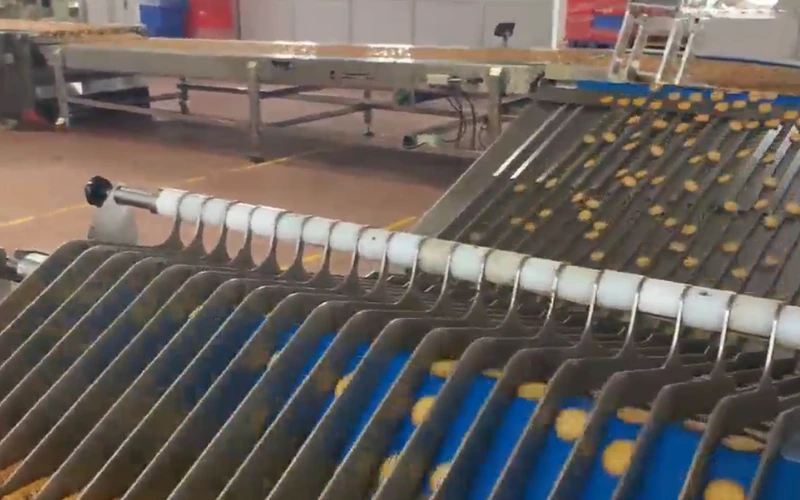
Smart Diversion and RoutingThe biggest challenge for factories producing both plain and filled crackers is managing the flow. Intelligent diversion systems, using high-speed cameras and sensors, identify each cracker as it comes off the cooling conveyor. They then use pneumatic pushers or servo-controlled gates to route the crackers, with a 99.9% accuracy rate, to either the filling machine or the main packaging line, achieving flawless separation in milliseconds.
End-of-Line IntegrationAutomation doesn't stop at the wrapper. A complete solution includes automated case packing and palletizing robots. These systems take packaged crackers, arrange them into shipping boxes, and stack them onto pallets, all without human intervention. This not only eliminates a major labor cost but also improves stacking consistency for safer shipping.
The ROI: A Financial Justification for Automation
For a capital investment of this size, a clear ROI is essential. Let’s look at a typical production line with an annual revenue of $50 million.
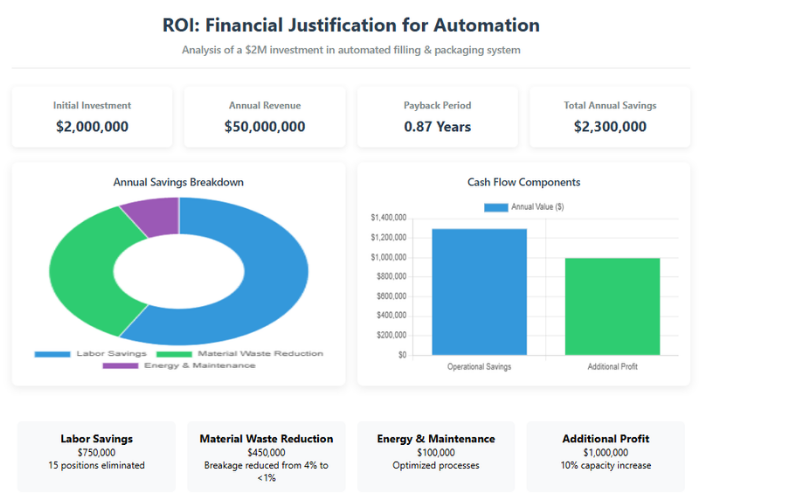
Initial Investment: Automated Filling & Packaging System ≈ $2 million
Annual Operating Savings:
Labor: Eliminating 15 operator positions (at $50,000/year each) = $750,000/year
Material Waste: Reducing breakage from 4% to <1% (on $15M material cost) = $450,000/year
Energy & Maintenance: Optimized processes and reduced downtime = $100,000/year
Total Annual Savings: $1.3 million
Additional Revenue:
Assuming a 10% capacity increase from automation, generating an extra $5 million in sales. With a 20% profit margin, this yields $1 million in additional profit.
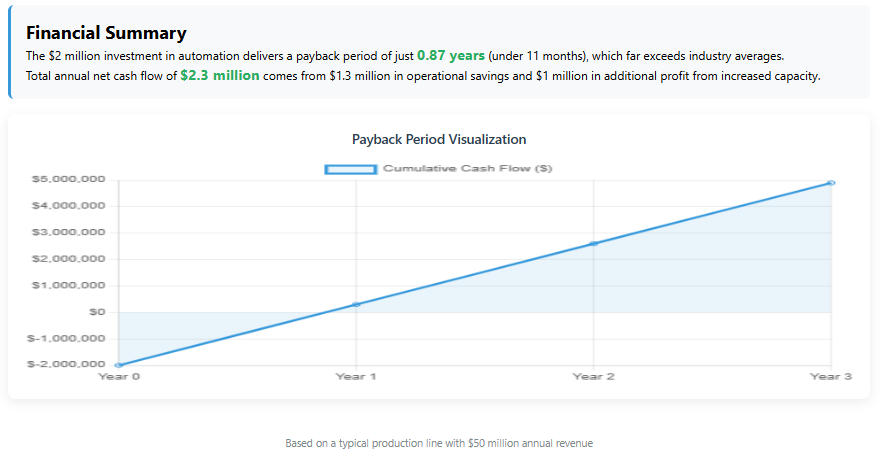
Total Annual Net Cash Flow: $1.3 million (savings) + $1 million (profit) = $2.3 million
Payback Period:
$2 million (initial investment) / $2.3 million (annual cash flow) ≈ 0.87 years
This means the investment is recovered in under one year, far exceeding the industry average.
Frequently Asked Questions
How long does the installation and training process take?Installation for a complete line typically takes 4-6 weeks. This is followed by a 2-week training period for your team. The entire process is designed to minimize disruption to your operations.
What kind of maintenance is required for these automated systems?Modern systems are designed for low maintenance. A typical schedule includes weekly checks of sensors and air lines, along with a quarterly deep clean and lubrication of moving parts. Predictive maintenance alerts can also warn you of potential issues before they become problems.
Can we integrate this with our existing ERP/MES system?Absolutely. Our systems are built with open architecture and standard communication protocols. This allows for seamless integration with your existing enterprise resource planning (ERP) or manufacturing execution systems (MES) for real-time data tracking and production control.
What are the key things to look for in an automation equipment manufacturer?Look for a company with a proven track record of successful installations. They should have a dedicated after-sales support team and offer comprehensive training. Be sure to check their expertise in areas like servo drives, robotics, and vision systems.
Conclusion: Automation Is the Future
Automated production has gone from a nice-to-have to a core competitive advantage. By tackling the challenges of filling and packaging, manufacturers can boost efficiency and ensure consistent quality, staying ahead in a fast-paced market. For any company, embracing automation is no longer an option—it’s a necessity.
EverSmart Food Equipment LimitedIf you're ready to upgrade your production line, contact our team. We'll help you win the cracker challenge for good.
WhatsApp: +86 13794619343
Ready to start your journey toward a customized solution? Contact me directly on WhatsApp to begin the conversation.