How to Standardize Soda Cracker Production: EverSmart's Guide to Quality & Consistency
How to Best Standardize Soda Crackers: A Multi-Departmental Action Plan
Achieving consistent thickness, shape, and crispness in soda crackers requires more than just the perfect soda cracker recipe. It demands an integrated strategy that addresses raw material sourcing, equipment technology, and continuous process optimization. As a plant, our core goal must be to minimize variability at every stage of production. This requires a unified approach across procurement, engineering, and R&D departments, ensuring every cracker consistently meets quality standards. Can refer to
The procurement team focuses on consistent ingredients, engineering on machine precision, and R&D on perfecting the interplay between formula and process. These departments are interconnected; a small change in one can have a cascading effect on the others. Let’s break down the key factors and actionable steps for each team to achieve unparalleled product consistency.
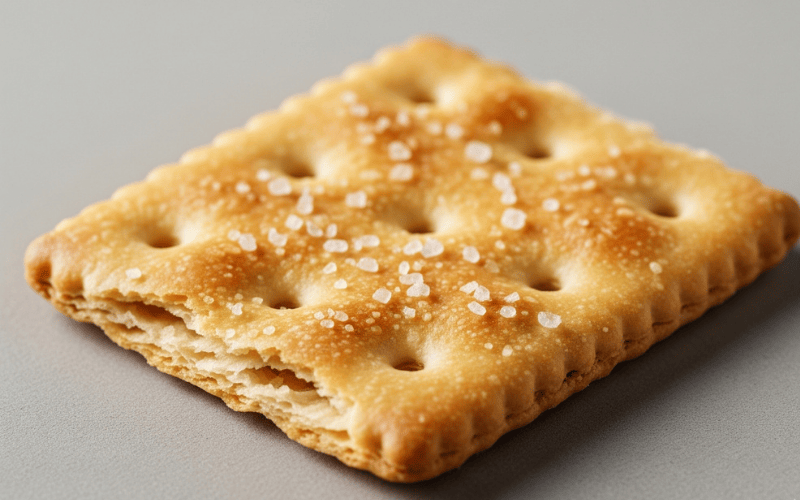
For the Procurement Manager: Securing Quality from the Start
The journey to a perfect cracker begins with uniform, high-quality ingredients. Any variability in flour, leavening agents, or shortening can lead to significant inconsistencies in the final product's texture and appearance.
Flour Consistency: Flour is the most critical ingredient. Its protein content (typically 9-11%) and gluten strength directly impact dough elasticity and final cracker texture.
Actionable Step: Establish strict specifications for flour protein, ash content, and water absorption. Work with a primary supplier to ensure batch-to-batch consistency and require a Certificate of Analysis (CoA) with every shipment.
Shortening and Fat: The type and quality of shortening affect the dough's flakiness and the final cracker's crispness.
Actionable Step: Opt for a consistent, high-quality shortening or fat that meets specific melting point and solid fat index (SFI) requirements.
Cost vs. Quality: While cost is a factor, a cheaper, inconsistent ingredient will ultimately lead to higher waste and potential customer complaints.
Actionable Step: Prioritize long-term supplier relationships that guarantee consistent quality over short-term savings from varied sources. This stability reduces risk and simplifies the production process.
For the Engineering Manager: Mastering Production with Precision Equipment
Your equipment and process parameters are the primary tools for standardizing thickness, shape, and crispness. The goal is to eliminate human error and mechanical inconsistencies.
Dough Mixing: The First Critical Step
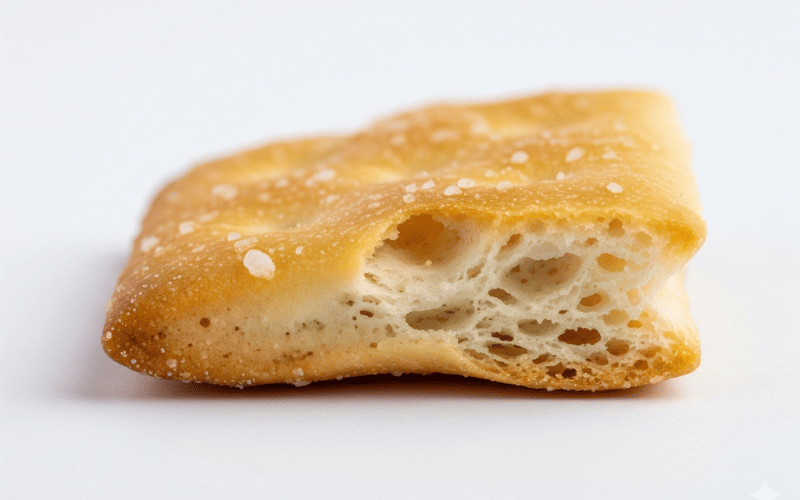
Key Challenge: For soda crackers, the mixing method and time directly determine gluten formation and the final cracker's layered structure. Traditional high-speed mixers can overwork the gluten, leading to a tough texture and lack of flakiness.
EverSmart Case Study: We had a Thai client who was struggling with inconsistent crispness and poor cracker structure. After a site visit, we found they were using a standard high-speed horizontal mixer, which is better suited for hard biscuits, not for the slow, gentle gluten development needed for fermented soda crackers.
Solution: We advised the client to switch to a vertical dough mixer and adjust the process to a slower, 15-20 minute mix. This seemingly simple change completely resolved their product issues, allowing them to produce crackers with the perfect layered structure and uniform crispness. This case proves that choosing the right equipment is fundamental to ensuring product consistency.
Dough Sheeting & Laminating: This is the most crucial step for controlling thickness.
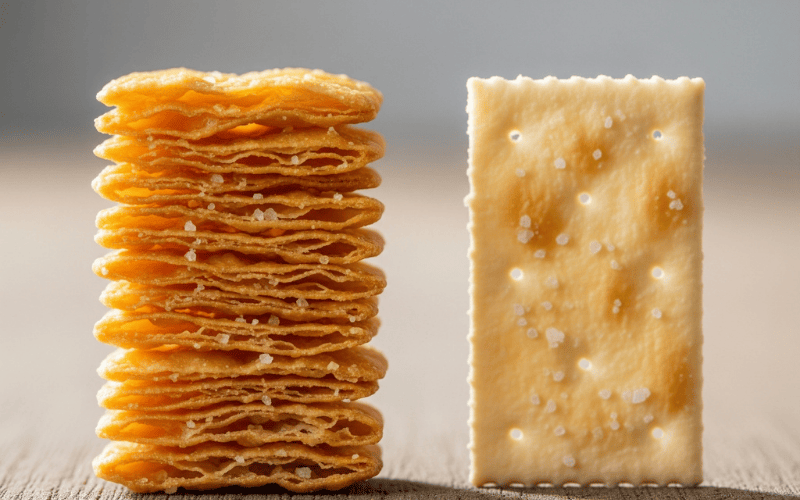
Actionable Step: Calibrate the reduction rollers regularly to ensure a consistent gap. Implement a laminating process with multiple folds to create the flaky, layered structure that is characteristic of soda crackers. This process is key for achieving the "what is the texture of crackers?" flaky texture.
Rotary Cutting and Docking: The rotary cutter determines the cracker's shape and size.
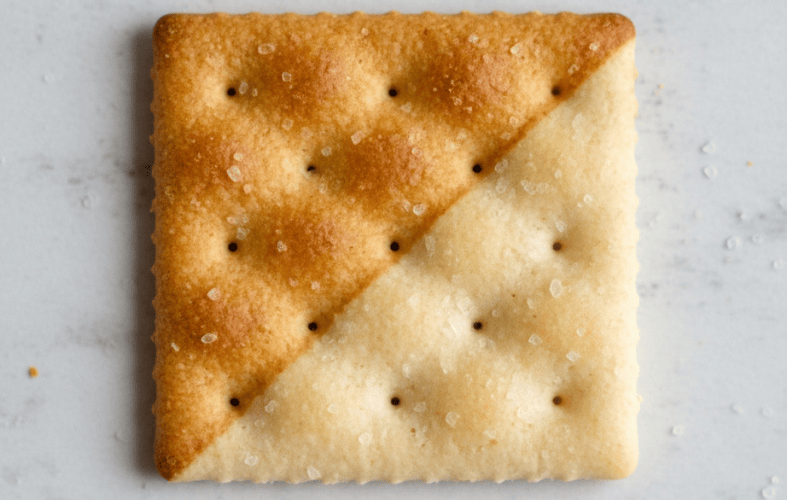
Actionable Step: Use precision-engineered cutting dies and ensure they are clean and sharp to prevent tearing. The docking pins (the small holes) are vital for preventing blisters during baking. Ensure the pins are set to the correct depth and pattern.
Baking Technology: The oven is where crispness is born.
Actionable Step: Use a traveling band oven with multiple, independently controlled temperature zones. The initial zone should have high heat to trigger rapid expansion and blistering, followed by lower heat zones to thoroughly dry the crackers to the ideal moisture content (typically 1-2%). This method perfectly answers "how do you keep soda crisp?".
For the R&D Manager: Innovating for Perfection and Consistency
Your department is the bridge between the formula and the final product. You focus on sensory metrics and continuous improvement.
Optimizing the Recipe: While the classic soda cracker recipe is well-known, small adjustments can yield significant improvements.
Actionable Step: Experiment with leavening systems (baking soda, yeast, enzymes) to fine-tune the dough's fermentation process, which affects both texture and flavor. Consider using natural dough conditioners to improve machinability and consistency.
Sensory and Physical Metrics: Don't just rely on visual inspection.
Actionable Step: Regularly conduct sensory panels to evaluate taste, crispness, and mouthfeel. Use instruments like a texture analyzer to measure the force required to break a cracker, providing a quantifiable metric for crispness. This data-driven approach helps to answer the question, "how are soda crackers made?".
Problem-Solving: When inconsistencies arise, your team is on the front lines.
Actionable Step: Collaborate with engineering to troubleshoot issues. For example, if crackers are too hard, it could be a moisture issue from the oven (engineering) or a gluten development problem from the recipe (R&D).
Multi-Departmental Action Checklist
Procurement:
Establish and enforce detailed ingredient specifications (CoA required).
Standardize suppliers for critical ingredients like flour and shortening.
Conduct regular quality audits of key suppliers.
Engineering:
Implement a preventative maintenance schedule for sheeting rollers, cutters, and ovens.
Calibrate all thickness gauges and temperature sensors weekly.
Use in-line moisture sensors to provide real-time data for oven adjustments.
R&D:
Develop and maintain a "golden standard" recipe and process.
Conduct regular physical and sensory testing of finished products.
Train production staff on proper mixing and fermentation techniques.
Frequently Asked Questions (FAQs)
Q1: How does gluten content affect cracker crispness?
A: Gluten content and strength directly influence the dough's extensibility and the final product's texture. Low-gluten flour (like soft wheat flour) helps create a crispy, fragile texture, while high gluten makes crackers harder and chewier. Precision gluten control in your formula is key to achieving the ideal crispness.
Q2: Why do my crackers come out with large blisters or uneven bumps?
A: This is usually due to two reasons:
Insufficient Docking: The small holes ("docking") in the dough allow steam to escape during baking. If docking is insufficient or uneven, steam gets trapped, causing the crackers to balloon.
Over-Fermentation: If the dough ferments for too long, it produces an excess of gas that cannot be fully released even with docking, leading to irregular puffing.
Q3: How can I scientifically quantify "crispness"?
A: R&D can use a texture analyzer to scientifically quantify crispness. This device measures the peak force required to break a cracker, providing an objective, repeatable value. This metric can be used to set quality standards and ensure every batch meets the desired crispness level.
Q4: Can I change crispness just by adjusting baking parameters without changing the recipe?
A: Yes, you can. Baking is the key to controlling final moisture content, which directly determines crispness. To make crackers crispier, you can slow down the baking speed or increase the time to further reduce moisture. Conversely, if crackers are too hard, you can reduce the baking time or slightly lower the temperature to retain more moisture. However, this must be done without negatively affecting flavor and appearance.
Ready to Elevate Your Cracker Production?
If your factory is facing challenges with product consistency, we can help. Our team of experts specializes in optimizing production lines, providing bespoke equipment solutions, and fine-tuning processes to ensure your soda crackers consistently meet the highest quality standards.
Contact Us Today to Schedule a Free Consultation!
Sofia
Export Vice President | EverSmart
📞 +86 137 94619343

Ready to start your journey toward a customized solution? Contact me directly on WhatsApp to begin the conversation.