The Ultimate Guide to Solving Sandwich Biscuit Production Problems: A Manufacturer's Handbook
Author: EverSmart Engineering Team | Date: September 11, 2025
Executive Summary
For biscuit manufacturers, achieving consistent quality and efficiency is the cornerstone of profitability. However, production lines are often plagued by persistent issues like filling leakage, misaligned biscuits, broken bases, and inconsistent quality. These problems lead to massive waste, reduced output, damaged brand reputation, and squeezed profit margins. This definitive guide, crafted from decades of hands-on engineering experience at EverSmart, delves deep into the root causes of these problems and provides proven, actionable solutions. We move beyond basic troubleshooting to a holistic understanding of your production line, empowering you to transform your operations from a source of frustration into a model of efficiency and reliability.
Why Sandwich Biscuit Production Fails: A Systemic View
Many manufacturers address symptoms rather than underlying causes. A holistic approach recognizes that problems often stem from an interaction between machine settings, ingredient properties, and environmental factors. The key to sustainable resolution lies in systematic diagnosis and precision engineering. As evidenced by industry upgrades, modernizing control systems can be pivotal in addressing these intertwined challenges and unlocking significant operational advantages, including enhanced remote diagnostics and troubleshooting .
Section 1: Core Sandwiching Process Problems & EverSmart Solutions
This section covers issues that occur specifically at the sandwiching and capping stage.
1.1 Filling Leakage (Oozing)
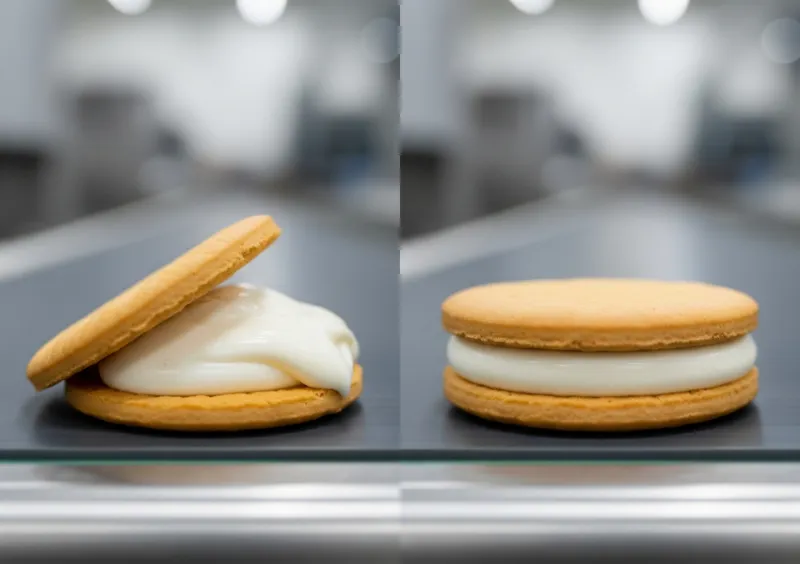
Filling oozing out the sides of biscuits is one of the most common and visually apparent defects, leading to messy products and packaging issues.
Root Causes:
Inaccurate Filling Volume: The most common cause. Even a slight overfill will force cream or jam to escape during the capping process.
Incorrect Viscosity: Filling that is too warm or has an improper formulation becomes too thin and runny, making it impossible to contain.
Misaligned Capping: If the top biscuit (lid) is not perfectly centered when placed, it creates an uneven seal, allowing filling to seep from one side.
Excessive Pressure: The capping head applying too much pressure can compress the biscuit and force the filling out.
Advanced Solutions:
Precision Metering Pumps: Invest in a machine with servo-driven positive displacement pumps. These allow for micro-adjustments to the filling volume, ensuring accuracy within fractions of a gram.
Temperature Control System: Implement jacketed, temperature-controlled cream reservoirs to maintain the filling at its ideal viscosity throughout production.
Optical Alignment Systems: Upgrade to a capper with vision systems that automatically detect biscuit orientation and make micro-adjustments to ensure perfect centering before the lid is placed.
Pressure-Calibrated Capping Heads: Use machines that allow for precise calibration of the capping head's downward pressure to ensure a secure seal without compression.
EverSmart Integration: The cookie capper machine is engineered with these exact solutions in mind. Our precision cookie capper machine features a servo-driven pump and optical alignment as standard to eliminate leakage at its source.
1.2 Misaligned Bases and Lids
This results in an unprofessional appearance, uneven filling distribution, and contributes to leakage.
Root Causes:
Worn or Loose Guide Rails: Over time, mechanical guides that channel biscuits can wear down or become loose, introducing play and misalignment.
Vibration: Excessive vibration from other line components (e.g., ovens, coolers) can jostle biscuits off their intended path.
Incorrect Biscuit Size/Tolerance: Biscuits that are out-of-spec due to upstream issues (e.g., worn molders, inconsistent dough) will not be handled correctly by the capper's designed parameters.
Advanced Solutions:
Laser-Guided Alignment: Modern systems use non-contact laser sensors to track biscuit position in real-time, making automatic adjustments.
Anti-Vibration Mounting: Isolate the capping machine from the main conveyor structure using anti-vibration pads to eliminate external disturbances.
Upstream Quality Control: Implement vision inspection systems before the capper to reject out-of-spec biscuits, preventing jams and misalignment issues.
EverSmart Integration: Persistent misalignment is often a sign that mechanical guides are beyond repair. modern biscuit sandwiching machine from EverSmart, equipped with non-contact laser guidance, renders this problem obsolete by making real-time corrections for every single biscuit.
1.3 Broken or Cracked Biscuits
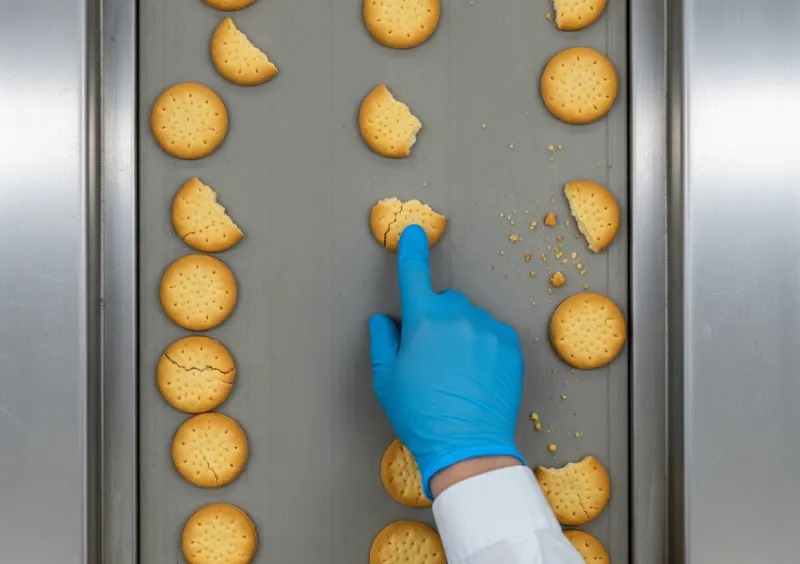
Biscuits breaking during the capping process represent direct product loss.
Root Causes:
Biscuit Structural Integrity: The core issue often lies in the recipe or baking process. A dough with low moisture content (below 20%) can result in a brittle biscuit prone to cracking .
Improper Baking or Cooling: Incorrect temperature profiles can create biscuits that are too fragile.
Aggressive Handling: Dropping biscuits from a height onto a conveyor or using overly abrupt transfer points can cause micro-fractures that lead to full breaks during capping.
Capper Pressure Settings: As with leakage, too much pressure from the capping head will smash fragile biscuits.
Advanced Solutions:
Recipe Optimization: Address the root cause. Ensure dough hydration levels are between 25-30% and use fats/oils to improve plasticity and reduce brittleness .
Gentle Handling Systems: Specify conveyors with low-friction, food-grade belts and utilize "soft-drop" transfer systems that minimize impact and abrasion.
Weight-Sensitive Capping: Utilize capping heads with sensors that can detect biscuit presence and apply a pre-set, minimal force required for sealing.
EverSmart Integration: If your biscuits are prone to breaking, a machine with brute force will only make it worse. Our automated cookie capper utilizes a pressure-sensitive head and a soft-infeed conveyor designed specifically to handle delicate products with the utmost care, dramatically reducing breakage.
1.4 Uneven or Inconsistent Filling
This quality issue erodes consumer trust, as each biscuit offers a different experience.
Root Causes:
Pump Inconsistency: Worn or low-quality pumps cannot deliver a consistent volume of filling with each stroke.
Filling Viscosity Fluctuations: As the product sits in the hopper, its temperature and viscosity can change, leading to variation in deposit weight.
Clogged Nozzles: Particulates in the filling can partially block nozzles, reducing output and creating uneven deposits.
Advanced Solutions:
High-Precision Pumping System: Use pumps designed for food processing that guarantee consistent displacement with every cycle.
In-Line Viscosity Monitoring: Install sensors that monitor filling consistency in real-time and automatically adjust pump parameters to compensate.
Automated Sieving/Filtration: Integrate an in-line filter before the filling hopper to remove particulates and prevent nozzle blockages.
EverSmart Integration: Inconsistency is a hallmark of worn-out equipment. The EverSmart cookie capper machine is built with industrial-grade, high-precision pumps and optional in-line monitoring to guarantee that the 100th biscuit is identical to the 10,000th, ensuring brand quality and consumer trust.
Table 1: Quick Diagnostic Guide for Common Sandwiching Problems
| Problem | Immediate Check | Likely Root Cause | Advanced Solution |
|---|---|---|---|
| Filling Leakage | Filling volume setting | Overfilling, Misalignment | Precision metering pump, Optical alignment |
| Misalignment | Guide rails for play | Vibration, Worn parts | Laser guidance, Anti-vibration mounts |
| Broken Biscuits | Biscuit moisture content | Brittle recipe, Handling | Recipe optimization, Gentle conveyors |
| Inconsistent Filling | Pump condition | Worn pump, Viscosity change | High-precision pump, In-line monitoring |
Section 2: Leveraging EverSmart's Process Expertise: Solving Upstream Biscuit Quality Issues
A critical insight from our decades of experience is that many problems attributed to the sandwiching machine are actually born upstream in the mixing, molding, and baking stages. A flawless capping process requires a flawless biscuit. Ignoring upstream issues will overwhelm even the most advanced sandwiching equipment.
2.1 Biscuits Sticking to Molds or Conveyors
This causes malformed biscuits that will jam, misalign, or break in the capper.
Root Cause & Solution:
Dough is Too Loose/Lacks Binding: Often a formula issue. Reducing the amount of leavening agent strengthens the dough's structure, reducing stickiness.
Over-Baking in Final Zone: Biscuits that harden and fuse in the oven's final zone. Ensure a gradual temperature gradient and avoid excessively long cooling times there.
2.2 Biscuits with Concave Bottoms
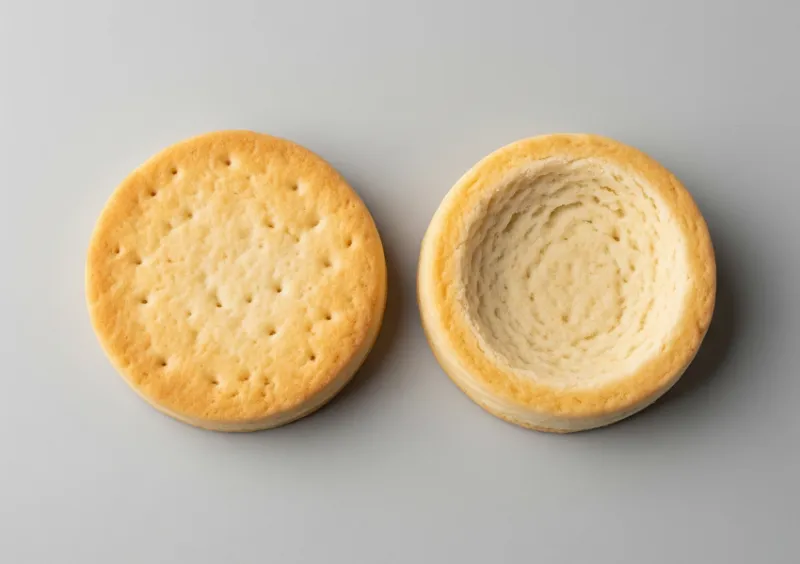
An unstable foundation leads to misalignment and uneven filling.
Root Cause & Solution:
Insufficient Expansion: A slight increase in leavening agents, particularly baking soda, promotes better lift.
Inadequate Pinning: Using a biscuit mold with more pins prevents trapped steam from deforming the base.
Excessive Dough Elasticity: Adding starch (5%-10% of flour weight) effectively dilutes the gluten content, creating a more stable biscuit .
2.3 Biscuits Shrinking or Deforming
Deformed biscuits are impossible to align correctly.
Root Cause & Solution:
Tension from Sheeting: Adjust the dough sheet to sag slightly between rollers and ensure conveyors keep it relaxed.
Excessive Dough Elasticity: Solutions include increased conditioning, mixing, or starch addition.
Unidirectional Rolling: Continuously change the dough's direction by 90° during rolling to distribute tension evenly.
2.4 Bubbles on Biscuit Surfaces
Bubbles create weak points that fracture under capping pressure.
Root Cause & Solution:
Aggressive Oven Top Heat: Avoid a high-temperature start; gradually increase top heat.
Elastic Dough Trapping Gas: Reducing dough elasticity and using a high-pin-count mold are effective.
Clumped Leavening Agents: Always sieve and crush leavening agent clumps.
Excess Dusting Flour: Minimize or avoid dusting flour; ensure extruders and molds are calibrated to prevent sticking.
2.5 Biscuits with Poor Color
A key quality marker that affects brand perception.
Root Cause & Solution:
Insufficient Sugar: Increasing the amount of invert sugar or glucose syrup in the recipe drives Maillard browning.
2.6 Biscuits That Are Soft, Not Crispy, After Cooling
High moisture content leads to breaking and sogginess.
Root Cause & Solution:
Incorrect Baking Profile: For thicker products, slightly lower the oven temperature and extend the baking time to achieve a final moisture content of less than 6%.
Blocked Oven Exhaust: Ensure exhaust ducts are clear and properly insulated to maintain an outlet temperature of at least 100°C (212°F), preventing moisture feedback.
Table 2: Upstream Biscuit Defects and Their Impact on Sandwiching
| Upstream Defect | Cause | Effect on Sandwiching Process | Solution |
|---|---|---|---|
| Sticking | Over-leavening, Hardening in oven | Jams, malformed biscuits | Reduce leavening, adjust oven cooling zone |
| Concave Bases | Low expansion, high gluten | Unstable base, misalignment | Add starch, use more pins, adjust leavening |
| Deformation | Sheet tension, elastic dough | Misalignment, jams | Relax dough sheet, change rolling direction |
| Surface Bubbles | High top heat, elastic dough | Weak points, breakage | Gradual heat increase, reduce elasticity |
| High Moisture | Blocked exhaust, short bake time | Sogginess, breakage | Clear exhaust, extend baking time |
Section 3: The EverSmart Advantage: A Case Study in Total Line Optimization
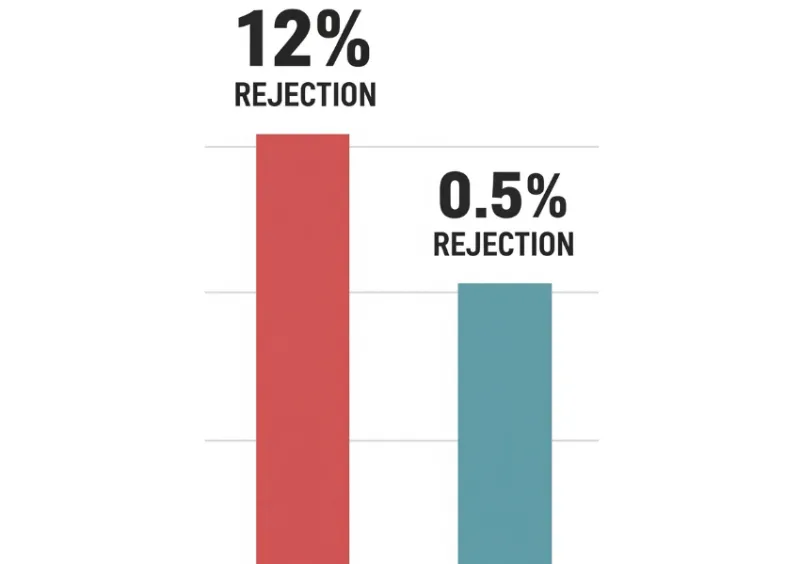
The Problem: A mid-sized bakery ("Britannia Bakery") was experiencing a 12% product rejection rate due to a combination of filling leakage and biscuit breakage on their existing, aging sandwiching line. This was costing them over $5,000 per month in wasted ingredients and lost productivity, and preventing them from fulfilling a large new contract.
The Analysis: Our engineering team conducted an on-site audit. We discovered:
The existing piston-fill pump was worn, with a ±15% volume variance.
The capper used simple mechanical guides that were slightly misaligned, causing lids to be placed off-center.
The transfer from the cooling conveyor to the capper involved a 3-inch drop, causing micro-fractures in the biscuits, which then fully cracked under the capper's fixed pressure.
Upstream Issue: The biscuit recipe had low moisture content (18%) and the oven exhaust was partially blocked, leading to slightly soft and brittle biscuits with a moisture content of 7.5%.
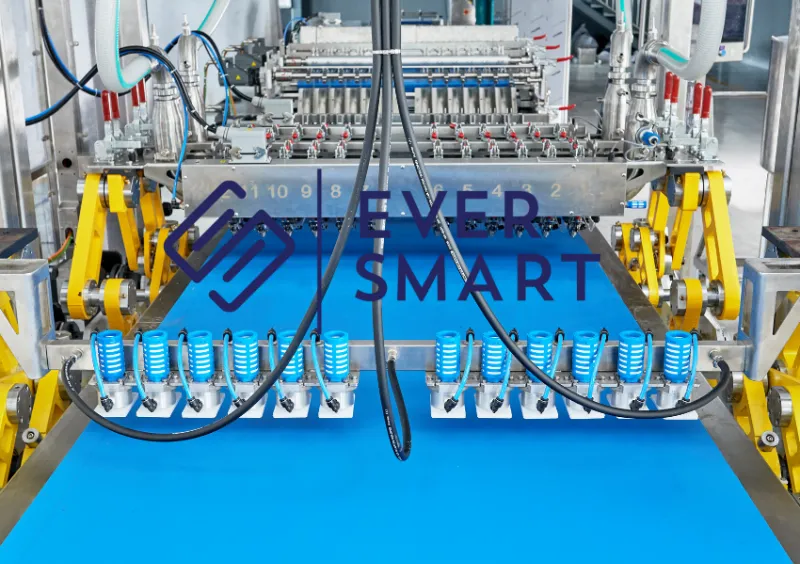
The Holistic Solution: Britannia Bakery installed an EverSmart Cookie Capper Machine and implemented our upstream recommendations:
Precision Engineering: A servo-driven, positive displacement pump for accurate filling within ±1%.
Advanced Guidance: An optical alignment system to ensure perfect lid placement every time.
Gentle Handling: A "soft-infeed" conveyor and a pressure-sensitive capping head.
Upstream Optimization: We advised them to:
Increase dough moisture to 26%.
Add 8% starch to reduce gluten elasticity.
Clear and insulate the oven exhaust duct.
The Results:
Rejection rates plummeted from 12% to under 0.5% within the first week.
Production output increased by 18% due to the elimination of stoppages.
Return on Investment (ROI) was achieved in just 7 months through savings on waste and increased revenue.
This case demonstrates how a systemic approach that addresses multiple interacting factors delivers transformative results, turning a cost center into a profit driver. This aligns with industry best practices that emphasize evaluating production line investments based on comprehensive metrics like unit output, quality indicators (e.g., product qualified percentage), and overall profitability .
EverSmart Integration: This holistic approach is what sets us apart. We don't just sell you a machine; we provide a solution. Our cookie capper machines are the engineered endpoint of a process we understand from raw ingredients to finished, packaged product.
Section 4: Frequently Asked Questions (FAQ)
1. What are the most common problems in sandwich biscuit production?
The most frequent issues are filling leakage, misaligned biscuits, broken or cracked bases/lids, and inconsistent filling volume. These problems typically stem from a combination of machine precision, ingredient properties (like dough moisture being below 20%) , and handling processes. Solving them requires a diagnostic approach to identify the root cause rather than just treating the symptom.
2. How can I prevent filling leakage in my sandwich biscuit machinery?
Preventing leakage requires a multi-pronged approach:
Precision Filling: Ensure your machine has an accurate, well-maintained filling pump.
Viscosity Control: Maintain your filling at a consistent temperature and viscosity.
Perfect Alignment: Use a capper with optical or laser guidance to place lids perfectly centered.
Calibrated Pressure: Adjust the capping head to apply the minimum pressure needed for a secure seal. Upgrading to a machine with these features is the most effective long-term solution.
Related Resource: The most reliable way to eliminate leakage is with precision engineering. Explore the features of our cookie capper machine that are designed specifically to solve this exact problem.
3. Why do my biscuits keep breaking during the capping process?
Biscuit breakage is often a sign of improper biscuit integrity or aggressive handling. First, check your dough recipe and baking process; low moisture content is a primary cause of brittleness . Second, audit your production line for rough transfer points where biscuits are dropped or knocked. Finally, ensure your capper's pressure setting is not excessively high.
4. How does automating a manual sandwiching process improve my ROI?
Automation directly impacts ROI by:
Reducing Waste: Precision automation drastically cuts product loss from errors like leakage and breakage.
Increasing Output: Automated machines run significantly faster than manual lines.
Lowering Labor Costs: One automated line can replace 10-15 manual workers, reducing long-term operational expenses.
Improving Consistency: Automated machines produce a consistently high-quality product, enhancing your brand reputation. This is confirmed by analyses showing automation improves key production metrics .
Related Resource: See the dramatic impact automation can have. Read our detailed analysis of cookie capper machine ROI to see the numbers for yourself.
5. What should I look for when choosing a new cookie capper machine?
Key factors to consider include:
Production Capacity: Does it meet your current and future output needs?
Precision and Accuracy: Does it feature high-precision pumps and alignment systems?
Flexibility: Can it handle different biscuit sizes and fillings with quick changeovers?
Build Quality and Support: Is it built from durable materials and backed by a reliable manufacturer with strong technical support and spare parts availability? A detailed cost-benefit analysis is crucial .
Related Resource: The choice can be complex. Our comprehensive guide on how to choose a biscuit sandwiching machine breaks down all the critical decision factors.
6. How often should I perform maintenance on my biscuit sandwiching machine?
Maintenance frequency depends on usage, but a general guideline includes:
Daily: Clean filling nozzles, wipe down guides, and perform a visual inspection.
Weekly: Lubricate moving parts as per the manufacturer's instructions and check for wear on seals and gaskets.
Monthly: Calibrate pumps and sensors and inspect electrical connections.
Annually: A full preventive maintenance service conducted by a qualified technician to ensure optimal performance and longevity.
Conclusion: From Problem-Solving to Performance Optimization
Chronic production problems are more than an annoyance; they are a direct drain on your bottom line and a ceiling on your growth. While temporary fixes can provide short-term relief, a sustainable competitive advantage comes from investing in precision engineering and holistic solutions.
The EverSmart Cookie Capper Machine is engineered from the ground up to eliminate the common problems of sandwich biscuit production. With features like optical alignment, servo-driven pumps, and gentle-product handling, it transforms your production line from a source of cost into a driver of profit, quality, and brand reputation. Furthermore, our unique end-to-end process expertise allows us to help you optimize your entire line, not just the capping stage, ensuring you achieve the maximum possible return on your investment.
Ready to Eliminate Production Problems and Boost Your Profitability?
Don't let another day of wasted product, missed deadlines, and frustrated teams limit your business's potential. The journey to seamless production begins with a single step.
➡️ Schedule a Free, No-Obligation Production Line Audit with our Engineering Specialist.
We'll analyze your specific challenges and provide a customized solution to maximize your ROI.
📞 Contact Us Today to request a quote and learn how our precision machinery can transform your biscuit production.
Email: [email protected] | Phone: +8613794619343
Your Next Step: Understand the full potential of a modern solution. Visit our main cookie capper machine page to explore the specifications, features, and models that can revolutionize your production line.

Ready to start your journey toward a customized solution? Contact me directly on WhatsApp to begin the conversation.