Food Safety & Hygiene: How Tunnel Oven Design Actively Prevents Contamination
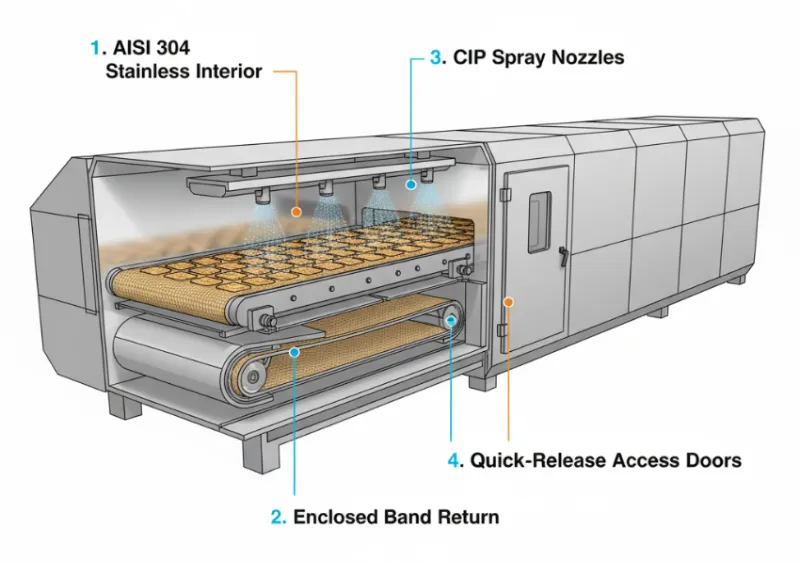
In the high-stakes world of industrial food production, safety is not a feature—it is the foundation. For biscuit, cracker, and bakery manufacturers, the
At EverSmart, we engineer proactivity into every component of our
Technically Reviewed by Johnathan Deng, Lead Sanitary Design EngineerWith over 25 years of experience in bakery equipment engineering, Johnathan ensures every EverSmart oven meets and exceeds global food safety standards like USDA, FDA, and CE.
1. Material Science for Food Safety: Why Food-Grade Construction is Non-Negotiable
The battle for food safety is won or lost at the material level. Surfaces that contact your product must be inert, non-porous, and fundamentally resistant to corrosion and degradation.
Premium AISI 304 & 316L Stainless Steel
Unlike painted carbon steel or inferior alloys, EverSmart ovens utilize AISI 304 or, for highly corrosive environments (like bakeries using high levels of salt or acidic ingredients), 316L "Marine-Grade" stainless steel for all product-contact surfaces. This isn't just a specification; it's a commitment. This material is non-porous, preventing bacteria from penetrating the surface, and is recognized as a safe Food Contact Substance under regulations outlined in the
Sanitary Continuous Welding over Mechanical Fasteners
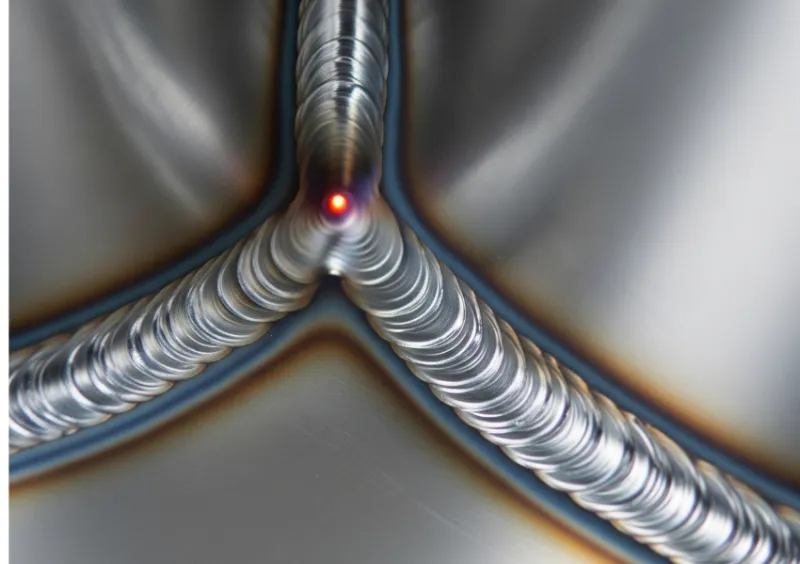
Bolts, rivets, and overlapping panels are death traps for hygiene. Our field audits have consistently shown these areas to be the primary sites of biofilm formation. To combat this, our design philosophy mandates continuous, sanitary Tungsten Inert Gas (TIG) welding for all internal seams. From our experience, while TIG welding is a more meticulous and time-consuming process, the resulting weld integrity is the only way to guarantee a truly sanitary surface that withstands decades of thermal stress and chemical sanitation. These welds are then ground and polished to a smooth, radiused finish, leaving pathogens nowhere to hide.
FDA-Approved High-Temperature Coatings
For external, non-product contact surfaces, durability is key. A common field failure we observe in lesser equipment is flaking paint, which becomes a foreign material hazard. That is why we use only FDA-approved, high-temperature coatings specifically formulated to withstand the thermal cycling of a bakery environment without cracking, peeling, or flaking.
2. Design That Defeats Bacteria: How Sanitary Welds & Radiused Corners Eliminate Harborage
Beyond the materials themselves, the geometry of the oven's interior is a primary determinant of its cleanability. The core principle is simple: eliminate all horizontal surfaces, sharp angles, and dead ends.
The Principle of "Cleanability"
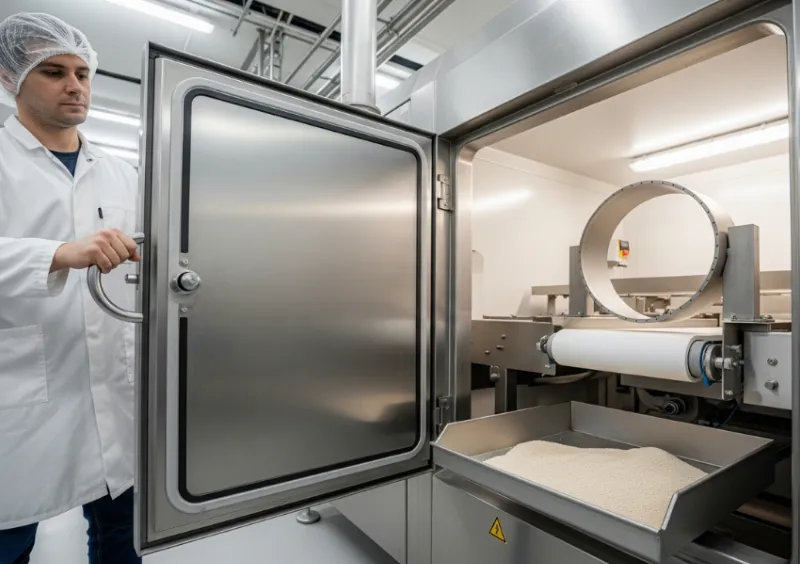
A surface is only truly clean if it can be verified as clean. This requires visual inspectability and the ability for cleaning solutions to make complete contact. Our designs feature sloped floors and casings that are fully openable, ensuring no area is "out of sight, out of mind"—a lesson learned from years of consulting with sanitation crews on factory floors.
The Enclosed Band Return: A Critical Innovation
A major hygiene challenge in any tunnel oven is the return of the baking band. This innovation came directly from observing client challenges with high-fat products. For a client producing items on their
3. Containing the Process: Advanced Airflow & Exhaust Management
An oven does not operate in a vacuum. The management of air within and around it is a critical, yet often overlooked, food safety function. Proper design prevents cross-contamination from the factory environment.
Positive Pressure as a Barrier
EverSmart ovens are engineered to maintain a slight positive static pressure inside the baking chamber. This acts as an invisible shield, constantly pushing air out of the oven and preventing unfiltered factory air—which may contain flour dust or allergens—from being sucked in. This is a core part of the tunnel oven working principle that protects product purity.
Dedicated High-Velocity Exhaust Stacks
Efficiently removing moisture is key to achieving the perfect texture and maintaining the correct
4. Revolutionizing Sanitation: Clean-In-Place (CIP) Systems & Unmatched Access
The best design is meaningless if it cannot be cleaned effectively and efficiently. Downtime for cleaning is lost production time, and manual cleaning is prone to human error. We engineer this challenge out of the equation.
Clean-In-Place (CIP) Automation
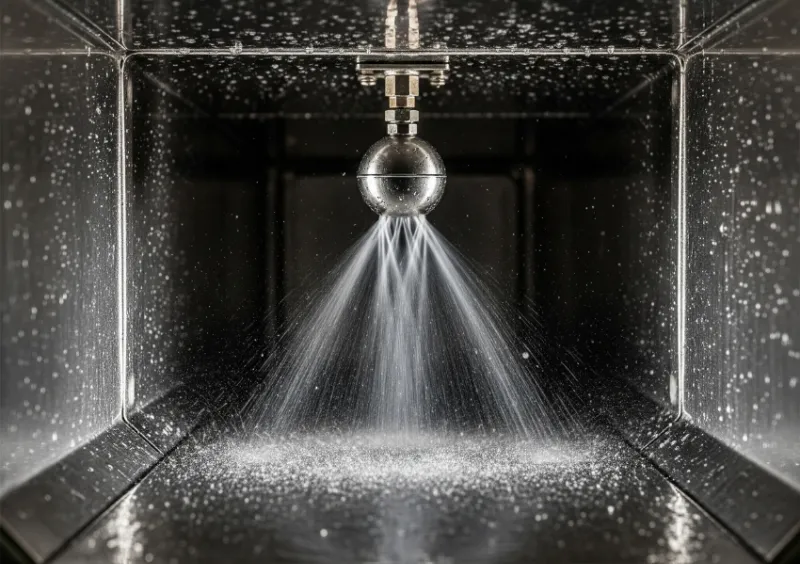
For the ultimate in sanitation consistency and labor savings, EverSmart offers integrated Clean-in-Place (CIP) systems. This is not a simple spray pipe; it is a programmable, automated system featuring strategically placed spray balls or nozzles within the oven's upper and lower ducts. At the push of a button, the system executes a pre-programmed cycle, rinsing, washing with detergents, and sanitizing the internal cavities. This ensures every clean is verified, repeatable, and documented for your HACCP records, answering the common question, "what's the most efficient way to clean a conveyor oven?" with a technologically advanced solution.
Unmatched Physical Access for Verification
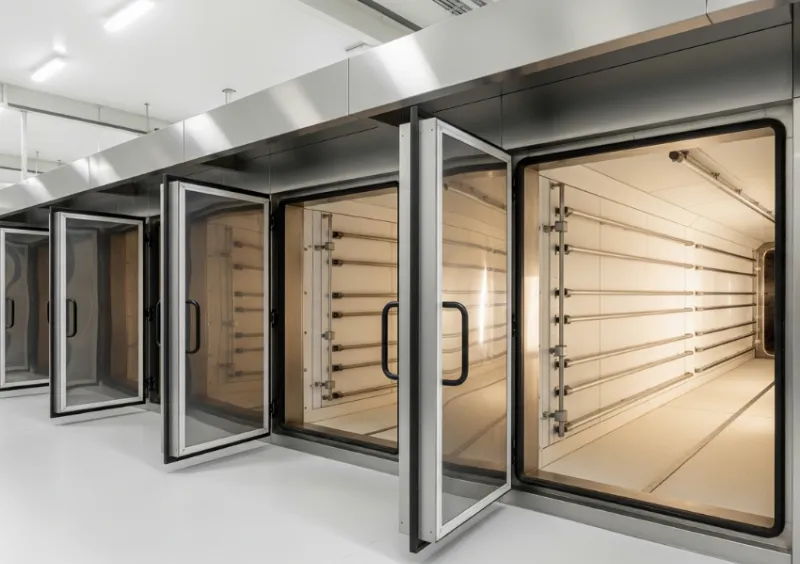
Our engineers have been on countless factory floors at 3 AM during sanitation shifts. We saw crews struggling with heavy panels and hard-to-reach bolts. That's why we standardized on lightweight, quick-release doors that open with a single lever. This design philosophy is born from empathy for the people who maintain the equipment, making tasks like how to clean under the oven straightforward and efficient. This focus on accessibility is a key differentiator when comparing a
5. Mitigating Foreign Material Risk: Engineering for Component & Belt Integrity
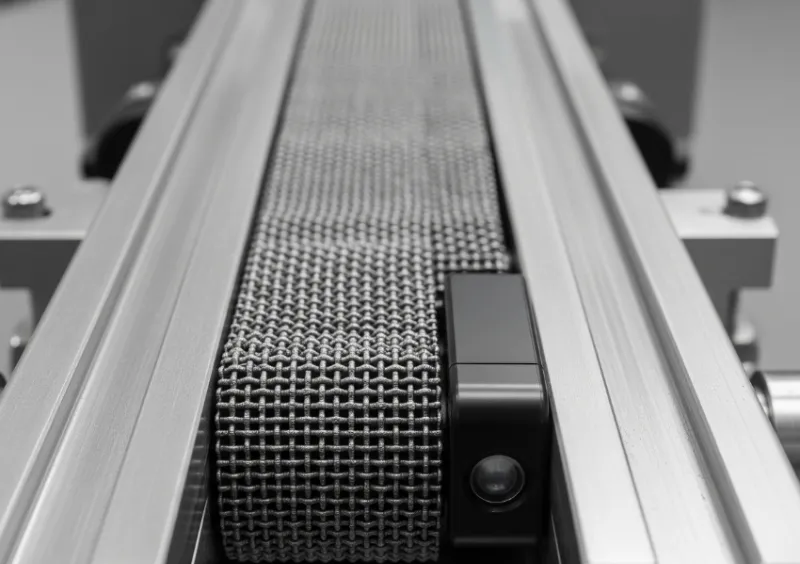
Physical contamination from metal shavings, worn parts, or lubricants is a leading cause of food recalls. Our design proactively prevents these failures at the source.
Precision Band Tracking for Integrity
A misaligned or mis-tracking baking band is not just an operational nuisance; it is a severe food safety risk. If the band rubs against the oven structure, it can generate metal shavings directly into the product zone. EverSmart's automated, precision band tracking system, with its robust guides and sensitive feedback sensors, maintains perfect band alignment at all speeds and temperatures, eliminating this risk entirely.
Food-Grade Components and Lubricants
Every component in the product zone is selected for durability and compliance. Critically, any component requiring lubrication exclusively uses
Meeting & Exceeding Global Food Safety Standards
Our design principles are forged to meet the world's most rigorous food safety benchmarks.
USDA Compliant:Designed and fabricated with materials and practices that meet the stringent sanitary standards outlined in the
USDA's Accepted Meat and Poultry Equipment guidelines .FDA Approved Materials: All food-contact surfaces utilize materials compliant with FDA regulations under Title 21 of the Code of Federal Regulations (CFR).
CE Certified: Our ovens meet the rigorous health and safety standards of the European Union, as detailed by the
European Commission's guidance on CE Marking , ensuring safe operation.
Frequently Asked Questions (FAQs)
Q: How to keep my oven clean and what's the most efficient method?
A: The most efficient method is a combination of robust design and disciplined process. Choose an oven with sanitary features (CIP, easy access, enclosed band return) to make cleaning easier. Then, implement a documented cleaning schedule: daily brushing of the band and wiping of accessible areas, coupled with a weekly deep clean of the entire interior, including the enclosed band return area. For the ultimate efficiency, an integrated CIP system automates and validates the deep cleaning process.
Q: How to keep the bottom of an oven clean and prevent debris buildup?
A: The key is preventing debris from entering the bottom cavity. An enclosed band return is the definitive solution, as it catches all crumbs and drips from the band. For existing ovens without this, diligent use of crumb trays and frequent vacuuming are essential. Furthermore, ensuring effective belt cleaning both before and after the return roller, as detailed in technical resources like this guide from Steinhaus, is crucial for maintaining hygiene.
Q: What's the difference between a continuous cleaning oven and a CIP system?
A: "Continuous cleaning" often refers to pyrolytic self-cleaning cycles in domestic ovens, which use extreme heat to burn off soil. This is not suitable for industrial food processing. A CIP (Clean-in-Place) system in an industrial tunnel oven is an automated mechanical system that uses sprayed detergent and sanitizer solutions, followed by rinses, to clean the interior. It is a precise, controlled, and documentable process that is essential for food safety compliance.
Q: How do you clean a convection oven in a factory setting?
A: While this article focuses on tunnel ovens, the principles for large convection ovens are similar: disconnect power, allow to cool, remove racks and accessories for washing, then manually scrub the interior walls and floor with appropriate food-safe cleaners. The key differentiator with a well-designed tunnel oven is the scale of automation (CIP) and the design features (enclosed returns, easy access) that make the massive task of how to clean tunnel oven systems significantly faster and more reliable.
Q: I've read forums like Reddit discussing challenges; how to keep tunnel oven clean?
A: Common themes in these discussions highlight real-world pain points: hard-to-reach areas, grease buildup in the bottom, and long downtime for cleaning. These are exactly the challenges EverSmart's hygienic design solves. Our ovens are built based on decades of field experience, specifically engineered to eliminate these common frustrations through features like lift-out panels, enclosed returns, and CIP integration, moving the conversation from complaint to solution.
Invest in Uncompromising Food Safety with EverSmart's Hygienic Design
Your product's safety is the cornerstone of your reputation. While other manufacturers offer a tunnel oven for sale, EverSmart offers a partnership in risk mitigation, creating integrated solutions that extend to post-baking processes like our
Our engineers specialize in designing tunnel ovens that are not just efficient, but are intrinsically safe, meeting the most stringent global food safety standards and making your HACCP compliance simpler, more reliable, and verifiable.
[Whatsapp +86 13794619343]Dive deeper into the technical specifications and validation data behind our hygienic design philosophy.
[Email [email protected]]Discuss your specific production challenges and get a custom solution designed for your safety and efficiency needs.

Ready to start your journey toward a customized solution? Contact me directly on WhatsApp to begin the conversation.