From Bulk to Brilliance: Maximizing ROI with Automated Stacking and ASRS Integration
In the high-cadence environment of a modern biscuit factory, profitability often leaks through the "gaps." These are the chaotic transition points where the production line ends and the warehouse begins.
Many facilities suffer from severe bottlenecks because their backend logistics cannot keep pace with high-speed ovens. Achieving true operational efficiency requires an evolution from handling bulk flow to managing aligned product streams.
This transition demands a sophisticated synergy between automated stacking solutions and Automated Storage and Retrieval Systems (ASRS). Integrating these systems eliminates manual handling and ensures perfect batch traceability across the entire supply chain.
Key Takeaways for Global Stakeholders
For Owners: Reclaim up to 70% of your facility's footprint by shifting from manual floor stacking to vertical high-density storage.
For CFOs: Automated inventory management and FEFO compliance eliminate stock write-offs, directly boosting your net profit.
For Engineering: Integrated WMS/WCS software ensures that palletizing conveyor systems and storage units operate as a single, synchronized organism.
For Maintenance: Modern shuttle-based systems offer ground-level serviceability, significantly reducing the need for high-risk aerial repairs.
For Production: Buffering systems act as a critical "surge tank." They allow the oven to continue running even during downstream packaging stoppages.
1. Understanding Automated Stacking and ASRS Solutions
At its core, the transition to aligned product streams is about singulation and meticulous organization. On the production floor, the Production Stacker serves as your first line of defense.
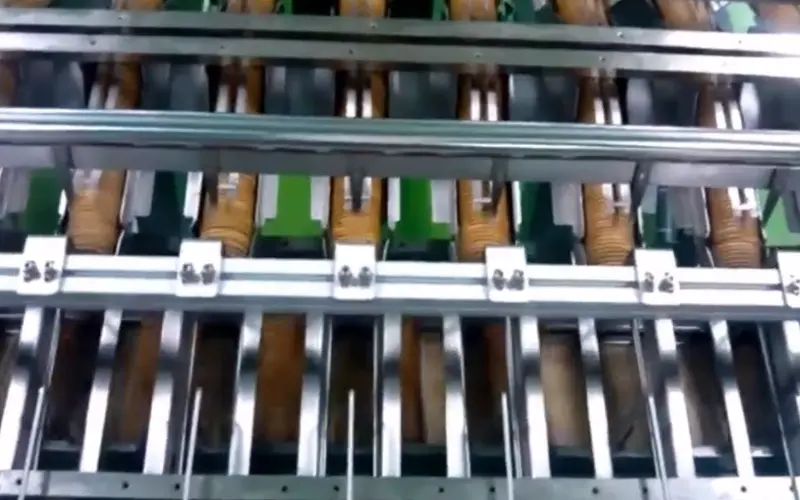
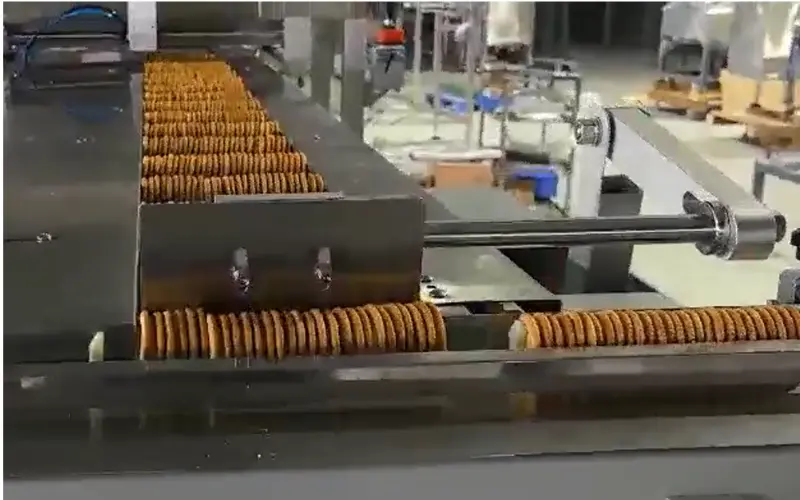
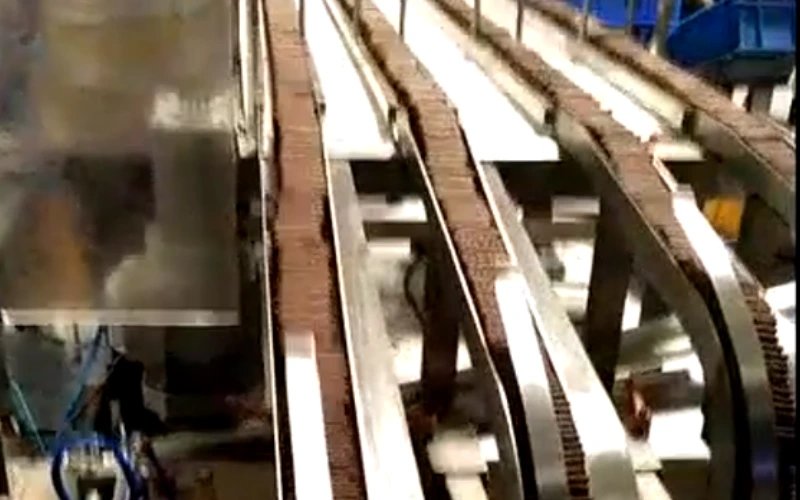
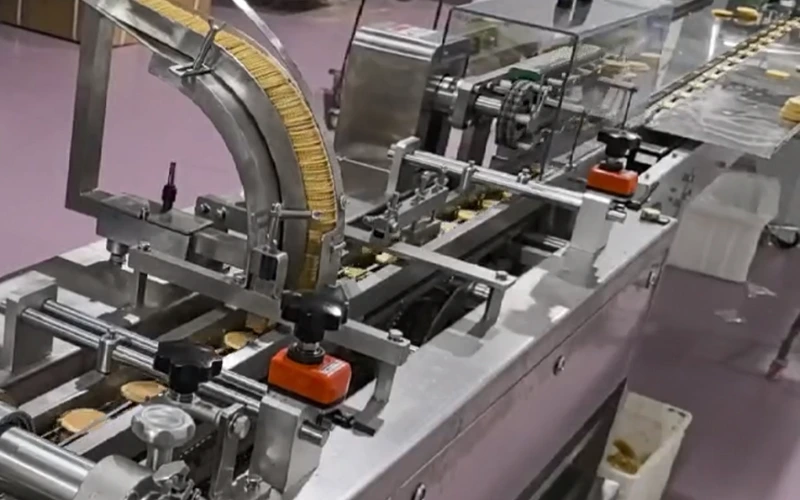
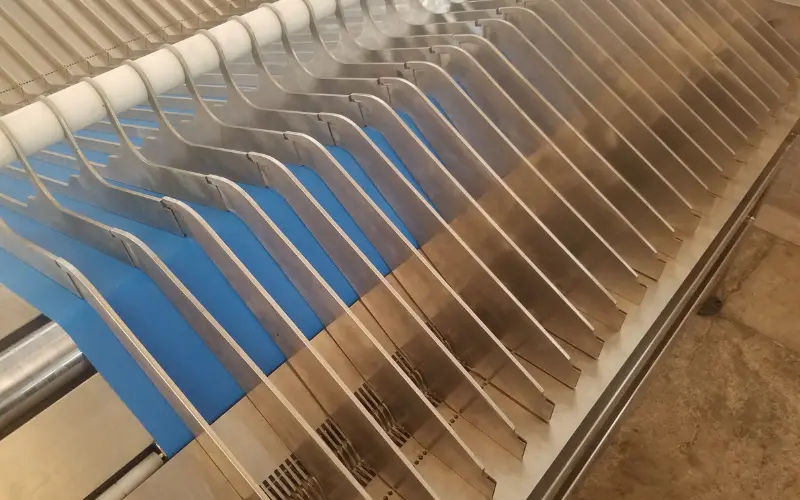
Utilizing biscuit star-wheel stackers, the system flips products from a flat-on-belt orientation to on-edge "slugs." This configuration is essential for both packaging efficiency and achieving optimal density in secondary packaging.
Once the biscuits are stacked and primary-packaged, they enter the Warehouse ASRS. This is not merely a racking system; it is a computer-controlled storage environment managed by robotic load-handling devices.
The bridge between these two worlds is formed by vibratory feeding and buffering systems. They manage the "pulse" of the factory, ensuring the warehouse never starves and the production line never chokes.
Note: The "Bridge" between production and the warehouse is the most critical area for OEE optimization. Without a buffer, a 5-minute palletizer stop forces a full oven shutdown.
2. Advanced Stacking Technology: Protecting Product Integrity
Mechanical precision during stacking is paramount. This is especially true when dealing with fragile biscuits or high-oil content crackers.
The Physics of the Star-Wheel
EVERSMART’s biscuit star-wheel stackers utilize variable-frequency motion curves. This ensures the biscuit "lands" in the slug stream without any structural stress or edge-chipping.
For the Mechanical Engineer, this precision reduces the reject rate at the flow wrapper infeed. It also ensures that the final product reaches the customer in pristine condition.
Multi-Lane Lane-Shapers
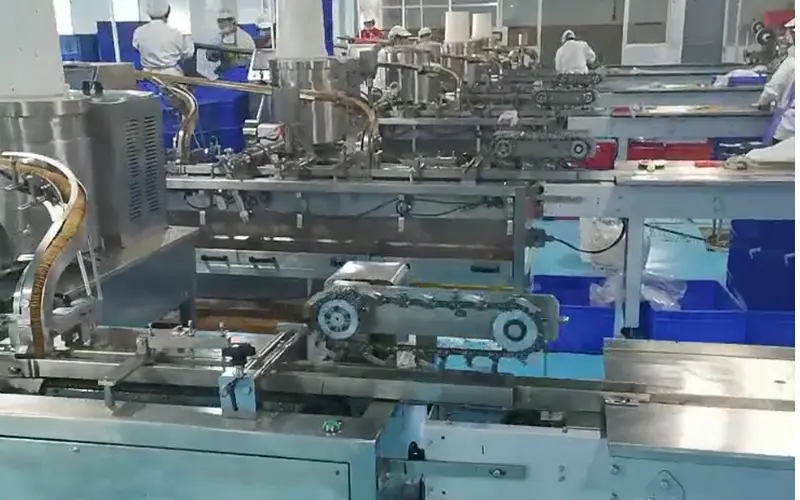
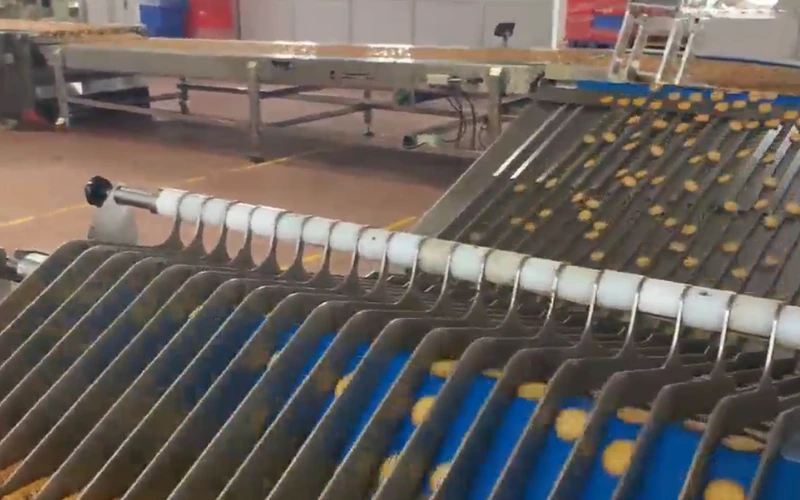
Handling multi-lane production flow is a major challenge in high-volume bakeries. Our lane-shapers act as intelligent traffic controllers for your product.
They merge 8 or 10 oven lanes into perfectly synchronized streams for the stackers. This prevents the high-speed collisions and "pile-ups" that lead to significant material waste.
3. High-Density ASRS: Maximizing Cubic Profitability
For the CFO and the Owner, the warehouse is often viewed as a costly "dead zone." ASRS warehouse automation transforms this area into a profit-generating asset by maximizing space optimization.
Unit-Load vs. Mini-Load Systems
Unit-Load AS/RS: These systems use heavy-duty stacker cranes to reach heights of up to 40 meters. They are the ideal labor shortage solution for large-scale palletized distribution centers.
Mini-Load AS/RS: This technology is perfect for handling cartons, totes, and small parts. If you produce a high variety of SKUs, mini-load systems offer the throughput needed for rapid order fulfillment.
Shuttle-Based and Cube-Based Storage
These represent the latest in smart warehousing technology. High-speed robotic shuttles move independently across multiple levels to retrieve products in seconds.
This provides scalable systems that can grow as your production capacity increases. You can add more shuttles to the existing grid without a full system overhaul.
Tip: When evaluating ASRS, calculate your "Vertical ROI." Every meter of height added to an ASRS is significantly cheaper than a meter of horizontal factory expansion.
4. Smart Logistics: WMS, IoT, and Batch Traceability
In the 2026 food industry, regulatory compliance and food safety are non-negotiable. An ASRS is only as effective as the Warehouse Management System (WMS) that controls it.
FEFO (First-Expired, First-Out) Automation
Manual warehouses often suffer from "ghost stock." These are pallets forgotten in back corners until they expire and become a total loss.
ASRS ensures perfect FEFO compliance automatically. The system tracks every batch precisely and retrieves the oldest stock first to ensure consistent quality.
IoT & AI Integration
Using adaptive AI algorithms, the WMS can predict daily demand with high accuracy. It moves high-velocity SKUs closer to the exit gates during slow periods for faster retrieval.
This process is known as predictive load balancing. It ensures maximum throughput during your busiest shipping windows.
5. Strategic Factors for Selecting the Right Solution
For the Project Manager, selecting an ASRS requires a holistic view of the supply chain. You must look beyond the individual machine.
Throughput Requirements: Assess your peak material handling speed carefully. Does the system need to handle 50 pallets per hour or 500?
Environmental Constraints: Determine if your product requires cold storage or humidity-controlled storage locations. EVERSMART systems resist the unique dust levels found in bakeries.
Software Integration: Ensure your ASRS warehouse automation software speaks the same language as your ERP. Whether you use SAP, Oracle, or Microsoft Dynamics, compatibility is key.
6. People Also Ask: Expert Industrial Q&A
Q: How can I increase storage capacity without expanding my building footprint?
The most effective method is transitioning to a high-density ASRS. Traditional forklift aisles occupy up to 60% of warehouse floor space.
By using automated racking systems and vertical storage, you can reclaim that space. This allows you to store 3–4 times more product in the same physical footprint.
Q: What is the difference between a biscuit stacker and an ASRS?
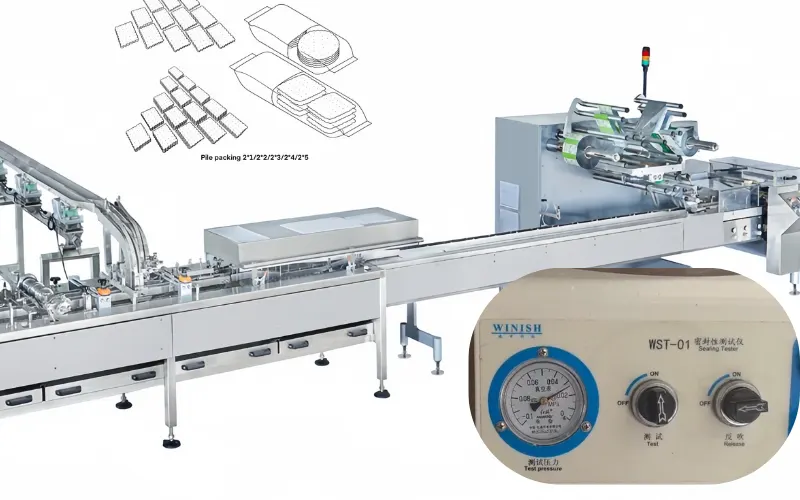
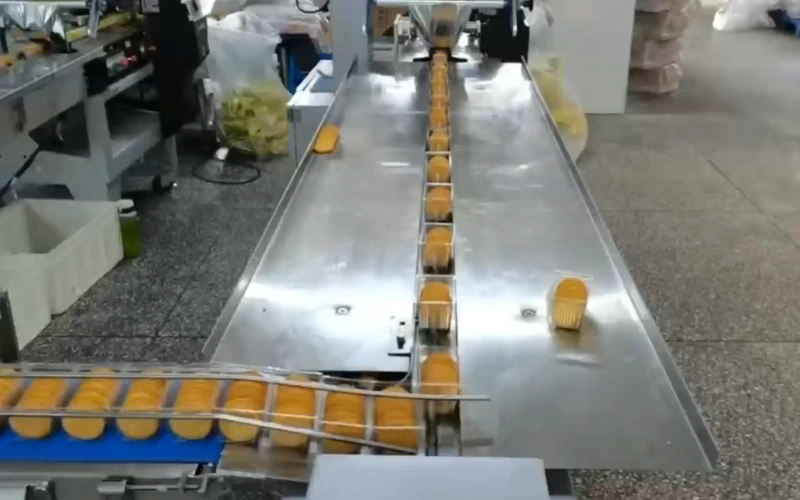
A biscuit star-wheel stacker is a production-line tool located immediately after the cooling conveyor. Its job is to organize individual biscuits into aligned "slugs" for primary packaging.
An ASRS is a warehouse-scale system. It automates the storage of finished cases or pallets of those packaged biscuits.
Q: How does a buffering system improve production line OEE?
Buffering systems act as a "surge tank" for your production flow. In biscuit manufacturing, the oven cannot be easily stopped without ruining the product.
If a downstream packaging machine fails, the buffer automatically stores the product flow for 15–30 minutes. This allows the oven to continue running while the issue is fixed.
Q: Can ASRS be integrated into an existing, older factory?
Yes, modern scalable systems like vertical storage rack systems are highly modular. They can be retrofitted into existing buildings with limited ceiling heights.
This maximizes space optimization without requiring a full rebuild. It is a cost-effective way to modernize legacy facilities.
Q: Is ASRS safe for fragile, secondary-packaged biscuits?
Absolutely, because robotic load-handling devices move with programmed acceleration and deceleration. This provides gentle product handling that protects your cartons.
Unlike manual forklifts, which can be "rough" during pallet retrieval, robots are precise. This significantly reduces the risk of crushing or impact damage.
7. Implementing Automated Stacking: ROI and Planning
Calculating the Return on Investment (ROI) for an integrated solution involves more than just reduced labor costs. You must look at the whole picture.
Waste Reduction: Accurate singulation and automated retrieval eliminate hidden losses. You no longer lose money on damaged products or expired stock.
Real-Time Traceability: In the event of a recall, an ASRS can identify and isolate specific batches in minutes. This protects your brand reputation and consumer safety.
Workforce Transformation: Shift your team from manual forklift driving to high-value WMS oversight. This improves morale and technical expertise within your facility.
8. Ready to Eliminate Your Warehouse Bottlenecks?
The transition from bulk flow to aligned streams is the secret to scaling your production. You can increase output without a proportional increase in costs.
At EVERSMART, we provide the end-to-end intralogistics solutions needed to bridge the gap. We help you move seamlessly from baking to shipping.
Take the Next Step Toward Efficiency
Request an Intralogistics Audit: Let our engineers map your current flow and identify "dead zones."
Calculate Your Vertical ROI: See exactly how much space you can reclaim with a high-density storage model.
Consult on Software Integration: Ensure your production line and warehouse speak the same language.
[BUTTON: CONTACT AN EVERSMART AUTOMATION EXPERT TODAY]

Ready to start your journey toward a customized solution? Contact me directly on WhatsApp to begin the conversation.