High-Speed Feeding Excellence: Eliminating Product Skips in Sandwich Biscuit Lines
In the relentless tempo of a modern food factory, the feeding stage serves as the primary gatekeeper of quality. For the Owner and Financial Manager, a single "skip"—a biscuit sandwich reaching the package without filling—is more than a minor error.
It represents a direct hit to your net profit and a significant risk to your brand's reputation. Transitioning from manual handling to an automated feeding system is now essential for shelf-life extension and maintaining product integrity.
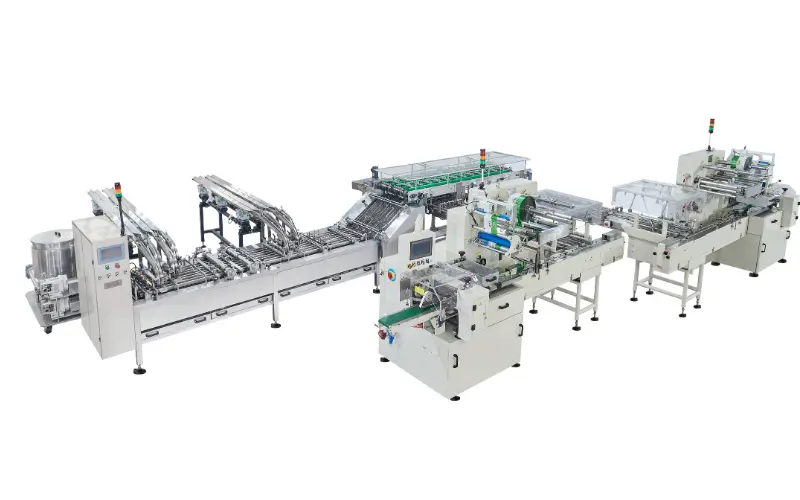
True production efficiency in 2026 requires a shift from basic mechanical timing to intelligent, servo-driven feeding systems. These systems must adapt to complex material variables in real-time to ensure seamless operation.
Key Takeaways for Global Stakeholders
For Owners: High-precision feeding is your primary defense against brand erosion caused by "no-fill" packaging reaching retail shelves.
For CFOs: Eliminating just 0.5% of "skips" and "overlaps" can save tens of thousands of dollars annually in wasted film and rejected dough.
For Engineering: Phase-matching technology and encoder system integration are the only ways to ensure millisecond-perfect synchronization at speeds exceeding 1,200 ppm.
For Maintenance: Sanitary quick-disconnect designs and tool-less manifolds slash sanitation downtime by 50%, keeping your production lines operational 24/7.
For Procurement: Adaptive systems allow for a much wider raw material tolerance. This reduces your dependency on ultra-expensive, high-purity ingredient suppliers.
1. Introduction to High-Speed Creamer Feeding Systems
The evolution of automation in food processing operations has moved far beyond simple belt conveyors. In previous decades, mechanical chain-driven feeders were the industry standard, but they suffered from significant timing "drift."
Modern, high-cadence dairy manufacturing and biscuit lines now rely exclusively on servo-driven feeders. These units provide the agility needed to handle rapid product changes and varied filling viscosities.
The Precision Gap: Skips and Overlaps
Skips: These occur when the depositor fails to fire or the feeder fails to present a biscuit. This leads to an empty package or a "shell-only" product that frustrates consumers.
Overlaps: These happen when two biscuits are fed into a single lug. This results in a physical jam in the horizontal positioning unit of your flow wrapper.
Both issues compromise your production efficiency significantly. They increase the Total Cost of Ownership (TCO) through constant material waste and frequent machine downtime.
Note: Feeding precision is the absolute foundation of your OEE score. If the feeder is inconsistent, every downstream machine—including the robotic case packer—will underperform.
2. Root Causes of Feeding Inconsistency: Why Errors Occur
Understanding why feeding errors occur requires a sophisticated, multi-disciplinary approach. It is rarely just a simple mechanical issue; it is often a failure to account for complex material dynamics.
Mechanical Timing and Phase Mismatch
For the Electrical Engineer, the ultimate nightmare of high-speed lines is "signal latency." Even a millisecond of lag in the conveyor systems can cause a biscuit to miss its window entirely.
Traditional mechanical linkages eventually wear down over time. This creates "play" or mechanical backlash that results in inconsistent product flow and timing errors.
Material Dynamics and Viscosity Control
One of the most frequent causes of feeding jams is the inconsistency of the filling material itself. Viscosity control and gum dispersion in the vacuum mixer directly affect how the cream behaves under high pressure.
Rheology: If the cream is too thick, it will not release from the nozzle cleanly. This leads to "tailing" and messy conveyor belts.
Aeration: Micro-bubbles in the cream cause "voids" in the manifold. This leads to inconsistent deposit weights and frequent "skips."
Environmental Variables
Factors such as water activity levels and pH control can change the "stickiness" of the cream instantly. In high-humidity environments, biscuits may stick to the magazine feeders, disrupting the continuous supply.
3. High-Performance Technologies for Error-Free Feeding
AI-Enhanced Phase-Matching Technology
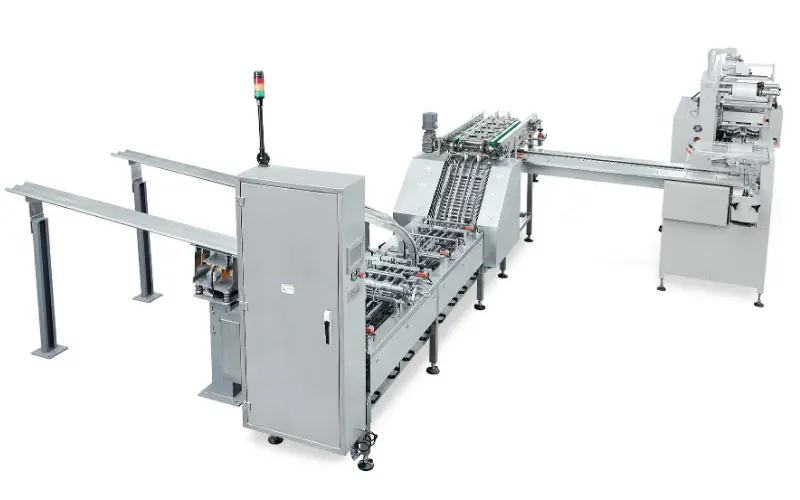
EVERSMART feeders utilize advanced phase-matching technology to achieve real-time synchronization. Using high-speed encoder system integration, the feeder continuously monitors the position of the packaging machine's flight lugs.
The system "predicts" the arrival of the next lug with extreme accuracy. It adjusts the servo-driven feeder speed instantly to match it perfectly, even during rapid production ramp-ups.
Vacuum High-Speed Disperser Systems
To ensure a bubble-free filling, we integrate vacuum high-speed disperser systems into our production lines. Removing entrapped air during the mixing phase ensures that every gram of filling is dense and consistent.
This is vital for maintaining the quality control standards required by international retailers. It also prevents the pressure fluctuations that lead to depositing errors.
3D Food Printing and Edible Structures
Advanced distribution systems now enable the creation of complex, multi-layered edible structures. This allows manufacturers to layer different viscosities—such as a liquid jam center inside a thick cream ring—at high speeds.
This capability offers a massive marketing advantage in a crowded snack market. It allows you to produce premium products that your competitors simply cannot replicate.
4. Engineering for Hygiene and Maintenance
In a dairy manufacturing or high-fat bakery environment, hygiene is a non-negotiable legal requirement. If a feeding system is difficult to clean, it becomes a severe liability for your food safety audit.
Microbial Activity Control and GMP
EVERSMART equipment is designed with Good Manufacturing Practices (GMPs) at its very core. We prioritize smooth surfaces and the elimination of "dead zones" where bacteria could thrive.
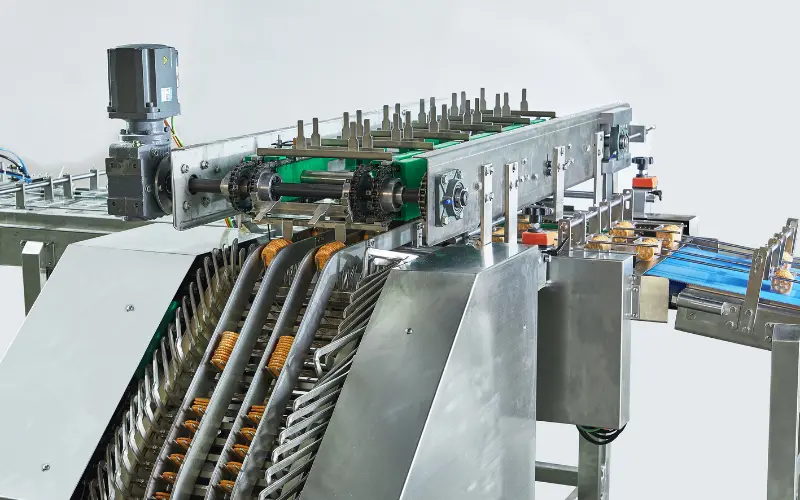
Hygienic Quick-Disconnect System: All manifolds and pump assemblies can be removed for Easy Cleaning (COP). This process requires zero tools and can be completed in minutes.
No-Dead-Zone Design: Our engineering eliminates areas where cream can stagnate. This ensures total microbial activity control and prevents cross-contamination between batches.
Tip: For the Maintenance Engineer, a "Tool-less" design is the fastest way to improve OEE. Reducing changeover and cleaning time directly increases the "Availability" score of your production line.
5. Selection Guide: Matching Feeder to Viscosity
Choosing the right feeder depends heavily on your material handling specs and the specific texture of your product. A mismatched system will lead to constant failures and high waste levels.
Liquid Filling & Bottling: This requires precision valves and strict pH control for stability. It is often used for liquid creamers or thin syrups.
High-Viscosity Pastes: These require heavy-duty industrial pistons and heated manifolds. Heat maintains the "flowability" of thick chocolate or peanut butter fillings.
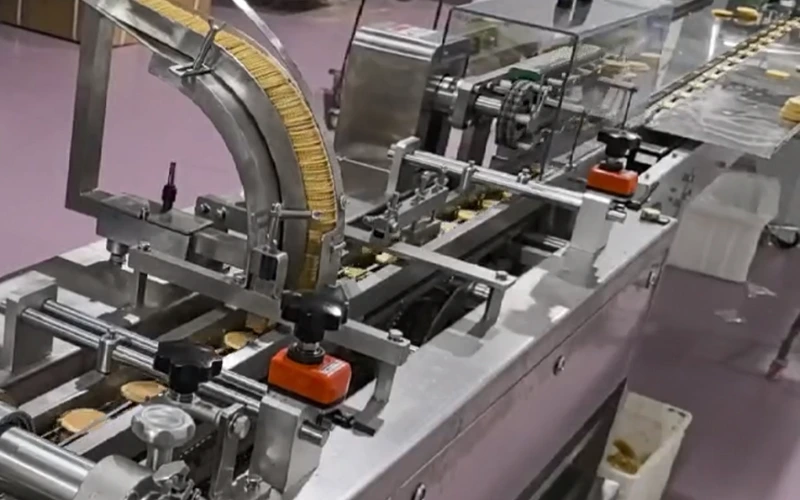
Fragile Biscuits: These require gravity feeding or specialized low-friction magazine feeders. This prevents edge-chipping during the horizontal positioning phase of the cycle.
6. People Also Ask: Expert Industrial Q&A
Q: How can I prevent the cream filling from "tailing" and making a mess on the conveyor?
This is primarily a viscosity control issue that requires a technical solution. Using an anti-tailing nozzle with a "suck-back" feature ensures the cream is pulled back into the tip instantly.
This feature is controlled by the servo-driven feeder for millisecond precision. It results in a clean break every time, keeping your line clean and sanitary.
Q: What happens if my cream batch viscosity changes halfway through the shift?
EVERSMART systems use dynamic viscosity compensation to handle this common issue. Sensors monitor the torque on the pump in real-time.
If the cream thickens, the PLC programming automatically increases the pressure. This maintains a consistent deposit weight without requiring the operator to stop the line.
Q: How do I sync a new creamer feeder with an older, legacy flow wrapper?
We utilize encoder system integration to bridge the technology gap. By mounting an external encoder to your legacy machine's main drive, we create a digital heartbeat.
Our integrated control architecture then "slaves" the new feeder to your old wrapper's speed. This allows you to bring modern precision to your existing production assets.
Q: Does air in the cream really cause "skips"?
Yes, because air pockets cause the manifold pressure to drop momentarily. This results in an incomplete or missing deposit at the nozzle.
Using a vacuum high-speed disperser during mixing is the only physical way to eliminate this problem. It ensures a dense, reliable filling for every single biscuit.
Q: What are the cleaning requirements for high-fat cream feeders?
Following Good Manufacturing Practices (GMP), these systems should undergo a full Clean-Out-of-Place (COP) regularly. Most plants perform this every 24 to 48 hours.
Our tool-less design allows your team to perform this deep clean in under 30 minutes. This ensures food safety without sacrificing your production efficiency.
7. Maximizing ROI and OEE through Precision
The ultimate goal of upgrading your ingredient handling and feeding system is to enhance Overall Equipment Effectiveness (OEE). By reducing microbial activity risks and minimizing rework, you protect your bottom line.
The "Zero-Skip" Financial Impact
Reduced Waste: Eliminating just one skip per minute on a 24/7 line saves over 500,000 biscuits per year. That is a massive amount of "recovered" profit.
Labor Displacement: Automated magazine feeders allow one operator to manage three lines instead of one. This effectively triples your labor productivity.
Brand Protection: Avoiding a single retail-level "empty-pack" complaint protects your long-term shelf presence. Retailers are far more likely to stick with reliable suppliers.
8. Ready to Eliminate Skips and Boost Your OEE?
Stop losing profit to inconsistent feeding and mechanical timing drift. At EVERSMART, we specialize in high-speed portioning and integrated control solutions for the global food industry.
Our engineers are ready to help you analyze your current line performance. We focus on finding the specific bottlenecks that are holding back your manufacturing productivity.
Request a Feeder Precision Audit: Let our engineers evaluate your current skip-rate and calculate your potential ROI.
Download the Rheology Guide: Learn how to manage cream viscosity for high-speed food processing operations.
Consult on System Integration: See how our feeders can sync perfectly with your existing packaging machinery.
[BUTTON: CONTACT AN EVERSMART PRECISION ENGINEER TODAY]

Ready to start your journey toward a customized solution? Contact me directly on WhatsApp to begin the conversation.