Food Packaging Machinery: Ultimate Engineer's Guide to Selection Based on Total Cost of Ownership
(Author: David Chen, Senior Automation Engineer | 16+ years of experience in F&B packaging line integration for multinationals like Nestlé and Mars.)
Executive Summary: The 3-Layer Architecture for Smart Investment
Food packaging machinery selection transcends basic functionality—it demands analysis of a three-layer technical architecture: the Mechanical Execution Layer, the Electrical Control Layer, and the Software Decision Layer. This guide provides engineering managers, financial controllers, and plant owners in bakeries and snack facilities with a complete framework to evaluate equipment through a Total Cost of Ownership lens.
We bridge the gap between technical specifications and business outcomes, offering actionable tools for procurement negotiation, risk mitigation, and future-proofing your packaging operations.
KEY STRATEGIC INSIGHTS
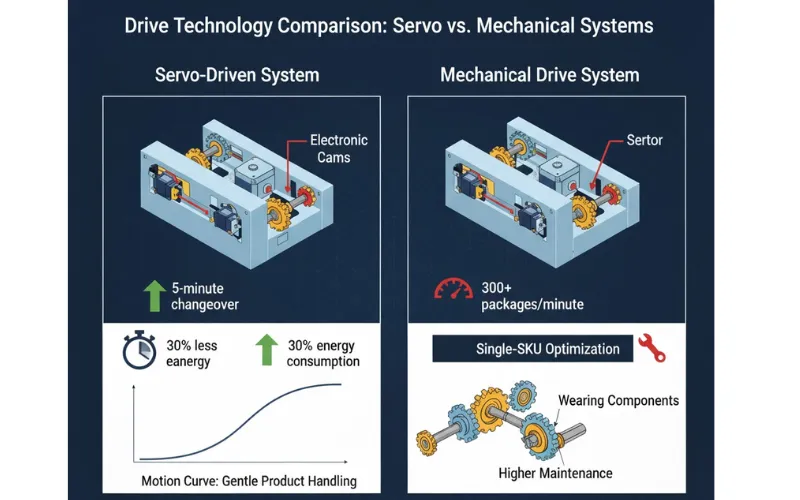
Drive Technology Defines Production Flexibility: All-servo systems with electronic cams enable 5-minute changeovers, while mechanical cams deliver superior stability for single-SKU production at 300+ packages/minute.
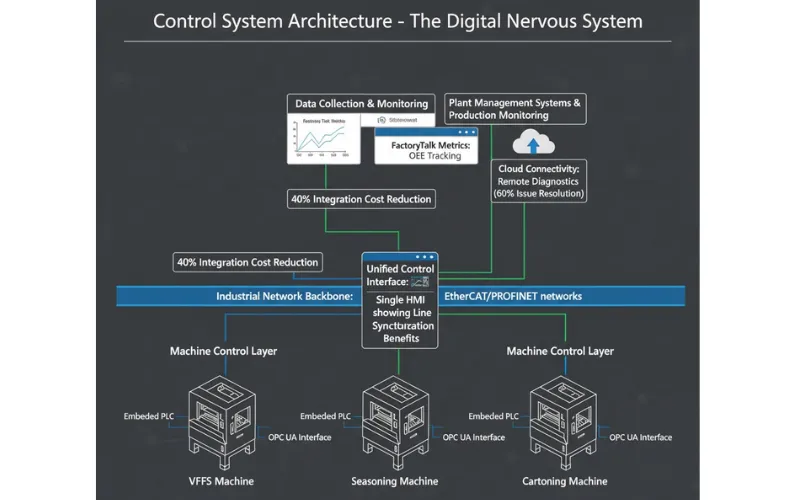
Control Architecture Determines Integration Cost: Equipment with EtherCAT/PROFINET networks and OPC UA interfaces reduces MES integration costs by 40% compared to proprietary systems.
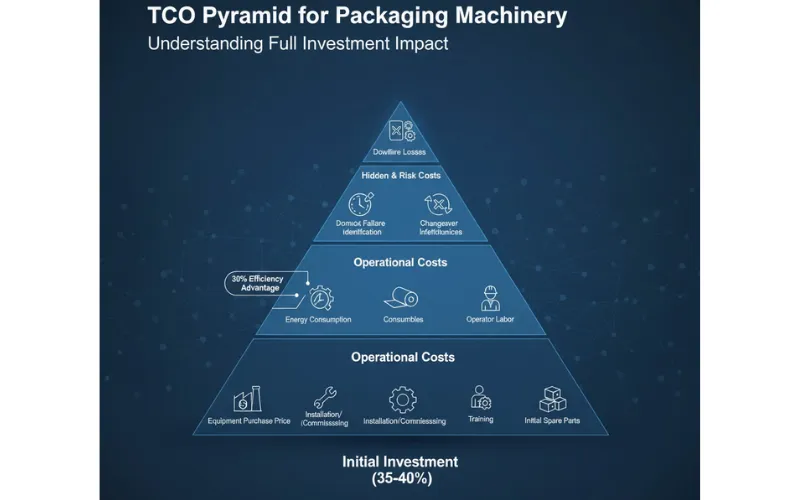
TCO Analysis Reveals True Investment Impact: Our framework quantifies how energy efficiency, maintenance planning, and operational uptime affect your 5-year equipment costs. A deep dive into this can be found in our guide to Understanding the Total Cost of Ownership for Packaging Machinery.
Risk Management Must Precede Procurement: Technical checklists and Factory Acceptance Tests identify 85% of potential operational failures before installation.
Sustainable Packaging Capability is Non-Negotiable: Mono-material compatibility and paper-based packaging handling are essential for 2025 regulatory compliance.
1. Technical Foundation: The Engineering Reality Behind Packaging Machinery
1.1 Drive System Selection: Precision vs. Speed vs. Cost
Servo-driven systems provide unparalleled flexibility for bakeries running multiple product lines. The customizable acceleration profiles prevent delicate wafers from cracking during high-speed transfers.
Note: Servo systems consume 30% less energy than mechanical drives during typical 16-hour production cycles, significantly impacting your operational budget.
Pneumatic systems offer cost-effective solutions for simple tasks like case ejection. Their simplicity, however, comes with higher long-term energy costs and limited precision control for fragile products.
Tip: Always request motion curve analysis from suppliers to verify gentle handling of your specific biscuit and cracker products.
1.2 Control Systems: Your Factory's Digital Nervous System
Modern packaging lines require distributed control architectures. Centralized PLCs create maintenance bottlenecks and severely limit future expansion capabilities.
Real-time industrial networks like EtherCAT enable seamless coordination between filling, wrapping, and cartoning stations. This is critical for eliminating production bottlenecks in complex cookie packaging lines.
1.3 Sensing Technology: Beyond Basic Detection
Advanced vision systems now perform quality inspection at full production speeds. They can detect broken crackers, verify package seal integrity, and ensure proper labeling alignment.
Laser measurement sensors maintain precise positioning, which is essential for the consistent packaging of variable-height bakery products.
2. Packaging Machinery Deep Dive: Baker-Specific Applications
2.1 Primary Packaging: Protecting Your Product Investment
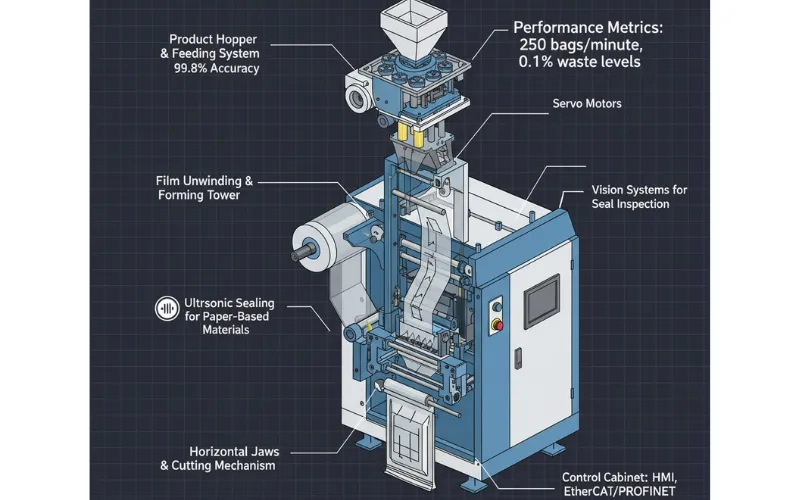
Vertical Form-Fill-Seal machines dominate flexible packaging for biscuits and snacks. Modern units can achieve 99.8% weighing accuracy, which is critical for cost control in high-volume production.
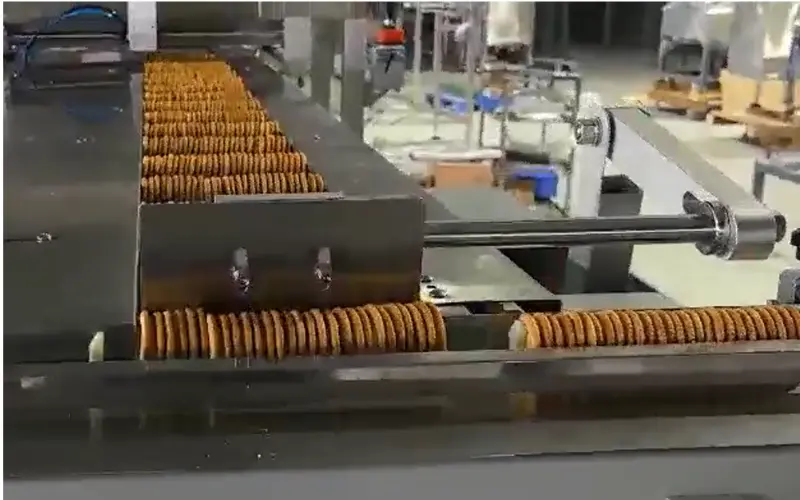
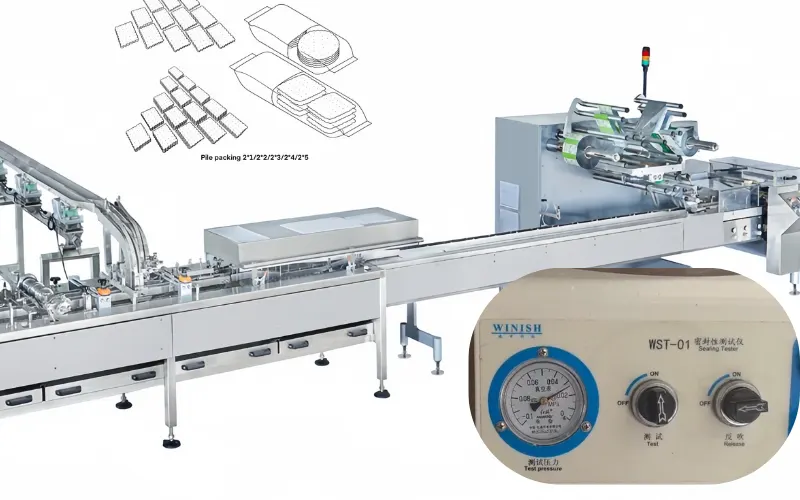
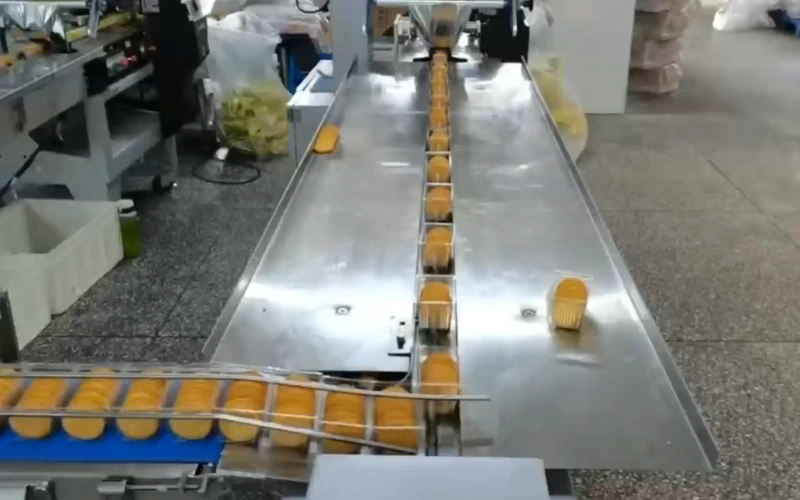
Horizontal Flow Wrappers excel at handling delicate wafers and stacked crackers. Their gentle product handling systems can reduce breakage to under 0.5% even at speeds of 400 packages/minute.
Note: For bakeries planning sustainable packaging transitions, ultrasonic sealing systems are essential. They maintain seal integrity with paper-based materials that challenge and often defeat conventional heat sealing methods. For more on this, explore the Latest Technological Innovations in Food Packaging Systems.
2.2 Secondary Packaging: Efficiency in Distribution
Robotic Pick-and-Place systems with specialized vacuum grippers gently handle fragile cookies without causing surface damage. Modern vision-guided robots can adapt to variations in product placement on the conveyor.
Automatic Cartoners are now engineered to process 30% lighter-weight board while maintaining structural integrity. This innovation directly reduces material costs without compromising product protection during shipping.
Tip: You must verify secondary equipment compatibility with your planned 2025 packaging materials during the Factory Acceptance Testing phase. This is a non-negotiable step in how to choose the right food packaging machine.
3. Total Cost of Ownership Framework: The Complete Financial Picture
3.1 Initial Investment Analysis
Move beyond the purchase price to include installation, training, and initial spare parts. These "hidden" costs often represent 25-40% of the total first-year capital outlay.
3.2 Operational Cost Drivers
Energy consumption varies dramatically between drive technologies. As noted, servo systems can reduce power costs by 30% or more compared to mechanical alternatives.
Maintenance planning should include both preventive schedules and predictive technologies that can forecast component failures before they cause catastrophic downtime. A robust strategy is detailed in our guide to Food Packaging Equipment Maintenance.
3.3 Lifetime Value Calculation
Equipment longevity and technology refresh cycles are critical for capital planning. High-quality packaging machinery should deliver 15+ years of reliable service with proper maintenance.
Financial Insight: A 20% higher initial investment in a well-engineered, reliable machine often yields a 200% greater lifetime value through reduced downtime, lower energy costs, and higher operational efficiency.
4. Implementation Strategy: From Selection to Operation
4.1 Technical Specification Development
Create a detailed User Requirements Specification (URS) that includes quantifiable targets for OEE, changeover time limits, and utility consumption ceilings. These form the contractual basis with your suppliers. For a complete guide, see our article on Essential Food Packaging Machinery Specifications.
4.2 Supplier Evaluation & Negotiation
Use a technical checklist to verify component quality, control system architecture, and service support capabilities. This simple step can prevent 80% of post-installation issues. Learn more in our guide on how to vet packaging machinery suppliers.
4.3 Factory Acceptance Testing (FAT)
Insist on testing with your actual products under simulated production conditions. This validates performance claims and identifies integration challenges before the equipment ever reaches your facility.
4.4 Operational Integration
Plan meticulously for staff training, maintenance documentation, and spare parts inventory. These elements are decisive in how quickly you achieve your target performance levels and see a return on your investment.
5. Future-Proofing Your Packaging Operation
5.1 Industry 4.0 Readiness
Your packaging equipment must provide data accessibility for production monitoring, quality tracking, and maintenance planning. Native OPC UA interfaces are the standard for enabling seamless MES integration and achieving peak industrial packaging machinery uptime and efficiency.
5.2 Sustainable Packaging Transition
Mono-material films and paper-based packaging require different handling characteristics. You must verify equipment compatibility with your company's planned sustainable packaging roadmap.
5.3 Regulatory Compliance
Upcoming extended producer responsibility (EPR) regulations will require detailed packaging material reporting. Ensure your equipment can provide this data automatically to avoid future compliance issues.
FREQUENTLY ASKED QUESTIONS
What specific features should biscuit factories prioritize in packaging equipment?Focus on gentle product handling to prevent breakage, high-speed capabilities for volume production, and quick changeover systems for multiple product lines. Precision weighing accuracy within ±0.2 grams is essential for cost control.
How do we calculate ROI for packaging automation in our wafer factory?Factor in labor reduction, material waste decrease, energy savings, and quality improvement. Most bakeries achieve 18-24 month payback periods through these combined efficiencies.
What's the realistic lifespan for modern packaging machinery?Well-maintained equipment should deliver 15+ years of service. Critical components like servos and PLCs may require upgrading after 8-10 years to maintain peak performance.
How important is remote diagnostics capability?It is extremely valuable. Remote support can resolve up to 60% of technical issues without requiring a service visit, dramatically reducing downtime and maintenance costs.
What training should we require from equipment suppliers?Demand comprehensive programs covering operation, maintenance, and troubleshooting. Always include "train-the-trainer" sessions to build internal expertise for long-term sustainability.
PROFESSIONAL CONSULTATION & NEXT STEPS
Our packaging engineering team provides specialized support for bakery and snack operations. We are not just consultants; we are integration specialists.
Technical Specification Review - We evaluate supplier proposals to identify technical risks and configuration gaps.
Total Cost of Ownership Modeling - Our detailed financial analysis quantifies the long-term investment impact.
Factory Acceptance Test Supervision - We act as your technical representative to ensure performance validation.
Operational Integration Planning - We help design implementation roadmaps for smooth production transitions.
Contact us for a packaging line assessment tailored to your bakery's specific products and production requirements. We'll help you navigate the complex landscape of packaging technology—from a single machine to a fully integrated system—to make strategic investments that deliver lasting competitive advantage. For a broader overview, start with our comprehensive manufacturer comparison.

Ready to start your journey toward a customized solution? Contact me directly on WhatsApp to begin the conversation.