Top 10 Food Packaging Machinery Manufacturers: The 2025 Engineer's Guide to Selection Based on Total
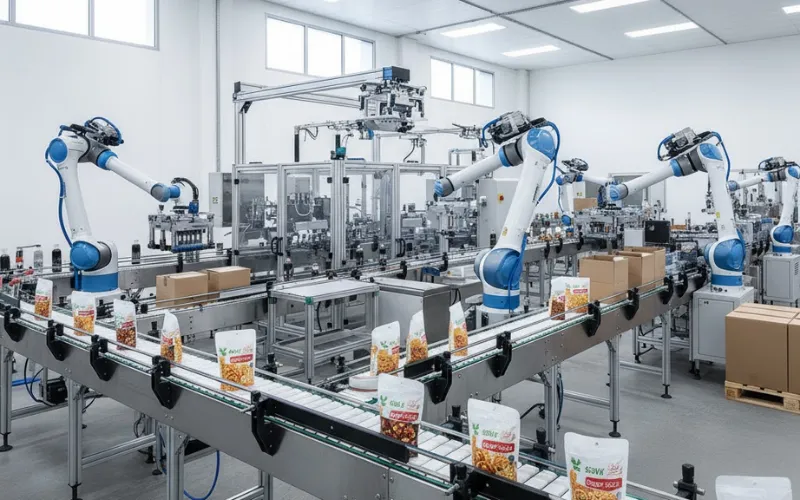
(Author: David Chen, Senior Automation Engineer | 16+ years of experience in F&B packaging line integration for multinationals like Nestlé and Mars.)
Introduction
Navigating the global market of food packaging machinery manufacturers requires understanding both technical specifications and long-term operational costs. The International Society of Automation projects that companies implementing comprehensive TCO analysis for packaging equipment will achieve 30-40% lower operational costs over the 2025-2030 period compared to those focusing solely on initial purchase price.
This 2025 analysis provides an engineer's perspective on evaluating packaging machinery through the lens of Total Cost of Ownership (TCO), helping procurement managers and plant engineers make strategically sound investments that balance performance with lifetime operational expenses.
Key Takeaways
2025 TCO Priorities: Beyond initial investment, the focus must be on energy efficiency compliance with new EU Ecodesign Directive 2025 standards and the integration of predictive maintenance capabilities.
AI Integration: Leading manufacturers now embed AI-driven optimization for changeover times and material waste reduction, demonstrably achieving 15-20% operational improvements.
Sustainability Mandates: Modern equipment must be engineered to accommodate the 2025 EU Packaging and Packaging Waste Regulation requirements, supporting fully recyclable and reusable packaging formats.
Digital Thread: The implementation of ISO 23247-based digital twin technology across packaging lines is becoming standard, enabling real-time TCO monitoring and process optimization. Prioritize equipment with open data protocols like OPC UA and adaptable control systems.
Supply Chain Resilience: In the post-pandemic landscape, manufacturers that prioritize localized spare parts networks and robust multi-sourcing strategies are showing up to 30% higher equipment availability.
1. Packaging Types: Translating 2025 Business Needs into Technical Specs
The European Packaging Institute forecasts that by 2025, 65% of all packaging machinery will require native compatibility with monomaterial structures to meet ambitious circular economy targets. Understanding these evolving technical requirements is absolutely crucial for designing sustainable and future-proof packaging lines.
1.1. Primary Packaging: Adapting to 2025 Material Challenges
Primary packaging systems are on the front line, now needing to address both stringent performance requirements and the complex 2025 sustainability mandates.
Powders & Granules: Today's advanced systems can achieve 99.8% filling accuracy. This is accomplished through AI-compensated weighers that automatically adjust for subtle variations in material density, effectively reducing product giveaway by 3-5% annually.
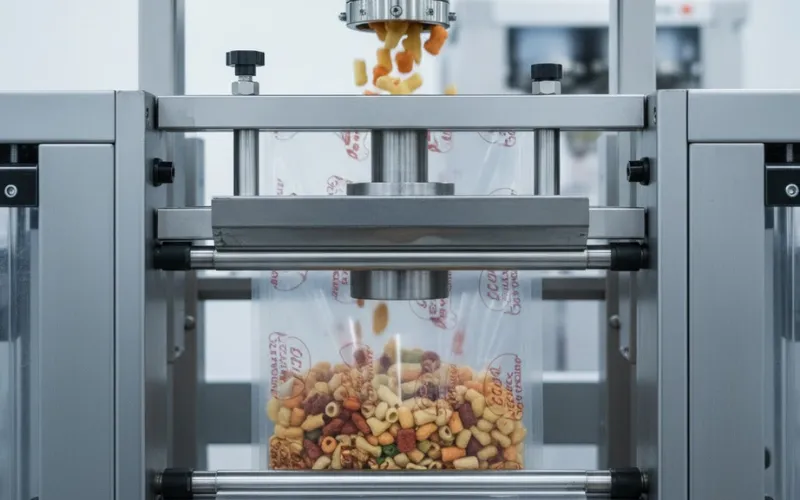
Liquids & Sauces: The latest filling systems incorporate vision-guided robotics. These systems achieve an impressive ±0.5% volume accuracy while adeptly handling the increased viscosity variations found in new bio-based materials.
Note: The 2025 packaging landscape demands equipment that is dual-compatible, seamlessly handling both traditional plastics and emerging sustainable materials. This necessitates highly flexible sealing and product handling systems.
Sustainable Materials: Ultrasonic sealing systems are a game-changer. They now achieve consistently strong and reliable seals with challenging paper-based composites and monomaterial films, successfully overcoming the 15-20% lower seal strength traditionally associated with these eco-friendly materials. This is part of a larger trend. Explore the Latest Technological Innovations in Food Packaging Systems to future-proof your investment.
1.2. Secondary Packaging: Meeting 2025 Efficiency Demands
Secondary packaging systems must now strike a difficult balance: meeting ever-increasing speed requirements while simultaneously supporting initiatives for reduced material consumption.
Automatic Cartoning: Modern cartoning systems can achieve 98% reliability even when running 30% lighter-weight paperboards. This capability significantly reduces material costs without compromising the structural integrity and protection of the final product.
Robotic Pick-and-Place: Advanced pick-and-place systems now incorporate machine learning algorithms. These algorithms optimize grip force and trajectory in real-time, leading to a 25% reduction in product damage compared to 2023 models.
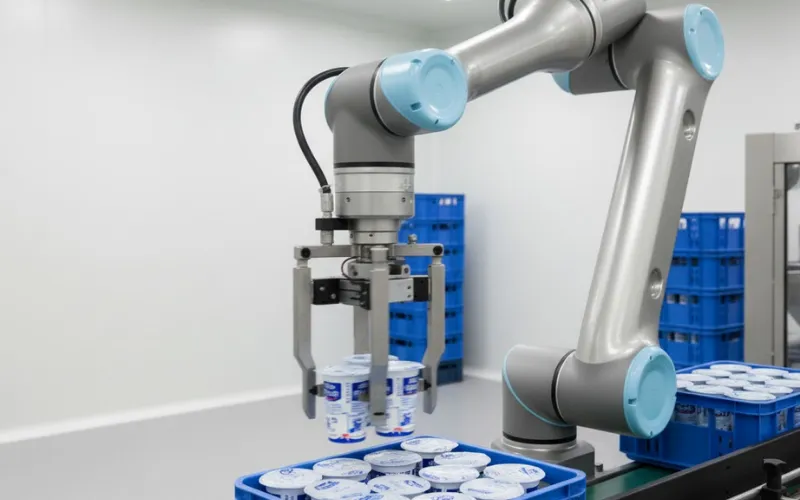
Tip: When evaluating any secondary packaging equipment, always verify its compatibility with your entire planned 2025 packaging portfolio. This includes any lightweighting or material substitution initiatives you plan to implement.
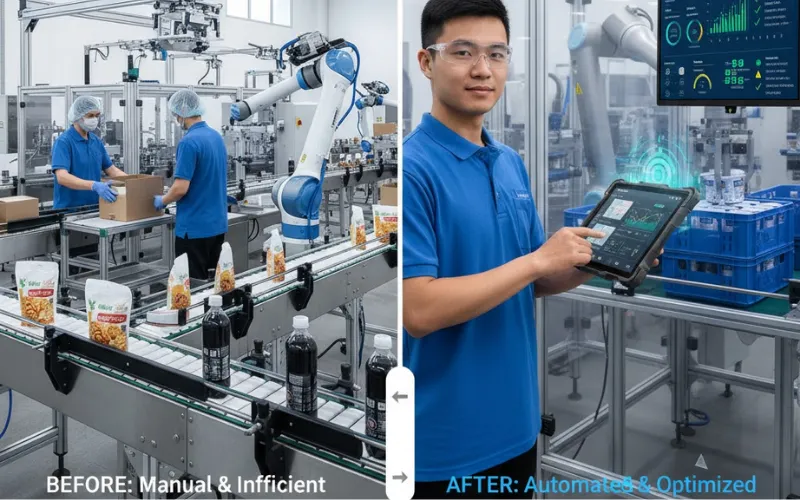
2. Analyzing the Top 10 Global Manufacturers for 2025 Performance
We evaluate these leading manufacturers not on marketing claims, but on their demonstrated readiness for 2025 industry challenges and their concrete TCO performance metrics.
Rank | Manufacturer | 2025 Core Competency & TCO Advantage | Strategic Alignment |
|---|---|---|---|
1 | EverSmart | AI-Optimized Flexibility: Integrates Siemens AI-assisted controls with modular mechanics, achieving 30% faster changeovers while maintaining price competitiveness. | Companies requiring rapid adaptation to changing packaging formats and emerging sustainable materials.Excel in customized automatic solution. |
2 | Syntegon | Predictive Operations Platform: Implements cloud-based analytics that reduce unplanned downtime by 40% through component failure prediction 30 days in advance. | Large-scale operations where absolute production continuity is critical to overall business performance. |
3 | Tetra Pak / SIG | Circular Economy Integration: Offers certified carbon-neutral packaging lines with 95% material recyclability and 40% reduced energy consumption versus 2022 benchmarks. | Organizations with firmly committed 2025 sustainability targets and comprehensive circular economy mandates. |
4 | KHS | Hydrogen-Ready Systems: Implements future-proof energy systems fully compatible with hydrogen blending, reducing carbon emissions by 25% while maintaining best-in-class speed. | Beverage companies actively transitioning their manufacturing facilities to renewable energy sources. |
5 | IMA Group | Pharmaceutical-Grade Precision: Delivers 99.95% accuracy in filling and sealing for highly regulated products, mitigating compliance risks in evolving regulatory landscapes. | Companies in pharma, medical devices, and premium food segments requiring absolute, verifiable precision. |
6 | Fuji Machinery | Extended Lifecycle Platform: Implements a 20-year design life with guaranteed spare parts availability, significantly reducing long-term operational risks and supporting asset depreciation strategies. | Organizations prioritizing equipment longevity and highly predictable maintenance costs over 15+ year horizons. |
7 | Yamato Scale | Material Intelligence Systems: Employs AI-powered compensation for sustainable material variations, maintaining weighing accuracy within 0.1% despite inconsistent material characteristics. | Companies transitioning to alternative materials who cannot afford to compromise on portion control accuracy. |
8 | ProMach | North American Digital Network: Implements real-time remote diagnostics across its vast brand portfolio, achieving a 4-hour average response time for critical production issues. | US and Canadian operations requiring fully integrated solutions with robust, localized support infrastructure. |
9 | Coesia | Lights-Out Automation: Delivers 95% unmanned operation capabilities with sophisticated remote monitoring, directly addressing 2025 labor availability challenges in developed markets. | Manufacturers located in high-cost labor markets who are implementing strategic workforce reduction initiatives. |
10 | MULTIVAC | Carbon-Neutral Thermoforming: Implements all-electric thermoforming with 60% energy recovery, achieving carbon-neutral operation when integrated with renewable energy sources. | Companies with aggressive Scope 1 and 2 emission reduction targets that rely on energy-intensive packaging processes. |
Tip: When discussing requirements with manufacturers, always inquire about their 2025 technology roadmap. Ask specifically how they are preparing for emerging regulations like extended producer responsibility (EPR) schemes.
3. The 2025 TCO Evaluation Framework: Five Critical Dimensions
This updated framework incorporates 2025-specific considerations, providing a comprehensive tool for rigorous supplier assessment.
3.1. Drive & Control: Intelligence and Adaptability
Modern packaging lines require more than just precision; they demand the ability to learn and adapt to constantly changing conditions.
AI-Enhanced Servo Systems: Next-generation servos now incorporate edge computing capabilities. These systems optimize motion profiles in real-time based on material behavior, reducing energy consumption by 15% while maintaining speed.
Cybersecurity Protocols: With the rise of increased connectivity, IEC 62443-4-1 certification has become an essential baseline for control systems to prevent costly production disruptions from cyber threats.
Note: The industry's transition to all-electric systems is accelerating. 2025 projections show that 70% of new installations will be fully electric, moving away from older, less efficient hybrid configurations.
3.2. Hygienic Design: Beyond Cleanability
Modern hygienic design has evolved. It now encompasses both traditional cleaning efficiency and a critical focus on reducing environmental impact.
Water & Chemical Reduction: Advanced systems now incorporate clean-in-place (CIP) technology that is proven to reduce water consumption by 40% and chemical usage by 35% compared to 2022 designs.
Microbial Prevention: New surface treatments that incorporate antimicrobial properties can demonstrate a 99.9% reduction in pathogen viability between standard cleaning cycles. For a complete guide on maintaining these standards, see our article on Food Packaging Equipment Maintenance.
Tip: Evaluate all equipment using the latest EHEDG Type EL Class I guidelines. These guidelines specifically address energy-efficient hygienic design for full 2025 compliance. You can find them at the official EHEDG website.
3.3. Data, IIoT, and Sustainability Integration
The convergence of operational data (IIoT) and sustainability metrics is creating powerful new opportunities for optimization.
Carbon Accounting Integration: Modern IIoT platforms can now automatically calculate Scope 1 and 2 emissions based on real-time energy consumption, directly supporting mandatory regulatory reporting requirements. Understanding and tracking your OEE is critical. Learn how to calculate and improve it in our dedicated guide, Understanding OEE for Packaging Lines.
Circularity Monitoring: Advanced systems can track material usage efficiency and waste generation with high precision, providing the granular data needed for circular economy performance reporting.
Note: The implementation of ISO 23247-based digital twins enables the simulation of operational changes before they are implemented on the factory floor. This technology is proven to reduce validation and commissioning time by up to 60%.
3.4. Future-Proofing for Regulatory Compliance
2025 introduces significant regulatory changes that new equipment must accommodate without requiring major future modifications.
Extended Producer Responsibility (EPR): Systems must have the native ability to track and report packaging material usage by type and weight. This is essential to comply with emerging EPR schemes across multiple jurisdictions.
Digital Product Passports (DPP): Equipment should be capable of generating the necessary data for upcoming EU DPP requirements. This includes critical information like material composition and recyclability codes.
3.5. Technical Documentation and 2025 Skills Development
As packaging systems become exponentially more complex, a comprehensive knowledge transfer strategy becomes critical for long-term operational success.
Augmented Reality (AR) Documentation: Leading manufacturers now provide AR-assisted maintenance instructions. This technology has been shown to reduce average repair time by 45% and lower the required skill level for technicians by 30%.
Cybersecurity Training: A comprehensive training program is no longer optional. It must include cybersecurity protocols to protect connected packaging lines from the full spectrum of emerging threats.
Tip: Require suppliers to demonstrate their training programs. Ensure they specifically address the advanced skills needed to operate and maintain their 2025 technology implementations. For a ready-to-use checklist to ensure you get everything you need, use our Factory Acceptance Test (FAT) Checklist.
4. 2025 Frequently Asked Questions (FAQ)
How are equipment financing models evolving for 2025?For 2025 projects, we're seeing a significant shift toward performance-based contracts. In these models, payments are partially tied to achieved OEE, energy efficiency, and sustainability metrics. This innovative approach aligns supplier incentives with buyer operational targets and reduces the financial risk associated with technology transitions. Our detailed guide on How to Choose the Right Food Packaging Machine provides a step-by-step framework for this process.
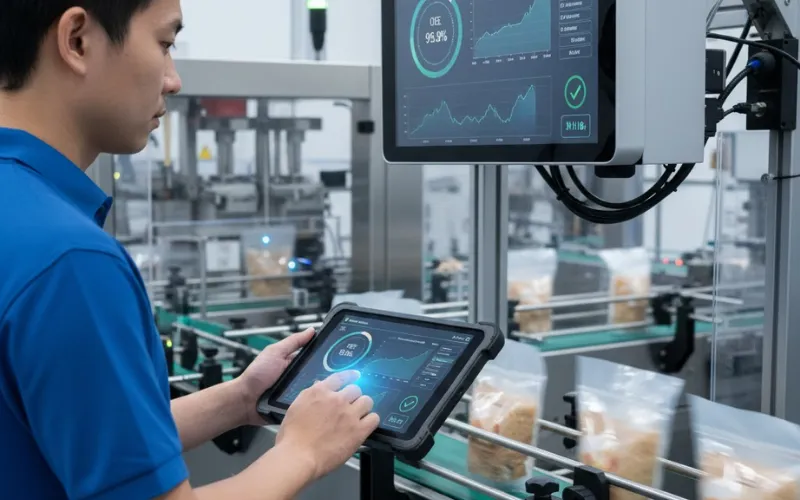
What cybersecurity certifications should we require for 2025 installations?The baseline requirements have been standardized. IEC 62443-4-1 certification for component suppliers and IEC 62443-2-4 for system integrators are now considered mandatory. Additionally, always require documentation of their regular penetration testing and security patch management processes.
How do we calculate ROI for sustainability features in 2025?To calculate a true ROI in 2025, you must look beyond energy savings. Your calculation should factor in carbon credit values, potential regulatory penalties avoided, brand value enhancement, and material efficiency gains. Leading companies are achieving a 20-30% ROI on sustainability investments when all of these factors are accurately considered. These metrics are key components of a Total Cost of Ownership analysis. Our deep dive into TCO explains how to use them effectively.
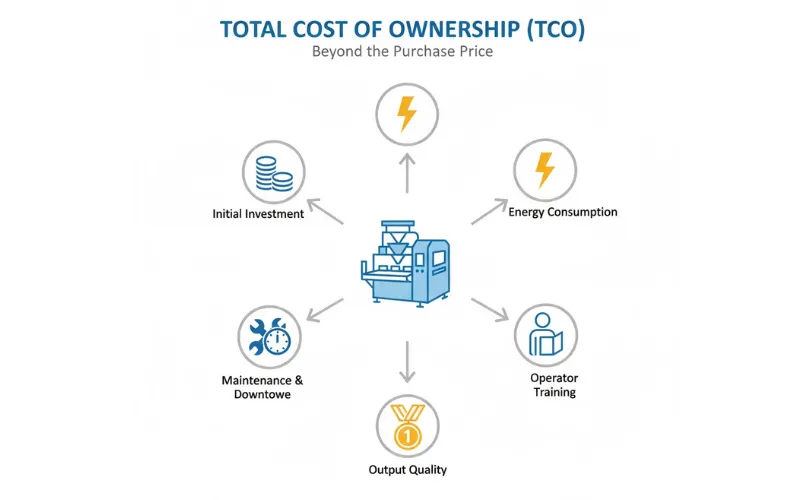
What workforce skills should we develop for 2025 packaging operations?The focus should be on developing skills in data analytics, IIoT system management, predictive maintenance techniques, and sustainability reporting. The required skillset is fundamentally shifting away from purely mechanical troubleshooting toward system optimization and data-driven decision making.
How are warranty and service terms changing for 2025?For 2025, we're seeing the extension of standard warranties to 3-5 years, now with the inclusion of software and cybersecurity coverage. Furthermore, services like remote diagnostics and predictive maintenance are rapidly becoming standard inclusions rather than premium add-on options.
Professional Consultation & 2025 Planning
Selecting packaging machinery for 2025 operations requires a delicate balance between traditional performance metrics and emerging sustainability, digitalization, and regulatory considerations.
Our team provides specialized analysis of how 2025 regulatory changes impact equipment selection criteria, helps develop implementation roadmaps for technology adoption, and creates detailed TCO models that incorporate carbon pricing and circular economy metrics.
Contact us to schedule a 2025 packaging technology assessment and develop your strategic equipment investment plan. This article is part of our comprehensive resource center on food packaging machinery. Continue your research with our detailed guides on packaging line optimization and industrial packaging machinery maintenance.

Ready to start your journey toward a customized solution? Contact me directly on WhatsApp to begin the conversation.