Manual vs. Automatic Biscuit Sandwiching: A Strategic Cost Analysis for Financial Decision-Makers
Author: EverSmart Engineering Team | Date: September 11, 2025
Executive Summary
For procurement managers, financial controllers, and biscuit factory owners, the choice between manual labor and automated production is a fundamental strategic decision with profound financial implications. While manual assembly presents a low initial cost, a rigorous Total Cost of Ownership (TCO) analysis reveals a different story. According to a market analysis by Dataintelo, the
This definitive analysis moves beyond superficial price comparisons to provide a data-driven framework for evaluating the true financial impact of investing in an automatic sandwiching machine. We will quantify the often-overlooked expenses of manual production, model the return on investment (ROI) of sandwich automation, and provide the insights necessary to justify a capital expenditure that enhances profitability and competitive advantage.
The Hidden Cost Structure of Manual Sandwiching
Many manufacturers evaluate automation based solely on the purchase price of an automatic sandwich maker, overlooking the significant and recurring expenses embedded in their current manual operations. A true financial analysis must account for all direct and indirect costs.
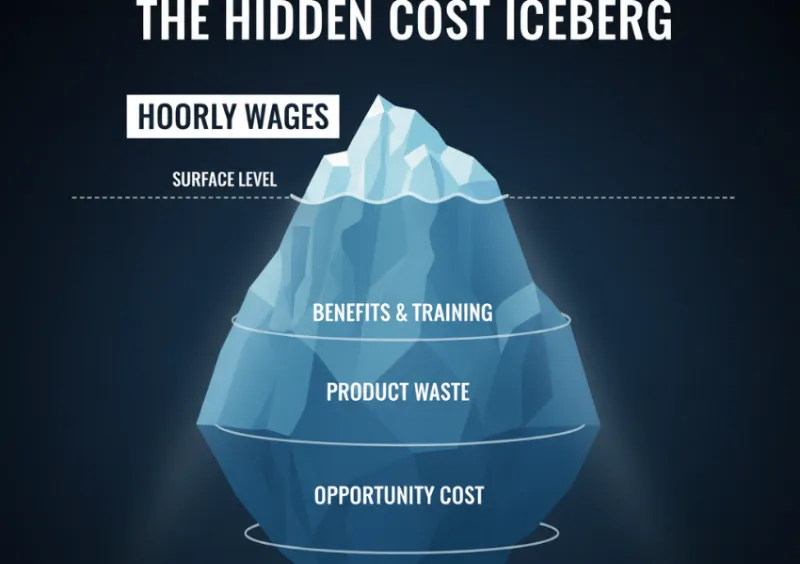
1. Direct Labor Costs: The Visible Iceberg
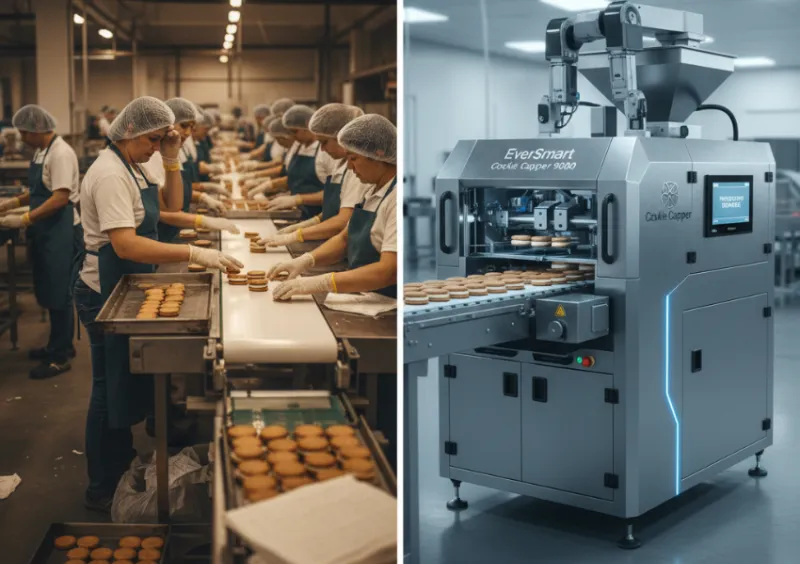
Manual biscuit sandwiching is intensely labor-dependent. A single production line often requires 4-6 employees per shift solely for assembly, leading to substantial annual expenditures.
Calculation Example: (5 Employees × €15/hour × 8 hours/shift × 2 shifts/day × 240 operating days) = €288,000 in annual wages. This figure excludes benefits, training, absenteeism, and overtime, which can inflate the cost by 25-40%.
2. Quality Inconsistency and Product Waste
Human error is inevitable. Manual processes consistently suffer from:
Variable Filling Weight: Leading to product giveaways or underfills that disappoint consumers.
Misalignment and Breakage: Resulting in a high rejection rate. A conservative estimate of a 8-12% rejection rate translates to tens of thousands of euros in wasted raw materials and lost product annually.
3. Scalability Constraints and Opportunity Cost
Manual production creates a hard cap on output. Accepting a large new order or scaling production to meet seasonal demand requires hiring and training new staff—a slow and costly process. The inability to scale quickly results in lost revenue opportunities and inhibits growth.
4. Hygiene, Safety, and Compliance Risks
Manual handling increases the risk of product contamination. Furthermore, repetitive strain injuries among staff lead to lost productivity, rising insurance premiums, and potential regulatory non-compliance fines.
Table 1: The Hidden Annual Costs of Manual Sandwiching (Estimated)
| Cost Factor | Low Estimate (€) | High Estimate (€) | Impact |
| Direct Labor & Benefits | 288,000 | 400,000 | Largest recurring expense |
| Product Waste (10% Rejection) | 50,000 | 100,000 | Direct loss of materials & potential revenue |
| Opportunity Cost (Inability to Scale) | 50,000 | 200,000 | Lost sales and market share |
| Total Annual Cost | 388,000 | 700,000 | A significant, recurring financial drain |
The Automated Advantage: Investment vs. Total Cost of Ownership
Investing in an automatic sandwich making machine shifts costs from variable, unpredictable operational expenses to a fixed, predictable capital investment. The key metric for comparison is not initial price, but Total Cost of Ownership (TCO) over a 5-7 year horizon. For more information on our solutions, you can explore our dedicated page on the
Breaking Down the Automation Investment:
Capital Expenditure (CapEx): The upfront cost of the automatic sandwiching machine for sale.
Operational Expenditure (OpEx): Energy consumption, preventative maintenance, and spare parts (typically 1-3% of CapEx annually).
The Financial Benefits of an Automated Sandwich Production Line:
Drastic Labor Reduction: An automatic sandwich machine can perform the work of multiple operators, often reducing line staffing needs from 5-6 people to 1 supervisor, slashing the largest cost center.
Near-Zero Waste: Precision automatic sandwiching ensures filling accuracy (±1%) and perfect alignment, reducing rejection rates to below 1%.
Increased Output Revenue: Machines operate at consistent speeds 24/7, typically increasing production capacity by 50-150%, enabling revenue growth.
Enhanced Quality and Brand Value: Consistent, high-quality products strengthen brand reputation and allow for premium pricing.
Improved Safety and Compliance: Reduced human contact minimizes contamination risks and workplace injuries.
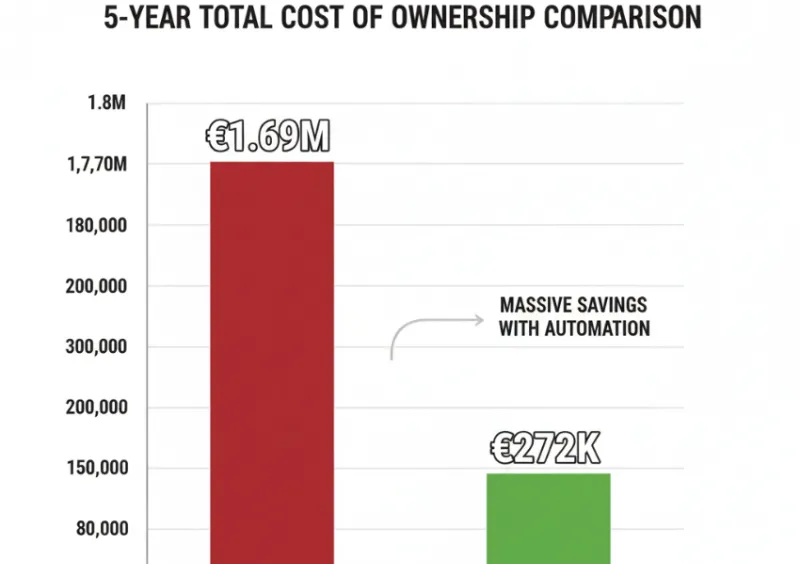
Table 2: 5-Year Total Cost of Ownership Comparison
| Cost Factor | Manual Production (5Y) | Automatic Production (5Y) | Notes |
| Labor Costs | €1,440,000 | €75,000 | Based on 5 vs. 1 operator |
| Product Waste | €250,000 | €25,000 | 10% vs. 1% rejection rate |
| Machine Investment | €0 | €150,000 | Average cost of a robust system |
| Maintenance & Energy | €0 | €22,500 | 1.5% of CapEx per year |
| Total 5-Year Cost | €1,690,000 | €272,500 | |
| Net Savings with Automation | €1,417,500 | ROI Period: Often under 12 months |
Key Factors for ROI Calculation and Machine Selection
Calculating Your Specific ROI:
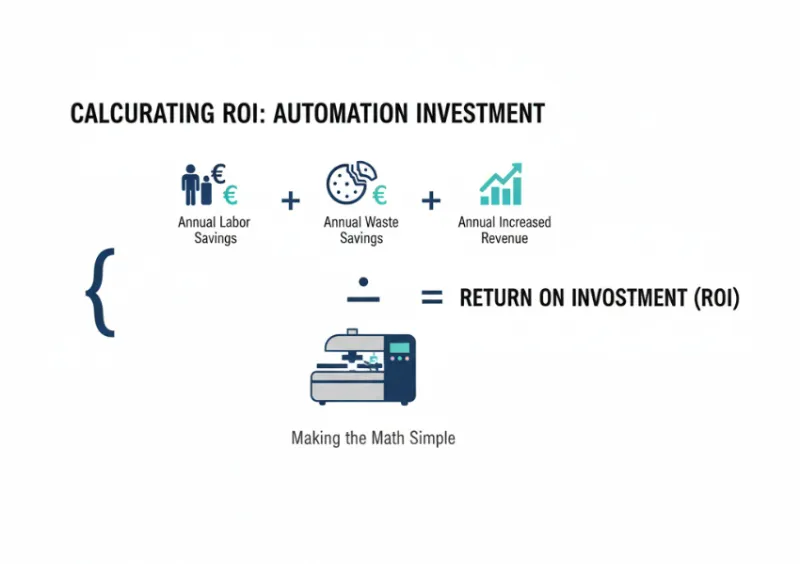
Use this simple formula to forecast your ROI:
(Annual Labor Savings + Annual Waste Savings + Annual Increased Revenue) - Annual Operational Cost = Annual Net Savings
(Machine Investment / Annual Net Savings) = Payback Period (in years)
Choosing the Right Automatic Sandwich Machine:
When evaluating an automatic sandwiching machine for sale, consider:
Production Capacity: Does the machine's speed align with your current and future goals?
Versatility: Can it handle different biscuit shapes, sizes, and filling types? Some advanced models integrate with automatic sandwich wrapping systems.
Ease of Operation: Look for user-friendly interfaces and easy-to-clean designs.
After-Sales Support: Ensure the manufacturer provides excellent technical support, training, and readily available spare parts.
Frequently Asked Questions (FAQs)
1. What is the typical ROI for an automatic sandwiching machine?The return on investment (ROI) for an automatic sandwiching machine varies based on a factory’s current labor costs, production volume, and product specifications. However, most manufacturers report a payback period of 12 to 24 months due to significant savings in labor, reduced material waste, and increased output. The higher the volume, the faster the ROI.
2. How difficult is it to maintain an automated sandwich production line?Modern automated sandwich production lines are designed for minimal maintenance. They are built with durable, hygienic materials like stainless steel and feature user-friendly interfaces for routine operations. Your maintenance staff will need basic training, but the long-term maintenance costs are predictable and far less than the overhead of managing a large manual workforce.
3. Can an automatic sandwich maker handle different biscuit sizes and shapes?Yes, most high-quality automatic sandwich makers offer a high degree of flexibility. They can be configured to handle various biscuit shapes (round, square, rectangular), sizes, and even different types of fillings. This versatility is a key advantage, allowing you to diversify your product line without major equipment changes.
4. What about food safety? Is an automatic sandwich machine more hygienic?Absolutely. An automatic sandwich machine significantly reduces human contact with the product, a primary source of contamination. The enclosed, stainless steel design and easy-to-clean components ensure compliance with the strictest food safety regulations (e.g., HACCP, GFSI), protecting your brand from potential risks and costly recalls.
5. How does a machine compare to manual labor in terms of output?An entry-level automatic sandwiching machine can produce hundreds of sandwiches per minute, a capacity that is virtually impossible to achieve with manual labor. This allows for round-the-clock production, ensuring you can meet high market demand and take on larger contracts that would be unfeasible with a manual process.
6. Are there options for an automatic sandwich wrapping machine?Yes, advanced sandwich automation systems can be integrated with downstream equipment, including an automatic sandwich wrapping machine. This creates a complete, end-to-end production line that handles everything from biscuit feeding to final packaging, maximizing efficiency and minimizing labor from start to finish.
Case Study: The Sweet Success of Baker's Delight
Baker's Delight, a mid-sized biscuit manufacturer, struggled with inconsistent product quality and rising labor costs. Their manual sandwiching process was labor-intensive, leading to significant product waste due to uneven cream distribution and misaligned biscuits. Production capacity was capped at 200,000 sandwiches per day, limiting their ability to expand into new markets.
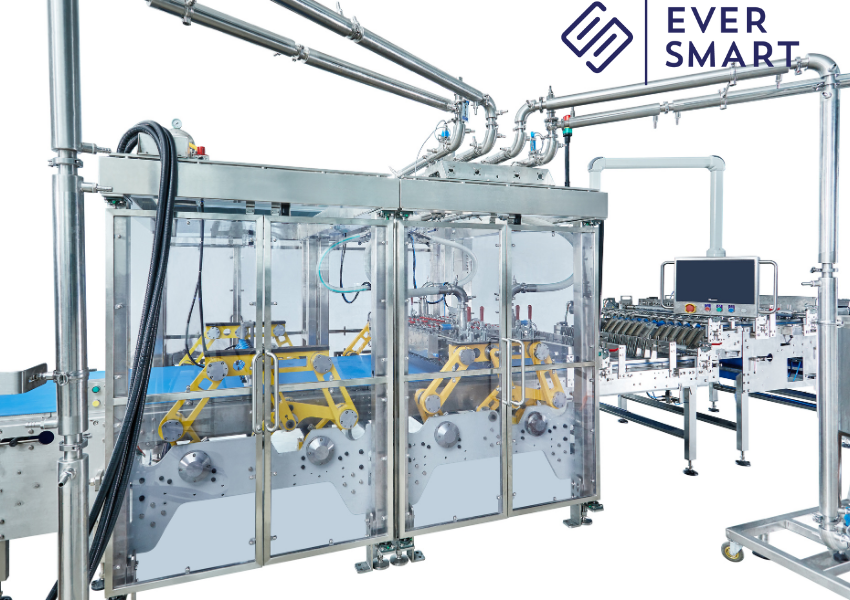
The Solution:After a detailed cost analysis, Baker's Delight invested in an EverSmart automated sandwich production line. The procurement manager prioritized a machine with a proven track record for precision, hygienic design, and a strong after-sales service. The installation was seamless, and their team was fully trained within a few days.
The Results:
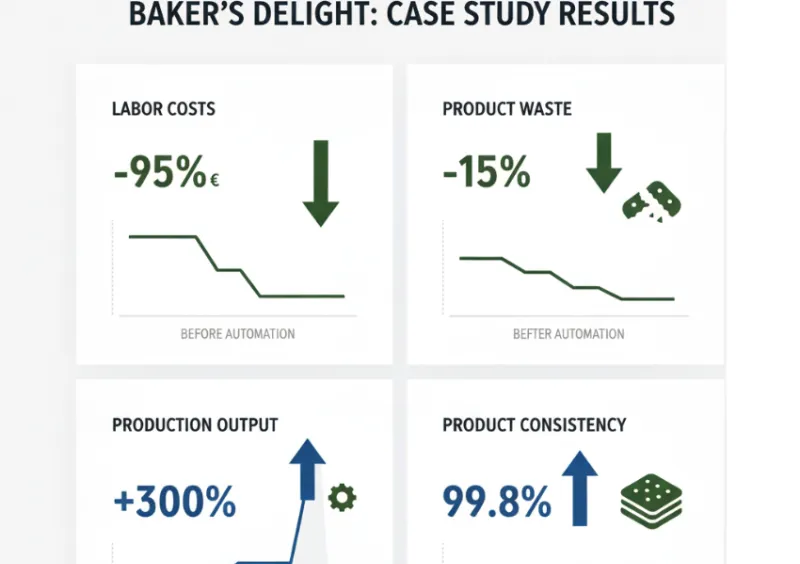
ROI Achieved in 18 Months: The machine paid for itself in less than two years.
95% Reduction in Labor Costs: The company was able to reallocate 80% of its manual labor to other high-priority tasks.
99.8% Product Consistency: The machine's servo-driven pumps and optical sensors ensured perfect alignment and filling every time, slashing product waste by 15%.
300% Increase in Output: Production capacity surged to 600,000 sandwiches per day, enabling the company to secure major contracts with a national retailer.
This strategic investment in sandwich automation transformed Baker's Delight from a struggling mid-tier player to a market leader in their region.
Beyond the Numbers: The EverSmart Philosophy of Success
At EverSmart, we believe that true success in biscuit production isn't found in a single secret ingredient or a high-tech machine alone. It's about a holistic approach that combines the right technology, knowledge, and business vision.
In our experience working with over 600 biscuit manufacturers and many technical professionals, we’ve observed a clear progression in thinking:
Those with 1-3 years in the industry usually ask: "What's the recipe for this biscuit?"
Those with 3-5 years of experience want to know: "What's the production process? Which brands of ingredients do you use?"
Those with 5-8 years of expertise will ask: "What kind of equipment is best for this biscuit?"
Those with 8-10 years will say: "If I could produce the same quality biscuit and sell it for the same price, I’d give it a try."
And those with over 10 years of experience will tell you: "It all depends on how much time and money the owner is willing to invest in this product."
From our perspective, it’s time to change that mindset. When you're learning how to produce biscuits, you shouldn’t get too focused on just one aspect. The goal is to learn the entire process, to pay attention to every detail that determines a biscuit's success or failure.
A recipe is useless if you don't know how to execute it. A high-end machine is underutilized without the knowledge of how to operate it to its full potential. What truly sets a biscuit apart is a combination of factors: knowing the production process, understanding the nuances of your own equipment, knowing the characteristics of each ingredient, and understanding the principles of adding materials—all combined with the unwavering determination and passion of the business owner. Together, these elements are what you need to create a truly exceptional biscuit.
Ready to See the Financial Difference?
Stop letting hidden costs erode your profitability. Let us provide a detailed ROI projection specific to your production line.
Schedule a Free Cost-Benefit Analysis with Our Experts
We will analyze your current costs and demonstrate the potential savings with an EverSmart automated solution.
Contact Me for a Detailed Consultation and Quote:
Sofia | Vice President
📱 WhatsApp: +86 13794619343
✉️ Email: [email protected]
Explore our range of high-efficiency solutions on our main product page: EverSmart Cookie Capper Machine
Ready to start your journey toward a customized solution? Contact me directly on WhatsApp to begin the conversation.