The Science of Perfect Baking: Temperature Control & Baking Curves for Industrial Tunnel Ovens
1. Getting to Perfect Biscuits: Your Oven's Hidden Power
Ever wondered why some biscuits taste exactly right, batch after batch, while others are a gamble? For anyone running a cookie, wafer, or biscuit factory, the journey from raw dough to golden perfection isn't just a simple cooking step—it's where real magic, and real money, is made (or lost).
As a factory owner or financial manager, you know that baking isn't just another part of the line; it's often your biggest energy hog and a major source of waste. Think about inconsistent batches: that's wasted ingredients, wasted energy, wasted time, and worst of all, unhappy customers who might not come back. It's a hidden cost that can really eat into your profits. In fact, the Food Processing Suppliers Association (FPSA) points out that problems during processing, especially in baking, can cause big financial losses across the entire food industry.
If you’re an R&D expert or an engineering manager, you understand that making consistent, high-quality biscuits isn't just about a great recipe. It’s a precise science, a delicate dance between physics and chemistry happening inside your powerful, industrial biscuit tunnel ovens. The difference between a bland, crumbly biscuit and one that’s perfectly crisp and flavorful often comes down to how precisely you manage the heat and time. You face real challenges: inconsistent product quality, too many wasted biscuits, soaring energy bills, and customer complaints. These aren’t just small headaches; they chip away at your profits and your brand's reputation.
This guide is here to help you truly understand biscuit tunnel oven baking. We’re going to dive deep into the science behind control of oven temperature for biscuits and the art of creating the perfect baking curves for tunnel ovens. Our goal is to give plant managers, production specialists, and decision-makers like you the knowledge to turn your baking process from a problem area into a precise, profit-driving part of your business. As Baking & Snack Magazine highlights, staying ahead means constantly innovating and running your operations flawlessly.
Quick Answers to Your Questions:
"What is a biscuit oven?"Simply put, it’s a large, often continuous, industrial machine made specifically for baking huge quantities of dough products like biscuits, cookies, and crackers on a production line, unlike a small home oven.
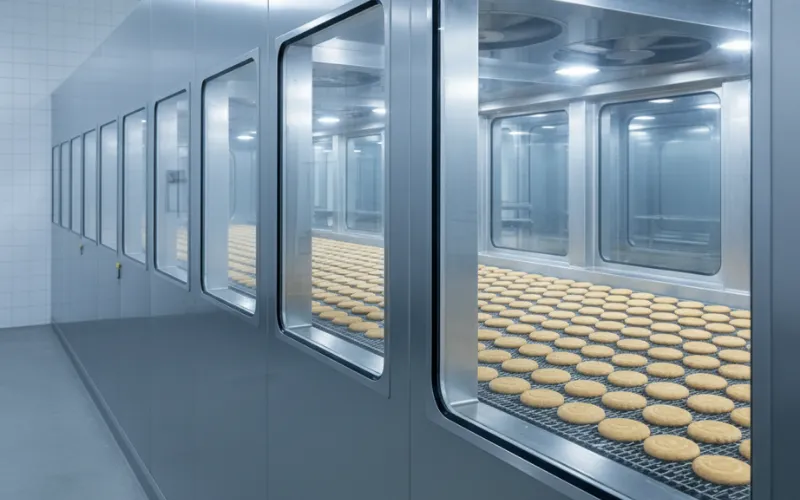
"What is a tunnel oven used for?"A tunnel oven is your go-to for continuous, high-volume baking in factories. Its long, tunnel-like shape allows products to move through different heated zones. This means you can control each step of baking precisely, making it perfect for turning out millions of consistent biscuits, cookies, wafers, and other baked goods.
2. Meet Your Baking Powerhouse: The Industrial Tunnel Oven
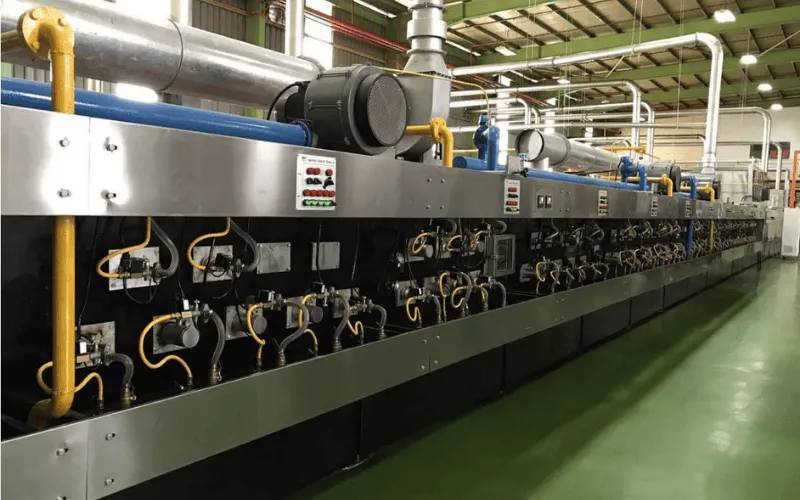
At the very heart of any big biscuit, cookie, or wafer factory sits the biscuit tunnel oven—a true engineering marvel. It's a smart system where raw dough becomes a perfectly baked treat through carefully controlled steps. Really understanding how it’s built and how it works is your first step to mastering biscuit tunnel oven baking.
How It Works: Baking Non-Stop
The main idea behind a tunnel oven is continuous production. Instead of baking trays in separate batches, your products continuously enter one end of a long, heated tunnel and come out, fully baked, at the other. This steady flow is exactly why the biscuit baking tunnel oven is essential for modern industrial bakeries. It ensures a constant output and smooths out your entire production line, working perfectly with other machines like a biscuit sandwich machine or a biscuit stacker.
What's Inside: The Key Parts and What They Do
For engineering managers and production specialists, knowing the oven’s parts helps you control the whole process:
Conveyor Systems: The backbone of your tunnel oven. Wire Mesh Bands let hot air circulate, while Steel Bands give you a super even bottom bake.
Heat Sources:
Direct-Fired Ovens (DFO): Burners are inside the oven, so combustion gases touch your product directly.
Indirect-Fired Ovens (IFO): Heat comes from exchangers, and hot air circulates without combustion gases touching your product.
Convection Ovens: Use powerful fans to blow hot air around, ensuring super even heating.
Exhaust & Ventilation Systems: Vital for controlling moisture and preventing steam from building up, which can prevent a crisp crust.
Advanced Control Systems: Modern biscuit tunnel ovens are run by smart PLCs and touch-screen HMIs. They are the digital brain of your oven for baking biscuits.
See more comparison among tunnel oven vs. convection, see check this oven comparison.
The Multi-Zone Advantage: Why It Matters So Much
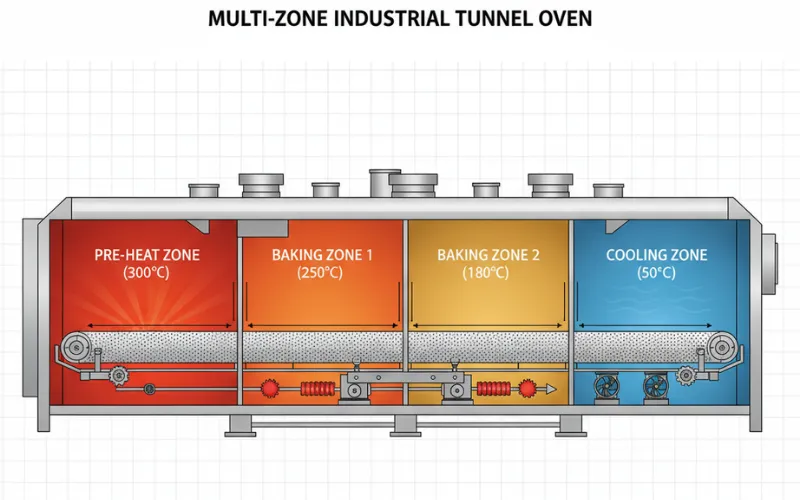
The coolest thing about a biscuit baking tunnel oven is that it's split into many separate, independently controlled temperature zones. This isn't just a fancy feature; it's absolutely essential for managing all the complex changes that happen as your dough bakes. This smart way of managing temperature is how you create that perfect baking curve for tunnel ovens, ensuring every product comes out just right. If you’re looking at a new or used biscuit tunnel oven baking system, how well it controls these zones should be a top priority for procurement and engineering managers.
3. The Biscuit's Journey: From Dough to Delicious
Knowing your tunnel oven’s parts is a start, but truly mastering biscuit tunnel oven baking means understanding the amazing journey your dough takes. This sequence of temperatures over time creates what we call the baking curve for tunnel ovens—a precise roadmap for perfect quality.
The Biscuit's Big Transformations: From Bland to Brilliant
Different biscuits will need their own unique baking curves, but the basic stages stay the same.
Stage 1: The First Heat – Setting and Flash Drying
This is usually the hottest part of your biscuit tunnel oven. The dough quickly soaks up heat, rapidly drying its surface (flash drying) and making any leavening gases puff up (oven spring). This quick crust keeps the biscuit's shape. This first setting is absolutely key to getting that classic flaky texture for products from a soda cracker machine.
Stage 2: The Main Event – Developing Structure and Flavor
After setting, the middle zones are where the real baking happens. Steady heat removes most of the moisture from inside the biscuit, helping its structure develop. This is also where delicious browning reactions kick in—the Maillard reaction and caramelization—giving your biscuit its final taste and color.
"How long do you put biscuits in the oven at 350 degrees?"In an industrial biscuit tunnel oven, we don't think about a single "350 degrees" setting. Instead, the time the biscuits spend in these zones is controlled by the conveyor speed, not a fixed time at one temperature.
Stage 3: The Final Touches – Drying, Conditioning, and Coloring
These last zones are all about precision drying and getting the biscuit just right. The goal is to hit that perfect target moisture content, which is vital for crispness, stability, and a long shelf life. This stage often flows directly into a bakery cooling tunnel.
"What should the oven be preheated to 450 F when baking biscuits?"For an industrial biscuit in oven, you don't "preheat" to a single temperature like 450°F (232°C). Instead, each zone of the continuous tunnel oven is kept at its own specific operating temperature.
By carefully controlling these stages, you can create exactly the kind of biscuit you want. This basic understanding is key for fixing problems and making your entire biscuit baking tunnel oven operation as good as it can be.
4. Crafting the Perfect Baking Curve: EverSmart's Expertise in Action
The baking curve is where the art and science of industrial baking truly meet. It's your ultimate blueprint for consistently amazing products. For engineers, R&D specialists, and production managers, mastering the variables that shape this curve is absolutely essential.
Key Control Points for Precision Baking:
Oven Zone Temperatures: The specific heat targets for each section.
Baking Time (Conveyor Speed): Decides how long your product stays in each hot zone.
Heat Transfer (Flux): How the heat actually reaches your product—conduction, convection, and radiation.
Exhaust/Damper Settings: Crucial for getting rid of moisture released during baking.
EverSmart's Baking Experience: Tailoring the Curve to Your Product
At EverSmart, our deep experience in building and perfecting industrial biscuit tunnel ovens has taught us a fundamental truth: there’s no one-size-fits-all "best" baking curve. The perfect profile is always carefully crafted based on the core qualities of your dough.
A. Soft Biscuits – The "Hot & Fast" Approach
Soft biscuits, often made on an EverSmart soft biscuit machine, have more fat and sugar. EverSmart recommends a baking approach that's "higher oven temperature, shorter baking time." The higher fat, sugar, and dairy/egg content naturally helps them brown, so slightly lower temperatures in the final stages are perfect for getting that ideal surface color without burning.
EverSmart's Typical Oven Temperatures for Soft Biscuits:
Zone 1: About 250-300°C (For quick setting)
Zone 2: About 220-270°C (For thorough baking)
Zone 3: About 180-200°C (For final drying)
Typical Baking Time: Around 5-6 minutes.
B. Hard Biscuits – The "Gentle & Long" Approach
Hard biscuits, often made using an EverSmart hard biscuit machine, have less fat and more water. EverSmart recommends a baking strategy of "lower oven temperature, longer baking time." The baking curve for hard biscuits often sits between that of soda crackers and soft biscuits.
C. Soda Crackers – The "Upside-Down Heat" Masterpiece
Soda crackers, often made with an EverSmart soda cracker machine, require an "inverted temperature profile"—strong bottom heat and gentle top heat in the beginning zones. This is absolutely critical for getting that famous layered, flaky texture. If the bottom heat isn't strong enough, even well-fermented dough won't expand properly, affecting the crispness.
EverSmart's Typical Baking Time for Soda Crackers: Around 6-7 minutes.
Ultimately, getting that perfect biscuit making in oven for any product—whether it's from a soft biscuit machine, a hard biscuit machine, or a soda cracker machine—comes down to carefully adjusting and optimizing oven settings based on your specific recipe and desired final product.
5. Smart Baking: How Tech Powers Your Tunnel Oven
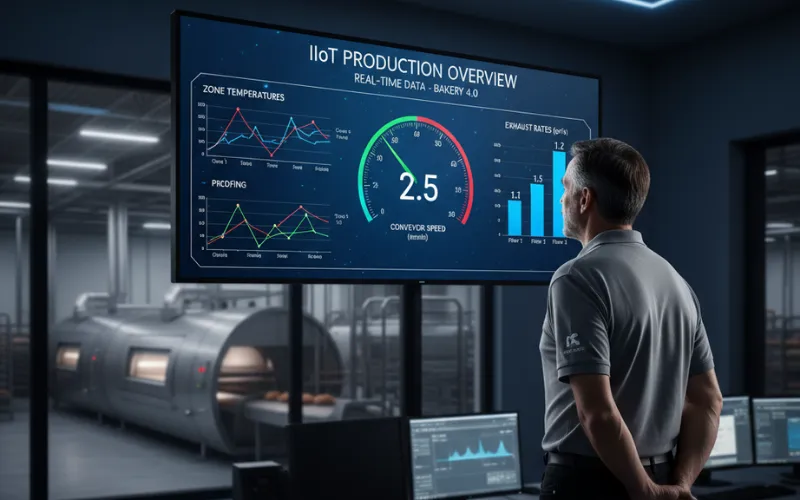
The endless quest for perfect biscuit tunnel oven baking is always pushing innovation in control technology. Using advanced systems moves your operations from simply reacting to problems to proactively optimizing everything with data. For factory owners and financial managers, this directly means better ROI and lower operating costs.
Precision Sensing: Your Oven's Eyes and Ears
Super-Accurate Thermocouples & IR Sensors: Give you real-time temperature readings from each oven zone.
Product Core Temperature Sensors: For critical products, these can measure the biscuit's internal temperature as it bakes.
PID Control: The Brains Behind Stable Temperatures
Modern industrial ovens use clever PID (Proportional-Integral-Derivative) control systems. These smart algorithms constantly compare the actual temperature to your desired setting, automatically adjusting the heat to keep temperatures incredibly stable throughout your entire biscuit baking tunnel oven.
IIoT and Data Logging: The Data Revolution in Baking
Real-time Data Visualization: Industrial Internet of Things (IIoT) sensors continuously send data on zone temperatures, conveyor speed, and fuel use.
Predictive Analytics: IIoT systems can use past data to predict potential equipment failures before they cause downtime.
Recipe Management Systems: These digital platforms let operators save, recall, and precisely use optimized baking curves for tunnel ovens for hundreds of different products.
Whole-Line Integration: Data from your oven can be linked with machines both upstream (like dough mixing) and downstream, such as your bakery cooling tunnel or packaging lines.
Thermal Profiling: This advanced technique involves sending a data logger with tiny temperature probes attached directly to your biscuits through the oven. It gives you incredibly valuable data to confirm if your planned baking curves are working correctly and to spot any differences between the oven's air temperature and the biscuit's actual temperature—a crucial step for perfecting your biscuit making in oven process.
Energy Efficiency: A Win for Your Wallet (Financial Managers)
Optimizing your biscuit tunnel oven temperature curves isn't just about making better products; it's a direct way to save a lot of energy. Precise control stops overheating, minimizes wasted heat from inefficient exhaust, and ensures that fuel is used as efficiently as possible. This directly impacts your operating costs and boosts your profits, making it a key factor when you're looking at a new or used biscuit tunnel oven baking system.
More FAQ Answers:
"Is it better to bake cookies in a convection oven or regular oven?" For factory-scale operations using an EverSmart biscuit tunnel oven, many zones are designed to use convection heating. This is because convection is great at spreading heat evenly across huge numbers of products. So, in a factory, "convection" is often just a smart part of a "regular" tunnel oven.
"Can you use a convection oven to bake biscuits?" Absolutely, and it's a very effective method, especially in factories where powerful fans blow hot air around, ensuring every biscuit gets uniform heat as it moves through the tunnel.
6. Fixing Baking Problems: Your Guide to Troubleshooting
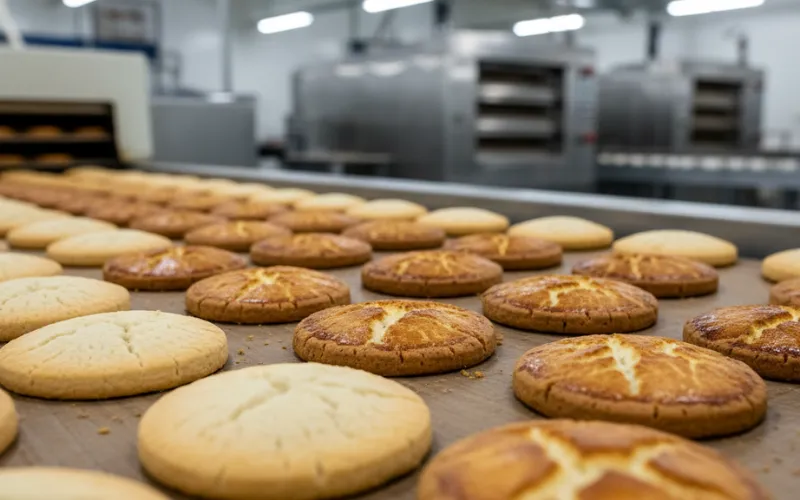
Even with the smartest industrial tunnel oven and the perfect baking curve, problems can pop up. For production managers and engineers, knowing how to figure out what's wrong and fix it by adjusting temperatures and processes is incredibly valuable.
Problem: Uneven Baking / Hot Spots
Solution: Use oven temperature mapping to find exactly where the hot or cold spots are. Check and maintain your burners, inspect fan operations, and make sure dough is spread evenly from your cookie maker machine or other forming equipment.
Problem: Biscuits too Pale / too Dark
Solution: Adjust the relevant oven zone temperatures in small steps. Change the conveyor speed. Check the balance of top-to-bottom heat. For products like wafers from a wafer making machine, precise color is super important.
Problem: Cracking or "Checking" after Baking/Cooling
Solution: Adjust the final oven zones to allow for a gentler cool-down. Optimize the environment within your bakery cooling tunnel to ensure temperatures and moisture levels stabilize gradually.
Problem: Incorrect Spread or Shape
Solution: Adjust the initial biscuit tunnel oven temperatures to ensure the biscuit sets quickly. Review your dough recipe and its properties.
Problem: Inconsistent Moisture Content
Solution: Make sure all your oven sensors are calibrated regularly. Review and adjust exhaust settings. Implement stricter controls on the moisture content of your raw ingredients.
Why a Data-Driven Approach is Key: Always use your data logging system to find patterns and the root causes of problems, rather than just reacting to symptoms. This proactive troubleshooting saves huge amounts of time and material, especially in complex biscuit making in oven processes.
More FAQ Answers:
"Which oven setting for baking biscuits?" As EverSmart's experience shows, it's not a single "setting," but a dynamic and precisely engineered "baking curve" that varies significantly based on the biscuit type (soft, hard, soda cracker) and its unique dough characteristics, encompassing multiple temperature zones and controlled conveyor speed.
"How long do you put biscuits in the oven at 350 degrees?" For industrial biscuit making in oven, this question is framed by the continuous flow. There's no fixed time at a single temperature. Instead, it's about the total residence time determined by conveyor speed and the specific temperature profile encountered across multiple zones.
"What should the oven be preheated to 450 F when baking biscuits?" Industrial tunnel ovens operate with continuous, independently controlled heating zones, not a single preheat temperature like a domestic oven. Each zone is brought to its specific setpoint and maintained for constant readiness.
7. Your Edge: Mastering the Oven
In the complex world of industrial food production, your biscuit tunnel oven is a powerful asset. It can bring you huge efficiency, but also significant waste if not managed correctly. As we've explored, truly mastering biscuit tunnel oven baking all comes down to deeply understanding and precisely controlling temperature and those all-important baking curves.
For factory owners and financial managers, this means a clear path to lower energy bills, drastically reduced waste, consistently better product quality, and a stronger, more trusted brand. For engineering and production managers, it means you can fine-tune your processes, confidently launch new products, and troubleshoot problems using solid data. Getting your baking just right isn't just another task; it's a huge competitive advantage for your business.
EverSmart is a leader in this field, offering advanced industrial tunnel oven solutions with smart control systems and deep expertise. We’re here to help you move past basic settings and towards precisely engineered baking curves that guarantee outstanding quality and boost your return on investment.
Ready to unlock the full potential of your baking line?Contact EverSmart today for a consultation with our baking experts. We’ll help you assess your current oven’s performance, find ways to optimize, and show you how our advanced solutions can elevate your biscuit making in oven to the highest standards.
Don't just bake—perfect your bake. Welcome whatsapp +86 13794619343 or email to [email protected] for your customized solution!
Explore the technology that makes this precision possible:

Ready to start your journey toward a customized solution? Contact me directly on WhatsApp to begin the conversation.