Mini Oreo Production Line Cost: Full Analysis & ROI
The tantalizing crunch, the creamy filling, the iconic design – the mini Oreo is a global sensation. For entrepreneurs and established food manufacturers eyeing a lucrative entry or expansion into the biscuit market, understanding the financial intricacies of setting up a mini Oreo production line is paramount. This deep dive will provide a full analysis of the costs involved, from initial investment to ongoing operations, and meticulously break down the potential return on investment (ROI) to help you make an informed decision.
According to a recent report by
The Allure of the Mini Oreo Market
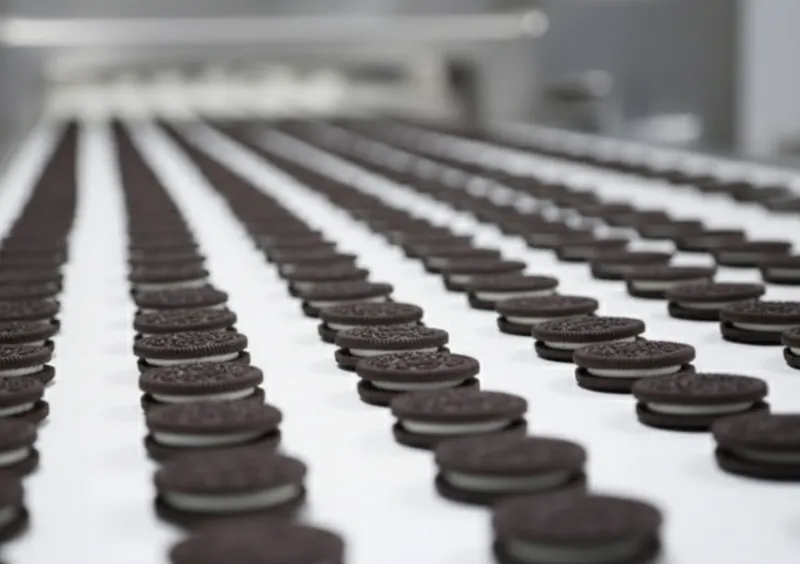
Before we delve into numbers, it's crucial to acknowledge the immense market appeal of mini Oreos (or similar bite-sized sandwich biscuits). Their convenient size, delicious taste, and established brand recognition (or potential for private-label success) make them a top-tier product in the snack industry. The demand is consistent, driven by various consumer segments, from children's lunchboxes to adult snack packs. This robust market underpins the strong ROI potential of a well-executed production strategy. For a broader understanding of the product itself and its market, explore our comprehensive
Deconstructing the Initial Investment: What You Need to Budget For
Setting up a complete mini Oreo production line is a significant capital expenditure. This section will break down the primary cost centers you'll encounter.
1. Core Production Equipment: The Heart of Your Operation
This is arguably the largest portion of your initial investment. A fully automated mini Oreo production line comprises several sophisticated machines, each playing a critical role. The scale and automation level you choose will heavily influence the cost.
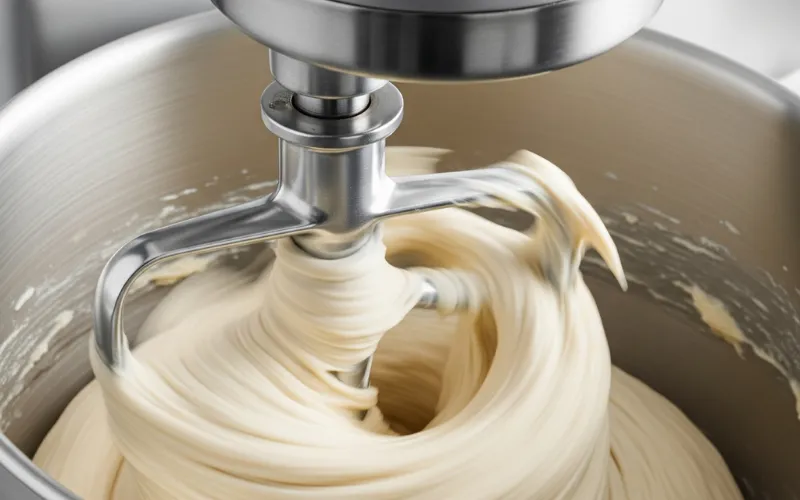
Dough Mixer: The journey begins here. Industrial mixers are designed for high-volume, consistent dough preparation. Costs vary based on capacity (e.g., 200kg, 500kg, 1000kg batches) and automation features. A good example is our efficient
Horizontal Dough Mixer 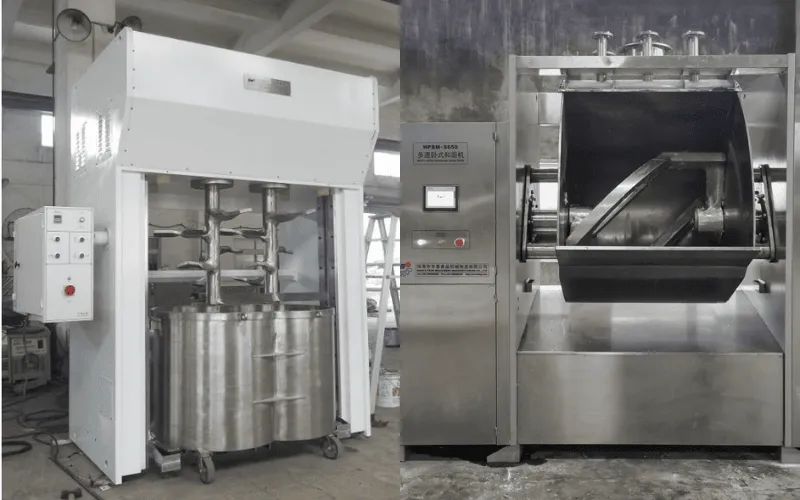
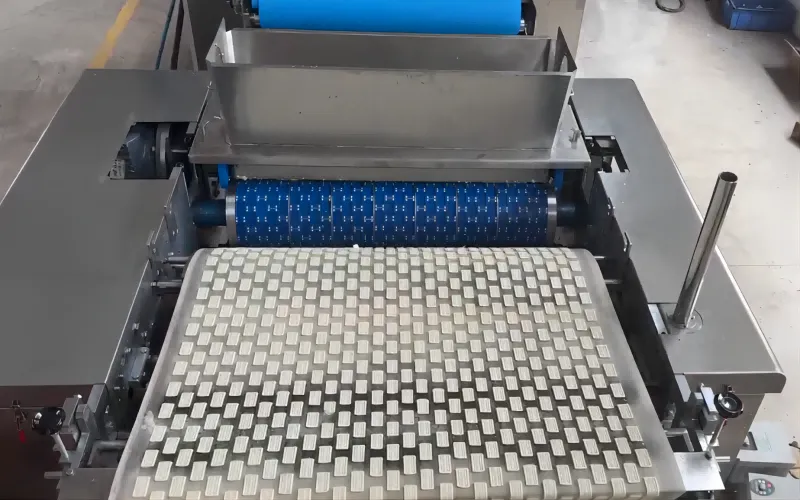
Rotary Moulding Machine: This is where the iconic mini Oreo shape and intricate pattern are formed. Precision engineering is key here. These machines typically include adjustable rollers and dies. A basic model might start around $50,000, while a high-capacity, multi-lane system can easily reach $200,000 to $500,000. The detail of the pattern and speed directly correlate with cost.
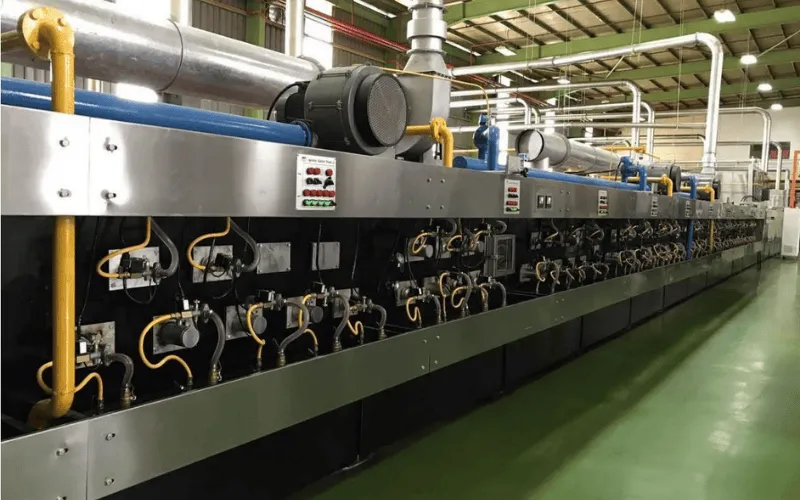
Baking Oven (Tunnel Oven): After moulding, the biscuits enter a long, continuous tunnel oven for baking. These ovens are specialized for consistent heat distribution to ensure uniform baking. Fuel type (gas, electric, diesel) and length/capacity are major cost drivers. A medium-sized industrial oven could be $100,000 to $300,000, with large-scale, high-throughput systems exceeding $500,000.
EverSmart's experience and tips:
"Soft biscuits like mini Oreos, due to the presence of ingredients like sugar and fat in the dough, have fewer binding agents within the dough, making the moisture easier to evaporate. Therefore, their baking time is shorter than that of hard/crisp biscuits.
The baking time for soft biscuits like mini Oreos is closely related to the baking temperature. If the temperature is too high during the initial baking phase, it can cause charring on the surface of the biscuit while the internal temperature has not yet risen and moisture hasn't been expelled – commonly known as the 'burnt outside, raw inside' problem. Therefore, precise control of baking temperature and time is crucial to ensure biscuit quality.
For a typical soft biscuit like a mini Oreo, most factories currently aim for a baking time of around 4-5 minutes. The time allocation for different baking stages is generally as follows:
Surface layer heating to 100°C: Approximately 1-1.5 minutes.
Surface reaching 120°C, center reaching 100°C: Approximately 1.5-2.5 minutes.
Massive dehydration stage: Approximately 0.5-1 minute.
Surface browning/coloring stage: Approximately 0.5 minute.
However, the recipes for soft biscuits are quite complex, often involving higher amounts of sugar, fats, and dairy/egg products. The quantities of these ingredients vary greatly between different varieties, so the baking temperature must be specifically tailored to each product.
Generally, for mini Oreos with higher sugar, fat, and dairy/egg content, it's necessary to increase both the top and bottom heat significantly right at the beginning of baking (upon entering the oven). This ensures the bottom solidifies quickly, preventing the 'fat spreading' phenomenon that can occur with high-fat doughs. In the later stages of baking, the temperature can be gradually reduced. Since these biscuits have a higher fat content, even with minimal leavening, the biscuits will not become hard. Thus, choosing lower temperatures for the later baking stages is appropriate.
Conversely, for soft biscuits with average sugar and fat content, the volume expansion relies more heavily on proper baking. Therefore, the first half of the baking process requires lower bottom and top heat. This allows the volume to expand without rapidly forming a hard crust on the surface. However, the top heat should gradually increase. Additionally, because more water is added during mixing and there are fewer auxiliary ingredients involved in caramelization and Maillard browning, coloring is slower. Thus, the surface temperature should remain relatively high until the desired browning is achieved.
Steel belt ovens are commonly used for baking soft biscuits . The steel belt should ideally be a cold-rolled, low-carbon alloy steel belt with a smooth surface and low elongation. The typical thickness of such steel belts is 0.5-1.5mm. Soft biscuits baked on a steel belt will exhibit a uniform 'sandy bottom' texture."
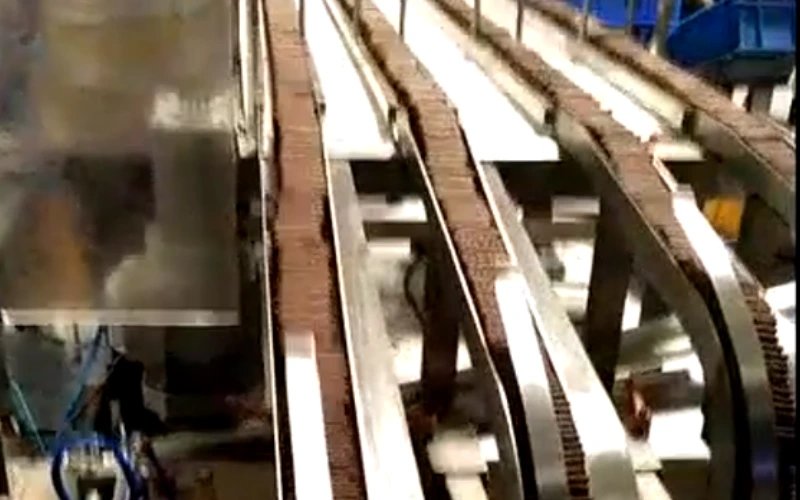
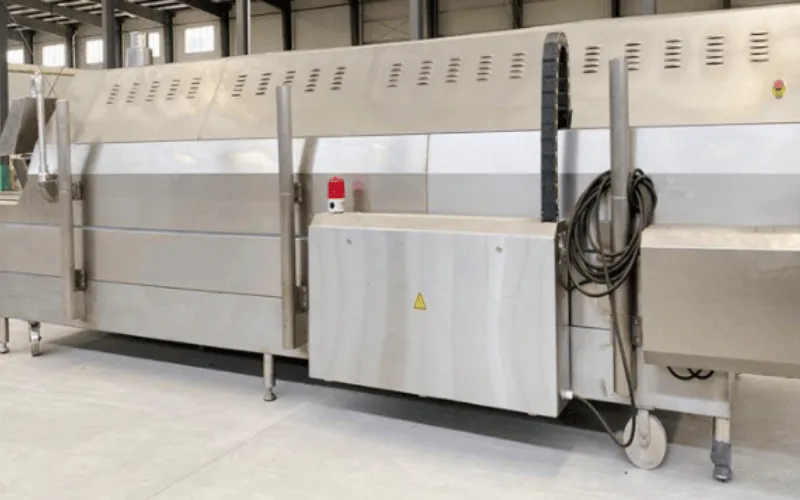
Cooling Conveyor/Tunnel: Once baked, the biscuits need to cool down before sandwiching. This typically involves long conveyors, often within a controlled cooling tunnel, to prevent cracking and ensure structural integrity. This segment is generally less expensive than the oven but still crucial, ranging from $30,000 to $100,000.
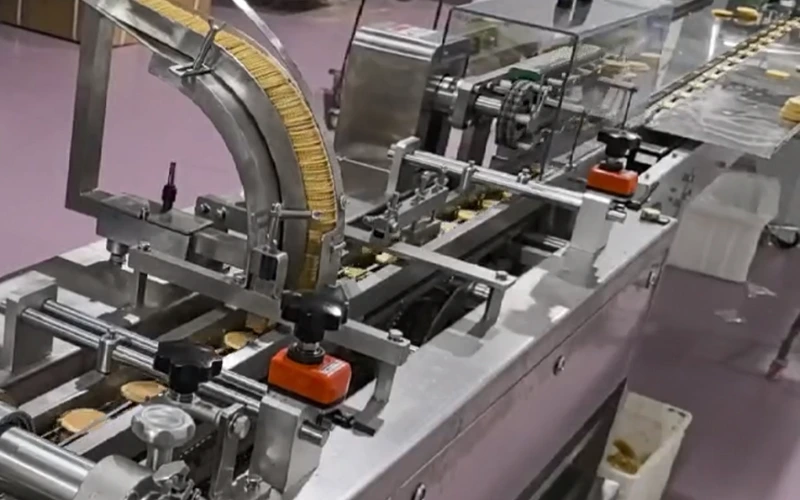
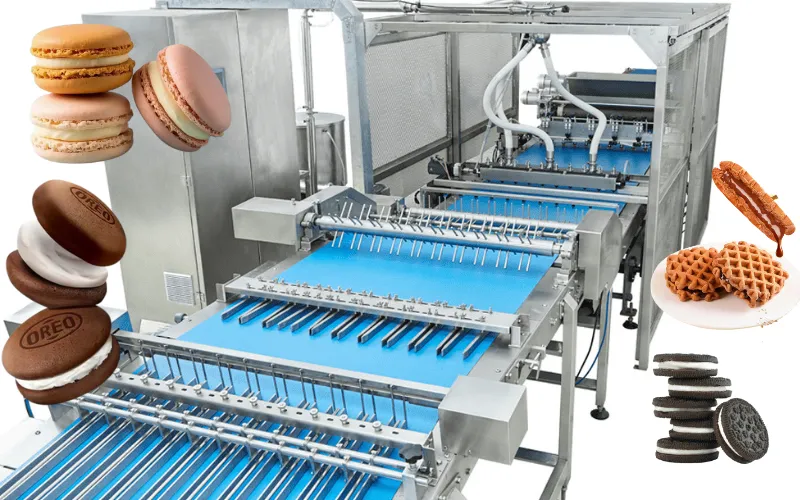
Automatic Sandwiching Machine: This is where the magic happens – two biscuit wafers are precisely brought together with a dollop of cream in between. The precision and speed of this machine are critical for efficiency and product quality. A high-speed, multi-lane sandwiching machine can cost between $80,000 and $250,000.
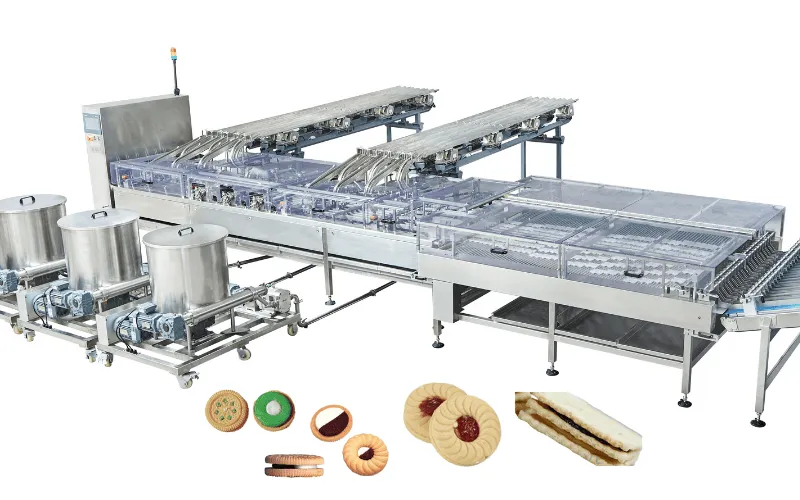
Cream Mixer and Depositor: Alongside the sandwiching machine, you'll need equipment to prepare the cream filling and precisely deposit it. This includes cream mixers (similar to dough mixers but for different viscosities) and the depositor mechanism integrated into the sandwiching unit. Costs here are typically $20,000 to $70,000.
2. Packaging Machinery: The Final Presentation
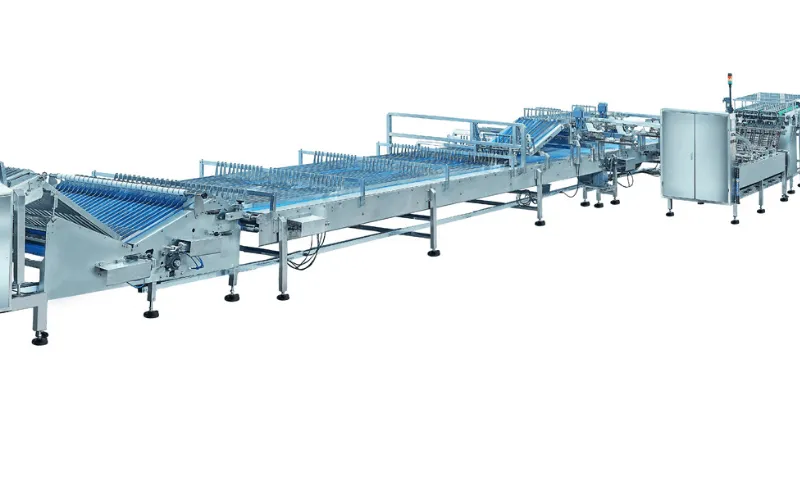
The quality of your product extends to its packaging. Efficient and appealing packaging not only protects the biscuits but also plays a crucial role in branding and shelf appeal. Packaging costs are highly variable based on the format (individual packs, multi-packs, trays) and automation level.
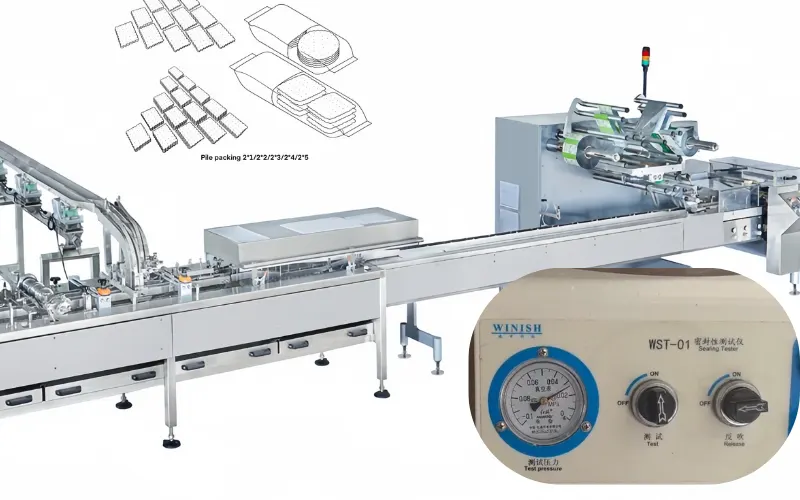
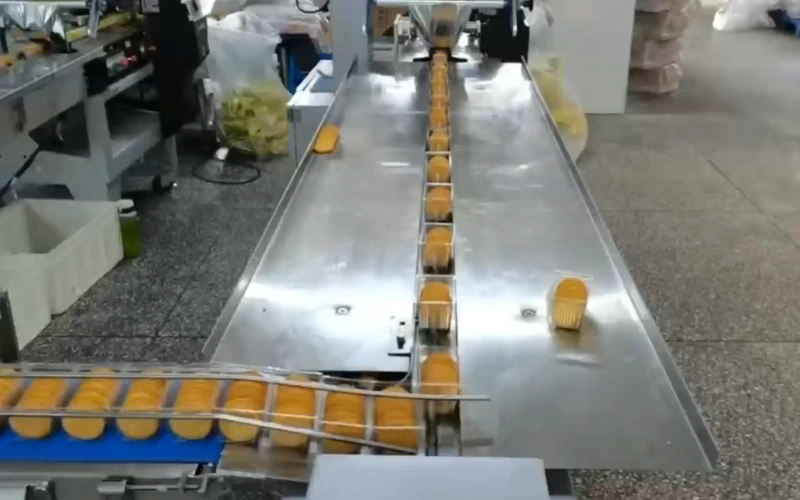
Flow Wrapping Machine: For individually sealed mini Oreo packs or small multi-packs, flow wrappers are essential. These machines quickly seal products in a flexible film. Costs range from $25,000 to $80,000+ depending on speed and features.
Cartoning Machine: If your mini Oreos are sold in boxes (e.g., family packs or display boxes), a cartoning machine will automatically erect, fill, and seal the cartons. These are more complex and can cost $50,000 to $150,000.
Case Packer/Palletizer: For high-volume operations, automated case packing (placing multiple product packs into larger shipping cases) and palletizing (stacking cases onto pallets) machines significantly reduce labor costs and increase efficiency. These are a more substantial investment, typically $70,000 to $200,000+ each, but offer substantial long-term savings. For a wider range of options, see our
Biscuit Packaging Machines Date Coding/Printing Systems: Essential for legal compliance and traceability, these systems print expiration dates, batch codes, and other necessary information onto individual packs and cartons. Costs are generally $5,000 to $25,000.
3. Ancillary Equipment & Quality Control: Ensuring Perfection
Beyond the main production line, several other pieces of equipment are vital for a smooth operation, quality assurance, and compliance.
Metal Detectors: Crucial for food safety, these machines detect metallic contaminants in the product stream. Integrated into the conveyor belt, they are a non-negotiable expense, typically $10,000 to $30,000.
Checkweighers: These systems accurately weigh individual packs or products to ensure they meet specified weight criteria, reducing giveaway and ensuring consistency. Costs range from $15,000 to $40,000.
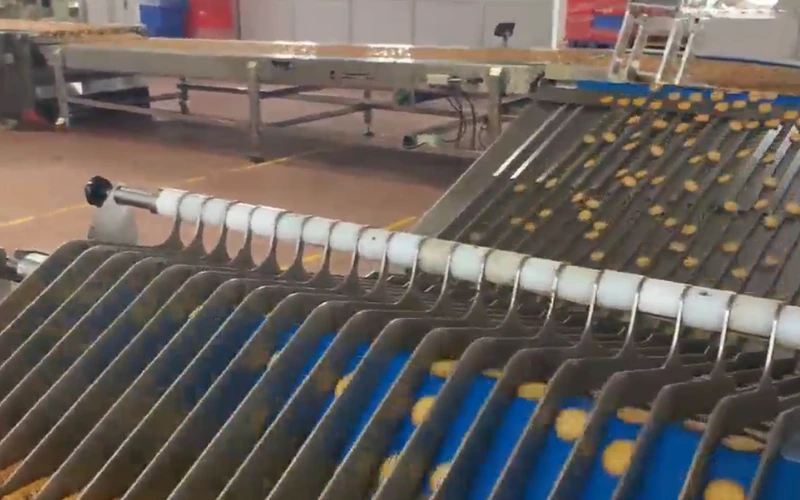
Conveyor Systems: A vast network of conveyors connects all the machines, moving products seamlessly from one stage to the next. The total cost depends on the length, type (belt, chain, modular), and complexity of the layout, from $20,000 to $100,000+.
Air Compressors: Many pneumatic systems in modern machinery (e.g., for cutting, pushing, or packaging) require compressed air. An industrial-grade air compressor is a must, costing $5,000 to $30,000.
Water Treatment Systems: Depending on your water source and product requirements, water purification or softening systems might be necessary to ensure quality and prevent machine damage. These can range from $10,000 to $50,000.
Laboratory Equipment/Quality Control Tools: For in-house testing of raw materials and finished products (e.g., moisture analyzers, pH meters, texture analyzers, calipers for precise biscuit dimensions). Basic setup can be $5,000 to $20,000, with more advanced labs costing much more.
4. Infrastructure & Installation: Getting Ready for Production
The machines are only one part of the puzzle. The facility itself and the process of getting the equipment up and running involve significant costs.
Factory Building/Renovation: Whether you're building a new facility or renovating an existing one, this cost can vary wildly. Considerations include floor space, ceiling height, utilities access, and food-grade finishes. This could range from $100,000 for a minor renovation to $5,000,000+ for a new purpose-built factory.
Utility Upgrades: Industrial machinery requires substantial power, water, and sometimes gas. You might need upgrades to your electrical panels, plumbing, and gas lines. Costs here are highly site-specific, potentially $10,000 to $100,000+.
HVAC & Environmental Control: Maintaining optimal temperature and humidity in a food factory is crucial for product quality and worker comfort. This includes powerful ventilation, air conditioning, and dust extraction systems. Expect $50,000 to $200,000+.
Installation & Commissioning: This involves transporting the machines, placing them, connecting them, and performing initial tests. Machine suppliers often provide this service, but it comes at a cost, typically 5% to 15% of the total equipment cost, or a flat fee negotiated beforehand.
Automation & Control Systems (SCADA): Modern production lines are controlled by sophisticated Programmable Logic Controllers (PLCs) and Supervisory Control and Data Acquisition (SCADA) systems. These centralize control, monitor performance, and allow for recipe management. Implementation can add $30,000 to $150,000+.
Certifications & Regulatory Compliance: Obtaining necessary food safety certifications (e.g., HACCP, ISO 22000, BRCGS, Halal/Kosher if applicable) involves audits, documentation, and potentially facility modifications. While not direct equipment costs, they are essential for market entry and trustworthiness.
Estimated Total Initial Investment Range:
For a small to medium-scale automated mini Oreo production line (producing around 500-1,000 kg/hour), a realistic initial investment for equipment, installation, and basic infrastructure could range from $700,000 to $2,500,000 USD. Larger, high-capacity, and fully bespoke lines can easily exceed $5,000,000 to $10,000,000+. This does not include land acquisition or new building construction costs, which would add substantially.
Beyond the Purchase: Understanding Ongoing Operational Costs
The initial investment is just the beginning. Sustainable profitability hinges on efficiently managing day-to-day operational expenses. These costs are often overlooked but are critical for an accurate ROI calculation.
1. Raw Materials: The Foundation of Your Product
This is typically the largest recurring cost. For mini Oreos, key ingredients include:
Flour: Wheat flour, often specialized for biscuits.
Sugar: Granulated sugar, powdered sugar for cream.
Cocoa Powder: For chocolate biscuits.
Vegetable Fat/Oil: For dough and cream filling.
Milk Powder/Whey Powder: For cream filling.
Flavorings & Leavening Agents: Vanilla, baking powder/soda.
Emulsifiers/Stabilizers: For cream consistency.
Cost Impact: Raw material costs fluctuate based on global commodity prices, supplier relationships, and bulk purchasing power. As a general rule, raw materials can account for 40% to 60% of your total product cost.
2. Packaging Materials: Presenting Your Product
The cost of packaging materials can be substantial, especially for individual portion packs.
Flexible Films: For flow-wrapped packets (e.g., BOPP, laminate films).
Cartons/Boxes: For secondary packaging.
Adhesives & Labels:
Shipping Materials: Pallets, stretch wrap.
Cost Impact: Packaging often represents 10% to 20% of your total product cost, depending on complexity and material choice.
3. Labor Costs: The Human Element
Even highly automated lines require skilled personnel.
Operators: To oversee machines, load raw materials, monitor processes.
Maintenance Technicians: To perform routine maintenance, troubleshoot, and repair.
Quality Control Staff: To conduct tests and ensure standards.
Supervisors/Management:
Warehouse/Logistics Staff: For raw material receiving and finished goods dispatch.
Cost Impact: Labor costs vary significantly by region and automation level. In highly automated factories, fewer but more skilled staff are needed. This can range from 15% to 30% of your total operating costs.
4. Utilities: Powering Your Production
Industrial biscuit production is energy-intensive.
Electricity: For mixers, conveyors, cooling tunnels, sandwiching machines, lighting, HVAC.
Natural Gas/LPG/Diesel: Primarily for the baking oven.
Water: For cleaning, cooling, and some recipes.
Cost Impact: Utility costs can be substantial, especially with fluctuating energy prices. They can represent 5% to 15% of your total operating costs.
5. Maintenance & Spare Parts: Keeping the Wheels Turning
Regular maintenance prevents costly breakdowns and extends machine lifespan.
Preventative Maintenance: Scheduled servicing, cleaning.
Corrective Maintenance: Repairs due to breakdowns.
Spare Parts: Consumables (belts, seals, sensors, nozzles) and critical spare parts.
Cost Impact: A typical budget for maintenance and spare parts is 2% to 5% of the initial equipment cost annually, though this can be higher in the early years or for older machinery.
6. Overheads & Administration: The Business Backbone
Rent/Lease/Property Tax: For your factory space.
Insurance: Property, liability, workers' compensation.
Administrative Salaries: Office staff, sales, marketing.
Marketing & Sales Expenses: To sell your delicious mini Oreos.
Depreciation: Accounting for the wear and tear of your assets over time.
Compliance & Audit Costs: Ongoing costs for food safety audits, certifications.
Cost Impact: These vary greatly by business structure and location but are non-negotiable for running a legal and functional business.
Revenue Projections: What Can a Mini Oreo Line Earn?
To calculate ROI, we need realistic revenue figures. This depends on production capacity, efficiency, and market pricing.
Production Capacity: A medium-scale automated line might produce anywhere from 500 kg to 1,500 kg of mini Oreos per hour. Assuming a typical run of 16-20 hours per day, 5-6 days a week, this translates to significant daily and monthly output.
Example: 1,000 kg/hour * 18 hours/day * 25 days/month = 450,000 kg/month.
Yield: Not all product will be perfect. Factor in a yield rate (e.g., 95-98%) to account for rejected products, waste, and rework.
Packaging Format & Price: Mini Oreos are often sold in small packs (e.g., 60g, 100g, 200g). Determine a realistic wholesale price per kg or per pack, considering your target market, brand positioning (private label vs. own brand), and competitor pricing.
Example: If 1 kg of finished mini Oreos equates to 10 packs of 100g each, and your wholesale price is $1.50 per pack, then 1 kg generates $15 in revenue.
Sales Volume: This is the most challenging projection. It depends on your market reach, sales team effectiveness, marketing efforts, and competitive landscape. Start with conservative estimates and scale up.
Calculating Your Return on Investment (ROI): The Bottom Line
ROI is a crucial metric for justifying such a significant investment. It measures the profitability of an investment relative to its cost.
ROI Formula:
Payback Period Formula:
Illustrative ROI Example (Simplified):
Let's assume a hypothetical medium-scale mini Oreo production line:
Initial Investment (Total Capital Outlay): $1,500,000 (including equipment, installation, basic infrastructure)
Production Capacity: 1,000 kg/hour
Operating Hours: 18 hours/day, 25 days/month
Annual Production: 1,000 kg/hr * 18 hrs/day * 25 days/month * 12 months/year * 0.95 (yield) = 513,000 kg/year
Wholesale Revenue per kg: $15.00/kg (based on packing into 100g packs at $1.50/pack)
Annual Gross Revenue: 513,000 kg * $15.00/kg = $7,695,000
Cost of Goods Sold (COGS) per kg: Let's assume $6.00/kg (40% raw materials, 15% packaging, 20% labor, 10% utilities, 5% maintenance, 10% overhead & other variable costs).
Annual COGS: 513,000 kg * $6.00/kg = $3,078,000
Annual Gross Profit: $7,695,000 - $3,078,000 = $4,617,000
Annual Fixed Overheads (e.g., rent, insurance, admin, depreciation, marketing - excluding variable labor/utilities in COGS): $500,000 (highly variable)
Annual Net Profit (before tax): $4,617,000 - $500,000 = $4,117,000
Now for the ROI:
Annual ROI: ($4,117,000 / $1,500,000) * 100% = 274%
Payback Period: $1,500,000 / $4,117,000 = ~0.36 years (approx. 4.3 months)
Important Caveats for ROI Calculation:
This is a highly simplified example. Real-world scenarios involve complex tax implications, varying market demands, unforeseen costs, and capital depreciation schedules.
Market Penetration: Achieving the assumed sales volume immediately might be challenging. A ramp-up period is usually required.
Competition: Intense competition can affect pricing and market share.
Economic Conditions: Inflation, interest rates, and consumer spending power impact profitability.
Efficiency: The efficiency of your operations directly impacts costs and output.
Common Production Issues & Solutions: Maximizing Efficiency and Quality
Even with top-tier equipment, production lines can encounter issues. Understanding these and their solutions is crucial for maintaining efficiency, product quality, and ultimately, your ROI.
Sticky Bottoms / Uneven Bake:
Issue: Biscuit bases stick, appear dark/burnt.
Cause: Over-sugared dough, poor oven heat distribution.
Solution: Adjust recipe, oven mapping.
Concave Bases / Shrinkage:
Issue: Biscuits shrink, form hollows.
Cause: High moisture, rapid cooling.
Solution: Controlled rapid cooling, pre-drying phase.
Surface Bubbles / Cracking:
Issue: Bubbles and cracks top.
Cause: Uneven mixing, trapped air, dough de-aeration issue, inconsistent pressure.
Solution: De-aeration of dough, consistent pressure.
Calculating Your Return on Investment (ROI): The Bottom Line (Continued)
Beyond the simplified example, a comprehensive ROI analysis for a professional procurement manager requires considering several advanced factors:
Net Present Value (NPV): Evaluates the profitability of an investment by comparing the present value of all cash inflows and outflows over the investment's life. A positive NPV indicates a profitable project.
Internal Rate of Return (IRR): The discount rate at which the NPV of an investment equals zero. It's often used to compare the profitability of different projects; a higher IRR is generally preferred.
Sensitivity Analysis: How changes in key variables (e.g., raw material costs, selling price, production volume, exchange rates) impact your ROI and payback period. This helps identify risks and build more robust financial models.
Depreciation & Tax Implications: The tax deductibility of depreciation on capital equipment can significantly impact net profit and, therefore, the true payback period. Consult with financial experts for accurate local tax treatments.
Working Capital Requirements: The ongoing funds needed to cover day-to-day operations (raw materials, salaries, utilities) until sales revenue consistently covers expenses. This is often underestimated.
Scalability & Future Proofing: Investing in a line that can be expanded or adapted with minimal additional cost in the future can offer long-term ROI benefits, avoiding complete system overhauls.
Why a Robust ROI Analysis Matters to a Procurement Manager:
For a professional procurement manager, the "cost" isn't just a number; it's an investment that needs justification. They need to present a compelling business case to their stakeholders, showing not just the expense but the strategic value and expected financial returns. Your ability to provide transparent, detailed, and realistic ROI projections, backed by engineering knowledge, significantly enhances your credibility and trustworthiness as a supplier.
Case Study: Kuala Lumpur Confections – A Model of Efficiency & Rapid ROI
To illustrate the tangible benefits and rapid ROI possible with a well-planned mini Oreo production line, let's look at "Kuala Lumpur Confections."
The Challenge:A mid-sized Malaysian food manufacturer, Kuala Lumpur Confections, sought to expand their product portfolio into the lucrative private-label mini sandwich biscuit market. They needed a high-capacity, highly efficient, and reliable production line to meet demanding quality standards and aggressive production targets for export. Their key concern was justifying the significant capital outlay with a clear and achievable return on investment.
The Solution:Kuala Lumpur Confections partnered with Eversmart Food Equipment Limited to design and implement a fully automated mini sandwich biscuit production line. This included:
High-capacity dough mixing and feeding systems.
A multi-lane rotary moulding machine for precise biscuit pattern formation.
A state-of-the-art travelling tunnel oven with multi-zone temperature control for consistent baking.
An efficient cooling tunnel.
A high-speed automatic sandwiching machine with precise cream deposition capabilities.
Integrated automated packaging solutions (flow wrapping and cartoning).
Essential ancillary equipment including metal detectors, checkweighers, and a comprehensive SCADA system for centralized control and monitoring.
The Results & ROI:Within 12 months of commissioning, Kuala Lumpur Confections achieved remarkable results:
Production Capacity: Consistently exceeding 1,200 kg/hour, allowing them to fulfill multiple large export contracts.
Operational Efficiency: The high level of automation drastically reduced labor costs per unit and minimized waste, leading to a significant reduction in overall operational expenses.
Product Quality & Consistency: The precise engineering of the moulding and sandwiching machines, coupled with the advanced oven technology, ensured superior, consistent product quality, critical for private-label reputation.
Rapid Payback: Through optimized production, minimized downtime (thanks to robust equipment and preventative maintenance training), and strong market demand, Kuala Lumpur Confections achieved a payback period of just 14 months on their total investment.
Growth & Expansion: Their initial success enabled them to explore adding a second production line within 2 years, further solidifying their market position.
This case study demonstrates how a strategic investment in a high-quality, efficient mini Oreo production line, supported by expert planning and implementation, can lead to substantial financial returns and sustainable business growth.
Navigating Legal Compliance & Regulations: A Foundation of Trust
For any food production facility, adherence to stringent legal and quality regulations is non-negotiable. This not only ensures consumer safety but also builds brand trust and facilitates market access, especially for export. Key compliance areas include:
Food Safety Standards: Implementing systems like HACCP (Hazard Analysis and Critical Control Points) and obtaining certifications like ISO 22000, BRCGS, or FSSC 22000 are essential. These demonstrate a robust food safety management system.
GMP (Good Manufacturing Practices): Adhering to GMP guidelines ensures products are consistently produced and controlled according to quality standards.
Local Health & Safety Regulations: Compliance with national and regional health, safety, and environmental protection laws.
Product Labeling Laws: Accurate and compliant labeling for ingredients, allergens, nutritional information, and shelf life.
International Certifications: For global markets, Halal, Kosher, or organic certifications may be required.
Investing in high-quality machinery that is designed for easy cleaning and maintenance, and partnering with suppliers who understand these regulatory landscapes, can significantly ease the path to compliance and ensure long-term trustworthiness.
FAQ: Your Mini Oreo Production Line Cost Questions Answered
Q1: What is the true "starting" budget for a mini Oreo production line?
A: While very basic, highly manual setups might start around $50,000 for equipment, a truly viable, semi-automated line suitable for consistent commercial production (including basic installation and initial working capital) would realistically require a minimum budget of $150,000 to $300,000. For a more robust, medium-scale automated line aiming for significant output, expect $700,000 to $2,500,000+.
Q2: What's the biggest hidden cost in setting up a production line?
A: Often, the biggest "hidden" costs are facility preparation and utility upgrades (electrical, plumbing, HVAC, specialized flooring). These are highly site-specific and can quickly inflate the initial budget if not thoroughly assessed. Also, working capital for the first few months of operation (raw materials, salaries, marketing) is frequently underestimated.
Q3: How long does it typically take to see a return on investment for an automated mini Oreo line?
A: With a well-executed plan, robust market demand, and efficient operations, a fully automated line can often achieve a payback period of 12 to 24 months. Factors like product margin, sales volume, and initial capital expenditure significantly influence this. Our case studies show it can even be faster under optimal conditions.
Q4: What are the key factors that drive down the long-term operational costs?
A: Automation (reducing labor), energy-efficient machinery (lower utility bills), optimizing recipes (reducing raw material waste), preventative maintenance (minimizing downtime and costly repairs), and bulk purchasing of raw materials and packaging are crucial for long-term cost reduction.
Q5: Can these production lines be scaled up in the future?
A: Absolutely. Most reputable machine manufacturers design their systems with scalability in mind. You can often start with a smaller line and add modules (e.g., additional moulding lanes, faster packaging units, more sophisticated automation) as your production demands grow, preserving your initial investment.
Q6: How important is after-sales service and spare parts availability from the supplier?
A: Critically important. Downtime is incredibly costly in food production. A supplier offering excellent after-sales support, readily available spare parts, remote diagnostics, and technician training ensures your line stays operational, protecting your investment and maximizing your ROI. Look for suppliers offering comprehensive warranties and service contracts.
Conclusion: Your Investment, Our Expertise – Building a Profitable Future
Investing in a mini Oreo production line is a strategic decision that promises significant returns when approached with careful planning and the right partners. This comprehensive analysis has aimed to provide professional procurement managers with a transparent view of the full cost landscape, from initial capital expenditure to ongoing operational expenses, culminating in a clear understanding of the robust ROI potential.
While the figures may appear substantial, the global demand for bite-sized sandwich biscuits, coupled with the efficiency and quality enabled by modern automated machinery, positions this as a highly attractive venture. Your success hinges on selecting not just equipment, but a complete solution, backed by expertise in engineering, food technology, and market dynamics.
Ready to Transform Your Vision into a Profitable Reality?
Don't let vague estimates hinder your next big move. Eversmart Food Equipment Limited specializes in designing, manufacturing, and installing state-of-the-art mini sandwich biscuit production lines tailored to your specific needs and budget.
Contact Sofia | Vice President today for a personalized cost breakdown, a detailed ROI projection, and a consultation that will empower you to make the most informed decision for your business's profitable future.
Sofia | Vice PresidentEverSmart Food Equipment LimitedWhatsApp: +86 13794619343Email: [email protected]
Let's build a profitable future for your business.

Ready to start your journey toward a customized solution? Contact me directly on WhatsApp to begin the conversation.