The Business Case for Alfajor Automation: A Guide to ROI & TCO
Introduction: The Strategic Shift from Price Tag to Lifetime Value
The decision to invest in a fully automatic alfajor production line represents a pivotal moment for any growing confectionery business. While the initial capital outlay is a significant consideration, the most forward-thinking and ultimately successful producers understand that the true measure of such an investment lies not in its purchase price but in its long-term contribution to profitability, efficiency, and operational resilience. This guide moves the conversation beyond the sticker price to a more sophisticated and strategically sound evaluation framework.
Making a high-value B2B manufacturing purchase is a complex process involving multiple stakeholders, from production managers to C-level executives. For these key decision-makers, the primary concerns are not merely the upfront cost but the long-term reliability, the total cost of ownership (TCO), and the quality of comprehensive support provided by the equipment partner. This report is designed to address these precise concerns, providing a clear, data-driven methodology for building a compelling business case for automation. By introducing the core concepts of Total Cost of Ownership and Return on Investment (ROI), this analysis provides the essential tools for transforming a major expenditure into a powerful strategic investment that pays dividends for years to come.
Section 1: Beyond the Sticker Price: Deconstructing the Total Cost of Ownership (TCO)
1.1 Defining TCO in the Context of Food Production
Total Cost of Ownership is a comprehensive financial framework used to evaluate the full lifecycle cost of a capital asset, from acquisition to disposal. In the context of an automated alfajor production line, TCO provides a far more accurate picture of the investment's true financial impact than the initial purchase price alone. Industry analyses consistently show that the upfront cost of food processing machinery often represents a mere 20-30% of its total cost over a decade-long lifespan. The remaining 70-80% is composed of ongoing operational and maintenance expenses. Understanding TCO is therefore not just a budgeting exercise; it is a strategic necessity for ensuring long-term profitability and avoiding the common pitfall of selecting a seemingly cheaper option that proves far more expensive over time.
1.2 The Core Components of TCO
A thorough TCO calculation involves a detailed breakdown of all direct and indirect costs associated with the equipment's lifecycle. Each component must be carefully estimated to build an accurate financial model.
Initial Investment (I): This is the most visible cost but extends well beyond the machine's price tag. It encompasses the complete cost of making the equipment operational, including the purchase price, taxes, shipping fees, site preparation, professional installation, and the initial commissioning and validation processes. A critical, often overlooked component is the cost of initial employee training for both operators and maintenance staff, which is essential for proper and safe equipment use from day one.
Operational Costs (O): These are the recurring expenses incurred during the day-to-day running of the production line. The most significant of these are utility costs, including electricity to power motors and control systems, gas for ovens, and compressed air for pneumatic components. Water consumption for cleaning and processing is another key factor. Modern, energy-efficient equipment can dramatically reduce these lifetime costs, with newer motor systems offering significant energy savings compared to older models. The initial purchase price of a motor, for instance, may represent only 2% of its total lifetime cost, with power usage making up the other 98%.
Maintenance & Repair Costs (M): This category includes all expenses related to keeping the equipment in optimal working condition. It covers the cost of scheduled preventive maintenance programs, the procurement of replacement parts (with a distinction between potentially higher-cost but more reliable Original Equipment Manufacturer (OEM) parts and third-party alternatives), and fees for specialized service technicians. Also included are the costs of sanitation labor and the necessary cleaning chemicals required to maintain hygienic standards. A well-structured maintenance plan is not an expense but an investment in uptime and longevity.
Downtime Costs (D): This is one of the most critical yet frequently underestimated components of TCO. Downtime represents the total financial loss incurred when the production line is not operational. This is calculated by quantifying the lost revenue from unrealized production and the cost of idle labor during the stoppage. A single equipment failure can bring an entire production line to a halt, causing a cascade of financial consequences that far outweigh the cost of a simple repair.
Lifecycle & Disposal Costs (R): This final component accounts for the equipment's value over its entire lifespan. It includes the asset's depreciation rate and its potential resale value at the end of its service life. A high-quality machine from a reputable brand may have a higher resale value, lowering its net cost over time. Finally, the costs associated with decommissioning, removal, and disposition of the old equipment must also be factored into the calculation.
1.3 Common Pitfalls in TCO Evaluation
When evaluating a major equipment purchase, decision-makers can fall into several common traps that lead to poor investment outcomes. The most frequent mistake is focusing disproportionately on the initial purchase price while neglecting the long-term operational costs that constitute the bulk of the TCO. Another significant error is ignoring hidden costs, such as the need for extensive staff training, complex integration with existing systems, or specialized site modifications. Finally, failing to thoroughly research the manufacturer's reputation for reliability, service, and parts availability can lead to inflated maintenance expenses and prolonged, costly downtime in the future.
The logic is straightforward: a machine that appears to be a bargain upfront but suffers from frequent breakdowns, high energy consumption, and difficult maintenance will invariably cost more over its lifecycle than a premium, reliable alternative. The following table provides a clear financial model demonstrating this principle. It compares a hypothetical lower-cost machine with a premium-quality Eversmart line, illustrating how a higher initial investment can lead to substantially lower Total Cost of Ownership.
Table 1: Representative Case Study: Comparative 10-Year TCO Analysis
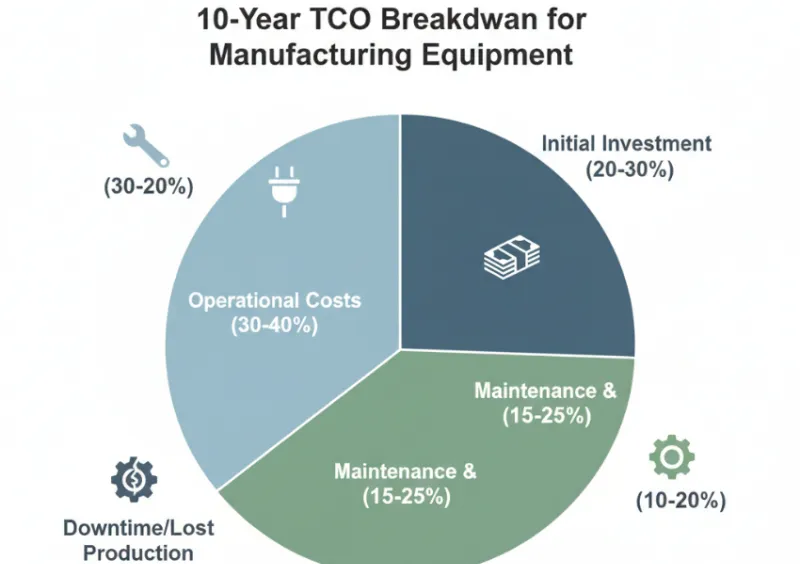
This financial model serves as a representative case study, using industry-average data to illustrate the long-term financial impact of choosing a premium, reliable production line over a standard, lower-cost alternative. Factory managers can use this template, substituting the figures with their own operational data to build a specific business case.
| Cost Component | Machine A (Standard) | Eversmart Machine B (Premium) | Notes |
| Initial Purchase Price | $300,000 | $380,000 | Includes base equipment cost. |
| Installation & Training | $30,000 | $25,000 | Premium lines often include more comprehensive training and streamlined installation. |
| Annual Energy Costs | $25,000 | $19,000 | Assumes Eversmart line is 24% more energy-efficient due to modern motors and optimized design. |
| Annual Maintenance Costs | $15,000 | $8,000 | Premium equipment uses more durable components, requiring fewer parts and less frequent service. |
| Annual Projected Downtime Costs | $20,000 | $5,000 | Higher reliability leads to significantly fewer hours of lost production and idle labor. |
| Subtotal (Annual Operating Costs) | $60,000 | $32,000 | |
| Total Operating Costs (10 Years) | $600,000 | $320,000 | |
| Total 10-Year TCO | $930,000 | $725,000 | The initial $80,000 premium for the Eversmart line results in a $205,000 savings over a decade. |
This model clearly demonstrates that the decision-making process must extend beyond the initial quote. By quantifying the long-term operational variables, a business can make a financially sound choice that prioritizes lifetime value and sustainable profitability.
Section 2: Calculating the Return on Investment (ROI) for Your Automated Line
While TCO provides a comprehensive view of the costs, Return on Investment (ROI) measures the profitability of the investment. It answers the fundamental question: "For every dollar we invest in this automated line, how much will we get back?" A robust ROI analysis is essential for justifying the capital expenditure to stakeholders and securing project approval.
2.1 The ROI Formula for Manufacturing Automation
The fundamental formula for calculating ROI is a simple percentage:
For an automated alfajor line, these terms are defined as:
Investment Cost: This is the total upfront cost to get the system operational, including the equipment price, installation, and initial training. It is the same figure used as the "Initial Investment (I)" in the TCO calculation.
Net Return: This is the total financial gain generated by the investment over a specific period (typically one year), minus the ongoing operational and maintenance costs for that same period.
A comprehensive ROI calculation must look beyond simple labor savings and incorporate all the tangible and strategic benefits that automation delivers.
2.2 Quantifying "Hard" ROI: The Tangible Financial Gains
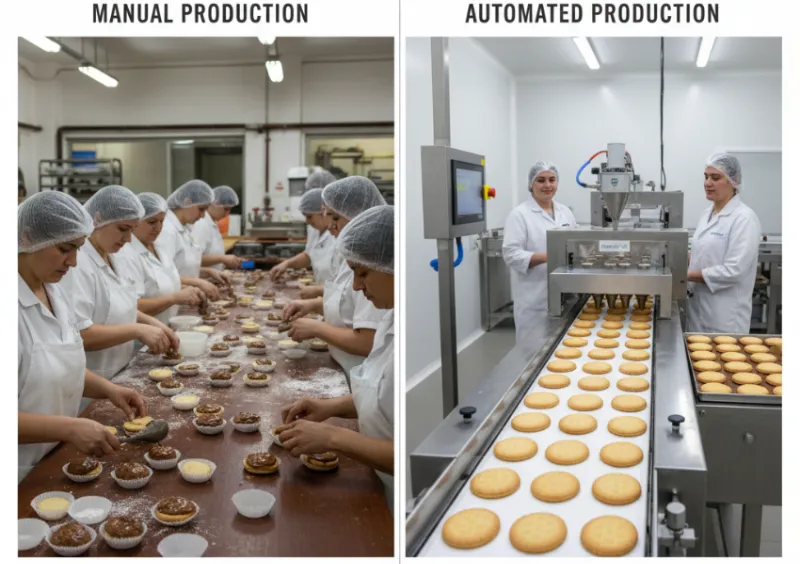
"Hard" ROI benefits are the measurable, direct financial gains that can be clearly tracked on a company's profit and loss statement.
Labor Savings Analysis: This is often the most significant and easily quantifiable return. The calculation involves more than just eliminating positions; it requires a full accounting of labor costs. For example, if a manual line requires 11 operators per shift and an automated line requires only 3, the savings are substantial. Assuming a conservative annual cost of $60,000 per employee (including wages, benefits, and overhead), the annual savings for a single shift would be $480,000 (8 employees x $60,000). For a plant running three shifts, this figure triples to nearly $1.5 million per year. Studies show that a switch to a fully automatic production line can result in labor expense savings of 40-60%.
Increased Throughput and Production Capacity: Automation enables faster and more consistent production, directly increasing sales potential. To calculate this gain, a business must first determine its current manual output (e.g., 1,000 alfajores per hour) and the projected output of the automated line (e.g., 2,500 alfajores per hour). The additional 1,500 units per hour, multiplied by the number of operating hours and the profit margin per unit, represents a direct increase in revenue. Businesses often report a 20-40% increase in daily output after automating.
Waste Reduction and Improved Yield: Manual processes are prone to inconsistencies in portioning and handling, leading to higher rates of rejected products and wasted ingredients. Automated systems provide precise portioning and gentle handling, significantly reducing scrap. A reduction in raw material waste, which can be as high as 10-20%, translates directly into lower cost of goods sold and higher profitability.
2.3 Valuing "Soft" ROI: The Strategic and Operational Advantages
"Soft" ROI benefits are strategic advantages that are less straightforward to quantify but are often just as critical to long-term success. While they may not have a direct line item on the balance sheet, their impact on growth and stability is immense.
Enhanced Product Consistency: Automated systems produce a uniform product every time, eliminating variations in size, shape, and filling that are common in manual production. This consistency strengthens brand reputation, enhances customer satisfaction, and reduces the costs associated with product returns and complaints.
Improved Scalability and Market Agility: An automated line provides the flexibility to rapidly increase production volume to meet a large wholesale order or seasonal demand without the need to hire and train a large temporary workforce. This agility allows a business to confidently pursue new growth opportunities that would be impossible to service with a manual process. This capability is a key asset for maintaining profitability in a dynamic market.
Data and Process Improvement: Modern automation platforms generate vast amounts of operational data. This data can be analyzed to identify bottlenecks, optimize production schedules, and enable predictive maintenance strategies, creating a cycle of continuous improvement. The insights derived from this data are a valuable asset that can inform future business decisions.
Focusing solely on labor savings tragically undervalues the full business impact of automation. A truly compelling ROI calculation presents automation not just as a cost-reduction tool, but as a strategic platform for enhancing quality, enabling growth, and building a more resilient and competitive operation.
2.4 A Phased Approach to ROI
For businesses where a full-line investment is initially prohibitive, a modular approach to automation offers a strategic pathway. By choosing modular stations that can be added over time, a company can target the most labor-intensive or bottleneck-prone areas of their process first. This phased implementation allows the business to realize a faster return on a smaller initial investment, with the savings from the first phase helping to fund subsequent expansions. This strategy is gaining traction as it makes the benefits of automation more accessible and financially manageable.
Section 3: The Hidden Costs of Inaction: Analyzing Your Current Manual Process
The decision to invest in automation is often framed as a choice between "spending money" on a new machine or "saving money" by maintaining the status quo. This is a false dichotomy. Continuing with a manual process is not a zero-cost option; it is an active acceptance of ongoing, often unmeasured, financial drains and strategic limitations. Creating a sense of urgency requires making these hidden costs visible.
3.1 Quantifying the Financial Drain of Manual Operations
A critical look at existing manual processes reveals numerous costs that erode profitability daily.
The High Price of Human Error: Manual processes are inherently vulnerable to human error, leading to inconsistencies in product weight, size, and quality. These errors result in higher rates of rejected products, which must be reworked or discarded, leading to direct losses in both materials and labor.
Labor Inefficiency and Turnover: The cost of labor extends far beyond hourly wages. It includes the significant expenses associated with recruitment, hiring, and training new employees. High turnover rates, common in repetitive manufacturing roles, create a costly cycle of constantly bringing new staff up to full productivity, during which time quality often suffers and waste increases.
Increased Overhead Costs: Manual production lines typically require a larger physical footprint to accommodate more workers, leading to higher facility and utility costs. Furthermore, managing a larger workforce carries a significant administrative burden, from payroll and scheduling to compliance and HR management, all of which contribute to overhead.
3.2 The Opportunity Cost of Stagnation
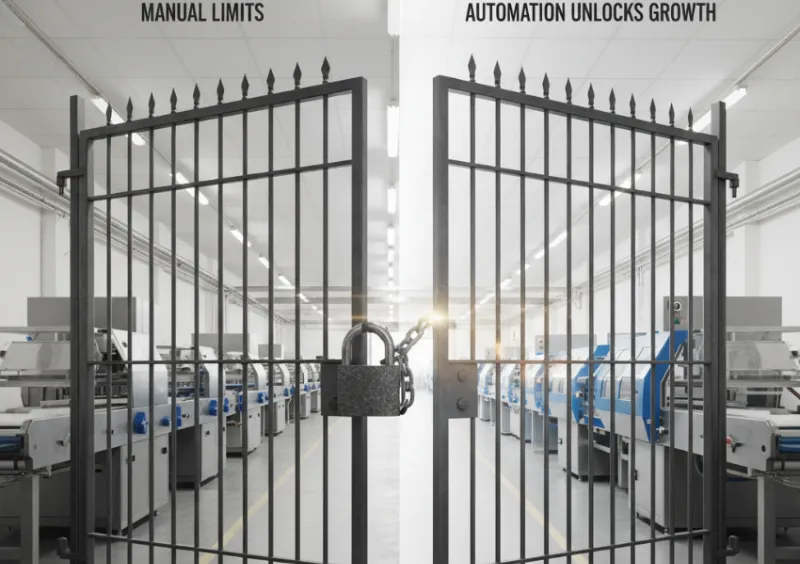
Perhaps the greatest cost of maintaining a manual process is the growth that is forfeited. Opportunity cost represents the potential benefits a business misses out on when choosing one alternative over another.
Inability to Scale: A manual production line has a hard ceiling on its output capacity. This limitation means the business may have to turn down large, profitable orders from wholesale or retail partners, effectively capping its own growth.
Stifled Innovation: When skilled employees are consumed by repetitive, low-value manual tasks, they have little time or mental energy to devote to strategic initiatives like developing new alfajor varieties, improving recipes, or optimizing workflows. Automation frees up this valuable human capital to focus on innovation and activities that drive the business forward.
Competitive Disadvantage: In a competitive market, efficiency is paramount. Competitors who have already embraced automation can produce goods faster, more consistently, and at a lower per-unit cost. Over time, this efficiency gap can allow them to capture market share, leaving businesses with manual processes struggling to compete on both price and quality.
3.3 The Compounding Costs of Manual-Related Downtime
While automated systems can experience downtime, manual lines are subject to their own unique and often more frequent disruptions. Unplanned employee absences, persistent labor shortages, or even minor injuries can halt or significantly slow down production with little warning. Changeovers between product runs are often inconsistent, and quality control issues can force stoppages for rework. These disruptions create a cascade of costs, from lost revenue to expedited shipping fees to make up for delays. By quantifying these hidden costs, the financial baseline shifts. The decision is no longer about affording a new machine, but rather about whether the business can afford to continue absorbing the costs of its current inefficient process.
Section 4: Building the Business Case and Securing Investment
With a comprehensive understanding of TCO, ROI, and the costs of inaction, the final step is to synthesize this information into a powerful business case to present to key stakeholders.
4.1 Assembling Your Capital Expenditure Proposal
A successful proposal for a major capital investment requires input from a multi-departmental buying group. Decision-makers from operations, purchasing, R&D, and finance should all be involved in the evaluation process to ensure all perspectives are considered and to build internal alignment. The proposal should be a clear, data-driven document that includes:
A summary of the current operational challenges and limitations.
The detailed Total Cost of Ownership (TCO) analysis.
The comprehensive Return on Investment (ROI) calculation, including both hard and soft benefits.
An analysis of the risks and costs associated with maintaining the current manual process.
A clear implementation timeline and training plan.
4.2 From TCO and ROI to a Compelling Narrative
The most effective proposals translate complex financial data into a compelling narrative. This story should not just focus on cutting costs but should highlight how the investment in automation is a strategic move to de-risk the business, improve product quality, unlock new growth opportunities, and build a more sustainable and profitable future.
4.3 Exploring Financial Pathways
A significant capital investment does not always require a large upfront cash payment. Several financial options can make advanced automation more accessible.
Equipment Leasing vs. Purchasing: Leasing can offer lower initial costs and predictable monthly payments, though purchasing may provide a lower total cost over the long term and tax advantages through depreciation.
Financing Options: Many equipment suppliers and third-party lenders offer affordable financing and loan options for businesses with good credit, allowing the cost to be spread out over time.
Robotics-as-a-Service (RaaS): An emerging model where automation is provided on a subscription basis. This converts a large capital expenditure (CapEx) into a manageable operating expense (OpEx), making it an attractive option for businesses looking to preserve capital.
4.4 Partnering for Success
Ultimately, the choice of an equipment provider is as important as the choice of the equipment itself. A true partner does not disappear after the sale. They provide comprehensive support throughout the entire process, from initial needs assessments and technical evaluations to installation, training, and long-term after-sales service and maintenance. This commitment to partnership directly addresses the C-suite's critical need for reliability and comprehensive support, ensuring the investment delivers on its promise for its entire lifecycle.
Frequently Asked Questions (FAQ)
Q1: What is a realistic payback period for an automatic alfajor production line?
A1: The payback period can vary significantly based on factors like your production volume, labor costs, and the level of automation. However, with significant labor savings and increased throughput, many bakeries can achieve a payback period of 12 to 24 months.17 A detailed ROI calculation, as outlined in this guide, will provide a more precise estimate for your specific operation.
Q2: How much can I really save on labor costs?
A2: Labor savings are often the largest component of ROI. A switch to a fully automatic line can reduce direct labor expenses by 40-60%.16 This is achieved by reallocating workers from repetitive manual tasks like forming, filling, and packing to more supervisory roles, allowing you to increase output without a proportional increase in headcount.20
Q3: Is it better to lease or buy bakery automation equipment?
A3: Both options have distinct advantages. Purchasing offers long-term ownership and potential tax benefits through depreciation, often resulting in a lower total cost over the equipment's lifespan.12 Leasing provides a lower initial capital outlay and predictable monthly payments, which can be beneficial for managing cash flow.12 The best choice depends on your company's financial situation and strategic goals.
Q4: My factory has limited space. Can I still automate?
A4: Yes. Modern production lines are often designed with a compact footprint in mind. Furthermore, a modular approach to automation allows you to upgrade specific parts of your line—like a cookie capper or packaging system—that offer the biggest return without requiring a complete overhaul of your floor plan.23 It's crucial to discuss layout and space constraints with your equipment provider early in the process.33
Q5: Beyond cost savings, what is the biggest strategic advantage of automation?
A5: The single biggest strategic advantage is scalability. Automation removes the ceiling on your production capacity that manual labor imposes.18 This agility allows you to confidently accept large wholesale orders, enter new markets, and respond to seasonal demand spikes—opportunities you might otherwise have to turn down, thereby unlocking significant long-term growth potential.28
Mastering Your Alfajor Production Line: A Handbook for Operational Excellence
Introduction: From Installation to Optimization: Maximizing the Lifespan and Performance of Your Investment
The acquisition and installation of an automated alfajor production line mark the beginning, not the end, of the journey toward manufacturing excellence. The true realization of the financial benefits detailed in the business case—the impressive ROI and favorable TCO—is contingent upon the mastery of the machine's day-to-day operation. Long-term success and profitability are forged through a steadfast commitment to running the line efficiently, safely, and reliably for its entire operational lifespan.
This handbook serves as an essential owner's manual for achieving operational excellence. It moves beyond the financial justification to the practical implementation of best practices. By covering the critical pillars of food safety, regulatory compliance, and proactive maintenance, this guide provides the knowledge necessary to protect the investment, maximize performance, and ensure the production of safe, high-quality alfajores for years to come. This is the roadmap to transforming a piece of capital equipment into a cornerstone of a thriving and resilient business.
Section 1: The Foundation of Food Safety: Hygienic Design Principles
1.1 Why Hygienic Design is Non-Negotiable
Hygienic design is the application of engineering principles to create equipment that is inherently easy to clean and resistant to harboring contaminants. It is not an optional feature but a fundamental requirement for any food processing machinery. Equipment of poor hygienic design is difficult, time-consuming, and expensive to clean, creating niches where bacteria, allergens, and other soils can accumulate. This not only increases the risk of a catastrophic food safety event, such as a product recall, but also directly inflates the Total Cost of Ownership by increasing labor, water, and chemical usage during sanitation cycles. Investing in equipment built with superior hygienic design is a direct investment in operational efficiency and risk mitigation.
1.2 The 10 Principles of Hygienic Design in Practice
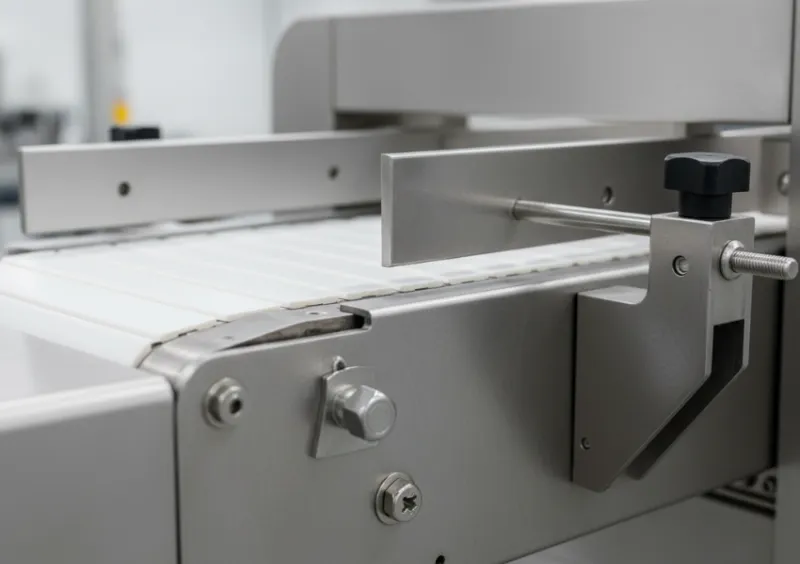
A truly hygienic machine adheres to a set of internationally recognized principles. When evaluating an automated alfajor line, look for evidence of these critical design attributes :
Cleanable to a Microbiological Level: All food-contact surfaces must be completely cleanable. This requires them to be exceptionally smooth, non-porous, and free of any imperfections like cracks, pits, or crevices where microorganisms could hide. A common industry standard for stainless steel surfaces is a roughness average (Ra) of less than 0.8 micrometers.
Made of Compatible Materials: The materials used in construction must be durable, corrosion-resistant, and non-toxic. For most bakery applications, 300-series stainless steel is the preferred material for its hygienic properties and resistance to degradation from food products and cleaning chemicals. All non-metal components, such as gaskets, seals, and conveyor belts, must be made of food-grade, compatible elastomers that will not break down or leach substances into the product.
Accessible for Inspection and Cleaning: Every part of the machine must be readily accessible for inspection, cleaning, sanitation, and maintenance. This means equipment should be designed for easy disassembly, preferably without tools, and have adequate clearance from floors, walls, and other equipment to allow for 360-degree access.
No Product or Liquid Collection: All surfaces, both internal and external, must be self-draining to prevent the pooling of liquids or the accumulation of product residue, which can become breeding grounds for bacteria. This is achieved through the elimination of flat horizontal surfaces and the use of sloped designs (a minimum 3% slope is recommended).
Hermetically Sealed Hollow Areas: Hollow areas, such as tubular frames or support legs, are unavoidable in some equipment designs. To prevent the ingress and accumulation of contaminants, these areas must be permanently and hermetically sealed.
1.3 Visual Guide: Identifying Hygienic vs. Unhygienic Design
The difference between good and poor hygienic design is often in the details. A well-designed machine will feature continuous, smooth welds, rounded internal corners, and "shoebox" style covers that prevent debris from entering. In contrast, poor design is characterized by sharp 90-degree angles, exposed threads on fasteners, spot welds that create crevices, and unsealed hollow components—all of which create significant sanitation challenges and food safety risks.
Section 2: Ensuring Compliance: Integrating Your Line with HACCP Protocols
2.1 HACCP 101 for Automated Bakeries
Hazard Analysis and Critical Control Points (HACCP) is a systematic, preventive approach to food safety that is a cornerstone of modern food manufacturing. It involves identifying potential biological, chemical, and physical hazards in the production process and implementing controls to prevent them from occurring. Integrating an automated line into a robust HACCP plan is not just a regulatory requirement; it is essential for protecting consumers and the brand.
2.2 Automating Critical Control Point (CCP) Monitoring
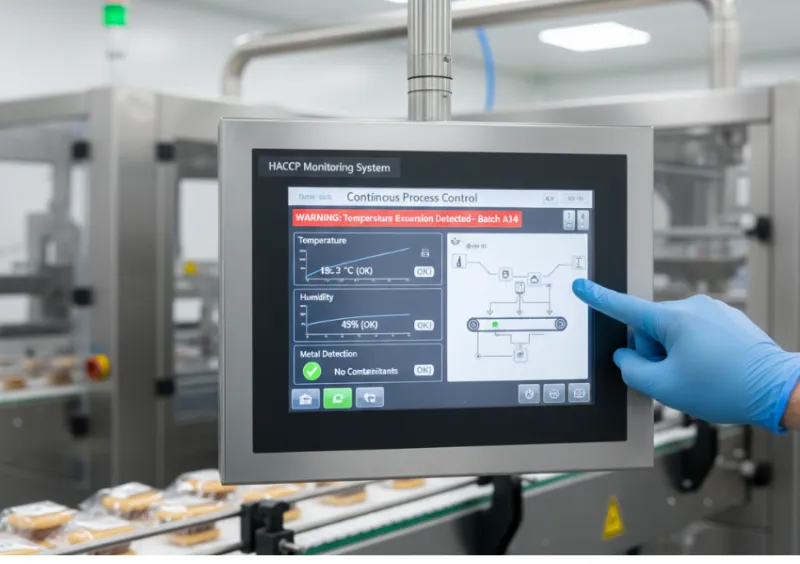
A Critical Control Point (CCP) is a step in the process where control can be applied to prevent or eliminate a food safety hazard. Automation fundamentally transforms the management of these CCPs from a manual, periodic task into a continuous, reliable, and automated system.
Example CCPs in Alfajor Production: In a typical alfajor line, potential CCPs could include:
The internal temperature and time in the baking oven to ensure microbiological kill-step effectiveness.
The temperature of the alfajores on the cooling conveyor to prevent pathogen growth before enrobing.
The functionality of a metal detector after packaging to eliminate physical hazards.
Automated Monitoring: An advanced automated line integrates sensors that provide real-time, continuous monitoring of these CCPs. For example, temperature probes within the oven constantly track and log baking temperatures, while infrared sensors can monitor the surface temperature of products on the cooling conveyor. This automated data collection is vastly superior to manual checks with a handheld thermometer, as it eliminates the potential for human error, missed readings, or falsified records.
Automated Alerts & Corrective Actions: The system can be programmed with critical limits for each CCP. If a parameter deviates from these limits—for instance, if the oven temperature drops below the minimum safe threshold—the system can trigger an immediate alarm to alert operators. In more advanced systems, it can even initiate an automatic corrective action, such as diverting potentially undercooked product.
2.3 Streamlining Record-Keeping for Audits
One of the most significant advantages of an automated system is its ability to streamline compliance and record-keeping. The system automatically generates a secure, time-stamped, and unalterable digital log of all CCP monitoring data. This provides complete traceability and makes preparing for regulatory or third-party audits incredibly efficient. Instead of searching through stacks of paper logs, an auditor can be presented with a complete, accurate, and easily searchable digital record, demonstrating a high level of process control and commitment to food safety. This shift from a reactive, labor-intensive documentation exercise to a proactive, integrated safety system fundamentally de-risks the operation and creates significant efficiencies in compliance management.
Section 3: Proactive Uptime: Developing a Preventive Maintenance (PM) Program
3.1 The Philosophy of Preventive Maintenance
A structured Preventive Maintenance (PM) program is the single most effective strategy for protecting the Return on Investment of an automated line. It represents a fundamental shift away from a reactive "fix it when it breaks" mentality to a proactive "prevent it from breaking" approach. By performing regular inspections, cleaning, lubrication, and parts replacement based on a set schedule, a PM program significantly reduces the likelihood of unexpected equipment failures. This, in turn, minimizes costly unscheduled downtime, extends the operational lifespan of the equipment, and lowers overall maintenance costs over time. PM is not a cost center; it is a profit-protection activity.
3.2 Building Your PM Schedule: A Step-by-Step Guide
Creating an effective PM program is a systematic process that requires careful planning.
Step 1: Asset Inventory & Prioritization: The first step is to create a comprehensive inventory of every major component and subsystem on the alfajor production line. This list should include details such as make, model, and serial number. Once inventoried, each asset should be prioritized based on its criticality to the overall production process and its potential impact on food safety. Components whose failure would cause a complete line stoppage are of the highest priority.
Step 2: Identify Failure Modes: For each critical component, the next step is to identify its most likely failure modes. This information can be gathered from the equipment manufacturer's recommendations, historical maintenance records, and the invaluable experience of operators and maintenance technicians who are familiar with the equipment's quirks.
Step 3: Define PM Tasks & Intervals: With a clear understanding of potential failures, specific maintenance tasks can be defined to prevent them. For each task, a frequency must be established—daily, weekly, monthly, quarterly, or annually—based on the manufacturer's guidelines and the intensity of use.
3.3 The Role of a CMMS
For a complex production line, managing a PM program manually can be challenging. A Computerized Maintenance Management System (CMMS) is a software solution that automates and streamlines this process. A CMMS can automatically generate and assign recurring work orders for PM tasks, manage spare parts inventory, and maintain a detailed history of all maintenance activities. This digital record provides invaluable data that can be used to analyze trends and continuously optimize the maintenance schedule.
3.4 Introduction to Predictive Maintenance (PdM)
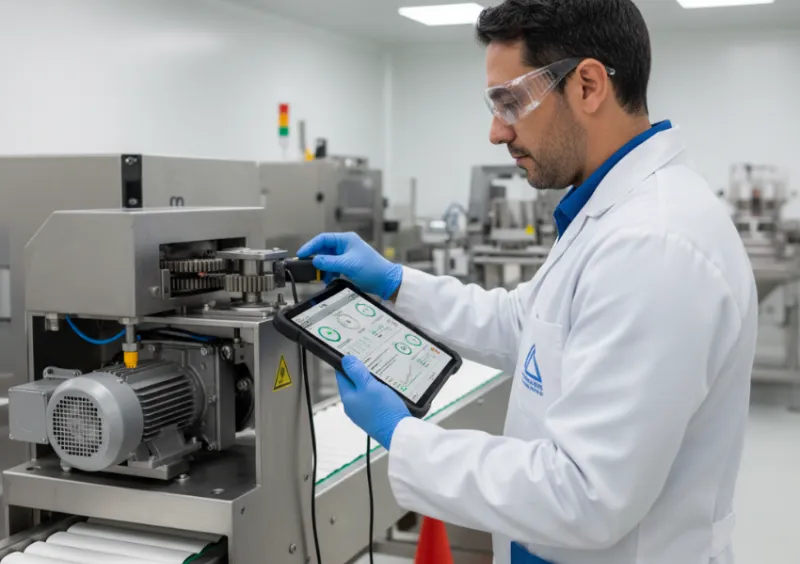
Predictive Maintenance is the next evolution beyond PM. It involves using sensors to monitor the actual condition of equipment in real-time. For example, vibration sensors on a motor can detect subtle changes that indicate bearing wear long before a failure occurs. This data allows maintenance to be scheduled precisely when it is needed, rather than based on a fixed time interval, further optimizing efficiency and preventing downtime.
Table 2: Sample Preventive Maintenance Schedule for an Automated Alfajor Line
| Component | Task Description | Frequency | Responsible Party | Notes/Tools |
| Dough Mixer | Inspect seals and gaskets for wear or leaks. | Weekly | Technician | |
| Lubricate main drive bearings per manufacturer specs. | Monthly | Technician | Food-grade lubricant | |
| Depositor | Remove, inspect, and clean all depositor nozzles. | Daily | Operator | Nozzle cleaning kit |
| Check pneumatic lines for leaks and proper pressure. | Weekly | Technician | Soapy water solution | |
| Baking Oven | Calibrate temperature sensors against a certified thermometer. | Quarterly | Technician | Calibrated thermometer |
| Inspect conveyor belt for damage and proper tension/tracking. | Weekly | Operator | ||
| Cooling Conveyor | Clean debris from under the belt and around drive motors. | Daily | Operator | |
| Check gearbox oil level and condition. | Monthly | Technician | ||
| Enrober | Inspect and clean chocolate filters. | Daily | Operator | |
| Verify heating element and thermostat functionality. | Weekly | Technician | Multimeter | |
| Metal Detector | Test functionality using ferrous, non-ferrous, and stainless steel test wands. | Per Shift | Operator | Certified test wands |
This template provides a starting point for developing a comprehensive PM program. A prospective buyer may feel overwhelmed by the perceived complexity of maintaining a new line, but this table demonstrates that maintenance is a structured, manageable process, not a series of chaotic emergencies.
Section 4: Standard Operating Procedures (SOPs) for Cleaning and Sanitation
4.1 The Importance of Documented SOPs
Standard Operating Procedures (SOPs) are detailed, written instructions for performing a specific task. For cleaning and sanitation, documented SOPs are absolutely essential. They ensure that every cleaning task is performed consistently and effectively, regardless of which employee or shift is performing the work. This consistency is critical for guaranteeing food safety, maintaining product quality, and meeting regulatory requirements.
4.2 Developing a Cleaning and Sanitation Protocol
A comprehensive sanitation SOP should detail every step of the cleaning process.
Pre-Cleaning: The initial step involves the physical removal of large, gross food soils from equipment surfaces.
The 4 Steps of Cleaning: This is the core of the process and includes:
Pre-rinse: Using water to remove remaining loose soils.
Wash: Applying an appropriate detergent at the correct concentration and temperature to break down and remove fats, proteins, and carbohydrates.
Rinse: Thoroughly rinsing all detergent from the surfaces.
Sanitize: Applying a sanitizing agent to reduce microorganisms to a safe level.
Chemical Compatibility: It is crucial to select cleaning and sanitizing chemicals that are effective for the type of soil present but will not damage the equipment's materials. For example, highly caustic or chlorinated cleaners can corrode certain metals or degrade plastic and rubber seals. The manufacturer's recommendations should always be followed.
Clean-In-Place (CIP) Systems: Many modern automated lines incorporate Clean-In-Place systems, which automate the washing and sanitizing of internal piping and vessels. These systems provide a highly consistent and validated clean, reduce labor, and improve worker safety by minimizing exposure to chemicals.
4.3 The Human Element: Training for Operational Success
Ultimately, the effectiveness of any automated system or procedure depends on the people who operate and maintain it. Comprehensive training is not an option; it is a prerequisite for success.
Operator Training: Operators must be trained not only on how to run the machine during production but also on how to perform daily inspections, basic cleaning tasks, and how to recognize and report the early warning signs of a potential problem.
Maintenance Training: Maintenance technicians require in-depth training on the machine's mechanical and electrical systems, proper disassembly and reassembly procedures, and the specific tasks outlined in the PM schedule.
Sanitation Crew Training: The sanitation team needs specific training on the cleaning SOPs, safe handling of chemicals, and the methods used to verify cleaning effectiveness, such as ATP swabbing.
Conclusion
Mastering the operation of an automated alfajor production line is the key to unlocking its full value. The principles of hygienic design, the diligent application of HACCP protocols, the proactive execution of a preventive maintenance program, and the consistent follow-through on sanitation SOPs are not separate disciplines. They are interconnected components of a holistic system of operational excellence. By embracing this system, a food manufacturer can move beyond simply owning a machine to truly commanding a powerful production asset—one that consistently delivers safe, high-quality products, protects the brand's reputation, and drives sustainable, long-term profitability.
Contact SofiaExport Vice President | EverSmart 📞 WhatsApp +86 137 94619343📧 [email protected] for your project's unique solution of Alfajor!

Ready to start your journey toward a customized solution? Contact me directly on WhatsApp to begin the conversation.