Automating the Tray: Robotic Pickers vs. Gravity Loaders
Introduction: The Premium Presentation
A flow-wrapped slug is efficient, but it looks like a commodity. For premium Sandwich Biscuits—especially those with delicate fillings like aerated cream or jam centers—a plastic tray (thermoform) signals luxury.
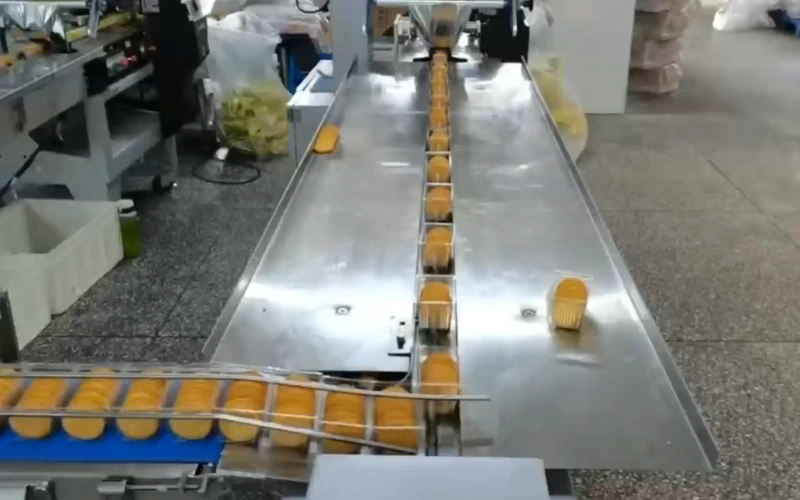
However, getting sandwiched biscuits into a multi-cavity tray at 3,000 per minute is one of the hardest tasks in automation.
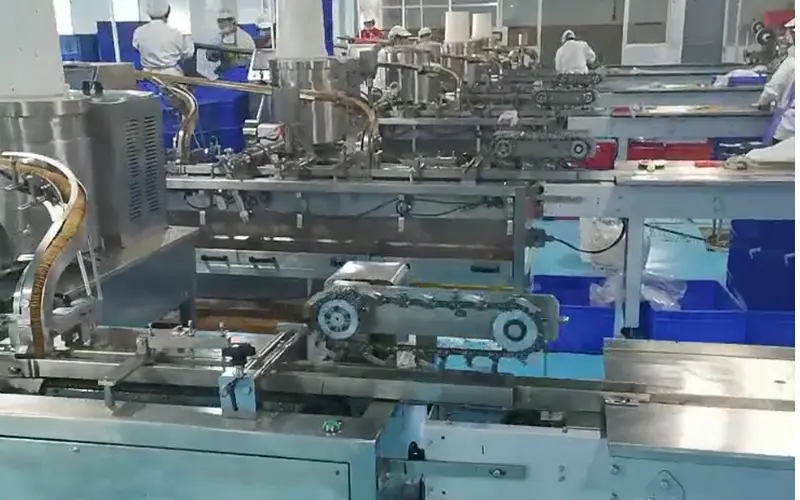
The Manual Trap:Most factories start by manually loading trays. It takes an army of people. To keep up with one high-speed sandwicher, you might need 8 to 12 operators. This is expensive, unhygienic, and prone to Repetitive Strain Injury (RSI).
The Engineering Choice:Do you choose the low-cost, high-speed Gravity Loader? Or do you invest in the high-tech, flexible Robotic Picker?
🚀 Key Takeaways
Gravity is Fast: Mechanical chute loaders fill trays at 800+ ppm but require durable, hard biscuits.
Robots are Gentle: Delta robots use vision to pick delicate products, but are slower per unit.
Vision Quality Control: Robots don't just pack; they inspect. They refuse to pick misaligned sandwiches.
Space vs. Cost: Gravity loaders are compact. Robotic cells require large safety cages.
System Context: Before automating the tray, ensure your upstream
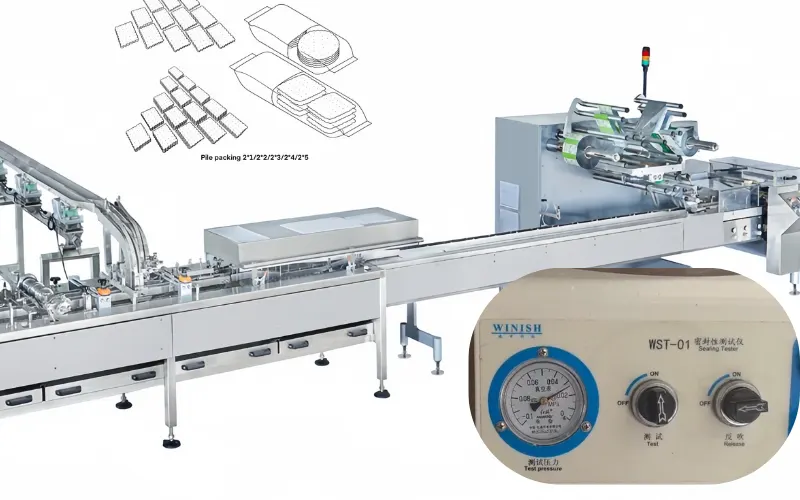
is outputting consistent rows. Industrial Biscuit Sandwich Machine
Option A: The Gravity Loader (Mechanical)
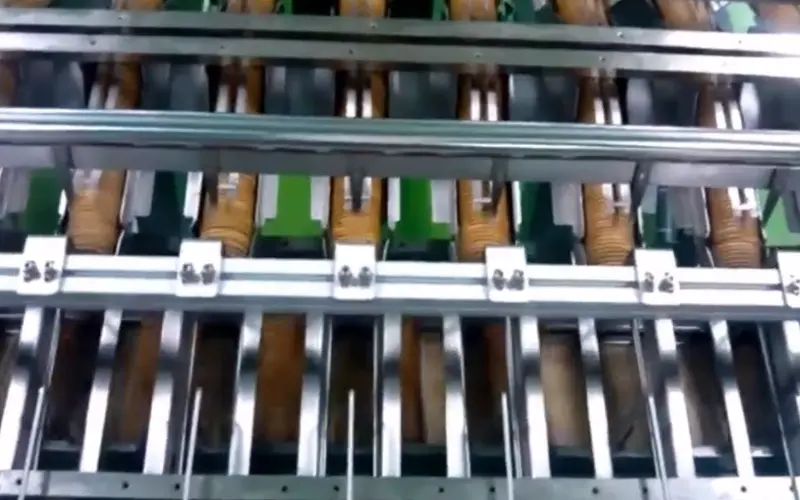
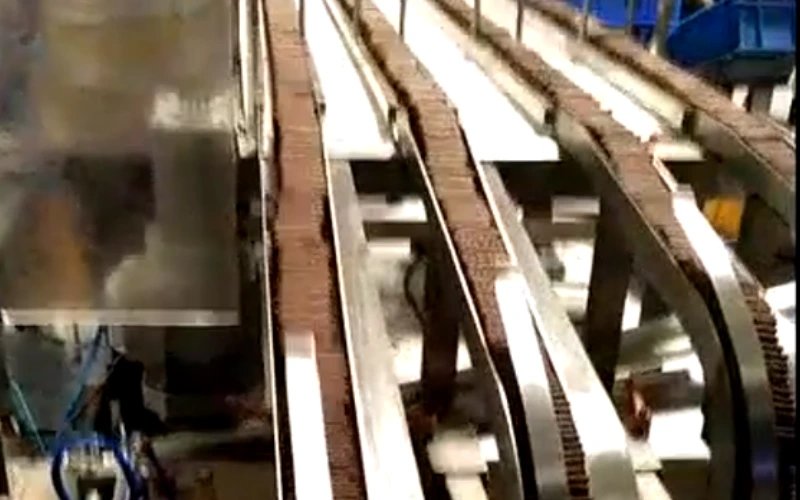
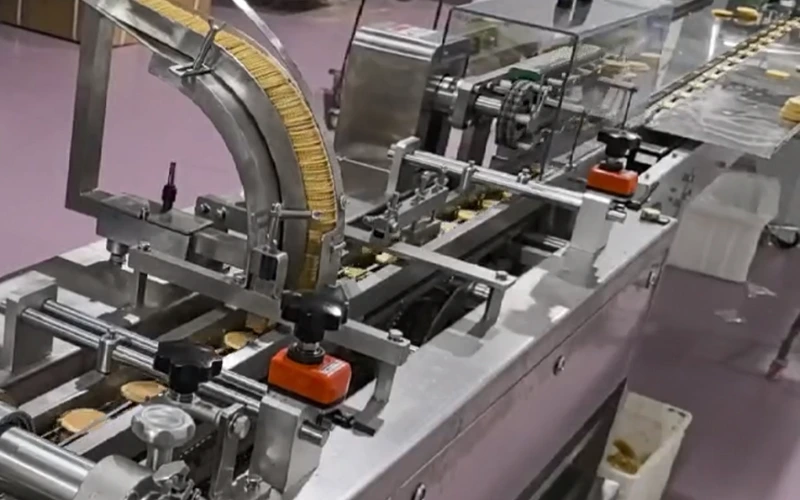
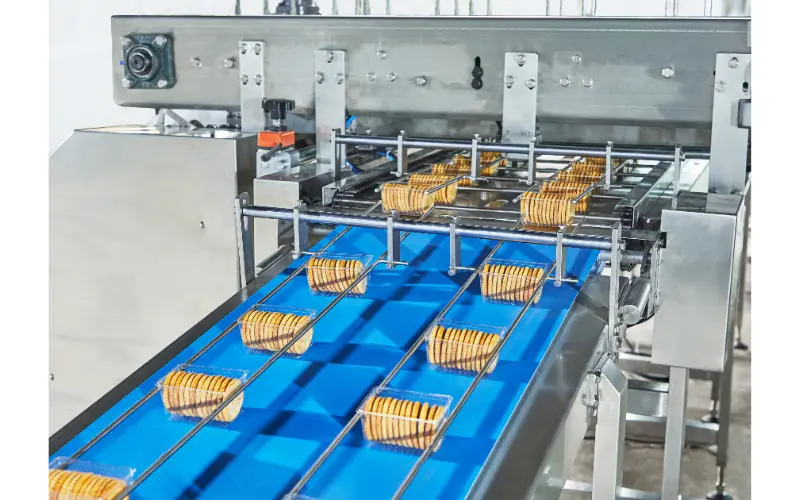
This is the "Old Reliable" of the biscuit industry. It uses simple physics to slide biscuits into place.
How It Works
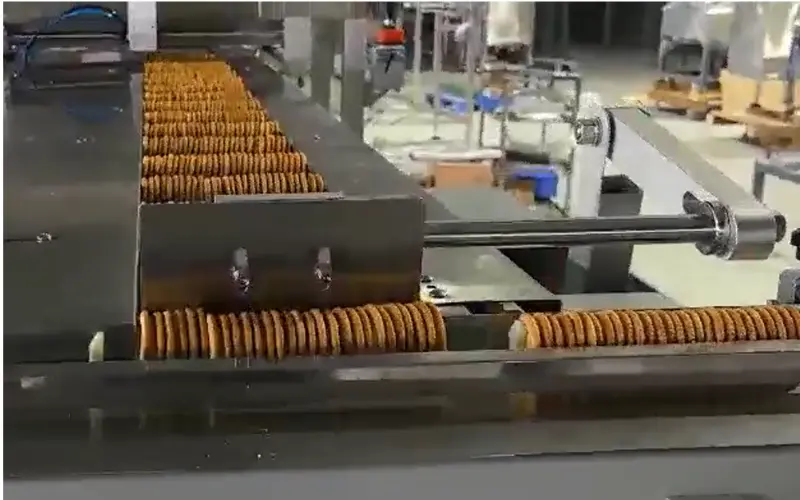
The Accumulation: Sandwiches are flipped on edge. (See the "Penny Stacker" mechanics in our
On-Edge vs. Flat Pile Guide The Chute: The slug is pushed into a curved stainless steel chute.
The Catch: A conveyor moves empty trays underneath. The slug slides out of the chute and lands in the moving tray cavity.
Best For:
Hard Dough Sandwich Biscuits (Oreo, Digestive).
High-Speed Lines (Single SKU).
The "Crash" Factor
The weakness of gravity is impact.
Risk: If your sandwich is fragile (e.g., a thin almond biscuit), the impact will shatter it.
Limit: Do not use gravity loaders for products with a "Breakage Force" of less than 2kg.
Option B: The Robotic Picker (Delta Robots)
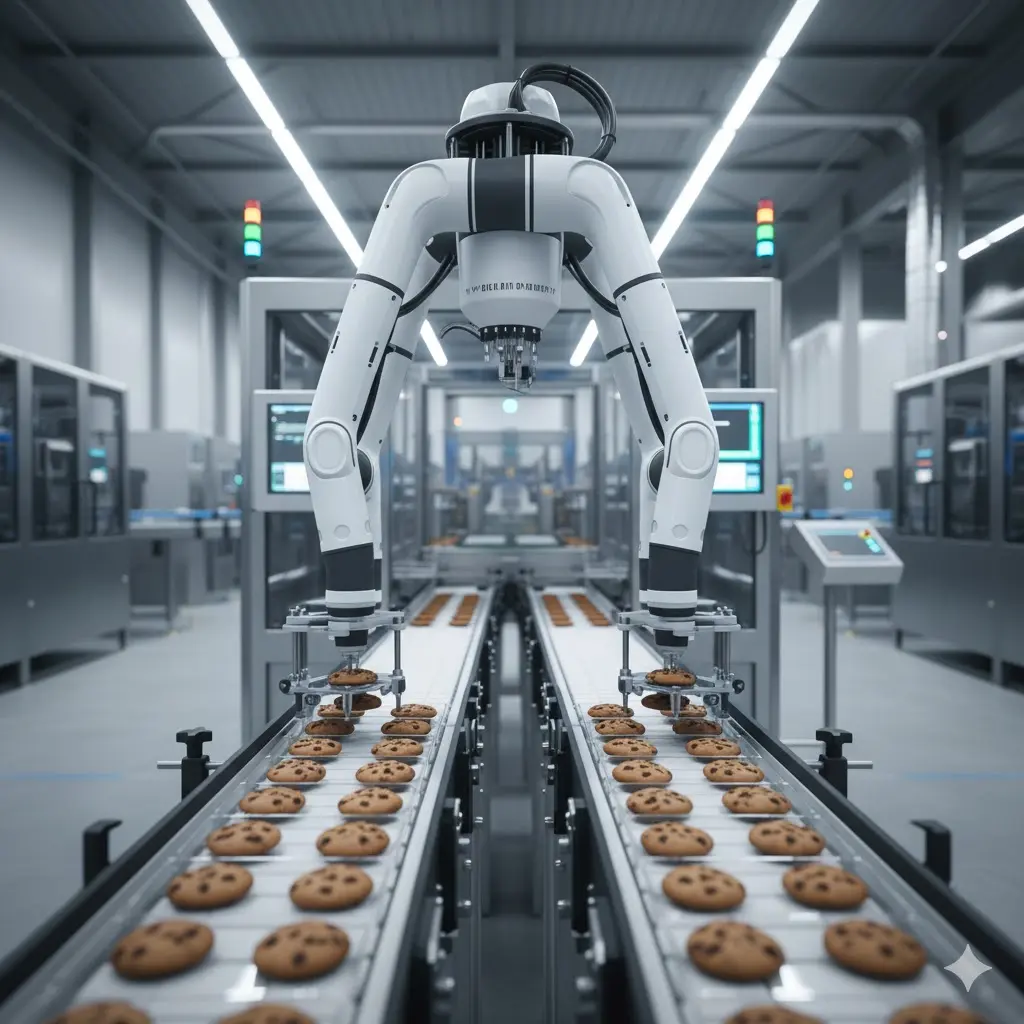
If gravity is a sledgehammer, the robot is a scalpel. Delta Robots (Spider Robots) suspended from the ceiling are the standard for flexible packing.
Vision-Guided Picking
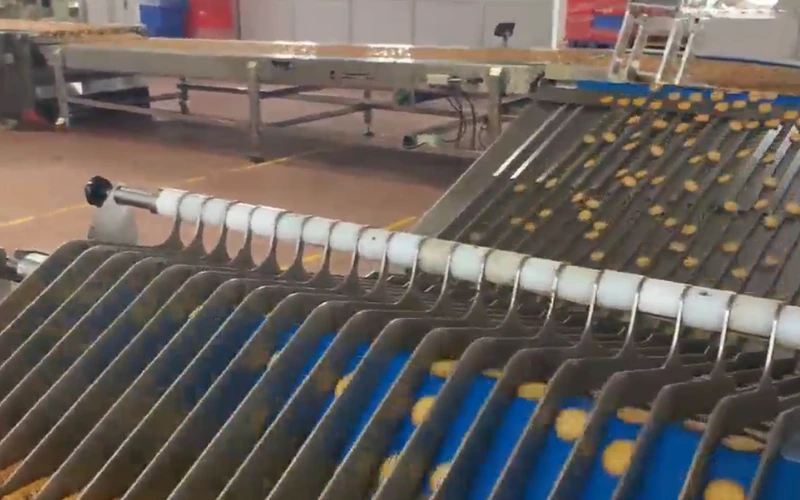
The robot doesn't need the sandwiches to be aligned.
Camera: Scans the incoming belt, identifying X, Y, and Rotation.
Tracking: Synchronizes with the moving belt.
Pick & Place: The vacuum gripper picks the biscuit and places it gently into the tray.
External Authority: Read the
standards on food safety in robotics. Robotic Industries Association (RIA)
Pros:
Non-Contact: No mechanical guides to crush edges.
Assortments: Can pick Chocolate Sandwiches from Belt A and Vanilla from Belt B to mix in one tray.
Hybrid Lines: Perfect for
Hybrid Biscuit Production Lines
Speed Limits
One robot cannot match one gravity loader.
Gravity Loader: 800+ biscuits/min.
Single Delta Robot: 80–120 picks/min.
The Consequence: To handle 3,000 ppm, you need a Robotic Cell containing multiple robots in series.
End-of-Arm Tooling (The Gripper)
The robot is only as good as its hand.
Vacuum Cups
Standard: Silicone cups. Good for smooth surfaces.
Physics: Understanding vacuum lift is critical. Review the principles in our
Vacuum Cookie Capper Engineering Guide
Soft Grippers
Bernoulli Grippers: Use air flow to create a "non-contact" lift zone. Great for topped cookies.
Soft Fingers: Pneumatic silicone fingers that gently wrap around the edge.
The Critical Role of Buffering
Robots are fast, but if the Tray Denester jams, the robot has nowhere to put the biscuit. It will drop the product into the reject bin.
The Fix: You must install a
The ROI Calculator
Robots are expensive. When are they worth it?
Scenario: Factory runs 24/7 (3 shifts).
Manual Loading: 10 people/shift = 30 people. Cost: $750,000 / year.
Robotic Solution: Cell Cost: $1.2M. Maintenance: $20k/year.
Payback: $1.2M / $730k savings = 1.6 Years.
Verdict: If you run multi-shift operations in a high-wage country, robots pay for themselves quickly.
Troubleshooting Tray Loading
FAQ: Automation Engineering
Q1: Can robots stack biscuits?A: Yes. A robot can "Pick-and-Stack" into a tray, though this slows the cycle time.
Q2: How do I handle tray variations?A: Plastic trays are flimsy. You need a Lug Chain conveyor to hold the tray rigid.
Q3: How much space do I need?A: Robotic cells are large. Check your available footprint with our
Conclusion: Balancing Care and Cost
Tray loading is the final mile of your production.
If you produce a robust, high-volume cookie, choose the Gravity Loader.
If you produce a high-value, delicate assortment, invest in Robotics.
The EverSmart Advantage: We integrate both. We can build a line with a Gravity Loader for your main SKU and a modular "Robot Ready" section for future flexibility.
Simulate Your Savings.Not sure if robots fit your budget?
[CTA Button]Calculate Your Automation ROI by whatsapp us. Compare Manual vs. Gravity vs. Robotic loading for your specific labor rates.

Ready to start your journey toward a customized solution? Contact me directly on WhatsApp to begin the conversation.