Flexible Factories: Designing a Line for Both Plain and Sandwich Biscuits
Introduction: The "One-Trick Pony" Problem
In traditional factory planning, lines were rigid. Line A made Oreos. Line B made Digestives. If sales for Oreos dipped, Line A sat idle. This is the "One-Trick Pony" problem.
Your Tunnel Oven is the most expensive asset in your factory ($2M+). It should never stop. However, a
The Strategic Solution: The Hybrid Line.A production line designed to split its personality. On Monday, it feeds the Sandwich Machine. On Tuesday, it bypasses the sandwicher entirely and feeds a bulk packaging system.
This guide explains the engineering behind Bypass Diverters, Overhead Conveyors, and the logic required to run a flexible factory.
🚀 Key Takeaways
Asset Utilization: Run the oven 24/7, even if the sandwicher is down.
The Diverter Gate: A pneumatic "Smart Gate" immediately after the cooling tunnel is the key.
Layout Physics: Bypass Parallel (easy maintenance) or Overhead (space-saving).
Hygiene Zoning: Protect the "Plain" path from cream contamination.
ROI: A divert system costs $50k. A second oven costs $2M.
Chapter 1: The Core Mechanism: The Diverter Gate
You cannot switch production modes if you have to physically unbolt conveyors. You need a switch track.
The "Smart Gate" (Pneumatic)
Located at the end of the Cooling Tunnel, before the
State A (Sandwich): The nose extends, connecting to the feeding system.
State B (Plain): The nose retracts, dropping biscuits onto a separate Bypass Conveyor.
Changeover Time: < 10 Seconds (One touch on HMI).
The "Dump" Function
A good diverter has a third position: Dump. If the packaging machine crashes, you cannot stop the oven instantly. The gate opens fully, dumping biscuits into a scrap bin.
Optimization: Learn how to avoid dumping using
Buffer Systems
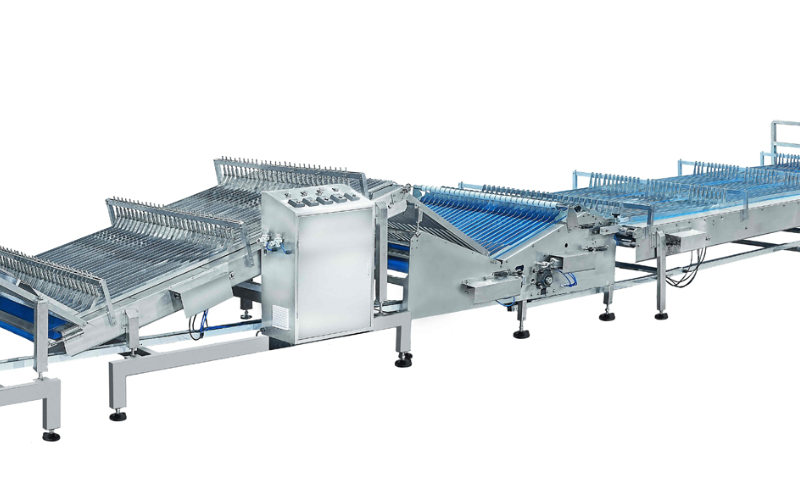
Chapter 2: Layout Option A: The Parallel Bypass
This is the simplest layout if you have a wide factory floor.
The Design:
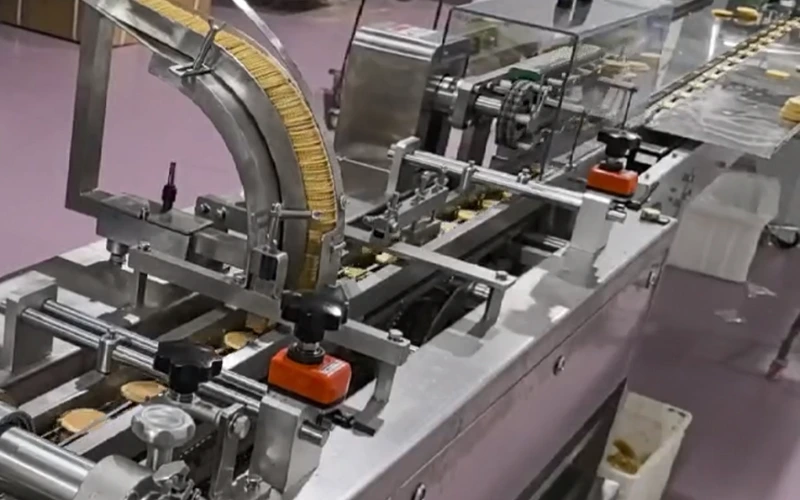
Path 1 (Sandwich): Straight line flow.
Path 2 (Plain): A 90-degree turn immediately after the diverter, running parallel to the sandwicher.
Pros: Easy access for maintenance; no risk of cream drips.
Cons: Consumes double the floor width.
Chapter 3: Layout Option B: The Overhead Bypass (Z-Conveyor)
Most factories are tight on space. You cannot afford a 5-meter wide aisle. You need to go Up.
The Design:
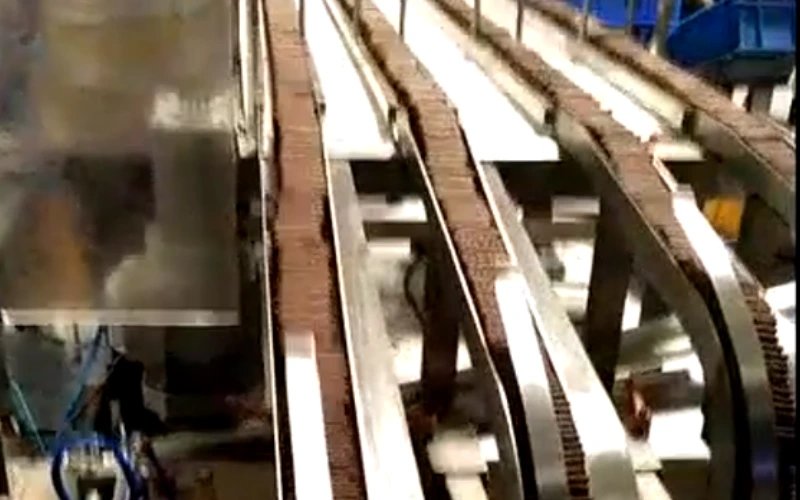
Diverter: Sends plain biscuits onto an incline belt.
Overhead: Biscuits travel on a covered conveyor directly above the sandwich machine.
Descent: A decline belt brings them back down to the packaging level.
⚠️ Engineering Constraint: The maximum incline angle for loose biscuits is typically 15-18 degrees to prevent sliding.
External Resource:
(Engineering Toolbox). Conveyor Belt Friction and Incline Angles
Pros: Zero Footprint Increase. Single Packing Hall.
Cons (Hygiene): You must have catch pans under the overhead belt. If a plain biscuit breaks and crumbs fall into the cream hopper below, you have contamination.
Learn More:
Hygienic Design Biscuit Sandwicher Guide
Chapter 4: The Logic of "Dual-Mode"
Running a Hybrid Line requires smart PLC logic.
Speed Matching
Mode A (Sandwich): Oven speed dictated by Sandwicher Capacity (e.g., 3,000 SPM).
Mode B (Plain): Oven speed dictated by Baking Time only (e.g., 4,000 SPM).
EverSmart Solution: Our PLC links the Diverter Position to the Oven Drive, automatically ramping the speed profile.
Packaging Compatibility
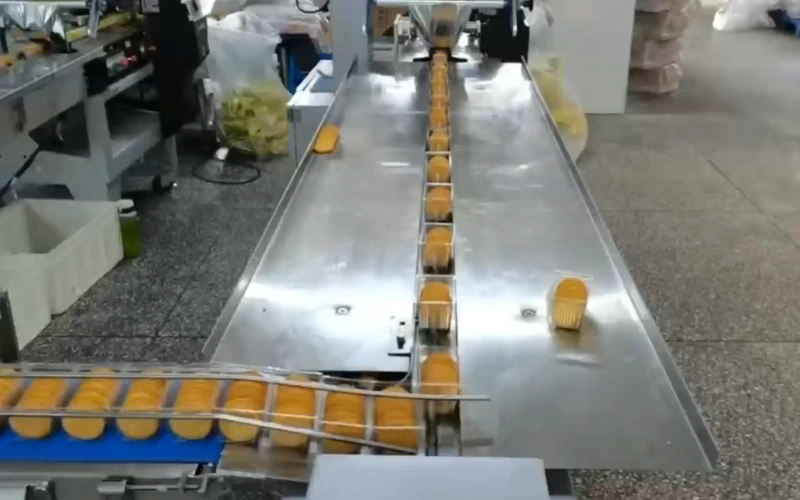
If you merge both paths into one packaging area, the wrapper must be versatile.
Sandwich: 50mm high stack (4 biscuits).
Plain: 50mm high stack (8 biscuits).
Integration: Ensure your wrapper has Servo-Adjustable chain pitch. Read
Biscuit Sandwicher & Flow Wrapper Synchronization 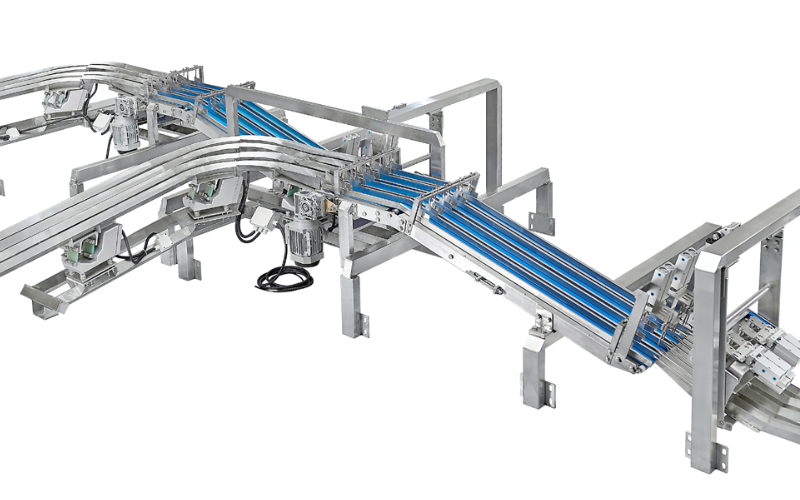
Chapter 5: Troubleshooting Hybrid Lines
| Symptom | Probable Cause | Corrective Action |
| Jams at Diverter | Nose bar gap too wide. | Install "Knife Edge" transfer plate (3mm radius). |
| Plain Biscuits Dirty | Dust from sandwicher below. | Install full dust covers on overhead conveyors. |
| Wrapper Timing Errors | Different belt lengths. | PLC must have distinct shift registers for Path A vs Path B. |
| Slow Changeover | Manual belt adjustments. | Implement |
Chapter 6: FAQ: Factory Planning
Q1: Can I retrofit a bypass to my existing line?A: Yes. We cut the cooling conveyor 2 meters before the sandwicher and insert a modular Diverter Station.
Planning: See our
Biscuit Factory Layout Optimization Guide
Q2: Is it better to have two dedicated wrappers or one shared wrapper?A: Two is safer. If you share one wrapper and it breaks, your entire flexible factory stops.
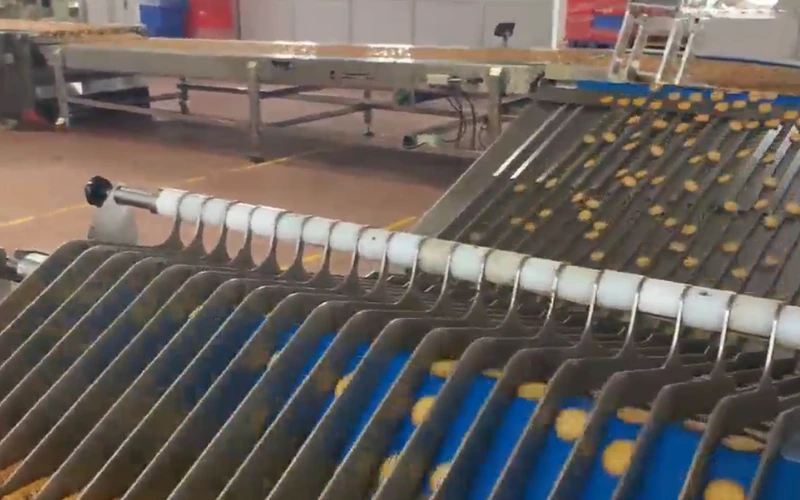
Q3: Can I run both at the same time?A: Only if your oven is wide enough. We can design a "Split Lane" system (Lanes 1-3 Sandwich, Lanes 4-6 Plain).
Conclusion: The Asset Utilization King
A Hybrid Line is the difference between a factory that runs 60% of the time and one that runs 95% of the time. It allows you to say "Yes" to urgent orders without disrupting your sandwich schedule.
The EverSmart Advantage: We model your factory floor in 3D before we build to ensure Path A and Path B flow perfectly.
Unlock your factory's potential.Do you have dead space above your sandwicher?
[CTA Button]Request a Hybrid Layout Design by whatsapp us.Upload your floor plan. See the possibilities.

Ready to start your journey toward a customized solution? Contact me directly on WhatsApp to begin the conversation.