Soda Cracker Production: Optimize for Quality & Efficiency
Optimizing Your Soda Cracker Recipe and Production Parameters for Better Efficiency and Quality
A successful soda cracker formulation is at the core of your production line's performance. A great recipe doesn't just guarantee fantastic flavor and texture; it directly impacts efficiency, reduces waste, and ensures product consistency, potentially saving your factory millions. By understanding how each ingredient influences dough characteristics and the baking process, you can proactively adjust equipment parameters to solve common production problems at their root. This guide provides actionable insights from the perspectives of four key departments—Purchasing, R&D, Project Management, and the front-line operator—to help you gain control of your soda cracker production from the source.
For those focused on achieving ultimate product quality and consistency, be sure to check out our detailed guide: How to Standardize Soda Cracker Production: EverSmart's Guide to Quality & Consistency.
What Are Soda Crackers? And What Are the Challenges?
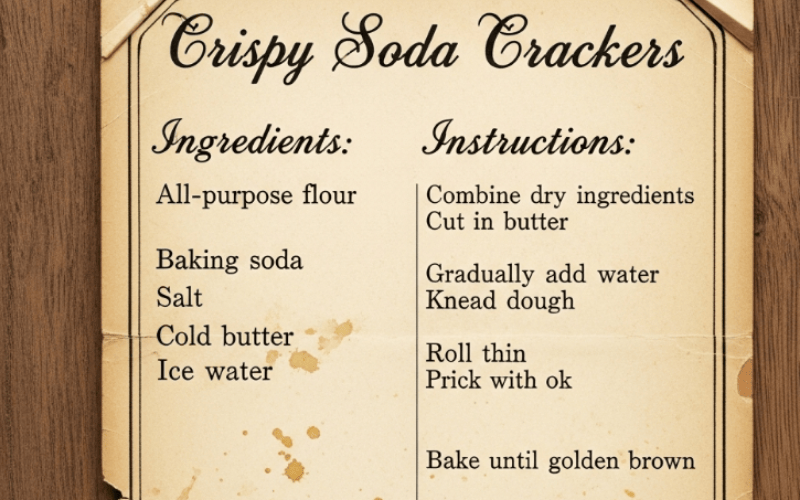
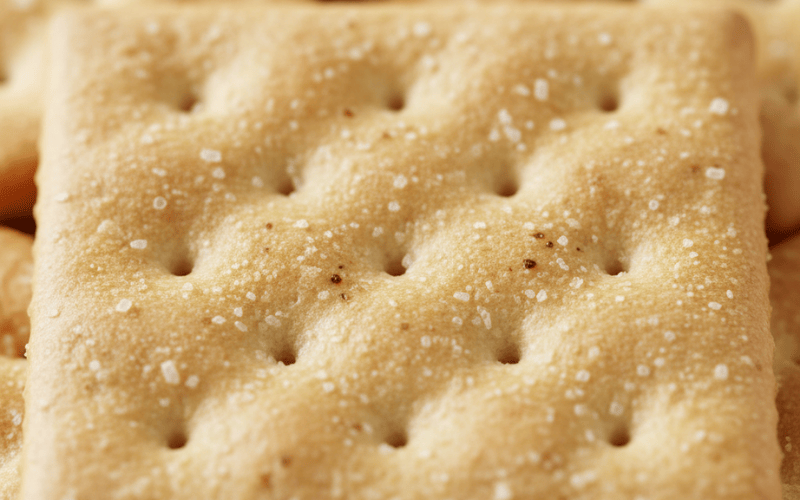
What are soda crackers? Soda crackers, also known as Saltines, are thin, crisp crackers made from a hard dough. They are typically square, with a porous surface and a distinctively crunchy texture. Their uniqueness comes from a fermentation and chemical leavening process, which uses baking soda (sodium bicarbonate) and yeast to create air pockets and a flaky, layered structure during baking. Unlike soft dough biscuits, soda crackers are made on a hard dough biscuit production line, requiring specific sheeting and forming processes due to their high elasticity and extensibility.
What is the soda cracker challenge? The challenges on a hard dough biscuit production line are mostly due to dough inconsistency. Every ingredient in the recipe—from the type and quality of flour to the baking soda—directly affects the dough's rheological properties, specifically its extensibility, elasticity, and stickiness. These properties dictate how the dough performs during mixing, sheeting, forming, and baking. For instance, flour with excessively high protein content can make the dough too elastic and difficult to sheet evenly, while insufficient water makes the dough too stiff, increasing equipment wear. Understanding these fundamental correlations is key to problem-solving, as research has proven that dough moisture content and chemical leavening agents in the formulation significantly affect the final cracker quality (Reference:
How Do They Make Crackers in a Factory?
How do they make crackers in a factory? The complete process for manufacturing crackers on a hard dough biscuit production line includes these main steps:
Mixing: Precisely blending ingredients like flour, water, yeast, and baking soda to form the dough.
Fermentation: Allowing the dough to rest and ferment, a crucial step for developing flavor and leavening.
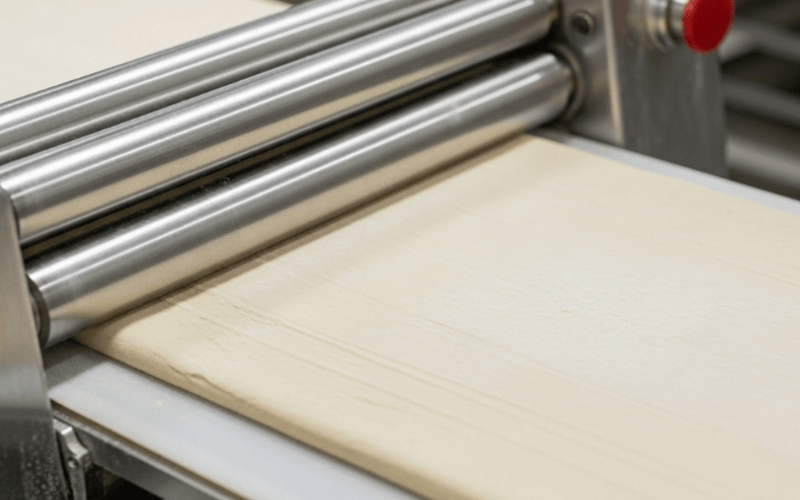
Sheeting and Laminating: Repeatedly folding and sheeting the dough through a series of rollers to create the flaky, layered structure that is key to the cracker's crispiness.
Forming: Cutting the dough into a specific shape using a rotary cutter or dies.
Department-Specific Action Guides: Solutions for Your Role
Cooling and Packaging: Allowing the finished crackers to cool before sorting and packag
Baking: Baking in a tunnel oven with controlled temperature and humidity zones.
1. Purchasing Manager's Perspective: Focus on Quality Assurance, Not Just Price
Your primary goal is to ensure a stable supply of consistent, high-quality ingredients, as this is the root cause of production line parameter fluctuations.
Establish Strict Raw Material Specifications: Work with the R&D department to set clear quality standards for key ingredients like flour, fats, and baking soda. Beyond traditional metrics, you should focus on flour's Gluten Index, Falling Number, and water absorption.
Implement a Supplier Quality Assurance Agreement (QAA): Sign agreements with your core suppliers to define the acceptable range of quality fluctuations for each batch. Request Certificates of Analysis (CoA) for every delivery and use data analysis to monitor trends, allowing you to flag potential issues early.
Optimize Inventory Strategy: Maintain an appropriate safety stock of critical ingredients to mitigate issues caused by batch-to-batch variations.
2. R&D Manager's Perspective: From Lab Formulation to Production Adaptability
Your goal is to develop recipes that not only meet market demands but are also easily scalable for industrial production.
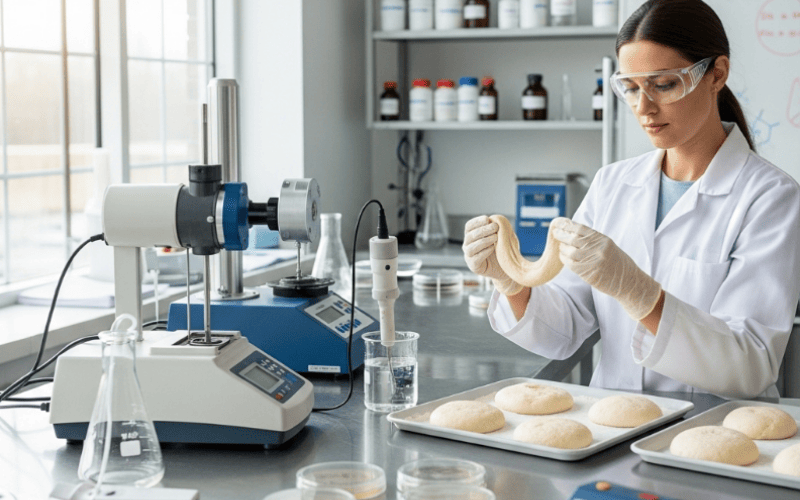
Quantify Dough Rheology: When developing a new soda cracker recipe, use professional rheological instruments to quantify the dough's properties. For example, a Farinograph's data on water absorption can directly guide the mixer's water ratio, while an Extensograph's data can predict how the dough will perform on the sheeter.
Understand the Impact of Minor Ingredients: Conduct in-depth research on how minor ingredients like emulsifiers, enzymes, and dough conditioners stabilize the production process. Small adjustments in these components can help the dough better adapt to temperature and humidity swings on the line.
Conduct Small-Scale Production Runs & Systematic Troubleshooting: Before scaling up a new formulation, a small-scale production trial is a must. If issues arise, use a systematic approach: first, check if the mixing and sheeting parameters match your specifications; then, compare the dough's rheological data from the trial with your lab data to pinpoint the root cause of the problem.
3. Project Manager's Perspective: Focusing on Investment and Risk
Your concern is the success of a project, which is not just a technical matter but a question of cost and time.
Analyze Equipment ROI (Return on Investment): When selecting equipment, look beyond the initial cost. For example, a more flexible sheeter may have a higher upfront price, but its ability to handle multiple formulations (like a gluten free soda cracker recipe) can reduce future costs from equipment retrofits or downtime, leading to a higher long-term ROI.
Manage Production Line Risk: During the project planning phase, work with the R&D and engineering teams to assess potential risks of the new formulation. If a soda cracker recipe is highly sensitive to moisture or temperature, consider adding in-line moisture sensors or temperature controls to mitigate risk before the line goes live, preventing frequent adjustments and costly stoppages.
Front-Line Engineer's Practical Guide: Real-Time Adjustments Based on Dough Characteristics
As a front-line engineer on a hard dough biscuit production line, your most powerful tool isn't a printout of the soda cracker recipe—it's your eyes and hands. The recipe is the starting point, but batch variations in flour and environmental temperature and humidity changes will give each dough its own "personality." Your job is to learn how to "read the dough" and make real-time, precise micro-adjustments on the line, like a seasoned sea captain, to ensure the final soda cracker cookies or soda cracker snacks achieve the best possible quality.
Reverse Troubleshooting Method
When the final product has a defect, don't blindly adjust parameters. Use this "reverse troubleshooting method" to quickly pinpoint the root cause.
Problem: Crackers are too dark and have burnt spots.
Starting Point: The oven.
Steps: Check if the temperature in the final oven zones is too high, or if the conveyor belt speed is too slow. If the baking parameters are normal, trace back.
Trace Back: Check if the recipe contains too many reducing sugars (like high fructose corn syrup), which can cause rapid browning at high temperatures.
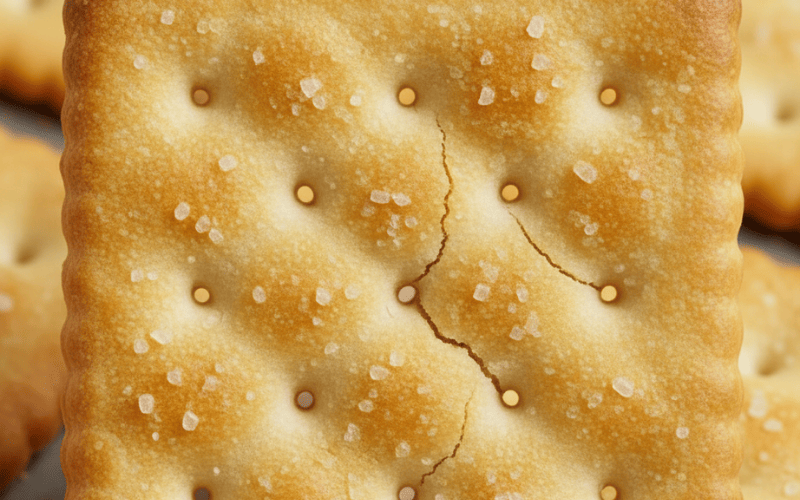
Problem: Cracker surface is cracked and the texture is too hard.
Starting Point: The oven or the mixer.
Steps: Check if the oven temperature is too high, causing moisture to evaporate too quickly. If the temperature is normal, trace back.
Trace Back: Check if the dough's moisture content was too low during the mixing phase, or if the flour's water absorption deviated from the standard.
Practical Operational Tips
Mixing Stage
Signs: The dough is wet and sticks to the equipment; the surface is rough after sheeting.
How to Adjust: During mixing, try adding a small amount of flour; on the sheeter, increase the dusting flour and closely monitor the scrapers. This is particularly important when working with formulations like a gluten free soda cracker recipe, as their gluten-free properties are different.
Signs: The dough is crumbly and cracks easily when passing through the rollers.
How to Adjust: At the beginning of the sheeter, slowly increase the amount of dusting flour and gradually reduce the roller gap to give the dough a "cushion." If this is a brand new soda cracker recipe, you need to be especially cautious.
Dough is too hard or dry?
Dough is too soft or sticky?
Sheeting Stage
Signs: The dough sheet cannot separate cleanly and wraps around the rollers.
How to Adjust: First, increase the dusting flour. Second, check the roller temperature; if it’s too high, you can activate the cooling system.
Signs: The dough sheet retracts or tears quickly.
How to Adjust: Decrease the tension on the conveyor belt to let the dough "relax." Slightly reduce the reduction rate on each roller pass and increase the number of passes. This step is critical whether you're working with a simple soda cracker recipe? or a complex formulation.
Dough is too elastic?
Dough sticks to the rollers?
Forming & Cutting
Signs: The cracker edges have burrs and the shape is irregular.
How to Adjust: Check the temperature of the cutting die and slightly adjust the cutter pressure to ensure a clean cut, producing perfect soda cracker snacks.
Cracker edges are jagged after cutting?
Baking Stage
Signs: The color is too dark or too light, and the edges are burnt while the center is undercooked.
How to Adjust: Adjust the temperatures in the different baking zones and adjust the conveyor belt speed to ensure a more even bake.
Signs: Excessive bubbles and blisters on the cracker surface.
How to Adjust: Adjust the temperature in the first oven zone, lowering it slightly and extending the baking time to ensure the final product matches the ideal texture expected from a best soda cracker recipe.
Cracker surface is uneven or has blisters?
Cracker color is uneven or the edges are burnt?
EverSmart: Soda Cracker Production Optimization — A Q&A
Q1: How can a purchasing manager ensure the stability of flour from a new supplier?
A: Beyond the standard Certificate of Conformance (CoC) provided by suppliers, purchasing managers should request recent Certificates of Analysis (CoA). Focus on key metrics like the flour's Gluten Index, Falling Number, and water absorption. These data points directly reflect the flour's strength, enzyme activity, and water capacity. It's also recommended to establish a Quality Assurance Agreement (QAA) with suppliers, specifying acceptable quality fluctuations for each batch and allowing for pre-arrival spot checks.
Q2: How does an R&D department know if a new recipe will have problems on the production line?
A: After a successful lab trial, the R&D team shouldn't push the formulation directly to mass production. First, use rheometers like the Farinograph and Extensograph to conduct a full assessment of the new recipe. The data can predict dough viscosity, elasticity, and extensibility, which in turn informs the engineering team on specific mixing times and sheeter parameters. Second, conduct a small-scale production run and document the dough's real-world performance on the line to validate the lab data. This allows for quick adjustments, avoiding costly production losses.
Q3: When a front-line engineer faces a severely sticky dough, what's the best troubleshooting sequence?
A: A sticky dough is a common but tricky issue. The best troubleshooting sequence is to follow the principle of "from outside in, from machine to ingredient":
Check the dusting system: Make sure the dusting flour amount is sufficient and the distribution is even. If the amount is normal, check if the flour is damp.
Check the equipment temperature: Verify the temperature of the rollers, conveyor belts, and scrapers. High temperatures can soften the dough, increasing its stickiness.
Check the dough's condition: Take a small piece of dough and feel its moisture. If the dough is clearly too wet, it might be due to too much water added during mixing or the flour's water absorption being lower than expected. At this point, you should notify the mixer operator to adjust the ratio and record the changes.
Q4: When planning a new production line, how do project managers balance equipment cost and recipe flexibility?
A: This is a crucial decision. Project managers should conduct a Return on Investment (ROI) analysis with the R&D and engineering teams. For example, if the company plans to launch a variety of products, including formulations like a gluten free soda cracker recipe that has special equipment requirements, investing in a more flexible sheeter and oven that can handle a wider range of parameters is wise. Although the initial cost may be higher, it can reduce the need for future equipment retrofits or downtime due to recipe changes, leading to higher long-term efficiency and market competitiveness.
Let's Take Your Soda Cracker Production Further. Contact EverSmart.
Our expertise goes beyond just manufacturing equipment. The EverSmart team has an in-depth understanding of every detail of recipe principles and production processes, and we are committed to providing global biscuit companies with comprehensive solutions, from equipment selection and process optimization to production line commissioning.
If you are facing any challenges in your soda cracker production or want to optimize your soda cracker recipe to improve efficiency and product quality, we welcome you to contact us at any time.
Author: Sofia(Vice President of EverSmart Food Equipment Limited)
Whatsapp: +86 13794619343
Email: [email protected]

Ready to start your journey toward a customized solution? Contact me directly on WhatsApp to begin the conversation.