Biscuit Line Maintenance Guide: Daily to Deep Care for Food Safety
A biscuit production line is the heart of a food factory, but without a robust maintenance plan, it can be a source of profit loss and food safety risks. For procurement managers, engineering managers, and maintenance teams, a proactive maintenance strategy isn't just a best practice—it's a critical investment in asset longevity, operational efficiency, and consumer trust. This guide provides a comprehensive overview of a maintenance protocol, from daily routines to annual overhauls, to keep your automatic biscuit production line running smoothly and safely.
The Business Case for Proactive Maintenance
For procurement managers and engineering managers, a structured maintenance plan is a financial and operational imperative. This is not merely about asset protection; it’s about meeting global standards. According to organizations like the
Maximizing ROI and Reducing TCO
Proactive maintenance delivers a clear return on investment (ROI) by targeting key cost centers and improving efficiency.
Cost of Downtime: For a typical high-volume production line, one hour of unplanned downtime can cost anywhere from $10,000 to $25,000 in lost production, wasted raw materials, and labor. A robust maintenance plan drastically reduces this risk.
Energy Savings: An unmaintained baking oven can lose efficiency due to heat leaks and clogged burners. Regular calibration and cleaning can improve energy consumption by 5% to 15%, leading to significant savings over a year.
Waste Reduction: Misaligned cutters or worn-out rollers can cause product breakage and inconsistent sizing, leading to waste. A diligent maintenance schedule can reduce product waste by up to 20%, directly impacting profit margins.
Extended Asset Life: By replacing small, inexpensive parts like bearings and seals on time, you can prevent major damage to expensive components like motors and shafts, potentially extending the equipment's lifespan by several years and delaying a $500,000+ capital expenditure.
Ensuring Uptime and Efficiency: Regular maintenance ensures machines operate at peak performance, preventing minor issues from escalating into major failures. This guarantees consistent production speed and product quality, directly impacting the factory’s output and profitability.
Guaranteeing Food Safety: Proper maintenance is a non-negotiable component of food safety compliance. Regular cleaning and part replacement prevent the buildup of contaminants like dough residue, grease, or dust, which can harbor bacteria and lead to costly product recalls. It's an essential part of a robust HACCP (Hazard Analysis and Critical Control Points) plan, crucial for any biscuit factory production line.
The Maintenance Protocol: A Practical Guide for the Team
For the maintenance team, this is a step-by-step guide to maintaining the biscuit line.
Daily Maintenance Checklist 📅
These are the essential tasks to be performed at the start and end of each shift to ensure continuous operation.
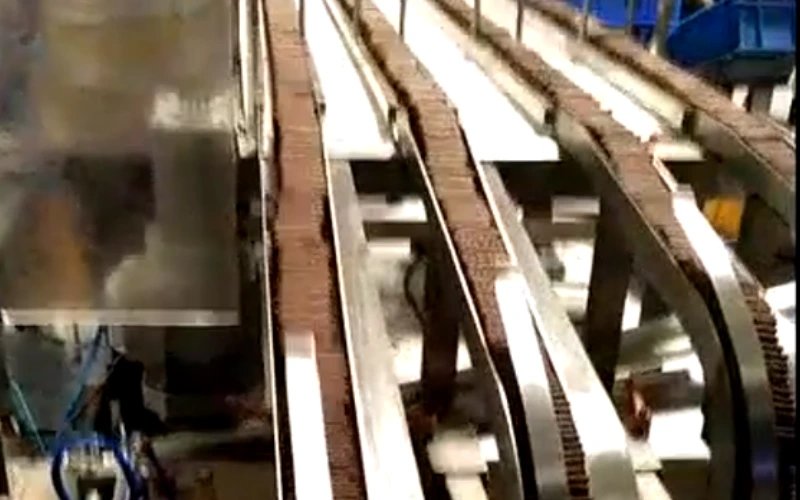
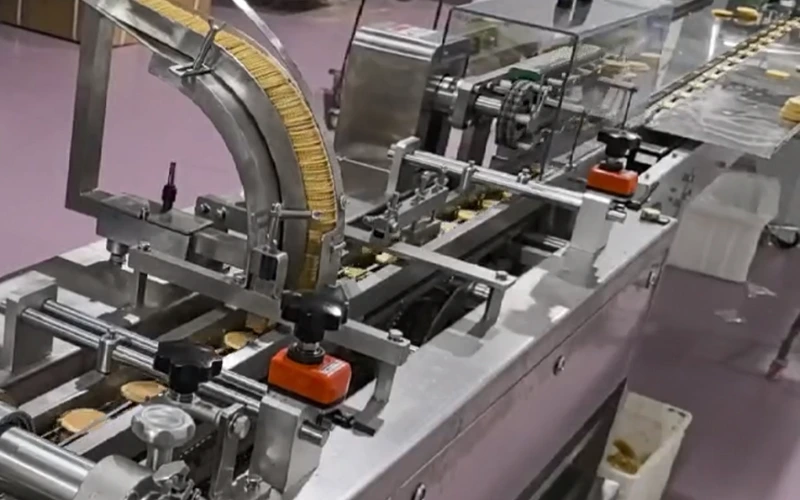
Visual Inspection: Before starting, check all moving parts, conveyor belts, and safety guards for any visible damage or misalignment on your biscuit production line.
Debris Removal: Immediately clean all dough crumbs, scrap, and residue from under and around the conveyors, mixers, and cutters. Use compressed air and brushes for hard-to-reach areas.
Spot Lubrication: Check and apply lubricant to designated points on the moulder and sheeter as per the manufacturer's guidelines.
Sensor and Emergency Stop Check: Confirm all sensors and emergency stop buttons are working correctly to prevent accidents.
Weekly Maintenance Tasks 🗓️
These tasks involve a deeper level of cleaning and inspection.
Deep Cleaning: Perform a more thorough cleaning of key components. This includes disassembling and cleaning dough rollers, cutters, and lamination sheets. For the oven, a weekly check of the belt and internal components is crucial to prevent uneven baking, maintaining your automatic biscuit production line.
Tension and Alignment Check: Inspect and adjust the tension of all conveyor belts and drive chains. Misaligned belts can cause wear, tear, and product jams.
Lubrication Audit: A comprehensive check of all lubrication points on the line, including bearings, bushings, and gearboxes. This is vital for all biscuit production line manufacturers to recommend.
Wear Parts: Replace Based on "Wear Rate," Not "After Failure"
Certain components of a biscuit production line have a defined "life cycle." Proactively replacing them before they fail can prevent sudden downtime:
Conveyor Belts: Food-grade PU conveyor belts typically last 1-2 years. If they show surface cracks, frayed edges, or stretching deformation (length extension exceeding 3% of original), replace immediately. When replacing, ensure the new belt has "food contact certification" (e.g., FDA, LFGB certification) to prevent non-compliant materials from leaching substances into food. One client, for example, overlooked frayed conveyor belt edges, leading to frequent biscuit damage during transfer, ultimately spoiling an entire batch. We recommended strict adherence to regular checks and replacements, which resolved the issue.
Forming Molds: The patterns on punching molds can wear after approximately 100,000 impressions, leading to blurry biscuit designs. It's recommended to check mold precision after producing every 500,000 biscuits. Use a micrometer to measure pattern depth; if the deviation exceeds 0.2mm, refurbish or replace the mold.
Heating Elements and Thermocouples: Heating elements in ovens (like quartz tubes, stainless steel heating tubes) can experience "localized aging" under prolonged high temperatures, leading to uneven heating. The measurement accuracy of thermocouples also decreases with use. It's advisable to replace heating elements annually (even if they look fine). Thermocouples should be sent to a metrological institution for calibration, and replaced if found to be out of specification.
Key Components: Professional Inspection to Restore "Factory Performance"
Maintenance of core components like motors, reducers, and pneumatic systems should be performed by qualified technical personnel:
Motor Inspection: Disassemble the motor casing, clean internal dust, inspect bearing wear (replace if "abnormal noise" occurs during rotation), measure winding insulation resistance (should be ≥50 MΩ), and re-varnish if necessary to ensure insulation performance.
Reducer Maintenance: Drain old gear oil, flush internal gears with a specialized cleaning agent, and replace with new oil (fill according to the manual's specified type, ensuring the oil level is at the midpoint of the sight glass). Check gear mesh clearance (adjust or replace gears if it exceeds 0.1mm).
Pneumatic System Maintenance: Replace air filter elements every 3 months. Check cylinder seals for air leaks (apply soapy water to joints; if bubbles appear, replace seals). Calibrate pneumatic valve action times (should match the equipment's cycle rhythm).
Overall Commissioning: Linkage Testing to Ensure "Seamless Integration"
After component replacement and inspection, a full production line linkage commissioning is required:
Run 3 continuous batches, from raw material input to finished product output. Observe if each equipment connection is smooth (e.g., do formed biscuits accurately land on the conveyor belt, are there any "jams" at the oven inlet?).
Randomly sample and test product quality: Measure biscuit thickness (deviation ≤±0.2mm), moisture content (should be within 2%-5%), and weight deviation (≤±3%), ensuring all meet standards.
Record commissioning data: Compile all equipment operating parameters (e.g., oven temperature, forming pressure, conveyor belt speed) into a "baseline parameter table" to serve as a reference for future production.
Deep Maintenance: The Annual Overhaul 🛠️
Once or twice a year, a full-scale shutdown is necessary to perform a comprehensive overhaul. This is a critical investment in the longevity of the equipment.
Component Teardown: Completely disassemble and clean key modules like the dough laminator, moulder, and cutters. This allows for detailed inspection.
Wear Part Replacement: Proactively replace high-wear components such as bearings, belts, and seals before they fail. This prevents costly, unexpected downtime for any biscuit production line.
Electrical and Mechanical Inspection: Inspect all electrical wiring, sensors, and control panels. Check motor performance and calibrate all speed controls to ensure efficiency.
The Role of Technology in Modern Maintenance
Modern biscuit lines are increasingly integrated with technology to enhance maintenance practices.
Computerized Maintenance Management Systems (CMMS): These software systems help maintenance teams schedule, track, and document all maintenance activities, moving from a reactive to a proactive model.
IoT Sensors: Integrating IoT sensors on critical components can provide real-time data on temperature, vibration, and performance. This allows for predictive maintenance, where teams can anticipate and address potential failures before they happen, maximizing uptime and reducing costs for your biscuit factory production line.
Frequently Asked Questions (FAQ)
Q1: How often should we lubricate our biscuit line?
A: Lubrication frequency depends on the specific machine and its manufacturer's guidelines. Critical components like moulder dies and bearings often require daily lubrication, while others may only need it weekly or monthly. Always refer to your machine's manual and use only food-grade lubricants.
Q2: What's the main benefit of moving from reactive to predictive maintenance?
A: Reactive maintenance is a costly gamble that leads to unplanned downtime and emergency repairs. By adopting a predictive approach with tools like IoT sensors and CMMS, you can anticipate equipment failure, schedule maintenance during non-production hours, and significantly reduce operational costs and interruptions.
Q3: How can I justify the cost of a formal maintenance program to management?
A: Focus on the return on investment (ROI). Highlight how a preventive maintenance program reduces the total cost of ownership by extending equipment life, minimizing expensive emergency repairs, improving energy efficiency, and preventing costly product recalls due to food safety issues.
Q4: We have high product waste. Can maintenance help with this?
A: Absolutely. A significant amount of product waste is caused by machine misalignment or wear. Regular maintenance, including the calibration of cutting dies, rollers, and conveyor belts, ensures product consistency, reduces breakage, and minimizes wasted dough or finished biscuits.
Q5: Should our maintenance team be trained by the original manufacturer?
A: Yes, receiving training directly from the biscuit production line manufacturers is highly recommended. It provides your team with in-depth knowledge of the specific equipment, its unique maintenance requirements, and the best practices for troubleshooting. This specialized knowledge is invaluable for maximizing your line's performance and longevity.
Need to Optimize Your Biscuit Production Line?
A well-maintained machine is your greatest asset. If you are looking to install a new high-efficiency line or upgrade your existing equipment to meet modern standards, our team of experts is ready to assist. For more in-depth guidance on factory planning, read our guide on how to choose the right biscuit production line.
Author: SofiaTitle: Senior Engineer, EverSmart Food Equipment LimitedContact:
📱 WhatsApp: +86 13794619343
✉ Email: [email protected]
🌐 Resources: eversmartbiscuitmachine.com

Ready to start your journey toward a customized solution? Contact me directly on WhatsApp to begin the conversation.