How to Choose the Right Biscuit Making Machine: An Expert Guide
Author: Sofia Title: Senior Engineer, EverSmart Food Equipment Limited Contact: 📱 WhatsApp: +86 13794619343 | ✉ Email: [email protected] | 🌐 Resources: eversmartbiscuitmachine.com
As an sales engineer with years of experience in the food machinery industry, I've seen countless businesses start from nothing and then succeed. My goal is to ensure you not only make a smart buying decision but also build a solid foundation for future growth.
A good biscuit making machine is the key to getting ahead in the competitive baking market. It transforms tedious manual labor into an efficient, stable automated process. This guarantees product quality while significantly boosting your output.
However, the sheer variety of commercial biscuit making machines can be overwhelming for new entrepreneurs. You might search for a "biscuit maker at home", but you’ll quickly find that home appliances just can't meet commercial demands.
I also want to clarify something for those searching for a "biscuit joint machine": we're talking about food machinery, not woodworking tools. This guide is designed to help you pinpoint the perfect equipment for your specific needs.
1. Industry Overview: Insights into the Global Biscuit Market
Understanding the big picture is the first step to making a smart investment. According to a 2023 report by Grand View Research, the global biscuit market is growing steadily. It's projected to be worth hundreds of billions of dollars in the coming years.
Driven by rising demand for healthy snacks and convenient foods, the market is expected to continue growing. It has a Compound Annual Growth Rate (CAGR) of over 5%.
These statistics come from professional research reports, which often require a subscription for full access. Still, they offer valuable insights into market trends.
Grand View Research Official Website:
grandviewresearch.com/industry-analysis/global-biscuit-market Statista Official Website: statista.com
2. Foundational Principles for Buying a Commercial Biscuit Machine
2.1 Match Your Needs to Your Production Capacity
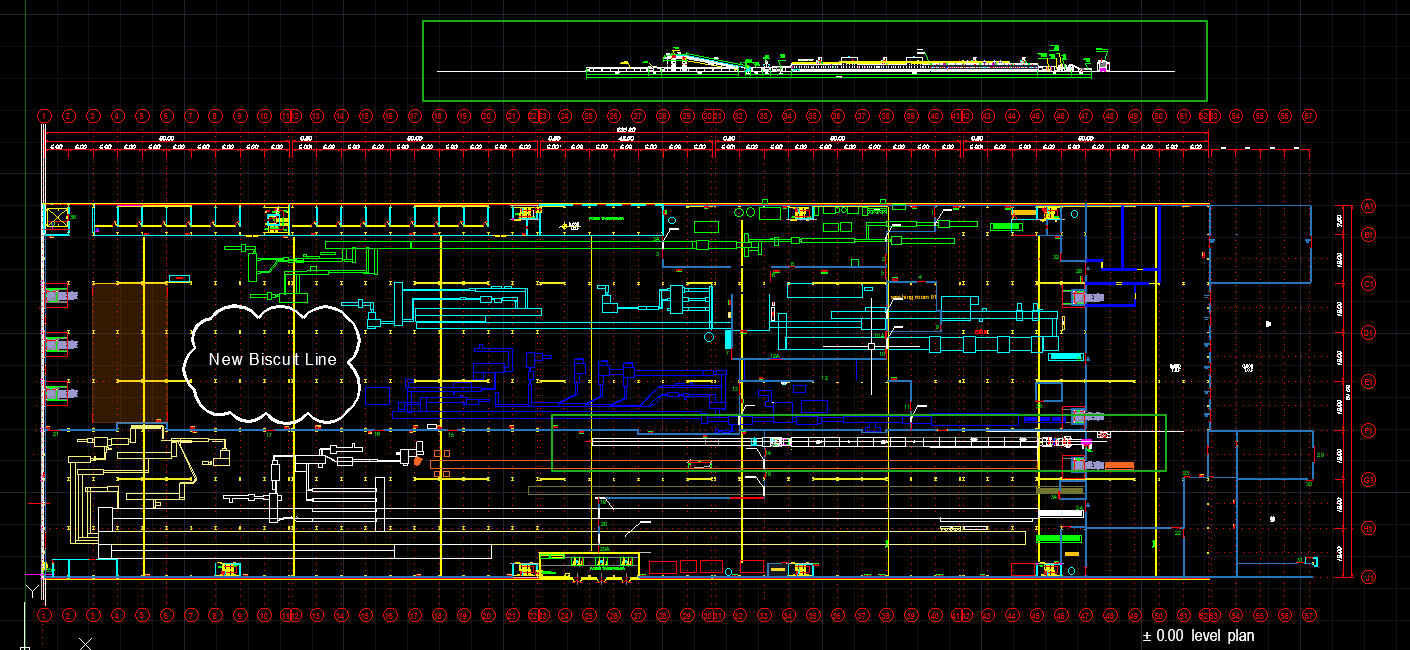
The first step in choosing a commercial biscuit making machine is to clearly define your production needs. This single choice will determine the right machine type and scale for your operation.
If you're a startup or a small bakery, a compact, easy-to-operate semi-automatic or single-unit machine may be more cost-effective. Your daily output might be a few hundred kilograms.
Conversely, if you have a steady stream of orders and need large-scale continuous production, a fully automated biscuit production line is the clear choice. Matching your capacity precisely ensures your investment meets current demands while leaving room for future expansion.
2.2 Budget Planning & ROI Analysis
A biscuit making machine can be a significant expense, but don't just focus on the initial cost. True cost analysis should include long-term operations and maintenance.
This includes the purchase price of the equipment, shipping, installation, and setup fees. You also have to consider operational costs like electricity, labor, raw material waste, and routine upkeep.
To determine if a machine is a good investment, you must calculate its ROI. For example, if a machine can produce an extra 50 kg of biscuits per hour, you can calculate the profit per kilogram to figure out if you'll recoup your investment in a few months or a year.
In the long run, machine efficiency is the key to lowering the production cost for each biscuit (how much does it cost to make a biscuit).
3. Our Global Client Success Stories: Real-World Experience
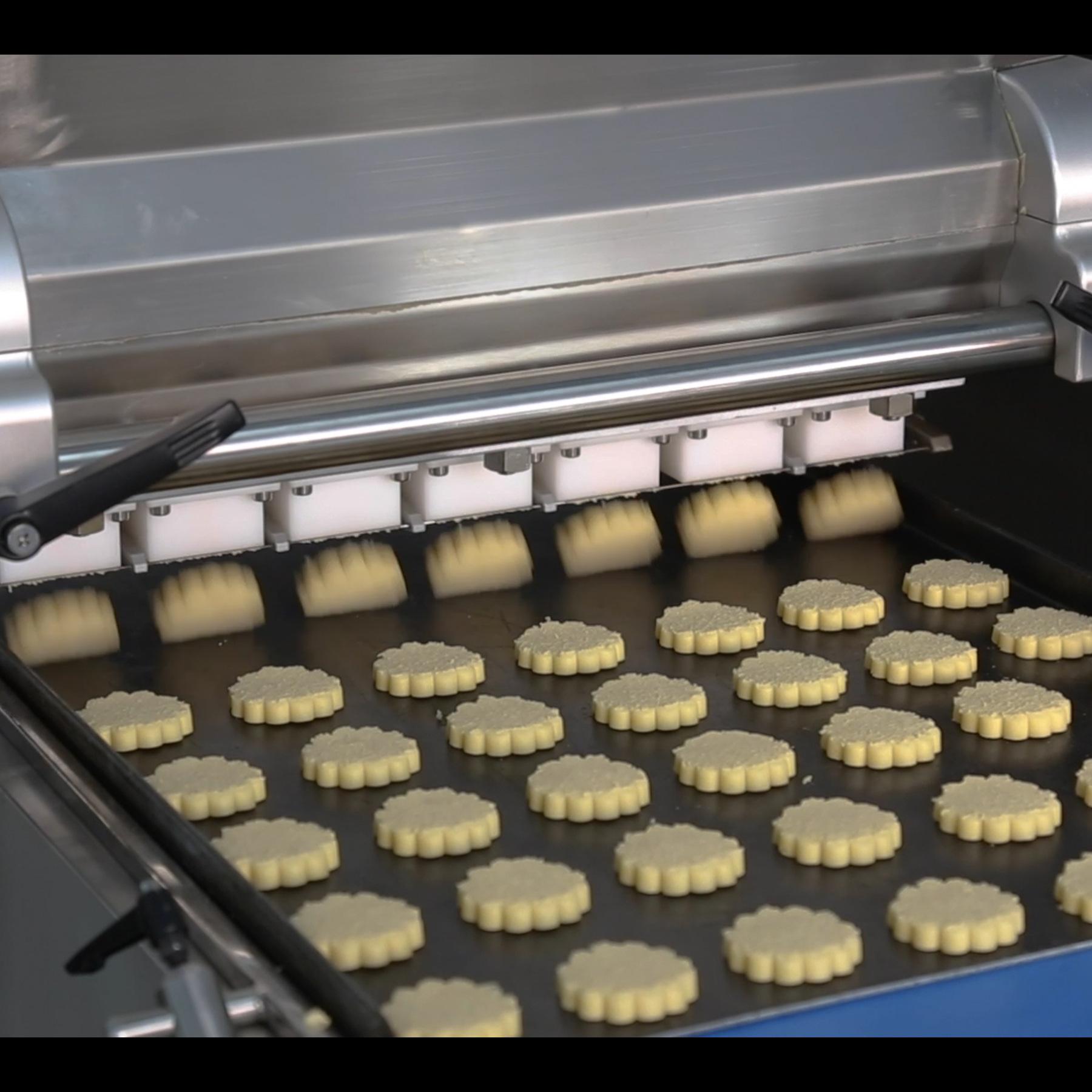
Our clients are spread across the globe. Here are three examples from different countries who solved unique challenges by choosing the right equipment.
3.1 Indonesia: From a New Bakery to a Market Leader
A new bakery in Jakarta, Indonesia, was struggling to keep up with the growing local demand for its specialty biscuits. Their manual production system had limited capacity and inconsistent product quality.
After upgrading to one of our compact commercial biscuit making machines, their daily output tripled, and the taste and shape of every batch of biscuits became perfectly consistent. The new machine not only saved labor costs but also helped them win the trust of customers due to improved product quality. This allowed them to quickly expand their sales channels and become a market leader.
3.2 Malaysia: Automating to Enter the Global Market
A well-established food manufacturer in Malaysia wanted to take its best-selling butter cookies to the international market. They needed a high-volume, automated production line to ensure consistent quality for export.
We provided a customized solution that included a fully automatic dough mixer, former, and tunnel oven system. This new equipment for making biscuits not only boosted their production efficiency by 50% but also guaranteed that every cookie met the exact specifications required for export. It helped them successfully enter the Singapore and Australian markets.
3.3 Australia: Targeting a High-End Niche Market
Australia's baking market is known for its focus on healthy, high-quality products. One of our clients specializes in gluten-free, all-natural granola bars and biscuits.
Their challenge was finding a machine that could handle their non-traditional doughs and still meet their high-quality standards. We custom-designed a biscuit making machine with special molds and an extrusion system for them. This machine perfectly handles high-fiber, low-gluten doughs, ensuring a unique texture and consistent shape. This has helped them secure a strong position in the local high-end health food market.
4. An In-Depth Look at Biscuit Making Equipment Types
To make an informed decision, you need to understand the different categories and functions of biscuit making equipment. The chart below provides a clear comparison of the main equipment types and their features:
Equipment Type | Applicable Biscuit Types | Core Function | Capacity Range | Automation Level | Key Advantages | Potential Drawbacks |
Fully Automated Line | Hard biscuits, soft biscuits, soda crackers, cookies, etc. | Automatic mixing, forming, baking, cooling, and packaging | High (1-5 tons/hour) | High Automation | High output, high efficiency, low labor costs, high product consistency | High investment cost, large footprint, complex maintenance |
Rotary Moulder | Soft biscuits, cookies, shortbread | Forms dough by pressing it into molds on a rotating drum | Medium-High (100-500 kg/hour) | Semi-Auto/Fully Auto | Diverse shapes, wide applicability, relatively simple to operate | Cannot produce hard biscuits; some custom molds are expensive |
Cutter/ Sheeter | Hard biscuits, soda crackers, hard cookies | Rolls dough into a sheet, then cuts shapes with a roller mold | Medium-High (150-600 kg/hour) | Semi-Auto/Fully Auto | Precise shapes and sizes; ideal for large-scale production | Only for hard dough; molds need regular replacement |
Wire Cutter | Cookies, shortbread, oat biscuits | Cuts extruded dough with a wire | Medium (50-200 kg/ hour) | Semi-Auto | Great for high-fat, sticky dough; allows for flexible shapes | Lower output than a fully automated line; requires a separate dough mixer |
Stick Biscuit Machine | Stick biscuits, finger biscuits, pet treats | Extrudes dough through a special nozzle to form sticks | Medium (100-300 kg/ hour) | Semi-Auto | Highly specialized, fast forming, high shape consistency | Limited to producing specific product shapes |
Compact Single Unit | Small-batch production | Simple mixing and forming (usually with molds or manual assistance) | Low (10-50 kg/hour) | Manual/Semi-Auto | Low investment, easy to operate; ideal for small bakeries and startups | Low output, not for continuous production, inconsistent product quality |
5. From Purchase to Production: A Complete Guide
5.1 Choosing and Vetting Your Supplier
How to choose a reliable food machinery supplier?
Choosing a reputable supplier is critical. Look at their past projects, client testimonials, and industry certifications (like ISO and CE) to ensure you are buying safe, reliable equipment.
5.2 International Standards & Compliance: Your Passport to Global Markets
As an engineer, I know how important international standards are. Our equipment not only complies with Chinese national standards but also with global technical regulations. For example, our products have earned EU CE certification, which shows they meet European market requirements for safety, health, and environmental protection.
In our manufacturing process, we also strictly follow international food safety management system standards like ISO 22000. This ensures that all food-contact surfaces are made from compliant, food-grade stainless steel (like SUS304) from the very start. You can check these standards here:
ISO 22000 Official Standard: iso.org/standards/iso-22000-food-safety.html
EU CE Certification Authority: tuv-sud.de/product-testing/services/ce-marking/
5.3 Machine Installation, Training & Commissioning
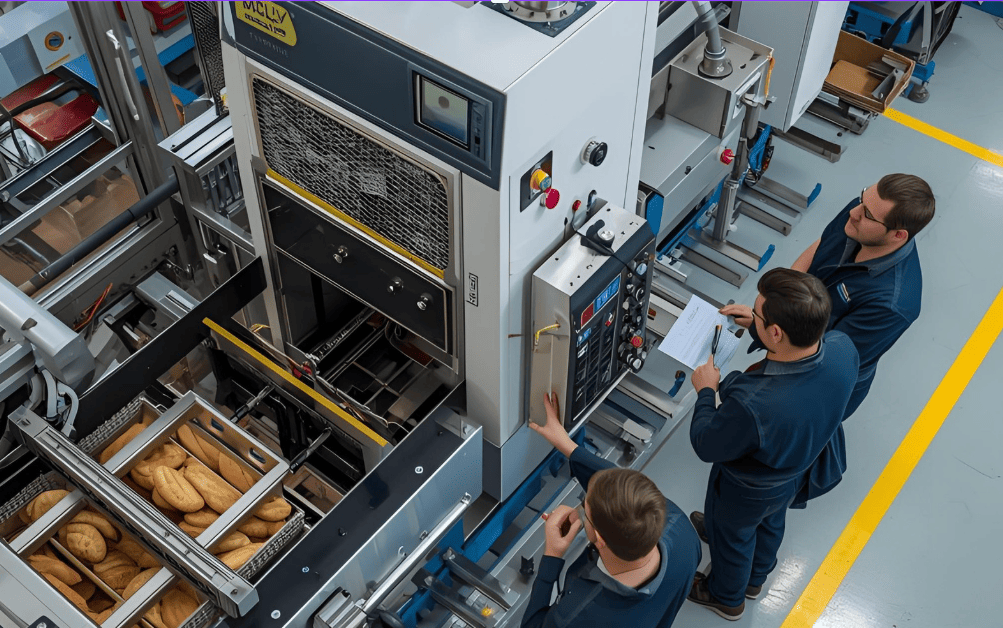
After your purchase, a professional supplier will handle the installation, setup, and on-site training for your staff. This ensures the machine can start production quickly. It also lowers your learning curve and reduces errors.
5.4 Common Issues and Simple Maintenance
Routine cleaning and maintenance are essential for ensuring a machine runs smoothly long-term. Keep the machine dry and lubricate the moving parts. Always follow the manufacturer's maintenance manual.
6. Frequently Asked Questions (FAQ)
Q1: Are biscuit joint machines and biscuit making machines the same?
A1: No. A biscuit joint machine is a woodworking tool used to create oval-shaped slots for joining wood. A biscuit making machine, on the other hand, is a piece of food production machinery. Please don't confuse the two.
Q2: How do I choose the best biscuit machine for my business?
A2: First, define your capacity and product type. Next, evaluate your budget and consider the ROI. Finally, choose a reliable supplier that offers great after-sales service.
Q3: What's involved in daily maintenance after purchase?
A3: Regular cleaning and inspections are key to keeping your machine running well. Keep the machine dry, lubricate moving parts, and follow the manufacturer's maintenance guide.
Conclusion
Choosing the right biscuit making machine is a critical step toward success. From clarifying your needs to evaluating your budget and selecting a trustworthy supplier, every step matters. I hope this guide helps you make the best decision and gives your biscuit business a powerful boost.
Get a Professional Consultation Now: We provide customized solutions for clients worldwide. Email me at [email protected] or add me on WhatsApp +86 13794619343 for a free one-on-one technical consultation. We’ll design the perfect biscuit production plan for you.

Ready to start your journey toward a customized solution? Contact me directly on WhatsApp to begin the conversation.