Gas vs. Electric Industrial Ovens: Which is better for commercial bakeries
Executive Summary
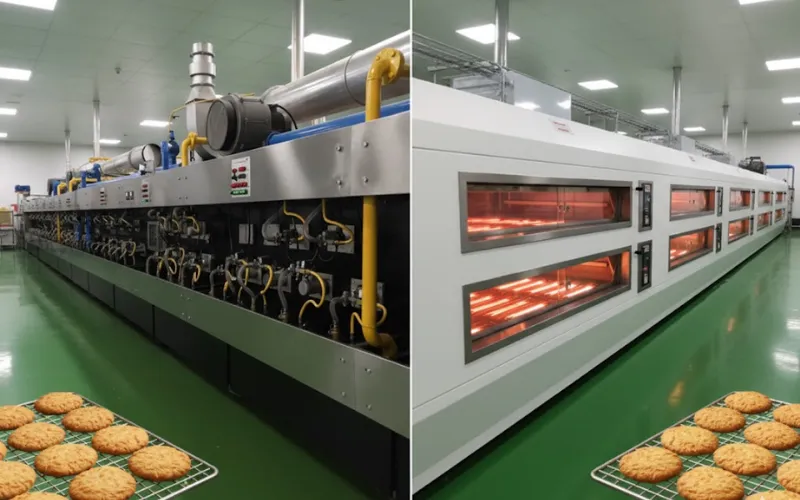
Selecting between gas and electric industrial ovens represents one of the most critical decisions for commercial bakery operations, with significant implications for product quality consistency, operational expenditure, and production scalability. For biscuit, wafer, and cracker factories specifically, this choice demands careful analysis of thermal transfer characteristics, humidity management requirements, and total cost of ownership. According to industry analysis from Baking & Snack Magazine, while gas ovens typically offer 15-30% lower operating costs in regions with inexpensive natural gas, electric ovens provide ±2-3°C temperature uniformity versus ±5-10°C for gas systems—a decisive factor for temperature-sensitive products.
1 Understanding Core Heating Technologies
1.1 Gas Oven Engineering Principles
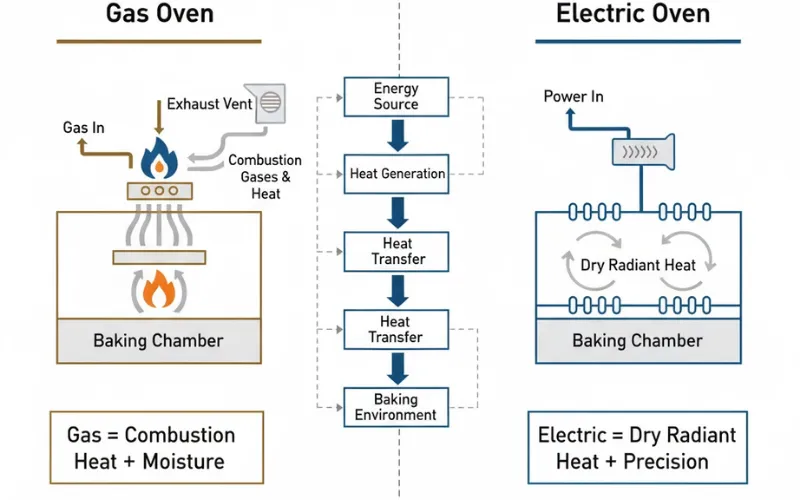
Gas-fired industrial ovens utilize combustion of natural gas or propane through distinct engineering approaches that significantly impact baking performance. The American Society of Baking notes that direct-fired gas systems introduce combustion gases directly into the baking chamber, creating 94-95% thermal efficiency through immediate heat transfer. These systems provide rapid temperature response but introduce combustion moisture that impacts product crispness.
Indirect-fired gas systems employ heat exchangers to separate combustion gases from baking chambers, maintaining cleaner baking environments while operating at 80-85% thermal efficiency. These systems eliminate combustion byproducts from contacting products—critical for delicate wafers—but require larger physical footprints.
1.2 Electric Oven Engineering Principles
Electric industrial ovens utilize resistance heating elements with distinct operational characteristics that deliver precision baking environments. Radiant electric systems employ metal alloy elements that convert 99% of electrical energy to infrared radiation, directly transferring heat to products without intermediate air heating. This method provides instantaneous thermal response and exceptional surface temperature control.
Convection electric systems combine heating elements with sophisticated airflow designs to achieve ±2-3°C temperature uniformity across baking chambers. The absence of combustion gases enables precise humidity management through integrated steam generators, achieving 75-85% relative humidity control for optimal crust development.
2 Performance Analysis by Product Type
2.1 Temperature Control Precision
Temperature management capability represents the most significant differentiator between gas and electric systems for quality-critical applications. Data from Baking Industry Research Trust shows that electric ovens deliver superior temperature precision through instantaneous element response, with modern PID controllers maintaining ±1.5-3°C tolerance across baking chambers.
Gas ovens typically maintain ±5-10°C tolerance in well-engineered systems, though combustion cycling can create ±15°C short-term fluctuations during burner activation. Advanced gas systems with modulating burners can approach electric performance but require 25-40% higher capital investment.
2.2 Product-Specific Recommendations
Biscuit & Cracker Applications:
Electric ovens are strongly recommended for most biscuit production due to superior temperature uniformity. The dry heat environment prevents premature surface drying that inhibits proper spread in short-dough biscuits. For detailed technical specifications, see our guide on optimizing baking temperatures for biscuits.
Wafer Sheet & Cone Production:
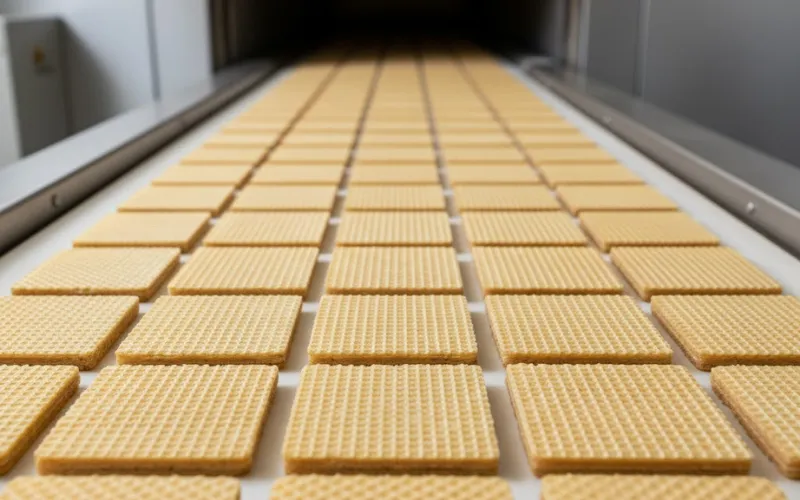
Electric ovens represent the unequivocal choice for wafer manufacturing where ±2°C plate temperature uniformity directly impacts release characteristics. The precise thermal control prevents localised sticking that creates 3-7% production waste in gas ovens. Learn more in our wafer production technical manual.
Bread & Pastry Applications:
Gas ovens maintain advantages in high-volume bread operations where faster heat recovery between pan loading increases throughput 8-12%. However, for laminated pastries, electric ovens with bottom-heavy heating prevent butter release while delivering consistent lift.
3 Comprehensive Financial Analysis
3.1 Capital Investment Comparison
Gas ovens command 15-25% higher equipment costs due to combustion systems, with commercial-scale units ranging from ¥400,000 to ¥2,500,000 depending on automation level. Installation expenses add 20-35% to initial outlay for ventilation and gas supply infrastructure.
Electric ovens present lower initial equipment costs with comparable capacity units at ¥300,000 to ¥1,800,000, though advanced control systems narrow this gap. Installation typically adds 10-20% to project costs, primarily for electrical service upgrades.
3.2 Operational Expenditure Analysis
Energy Consumption Calculations must reflect local utility rates. According to the U.S. Energy Information Administration, regional energy price variations significantly impact operating costs:
Electric Oven Operating Cost = Power Draw (kW) × Runtime (hours) × Electricity Rate (¥/kWh)
Example: 85kW tunnel oven operating 18 hours/day at ¥0.95/kWh = ¥1,453 daily
Gas Oven Operating Cost = Gas Consumption (m³/h) × Runtime × Gas Price (¥/m³)
Example: 45 m³/h direct-fired oven at ¥3.20/m³ = ¥2,592 daily
3.3 Total Cost of Ownership
Five-Year TCO Modeling for comparable 500kg/hour production systems demonstrates the importance of long-term planning. Use our interactive TCO calculator to model your specific scenario.
| Cost Category | Gas Oven | Electric Oven |
|---|---|---|
| Initial Investment | ¥1,800,000 | ¥1,500,000 |
| Installation & Commissioning | ¥450,000 | ¥225,000 |
| Annual Energy (18h/day) | ¥945,000 | ¥530,000 |
| Annual Maintenance | ¥28,000 | ¥15,000 |
| 5-Year Total | ¥6,815,000 | ¥4,550,000 |
4 Operational Considerations
4.1 Production Capacity & Thermal Recovery
Gas ovens provide faster temperature recovery after product loading—typically 45-90 seconds versus 2-3 minutes for electric systems. This characteristic delivers 8-15% higher throughput in operations with continuous loading patterns.
Electric ovens maintain more consistent performance throughout extended production runs, avoiding the gradual temperature drift sometimes experienced in gas systems during 12+ hour operations.
4.2 Facility Integration Requirements
Gas ovens require significant clearance for ventilation systems—typically 1-1.5 meters overhead for vertical venting. Combustion air requirements demand adequate make-up air provisions, while gas supply lines must accommodate 25-50% pressure drop from utility connection points.
Electric ovens offer flexible installation options with minimal clearance requirements. Electrical service must provide adequate capacity—typically 80-150kW for medium-scale operations—with appropriate voltage regulation.
5 Future Trends & Technology
5.1 Hybrid Heating Systems
Emerging dual-energy ovens combine gas and electric technologies to leverage respective strengths. These systems utilize gas burners for bulk heating during initial temperature recovery, then transition to electric elements for precision control during critical baking phases.
5.2 Advanced Heat Recovery
Next-generation energy systems capture waste heat for facility applications. According to Energy Star documentation, gas ovens now achieve 94.5-95.5% system efficiency through enhanced heat recovery, while electric installations utilize waste heat for water pre-heating.
5.3 Smart Manufacturing Integration
Industry 4.0 connectivity enables real-time performance optimization. Modern ovens incorporate predictive maintenance algorithms that forecast element failure in electric systems and burner degradation in gas ovens. Learn about implementation in our smart bakery integration guide.
6 Frequently Asked Questions (FAQ)
Q: Is a gas oven better than an electric oven for a commercial bakery?
A: The optimal choice depends entirely on operational priorities. Gas ovens deliver superior economics for high-volume operations where lower fuel costs outweigh precision requirements. Electric ovens provide unmatched consistency for quality-critical applications like biscuits and wafers. For factories prioritizing product consistency, electric typically delivers better long-term value.
Q: How to use a bakery oven for optimal biscuit quality?
A: Maximizing biscuit quality requires understanding your specific oven technology. For electric ovens, leverage multi-zone control to create differential temperature profiles. For gas ovens, conduct monthly burner calibration to maintain combustion efficiency. Download our complete bakery oven maintenance checklist.
Q: What is the fundamental difference in gas vs electric oven for baking?
A: The core distinction lies in heat generation methodology. Gas ovens create heat through combustion, producing moister heat transfer with inherent temperature cycling. Electric ovens generate heat through electrical resistance, delivering dry, consistent thermal energy without combustion variables.
7 Implementation Guide
7.1 Procurement Decision Framework
Conduct Comprehensive Needs Analysis by documenting current and projected production volumes with product mix percentages. Establish quality tolerance thresholds for color, moisture, and dimensional consistency. Evaluate facility constraints including utility infrastructure.
Evaluate Supplier Qualifications by verifying industry-specific experience with your product categories. Request performance validation through factory acceptance testing. Assess service network capability for ongoing technical support.
7.2 Performance Validation Protocol
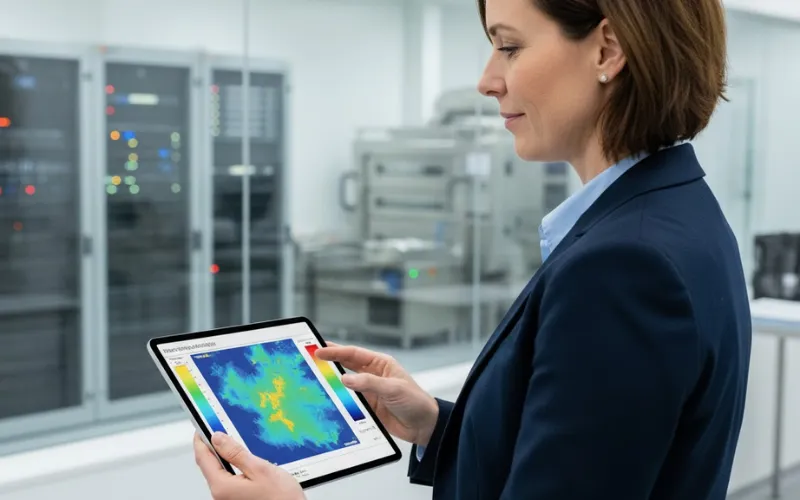
Factory Acceptance Testing should include conducting thermal mapping to verify temperature uniformity claims and performing product bake tests using your specific formulations. Our factory acceptance testing protocol provides detailed procedures.
Commissioning & Optimization requires implementing gradual production ramp-up to identify optimal settings and training multiple team members on operation and basic troubleshooting.
Call to Action: Advance Your Bakery Operations
Theoretical comparisons provide direction, but confident decisions require specific analysis of your unique operational context. Our bakery engineering team brings decades of specialized experience helping biscuit, wafer, and cracker factories optimize their thermal processing systems.
Request Your Custom Total Cost Analysis
Whatsapp us on the right to Submit Your Requirements
Provide your production volumes and utility rates for a detailed 5-year TCO projection comparing gas and electric options specific to your operation.
Schedule Technical Consultation
Whatsapp us on the right to Arrange Engineering Review
Connect with our applications team to review your facility layout, product specifications, and quality requirements for tailored technology recommendations.
Arrange Product Performance Testing
Whatsapp us on the right to Coordinate Sample Bake
Submit your product samples for comparative baking in both gas and electric environments, complete with detailed analysis of consistency, color development, and structural properties.
Explore Our Product Range
• View Electric Industrial Ovens
• View Gas Industrial Ovens
Stop debating and start validating. Contact us today to make a data-driven investment decision backed by engineering expertise and real-world performance validation.

Ready to start your journey toward a customized solution? Contact me directly on WhatsApp to begin the conversation.