The Definitive Guide to Industrial Cooling Tunnels: From Process Control to Profitability
The Post-Bake Bottleneck: Where Product Quality and Profitability Are Decided
In the high-volume, precision-driven world of industrial food manufacturing, success is measured in consistency, quality, and efficiency. Significant capital is invested in state-of-the-art mixers, depositors, and tunnel ovens to ensure every product meets exacting standards. Yet, a persistent and costly threat often undermines these efforts, not in the heat of the oven, but in the quiet, uncontrolled moments that follow. This phenomenon, a latent defect that manifests long after a product has left the factory, represents a significant and often unmeasured drain on profitability and brand equity
It is a common and frustrating scenario: a seemingly perfect batch of biscuits, crackers, or confections leaves the production line, passes initial quality checks, and is shipped with confidence. Days or even weeks later, reports filter back from distributors and consumers—the products are broken, cracked, soggy, or otherwise unsalable. The primary culprit is "checking"—the appearance of small, hairline cracks in baked goods that are deep structural flaws, diminishing a product's physical strength by as much as 50%. A consumer opening a package to find fragments instead of whole biscuits is a fundamental breach of a brand's promise of quality. What makes this problem so insidious is its delayed onset, often appearing 24 hours to several days post-production, rendering standard end-of-line inspections fundamentally incapable of detecting a problem that has not yet occurred .

This challenge is not limited to biscuits. The post-bake or post-process phase is a critical control point for a vast range of temperature-sensitive products, including chocolate, creams, jams, and breads. For these items, the cooling process is essential for achieving the correct texture, appearance, and shelf life. Neglecting this phase is a strategic vulnerability that leaves a company's bottom line and reputation exposed .
In many high-volume production facilities, the cooling phase represents the most significant operational bottleneck, a constraint that even the most advanced, high-speed ovens cannot overcome alone. Traditional ambient cooling on long, open-air conveyors simply cannot keep pace with modern production speeds, forcing the entire line to slow down and capping the plant's total throughput. This transforms the post-bake phase from a simple cool-down period into a major impediment to growth and profitability. The strategic solution to this challenge is the implementation of an engineered
industrial cooling tunnel. This technology is not merely a conveyor inside a refrigerated box; it is a sophisticated piece of process equipment designed to transform the cooling bottleneck into a seamless, automated, and highly controlled part of the production line, ensuring final product quality and unlocking the full financial potential of the entire manufacturing operation. By establishing deep expertise and providing comprehensive, well-organized information on this critical technology, manufacturers can demonstrate the authority that builds trust and drives business growth. This guide serves as that central, authoritative resource—a pillar of knowledge designed to navigate the complexities of post-bake stabilization and illuminate the path to operational excellence.
The Hydro-Mechanical Science of Post-Bake Stabilization
To effectively combat post-bake defects and understand the necessity of advanced cooling technology, it is essential to deconstruct the precise scientific mechanisms at play. The failure of products like biscuits and crackers is not a random occurrence but the predictable result of a complex interplay of moisture, mass transfer, and mechanics. The true cause is the presence of significant moisture gradients within the product immediately after it exits the oven . The intense heat of baking creates a dry, low-moisture outer region (the crust or rim) while the core remains relatively moist, creating a state of powerful internal instability.
This instability gives rise to two powerful and opposing physical forces that wage a war on the product's structural integrity :
Expansion at the Rim: The very dry outer rim of the product is hygroscopic, meaning it naturally seeks to absorb moisture from the surrounding air. As it absorbs this moisture, the material swells and expands.
Contraction at the Core: Simultaneously, the wetter, hotter core of the product begins to lose its own moisture to the drier outer layers and the ambient environment. This loss of moisture causes the core material to shrink and contract .
The result is a product being torn apart from the inside out. This dynamic generates immense internal stresses that strain the product's structure to its breaking point. As the product cools, its structure sets and it becomes hard and rigid, losing the initial plasticity it had when it was hot. From this point forward, any ongoing strain from this internal moisture migration cannot be relieved by simple deformation. Instead, the stress accumulates until it surpasses the material's tensile strength, and a crack forms—the phenomenon known as "checking" .
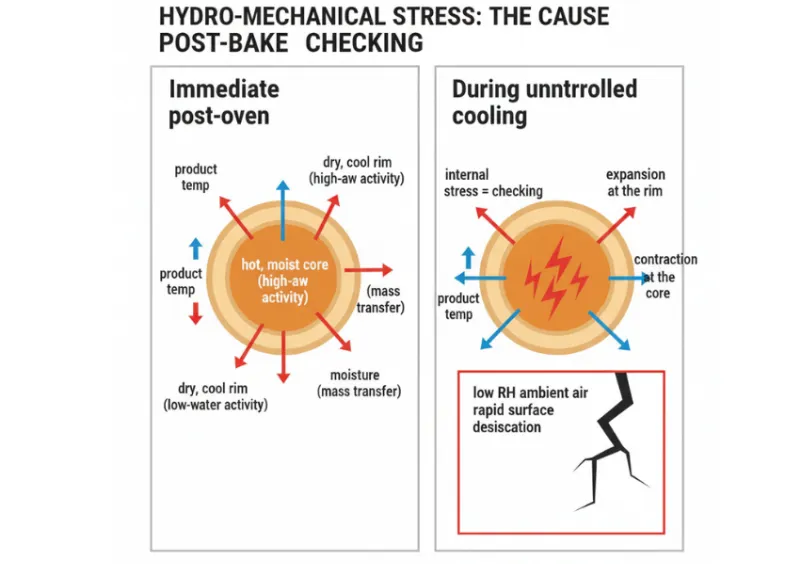
The environment in which the product cools is a critical accelerator of this destructive process. The relative humidity (RH) of the air is a key variable. A low-RH environment is particularly dangerous because it aggressively pulls moisture from the product's core while the dry rim continues to absorb what little moisture is available, dramatically increasing the internal stresses. Conversely, if a product is exposed to high RH during cooling, it may soften and lose its desired crispness.
Furthermore, a critical and often overlooked factor is the dew point of the ambient air. The dew point is the temperature at which water vapor in the air will condense into liquid water. If the surface of the cooling product drops below the dew point of the air in the cooling tunnel or the subsequent packaging room, condensation will form on its surface. This unwanted moisture can lead to a host of quality issues, including sogginess, loss of texture, the promotion of microbial growth, and, in the case of chocolate-coated products, the dreaded "sugar bloom".
This scientific reality reveals a crucial truth: the most intuitive cooling methods are often the most destructive. Aggressively blasting a hot, moist product with a high volume of cold, dry air is a counterproductive strategy. This action rapidly desiccates the surface, creating a hard, impermeable "skin" that traps moisture within the core. This dramatically steepens the moisture gradient and magnifies the destructive expansion-versus-contraction stresses that cause the product to fracture . The problem of post-bake instability is therefore not simply a mechanical failure but a failure of mass transfer management. The core issue is the rate of moisture movement, which is governed by the interacting gradients of temperature and humidity. It becomes clear that the profile of the cooling process is far more important than its raw speed. A gentle, precisely controlled, multi-stage process that manages both temperature and humidity gradients over time is scientifically superior to a rapid, single-stage "cold shock." This understanding provides the fundamental justification for the advanced, multi-zone cooling technologies engineered to execute such a profile with precision and repeatability.
A Taxonomy of Industrial Cooling Technologies: Selecting the Right Thermal Process
To overcome the limitations of uncontrolled cooling, the food processing industry has developed a range of sophisticated automated cooling technologies. The selection of a specific system is a critical process engineering decision that involves a strategic trade-off between three key variables: Process Time (Throughput), Facility Space (Footprint), and Product Integrity (Quality). Each technology and conveyor architecture represents a different solution to this complex optimization problem. A plant manager is not merely purchasing a "cooler"; they are investing in a solution to a specific set of production constraints. Understanding the taxonomy of these technologies is the first step in making an informed and strategic capital investment.
Fundamental Cooling Principles
At the heart of any cooling tunnel is the method used to remove heat from the product. The choice of cooling principle dictates the speed, efficiency, and cost of the operation.
Ambient and Forced Convection
The most basic cooling methods rely on convection, the transfer of heat through the movement of a fluid (in this case, air).
Ambient Cooling: This method involves conveying products on long, open-air conveyors, exposing them to the general factory environment . It requires a very large footprint and offers no control over temperature or humidity, making it inconsistent and incapable of keeping pace with high-speed production lines.
Forced Convection: This is a step above ambient cooling, using fans to move air across the product. While faster than passive ambient cooling, simple forced-air systems are often uncontrolled. Without precise management of air temperature, humidity, and velocity, they can exacerbate the very moisture gradients that cause product checking and cracking. Modern cooling tunnels refine this principle by using carefully engineered airflow systems within an enclosed, climate-controlled environment to achieve uniform and repeatable results.
Impingement Cooling
Impingement cooling is a highly efficient form of forced convection that dramatically accelerates heat transfer. This technology utilizes a series of high-velocity jets of cold air directed perpendicularly onto the product's surface from both above and below. This high-pressure, high-speed airflow acts as an "air knife," effectively breaking through the insulating boundary layer of stagnant air that naturally forms around the product. By disrupting this layer, impingement systems achieve exceptionally high rates of heat transfer, resulting in a very quick freeze or cool-down with minimal moisture loss. This makes impingement technology ideal for applications such as crust freezing of meat products before slicing, rapidly setting chocolate coatings, or quickly cooling baked goods like biscuits and wafers prior to packaging.
Cryogenic Cooling
For the fastest possible cooling or freezing, cryogenic technology is employed. These systems use a cryogen—typically liquid nitrogen (LN2) at -196°C or liquid carbon dioxide (CO2) at -78°C—which is sprayed directly onto the product within an insulated tunnel. As the cryogen evaporates, it absorbs a massive amount of thermal energy, rapidly lowering the product's temperature. This ultra-fast process is ideal for high-value or delicate products where preserving quality is paramount. The speed of the freeze minimizes the formation of large ice crystals within the product's cells, which helps to maintain texture, reduce dehydration (drip loss), and preserve flavor. Cryogenic tunnels are used for individually quick freezing (IQF) of small items like berries or diced meats, as well as for high-value seafood, poultry, and premium baked goods. While the operational costs associated with the cryogen are higher than convection systems, the superior quality, increased yield, and smaller footprint can provide a compelling financial return for specific applications.
Conveyor Architectures and Their Strategic Applications
The physical layout or architecture of the cooling conveyor determines how a product moves through the controlled environment. This choice has significant implications for facility layout, product handling, and process flexibility.
Linear Cooling Tunnels
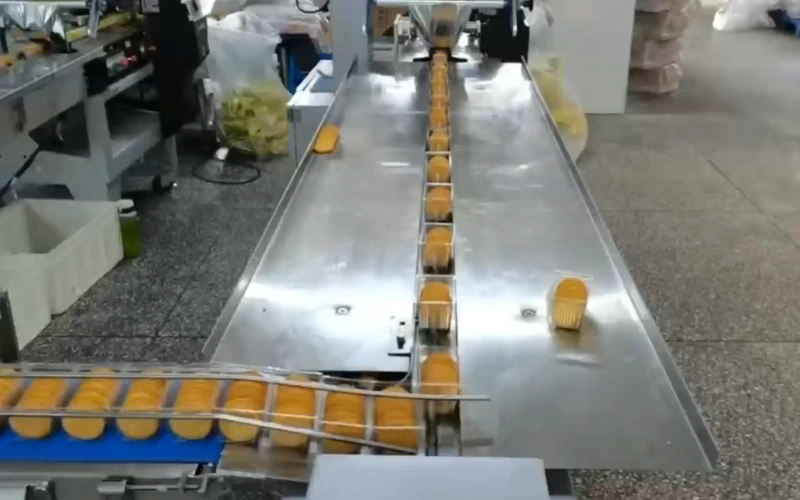
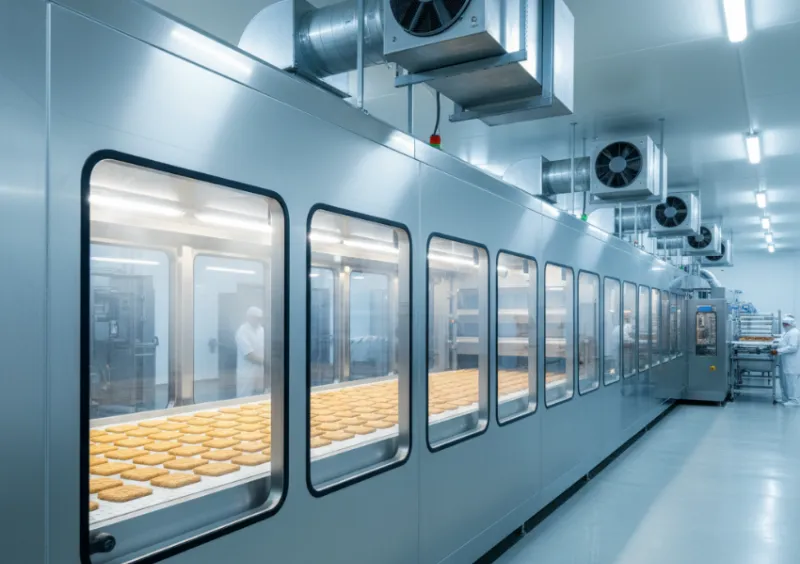
The most straightforward design, a linear cooling tunnel, transports products on a conveyor belt in a straight line through a long, enclosed chamber. While they require a significant linear footprint, their design offers advantages in simplicity, ease of maintenance, and accessibility. Their most significant process advantage is the ability to create distinct, sequential climate zones along the length of the tunnel. This allows for the creation of a programmed cooling "profile," where a product can move through progressively different temperature and humidity conditions, making them highly effective for managing the hydro-thermal stresses that cause checking. They are best suited for flat, uniform, and robust products like biscuits, crackers, and chocolate bars.
Spiral Cooling Conveyors
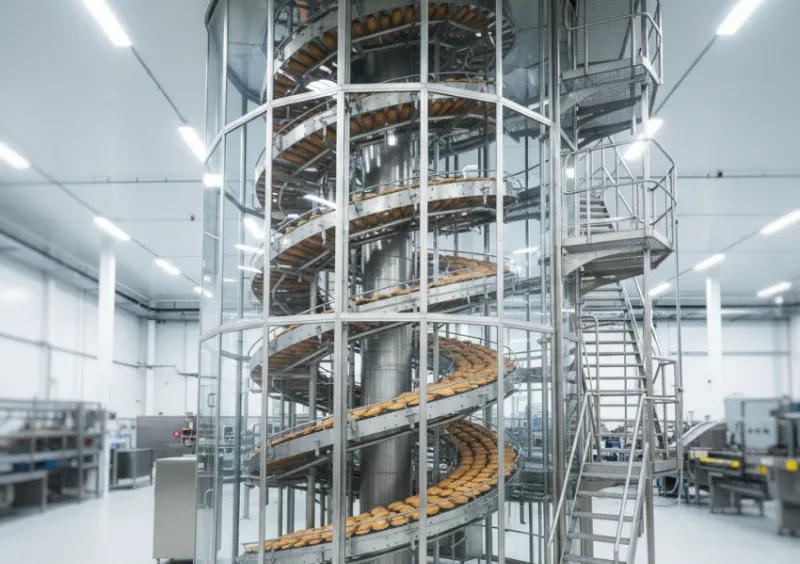
Spiral coolers utilize a continuous conveyor belt that travels in a helical path, either upwards or downwards, within a compact, vertical enclosure. Their defining advantage is the ability to accommodate a very long conveyor path—and therefore a long cooling or dwell time—within a remarkably small horizontal footprint. This vertical design makes them the ideal solution for facilities where floor space is at a premium. The gentle, continuous motion and ability to handle uneven or delicate products make them well-suited for a wide range of goods, including cakes, pastries, breads, and pies.
Racetrack and Custom-Configured Systems
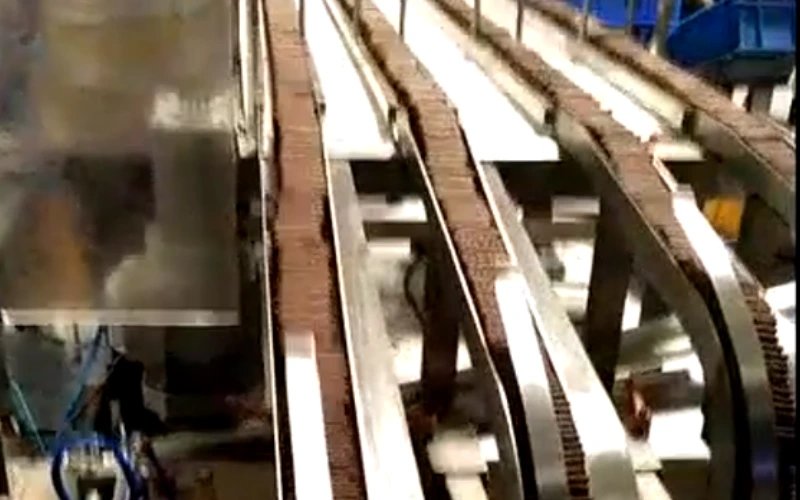
For facilities with unique layout constraints, racetrack and other custom-configured conveyor systems offer a flexible compromise. These systems use long, looping paths that are often engineered to utilize the open vertical space above other production equipment . By elevating the majority of the conveyor path, they free up valuable floor space for other operations or traffic while still providing the extensive travel distance required for gentle, prolonged cooling. The layout can be customized into various shapes (e.g., oval, serpentine) to fit specific building footprints, making them a highly adaptable solution for retrofitting existing plants or designing complex new lines .
| Feature | Linear Tunnel | Spiral Cooler | Racetrack Cooler |
| Footprint | Large (Linear) | Very Small (Vertical) | Moderate to Large (Configurable, Overhead) |
| Throughput Capacity | High [ | High | High |
| Product Handling | Best for flat, uniform products | Gentle; ideal for delicate/uneven items | Good for robust products, often in-pan |
| Dwell Time Flexibility | Moderate (limited by tunnel length) | High (very long retention time possible) | High (long travel paths possible) |
| Maintenance Complexity | Simpler, more accessible | More complex due to spiral design | Moderate, depends on layout complexity |
| Ideal Application | High-volume biscuit/cracker lines with available linear space. | Space-constrained facilities; delicate products like cakes and pastries. | Utilizing overhead space in complex plant layouts. |
The Unifying Principle: Multi-Zone Climate Control
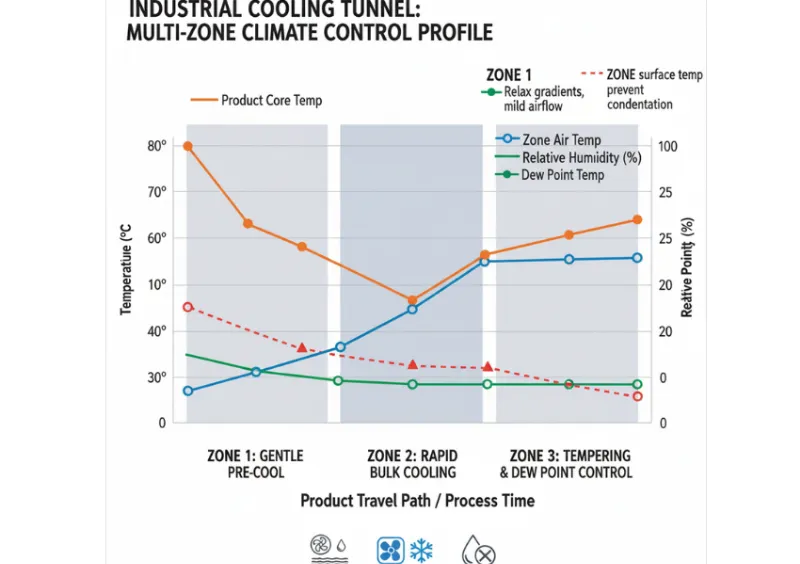
Regardless of the cooling method or conveyor architecture, the defining characteristic of a modern, high-performance cooling system is its implementation of multi-zone climate control. This is the critical engineering principle that enables the precise management of the post-bake stabilization process. Advanced cooling tunnels are segmented into multiple, independently controlled zones, each with its own dedicated air handling system, sensors, and control logic.
This zoned approach allows operators to establish a carefully programmed "cooling profile"—a sequence of different atmospheric conditions that a product is exposed to as it travels through the tunnel. This is the practical application of the hydro-mechanical science discussed earlier. An optimal profile might look like this :
Zone 1 (Entrance): A gentle cooling phase with mild airflow and slightly elevated humidity. This allows the intense heat from the product's core to begin migrating outward without creating a hard, sealed surface, beginning the process of relaxing internal moisture gradients.
Zone 2 (Middle): A more aggressive cooling phase with higher airflow velocity and lower temperatures to rapidly and efficiently remove the bulk of the thermal energy from the product.
Zone 3 (Exit): A final "tempering" or conditioning phase. Here, the temperature is raised slightly to bring the product's surface temperature safely above the dew point of the downstream packaging room. This crucial final step prevents condensation from forming on the product as it exits the tunnel, thereby safeguarding its texture, quality, and shelf life.
This ability to create a bespoke cooling journey tailored to the specific thermal and hygroscopic properties of each product is what separates modern process equipment from rudimentary cooling methods. It is the key to preventing defects, ensuring consistency, and producing a high-quality finished product batch after batch.
Engineering for Performance: Anatomy of a High-Efficiency Cooling Tunnel
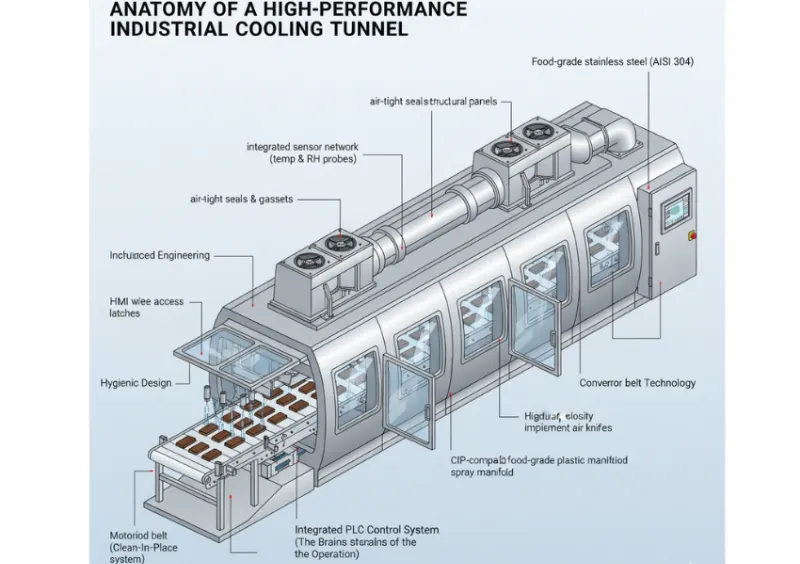
The effectiveness of an industrial cooling tunnel is determined by the sophistication of its underlying technology. A high-performance system is not merely a conveyor in a cold box; it is a sophisticated, integrated mechatronic system where mechanical engineering, thermodynamics, and advanced process control converge to create a precisely defined and repeatable environment. The value is derived not from any single component, but from the seamless integration of all its parts. A prospective buyer should evaluate the entire system integration and the manufacturer's expertise in process control, not just the specifications of individual components.
The Control System: The Brains of the Operation
The true power of a modern cooling system lies in its ability to create, maintain, and adapt its internal environment with high precision. This intelligence is governed by an integrated control system.
Programmable Logic Controllers (PLCs): At the heart of the system is a robust, industrial-grade PLC. This is the central computer that executes the pre-programmed cooling profiles, monitors all sensor inputs, and sends commands to the various mechanical components. It acts as the central nervous system, ensuring all parts of the tunnel work in concert.
Integrated Sensor Networks: The PLC is fed a continuous stream of data from an array of sensors strategically placed throughout the tunnel's zones . These industrial-grade sensors continuously monitor critical parameters like dry bulb air temperature, relative humidity, and dew point temperature, providing the closed-loop feedback necessary for the PLC to make real-time adjustments and maintain the desired setpoints with high precision. The accuracy of these sensors is paramount for consistent product quality.
Variable Frequency Drives (VFDs): High-performance systems utilize VFDs on key motors, particularly those driving the circulation fans and the main conveyor belt. VFDs allow the PLC to precisely modulate the speed of these components. By adjusting fan speed, the system can control the velocity of the cooling air in each zone. By adjusting the conveyor motor speed, operators can fine-tune the "dwell time"—the amount of time a product spends within each zone and the tunnel as a whole. This level of granular control is essential for optimizing the cooling profile for different products and production rates.
Mechanical Systems: The Brawn of the Operation
While process control is paramount, the physical construction of the system is equally important for ensuring reliability, efficiency, and safety.
Airflow Engineering: A well-engineered system does not simply blow cold air into a box. It uses carefully designed plenums, baffles, and ductwork to deliver a uniform, laminar flow of conditioned air across the entire width and length of the product zone. This meticulous engineering eliminates "dead spots" or areas of turbulent flow, ensuring that every single product on the belt—whether in the center or at the edges—experiences the exact same cooling conditions, which is critical for batch consistency.
Insulation and Seals: Energy efficiency and process stability are directly tied to the quality of the tunnel's enclosure. High-quality, thick insulation is used throughout the structure to minimize thermal energy transfer from the surrounding factory environment. Equally important are the air-tight seals on all doors, panels, and conveyor openings. Poor seals allow warm, humid ambient air to infiltrate the tunnel, which not only wastes a tremendous amount of energy but also compromises the precisely controlled internal climate, potentially introducing moisture that can lead to condensation and product defects.
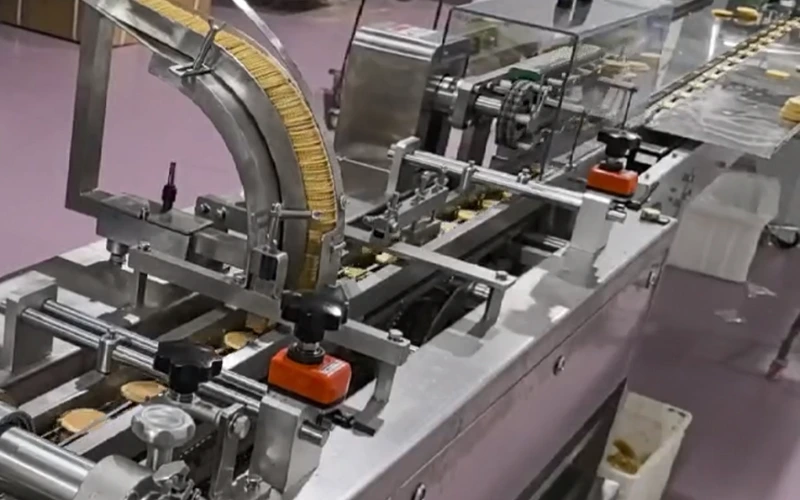
Conveyor Belt Technology: The conveyor system itself is a critical component. Belts can be made from various materials, including stainless steel mesh or modular, food-grade plastic, depending on the application. To ensure reliability and prevent costly downtime, modern systems incorporate features like automatic belt tracking and tensioning. These systems use sensors to detect if the belt is drifting to one side and automatically make adjustments to keep it centered, preventing damage to the belt edges and ensuring smooth, continuous operation.
Hygienic by Design: A Non-Negotiable Requirement
In food processing, sanitary design is not a feature; it is a fundamental requirement. A hallmark of high-quality equipment is its adherence to established hygienic design principles to ensure food safety and minimize cleaning time.
Materials and Construction: High-performance cooling tunnels are constructed primarily from food-grade stainless steel, typically AISI 304, for its durability and resistance to corrosion. All surfaces, especially those in the food contact zone, are designed to be smooth, non-porous, and free from cracks, crevices, or sharp corners where bacteria could harbor .
Accessibility and Cleanability: A key principle of hygienic design is that a component that cannot be easily cleaned cannot be considered sanitary. Therefore, modern systems are designed for easy access and disassembly. Features include removable panels, lift-up covers, and tool-free access points that allow maintenance and sanitation crews to easily reach all internal areas. Many systems are also designed to be fully wash-down capable and compatible with Clean-In-Place (CIP) protocols, which use automated systems to circulate cleaning and sanitizing solutions, ensuring a high level of hygiene with minimal manual labor. Adherence to recognized industry standards, such as those set by ANSI, is a clear indicator of a manufacturer's commitment to food safety.
The synergy of these integrated systems—control, mechanical, and sanitary—is what defines a modern, high-performance cooling tunnel. It is this holistic engineering approach that delivers the precision, reliability, and safety required in today's demanding food production environments.
Operational Excellence: A Guide to Cooling Tunnel Maintenance and Troubleshooting
The acquisition of a high-performance cooling tunnel is a significant investment in production capability. To protect this investment and ensure it delivers maximum value over its lifespan, a robust program of operational excellence is required. This involves a disciplined approach to preventive maintenance and a systematic methodology for troubleshooting. Operational problems are rarely isolated component failures; they are typically symptoms of a deviation from ideal process conditions. A troubleshooting mindset should therefore be systems-oriented, looking for the root cause in the process rather than just replacing the failed part. For example, insufficient cooling could be a symptom of reduced airflow, caused by a clogged filter, which in turn is caused by poor ambient air quality. Simply increasing fan speed would treat the symptom while ignoring the root cause, leading to higher energy consumption and eventual motor failure. This section provides a framework for both proactive maintenance and reactive problem-solving to ensure peak performance, efficiency, and longevity.
A Framework for Preventive Maintenance
Preventive maintenance is the cornerstone of operational reliability. A structured schedule of inspections, cleaning, and adjustments can identify potential issues before they escalate into costly, unplanned downtime. The following checklist, synthesized from industry best practices, provides a template for a comprehensive maintenance program.
| Task Frequency | Component/System | Check/Action Required | Notes/Spec |
| Daily | Overall System | Perform visual inspection for debris, leaks, or damage. Listen for unusual noises or vibrations. | Document any anomalies for follow-up. |
| Control Panel | Verify no fault lights or alarms are active on the HMI. | Report any persistent faults to maintenance. | |
| Condensate Drains | Ensure condensate drains are clear and flowing freely. | Clogged drains can lead to water buildup and hygiene issues. | |
| Weekly | Conveyor System | Check belt tracking for proper alignment. Inspect for signs of wear or damage. | Misalignment can cause premature belt failure. |
| Suction Screens/Filters | Inspect and clean air intake screens and filters. | Clogged filters restrict airflow and reduce cooling efficiency. | |
| Water System (if applicable) | Test water quality (pH, conductivity, biocides). | Poor water quality leads to scale, corrosion, and bio-fouling. | |
| Safety Systems | Test emergency stop buttons to ensure proper function. | Safety checks are non-negotiable. | |
| Monthly | Fan & Motor Assemblies | Check for excessive vibration. Inspect fan belts for proper tension and wear. | Vibration can indicate bearing wear or imbalance. |
| Lubrication | Lubricate motor bearings, pulleys, and other moving parts per manufacturer's manual. | Proper lubrication is critical for component longevity. | |
| Electrical Connections | Visually inspect electrical cabinets for loose connections or signs of overheating. | Use an IR scanner for more detailed thermal inspection. | |
| Quarterly | Mechanical Fasteners | Check tightness of all accessible bolts and fasteners, especially on fan assemblies. | Vibration can cause fasteners to loosen over time. |
| Door Seals & Gaskets | Inspect all door and panel seals for damage or deterioration. | Damaged seals lead to energy loss and climate control issues. | |
| Spray Nozzles (if applicable) | Inspect and clean spray nozzles to ensure they are not clogged. | Clogged nozzles cause uneven water distribution. | |
| Annually | Full System Clean-out | Perform a thorough cleaning of all internal and external surfaces, including coils and plenums. | Removes accumulated dust, debris, and biofilm. |
| Refrigeration System | Have a certified technician inspect the refrigeration system, check refrigerant levels, and inspect for leaks. | Ensures the cooling system is operating at peak efficiency. | |
| Motor & Drive Alignment | Check and adjust the alignment of all motors and drive components. | Misalignment causes premature wear on bearings and belts. | |
| Compressor | Change compressor oil per manufacturer's specifications. | Clean oil is essential for compressor health. |
Diagnosing and Solving Common Operational Problems
Even with excellent preventive maintenance, operational issues can arise. A systematic approach to troubleshooting can quickly identify the root cause and minimize downtime.
Problem: Insufficient or Inconsistent Cooling
Symptoms: Product exiting the tunnel is too warm; cooling times are longer than normal; temperature readings in one or more zones are above the setpoint.
Potential Causes & Solutions:
Check: Inspect door seals and panel gaskets for damage or gaps.
Solution: Replace any compromised seals to prevent warm, humid air from entering the tunnel.
Check: Verify that all circulation fans are running at the correct speed. Listen for unusual motor noises.
Solution: Check motor circuit breakers and VFD status. If a motor has failed, follow proper lock-out/tag-out procedures for replacement.
Check: Observe refrigerant sight glass (if available) for bubbles, indicating low refrigerant. Check for ice on refrigerant lines.
Solution: This requires a certified HVAC/R technician to diagnose the leak, repair it, and recharge the system.
Check: Inspect air filters and intake screens for clogging.
Solution: Clean or replace filters immediately.
Check: Inspect cooling coils for dust, debris, or ice buildup.
Solution: Clean coils according to manufacturer procedures.
Reduced Airflow: This is the most common cause.
Refrigeration System Fault:
Fan/Motor Malfunction:
Poor Air Seal:
Problem: Excessive Vibration or Noise
Symptoms: A noticeable increase in mechanical noise; visible shaking of the tunnel structure or components.
Potential Causes & Solutions:
Check: Vibration can cause mounting bolts on motors, fans, or structural panels to loosen over time.
Solution: Conduct a thorough check and tighten all hardware.
Check: The alignment between a motor and the fan it drives may have shifted.
Solution: Realign the drive components according to manufacturer specifications.
Check: Worn bearings in a motor or fan shaft often produce a distinct grinding or squealing noise.
Solution: Replace worn bearings immediately. Failure to do so can lead to catastrophic failure of the motor or fan assembly.
Check: Debris buildup on fan blades can cause imbalance. Blades may also be damaged.
Solution: Power down and lock out the system. Clean the fan blades thoroughly. If vibration persists, the fan may need to be professionally rebalanced or replaced.
Fan Imbalance:
Worn Bearings:
Component Misalignment:
Loose Hardware:
Problem: Conveyor Belt Tracking Issues
Symptoms: The conveyor belt consistently drifts to one side, potentially rubbing against the tunnel structure and causing damage to the belt edge.
Potential Causes & Solutions:
Check: If the system has an automatic tracker, verify that its sensors are clean and its pneumatic or electric actuators are functioning.
Solution: Troubleshoot the tracking system itself, checking air supply (for pneumatic systems) and sensor function.
Check: Product buildup on the drive drum or rollers can affect tracking. Worn or damaged rollers can also be a cause.
Solution: Clean all rollers and the drive drum thoroughly. Inspect rollers for wear and replace if necessary.
Check: Both insufficient and excessive tension can cause tracking problems.
Solution: Adjust the belt tensioning system according to the manufacturer's guide.
Check: The entire cooling tunnel structure must be perfectly level and square.
Solution: Use a precision level to check the frame both side-to-side and end-to-end. Adjust the leveling feet as needed. This is a critical step during initial installation that can prevent many future problems.
Improper Leveling:
Incorrect Belt Tension:
Worn or Dirty Components:
Automatic Tracking System Fault:
By implementing this dual strategy of diligent preventive maintenance and systematic troubleshooting, a facility can ensure its cooling tunnel remains a reliable, efficient, and productive asset for years to come.
The Strategic Investment: A Financial Analysis of Automated Cooling Systems
The acquisition of an automated cooling conveyor represents a significant capital expenditure. However, viewing this decision solely through the lens of initial cost is a strategic error. A comprehensive Return on Investment (ROI) analysis reveals that this technology is not a cost center but a powerful engine for profitability. The most crucial first step in this analysis is to honestly calculate the "Cost of Doing Nothing." Inefficient or uncontrolled cooling methods carry substantial and often hidden daily costs, including financial losses from product waste, excessive labor hours, constrained production capacity, and the ever-present risk of a catastrophic failure that could shut down the entire plant.
The true ROI of an advanced cooling tunnel is unlocked not by its isolated efficiency, but by its role as a strategic enabler of upstream and downstream automation. It is the critical link that allows multi-million dollar investments in high-speed ovens and high-speed packaging lines to operate at their full, rated potential. An inadequate cooling system throttles the entire production line, meaning the latent ROI of those other major investments is never realized. The financial justification, therefore, is not simply "How much money will the cooling tunnel save?" but rather, "How much potential revenue are we losing every day because our cooling phase is our primary bottleneck?"
Quantifying the Gains (The "Return")
The financial benefits of an automated cooling system are tangible, measurable, and can be modeled with a high degree of accuracy.
Reduced Product Waste: By implementing precise, multi-zone process control that minimizes checking, cracking, and condensation-related defects, the spoilage rate can be drastically reduced. Proactive process monitoring can prevent catastrophic failures, avoiding the loss of thousands of pounds of product and saving tens of thousands of dollars in a single incident. This directly converts material and production costs from the loss column to the profit column.
Increased Throughput and Revenue: This is often the largest and most compelling component of the financial return. By eliminating the cooling bottleneck, the system allows the entire plant to produce and sell more units in the same amount of time. An automated cooling conveyor that is properly sized to match the output of a high-speed oven enables a truly continuous, synchronized production flow. This increase in production velocity can be dramatic, with documented cases showing that automation can lead to a 20-30% increase in saleable units per shift. This gain translates directly to top-line revenue growth.
Labor Cost Savings: Automation significantly reduces the manual labor associated with transporting products on racks or trays, with potential labor cost reductions of up to 60%. More significantly, the superior hygienic design of modern systems dramatically cuts down on cleaning time and effort. The implementation of Clean-In-Place (CIP) systems and easily accessible components has allowed some bakeries to document reductions in sanitation labor hours of over 90%. This allows skilled labor to be reallocated to more value-added tasks.
Energy Efficiency: Modern cooling systems are engineered for significant energy savings, directly impacting operational expenditures. The use of high-quality, thick insulation and airtight seals minimizes thermal loss, reducing the load on the refrigeration system. The integration of high-efficiency motors and Variable Frequency Drives (VFDs) allows the system to use only the energy required for the specific product load, rather than running at full power continuously. These features can contribute to electricity consumption reductions of 25% to 50% compared to older or less sophisticated systems.
51
Analyzing the Costs (The "Investment")
The investment side of the ROI equation includes several key components:
Capital Expenditure (CapEx): The initial purchase price of the cooling tunnel and its associated refrigeration and control systems.
Installation and Integration Costs: The costs associated with site preparation, rigging, mechanical and electrical installation, and integration with upstream (oven) and downstream (packaging) equipment.
Operational and Maintenance Costs (OpEx): Ongoing costs for energy, consumables (e.g., water, cleaning chemicals), and routine preventive maintenance and spare parts.
Putting It All Together: The ROI Calculation
The ROI is calculated by comparing the net financial gains to the total investment. A common metric used for industrial equipment is the Payback Period, which calculates the time it takes for the accumulated gains to equal the initial investment. For many industrial equipment investments, a payback period of under two to three years is considered highly attractive and financially sound.
Beyond these quantifiable metrics, it is crucial to consider the powerful intangible benefits. Enhanced brand reputation from consistently higher product quality, improved food safety and reduced risk of recalls, and a more stable and predictable production environment all contribute significant long-term value to the business. When measured against the silent, daily drain of product waste, lost opportunity, and constrained throughput, the ROI of an automated cooling conveyor becomes not just clear, but strategically urgent.
Conclusion: Transforming the Cooling Phase into a Competitive Advantage
The post-bake cooling phase, long treated as a passive and often uncontrolled necessity, is unequivocally one of the most critical control points in modern industrial baking and food processing. The costly and brand-damaging problem of "checking" and other latent defects is the direct and predictable result of cooling processes that fail to manage the complex hydro-mechanical and thermal stresses inherent in a freshly processed product. The science is clear: uncontrolled moisture migration and thermal shock are the primary antagonists of final product quality.
The definitive solution lies in the implementation of automated, engineered industrial cooling tunnels. These systems—whether employing linear, spiral, or custom-configured architectures—are sophisticated process control instruments, not simple conveyors. Equipped with advanced multi-zone climate management, integrated sensor networks for closed-loop feedback, and precisely engineered airflow systems, they provide the essential capability to guide a product through its critical stabilization journey. This level of precision ensures structural integrity, optimal texture, and the final quality that consumers expect.
By eliminating the post-oven bottleneck, these systems unlock the full productive potential of the entire manufacturing line, from the initial mixing and forming stages to the final, high-speed packaging equipment. They transform the cooling stage from a production constraint into a strategic accelerator. The investment in this technology is therefore justified not only by significant and quantifiable cost reductions in product waste, manual labor, and energy consumption but, more powerfully, by the capacity for substantial revenue enhancement through increased production velocity and market share growth.
Ultimately, an automated cooling conveyor is more than an equipment upgrade. It is a strategic imperative that provides a decisive competitive advantage. It is the critical technology that ensures the quality promised in the mixing bowl is the quality delivered to the consumer, protecting invaluable brand equity, enhancing long-term profitability, and building a more resilient, efficient, and modern operation.
Stop hesitation, contact us today for a customized consultation:
Sofia Export
Vice President | EverSmart
📞 WhatsApp: +86 137 94619343
📧 Email: [email protected]

Ready to start your journey toward a customized solution? Contact me directly on WhatsApp to begin the conversation.