A Guide to Bakery Cooling Conveyors: Spiral vs. Linear vs. Z-Type
In the journey from oven to package, the cooling phase represents one of the most critical control points in bakery production. While our comprehensive guide to
The Foundation: Linear Cooling Tunnels
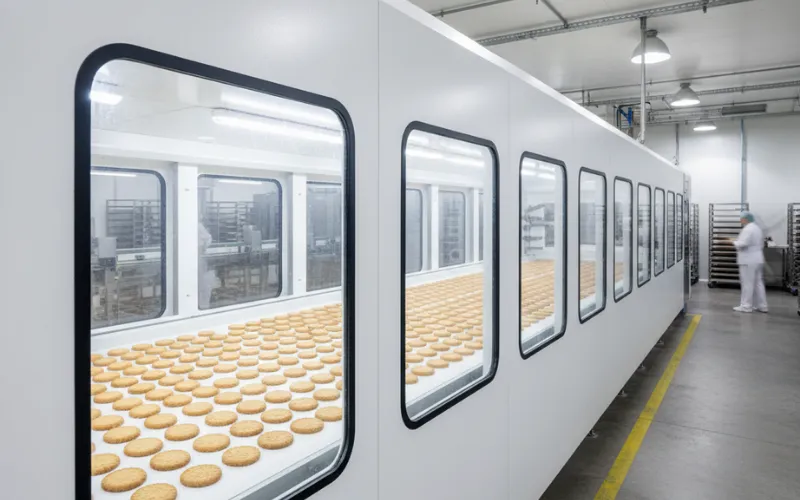
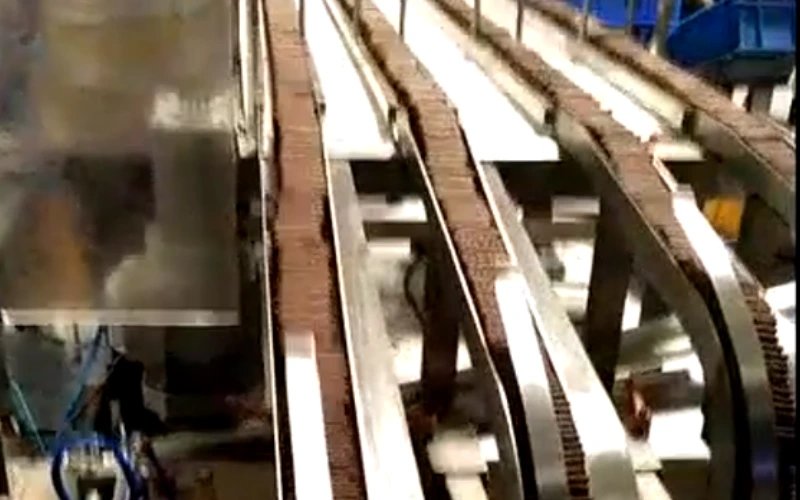
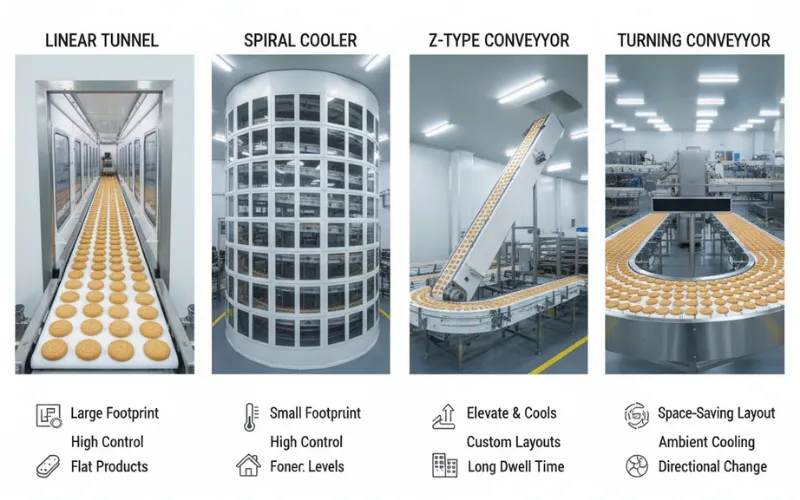
Linear cooling tunnels represent the most straightforward approach to product cooling. In this configuration, products travel on a straight conveyor belt through an enclosed chamber with precisely controlled climate conditions. While conceptually simple, modern linear tunnels incorporate sophisticated environmental controls that make them ideal for creating programmed cooling profiles.
The key advantage of linear systems lies in their ability to establish distinct climate zones along the conveyor length. This sequential cooling approach prevents thermal shock and manages internal moisture gradients - crucial for preventing defects like "checking" in biscuits and crackers. As detailed in our
Best Applications: High-volume production of uniform products like crackers, hard biscuits, and chocolate enrobed items.
Key Advantages:
Straightforward design simplifies
preventive maintenance and sanitation protocols.Excellent for creating precise, multi-zone cooling profiles.
Accessible design facilitates easy inspection and cleaning.
Considerations: Requires significant linear floor space, which can be challenging in space-constrained facilities.
Space-Optimized Solution: Spiral Cooling Systems
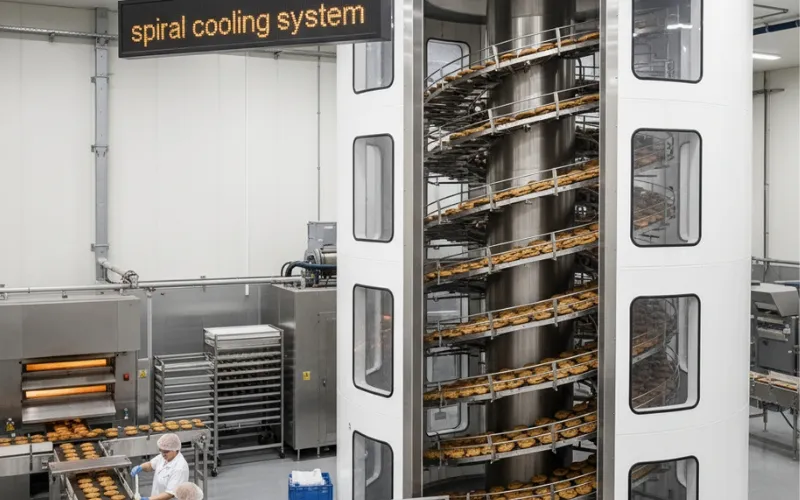
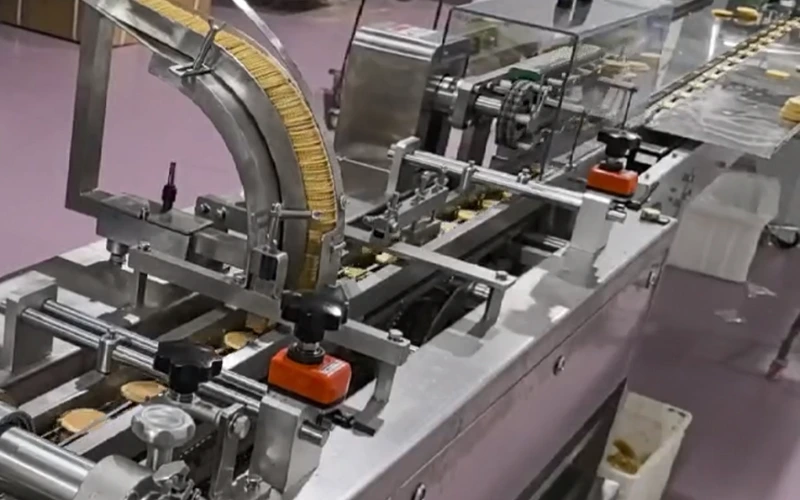
When floor space is limited but cooling time requirements are extensive,
The gentle, continuous motion of spiral conveyors makes them particularly suitable for delicate products that require extended cooling periods. The consistent product handling minimizes damage to soft-baked goods while providing the extended dwell times needed for proper internal structure setting. This makes spiral systems ideal for products where maintaining structural integrity during cooling is paramount.
Best Applications: Space-constrained facilities processing delicate items like cakes, pastries, soft cookies, and artisan breads.
Key Advantages:
Exceptional space efficiency through vertical design.
Gentle handling preserves product integrity.
Accommodates extended cooling periods.
Considerations: Mechanical complexity may require more specialized
maintenance expertise .
Integrated Solutions: Z-Type Conveyor Coolers
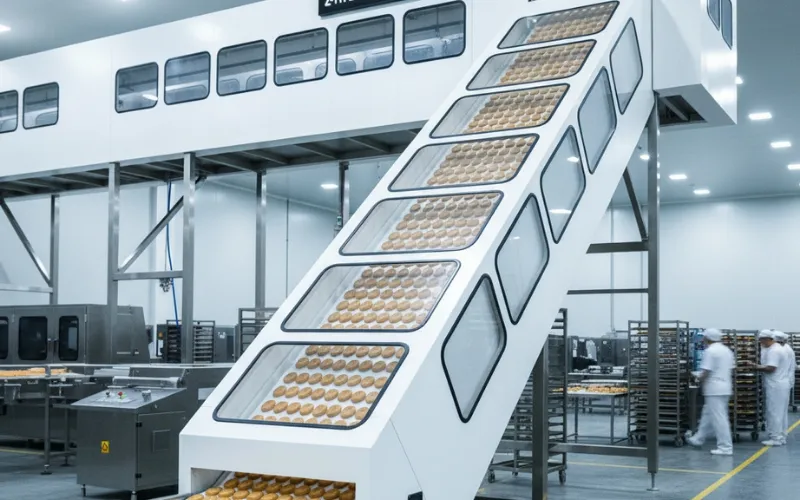
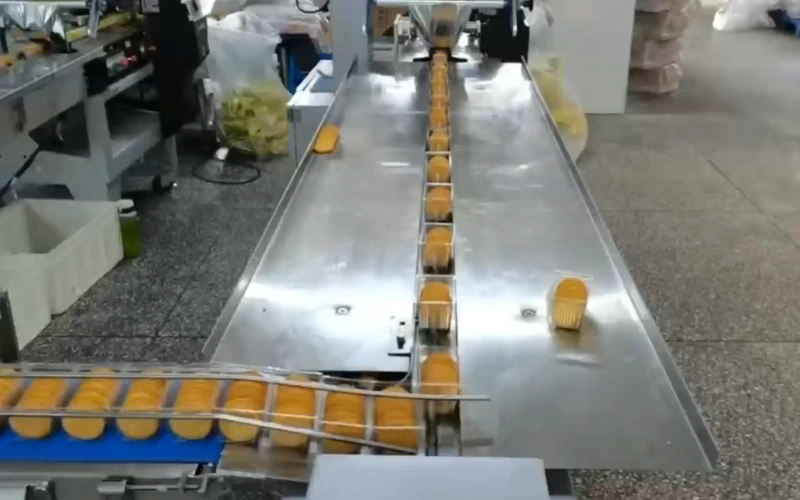
Z-type conveyor coolers represent a hybrid approach that combines elevation changes with cooling functionality. The distinctive "Z" path - horizontal infeed, inclined section, and horizontal outfeed - serves dual purposes of product transfer and cooling in a single integrated system.
For biscuit and cookie production, Z-type systems provide an efficient method to connect oven discharge to packaging lines across different elevations. The extended travel path offers sufficient ambient cooling for many products while facilitating smooth material handling between production stages. Modern designs incorporate features that support operational efficiency, including variable speed control and
Best Applications: Multi-level production layouts requiring both elevation changes and cooling.
Key Advantages:
Combines material handling and cooling functions.
Customizable to specific facility layouts.
Efficient space utilization through vertical integration.
Considerations: Cooling is primarily ambient rather than actively controlled.
Layout Optimization: Turning Conveyors
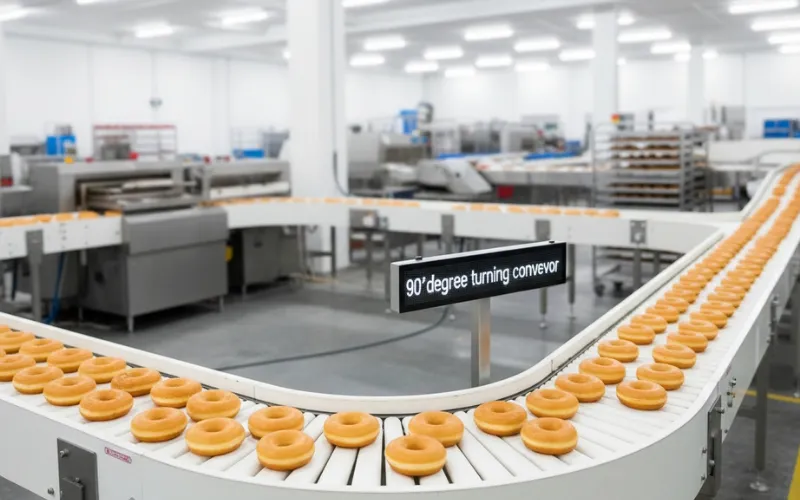
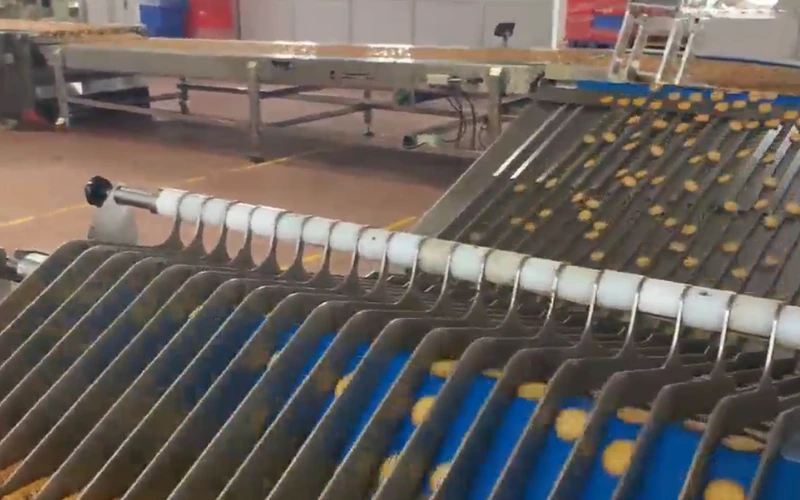
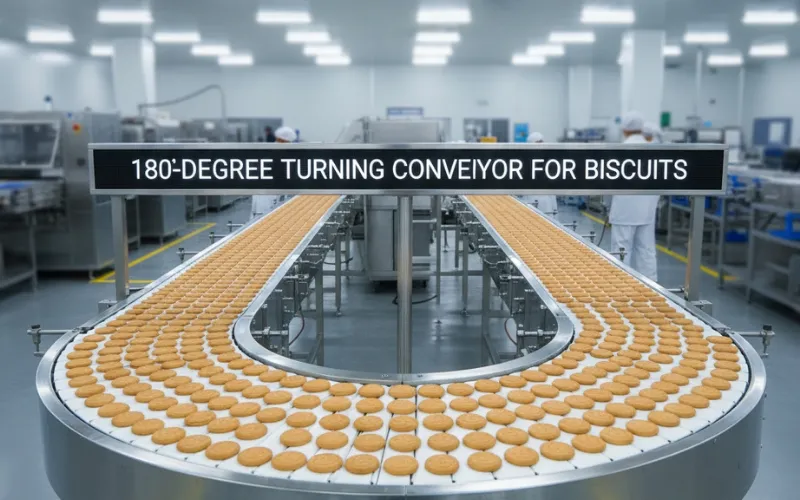
Turning conveyors (90° and 180° configurations) address layout challenges while providing incidental cooling benefits. These systems enable efficient production line designs within constrained facility footprints, creating L-shaped or U-shaped layouts that optimize workflow.
While their primary function is directional change, the additional travel distance provides valuable cooling time for products that don't require precise thermal management. This makes turning conveyors particularly useful in applications like donut production, where they can provide sufficient cooling before glazing operations.
Best Applications: Layout-constrained facilities requiring directional changes with incidental cooling.
Key Advantages:
Enables efficient facility layouts.
Provides cost-effective cooling for suitable applications.
Simplifies production flow in constrained spaces.
Considerations: Limited to ambient cooling conditions.
Comparative Analysis: Choosing Your Architecture
Strategic Implementation Guidance
Selecting the appropriate cooling architecture requires careful consideration of multiple factors:
For operations prioritizing precision and have ample space, linear tunnels offer unmatched control and straightforward maintenance.
Space-constrained facilities should consider
Multi-level production environments will benefit from Z-type conveyors that integrate material handling with cooling functions.
Layout-optimization scenarios may find turning conveyors provide adequate cooling while solving spatial challenges.
Each architecture represents a different approach to balancing spatial efficiency, cooling precision, and operational requirements. The optimal choice depends on your specific product characteristics, facility constraints, and production volumes. By understanding these fundamental architectural differences, you can make an informed decision that supports both immediate operational needs and long-term strategic goals, ultimately maximizing your
Ready to Optimize Your Cooling Line?
Choosing the right cooling system architecture is crucial for maximizing productivity and product quality. Our engineering team specializes in designing customized cooling solutions for biscuit, cookie, and bakery production lines.
Contact us today for a free consultation:
📞 WhatsApp: +86 137 94619343
📧 Email: [email protected]
Sofia Wang Export Vice President | EverSmart Bakery Equipment
Looking for immediate technical specifications? Download our [Cooling System Comparison Guide] or explore our

Ready to start your journey toward a customized solution? Contact me directly on WhatsApp to begin the conversation.