One Machine, Five Shapes: The Guide to Quick Changeover Parts
Introduction: The High Cost of "The Switch"
In the past, biscuit factories were dedicated. Line 1 made Round Vanilla. Line 2 made Square Chocolate. They ran the same product for weeks. Today, the market demands variety. Retailers want mixed cases, seasonal shapes, and limited-edition flavors. This forces factories to change products frequently—sometimes twice a day.
The Hidden Cost:If your sandwich machine takes 4 hours to switch from Round to Square, and you change twice a week, you lose 400 hours of production per year. That is 10 full weeks of lost revenue.
The Engineering Solution:Modern machines are designed for SMED (Single-Minute Exchange of Die). This philosophy aims to reduce changeover times to single digits (under 10 minutes).
This guide explains the mechanics of Tool-Less Parts, Quick-Release Mandrels, and how to organize your factory for rapid transitions.
🚀 Key Takeaways
No Tools Allowed: A modern changeover should require zero wrenches. Everything must be hand-knobs or cam-levers.
The "Poka-Yoke" Rule: Parts must be designed so they cannot be installed backward (Mistake-Proofing).
The Big Three: The main change parts are the Magazine Guides, Pusher Fingers, and Stencil Drum.
HMI Recipes: Mechanical changes are useless without digital "One-Touch" recipes to tune servo parameters.
Storage: Store precision parts on "Shadow Boards" to prevent damage.
The Philosophy of SMED
SMED was invented by Toyota to convert "Internal" setup tasks (machine stopped) into "External" tasks (machine running).
External Authority: Learn more about the origins of
from the Lean Enterprise Institute. Single-Minute Exchange of Die (SMED)
Tool-Less Design
If an operator has to walk to the workshop to find a 13mm spanner, you have lost money.
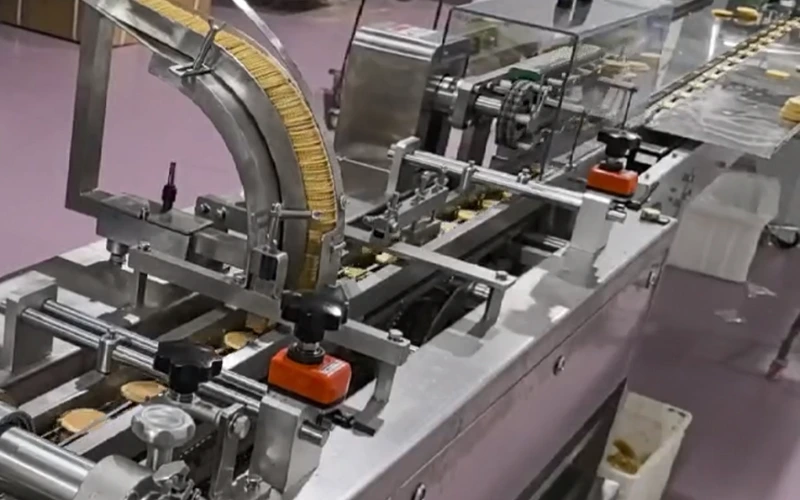
Cam-Lock Levers: Bicycle-style quick releases for guide rails.
Star Knobs: Hand-turnable knobs for adjusting magazine widths.
Magnetic Snap-Fits: For light-duty guards.
Poka-Yoke (Mistake Proofing)
A fast changeover is bad if it is wrong.
Color Coding: Anodized Blue for "Round 50mm"; Anodized Red for "Square 40mm".
Keyed Fits: Mounting pins have unique shapes (Triangle vs. Circle) so Part A cannot fit into Slot B.
The Critical Change Parts
To switch from a Round Oreo to a Rectangular Bourbon, you must swap three specific modules.
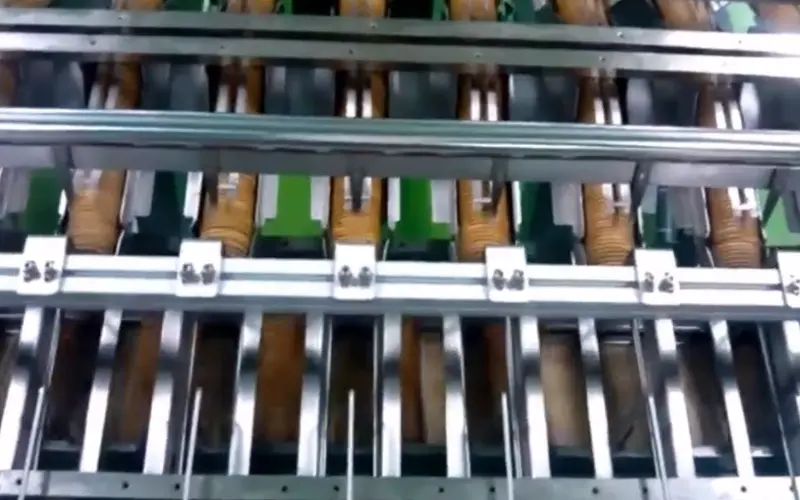
The Magazine Guides (The Feeder)
This is usually the most tedious part.
Old Way: Loosen 16 screws per lane. Time: 60 Minutes.
New Way (Cassette System): The entire magazine assembly is a single "Cassette." Unlock two clamps, lift off "Round," drop in "Square." Time: 5 Minutes.
Context: Different shapes require specific feeding strategies. Read our
Rectangular Biscuit Alignment Guide
The Pusher Fingers (The Chain)
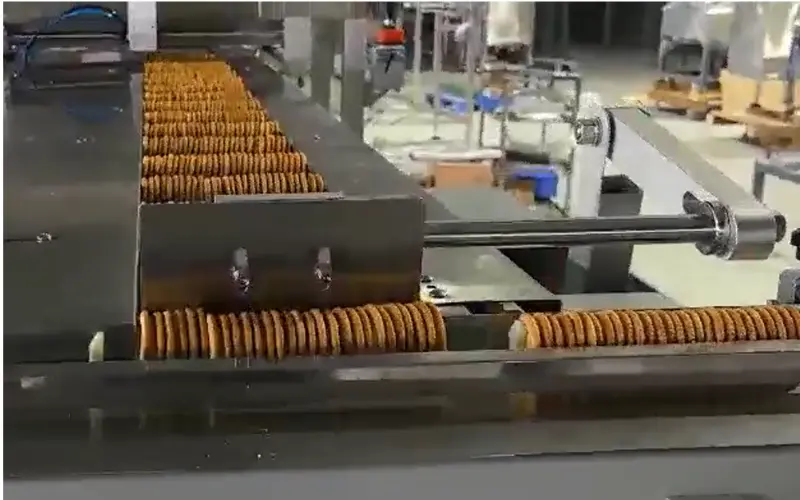
The metal fingers pushing the biscuit must match its profile.
The "Click-On" Finger: A durable plastic clip system allows operators to snap old fingers off and new ones on without breaking the chain.
The Stencil Drum (The Creamer)
This is the heavy part.
The Quick-Release Mandrel: Open the hand latch, slide the drum out on support rails, and slide the new one in. The servo coupling self-aligns.
Deep Dive: Understand the drum mechanics in our
Industrial Biscuit Stencil Creaming Guide 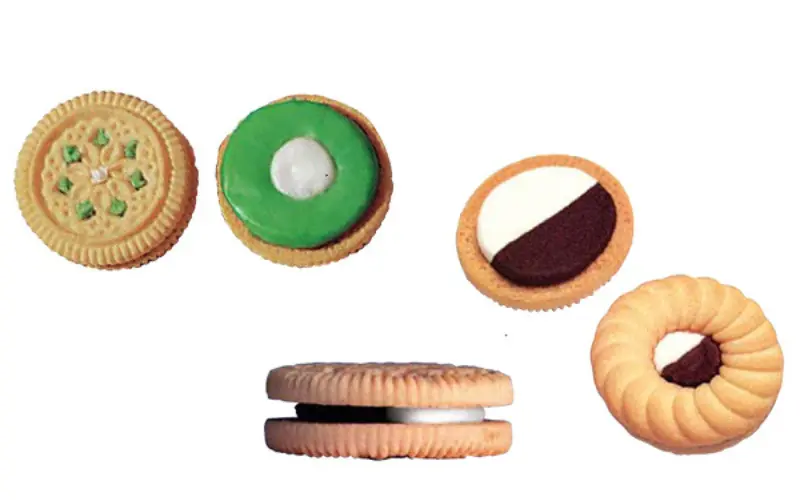
The Digital Changeover (The Recipe)
Swapping the metal is only half the battle. You have to tell the brain (PLC) what changed.
Servo Homing
When you install a square stencil drum, the "Zero Position" might differ from the round drum.
Auto-Homing: The new drum has an RFID chip. The machine scans it and automatically applies a "Phase Offset," ensuring the cream lands in the center.
The "Recipe" Button
Operators should never manually type in speeds.
The Protocol: Select "Recipe 2: Bourbon" on the HMI. The PLC automatically sets Pump Speed, Chain Speed, and Suck-Back Delay.
Storage and Logistics
Where do you put the parts when they are not in the machine?
The "Shadow Board" Trolley
Change parts are expensive. A scratch on a stencil drum causes cream leakage.
The Solution: A Mobile Parts Trolley with "Shadow Boards" (outlines of the tools). It is wheeled to the Wash Room for cleaning, then stored next to the line.
Troubleshooting After Changeover
The first 10 minutes after a changeover are dangerous.
FAQ: OEE & Efficiency
Q1: What is a realistic changeover time?A:
Flavor Change: 15 Minutes (Flush pump + swap drum).
Shape Change: 30-45 Minutes (Full cassette swap).
Q2: Can I run multiple shapes on the same pusher fingers?A: Sometimes. A "Flat" pusher works for Square AND Round (pushing the tangent). A "Curved" pusher only works for Round.
Q3: How does this apply to Mini Biscuits?A: Mini lines require even higher precision. Read our
Conclusion: Agility is Profit
In the modern food industry, the "Fast" eat the "Slow." The ability to switch from Vanilla Oreos to Chocolate Bourbons in under 45 minutes gives you a massive competitive advantage.
The EverSmart Advantage: We design our machines with "Visual Management." Every change point is labeled with a number (1, 2, 3), guiding the operator through the swap sequence correctly every time.
Audit Your Downtime.How long does your current changeover take?
[CTA Button]Download the SMED Tracker by whatsapp us. Measure your performance. Identify the waste. Boost your OEE.

Ready to start your journey toward a customized solution? Contact me directly on WhatsApp to begin the conversation.