The "Bourbon" Challenge: Aligning Rectangular Biscuits at High Speeds
Introduction: The Geometry of a Jam
In the world of automation, Round is easy. A round biscuit (like an Oreo) has infinite symmetry. If it rotates 5 degrees, nobody notices. It fits into guide rails naturally.
Rectangular (Bourbon) or Square (Cracker) biscuits are different. They have corners.
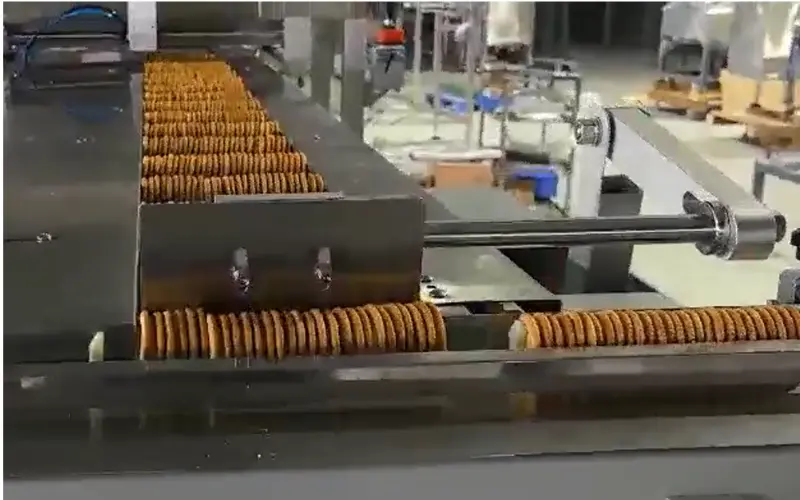
If a rectangular biscuit rotates just 5 degrees while traveling at 2 meters per second, its effective width increases. It hits the guide rail, creates friction, and turns further. Eventually, it bridges across the lane, jamming the pusher fingers and stopping the entire line.
The Quality Cost:Even if it doesn't jam, a skewed biscuit receives a "diagonal" cream deposit. The cream spills over the edges, creating a messy pack.
This guide explores the physics of Active Alignment, moving beyond static rails to discuss Differential Speed Belts and Vision-Based Rejection.
🚀 Key Takeaways
The Rotation Risk: Rectangular biscuits act like "sails." Air resistance and belt friction naturally cause them to skew.
Static vs. Active: Static rails cause friction and breakage. Active Side Belts straighten the product gently using speed differentials.
Stencil Phasing: The Stencil Drum must be "Phase-Locked" to the biscuit chain to prevent offset creaming.
Vision Gates: Reject biscuits skewed >5° before they hit the stencil head.
System Context: Feeding rectangles requires specialized upstream equipment. Read our
. Lane Multiplier Guide
The Physics of "Skew"
Why do rectangular biscuits turn sideways? It is usually a combination of Friction and Center of Gravity.
The Contact Patch
A round biscuit touches the guide rail at a single tangent point and rolls off. A rectangular biscuit touches with a sharp corner.
The Pivot Effect: If the leading corner hits the rail, the friction acts as a pivot point. The momentum of the belt pushes the biscuit around this pivot, spinning it 90 degrees.
External Resource: Understanding
Friction Coefficients in Sliding Motion 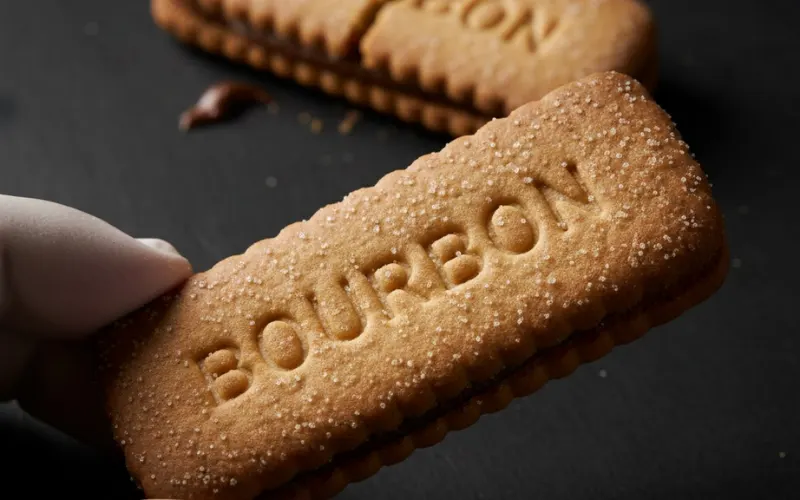
The "Diagonal" Cream Disaster
The Stencil Head deposits cream in a perfect rectangle at a fixed time. If the biscuit is rotated 10 degrees, the cream lands across the corners, hanging off the sides. This leads to smear inside the
The Passive Solution (Static Guides)
For low speeds (<400 SPM), you can use static mechanics.
The Tapered Funnel
You cannot force a rectangle into a slot that is the exact same width. We use a Tapered Lead-In.
Zone 1: Wide lane (+20mm).
Zone 2: Gradual taper.
Zone 3: Final lane (+2mm).
The Engineering Secret: Use Vibrating Rails. By vibrating the rails, we reduce the coefficient of friction, allowing the biscuit to "float" rather than rub.
The Active Solution (Side Belts)
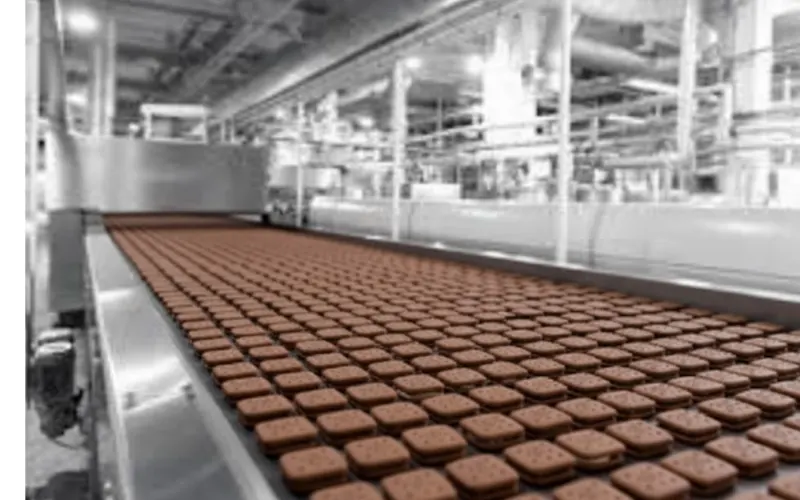
For high-speed industrial lines, we use Active Alignment. This mimics straightening a stack of papers with your hands.
Differential Speed Alignment
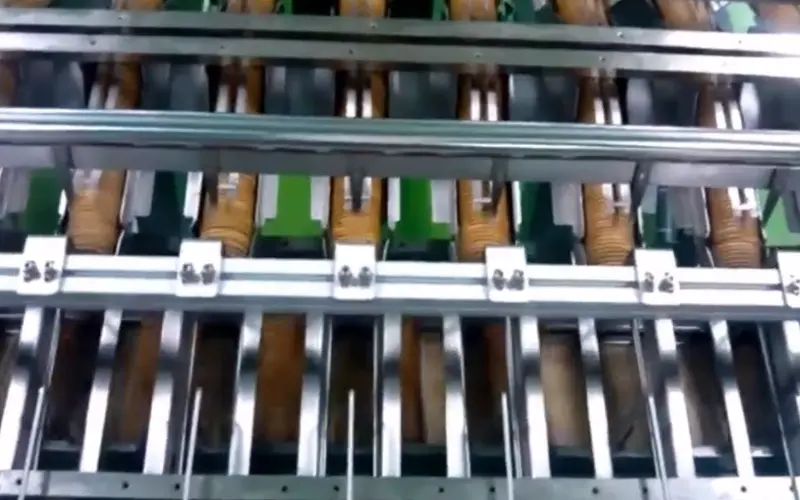
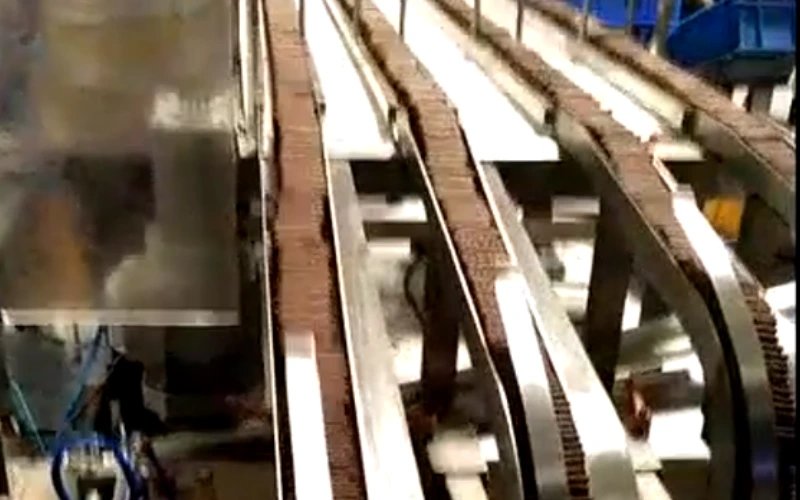
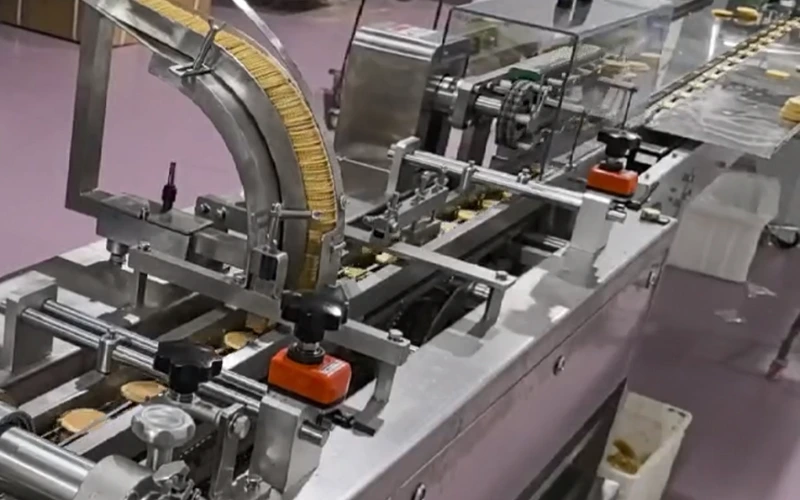
We install two small, vertical conveyor belts (Side Belts) on either side of the main transport belt.
The Physics: The Side Belts run slightly faster than the main belt. When a skewed biscuit corner hits a side belt, the belt "grabs" it and pulls it forward. This torque rotates the biscuit straight without impact shock.
Vision Systems: The Final Gatekeeper
Even with active alignment, some biscuits are stubborn (e.g., baked into a "Diamond" shape).
The "Angle Check" Camera
We install a high-speed Vision System immediately before the Stencil Head.
Logic: If Angle > 5°, Reject via air jet.
Why: It is cheaper to lose one biscuit than to jam the stencil drum.
Magazine Design for Rectangles
If you are using
The "Shingle" Lock
Embossed wording (e.g., "BOURBON") can lock together like LEGO bricks.
The Fix:
Tilting Magazine: Tilt back 15 degrees to relieve pressure.
Shingle Breakers: Mechanical bumps inside the chute to force an offset stack.
Troubleshooting Alignment
FAQ: Shape Handling
Q1: Can I run squares on a round biscuit machine?A: Yes, but you need Change Parts (pusher fingers, stencil drum, side guides).
Learn More:
Biscuit Machine Quick Changeover Guide
Q2: What about "Finger" biscuits (long/narrow)?A: You require a Lug Chain with "high back" pushers to support the biscuit so it doesn't flip backward.
Q3: How precise does the alignment need to be?A: Within ±3 degrees. Anything more, and cream will hang off the edge.
Conclusion: Square Pegs, Square Holes
Aligning rectangular biscuits is not magic; it is friction management. If you rely on simple static rails for a high-speed Bourbon line, you will fight jams every day.
The EverSmart Advantage: Our "Active-Align" Modules can be retrofitted onto existing lines, using servo-driven side belts to gently correct skew.
Are your Bourbons crooked?
[CTA Button]Get a Free Alignment Audit by whatsapp us. Upload your line video. We will propose a mechanical or vision-based solution.

Ready to start your journey toward a customized solution? Contact me directly on WhatsApp to begin the conversation.