Small but Mighty: The Specific Challenges of "Mini" Sandwich Biscuits
Introduction: The "Snack-Pack" Revolution
In the consumer market, "Mini" is big business. From "Mini Oreos" to "100-Calorie" packs, shoppers love bite-sized treats. For marketing, launching a Mini version seems simple: "Just shrink the biscuit by 50%."
For the factory engineer, this is a nightmare.
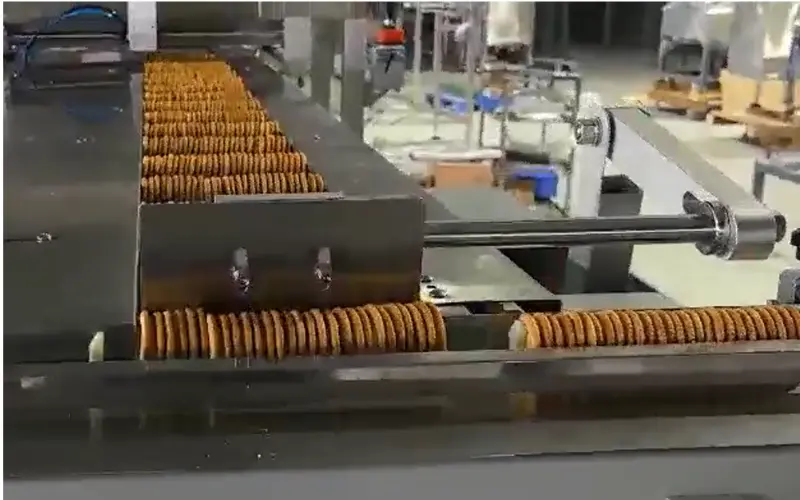
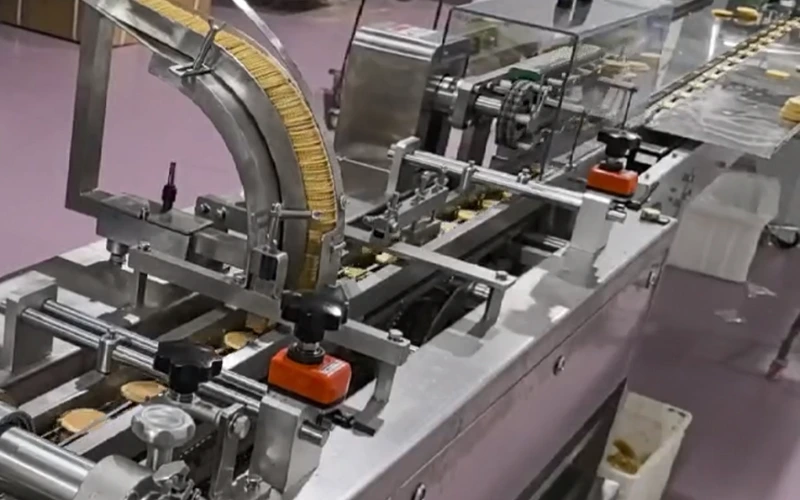
The Engineering Paradox: As the biscuit gets smaller, handling gets exponentially harder. A standard 50mm biscuit sits heavily on the belt. A 25mm "Mini" biscuit acts like a leaf in the wind—flying off belts and bouncing in feeders. Furthermore, depositing 1.0g of cream requires far tighter tolerances than depositing 5.0g.
This guide explores the engineering modifications required to run Mini Sandwich Biscuits at industrial speeds (>4,000 SPM).
🚀 Key Takeaways
Aerodynamics: Mini biscuits have a high surface-area-to-mass ratio. You need Vacuum Conveyors to prevent them from flying.
The 10% Error Rule: A 0.1g deviation on a mini biscuit is a 10% quality failure.
Vibration Tuning: Low-mass products bounce uncontrollably. You need High-Frequency / Low-Amplitude tuning.
Stencil Geometry: Drum wall thickness must be reduced to 2mm to ensure clean release.
Packaging: Decide early: Counting (Slug Pack) or Weighing (Bag)? This dictates the backend layout.
Chapter 1: The Physics of "Flight" (Aerodynamics)
The biggest enemy of high-speed mini production is Air Resistance.
Mass vs. Drag
A mini biscuit weighs ~3 grams. When traveling at 60 meters/minute, the air resistance is enough to lift it.
The Symptom: Biscuits flutter or blow off at transfer points.
The Solution: Vacuum Conveyors. You cannot rely on gravity. The main transport conveyors must use Perforated Belts with a vacuum plenum to "suck" the biscuit down.
Deep Dive: Learn more about vacuum physics in our
Vacuum Cookie Capper Engineering Guide
The "Dead Plate" Danger
Transferring a 25mm biscuit across a 10mm gap is risky.
Fix: Use Knife-Edge Transfers (Nose Bars with 3mm radius) to make the gap almost zero.
Chapter 2: The "Micro-Dose" Challenge
Depositing cream on a Mini is not just about volume; it is about Ratio.
The Mathematics of Deviation
Standard Sandwich: 4.0g cream ±0.1g = 2.5% Error. (Acceptable)
Mini Sandwich: 1.0g cream ±0.1g = 10% Error. (Unacceptable)
If you are 10% overweight, you destroy profit. If 10% underweight, the consumer tastes dry biscuit.
The "Mini" Pump Modification
You cannot use a standard pump. Large rotors turning slowly create a "pulsing" flow.
The Fix: Install Small-Displacement Rotors. This forces the pump to spin faster (Higher RPM), creating a smoother, non-pulsing flow for higher accuracy.

Chapter 3: Feeding: The Bouncing Problem
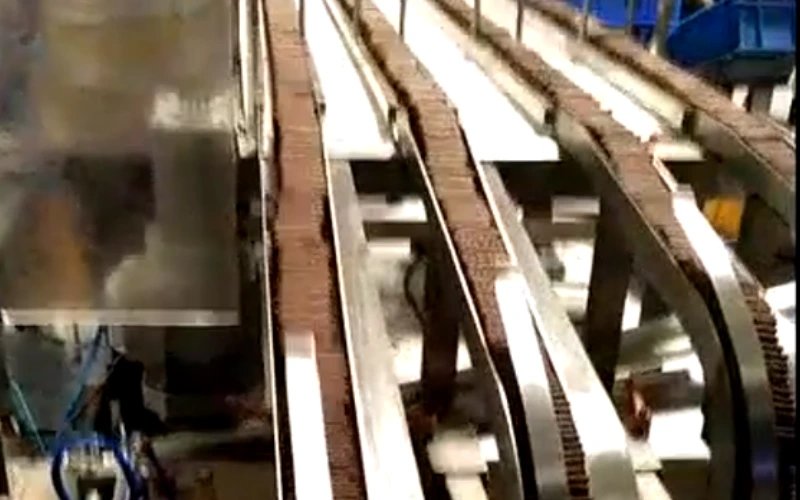
Feeding Minis requires a delicate touch.
Frequency vs. Amplitude
Standard
Tuning Protocol:
Amplitude: Reduce drastically (Short stroke).
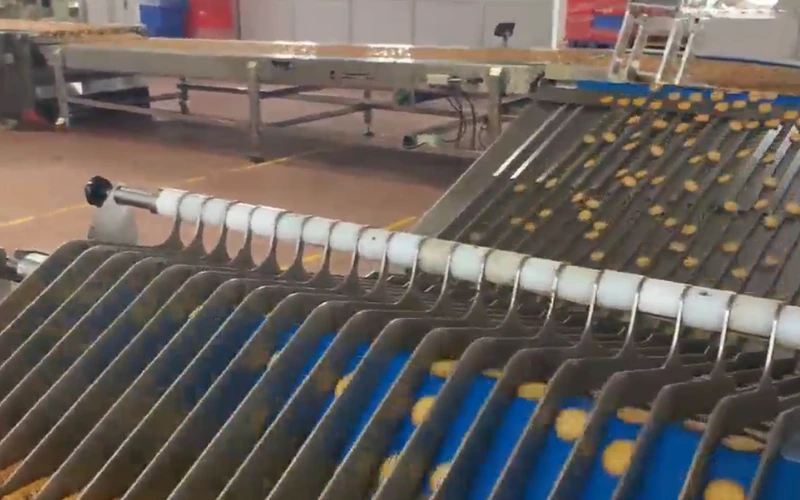
Frequency: Increase (Faster buzz).
Result: A "shimmering" effect that glides the biscuit without launching it.
Lane Guide Width
Mini biscuits have little tolerance for "slop." If the guide is 2mm too wide, it jams.
Precision Rails: Use Machined Stainless Guides with <1mm clearance.

Chapter 4: Stencil Drum Geometry
The Stencil Machine is best for speed, but the drum needs redesigning.
Wall Thickness & Release
A standard 4mm deep hole is too deep for a small 20mm deposit; the cream gets "plugged."
The Solution: Reduce drum wall thickness to 2mm. Apply Food-Grade Ceramic Coating to reduce friction.
Learn More:
Industrial Biscuit Stencil Creaming Guide
Chapter 5: Packaging: Count or Weight?
How you sell the product dictates the end of the line.
Scenario A: The "Portion Pack" (Count)
Format: "6 Mini Oreos."
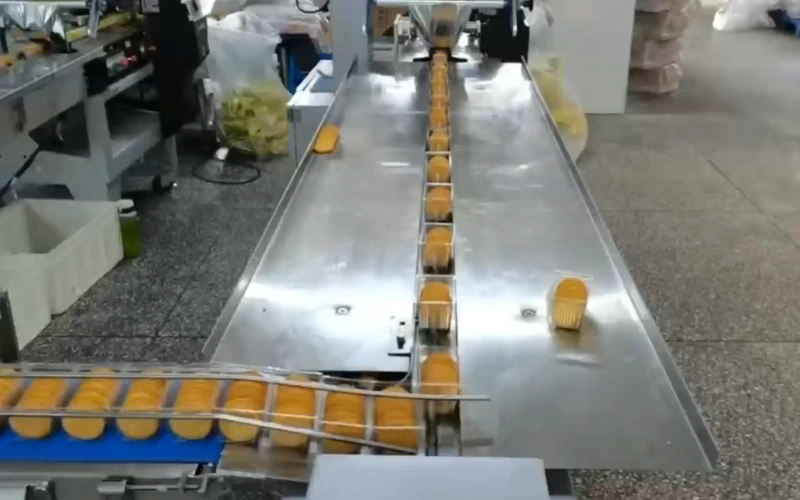
Challenge: You need a Slug Loader or Counting Slat Conveyor.
Speed Limit: Mechanical counting limits speed.
Scenario B: The "Grab Bag" (Weight)
Format: "40g Snack Bag."
Solution: Multihead Weigher. Dump bulk biscuits into a bucket scale.
Speed: Extremely fast. No orientation required.
Recommendation: For efficiency, sell by Weight.
Packaging Integration:
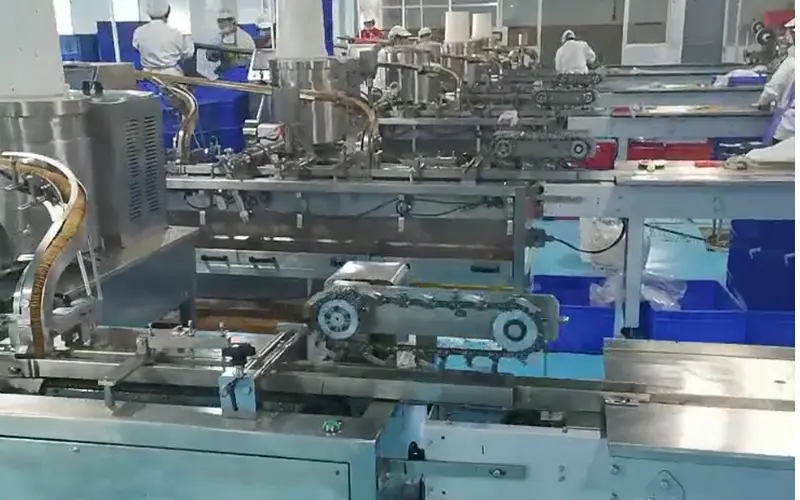
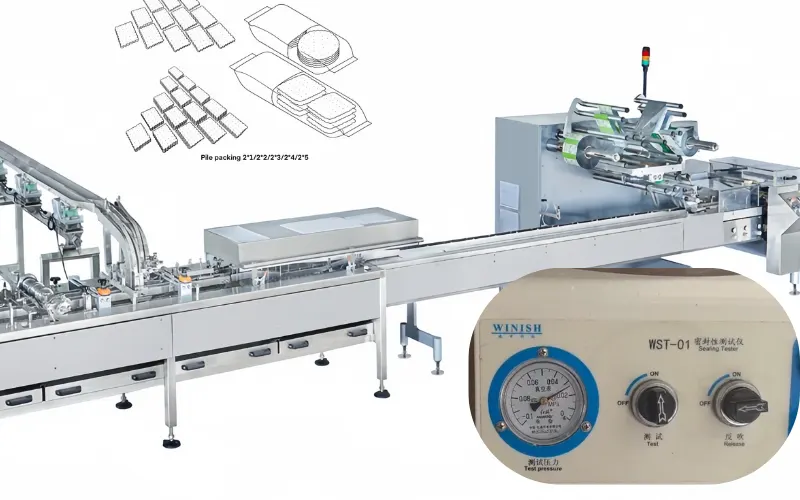
Biscuit Sandwicher & Flow Wrapper Synchronization
Chapter 6: Troubleshooting Mini Production
FAQ: Mini Specifics
Q1: Can I run Minis on my standard machine?A: Only if you change everything (Pushers, Drum, Guides, Pump Rotors). It is often cheaper to buy a dedicated Mini machine than to do a 4-hour changeover weekly.
Changeover Tips:
Biscuit Machine Quick Changeover Guide
Q2: What is the smallest size practical?A: 20mm diameter. Below this, the cream deposit becomes a dot (0.5g), requiring aerospace-grade tolerances.
Q3: Can I put a logo on a Mini?A: Keep it shallow. Deep embossing makes the stack unstable in the magazine.
Conclusion: Small Product, Big Engineering
Mini biscuits are not just "small biscuits." They are a different class of physics object, requiring air management and micro-dosing precision. But the reward is a 30% premium per gram.
The EverSmart Advantage: We offer dedicated "Mini-Spec" Sandwichers with vacuum conveyors and micro-pumps.
Planning a Mini Launch?Send us your dimensions. We will calculate the "Flight Risk."
[CTA Button]Get a Mini Line Consultation by whatsapp us. Scale down your product. Scale up your profits.

Ready to start your journey toward a customized solution? Contact me directly on WhatsApp to begin the conversation.