Sanitation Standards for Cooling Conveyor Systems: A Guide to FDA, USDA, and 3-A Compliance
From Compliance to Competitive Advantage: A Strategic Guide to Cooling Conveyor Sanitation for Biscuit & Bakery Leaders
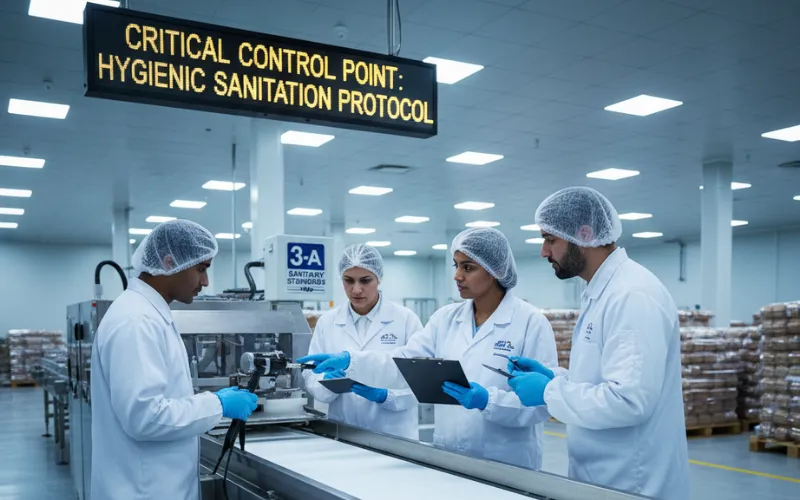
Authored by: Li Wei, Lead Sanitary Design Engineer, EverSmartWith over 15 years of experience designing and implementing hygienic processing lines for global food manufacturers, Li Wei specializes in material science and sanitary standards compliance.
Executive Summary for Decision-Makers
For the Owner, Financial Manager, and Project Manager: Sanitation is not a cost center; it's a strategic investment. This guide demonstrates how selecting a cooling conveyor built to superior hygienic standards directly impacts your
Introduction: Where Food Safety Meets Financial Performance
In biscuit, cookie, and cracker production, the cooling conveyor is where your product is most vulnerable. It's a critical control point where temperature transitions create condensation—a perfect storm for microbial growth.
The stakes have never been higher. According to industry analysis, sanitation failures contribute to over 40% of costly product recalls in the baked goods sector. A single failure can trigger a recall costing millions and devastate a brand reputation built over decades.
This guide moves beyond basic compliance. We provide a strategic framework for Procurement, Quality Assurance, and Engineering managers to evaluate cooling conveyor systems through the lens of risk management, operational efficiency, and long-term value. Understanding these principles is essential for protecting your
The 10 Principles of Hygienic Design: An Operational Checklist
Microbiologically Cleanable Surfaces: All surfaces must be smooth, non-porous, and free of imperfections.
Compatible Materials: Materials must be inert, non-toxic, and resistant to food, cleaning chemicals, and the processing environment.
Accessible for Inspection & Maintenance: All components must be readily accessible for visual inspection and cleaning without tools. This is vital for executing an efficient
preventative maintenance checklist .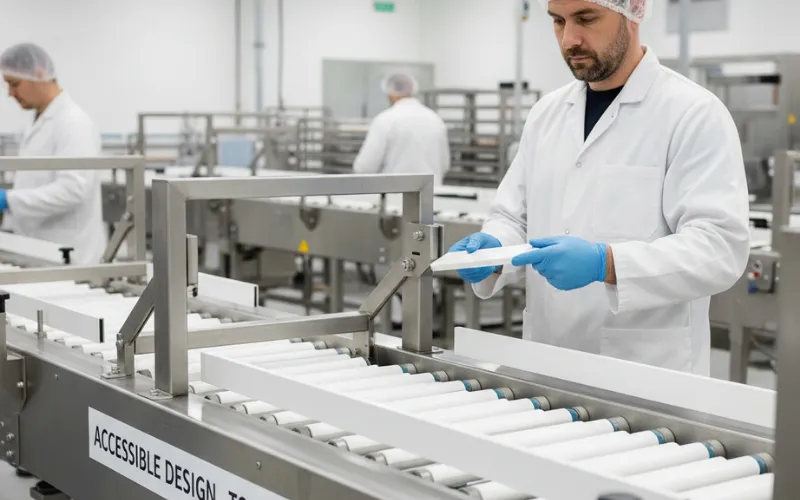
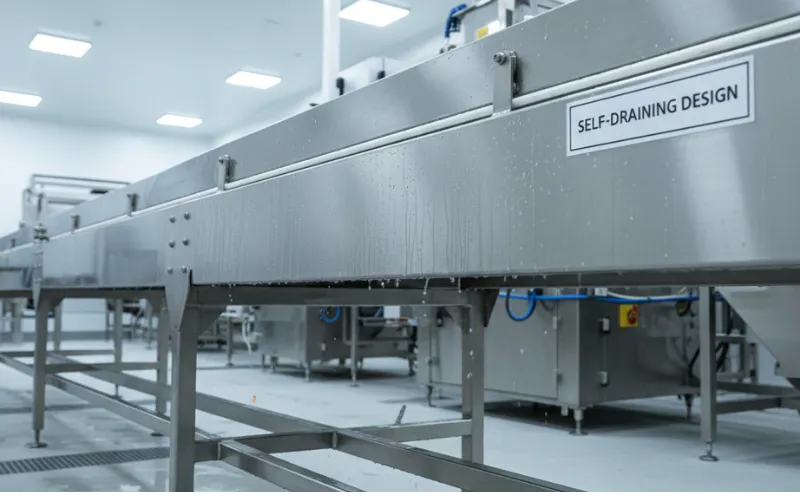
Self-Draining Design: The system must have sloped surfaces to prevent liquid pooling, a critical factor for managing condensation that can lead to moisture-related
troubleshooting and repair issues .Hermetically Sealed Components: Hollow areas must be permanently sealed. Continuous welding is superior to bolted joints, which are contamination risks. **
Niche-Free Construction: Designs must proactively eliminate cracks, pits, and recesses where contaminants accumulate.
Sanitary Operational Performance: The conveyor must function without creating unsanitary conditions like lubricant leakage.
Hygienic Compatibility: The design must integrate seamlessly with other plant systems, including automated
Clean-in-Place (CIP) systems .Validated Cleaning Protocols: Procedures must be defined, scientifically validated, and easily repeatable by your staff.
Hygienic Enclosures: Electrical components must be rated for washdowns and designed to prevent debris accumulation.
Understanding the Regulatory Landscape: FDA, USDA, and 3-A
FDA (Food and Drug Administration) USDA (United States Department of Agriculture) 3-A Sanitary Standards, Inc.
Case Study: Transforming Sanitation into Production Gains
Challenge: A major U.S. cookie manufacturer lost 45 minutes of production daily to manual cleaning of an old, poorly designed cooling conveyor. This equated to over 250 lost hours annually.
Solution: They upgraded to an EverSmart
Documented Results:
70% Reduction in Cleaning Time: Downtime reduced from 45 minutes to 15 minutes per shift.
100% Pass Rate on the next three microbial swab tests.
Annual Production Increase: Regained time equivalent to 1.2 million packages of cookies, directly boosting revenue.
Strategic Material Selection: 304 vs. 316 Stainless Steel
This is a critical procurement decision with significant long-term cost implications.
304 Stainless Steel: A cost-effective, food-grade option suitable for most dry biscuit and cracker applications.
316 Stainless Steel: Includes molybdenum for enhanced corrosion resistance.
It is the strategic choice for environments with high humidity, salty products (crackers), acidic creams, or aggressive chemical sanitizers.
Financial Rationale: While 316 stainless may have a 10-15% higher initial cost, it prevents corrosion and extends equipment lifespan, delivering a significantly lower Total Cost of Ownership (TCO).
The EverSmart Philosophy: Engineering for Performance and Compliance
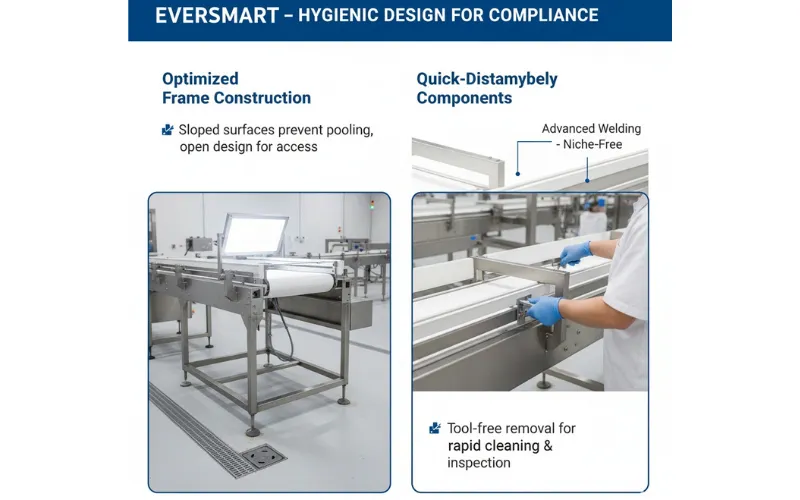
Our
Optimized Frame Construction: Open-frame designs with sloped surfaces to eliminate pooling and facilitate drainage.
Advanced Welding & Finishing: Continuous, polished welds on all product-contact surfaces to eliminate bacterial harborage points.
Quick-Disassembly Components: Tool-free removal of guide rails and belt lifters to complement your preventative maintenance routines and minimize labor.
Full Material Traceability: Complete documentation and compliance certificates for all product-contact surfaces.
Frequently Asked Questions (FAQ)
Q: What is the realistic ROI for investing in a 3-A compliant cooling conveyor?A: While initial costs can be 15-25% higher, the ROI is typically realized within 18-24 months through reduced labor, less downtime, and longer equipment life. The case study above demonstrates a payback period of under 12 months through production gains alone.
Q: Is 304 stainless steel sufficient for our new wafer line with cream fillings?A: For products with acidic or high-moisture fillings, 316 stainless steel is a mandatory investment. The enhanced corrosion resistance will prevent contamination and extend your conveyor's service life, protecting your asset.
Q: Is 3-A certification mandatory?A: While voluntary, it is the industry benchmark. Specifying 3-A principles simplifies your audit process, demonstrates due diligence to regulators, and provides the highest level of food safety assurance, directly protecting your brand's
Conclusion: Your Next Strategic Step
Selecting the right cooling conveyor is a strategic decision that impacts your bottom line, product quality, and brand integrity. It is a cornerstone for achieving the
For a detailed, confidential consultation on how these principles apply to your specific operation—including a preliminary ROI analysis—contact our expert team.
For technical and design specifications:
Li Wei | Lead Sanitary Design Engineer | EverSmart Email: [email protected]
For commercial proposals and project management:
Sofia | Export Vice President | EverSmart WhatsApp: +86 137 94619343 Email: [email protected]

Ready to start your journey toward a customized solution? Contact me directly on WhatsApp to begin the conversation.