The Ultimate Preventative Maintenance Checklist for Bakery Cooling Conveyors
Introduction: The True Cost of Conveyor Neglect
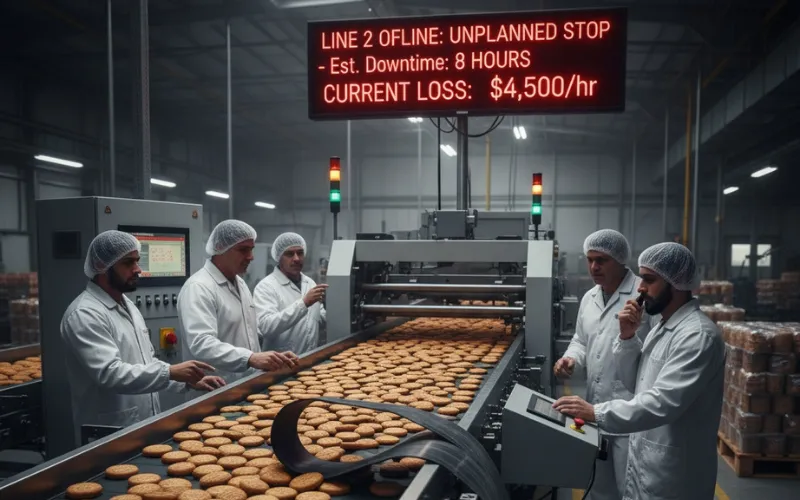
For a Factory Owner or Financial Manager, an unplanned production halt is a direct hit to the bottom line. In food manufacturing, conveyor downtime costs an average of $5,000 - $10,000 per hour in lost production and wasted ingredients. What starts as a minor vibration or a slight belt misalignment can escalate into a catastrophic bearing failure or a shredded belt, stopping your entire line for 8+ hours.
Preventive Maintenance (PM) isn't an expense; it's a strategic investment that directly impacts your
Your Comprehensive Cooling Conveyor PM Schedule
A one-size-fits-all approach doesn't work. This schedule is broken down by frequency, ensuring critical items are checked often enough without wasting resources.
Daily Checks (To be performed at shift start or during changeover)
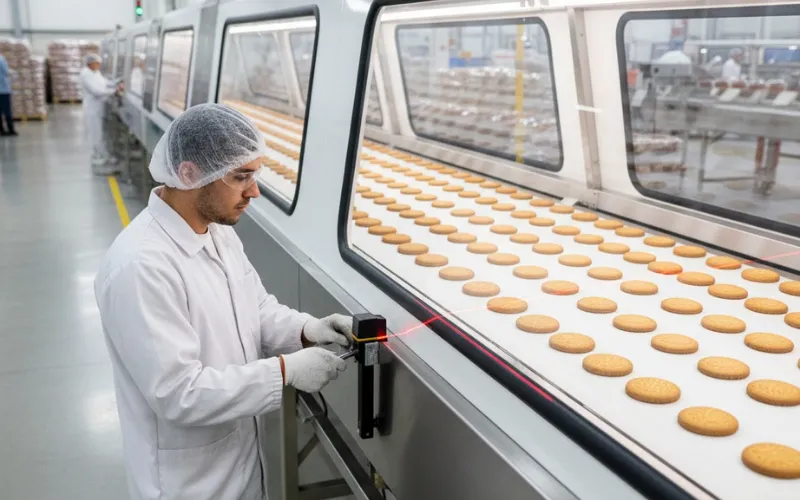
Visual Inspection: Walk the line. Look for loose debris, product spillage, and signs of wear.
Belt Tracking: Check for any side-to-side drift of the belt. Minor adjustments now prevent major damage later.
Listen for Unusual Noises: Grinding, squealing, or clunking sounds are early warnings. If you hear them, it may be time for a deeper diagnosis, which we cover in our guide to
troubleshooting cooling conveyor problems .Safety Guards: Ensure all guards are secure and in place.
Weekly Checks
Belt Tension: Check tension against manufacturer's specifications (typically a deflection of 1-2% of the span between rollers).
Drive Motor & Gearbox: Check for excessive heat or oil leaks.
Rollers & Bearings: Manually rotate rollers to check for grinding or resistance.
General Cleaning: Remove dust and debris from motors, frames, and underneath the belt.
Monthly Checks
Detailed Belt Inspection: Check for cuts, fraying edges, or material degradation.
Bearing Lubrication: Lubricate all bearings according to the manufacturer's guidelines. Over-lubrication is as harmful as under-lubrication.
Sprocket and Chain Inspection: Check for wear and proper tension on drive chains.
Electrical Connections: Tighten any loose connections in motor control cabinets.
Annual/Seasonal Checks
Major Component Overhaul: This is a deep dive, often best performed with a certified technician from your
industrial food cooling tunnel provider.Motor Alignment: Check and correct the alignment between the motor and gearbox.
Structural Integrity: Inspect the conveyor frame for cracks, corrosion, or misalignment.
Control System Check: Verify the calibration of sensors and PLC programs.
Key Focus Areas for Maximum Uptime (The 3 Most Common Failure Points)
1. Belt Tracking and Tension
A mistracked belt wears prematurely, damages the conveyor structure, and can spill product. Consistent tracking relies on properly aligned rollers and correct tension. At EverSmart, we install laser-guided alignment during commissioning and provide detailed tensioning protocols for your team.
2. Bearing Lubrication and Health
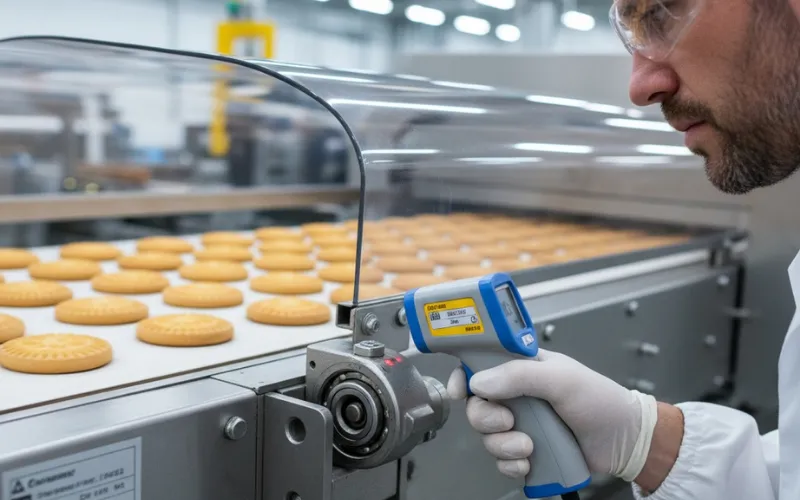
Bearings are the heart of your conveyor. Failure is often sudden and catastrophic. Use the right grease, in the right amount, at the right interval. Monitor bearing temperatures with an IR thermometer; a temperature rise of 10°C above ambient often signals impending failure.
3. Cleaning and Sanitation
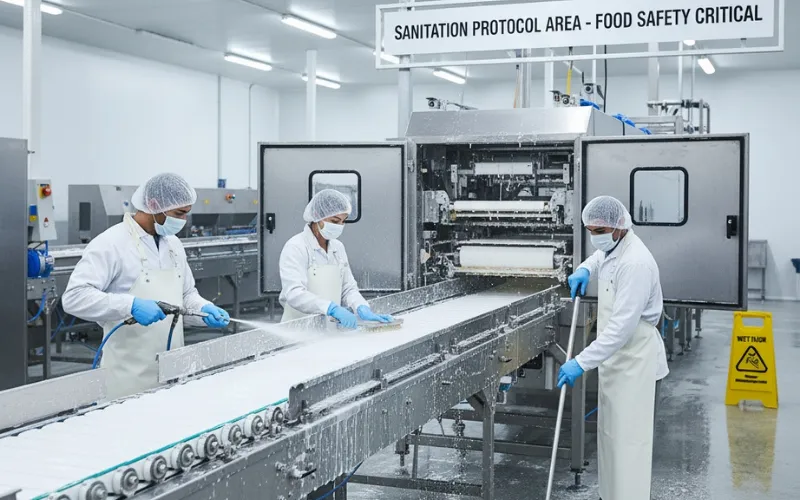
For a QA Manager, this is critical. Carryover of product residue and oils isn't just a maintenance issue; it's a food safety risk that requires adherence to strict
Our engineers design conveyors with easy-access panels and compatibility with modern
Free Downloadable PM Checklist & Log
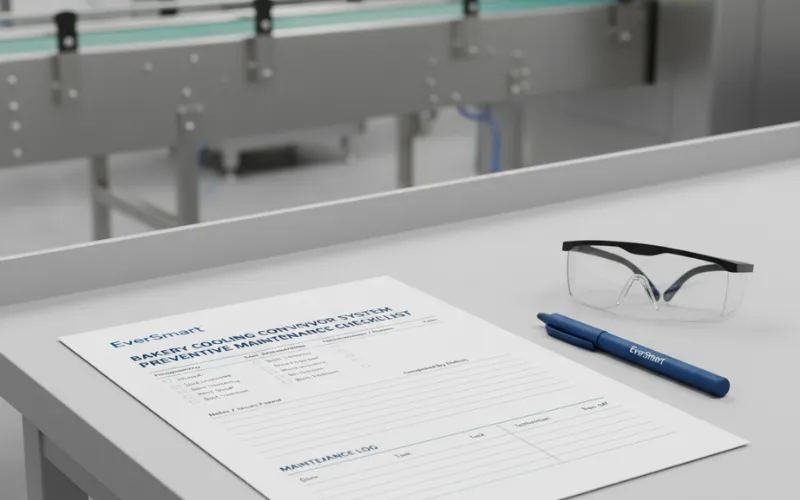
We've turned this article into an actionable tool for your team.
Download our comprehensive PDF checklist to print and use on your floor. It includes a full log to track tasks, note issues, and sign off on completion—making your PM program auditable and consistent.
(WHATSAPP +86 13794619343: Download Your Free PM Checklist PDF)
Frequently Asked Questions (FAQs)
Q: How often should I really replace my conveyor belt?
A: There's no single answer, as it depends on usage, product, and environment. However, a well-maintained food-grade belt in a 24/5 operation should typically be inspected for replacement every 12-18 months. Our checklist helps you spot the signs of wear early.
Q: We have an older conveyor. Is it worth starting a PM program now?
A: Absolutely. Implementing a rigorous PM program on an older line can immediately reduce breakdowns, extending its usable life and delaying capital expenditure—a clear boost to your equipment's overall ROI.
Q: What's the most common mistake in conveyor PM?
A: Over-lubrication. Excess grease attracts dust and debris, creating an abrasive paste that accelerates bearing wear. Always follow the "less is more" rule until you have precise data from your equipment.
Case Study: How a Brazilian Snack Factory Achieved 68% Less Downtime with Targeted Preventive Maintenance
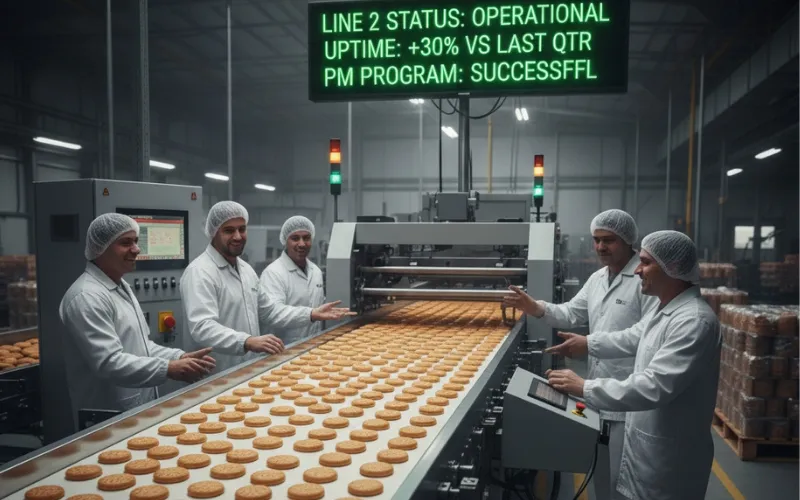
The Challenge: Tropical Climate Accelerating Equipment Failure
A major Brain east snack factory in the Brazilian industrial estate faced critical challenges with their biscuit cooling conveyor, especially during peak production months. The high heat and humidity were causing significant operational issues, including:
4+ hours of weekly downtime during humid summer months, creating bottlenecks for their entire packaging line.
8% product loss due to biscuit softening and breakage from inconsistent cooling temperatures.
Rapid bearing corrosion from constant high humidity, requiring costly replacements every 4-6 months.
Increased energy costs as cooling systems worked overtime to combat high ambient temperatures.
The EverSmart Solution: A Climate-Adapted Maintenance Protocol
Our local engineering team in Brazilian conducted a month-long on-site assessment. Based on their findings, they implemented a tailored preventive maintenance program specifically designed to address Brazilian unique climate challenges:
Humidity-Control Corrosion Prevention: Installed specialized, sealed bearings and implemented a bi-weekly corrosion inspection schedule during the rainy season (May-October).
Tropical-Grade Belt Tensioning: Adjusted conveyor belt tension specifications to account for material expansion and contraction on days exceeding 35°C.
Monsoon-Seal Electrical Protection: Upgraded all motor enclosures and control panels with IP65-rated seals to protect sensitive electronics against humidity and dust ingress.
Localized Spare Parts Inventory: Established a critical spare parts stock at the factory, eliminating the 2-3 week shipping delays for components from overseas.
The Measurable Results (After 6 Months)
The implementation of the climate-adapted protocol delivered significant, quantifiable improvements in performance and reliability.
The Financial Impact
The operational improvements translated directly to the bottom line. In the first year alone, the factory saved approximately ฿1.2 million ($32,000 USD) through reduced product waste, lower energy costs, and decreased emergency repair expenses.
The program's return on investment (ROI) was achieved in under 11 months, and the factory saw its overall equipment effectiveness (OEE) increase by 22%.
Factory Manager's Testimonial
"The humidity in Brazil was destroying our equipment. EverSmart's understanding of local conditions and their practical maintenance solutions have transformed our operations. We're now running at 95% uptime even during the rainy season."
— Mr. Manuel, Production Manager, Brazilian Snack Factory
Stop Reacting, Start Preventing
A checklist is just the first step. The real value comes from consistent execution and expert support.
Is your current maintenance strategy truly protecting your investment? Let's talk about how EverSmart's integrated cooling conveyors and professional support services can deliver unparalleled reliability for your factory.
Sofia | Export Vice President | EverSmart
WhatsApp: +86 137 94619343
Email: [email protected]
Further Reading:
Facing constant breakdowns? Learn how to diagnose them fast in our guide:
Troubleshooting Common Cooling Conveyor Problems Ready to calculate the financial upside? See our model:
The ROI of Automated Cooling Conveyors Planning your cooling system? Compare different
Cooling Conveyor Types and Architectures Concerned about food safety? Ensure compliance with
Cooling Conveyor Sanitation Standards

Ready to start your journey toward a customized solution? Contact me directly on WhatsApp to begin the conversation.