The Ultimate Guide to Packaging Line Efficiency: Boosting Uptime & OEE
Introduction: Shifting from "Keeping the Lights On" to Performance Optimization
In today's competitive manufacturing landscape, your packaging line's uptime and overall efficiency directly impact profitability and market responsiveness. Achieving peak performance requires a systemic strategy integrating people, processes, and technology.
The core shift moves from reactive "fix-it-when-it-breaks" toward proactive management using Overall Equipment Effectiveness (OEE) as its True North metric. This approach combines lean layout, predictive maintenance, data-driven decisions, and team empowerment to transform your packaging line from a cost center into a competitive advantage.
Key Takeaways
OEE guides improvement: This metric exposes availability, performance, and quality losses, unifying all improvement activities.
Start with process optimization: Lean principles eliminate systemic waste in layout and workflow.
Advance maintenance strategy: Move from preventive to predictive maintenance to defend uptime.
Technology enables improvement: Automation and IIoT provide speed consistency and decision insights.
People drive success: Empowered, trained teams sustain improvements through cultural change.
Chapter 1: The Foundation - Measuring and Understanding OEE
Before starting any improvement journey, establish a reliable measurement baseline. Authoritative sources like the American Society of Quality emphasize OEE as a crucial manufacturing metric for driving operational excellence.
OEE serves as the gold standard for measuring manufacturing efficiency, providing common language and precise coordinates for equipment performance assessment. This metric becomes particularly valuable when evaluating packaging machinery suppliers and their capabilities.
1.1 The Three OEE Dimensions and "Six Big Losses"OEE reveals your production process's most common inefficiencies through three key dimensions. Each dimension addresses specific types of performance loss that impact your operation.
Availability targets downtime loss from unplanned stops, changeovers, and equipment failures. Performance efficiency captures speed losses from minor stops and reduced operating speed. Quality rate measures loss from process defects and production start-up waste.
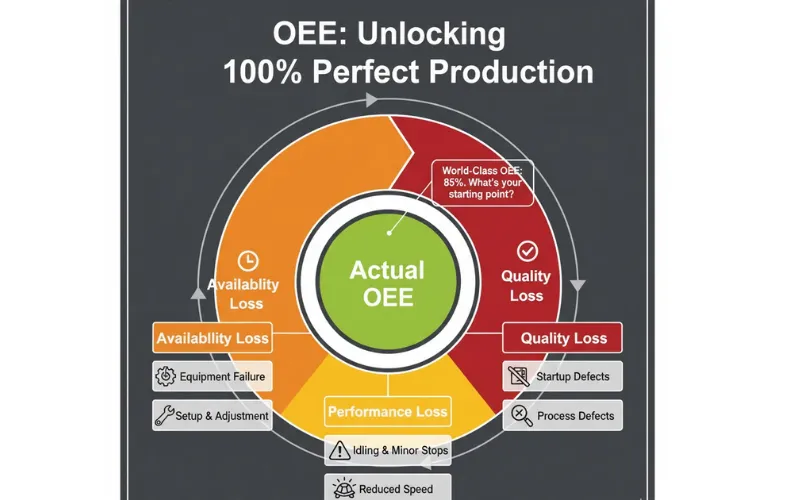
OEE Calculation and Six Big Losses Analysis| OEE Dimension | Calculation Formula | Corresponding "Six Big Losses" | Improvement Strategy | | :--- | :--- | :--- | :--- | | Availability | (Operating Time / Planned Production Time) | Equipment Failure, Setup and Adjustments, Idling and Minor Stops | Implement TPM, SMED | | Performance | (Ideal Cycle Time / Actual Cycle Time) | Reduced Speed, Small Stops | Line Balancing, Bottleneck Analysis | | Quality | (Good Pieces / Total Pieces) | Process Defects, Reduced Yield | SPC, Error-Proofing |
1.2 World-Class OEE and Your Starting PointWorld-class OEE levels typically reach 85%, requiring over 90% performance in each dimension. However, pursuing continuous improvement from your current baseline matters more than chasing an arbitrary "world-class" number.
Focus instead on establishing your measurement baseline and demonstrating consistent progress. Consider calculating your packaging machinery's total cost of ownership to contextualize OEE improvements within broader financial performance.
Chapter 2: Strategy 1 - Optimizing Layout and Workflow
Poor layout design fundamentally locks in inefficiency and high operational costs. Process optimization must begin with optimizing material and information flow throughout your operation.
2.1 Applying Lean Principles for Continuous FlowRearrange equipment to eliminate backtracking and crossover travel, significantly reducing material movement distance. Implement single-piece or small-batch flow to shorten lead times and quickly expose process problems, enabling better packaging line integration and optimization.
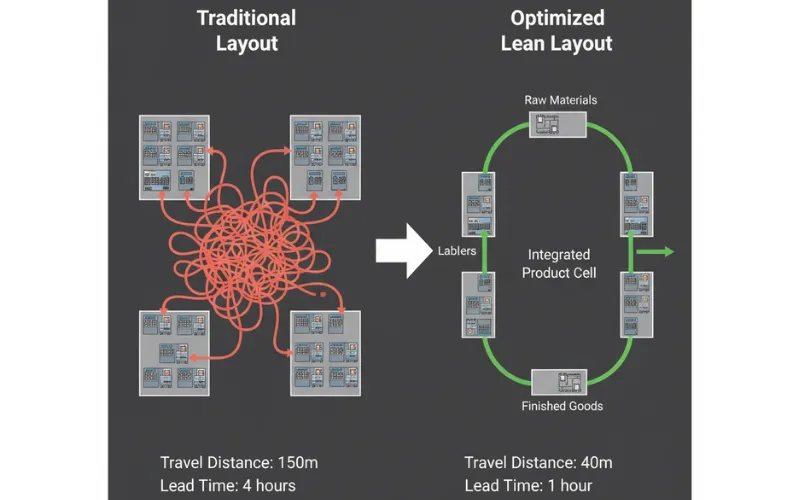
2.2 Ergonomics and Visual ManagementDesign workstations to minimize unnecessary operator movement, bending, and reaching. This reduces physical fatigue while improving sustained productivity and workplace safety.
Implement visual management tools like floor marking, shadow boards, and andon systems to make abnormalities immediately visible. These visual cues ensure problems get identified and addressed quickly, preventing small issues from becoming major disruptions.
Chapter 3: Strategy 2 - Implementing Predictive and Preventive Maintenance
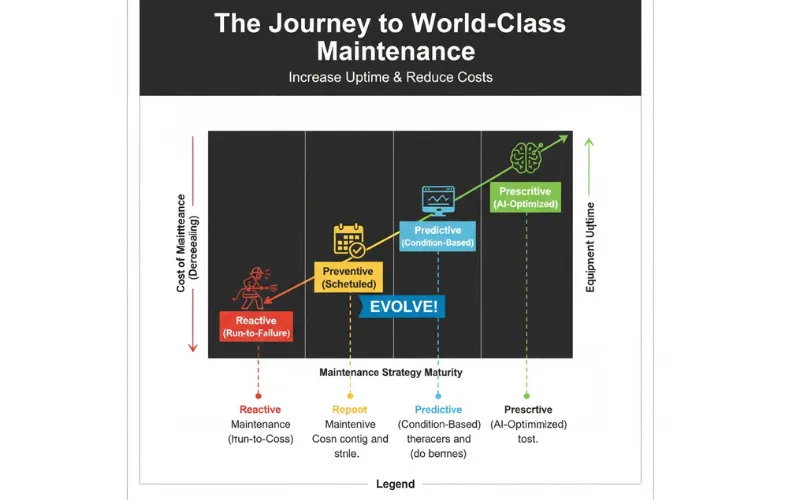
Maintenance's core value lies in proactively defending equipment uptime through strategic evolution. The journey progresses from reactive repair to preventive maintenance, ultimately reaching predictive maintenance.
3.1 Establishing Preventive Maintenance FoundationCreate time-based or runtime-based scheduled maintenance plans for critical equipment. This includes lubrication, cleaning, inspection, and tightening activities.
Develop detailed maintenance manuals and standard operating procedures to ensure consistent execution. A comprehensive food packaging equipment maintenance guide provides the perfect starting point for any preventive maintenance program.
3.2 Advancing to Predictive MaintenanceLeverage Industrial Internet of Things (IIoT) technologies like vibration sensors, thermal imaging, and ultrasonic testing to collect equipment condition data. These technologies identify early failure signs before problems become catastrophic.
This approach not only prevents unplanned downtime but enables condition-based maintenance, optimizing your maintenance resource allocation. For electrical engineers, this means selecting and integrating IIoT sensors while ensuring data reliably reaches monitoring platforms.
3.3 Implementing Total Productive Maintenance (TPM)TPM's core principle, as detailed by industry resources like Reliabilityweb, involves integrating operators into your maintenance system through daily inspections, cleaning, and basic autonomous maintenance. This creates the first line of defense for equipment health.
This approach enables your specialized maintenance team to focus on complex technical issues and systematic improvements. Start implementation by creating visual maintenance checklists that make autonomous maintenance tasks easy to perform correctly.
Chapter 4: Strategy 3 - Embracing Automation and IIoT
Automation enhances production speed and consistency, while IIoT provides management insights and foresight. Together, they form the core of tomorrow's smart factory.
4.1 Planning Your Automation Upgrade PathProgress from semi-automatic to fully automatic systems, focusing automation investments on bottleneck operations and highly repetitive, labor-intensive tasks. Collaborative robots for palletizing, pick-and-place, or case loading significantly improve consistency while freeing human resources for higher-value work.
4.2 IIoT Value Realization and System IntegrationIIoT's value extends far beyond simple data collection, enabling real-time monitoring dashboards, predictive analytics, and digital performance management. For electrical engineers, success depends on seamless integration with existing SCADA/MES/ERP systems using open APIs and standardized protocols like OPC UA.
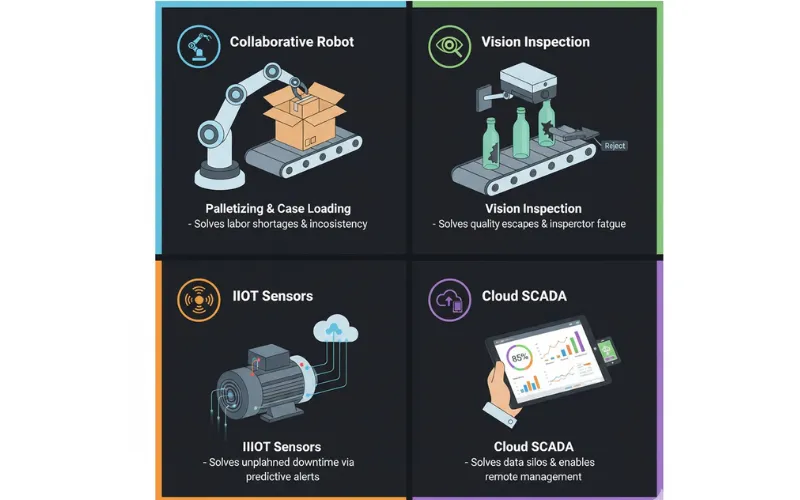
Packaging Line Automation and IIoT Technology Applications| Technology Type | Specific Applications | Efficiency Problems Solved | Expected Benefits | | :--- | :--- | :--- | :--- | | Collaborative Robots | Palletizing, Pick-and-Place, Case Loading | Labor Shortages, Repetitive Strain, Inconsistent Cycle Times | Improved Consistency, Labor Reallocation | | Vision Inspection Systems | Label Verification, Fill Level Check, Seal Quality | Inspector Fatigue, High Missed Defect Rates, Missing Quality Data | Quality Improvement, Fewer Customer Complaints | | IIoT Sensor Platforms | Motor Temperature, Vibration, Energy Monitoring | Unplanned Downtime, Energy Waste, Improper Maintenance Timing | Predictive Maintenance, Optimized Energy Use | | Cloud SCADA/MES | Centralized Monitoring, Data Logging, Performance Analytics | Data Silos, Delayed Decisions, Manual Reporting | Real-Time, Data-Driven Decision Making |
Chapter 5: Strategy 4 - Empowering Your Team
The most advanced technology and perfect processes still require well-trained, engaged employees to operate and maintain them. People remain the most adaptable and creative component of any operational system.
5.1 Implementing Structured Skills TrainingMove beyond "how to operate" training to include "how it works" and "how to troubleshoot" education. Provide cross-skills training for operators and maintenance technicians, ensuring mechanical engineers understand electrical basics while operators grasp fundamental maintenance concepts.
5.2 Establishing Employee-Driven Improvement Encourage and authorize frontline operators and technicians to submit improvement suggestions. Implement a simple "Find-Report-Analyze-Resolve-Standardize" framework with effective recognition to unlock tremendous improvement potential.
Create a visual "improvement board" and regularly recognize excellent suggestions. This approach often generates breakthrough efficiency ideas from those who know the processes best.
5.3 Conducting Effective Daily Performance MeetingsHold brief, data-focused daily stand-up meetings (15 minutes maximum) at the line side. The team quickly reviews previous OEE performance, confirms daily targets, and assigns pressing problems.
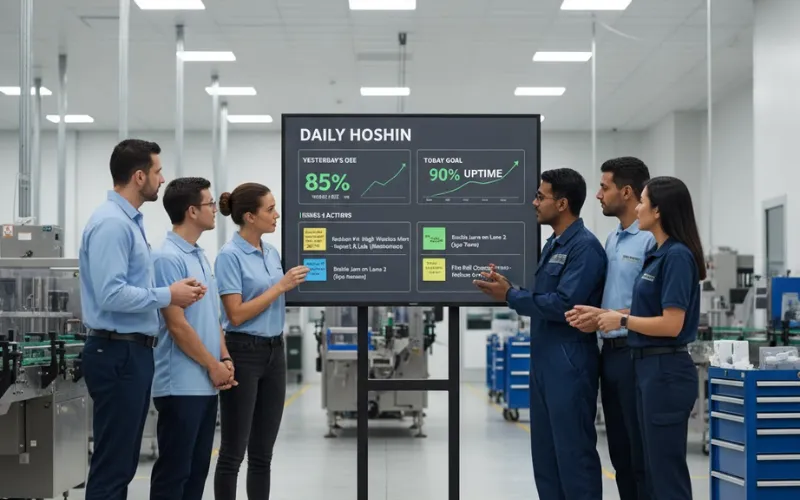
This process serves as both information synchronization and a daily engine for team collaboration and continuous improvement. Project managers should drive these meetings while fostering a culture of shared responsibility.
Conclusion: Starting Your Excellence Journey
Improving packaging line uptime and efficiency represents an ongoing excellence journey rather than a one-time project. It requires using OEE as your unified measurement standard while systematically applying the four pillar strategies outlined here.
Begin today by selecting one representative line, accurately measuring its current OEE, and forming a cross-functional team. Start with just one strategy area and take that first concrete step toward world-class operations. Our guide to choosing the right food packaging machine provides additional implementation guidance for your improvement projects.
Frequently Asked Questions
What OEE dimension should we prioritize with limited budget?Focus first on Availability (reducing downtime) as it typically delivers the most immediate and measurable return. Simple preventive maintenance and setup reduction often provide significant OEE improvement at relatively low cost before addressing performance and quality issues.
How can we implement IIoT with older equipment lacking data ports?Retrofit older machines with external sensors (vibration, temperature, current) to capture equipment condition data. Use gateway devices to collect I/O signals or employ protocol converters for limited-data PLCs, starting with your most critical equipment.
How do we justify predictive maintenance funding to management?Build a clear business case by quantifying potential benefits. Calculate historical costs of unexpected downtime, emergency repairs, scrap, and delayed shipments, then compare against predictive maintenance implementation costs to demonstrate clear ROI and risk reduction.
How do we address operator resistance to TPM autonomous maintenance?Start with executive support explaining TPM benefits for both company and employees. Provide comprehensive training to build confidence and capability. Begin with simple, visual maintenance tasks that deliver quick wins, then implement recognition programs for successful teams.
How do we balance efficiency with flexibility in high-product-change environments?Implement Single-Minute Exchange of Die (SMED) methodology to minimize changeover time. Invest in flexible equipment featuring servo technology, modular design, and recipe management capabilities that can quickly adapt to different products through programmed parameters.
Professional Consultation & Service CTA
Download Our Assessment ToolkitGet our Packaging Line OEE Health Assessment and Improvement Planning Template to quickly identify efficiency bottlenecks and develop your action plan.
Schedule Expert ConsultationBook a free 30-minute consultation with our operational improvement specialists to analyze your production data and identify improvement opportunities.
Discuss Technical SolutionsSchedule a technical solution workshop with our automation engineers to explore optimal paths for your automation or IIoT projects.
Review Success StoriesAccess our industry-specific case studies to see how similar companies achieved significant OEE improvements.
Explore Training OptionsLearn about our "Operational Excellence Core Skills" corporate training programs

Ready to start your journey toward a customized solution? Contact me directly on WhatsApp to begin the conversation.