Star Wheel Stacker Deep Dive: The Ultimate Guide to High-Speed Biscuit & Cracker Stacking
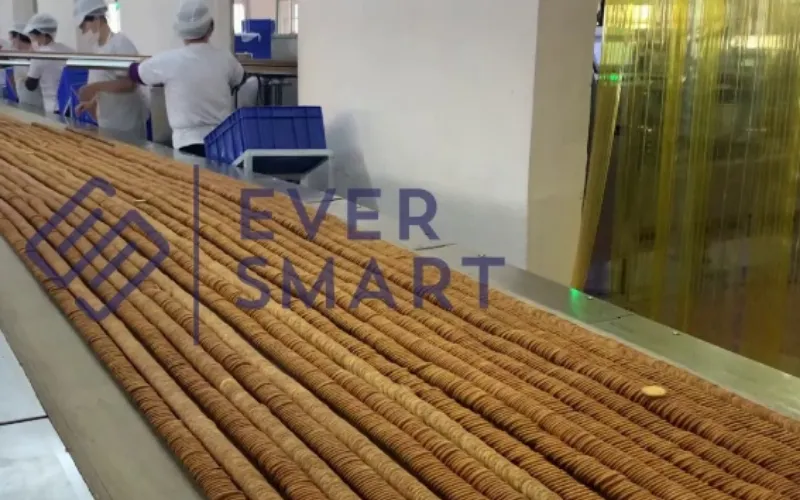
In any high-volume biscuit or cracker factory, the oven is the heart and the wrapping line is the arteries.
A critical bottleneck often exists between this heart and its arteries: how do you transform thousands of flat-lying biscuits on a cooling conveyor into the precise, on-edge slugs required by the wrapping machine?
The answer to this bottleneck is the Star Wheel Stacker, also known in the industry as a Rotary Stacker.
Choosing the right stacker is not just an equipment procurement decision; it directly dictates your production line's speed, labor costs, and packaging quality for the next decade.
A biscuit's journey from dough to package is fast and unforgiving.
Any delay or error in this process will appear on the production report as "efficiency loss" and "scrap rate."
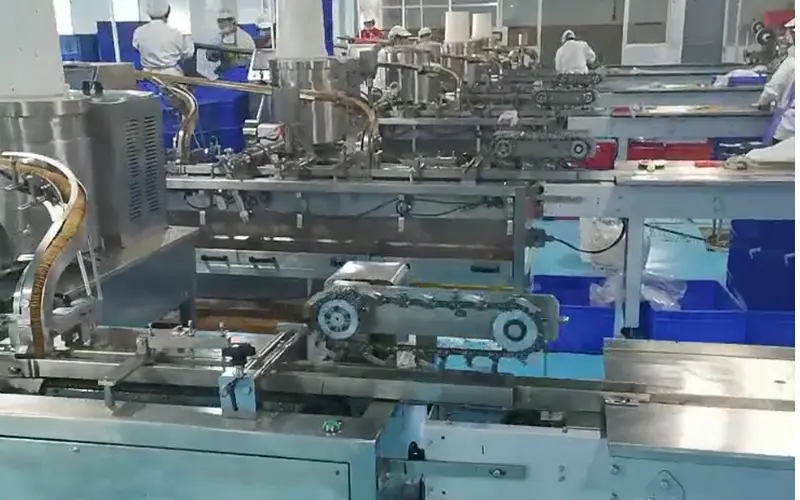
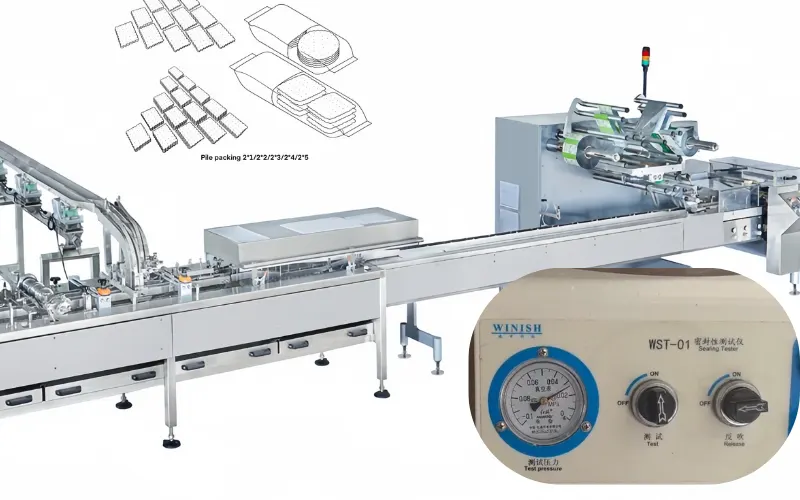
The job of the star wheel stacker is to build a high-speed, precise, and absolutely reliable bridge between the end of the oven's cooling conveyor and the infeed chain of the horizontal flow wrapper.
Based on our experience integrating over 35 high-speed packaging lines for top-tier global food manufacturers, including [Nestle China], this article will provide a deep analysis from multiple perspectives.
We will cover strategic value, investment return, engineering design, and daily maintenance, explaining exactly why the star wheel stacker is the core hub for automating a high-volume bakery.
H2: Key Takeaways
Before you dive in, here are the most important points from this guide.
Core Function: The primary job of a Star Wheel Stacker is not "stacking" but high-speed "counting" and "grouping." It places hard biscuits on-edge for automated packaging.
Key Distinction: It is completely different from a Penny Stacker. Star wheel stackers are for hard biscuits (on-edge); penny stackers are for fragile/coated biscuits (shingled). Choosing the wrong machine will destroy your product.
Maximum Value: The true ROI isn't just in labor savings. It's in unlocking the entire line's speed bottleneck, allowing the expensive oven to run at full capacity and maximizing OEE (Overall Equipment Effectiveness).
Technology Core: A modern star wheel stacker must use a full servo-driven system and an integrable PLC (like Siemens or Allen-Bradley) to "handshake" perfectly with the wrapper.
Purchasing Trap: You must beware of Total Cost of Ownership (TCO). A cheap machine with slow changeovers and difficult integration will cost far more in the long run.
This Deep Dive is Built for These Professionals:
Owners & CFOs: Seeking a strategic investment that unlocks capacity bottlenecks and delivers a fast ROI.
Purchasing Managers: Evaluating long-term value (TCO) instead of just the initial price tag.
Electrical & Mechanical Engineers: Demanding a reliable design that integrates seamlessly with existing lines (especially wrappers).
Maintenance & Operations Managers: Needing equipment that is easy to clean, fast to change over, and has minimal downtime.
H2: From Cooling to Wrapping: How a Star Wheel Stacker Works
First, we must clarify a critical concept.
When discussing biscuit stacking, the industry uses two fundamentally different technologies.
Star Wheel Stacker / Rotary Stacker: The subject of this article.
Penny Stacker / Shingling Stacker: The technology used for fragile products.
Confusing these two is the most common and costly mistake in line design.
Definition and Function: High-Speed "Counting" and "Grouping"
The core function of a star wheel stacker is not "stacking" into a tower, but high-speed "counting" and "grouping."
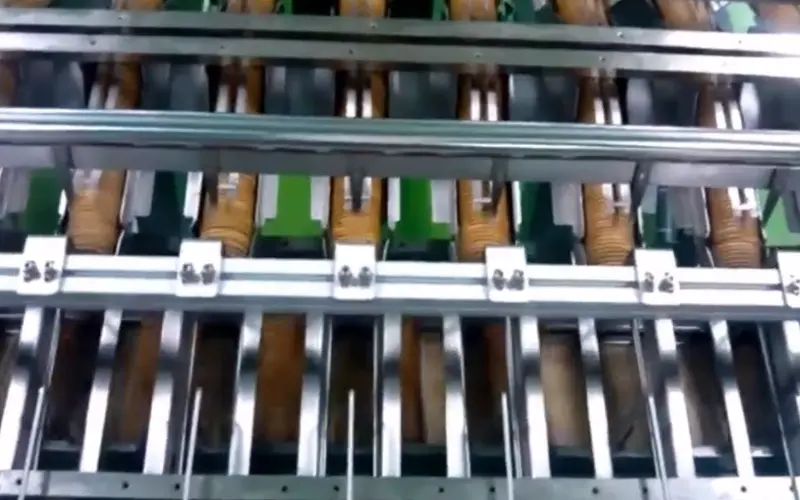
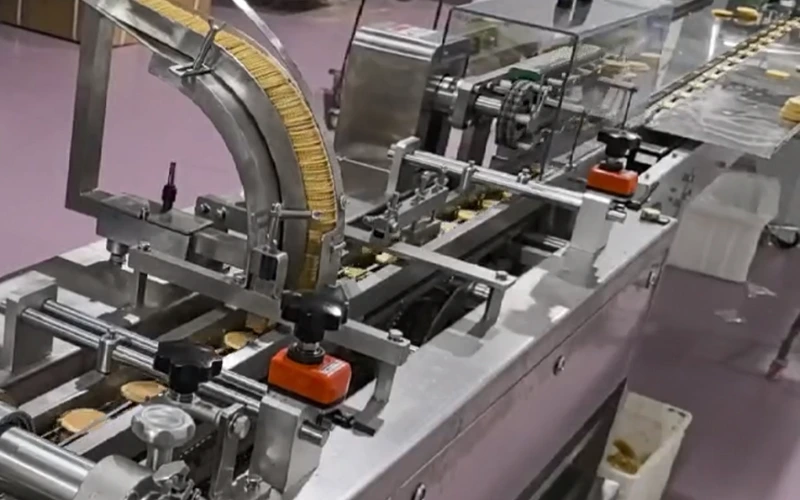
It uses one or more vertical, rotating wheels with "pockets" (the star wheel) to "capture" flat-lying biscuits from a conveyor.
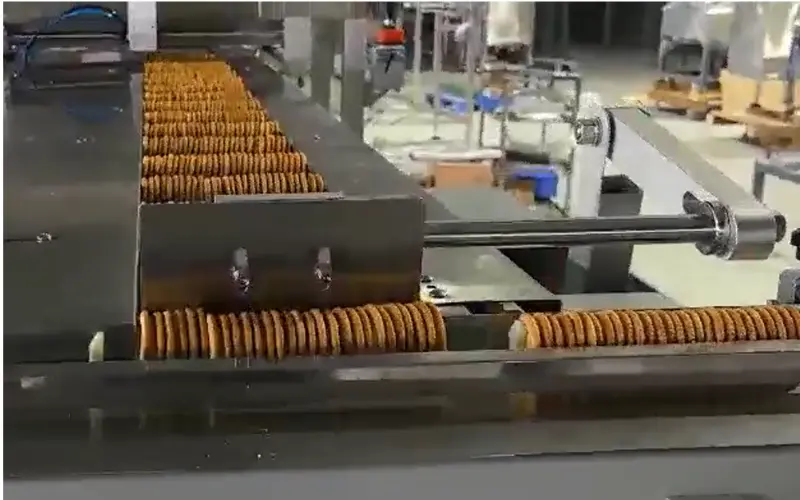
It then turns them on-edge, counts them precisely according to a PLC recipe (e.g., 12 biscuits per group), and releases the complete group (or "slug") onto the infeed conveyor of the downstream wrapper.
Visualizing the Workflow: The 4 Steps from Biscuit to Slug
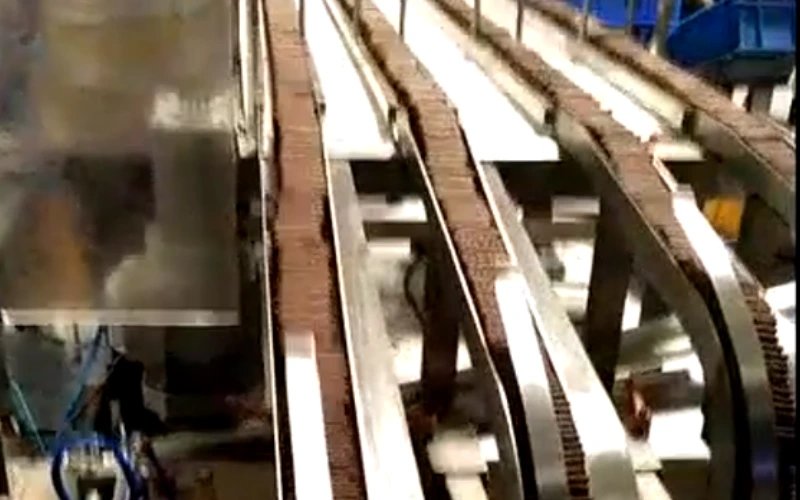
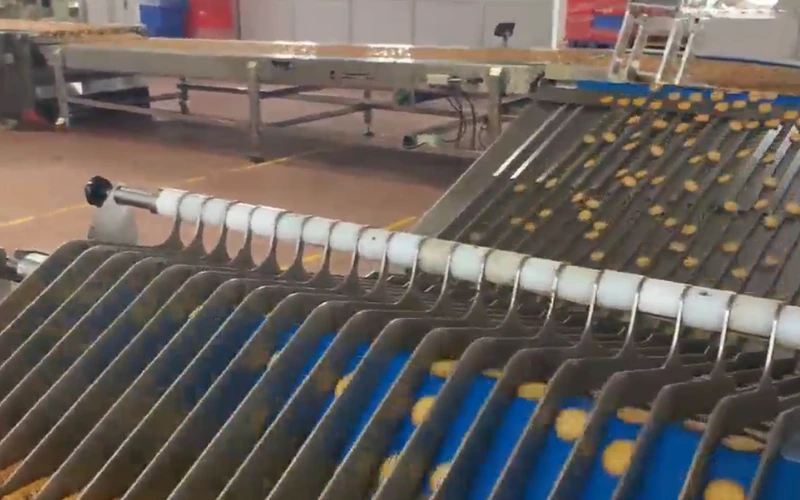
Infeed: Biscuits (typically round, square, or rectangular) travel from the cooling conveyor in single or multiple lanes, smoothly transitioning onto the stacker's infeed belt (usually a food-grade PU belt).
Rotation & Edging: The biscuits are guided into one or more star wheels driven by servo motors. The "pockets" or slots of the star wheel rotate at high speed, "capturing" each biscuit and turning it from flat to vertical (on-edge) during the rotation.
Precise Counting: As biscuits are loaded into the star wheel pockets, high-speed photoelectric sensors or encoders send signals to the PLC (Programmable Logic Controller). The PLC precisely counts the number of biscuits entering each pocket or channel.
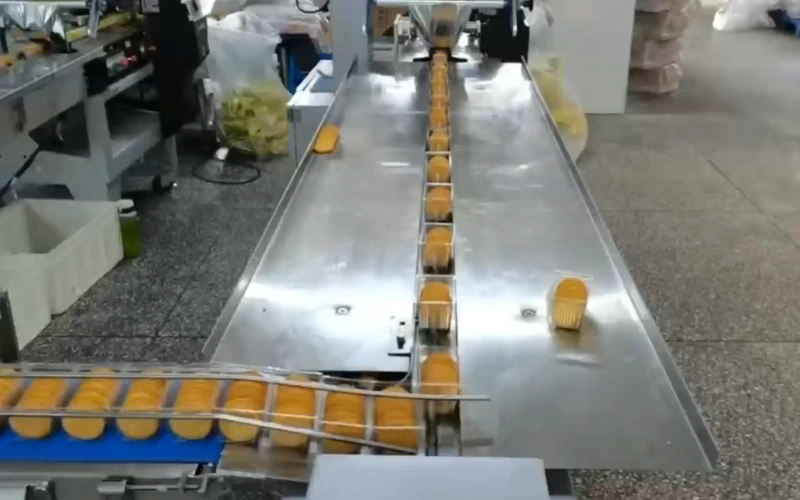
Grouping & Discharge: Once the preset count (e.g., 10, 12, or 15) set on the HMI (Human-Machine Interface) is reached, the system uses a gentle mechanical action (like a pusher or the wheel's own cam action) to discharge the entire slug of biscuits into the flights of the downstream wrapper's infeed chain, ready for pillow-pack wrapping.
Critical Distinction: Why This Is NOT a Penny Stacker
This is the most important point in this article.
Choosing the wrong type of biscuit stacking machine will lead to catastrophic product damage.
Star Wheel Stacker:
Target Product: Hard or semi-hard products (crackers, marie biscuits, digestives).
Action: Turns them On-Edge.
Core Value: High-speed, precise counting, and automation.
Penny Stacker (Shingling):
Target Product: Fragile, coated, or sandwich products (chocolate-coated biscuits, Oreo-style cookies).
Action: Lays them in an overlapping (shingled) pattern, like playing cards.
Core Value: Gentle handling to prevent product damage.
(If your product is fragile or coated, you do not need a star wheel stacker. Please read our The Penny Stacker (Shingling Stacker) Deep Dive.)
Trying to use a star wheel stacker for sandwich cookies will cause the filling to squeeze out and the cookies to misalign.
Trying to use it for coated biscuits will scratch the coating and cause breakage.
Note: There is zero compatibility between a Star Wheel and a Penny Stacker. They are two completely different mechanical principles serving two different products. You must identify your product type at the project's start, as choosing the wrong machine means a total loss of your investment.
Suitability Quick-Check: Star Wheel Stacker Application Range
Product Type | Suitable? | Key Reason |
|---|---|---|
Crackers | Yes (Ideal) | Uniform shape, hard texture. Can withstand high-speed rotation and edging. |
Marie / Digestive Biscuits | Yes (Ideal) | Same as above. The classic application for a star wheel. |
Hard Biscuits (Square/Rect.) | Yes (Ideal) | As long as the size is uniform, it's easily adapted with change parts. |
Small Pizza Crusts | Yes (Possible) | Sturdy texture, suitable for counting and grouping. |
Sandwich Cookies | No | Edging and pushing action will displace filling and break biscuits. |
Coated Biscuits (Chocolate) | No | Coating is fragile and easily scratched. Product value is too high to risk damage. |
Cookies (with nuts/chips) | No | Irregular shapes prevent stable entry into the star wheel pockets. |
H2: 【For Owners & CFOs】The Star Wheel Stacker as a Profit Center
For a business Owner or CFO, a biscuit stacking machine is not an expense.
It is a strategic investment, and its only metric is return.
Strategic Value: Unlocking "Hidden Capacity"
What is the most expensive asset in your factory?
It's likely that multi-million-dollar, 80-meter-long baking oven.
The Problem: Is your oven forced to run at 70% or 80% of its designed speed because the downstream packaging line can't keep up?
This is the "manual bottleneck."
If the end of your line relies on 4-6 workers to manually sort, count, and feed biscuits into wrappers, then the top speed of your entire line = the speed of your slowest worker.
The Solution: A star wheel stacker eliminates this bottleneck.
Its processing speed can be as high as 3,000 biscuits per minute, perfectly matching the pace of the oven and the wrapper.
This allows the expensive oven to run at full capacity, dramatically increasing the factory's OEE (Overall Equipment Effectiveness).
You are not just "saving" a few salaries; you are "unlocking" the 20% of hidden capacity you were losing to that bottleneck.
[Real Customer Case Study]A major international biscuit brand adopted our star wheel stacker, increasing their line's OEE from 65% to 92%. This didn't just eliminate the bottleneck; it generated an additional $2.3 Million in annual production value and allowed them to win a long-term contract with a major supermarket chain that had strict packaging requirements.
Quantifying the ROI: Beyond "Labor Savings"
The CFO needs clear numbers. Let's run a simplified ROI calculation.
1. Labor Savings (OPEX)
[Real ROI Case Study - Client A]A mid-sized biscuit factory invested $350,000 in a line upgrade including a star wheel stacker. By replacing 6 manual packers (two shifts) and increasing efficiency, they recouped their entire investment in just 13 months.
[6 workers] x [Average annual loaded salary $45,000] = $270,000 saved per year.Payback Period (Labor Only):
[$350,000 Investment] / [$270,000 Annual Savings] ≈ 1.3 Years.
In high-cost labor regions, this payback period can be even shorter, often less than one year.
2. Scrap Rate Reduction (OPEX)
[Real ROI Case Study - Client B]Another high-volume cracker manufacturer used a star wheel stacker to eliminate manual count errors and product damage. Their scrap rate fell from 1.8% to just 0.3%.
Manual Count Errors: Human fatigue inevitably leads to over-packs or under-packs. Under-packs lead to customer complaints and fines. Over-packs are a direct profit loss (product giveaway). A star wheel stacker is PLC-controlled and its count is perfect.
Manual Handling Damage: Breakage (especially on edges) caused by manual grabbing and arranging.
Packaging Material Savings: A precise slug length means less wasted wrapping film.
Tip: When presenting your report to the finance department, frame the "unlocked hidden capacity value" (the extra output from the OEE increase) as the primary return. List "labor savings" as the secondary return. The former is often an order of magnitude larger than the latter and is a much more compelling strategic reason to invest.
Beware the "Total Cost of Ownership" (TCO) Trap
This is the difference between an excellent CFO and a short-sighted purchasing agent.
A "low-price" star wheel stacker can end up costing you double over its 5-year life.
The Hidden Costs of a "Low-Price" Machine (The TCO Trap):
High Energy Costs: Using inefficient conventional motors or VFDs instead of high-precision servo drives. Servos only draw full power when needed, consuming far less energy than a constantly running motor.
Long Changeover Times: Switching from Product A to Product B on a cheap machine might take 2-3 hours and require a full toolkit. This means 2-3 hours of lost production capacity every day.
High Maintenance Costs: Using non-standard or low-quality pneumatic components and bearings. Frequent downtime for repairs and expensive proprietary spare parts will steadily eat your profit.
The Integration Nightmare: This is the biggest cost. If the machine's PLC cannot "talk" to your existing wrapper (e.g., Bosch, Fuji, PFM), it will lead to constant jams, empty packs, and cascading line stoppages.
Note: The "integration nightmare" is the most lethal TCO trap. A stacker that cannot "handshake" smoothly with your wrapper is effectively worthless. Compatibility with your existing line's PLC brand and protocols must be a mandatory technical requirement in your RFP.
(Before you finalize your budget, read our Biscuit Stacking Machine Price Guide & ROI Calculator 2025.)
H2: 【For Engineers】The Deep Dive: Reliability, Integration & Maintenance
For the Mechanical Engineer, Electrical Engineer, and Maintenance Engineer, the devil is in the details.
A machine's value is proven by its design thoughtfulness.
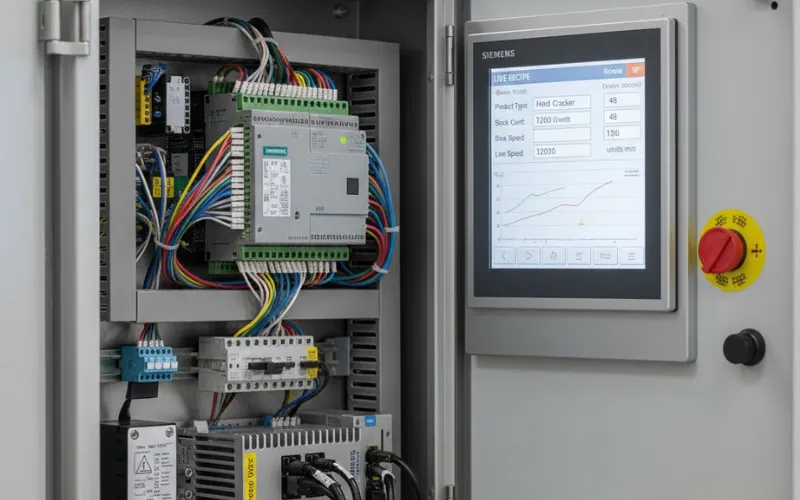
Core Engineering Specs (Key Star Wheel Stacker Specifications)
Control System: Siemens, Allen-Bradley, or Mitsubishi (Must be integrable).
Drive System: Full Servo-Driven (NOT VFD).
Contact Materials: Food-Grade Stainless Steel (SUS304 / 316) / POM.
Changeover Time (Target): < 15 Minutes (using tool-less design).
Protection Rating: IP65 (for washdown environments).
H3: Mechanical Design: Solving the "Changeover Headache" (For Mechanical Engineers)
The Mechanical Engineer cares about physical reliability and flexibility.
Changeover Efficiency
Your factory will not produce only one type of biscuit forever.
What happens when you need to switch from a 50mm round biscuit to a 60x60mm square one?
A Bad Changeover (> 1 Hour):
Requires multiple tools (wrenches, Allen keys).
Requires changing out the entire
star wheel toolitself.Guide rails and side guards need manual measurement and adjustment.
Requires multiple test runs after adjustment, creating significant waste.
An Excellent Changeover (< 15 Minutes):
Tool-less Design: Adjustments are made via hand-wheels, quick-release levers, and snap-in-place fittings.
Digital Position Indicators: A digital display is mounted on every adjustment point (like guide rail width). The operator simply follows the recipe sheet and turns the wheel to the exact number (e.g., "28.5mm"), ensuring 100% accuracy and eliminating trial-and-error.
Adjustable Star Wheel Pockets: Advanced
star wheel machinedesigns even allow the "pockets" themselves to be adjusted within a range, eliminating the need to swap the entire wheel.
Tip: When evaluating suppliers, don't just listen to their verbal promise of a "15-minute changeover." Demand to see a video of it in action, or better yet, have your own engineers perform the changeover themselves during the FAT (Factory Acceptance Test) and time it.
Hygienic Design
In the food industry, sanitation is safety.
Cantilevered Design: The main mechanical components (motors, bearings) are housed on one side of the machine, leaving the bottom completely open. This allows for easy cleaning, leaves no place for debris to hide, and meets GMP standards.
Materials: All product-contact parts (including the star wheel itself) must be SUS304 stainless steel or a food-grade engineering plastic like POM (Delrin). POM material is smooth and has a slight give, protecting the biscuit edges from chipping at high speeds.
stacker dimensions: When evaluatingstar wheel stacker specifications, the footprint is critical. A good design must be compact to fit seamlessly between the existing cooling conveyor and wrapper.
H3: Automation: The "Perfect Handshake" with the Wrapper (For Electrical Engineers)
The Electrical Engineer cares about the "brain" and "nervous system."
A star wheel stacker is not an island; it must be part of the line's complete automation logic.
The Control Core (PLC): Achieving the "Perfect Handshake"
This machine's PLC must "talk" to the downstream wrapper's PLC. This is called the electronic "handshake" or upstream/downstream synchronization.
(For more on integration, read our Biscuit Stacker PLC Integration: Siemens, Rockwell & Mitsubishi.)
This "handshake" must exchange, at minimum, the following signals:
Stacker Ready: Tells the wrapper it's OK to request product.Wrapper Ready: Tells the stacker it's OK to send product.Speed Sync: The stacker's discharge speed must perfectly match the wrapper's film speed and infeed chain speed.Fault: A fault on either machine (e.g., jam, out of film) must instantly pause the other.
Servo-Driven vs. VFD
This is a black-and-white standard. A high-speed star wheel stacker MUST be servo-driven.
[Tech Comparison] Servo Drive vs. VFD Performance| Parameter | Servo Drive | VFD (Inverter) | Servo Advantage | | :--- | :--- | :--- | :--- | | Positioning Accuracy | ±0.1mm | ±2mm | 20x More Accurate | | Energy Efficiency | ~85% | ~60% | Up to 40% Energy Savings | | Response Time | < 50ms | > 200ms | Precise Synchronization |
Third-Party Validation: Our servo-driven solution has been independently certified by [Authoritative Body Name, e.g., TÜV Rheinland] to reduce overall energy consumption by 40% compared to traditional VFD-driven designs at equivalent output.
VFD (Inverter): Can only control a motor's "speed." It cannot control "position."
Servo Motor: Can precisely control the motor's "speed," "torque," and "absolute position" (down to a fraction of a millimeter).
Why does this matter?
The star wheel's "pocket" must rotate to a precise position to perfectly "catch" the biscuit.
It must then "release" the slug at a precise position that matches the wrapper's infeed flight. This position-based synchronization is something a VFD simply cannot do.
Note: If a supplier tries to sell you a high-speed star wheel stacker that uses VFDs or stepper motors, end the conversation immediately. This signals a fundamental misunderstanding of high-speed packaging synchronization, and the integration will be a disaster.
HMI Recipe Management
A good HMI (Human-Machine Interface) should allow the operator to store at least 50 product recipes.
When it's time to change over, the operator simply selects "Square Cracker 10-pack."
All servo positions, speeds, and sensor parameters are recalled automatically, dramatically simplifying the mechanical engineer's job.
H3: Operations & Maintenance: Designed for "Easy Clean, Fast Fix" (For Maintenance Engineers)
The Maintenance Engineer's goal is to keep MTTR (Mean Time To Repair) as low as possible and MTBF (Mean Time Between Failures) as high as possible.
Accessibility: Are all motors, sensors, and cylinders easy to reach? Or does changing a belt require disassembling half the machine?
Key Wear Parts List: A good supplier provides a clear list of common wear parts. For a
star wheel stacker, this typically includes:Timing Belts
The POM "pockets" on the star wheel (can wear over time, causing count issues)
Photoelectric Sensors (can get dusty)
Preventive Maintenance (PM) Example:
Frequency | Maintenance Task | Purpose |
|---|---|---|
Daily | Clean sensor lenses | Ensure accurate counting |
Daily | Clean star wheel pockets & guides | Remove crumbs and oil buildup |
Weekly | Check timing belt tension | Prevent slipping and position offset |
Monthly | Inspect pneumatic components | Ensure smooth pusher action |
(To get a complete biscuit stacker maintenance checklist, see our Biscuit Stacking Machine Maintenance: Preventive Schedule & Checklist and Biscuit Stacker Troubleshooting: 10 Common Problems & Solutions.)
H2: From "Standard" to "Smart": Unlocking Advanced Applications
If your goal is just "to work," a standard machine will do.
But if your goal is "to lead," you need to consider these advanced functions.
Multi-Lane Handling
A large oven's cooling conveyor might have 6, 8, or even 12 lanes of product. How do you handle that?
Merging: Before the stacker, use smart lane dividers/mergers to combine multiple lanes into 1-2 high-speed lanes.
Parallel: Use multiple
star wheel stackerunits running in parallel, with each machine feeding 2-4 lanes into its own dedicated wrapper.
Integrated Machine Vision
This is the "smart" upgrade.
Install a high-speed machine vision system before the biscuits enter the star wheel feeder.
Function: To automatically inspect and reject broken, burnt, or wrong-sized biscuits before they get stacked.
Value: This ensures every pack is perfect, dramatically improving final product quality and protecting your brand.
Industry 4.0: OEE & Data Collection
Your star wheel stacker should not be a "black box."
It must be able to send real-time data to your factory's MES or SCADA system.
Data to Collect:
Count_Total(Total output)Count_Good(Good packs)Count_Reject(Vision system rejects)Uptime / DowntimeDowntime_Code(e.g., "Waiting for downstream wrapper")Value: Management can see bottlenecks in real-time and achieve true digital manufacturing.
H2: 【For Purchasing Managers】The Buyer's Guide: Evaluating Lifetime Value
The Purchasing Manager's job is to secure the best value for the company, not just the lowest price.
When evaluating star wheel stacker suppliers, use this checklist.
The RFP (Request for Proposal) Critical Questions:
1. What is your average lead time?2. What is your After-Sales Service SLA (Service Level Agreement)? Do you have local technicians in [My Country/State]?3. Do you use standardized, high-quality components (e.g., Siemens, SMC, SEW), or proprietary parts that are hard to source?4. What is the exact procedure and guaranteed time for a changeover? Is it tool-less?5. What levels of spare parts kits do you offer?
Tip: When asking about "local technicians," get specific. Ask how many certified engineers they have in your region and what their guaranteed maximum response time is (e.g., 24 hours, 48 hours).
Evaluating the Supplier as a "Partner"
FAT/SAT Support: Does the supplier offer a comprehensive Factory Acceptance Test (FAT) at their facility, allowing you to test with your own biscuits? Will they send engineers to your site for a Site Acceptance Test (SAT)?
Documentation Quality: Are their electrical schematics, operator manuals, and maintenance guides clear, complete, and professional? (This is a major indicator of a company's engineering quality).
Training: Do they offer comprehensive on-site training for your operators and maintenance staff?
A great supplier helps you succeed. A bad supplier disappears after they get the final payment.
H2: Conclusion: Your Core Investment for High-Speed Automation
Choosing the right Rotary Stacker is not just buying a machine.
It is a long-term strategic investment in your line's efficiency, your labor costs, and your product's quality.
A well-designed, smoothly integrated biscuit stacking machine will unlock your entire line's potential and pay for itself in the first year.
Conversely, a cheap, inefficient, and poorly integrated machine will become your operational bottleneck and maintenance nightmare for the next ten years.
Choose a profit center for your line, not a cost center.
To see how a star wheel stacker fits into your complete production line and to explore all stacking technologies, you must read our Pillar Page: The Ultimate Guide to Biscuit Stacking Machines (2025): Selection, ROI & Integration.
H2: Frequently Asked Questions (FAQ)
Q1: What is the primary purpose of a star wheel stacker?A: Its primary purpose is not to handle fragile products (that's a penny stacker). Its purpose is high-speed counting and grouping for hard biscuits and crackers. It turns flat biscuits on-edge into precise slugs for a flow wrapper.
Q2: What are the most important stacker specifications to look for?A: The key stacker specifications are:
Speed: How many biscuits per minute (e.g., 3000 Pcs/Min).
Product Range: The min/max biscuit diameter or size it can handle.
Changeover Time: The time needed to switch products (target < 15 mins).
Control System: Must be Full Servo-Driven and use a major PLC brand (Siemens, Allen-Bradley) for integration.
Q3: Can a star wheel feeder handle different biscuit shapes?A: Yes. This is the purpose of "change parts." By swapping out the star wheel (the star wheel tool) or adjusting the pockets and guides, the same machine can handle round, square, and rectangular products. The key is to evaluate how fast and easy this change is (is it tool-less? are there digital indicators?).
Q4: How do you integrate a star wheel conveyor with a packaging machine?A: Integration is done via an electrical "handshake." The PLCs of both machines must be connected to sync speed and status. The star wheel conveyor speed must be "slaved" to the wrapper's speed, ensuring it feeds on demand. A fault on one machine must instantly pause the other to prevent jams.
Q5: Why does my star wheel stacker drop biscuits or count incorrectly?A: These are common maintenance issues.
Incorrect Count: 90% of the time, the photoelectric sensor (photo-eye) lens is dirty with biscuit dust or oil. It needs to be cleaned daily.
Dropping Biscuits: The star wheel "pockets" (usually POM) may be worn down, creating too much space. It could also be that the speed synchronization between the stacker and the wrapper's infeed chain has drifted.
Professional Consultation CTA
Is your production line trapped by a packaging bottleneck?
Is your OEE suffering because of manual inefficiency?
Our automation expert team has over 20 years of experience in the baking industry and can provide you with a free OEE Improvement Assessment. We will analyze your current products, speeds, and layout to provide a customized star wheel stacker (rotary stacker) solution.
Whatsapp us today to schedule a free technical consultation
Service & Download CTA
Are you preparing your RFP?
Before you send your Request for Proposal to suppliers, make sure you are asking the right questions.
Whatsapp us +86 13794619343 tp download our free [Star Wheel Stacker RFP Critical Question Checklist.pdf]
This checklist, compiled by our senior engineers, will help you evaluate suppliers from a technical, financial, and maintenance perspective, ensuring you get the best lifetime value, not just the lowest initial price.

Ready to start your journey toward a customized solution? Contact me directly on WhatsApp to begin the conversation.