Cracker Production Line: How to Choose the Right Equipment for Your Biscuit Factory
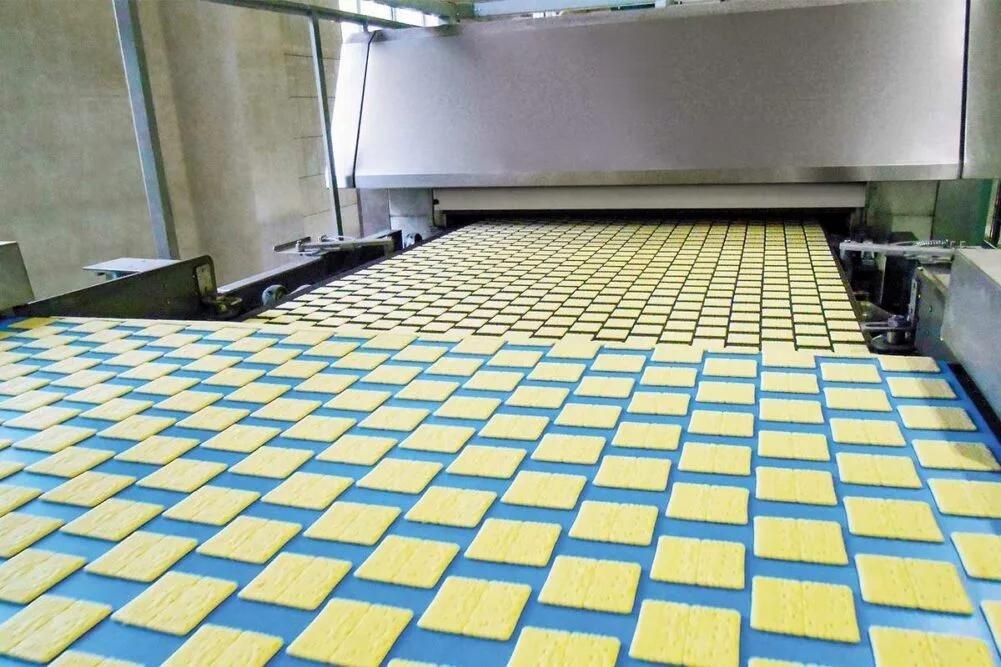
Most line problems begin in the dough room and in the first hour of a project plan, long before output drops or rejects pile up on the packing table. A cracker production line is a chain of dependent stages, and each stage inherits the mistakes of the one before it. This guide corrects the common beliefs that lead to a badly matched line and replaces them with criteria you can apply to any quotation, including those from EverSmart and its competitors.
Where Do Cracker Production Line Problems Quietly Start?
A new owner books a supplier meeting with a target of "about 500 kg an hour" and a vague idea that the product will be "a crispy cracker." Quotations arrive within days, all priced, all plausible. Nobody has yet written down the dough type, the thickness, the moisture at the oven exit or the pack format.
That is where the trouble starts. Equipment is specified against a product, and when the product is undefined, every supplier fills the gap with its own assumption. One quotes a laminating system, another a rotary moulder, a third a compact cutter. The prices cannot be compared because the lines do not make the same thing.
The consequences show up months later. Sheets tear because the dough was too elastic for the sheeting rolls. The bake is uneven because the oven zones were sized for a different product load. Packing stalls because the cooling conveyor was too short to bring crackers to a stable temperature.
None of these are machine defects in the usual sense. They are specification defects, created at the desk.
Three decisions deserve to be settled before any machine is discussed: the product definition (laminated, fermented, short-dough, thin or thick), the dough behavior that follows from it, and the sellable output per shift. Everything else in this guide depends on those three. A line is not a collection of machines, and treating it as one is the most expensive habit in the trade.
What Is the Short Answer to Choosing a Cracker Line?
Understanding how to choose cracker production line equipment starts with defining the product and the hourly sellable output, then selecting the forming method that suits the dough. From there, size the mixing and oven stages, along with cooling and packing, to match. Judge every quotation on total cost of ownership, not on purchase price alone.
That sequence matters more than any individual specification. Reverse it, and you end up buying the biggest oven the budget allows and then discovering that the dough, the forming section or the packers cannot feed it.
There is a limit to this advice. A first-time operator rarely knows the final product range, and a line locked tightly to one cracker can become a liability if the market moves. The practical compromise is to specify firmly for the hero product and to ask each supplier what changes, and what it costs, when you add a second one.
A few rules of thumb hold up across most projects. Run trials on your own dough, not the supplier's demonstration recipe. Ask for guaranteed output in kilograms of packed product, not belt speed. And treat after-sales capability as part of the machine, because a line without spare parts and technical support is a depreciating asset from day one.
The remaining sections work through each stage and decision in the order a project meets them.
What Equipment Is Needed for a Biscuit Factory?
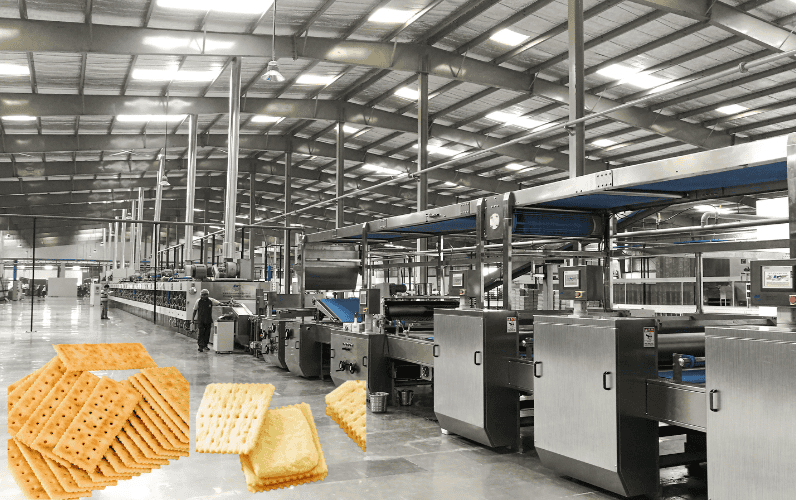
A full biscuit factory runs from ingredient handling and mixing through forming, baking, cooling, optional finishing and packing. Each stage has a specific job and a specific way to bottleneck the rest. If you are asking what equipment is needed for biscuit factory production, this biscuit factory equipment guide answers it by following the product through the plant in that same order.
Ingredient handling and mixing
Flour, sugar, fats and minor ingredients arrive in bags or bulk and must be stored, weighed and delivered to the mixer. Small plants often tip bags by hand into a horizontal mixer; larger ones use silos, sifters and automated dosing for flour, water and liquid fats.
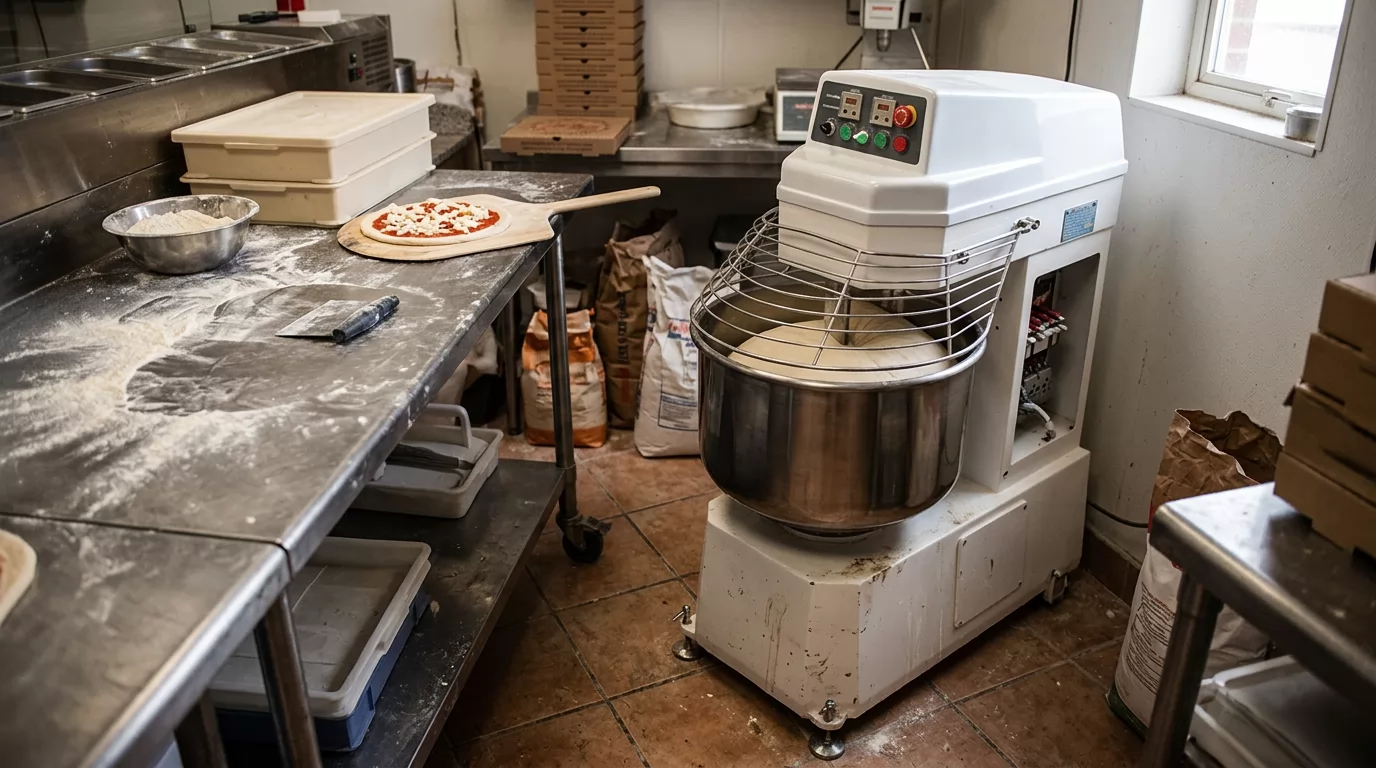
The mixer sets dough quality. Mixing time, temperature and sequence control gluten development, which in turn determines whether the sheet will stretch cleanly or tear. Repeatable batches matter more than raw mixer volume.
Forming, baking and cooling
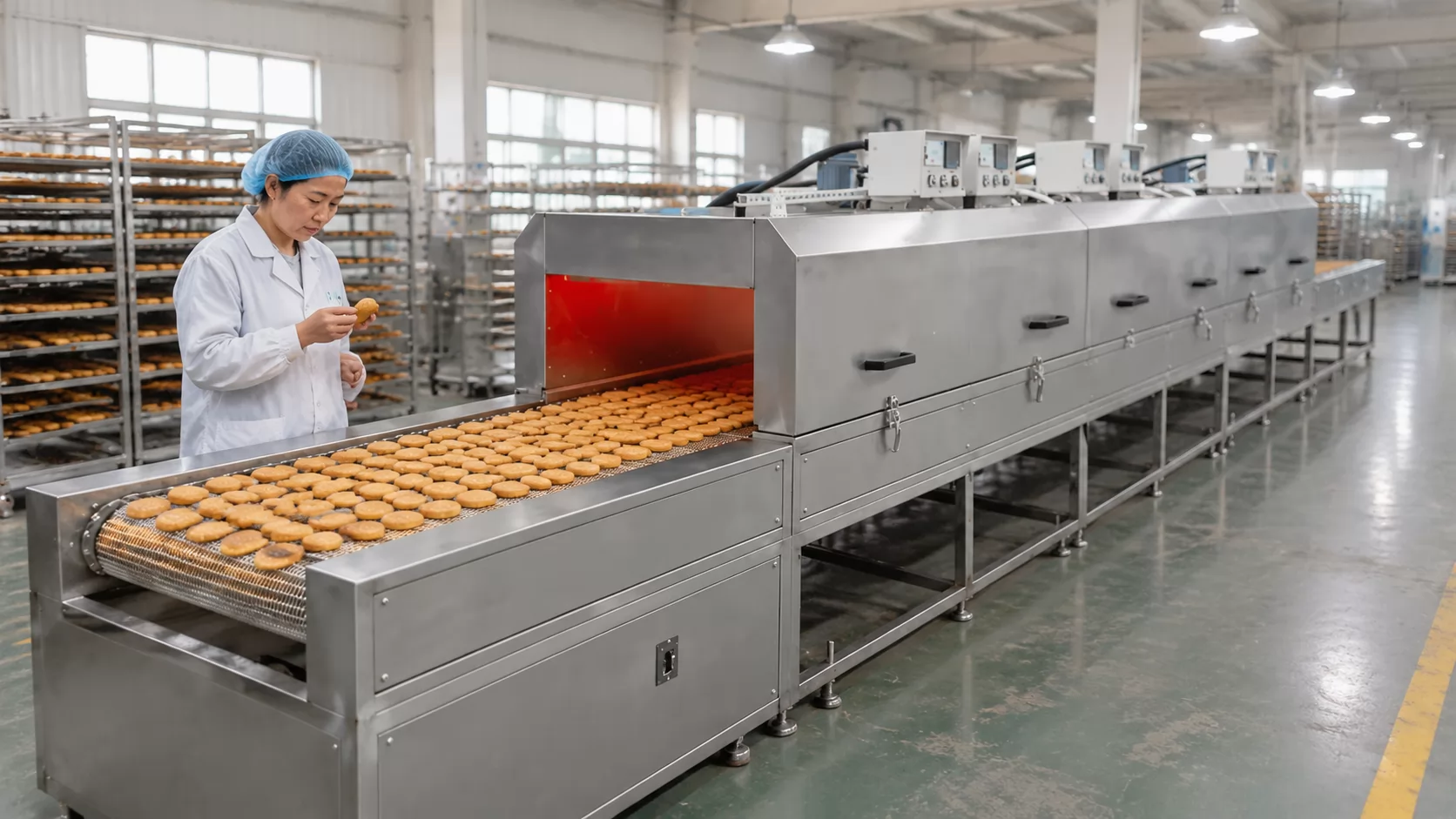
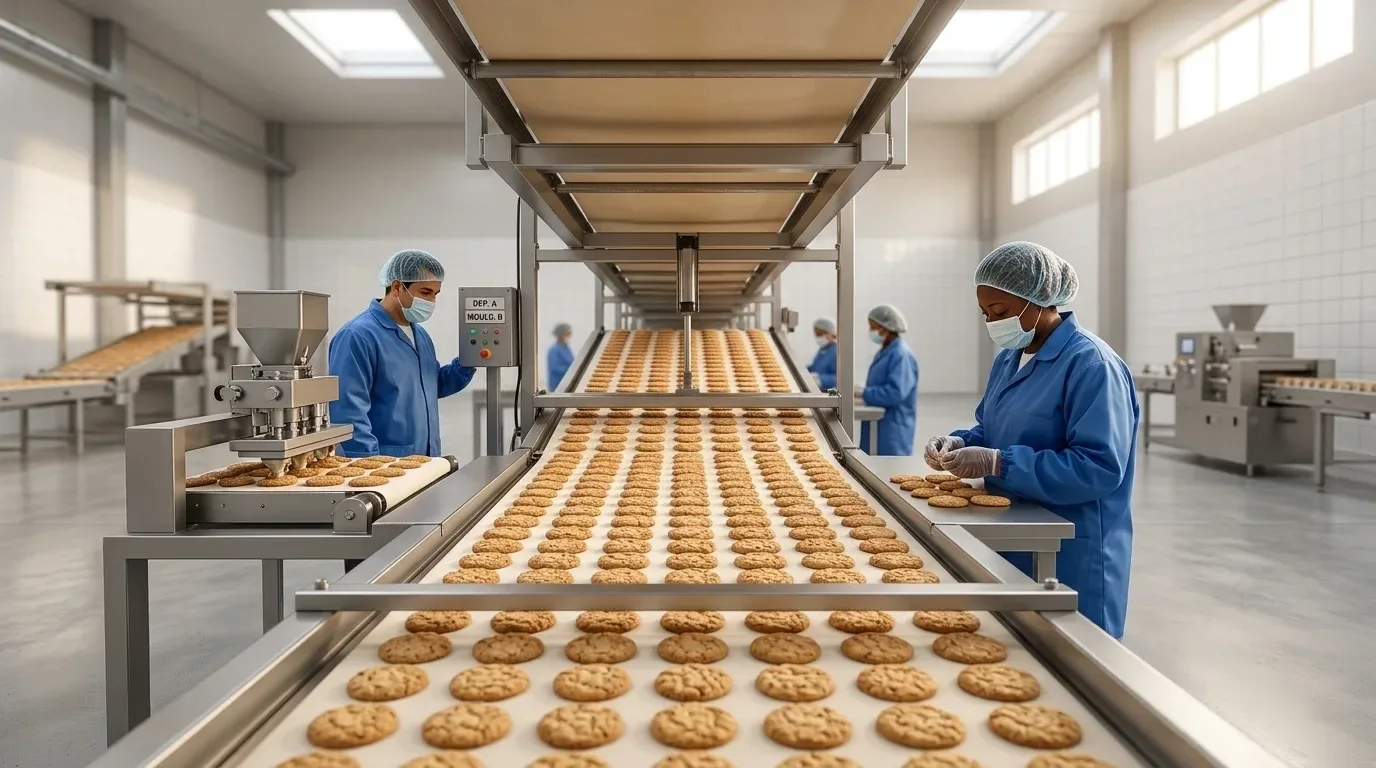
Forming turns dough into shaped pieces: a laminated dough sheeter builds layers, while a rotary moulder presses and cuts pieces from short dough. A tunnel oven then bakes the pieces on a moving band through several heating zones. Afterwards, a long cooling conveyor brings the crackers down to a temperature at which they can be packed without trapping moisture.

Finishing, inspection and packing
Finishing may include oil spraying, salting or seasoning, stacking and, for sandwich products, a sandwich cream-filling machine. Metal detection and visual inspection protect the consumer and the brand. Packing is usually a flow-wrapper or a stacked-sleeve packer, and its real speed is often lower than its nameplate figure.
Every stage can cap the whole line, which leads directly to the most persistent myth in the business.
Myth: Is the Oven the Only Machine That Matters?
A common belief holds that the oven is the line: buy a big, good oven, and the rest is accessories. The oven does take the largest share of the budget and the most attention in quotations, so the belief is understandable. It is also wrong.
A line runs at the speed of its weakest stage. If the mixer delivers dough in batches that cannot keep the sheeter busy, the oven sits half loaded. If the sheeter produces more pieces than the packer can wrap, crackers accumulate on the cooling belt, break and become scrap. Packers in particular are frequently the real cap, because film handling, product orientation and changeovers slow them well below their rated cycles.

The better approach is to treat the oven as one constraint among several and to ask for a stage-by-stage capacity table from each supplier. Look for the stage with the smallest margin. That stage is where an extra investment returns the most, and where a quoted headline capacity is most likely to fail.
There is a second, less obvious reason the myth persists. An oven's capacity is easy to state, because belt width, length and speed give a clean number. Dough handling, cooling and packing capacities depend on recipe, humidity and product format, so they are harder to quote and are often left vague. Vague figures are where hidden bottlenecks live.
Ask who is responsible if the line reaches the oven's rated output but not the packed output. If the answer is unclear, the contract is incomplete.
Laminated Dough Sheeter or Rotary Moulder: Which Forming Method Fits Your Cracker?
Laminated, layered crackers need a sheeting and lamination system, while docked, thin or short-dough products suit a rotary moulder or a cutter. A laminated dough sheeter folds and rolls dough into thin layers that puff and separate in the oven. A rotary moulder presses dough into a patterned roll and releases a shaped piece directly onto the band.
The dough defines the choice, not the price. A cream cracker or a savory soda cracker relies on lamination for its flaky bite; forcing that dough through a moulder gives a dense, flat result. Conversely, a rich short-dough biscuit has too little gluten to survive repeated folding and rolling.
| Attribute | Laminated dough sheeter | Rotary moulder | Cutter (cutting machine) |
|---|---|---|---|
| Typical product | Layered, flaky crackers | Short-dough, embossed biscuits | Thin crackers, docked pieces |
| Dough type | Gluten-developed, elastic | Low-gluten, high-fat or sugar | Moderate gluten, sheeted |
| Scrap handling | Trim returned to the dough | Little or none | Trim returned to the dough |
| Footprint | Larger, longer | Compact | Medium |
| Flexibility | Moderate, thickness and layers adjustable | Product change needs a roll swap | Good, die change is quick |
The table's main message is that forming method follows dough behavior, and each method trades footprint and scrap handling against product range.

If you plan a mixed range, a sheeting line with a cutter section covers the most ground for crackers. If you intend only embossed short-dough items, a moulder is simpler and more compact. Ask suppliers which dough recipes they have actually run on the proposed forming section, and insist the trial uses yours.
How Do Fermentation and Proofing Shape Cracker Quality?
Rule of thumb: for fermented cracker doughs, proofing capacity should be sized to the dough's required rest time at your target throughput, not to whatever space is left in the quotation. Fermentation and proofing give yeast or sponge-based doughs the time, warmth and humidity to relax gluten and develop flavor.
Why does the rule hold? A fermented dough that is cut short behaves differently on the sheeter. It resists stretching, springs back after cutting and bakes with irregular blisters. A dough left too long goes slack and sticky, and the sheet tears at the rolls.
Texture inconsistency is the usual symptom of undersized proofing. Operators compensate downstream by adjusting roll gaps, oven temperatures or dough water, and each compensation moves another variable out of range. The line then runs, but never runs well.
Three things need to be controlled: time, temperature and humidity. Time is a function of the trough or chamber volume and the dough flow rate. Temperature and humidity depend on the chamber design, its insulation and how well it handles seasonal changes in your plant. A proofing room in a hot, humid climate needs different control from one in a cool dry region.
The rule breaks in two cases. Chemically leavened or unfermented crackers need little or no proofing, and for them the money is better spent elsewhere. And some operators use a long, cold overnight rest to reduce yeast and improve flavor, which shifts the capacity question from chamber volume to cold storage and trolley handling.
Whichever route you take, ask the supplier to state the dough rest time the proposal assumes and how the chamber maintains it when flow rates change. That single question exposes how well the line was designed around your product.
Which Oven Type and Size Suit Your Output?
A tunnel oven, a long heated chamber through which a belt carries the product, dominates continuous cracker production. Four criteria decide the right one for your plant.
Belt width and baking length. Belt width sets how many pieces sit side by side, and baking length sets how long each piece stays in the heat at a given speed. Together they fix the surface area available for baking per hour. Crackers with a thick, laminated structure need a longer bake than thin, docked ones.
Zone control. A good tunnel oven has several independently controlled zones with adjustable top and bottom heat, plus exhaust control for moisture. Crackers need a strong initial lift followed by gradual drying, and without zone control the profile is a compromise.
Heating method. Gas, electric and thermal oil systems each change running cost and control. Gas is common where supply is cheap and reliable. Electric offers fast, clean control but depends on tariffs and installed power. Thermal oil gives even, indirect heat and suits larger plants but adds a boiler and piping to maintain.
Band type. Steel bands, wire mesh and stone-like surfaces transfer heat differently and affect bottom color and release. Choose by product and cleaning regime.
Size the oven last, not first. A rule that works is to confirm forming and packing capacities, then choose an oven with a modest margin above them. Heavy oversizing wastes energy and floor space, and an oven run far below its design load tends to bake less evenly. Ask for an energy consumption figure at your target output, stated per kilogram of baked product, and compare suppliers on that figure.
How Do You Size the Line to Your Real Throughput?
Work backward from sellable kilograms per shift, not forward from the speed printed on a quotation. The following sequence keeps the arithmetic honest.
State the sellable output you need per shift, in kilograms of packed product, and the number of shifts and operating days per year.
Add scrap: trim returned to the dough is recycled, but broken, burnt and rejected pieces are lost, and a realistic allowance must be built in.
Apply a realistic line efficiency, which is lower than 100% because of start-ups, jams, cleaning, maintenance and waiting for materials.
Allow time for changeovers between products, including die or roll changes, cleaning and first-piece checks.
Convert the result to the required hourly rate at the oven and compare it with each stage's rated capacity.
Check the weakest stage, usually packing or forming, and decide whether to upgrade it or accept it as the cap.
The method is simple, but the inputs are where projects fail. Efficiency in particular is often assumed at an optimistic figure because nobody wants to specify a bigger line than necessary. A newly commissioned line typically needs weeks of tuning before it reaches stable efficiency, so base the first-year plan on a ramp-up rather than the design figure.
Ask suppliers for their assumptions on efficiency and scrap in writing. If two quotations claim the same output with different assumptions, the cheaper one is probably not cheaper at all. The sizing sheet should also record the shift pattern, because a line that runs one shift a day has very different maintenance and cleaning windows from one that runs around the clock.
What Is the Right Cracker Making Machine Setup for a Small Factory?
Consider a small plant that starts with one cracker, one shift and a modest local market. The owner is tempted by a large line at a favorable unit price, on the logic that growth will fill it. Within a year the line runs a few hours a day, the oven burns fuel keeping zones warm, and cash is tied up in capacity that sells nothing.
The alternative is a compact, modular cracker making machine for small factory use: a mixer sized to the batch, a sheeting or moulding section of moderate width, a short tunnel oven, a cooling conveyor and a semi-automatic packing step. Each section is chosen so a wider belt, a second mixer or an automatic packer can be added later without scrapping what was installed.

The lesson is that modularity is worth paying for. Ask whether the oven can be extended by adding modules, whether the forming section accepts wider rolls, and whether the electrical cabinet and utilities were sized with spare capacity. These details cost little at the start and a great deal to retrofit.
The trade-off is real. A compact line needs more labor per kilogram, more manual handling of trays or trimmed dough, and more operator skill to hold quality. Labor cost and hygiene risk both rise with manual handling, so weigh them against the capital saved.
Equally, a small line is not a toy. Food-contact surfaces, safety guarding and temperature control must meet the same expectations as in a large plant. Cut capacity, not compliance, when the budget is tight.
Which Criteria Should Decide Between Competing Quotations?
Put every quotation on one like-for-like sheet. Six criteria usually separate a good proposal from a merely cheap one.
Materials of construction. Product-contact parts such as hoppers, conveyors, rolls covers and trays should be stainless steel SUS304 or an equivalent food-grade grade, with smooth welds and no hidden crevices. Frames and guards in lower grades are acceptable where they do not touch product, but ask for the material of each part.
Automation level. Check what is automatic and what depends on an operator: dough feeding, scrap return, tray handling, stacking, packing. Higher automation lowers labor and variability but raises cost and demands better maintenance skills.
Changeover time. If you plan several products, a line that needs hours to change dies and clean down erodes output. Ask for a documented changeover procedure and its typical duration.
Spare parts and wear items. Request a list of recommended spares with lead times, and confirm which parts are standard components, such as motors, bearings and drives, that you can source locally.
Energy and utilities. Compare consumption of gas, electricity, compressed air and water at the same output.
After-sales support. Ask how installation, commissioning, training and remote or on-site service are handled. EverSmart and other suppliers should be able to describe this in concrete terms: who attends, how fast and under what conditions.
Rule of thumb: if you cannot explain why one quotation costs more than another in terms of these six criteria, you are not yet comparing like with like.
Which Standards and Certificates Should the Line Support?
Rule: choose equipment that makes your food safety system easier to run, because the standard applies to your plant and the machine only supports it. Hygienic design should support your Hazard Analysis and Critical Control Points (HACCP) plan, the structured method for identifying and controlling food safety hazards. Where you pursue certification, it should also support ISO 22000, the international food safety management system standard.
In practice, that means machines with cleanable surfaces, accessible parts, minimal dead spots and materials that do not shed or react with food. Ask whether guards and covers can be removed for cleaning without tools that create contamination risk, and whether lubricants near product are food-grade.
Check three layers of compliance for your market:
Food-contact materials, for example Regulation (EC) No 1935/2004 in the European Union or the relevant food-contact rules of your own country.
Machine safety conformity, such as CE marking under the EU Machinery Directive for equipment sold into Europe, together with electrical safety documentation.
Local requirements for gas appliances, pressure systems and electrical installation, which vary by jurisdiction.
Ask each supplier to state which of these it can document, and request the actual declarations and material certificates, not a general assurance. Do not assume that a supplier holds any certificate unless it provides the paperwork; certification of the line is also different from certification of your factory. Your own audit will look at the whole process, including cleaning, pest control and staff practice, so equipment is necessary but never sufficient.
What Hidden Costs Turn a Cheap Line Into an Expensive One?
The warning sign is a quotation that wins on price but is silent on running cost. A line that costs less to buy can cost far more to own, and the gap tends to appear gradually, in utility bills, scrap bins and maintenance calls.
Energy comes first. An oven with poor insulation or weak exhaust control burns more fuel for the same bake, every hour of every shift. Over several years that difference can exceed the original price gap between two quotations.
Scrap is the second. A forming section that cannot hold thickness or a cooling conveyor that lets crackers collide produces rejects that are paid for in flour, fat and energy. Even a small percentage improvement compounds across annual volume.
Unplanned downtime follows. Cheap drives, bearings and sensors fail sooner, and without local spares a stoppage can last days. Wear parts such as belts, cutter dies, scrapers and band lacing need a budget line of their own.
Several costs sit outside the machine entirely: foundations, steel platforms, ventilation, gas or thermal oil piping, electrical upgrades, compressed air, water and effluent handling. Installation and commissioning labor, freight, insurance and import duties add further layers. Operator and maintenance training is easily forgotten and expensive to correct later.
To protect yourself, build a simple five-year cost model that adds purchase, installation, utilities, labor, spares and expected scrap. Ask each supplier for the inputs to that model. Quotations that cannot supply them are telling you something about the quality of the engineering behind them.
Pre-Purchase Checklist Before You Sign
Use the sequence below as the last gate before any contract is signed. Each item is a check, and any item you cannot tick is a reason to pause.
Write the product specification: dough type, thickness, weight, moisture, shape and pack format.
Run a trial with your own dough and recipe, and record yield, breakage, color and texture.
Confirm stage-by-stage capacities and the assumptions for efficiency and scrap in writing.
Check the layout drawing against your building, including doors, ceiling height, drains and access for maintenance.
List the utilities required, such as power, gas, water, steam or thermal oil and compressed air, and verify your site can supply them.
Define acceptance criteria: output, quality, energy consumption and run time, measured on site before final payment.
Request material certificates, safety declarations and the hygienic design documentation your auditor will ask for.
Agree on installation, commissioning, operator training and handover documents, including manuals in a language your team reads.
Obtain a spare parts list with prices and lead times, and decide which parts to hold in stock from day one.
Clarify warranty terms, response times for service and what is excluded.
Payment terms deserve the same discipline as the technical points. Tie a meaningful share of the payment to successful acceptance on your site, not to shipment. If the supplier resists measurable acceptance criteria, treat that as a risk signal.
FAQ
How do I decide a minimum budget for a cracker line?
Start from required sellable output, not from a price. Cost the full chain: mixing, forming, oven, cooling, packing, utilities, installation and working capital. A line is only as capable as its smallest funded stage, so cutting one stage to save money usually costs more in lost output.
Can I add a sandwich cream-filling machine later?
Yes, if you plan for it. Leave floor space after the cooling conveyor, confirm the conveyor height and width can feed the sandwiching unit, and specify enough electrical and compressed air capacity. Retrofitting is easier when the product format, such as round or rectangular, is fixed early.
Is used equipment a sensible choice?
Sometimes. Used ovens and mixers can be good value if they are inspected under load and spares remain available. The risks are worn gearboxes, obsolete controls, missing hygienic documentation and no performance guarantee. Budget for refurbishment and a trial run before agreeing a price.
How long do installation and commissioning take?
Usually several weeks for a compact line and a few months for a larger one, depending on building readiness and utilities. Delays more often come from site preparation than from the machines. Agree a schedule with milestones and confirm who is responsible for each task.
Can one line make both crackers and biscuits?
Partly. Ovens, cooling and packing can often be shared, but forming differs: crackers need sheeting and lamination, many biscuits need a rotary moulder. A line with interchangeable forming sections can serve both, at the cost of changeover time and a larger initial investment.

Ready to start your journey toward a customized solution? Contact me directly on WhatsApp to begin the conversation.