How an Industrial Tunnel Oven Boosts Your Production Capacity and Reduces Operating Costs
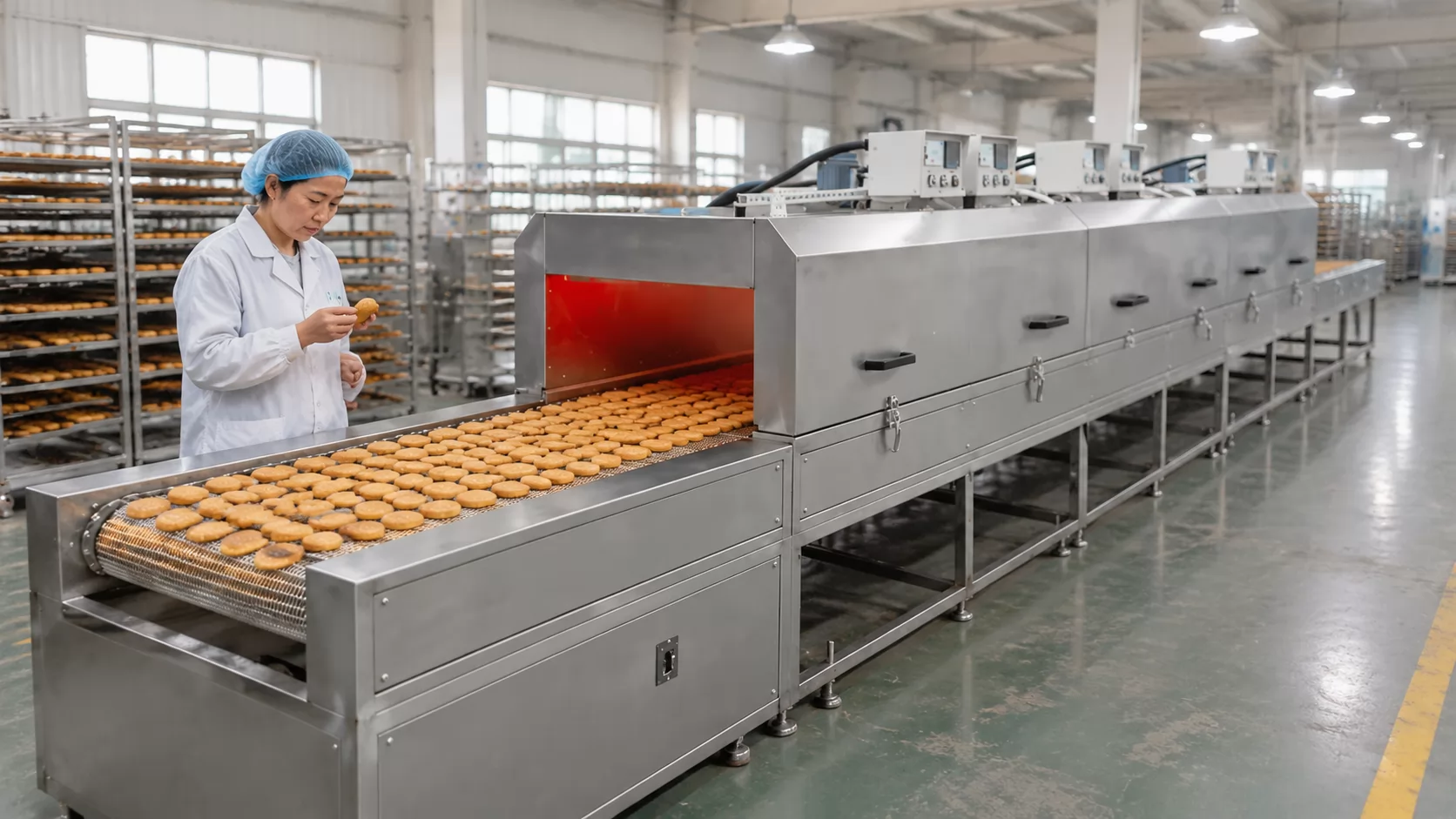
Selection of the oven receives disproportionately little scrutiny in capital planning for bakery operations. Because an industrial tunnel oven bakes product on a continuously moving band, it determines hourly throughput, energy consumption per kilogram, and staffing requirements across a service life that commonly exceeds ten years. The investment is justified only where production volume is stable, and the product range is sufficiently narrow to keep the band consistently loaded. Mixers and packaging lines are routinely evaluated through live demonstrations, whereas the oven is frequently procured on the basis of a specification sheet and a commercial agreement alone.
What Is an Industrial Tunnel Oven?
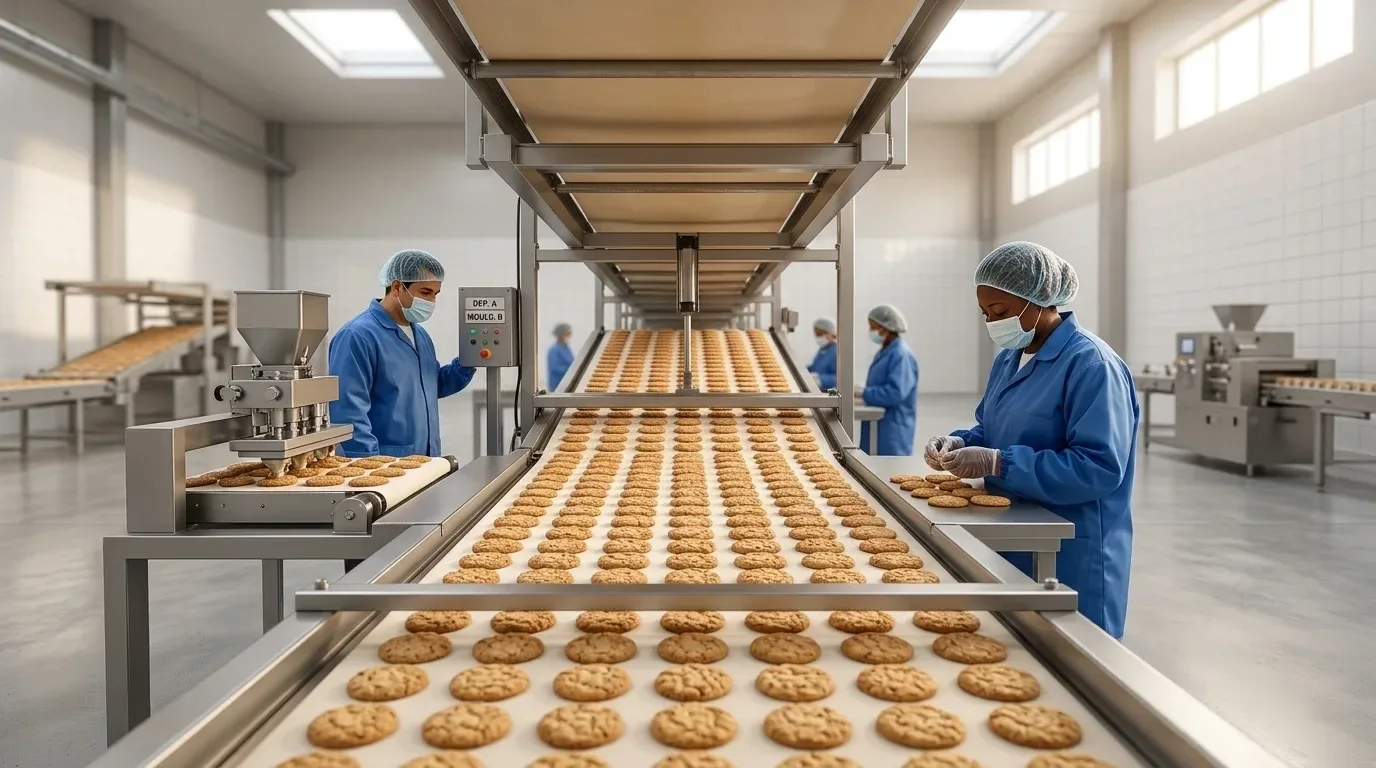
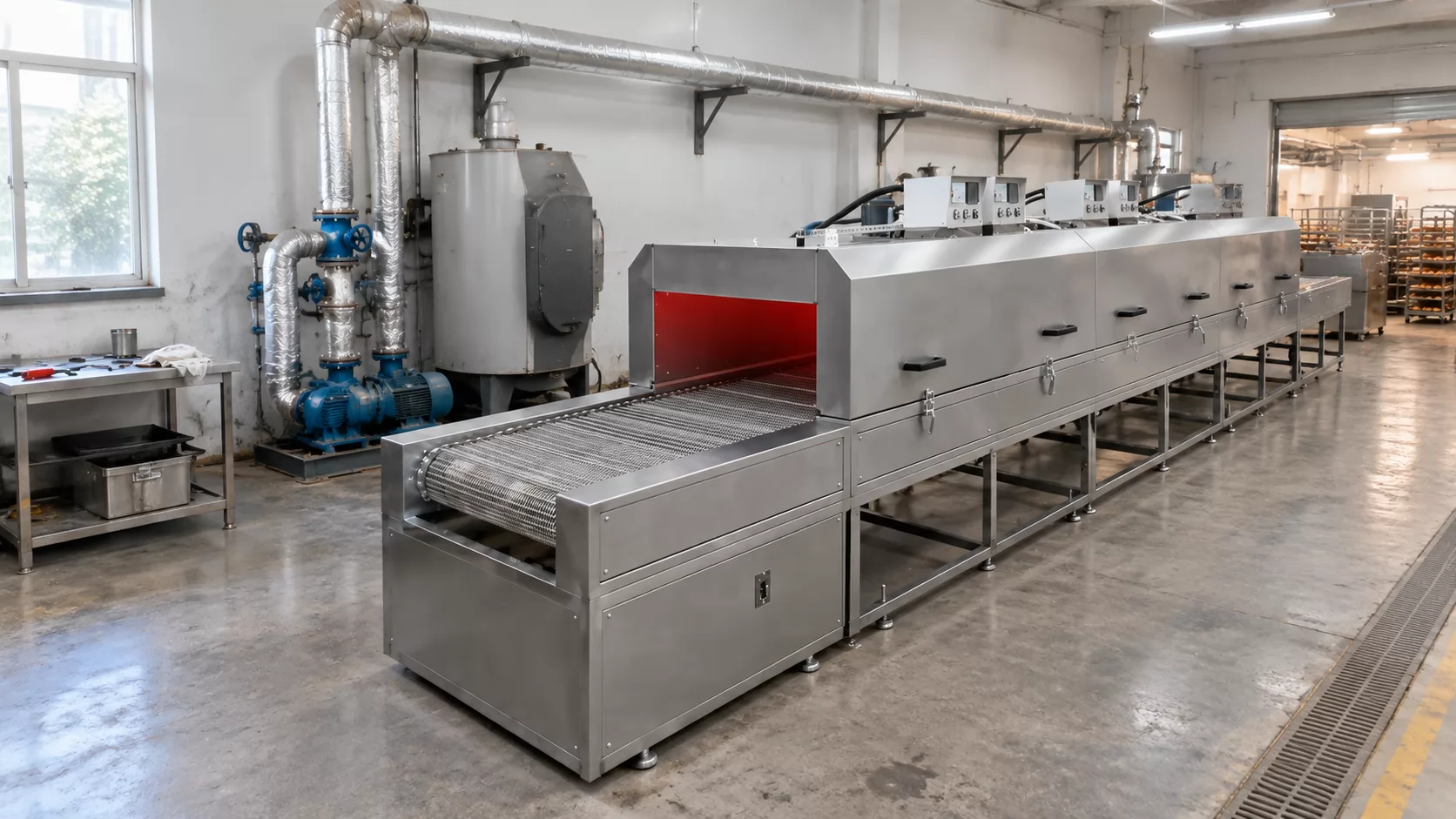
A tunnel oven is a long, zoned baking chamber with a conveyor running through it. Product enters raw at one end and leaves baked at the other. Output depends on belt area, bake time, and uptime, not on how fast a crew loads and unloads racks. Every piece gets the same time and the same heat profile.
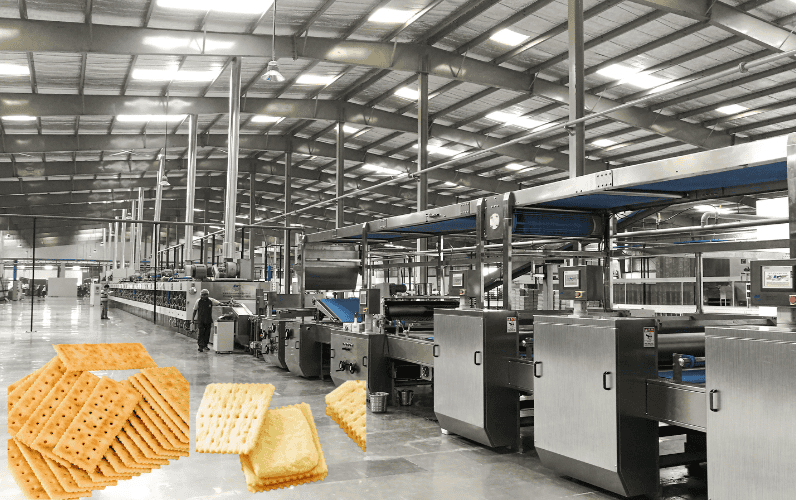
The chamber is split into zones, typically three or more on smaller ovens and many more on long biscuit lines. Each zone has its own burners or heating elements, its own fans and dampers, and often its own humidity control. That lets you shape the bake: high heat early for oven spring or spread, gentler heat in the middle to set the structure, and drier air at the end for color and moisture loss. The conveyor decides what the product sits on during all of this, and it is the first real choice in any quote.
Three conveyor types cover most bakery work. They differ in how heat reaches the bottom of the product, how cleanly the product comes off, and how much cleaning the band needs.
| CRITERION | STEEL BAND | WIRE MESH BELT | HYBRID (COMPACT OR PERFORATED) |
|---|---|---|---|
| Typical products | Biscuits, cookies, crackers, sheet cakes | Bread, buns, pizza bases, panned goods | Crackers, flatbreads, mixed ranges |
| Bottom heat transfer | Conduction through the solid band | Convection and radiation through open mesh | Mixed, set by open area |
| Product release | Clean, flat base; may need release agent | Mesh pattern on base; sticky doughs grip | Light marking, moderate release |
| Cleaning needs | Scrapers, band brushing, band oiling | Crumbs drop through; belt brushing and washing | Brushing plus scraping |
| Best for | Flat, spreading or batter products | Products needing airflow underneath | Lines switching between both families |
Choose the band for your highest-volume product; a hybrid is a compromise that bakes neither family quite as well as the dedicated option.
Conveyor Band Types
A steel band is a continuous sheet of carbon or stainless steel that carries product directly on its surface. It stores heat and passes it to the base of the product by conduction, which gives the even bottom bake and flat base that biscuits and crackers need. It also takes wet deposits and batters that would fall through a mesh. The cost is band tracking: a solid band wanders and needs active tracking rollers, plus scrapers at the discharge end.
A wire mesh belt is an open woven belt that lets hot air pass underneath the product. Bread, rolls and anything baked in tins or trays usually goes on mesh, because the pans sit on top and the open structure keeps the bottom from overbaking. Mesh grades range from open to compact; the tighter the weave, the closer it behaves to a solid band. That is where hybrids come from. They widen the product range of one oven, but you give up some of the strengths at either end.
Continuous Conveyor Baking
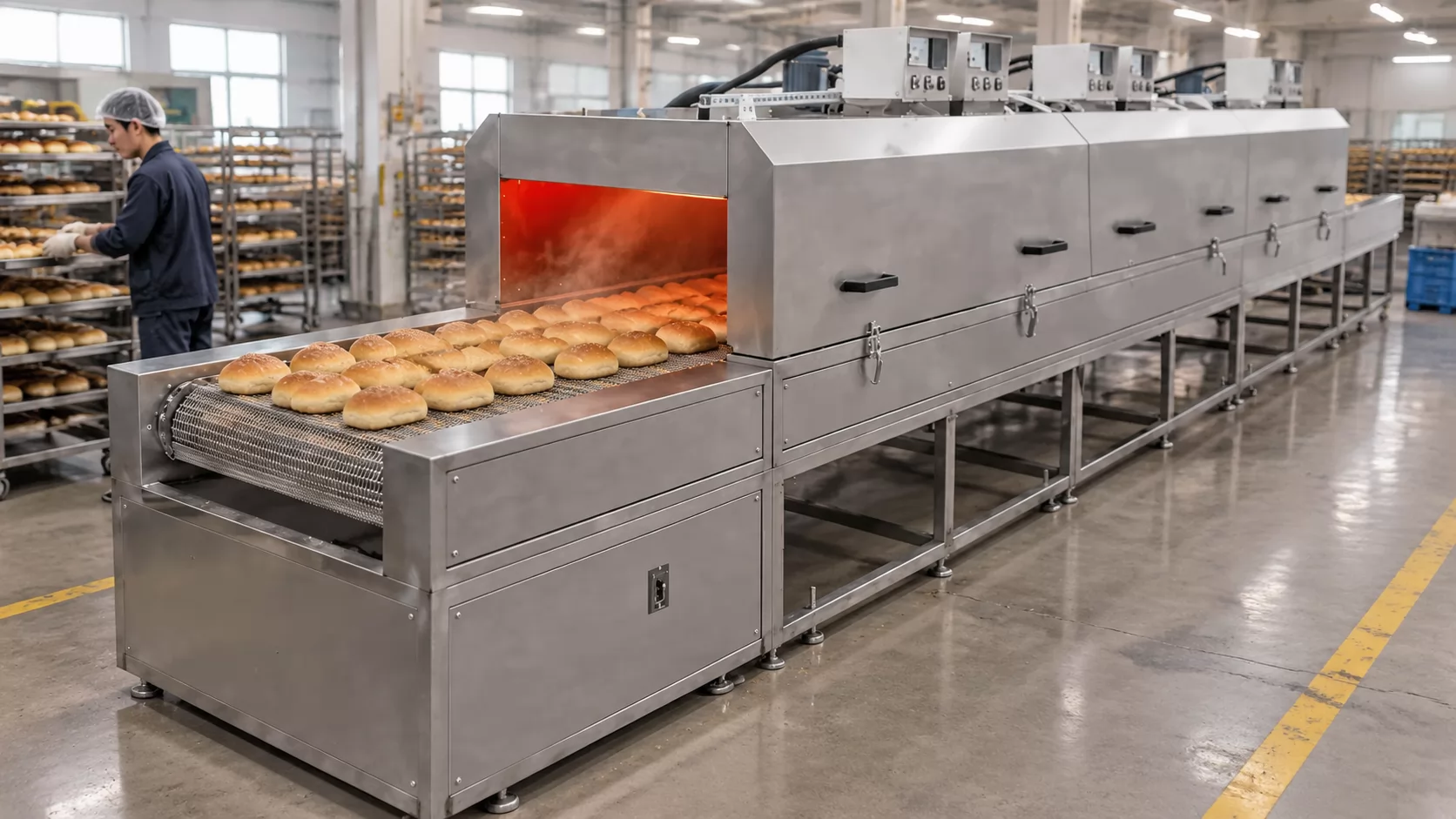
Belt speed is the bake time. Set the belt to cross the heated length in, say, nine minutes, and every piece spends exactly nine minutes inside, passing through each zone in the same order at the same temperatures. A rack or deck oven depends on someone opening a door at the right moment. A tunnel does not. So consistency comes from the machine, and the operator's job shifts toward watching color, moisture, and weight at the discharge end and adjusting zones in small steps.
How Does a Tunnel Oven Increase Production Capacity?
A tunnel oven raises capacity by baking without interruption: hourly output equals the band area that passes through the heated zone, multiplied by how densely product is loaded. Nameplate output is a ceiling, though. Heat-up time, product changes, and rejects all come off the top, so each variable needs checking on its own before you trust a quoted figure.
Most quotes give one output number, in kilos or pieces per hour. It is built from the variables below, and each one hides an assumption you should see in writing.
| VARIABLE | TYPICAL UNIT | WHAT TO CONFIRM WITH THE SUPPLIER |
|---|---|---|
| Usable belt width | m | Width after edge margins and side guides |
| Baking length | m | Heated length, not overall machine length |
| Bake time | min | Time for your recipe, not a reference product |
| Loading density | kg/m² or pieces/m² | Layout drawn with your own piece size |
| Uptime | % of scheduled hours | Heat-up time and planned cleaning stops included |
| Yield | % saleable output | Reject rate assumed behind the quoted figure |
Ask for every row on your own product; a capacity figure based on a supplier's reference biscuit says little about your bread roll.
Belt Area and Bake Time
The arithmetic is short enough to check on a napkin. Belt speed equals baking length divided by bake time. Hourly band area equals usable width multiplied by belt speed in metres per hour. Output equals band area multiplied by loading density. Take a hypothetical line with 1.2 m usable width, 40 m baking length and an 8-minute bake. Belt speed is 40 ÷ 8 = 5 m/min, or 300 m/h. That gives 360 m² of band per hour. If your dough pieces load at 6 kg per m², the oven takes in 2,160 kg of dough an hour. Baked weight will be lower, since every product loses moisture in the bake, and the bake loss for your recipe should come from a trial rather than an estimate. Two consequences follow. A longer bake time cuts output in direct proportion unless you add length. And loading density is where quotes quietly differ, because one supplier lays pieces tighter on paper than your depositor or moulder can manage in practice.
Uptime and Changeover
A tunnel oven earns its keep by running, and it loses output every time it does not. Heat-up from cold is the first deduction; a large thermal mass takes a while to reach a stable profile, and thermal oil systems are usually slower still. Changeovers come next. Changing belt speed is quick. Changing the temperature profile is not, because zones cool down far more slowly than they heat up, and product baked during the transition is often scrap or seconds.
So the number of product changes per shift matters more than any single setting. Sequence production from low to high temperature where you can. Group products that share a profile. Five changes a day on a long oven can cost more output than a slower bake time.
Bake Consistency and Yield
Underbaked and overbaked product comes from uneven heat across the band and drift along it. Zoned temperature control handles the length. Airflow balance handles the width, since edges often run hotter or cooler than the centre. Humidity control, through steam injection early and extraction later, decides crust formation and final moisture. At a fixed belt speed, a stable profile gives you a narrow spread of color and moisture, which means fewer rejects at the checkweigher and less giveaway in pack weight. Ask how many temperature sensors sit across the width, not only along the length.
Heating Systems Compared
The heating system decides how heat reaches the product and what you pay for it. Five types cover most of the market, and the right one depends as much on your site's energy prices as on the product.
Direct gas-fired (DGF) ovens burn gas inside the baking chamber, usually with ribbon burners above and below the band. Heat transfer is strongly radiant, and response is fast, so zones can be adjusted quickly. Biscuits, crackers and pizza bases are classic DGF products. Combustion gases are in contact with the product, which is normal and accepted for these goods, but it is a point to check against your customers' specifications.
Indirect-fired ovens burn gas or oil in a separate combustion chamber and circulate the hot gases through radiator tubes inside the oven, so the product never touches combustion products. This is the common choice for bread and cakes. Response is slower than DGF.
Thermal oil ovens heat oil in a central heater and pump it through radiators in each zone. Heat is gentle, even and very stable, which suits bread and some cakes. The large thermal mass makes them slow to change temperature, and the oil system adds its own maintenance and safety requirements.
Electric ovens use resistance elements or electrically heated air. There is no combustion, no flue, and very fine zone control. Running cost comes down to your electricity tariff against your gas tariff, and in many regions electricity per unit of heat costs more, though carbon targets and gas supply limits are pushing some plants the other way.
Hybrid ovens combine methods, often direct-fired zones at the front for fast heat and convection zones behind for drying and color. They suit plants that need DGF responsiveness with gentler finishing.
Before choosing, get the energy cost at your site per kWh of heat for each available fuel. That figure, more than any brochure claim, usually settles the question.
Tunnel Oven Operating Costs
Running cost lives in a few places. Fuel or electricity is the largest line on most ovens, and much of it never reaches the product. Heat leaves through the walls, through the exhaust stacks, and through the open ends where the band enters and exits.
Insulation thickness and quality set the wall losses, and the gap shows up after years, not on the day of commissioning, as insulation settles or gets wet during washdowns. Extraction is the larger lever. The oven has to vent moisture and combustion gases, but every cubic metre extracted carries heat with it, and dampers left open "to be safe" are a quiet, permanent cost. Heat recovery units on the exhaust can capture part of that energy to warm water, a proofer or the building. Whether they pay back depends on having a steady use for the recovered heat at the same hours the oven runs.
Running below rated capacity is the trap. Wall losses, end losses, and fan power stay roughly the same whether the band is full or half empty. Spread over fewer kilos, the cost per kilo climbs. An oven sized for future volume carries that penalty every day until the volume arrives.
Labor and Scrap
A continuous line cuts operator hours at the oven itself: nobody loads racks, opens doors or rotates trays. Staff move to the ends of the line and to quality checks. But skilled hours go up. Burner tuning, band tracking, control system faults and planned maintenance call for trained technicians, and a plant without them pays for callouts and downtime instead. Scrap behaves similarly. Steady-state rejects usually fall, while every start-up and changeover produces a pulse of scrap that a batch-minded schedule can make worse.
Energy per Kilo
Burner rating tells you the maximum heat the oven can produce. It does not tell you what it consumes per kilo of saleable product, and two ovens with similar ratings can differ widely in that figure. Ask each supplier for expected energy consumption per kilo of your product at your planned throughput, with the assumptions stated, then compare quotes on that basis. It is the only number that carries your fuel price, your loading and your hours into the comparison.
When a Tunnel Oven Pays Off
The case for a tunnel oven rests on volume that stays high and stays similar. The economics work when the band runs full for most of its scheduled hours, usually over two or three shifts, on a small number of products that share temperature profiles. Products that tolerate continuous handling, such as biscuits, crackers, pan bread and buns, fit naturally. Fragile, hand-finished or highly varied ranges fit less well.
Floor length and budget are the hard limits. A tunnel oven needs a long straight run, plus space for the infeed, discharge and cooling, and the purchase price is only part of the capital: foundations, gas and power connections, extraction ducting and building changes often add a large share on top. Payback should be calculated on realistic uptime and yield, not on nameplate output.
Some warning signs suggest a site is not ready yet:
Current demand fills the planned oven for only one shift.
The product list changes weekly or keeps growing.
No technician on staff can service burners and controls.
Upstream make-up or downstream packing cannot match the belt speed.
Payback only works at full rated capacity.
Any one of these can be fixed. Two or more together usually mean the oven would run expensive and half full.
Fitting the Bakery Line
A tunnel oven for a bakery production line sets the pace for everything around it. Upstream, the dough make-up equipment and proofer have to deliver product at the band's speed and in the pattern the band expects. For bread, a continuous proofer typically feeds the oven directly, so proof time and bake time are linked through belt speed and need planning together. For biscuits, the rotary moulder, cutter or depositor sits right at the infeed and its output width has to match the usable band width.
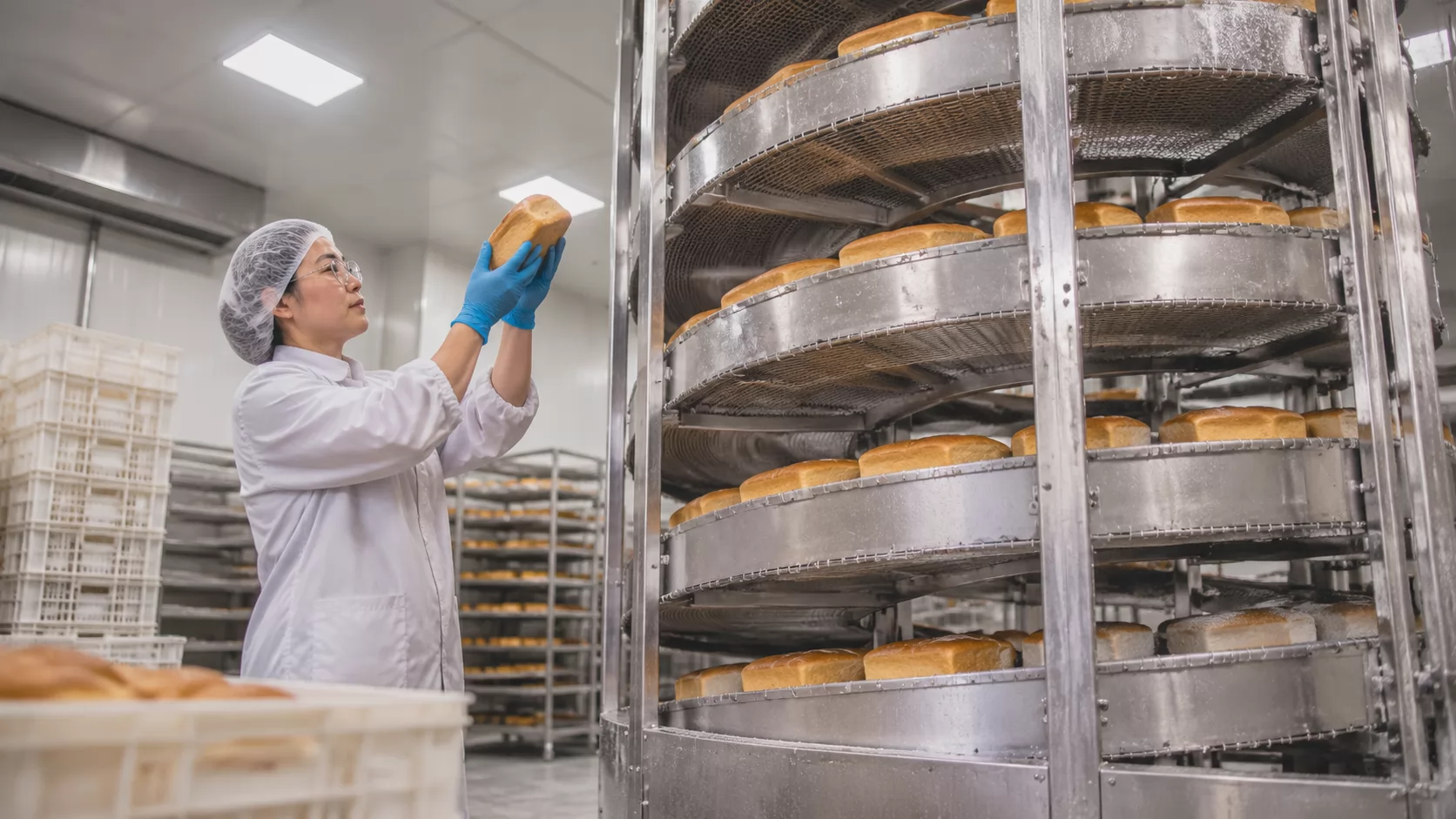
After the bake, panned products go through a depanner, then a cooling conveyor or spiral cooler. Cooling is often underestimated. Product that is packed warm sweats, and condensation inside the pack shortens shelf life and invites mold. The cooler needs enough residence time at the oven's full output, not at an average.
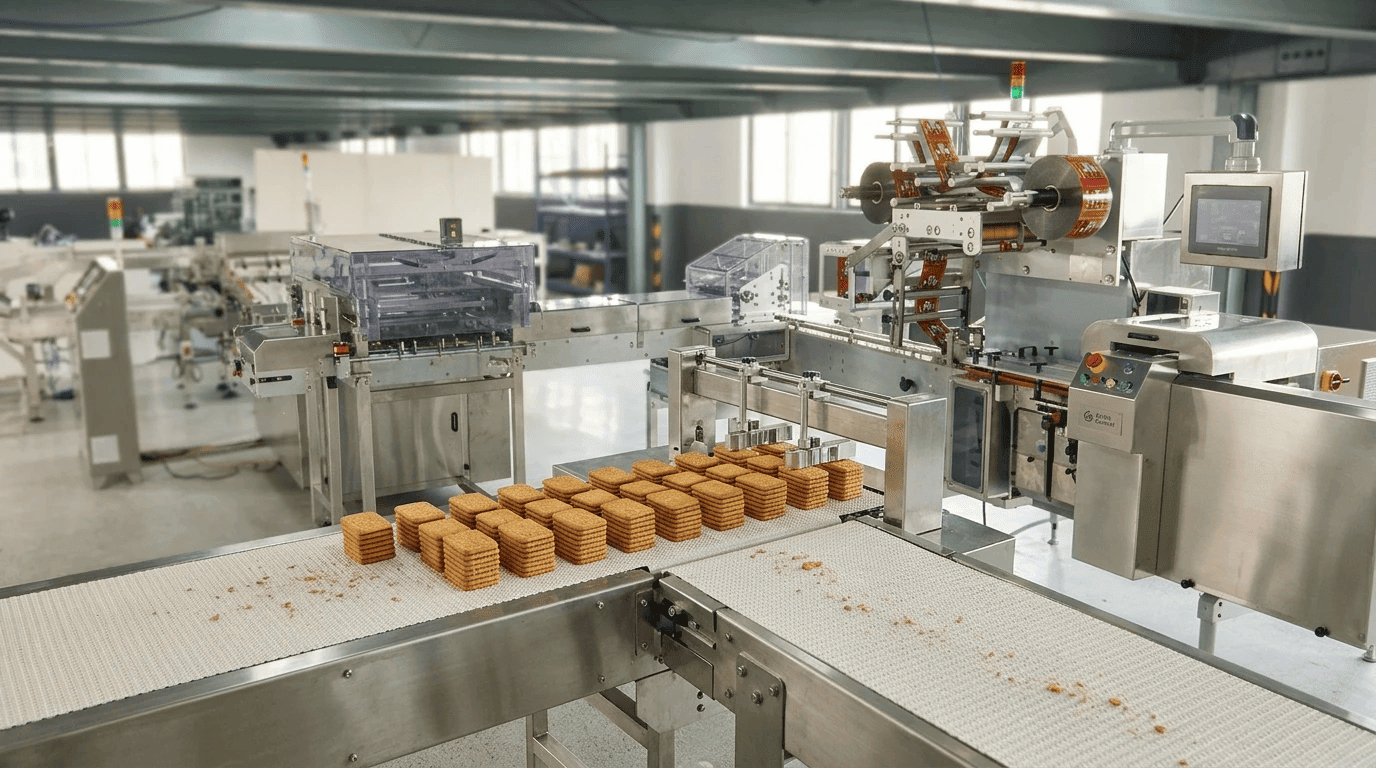
Packing is where oven output meets its last real constraint. Many baked goods are flow-wrapped on HFFS (horizontal form-fill-seal) machines, which form a pack from a reel of printed film, fill it and seal it in one pass. If the wrapper's speed in packs per minute, multiplied by the pieces per pack, falls short of the oven's discharge rate, product piles up or the oven slows down. Printed roll stock film for these machines comes from flexible packaging converters such as YLTPACK, and the film width, seal layer and reel size need to be agreed against the wrapper well before the line runs at full speed. Plan the line speed by the slowest machine, and size the buffer between oven and packing for the moments when a wrapper stops for a reel change.
Maintenance and Duty Cycle
Ovens on 24-hour lines rarely fail all at once. They drift. A band starts tracking toward one edge. A burner flame changes color. A fan bearing runs a little warmer each week. Most of the maintenance burden is catching that drift before it turns into a stop.
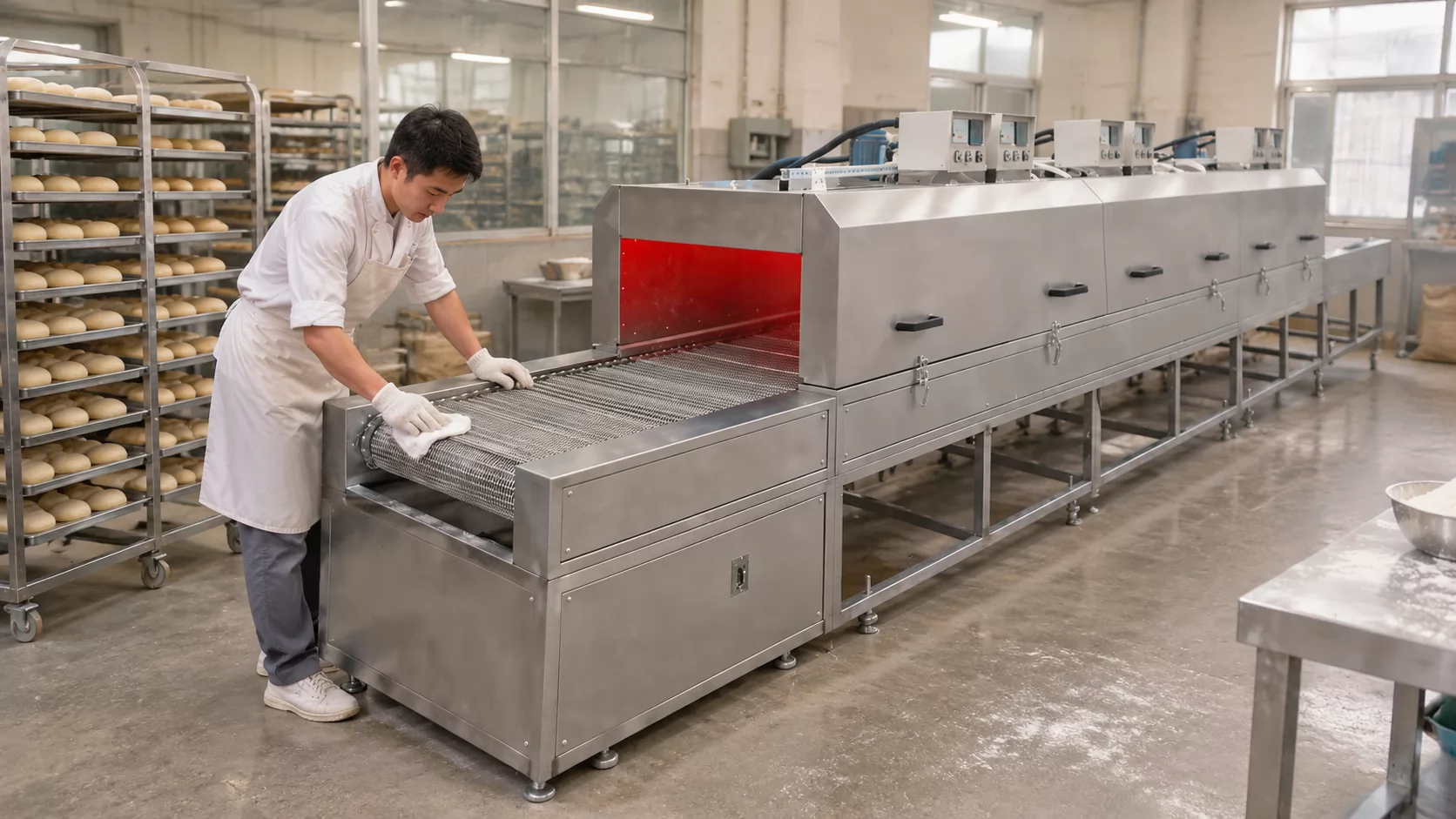
Band tracking needs daily attention on steel bands, because a band that runs into the frame can be damaged beyond repair. Burners need periodic inspection, cleaning and combustion checks to keep efficiency and safety where they should be. Circulation and exhaust fans need bearing and balance checks. Crumbs, fat and flour dust collect under the band and inside the chamber; besides hurting hygiene, that buildup is a fire risk, so cleaning access matters at the design stage. Ask how a technician reaches the underside of the band and the burner lines, and how long a full clean takes.
Planned stops come off available hours. A line that runs around the clock still needs scheduled shutdowns for deep cleaning and maintenance, and the supplier's capacity figure should state how many hours per week it assumes for them. Spare parts are the other half. Burner components, thermocouples, fan motors and band tracking parts should be on the shelf, not on a ship, and the recommended spares list belongs in the quote.
Safety and Compliance Checks
An industrial oven combines fuel, heat, moving parts and food contact, so several frameworks usually apply, depending on where it is installed. For the European Union, CE marking under the Machinery Directive 2006/42/EC covers the machine as a whole; equipment placed on the EU market from 20 January 2027 falls under the new Machinery Regulation (EU) 2023/1230 instead, which is worth raising with any supplier whose delivery slips into that year. EN 746, the European standard series for industrial thermoprocessing equipment, typically applies to the heating and combustion systems, with EN 746-2 addressing combustion and fuel handling.
In the United States, NFPA 86, the Standard for Ovens and Furnaces, is the usual reference for purging, flame safeguards and explosion relief, and local authorities often enforce it. EN 1672-2 sets hygiene requirements for food processing machinery and is a reasonable benchmark for cleanable design even outside Europe. EN 60204-1 commonly applies to the electrical equipment of machines.
Local gas and electrical approvals sit on top of all this, and they vary by country and sometimes by city. Ask the supplier which standards the oven is built to, request the declaration and test documents, and confirm with your local inspector or utility before the order is signed rather than after the oven arrives.
Specifying the Right Oven
A good specification starts from your product and volume, not from a catalog model. These are the points to pin down before asking for quotes:
Daily volume and shifts: how many kilos of saleable product per day, over how many hours, because this sets width, length and the honest payback.
Product type and SKU count: which products, and how many profile changes per day, because this decides zone count and how flexible the controls need to be.
Belt type and usable width: steel band, mesh or hybrid matched to your main product, with a width your make-up and packing equipment can match.
Oven length and zones: baking length from your bake time and target speed, split into enough independently controlled zones for your hardest product.
Energy source: heating type chosen on your site's cost per kWh of heat and on available gas or power capacity.
Staffing and payback horizon: who will run and maintain it, and the number of years over which the investment has to return its cost at realistic uptime.
Rule of thumb: specify the oven for the volume you can fill on most days within the next few years, and leave room in the layout to extend it later rather than buying length you will heat empty.
RFQ to First Bake
A tunnel oven project runs through fixed stages, and each one is a chance to catch a problem while it is still cheap. A factory acceptance test (FAT) is a trial at the supplier's plant before shipment; a site acceptance test (SAT) is the same check after installation at yours.
| STAGE | WHAT HAPPENS | WHAT TO VERIFY |
|---|---|---|
| Specification | Volume, products and site data agreed | Capacity assumptions stated for your product |
| Layout approval | Drawings, utilities and foundations fixed | Floor length, access, extraction routes |
| Factory acceptance test | Oven run at supplier's plant | Temperatures, band tracking, safety interlocks |
| Shipping | Oven split into modules and crated | Packing list, spares, crate protection |
| Installation | Assembly, connections, commissioning | Gas and electrical sign-off by local authorities |
| Site acceptance test | Runs with your product at target speed | Output, yield and energy against the contract |
| Ramp-up | Training and gradual move to full shifts | Operator skills, reject rate, uptime trend |
Tie a meaningful share of payment to the site acceptance test, since it is the first time the oven proves the numbers in the quote on your own product.
Common Questions
What drives cost per kilo in a continuous baking oven?
Energy, uptime and yield, in roughly that order for most lines. Labor and depreciation follow, and all of them rise sharply when the band runs below its rated load.
What daily volume usually justifies a tunnel oven?
No single figure applies across products and regions. The usual test is whether your demand can keep the band full for at least two shifts on most days.
Can one tunnel oven bake bread, biscuits and cakes?
Yes, within limits. A hybrid belt and flexible zoning widen the range, but each product family bakes best on the band and heating type designed for it.
How much floor length does a tunnel oven need?
Roughly 10 m to well over 100 m for the oven itself, depending on bake time and output. Add space for infeed, discharge, cooling and service access.
Is a gas or an electric tunnel oven cheaper to run?
Usually gas, in regions where gas costs less per unit of heat than electricity. Local tariffs, carbon rules and supply capacity can reverse that, so compare on cost per kilo at your site.
Key Takeaways
Bandwidth, oven length and heating system have to follow your real volume and product mix, not the supplier's reference product. Quotes only become comparable once each one states energy per kilo, uptime, and yield for your recipe, and compliance is settled before the contract. If you cannot fill the band most days, buy the layout space now and the length later.

Ready to start your journey toward a customized solution? Contact me directly on WhatsApp to begin the conversation.