Biscuit Packaging Automation: The 2025 Guide to ROI, Costs & Implementation
By Sofia | Vice President of Engineering | EverSmart Packaging Solutions
With over 200 biscuit packaging line installations across 15 countries and 20 years of field experience, Sofia consolidates our global expertise into your ultimate automation playbook.
In the competitive biscuit manufacturing market, strategic automation transforms struggling bakeries into market leaders. This comprehensive guide, drawing from two decades of field experience and 200+ global installations, provides the data-driven insights you need to make informed decisions.
Executive Summary: A well-designed automation system typically achieves 50-100% ROI with an 18-24 month payback period. Starting with a flow pack wrapper can reduce labor costs by up to 70% and cut product breakage from 8% to under 0.5%.
Why Trust This Guide? Our Authority & Expertise
200+ Successful Installations across 15 countries
15+ Years of Specialized Experience in biscuit and snack automation
ISO 22000 Certified facilities, ensuring food-grade compliance
Data-Backed Insights from the Packaging Machinery Manufacturers Institute (PMMI)
Industry 4.0 Compliance with IoT and AI integration expertise
Quick Answers: Biscuit Packaging Automation
What is biscuit packaging automation?
It's the use of integrated machinery to automatically handle, wrap, box, and palletize biscuits with minimal human intervention. A well-designed system typically achieves a 50-100% Return on Investment (ROI) with a payback period of 18-24 months, though many projects see a full return in under a year.
How much does a biscuit packaging line cost?
The investment varies based on complexity and speed:
Single machine: $20,000 - $150,000
Partial line (e.g., wrapper + cartoner): $150,000 - $500,000
Full turnkey line (oven to pallet): $500,000 - $1,200,000+
What's the first machine to automate?
For most bakeries, the journey starts with a flow pack wrapper. It addresses the most common bottleneck in primary packaging, offers significant labor savings, and typically delivers the fastest ROI. Learn more about our flow wrapper solutions.
The Business Case: Quantifying Automation Value
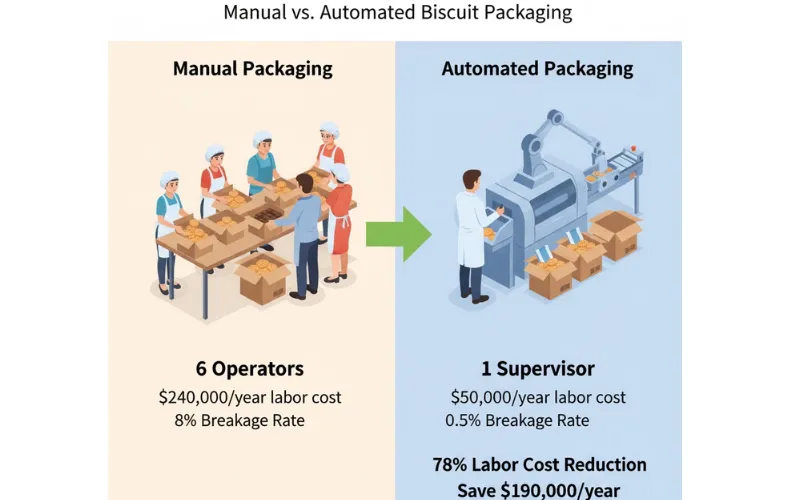
According to PMMI research, 70% of food and beverage manufacturers cite productivity as the primary benefit of automation. The financial justification rests on four pillars:
Labor Reduction:
In a market with persistent labor shortages, automation is a necessity. A single automated line can redeploy 3-6 operators per shift, translating to annual savings of $120,000-$240,000+, depending on local wages.
Waste Elimination:
Manual handling of fragile biscuits can lead to breakage rates as high as 8%. Gentle, automated handling can slash this figure to under 0.5%, saving tens of thousands of dollars annually. Precision systems also reduce packaging material waste by 3-8%.
Throughput Increase:
Automated lines run consistently without breaks or fatigue, boosting overall output by 15-25% or more. In one case study, automating a single bottleneck increased total line throughput by a staggering 35%.
Quality & Safety:
Automation creates a safer work environment, helping achieve OSHA compliance by eliminating repetitive strain injuries. It also ensures every package is a perfect representation of your brand.
→ For detailed ROI formulas and case studies, see our Comprehensive Packaging Automation ROI Guide
Anatomy of an Automated Biscuit Line

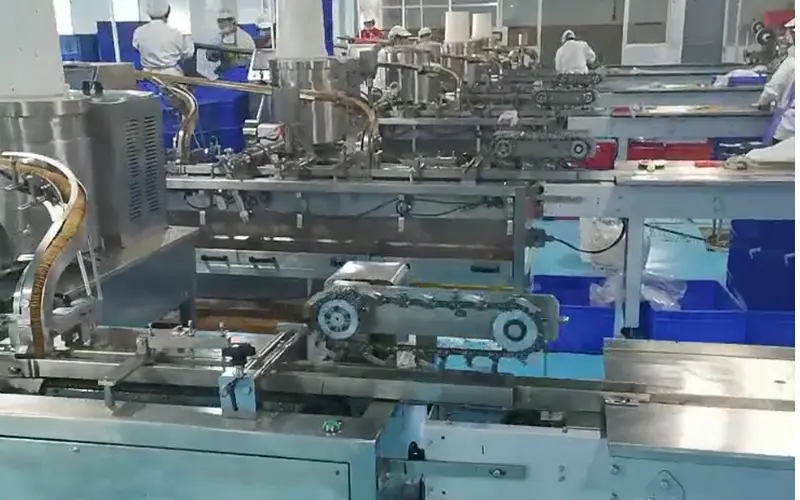
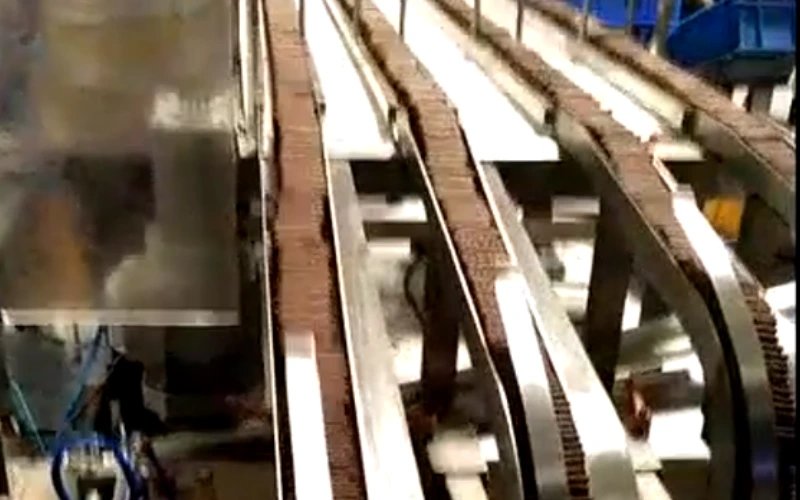
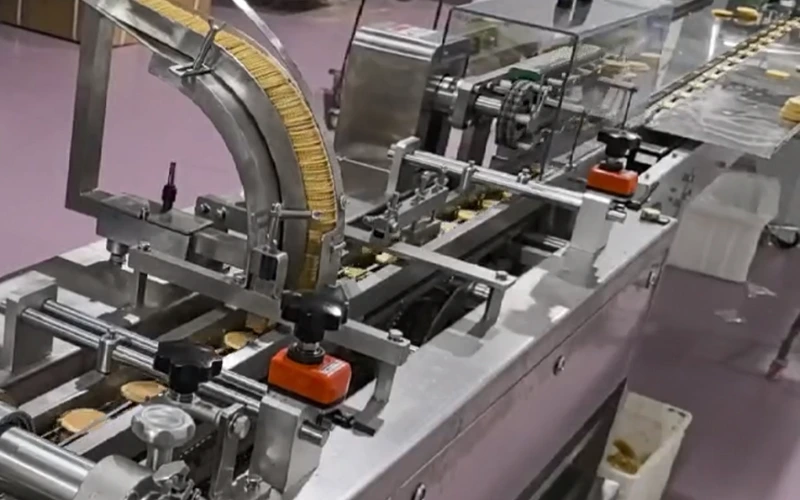
A perfectly synchronized packaging line is a seamless ecosystem that moves your product from the oven to a shipping-ready pallet:
Cooling & Alignment → Primary Packaging (Flow Wrapping) → Secondary Packaging (Cartoning) → Case Packing & Palletizing → Shipping Ready Pallets
Critical Integration Points:
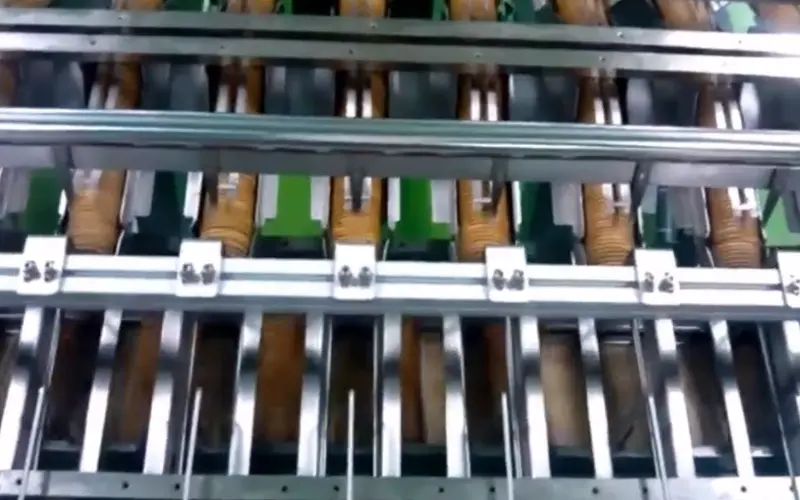
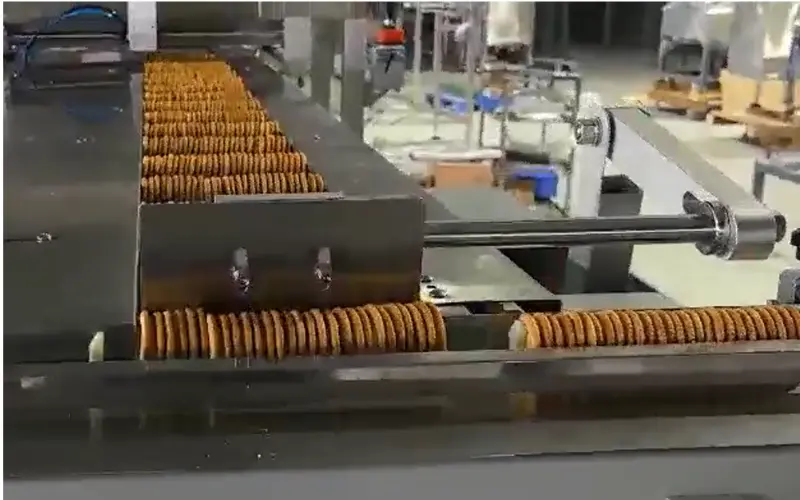
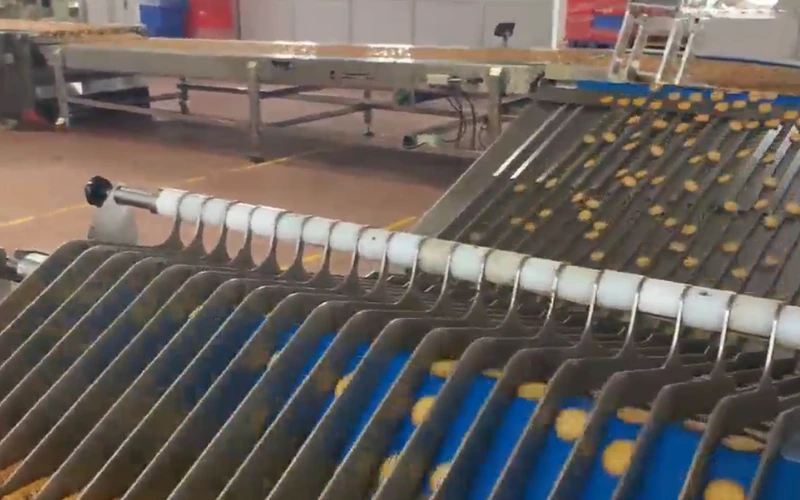
Gentle Handling Systems: Specialized conveyors and robotic arms prevent biscuit breakage, with documented cases showing reductions from 7-8% down to under 0.5%
Vision Inspection: AI-powered cameras ensure 100% quality control before packaging
PLC Synchronization: A central Programmable Logic Controller ensures every machine works in perfect harmony to maximize Overall Equipment Effectiveness (OEE)
→ Explore our Biscuit Line Integration Services for technical details
Core Technology Comparison

Flow Pack Wrappers (HFFS) vs. Vertical Form-Fill-Seal (VFFS)
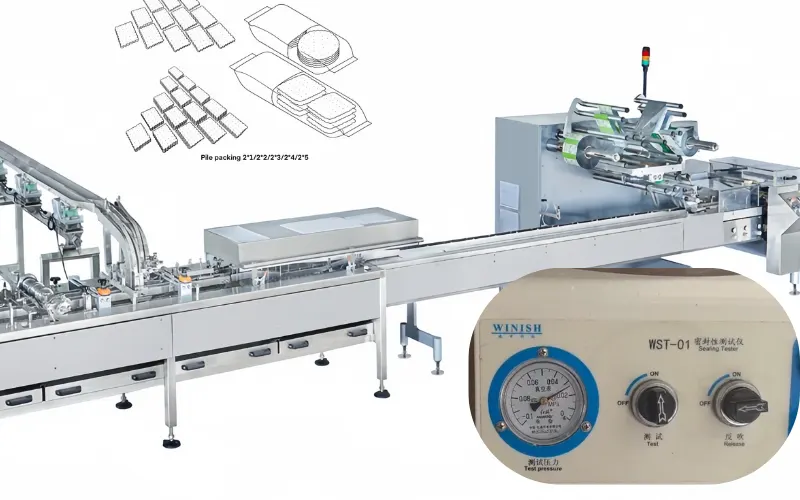
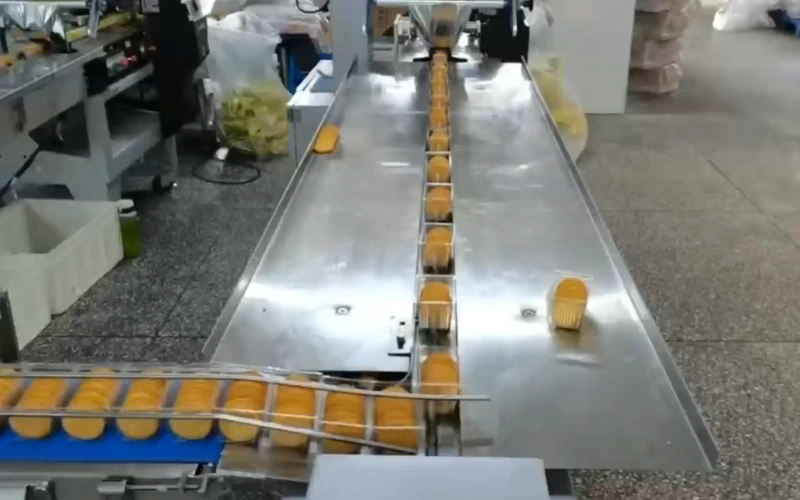
For fragile, solid products like biscuits, a Horizontal Form-Fill-Seal (HFFS) machine, or flow wrapper, is the industry standard. VFFS machines, which drop products using gravity, are unsuitable as they would cause significant breakage.
| Aspect | Flow Pack Wrapper (HFFS) | Vertical Machine (VFFS) |
|---|---|---|
| Speed | 200-300+ packages/minute | 100-180 packages/minute |
| Best For | Solid, fragile items like biscuits, crackers, and bars | Loose, granular, or liquid products (chips, coffee, powders) |
| Footprint | Moderate to large (linear) | Compact (vertical) |
| Cost | $50,000 - $250,000+ | $40,000 - $200,000 |
Sealing Technology: Rotary vs. Box Motion
Rotary Jaws: Offer the highest speed (300+ PPM) at a lower cost, ideal for standard films and high-volume production
Box Motion Jaws: Provide superior, hermetic seal quality essential for Modified Atmosphere Packaging (MAP) and newer, sustainable paper-based films
→ Get Detailed Technical Comparisons in Our Packaging Technology Hub
Implementation Timeline: What to Expect

A full automation project is a strategic partnership managed according to PMI PMBOK standards for quality and accountability:
Phase 1: Discovery & Design (4-8 weeks)
On-site assessment and detailed line layout design
Equipment selection, quotation, and ROI finalization
Project planning and timeline agreement
Phase 2: Manufacturing & Factory Acceptance Test (8-16 weeks)
Equipment manufacturing at our ISO 22000 certified facility
Your team witnesses the line running with your products
Initial operator training begins
Phase 3: Installation & Integration (2-4 weeks)
Equipment installation during planned downtime
Electrical, pneumatic, and utility connections
Line integration and PLC synchronization
Phase 4: Commissioning & Handover (1-2 weeks)
Site Acceptance Test with your actual products
Performance validation and final optimization
Final operator training and official project handover
Future-Proofing Your Investment

The next generation of packaging lines is smarter, more sustainable, and more autonomous:
Sustainable Materials:
Modern machines must handle emerging eco-friendly materials, including paper-based films and recyclable mono-materials, which often require different sealing technologies.
Industry 4.0:
Full integration of IoT sensors enables real-time data collection for OEE monitoring, ensuring compliance with standards like ISO 22000 and providing complete traceability.
AI & Machine Learning:
AI-powered vision systems revolutionize quality control, while predictive maintenance algorithms forecast equipment failures, reducing unplanned downtime by up to 40%.
→ Stay ahead with our Future of Biscuit Packaging Report
Your Next Step: Get a Data-Backed Proposal
Stop guessing and start planning with facts. Schedule a Free Packaging Line Assessment with our engineering team. We'll analyze your current costs, throughput, and breakage to provide a personalized ROI forecast.
[Schedule My Free Assessment] [Download ROI Calculator Template]
About EverSmart Packaging Solutions
EverSmart is a global leader in food automation solutions with over 200 successful installations across 15 countries. Our ISO 22000 certified facilities and two decades of specialized experience in biscuit and snack automation ensure we deliver proven, reliable solutions with measurable ROI.
Ready to transform your packaging operation? Contact our automation experts today.

Ready to start your journey toward a customized solution? Contact me directly on WhatsApp to begin the conversation.