How Much Is a Biscuit Production Line? 9 Key Factors That Determine Its Cost
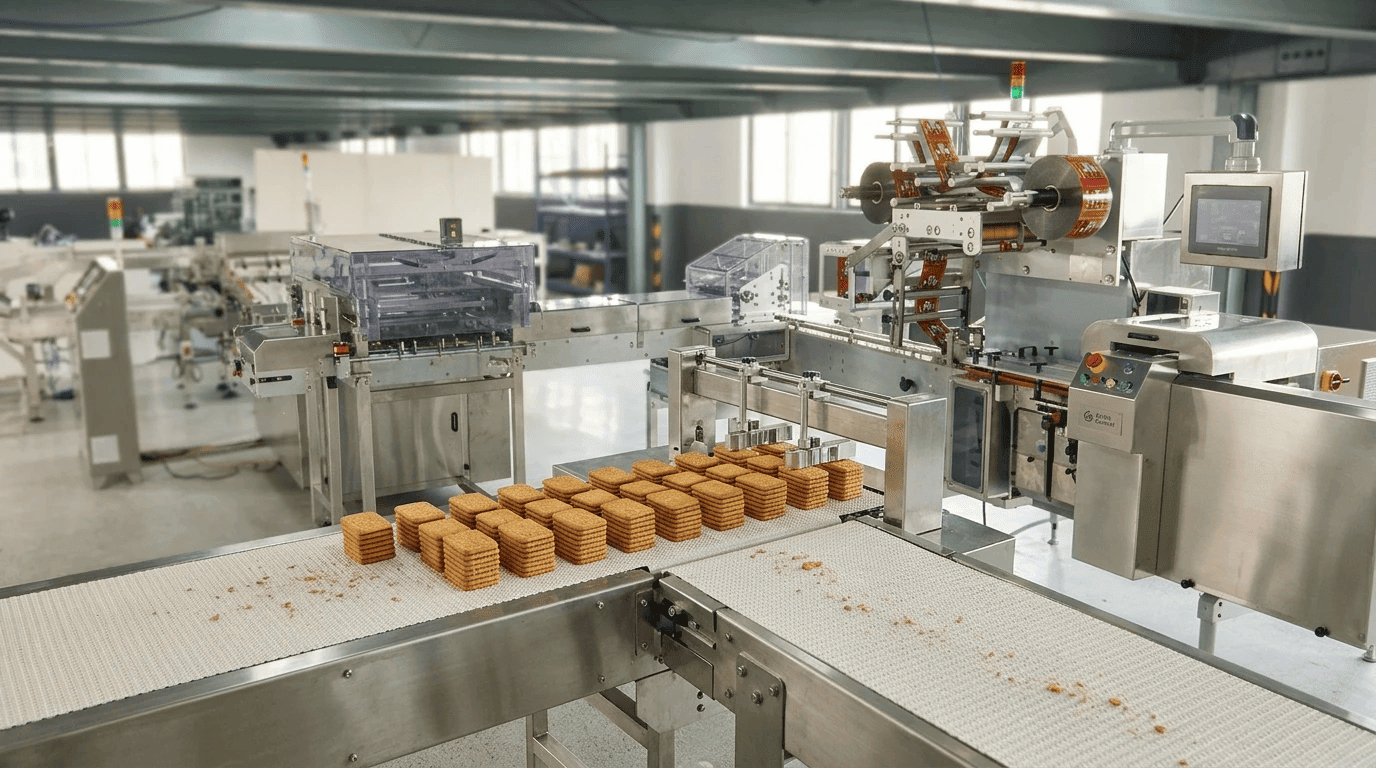
Procurement teams evaluating a biscuit production line frequently receive multiple quotations whose totals diverge so substantially that a misinterpretation of the specification appears to be the only plausible explanation. In most cases, however, the discrepancy reflects no such error. Each supplier has priced a materially different system, and the quotations are seldom itemized in a manner that permits direct, line-by-line comparison. A biscuit production line has no standard price; its cost is determined by the configuration of the system as a whole, and nine principal factors govern the final investment.
The range runs from a modest outlay for a compact semi-automatic setup to a major capital project for a fully automatic plant with silos and multi-lane packing. The nine factors behind that spread are capacity, automation, oven design, forming method, packaging, feeding, batching, building constraints and energy. Compare configurations, not totals.
A line sized too large wastes money just as surely as one sized too small, and automation earns its cost only where it removes real labour. The oven and the forming method set product quality, while packaging, feeding and silo batching have to keep pace with the front end. Your building and long-term energy use shape the real cost more than the equipment invoice does.
Why a Biscuit Production Line Price Is Never a Single Number
A biscuit line is priced as a system, not picked from a catalogue. You can reach the same nominal output with a short direct-fired oven and manual packing, or with a long hybrid oven, automatic feeding and robotic case packing. Different scope, different quote. Most of the spread comes from scope decisions a supplier made on your behalf because the inquiry left them open. One supplier assumed two shifts and a single product. Another assumed three shifts and a changeover between crackers and cookies. A third added a flour silo because "everyone needs one at that capacity." Each guess is reasonable, and none of them is your plan.
So line the quotes up factor by factor before looking at any total. The table sets out the nine factors and the decision you need to make on each.
| FACTOR | WHAT DRIVES THE COST | QUESTION TO SETTLE BEFORE QUOTING |
|---|---|---|
| Capacity | Band width, oven length, number of lanes | What output per hour do your sales really need? |
| Automation | Controls, sensors, robots, recipe management | Which manual jobs must disappear, and which can stay? |
| Oven | Heating method, zones, band type, insulation | Which biscuits must it bake well? |
| Forming | Machine type matched to dough | Which dough types will you run? |
| Packaging | Speed, format, stacking, buffering | What pack format, and how many packs per minute? |
| Feeding | Conveying, dosing, dust control | Manual tipping or automatic ingredient transfer? |
| Silo batching | Storage volume, weighing accuracy, software | Bulk deliveries now, or within a few years? |
| Plant layout | Columns, length, ceiling height, utilities | Do suppliers have your building drawings? |
| Energy | Gas or electric load, maintenance, spares | What do power and gas cost on your site? |
Where two quotes answer even three of these questions differently, their totals mean nothing until the scopes match.
Sizing the Core Line: Capacity, Automation and the Oven
These three decisions come up in every plant, whatever it bakes, and between them they usually account for the bulk of the investment. They also constrain each other. Oven length depends on capacity and bake time; the automation level depends on how many people you can staff per shift; and capacity rests on a sales forecast that is rarely as firm as it looks on a spreadsheet.
Capacity and biscuit production line cost per capacity
Capacity is normally quoted in kilograms of finished biscuit per hour, and it comes down to two physical dimensions: the width of the oven band and the length of the oven. A wider band carries more biscuits side by side. A longer oven lets the band move faster while each piece still gets the bake time the recipe needs. Both add steel, burners, insulation and floor space, so cost rises with capacity, though not in a straight line. Controls, the mixer, the forming head and commissioning cost roughly the same whether the band is narrow or wide. That is why biscuit production line cost per capacity usually falls as lines get bigger.
The falling cost per kilogram tempts people to oversize, and the arithmetic holds only if the line actually runs full. An oversized line that runs one shift, or stops for half a day at every product change, still heats a long oven, still turns large motors and still ties up capital. An oven burning gas to hold temperature while it waits for dough is the factory version of a truck idling in the yard. Undersizing fails the other way: it caps your sales. Adding capacity later usually means a second line rather than a longer oven, because neither the building nor the forming section was planned for it.
Size from the week, not the year. Work out the shift pattern you can realistically staff, the number of products you will run and how often you will switch between them. Each changeover (new cutting rolls, a new recipe, a new pack format) costs output time, and on lines running many short campaigns those losses add up. Divide the volume you can actually sell by the hours the line will really produce, add a growth margin you can defend, and that is your target capacity.
Then ask suppliers to quote that figure for your heaviest product, not their most flattering one. A thin cracker and a thick cookie give very different kilograms per hour on the same oven.
Is a higher automatic biscuit making machine cost worth it?
Only where it removes labour you would otherwise pay for, or errors you cannot afford. A higher automatic biscuit making machine cost pays back when it replaces repetitive jobs across several shifts, such as dough handling, tray loading or case packing. It does not when it adds complexity your team cannot maintain, or when the work it replaces is cheap and easy to staff.
Think of automation in layers. The base layer is the line control: a programmable logic controller (PLC), an industrial computer that runs motors, burners and conveyors to set parameters, plus a touchscreen for operators. Almost every modern line has this. Above it sit recipe management, automatic weight checking and closed-loop control of oven zones. The top layer brings automatic ingredient feeding, robotic pick-and-place for packing and data links to a plant-wide system. Each layer costs more, and each moves work from the production floor to the maintenance workshop.
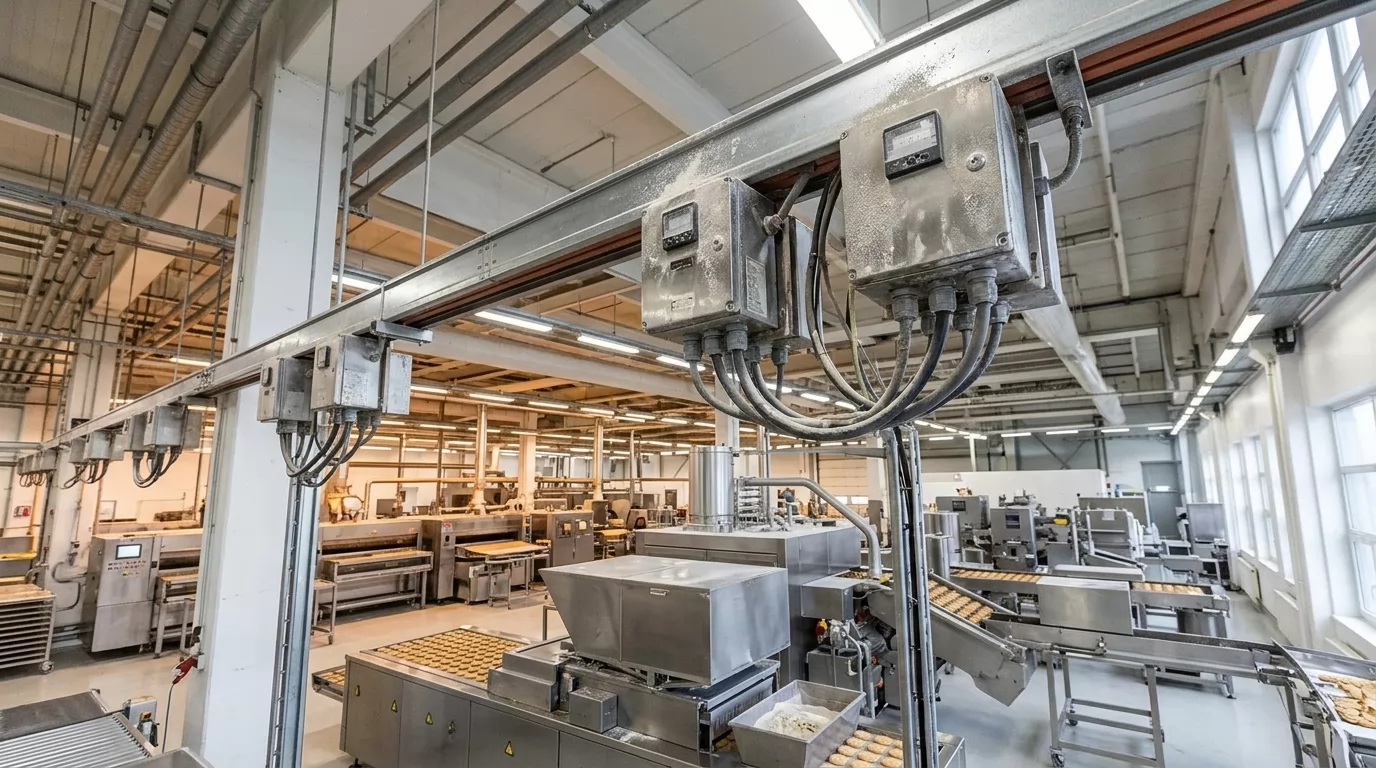
Quotes rarely spell that shift out. A robotic packing cell can replace several packers per shift, but someone has to recover it after a jam, recalibrate its vision system and keep its spare parts in stock. With nobody on site who can do that, and hiring hard in your area, the robot will stand still longer than the people it replaced ever did. Weigh automation against three local facts: what an operator costs per year including overheads, how easily you recruit and keep line staff, and the electrical and mechanical skill your maintenance team has today. A semi-automatic line with a steady, trained crew can outproduce a fully automatic one waiting for a service engineer.
Oven length and price alone tell you little
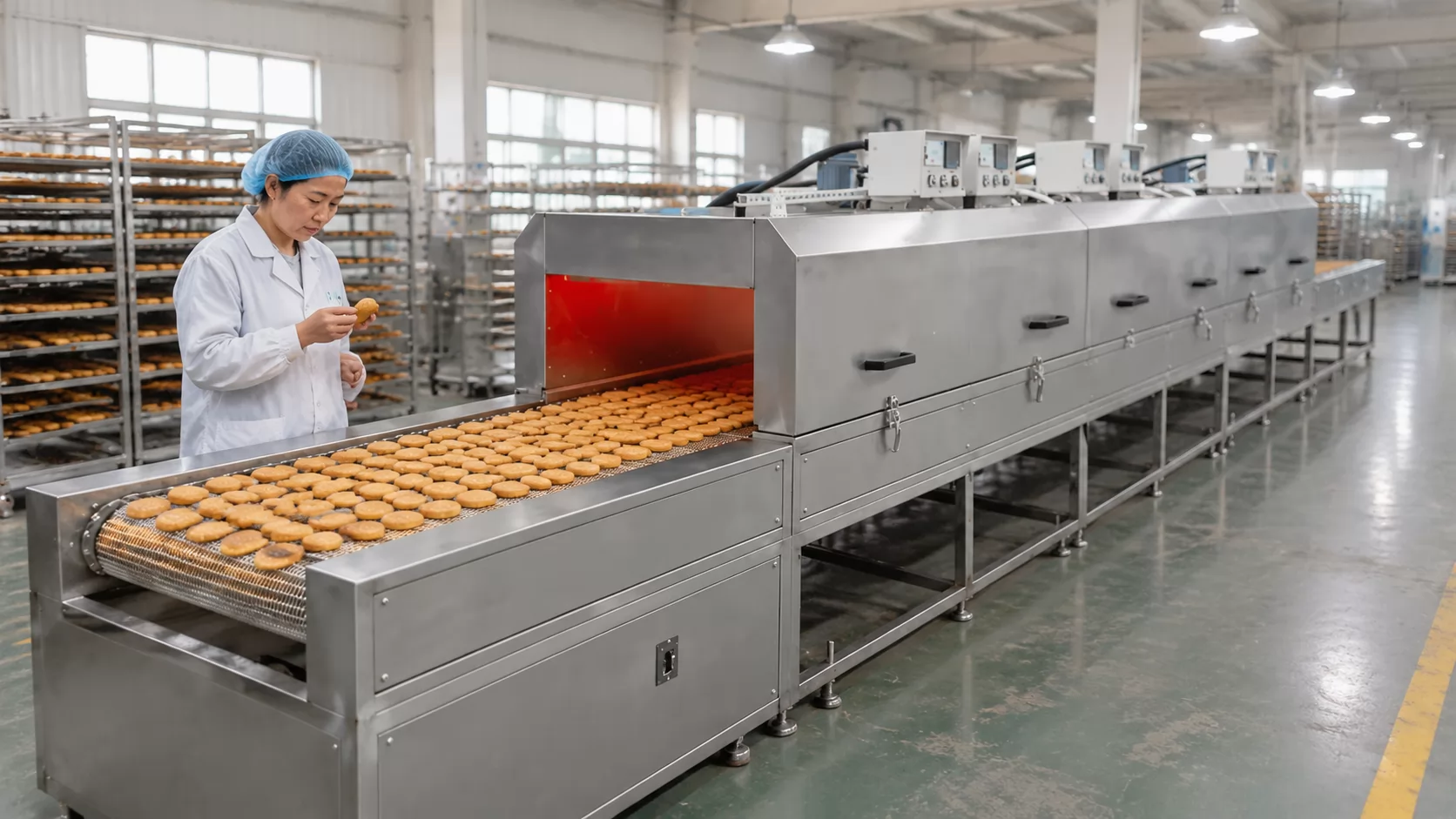
Colour, texture, moisture and how closely one biscuit matches the next across the band width are all decided in the oven. Two ovens of equal length and similar price can bake very differently. What counts is how heat reaches the dough piece, how many independently controlled zones there are, and how the band carries the product.
Start with the heating method. A direct gas-fired oven has burners inside the baking chamber, so heat reaches the product quickly and the oven responds fast to changes; it is common for crackers and hard biscuits, which need strong initial heat to build structure and lift. An indirect oven keeps combustion gases away from the product. The cyclothermic oven is one type: hot combustion gases circulate through radiator tubes above and below the band, and the product bakes mainly by radiant heat in a clean chamber. Convection ovens use fans to move heated air across the product, which helps colour and drying. Electric ovens give fine temperature control and suit sites without a reliable gas supply, though running cost then depends heavily on local power prices. Many larger lines are hybrids, with a direct-fired front section to set the structure followed by convection zones for colouring and drying. A hybrid usually costs more to build but lets one oven handle a wider product range.
Next, the band. Solid steel gives a flat, smooth base and suits short doughs, soft cookies and deposited products that would sink into a mesh. Wire mesh lets moisture escape through the base and leaves the familiar pattern on the underside of many crackers and hard biscuits. Some products run on either; others cannot. If your range covers both, raise it early, since the choice affects the oven frame, the transfer points and the cleaning routine.
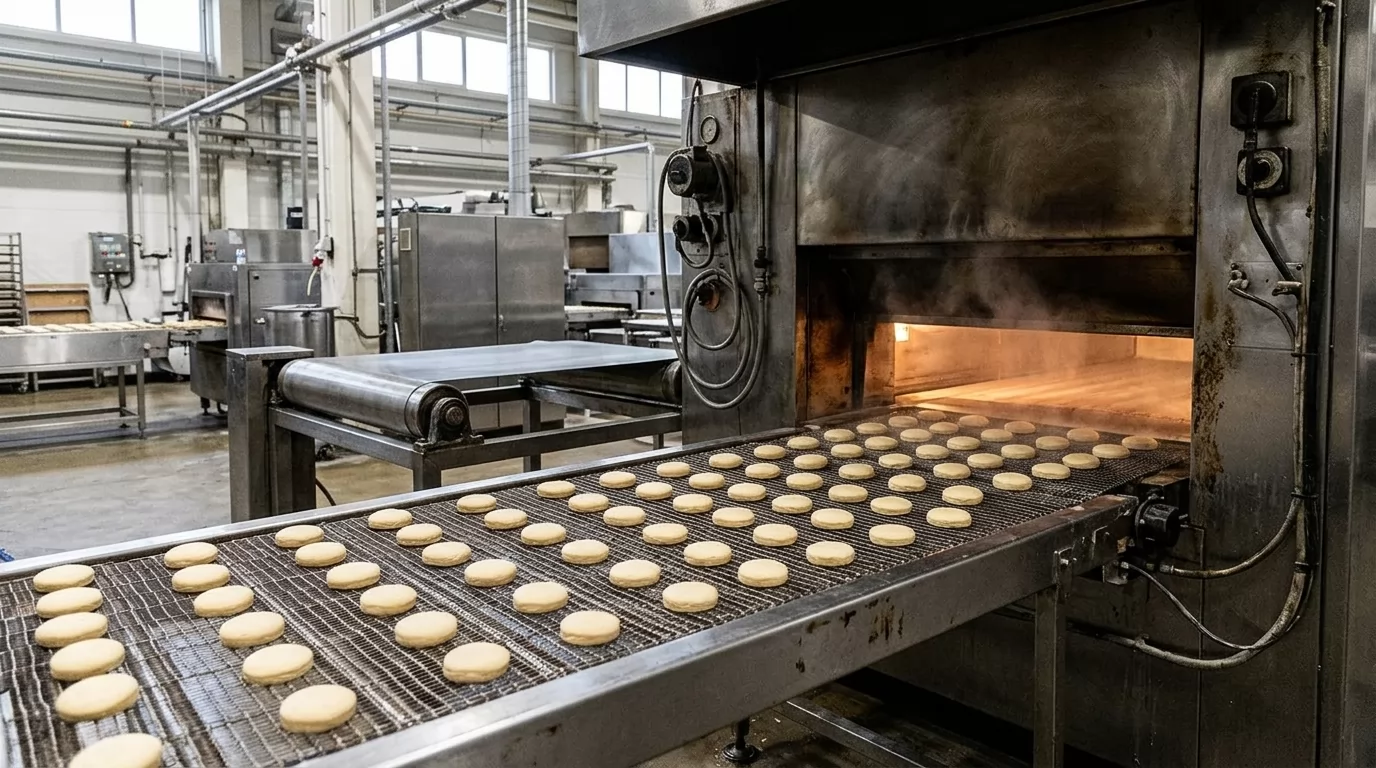
In oven quotes, look for the number of burners and control zones, insulation thickness, band type and its tracking system, and how temperature is measured and controlled in each zone. Length per euro or per dollar is a poor proxy for any of them.
Which Forming and Packaging Choices Fit Your Biscuit Type?
Here your recipe decides, not your budget. The forming machine has to suit how your dough behaves, and the packaging line has to match the oven's output. A wrong forming choice sends every biscuit out of the oven with the wrong shape or weight; a wrong packaging choice leaves a fast oven feeding a bottleneck. Neither is cheap to correct after installation.
Matching forming technology to your dough
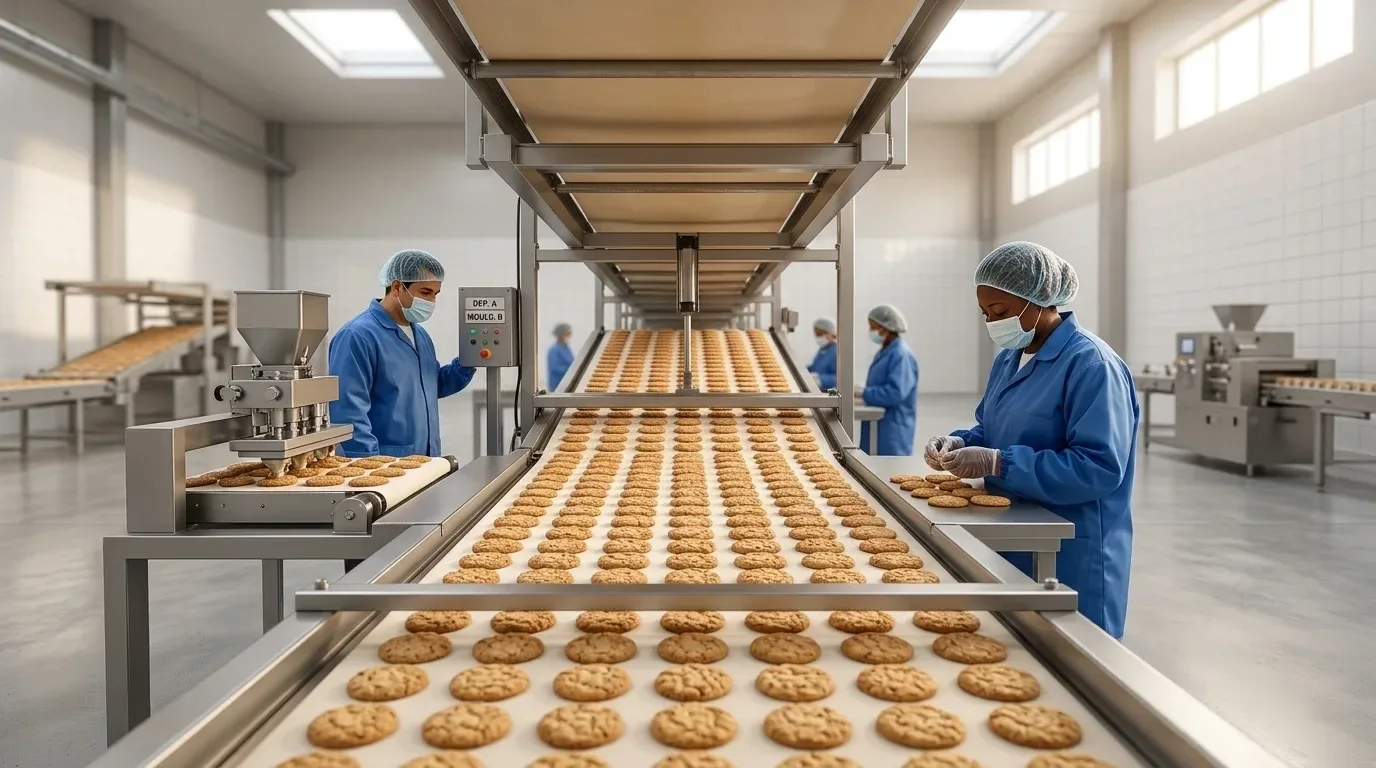
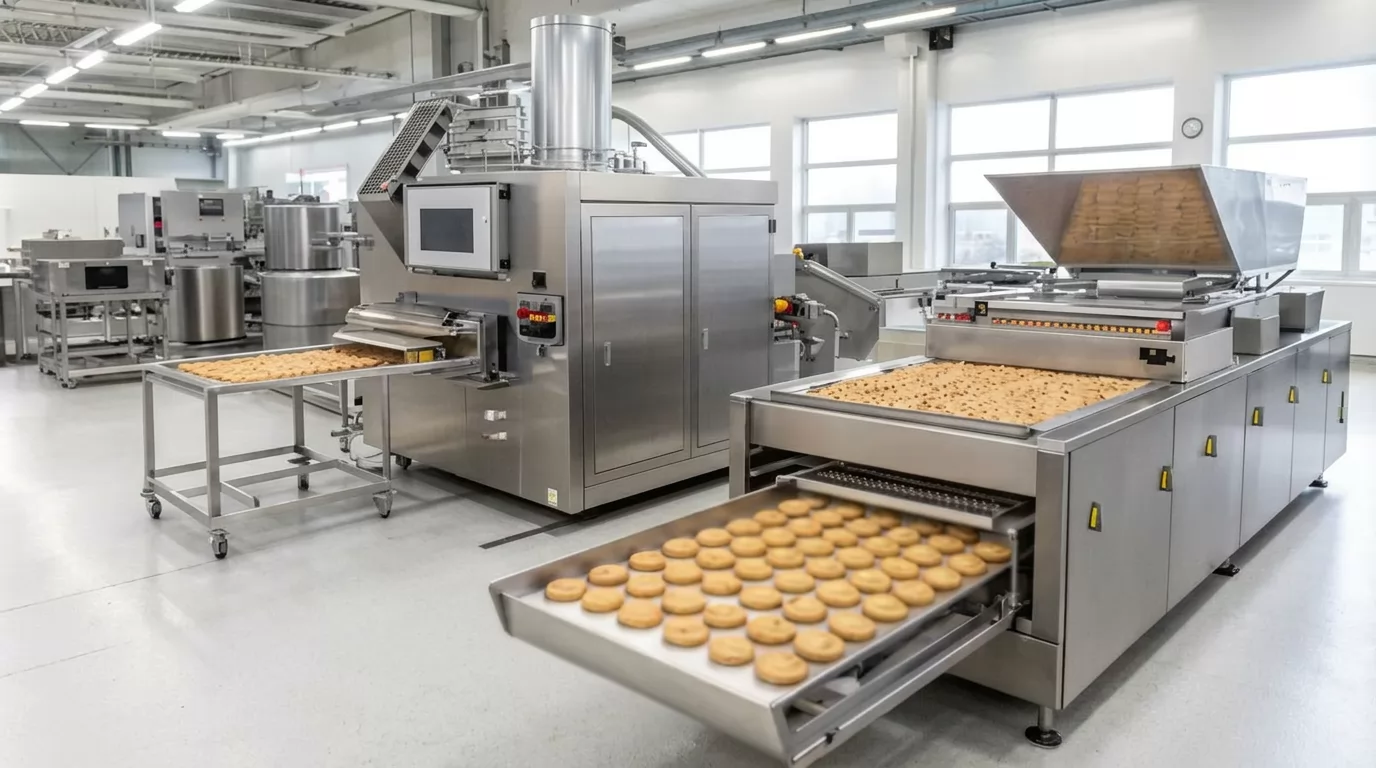
Biscuit doughs fall into a few broad families, each with a forming method that suits it. Hard and semi-sweet doughs are developed and elastic. They are sheeted through gauge rolls, sometimes laminated, then cut by a rotary cutter, a pair of rolls that stamps shapes out of the moving sheet. Short doughs are crumbly, with little gluten development, and would tear in a sheeter, so they go through a rotary moulder: dough is pressed into engraved cavities on a roll and released as formed pieces onto a belt. Wire-cut doughs carry chunky inclusions such as chocolate pieces or nuts; they are pushed through dies and sliced by a moving wire. Soft batters and piped doughs are deposited through nozzles.
The usual pairings are below. A single-product plant generally needs one forming method, while a plant running a mixed range often needs two forming stations ahead of the same oven, which adds cost and length.
| DOUGH TYPE | TYPICAL FORMING METHOD | TYPICAL BISCUIT EXAMPLES |
|---|---|---|
| Hard / semi-sweet | Sheeting, gauging, rotary cutter | Crackers, Marie, Petit Beurre |
| Short / soft | Rotary moulder | Shortbread, digestives, embossed tea biscuits |
| Wire-cut | Wire-cut extruder | Chocolate chip cookies, oat and nut cookies |
| Deposited | Depositor | Butter cookies, soft batter drops |
A range that sits in one row needs one forming station. One that spans two rows needs a second machine in the budget, not hope that one will stretch.
A poor match shows up downstream. Forced through a sheeter, a short dough cracks at the edges. Fed with dough that is too wet, a moulder leaves pieces stuck in its cavities, and the ones that do release vary in weight. Uneven pieces bake unevenly, because a heavier piece needs more heat than its neighbour on the same band, and then the packing machine rejects stacks that are too tall or too light. A single mismatch at the forming head can cost yield at three later stages. Send suppliers your actual recipes with water content and fat levels, and ask for trial bakes on their forming equipment if they offer them.
Packaging has to keep pace with the oven
Many lines lose their capacity at the packaging end without anyone noticing. The oven turns out a continuous stream of biscuits, while most wrappers work in packs per minute, and converting one to the other depends on how the biscuits are grouped. A slug pack of round biscuits on edge, a tray pack, a pillow pack of loose pieces and a family carton each need their own feeding and stacking system ahead of the wrapper. If packaging cannot absorb the oven's full output, you either slow the oven and lose the capacity you paid for, or run biscuits to waste.
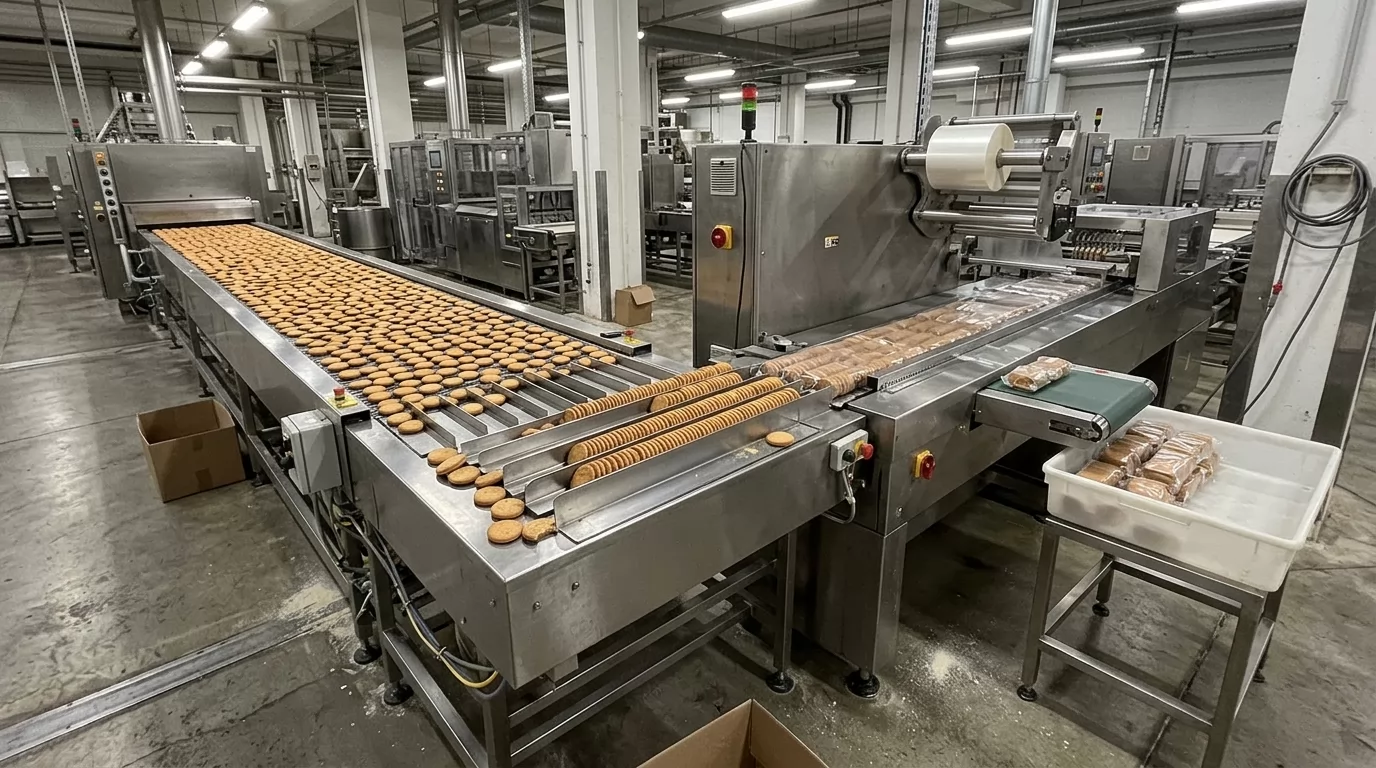
So plan the packaging layout alongside the oven. Ask how biscuits will be cooled, aligned and fed into lanes, how many wrapping machines the output requires, and what happens when one wrapper stops. That last question is where buffering comes in. A buffer, such as an accumulation table or storage conveyor, holds biscuits briefly so a short stop at the wrapper does not force the oven to stop, and ovens handle stopping badly: a band that halts with product inside burns that product. Buffering takes floor space and money, but it shields the most expensive part of the line from the cheapest interruptions.
Automatic Feeding and Silo Batching Pay Off at Scale
At small volumes, people with sacks and a scale handle ingredients well enough. As output grows, that approach starts costing more than the equipment that would replace it, in wages, dosing mistakes and flour dust. These systems are also the hardest to add later, because they reach into the building itself.
Automatic ingredient feeding
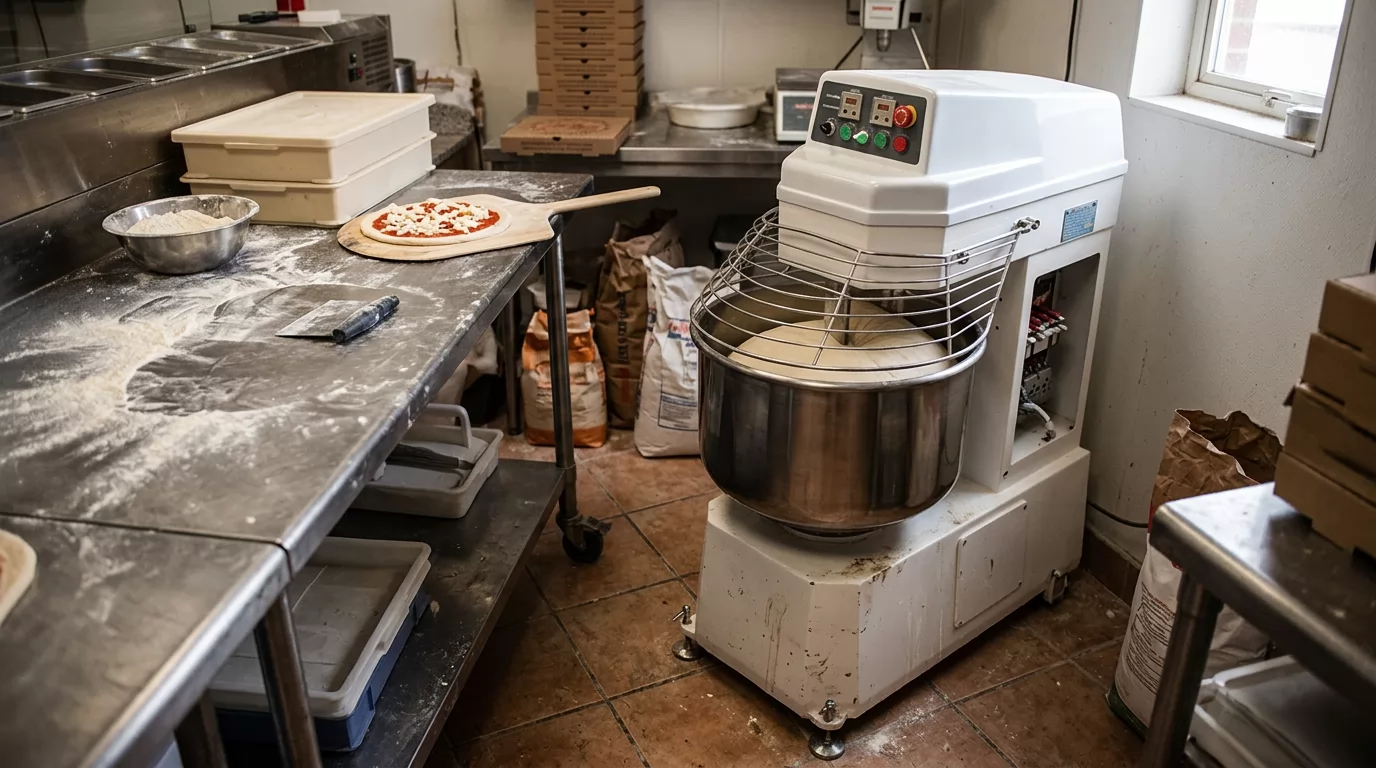
Manual tipping means operators lifting sacks, cutting them open and emptying them into a mixer or hopper, batch after batch, on every shift. At volume that is heavy, repetitive work, and it breeds weighing errors: a sack counted twice, a minor ingredient forgotten, a scale misread at the end of a long night. Every error lands in a mixer full of dough, which is either corrected at the cost of time or baked at the cost of product.
Then there is dust. Tipping flour releases fine particles that settle on surfaces and hang in the air. Dust collects where cleaning is difficult, which makes it a hygiene problem, and airborne flour can irritate the airways of people breathing it daily; fine organic dust in enough concentration can also be combustible. Automatic feeding moves ingredients through closed pneumatic or mechanical conveyors and weighs them with loss-in-weight or gain-in-weight systems, cutting both dust and handling. In the EU, closed conveying and storage of flour usually also bring an explosion-risk assessment under the ATEX directives into the project scope, so raise it with suppliers before the layout is fixed.
A silo is more than a big tank
A silo batching system stores bulk ingredients, usually flour and sugar and sometimes fat or syrup in heated tanks, and weighs out each recipe automatically. The tank is only the visible part. The value lies in weighing accuracy, batch records and stock control: every batch is logged with what went in and when, which supports traceability if a raw material is ever recalled, and stock levels can be read without anyone climbing a ladder.
Planning silos before an expansion is far cheaper than retrofitting them after one. They need foundations, access for bulk tankers, conveying routes into the mixing room and often a hole in an outside wall or roof. If you expect to move from sack deliveries to bulk within a few years, ask suppliers to leave space, structural loads and conveying connections in the first design, even if the silos come later.
Why Does Your Building Change the Industrial Biscuit Making Plant Price?
The equipment has to work around the limits your building sets. Column positions, available length, ceiling height, floor loading and utility connections all change the engineering, and engineering changes the price. Two plants buying identical biscuit capacity can pay quite different amounts because one has a clear rectangular hall and the other has columns every few metres.
Layout, columns and ceiling height
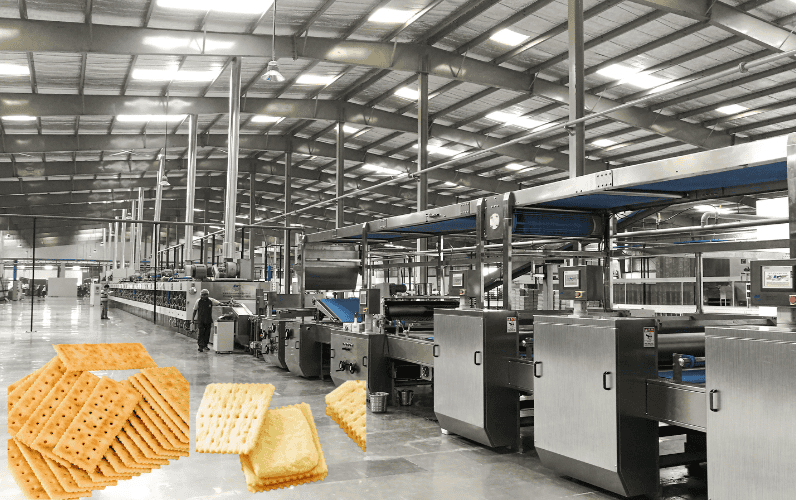
Biscuit lines are long. The oven alone often runs for tens of metres, and the full line from mixer to case packer can be much longer, a clear run few buildings offer. Where the space isn't there, the line has to turn, and each turn needs a transfer conveyor, extra controls and room for operators to reach both sides. Columns are the usual culprit. No column can pass through an oven, so a grid that doesn't suit the oven length forces a shorter oven, a bent line or structural work on the building.
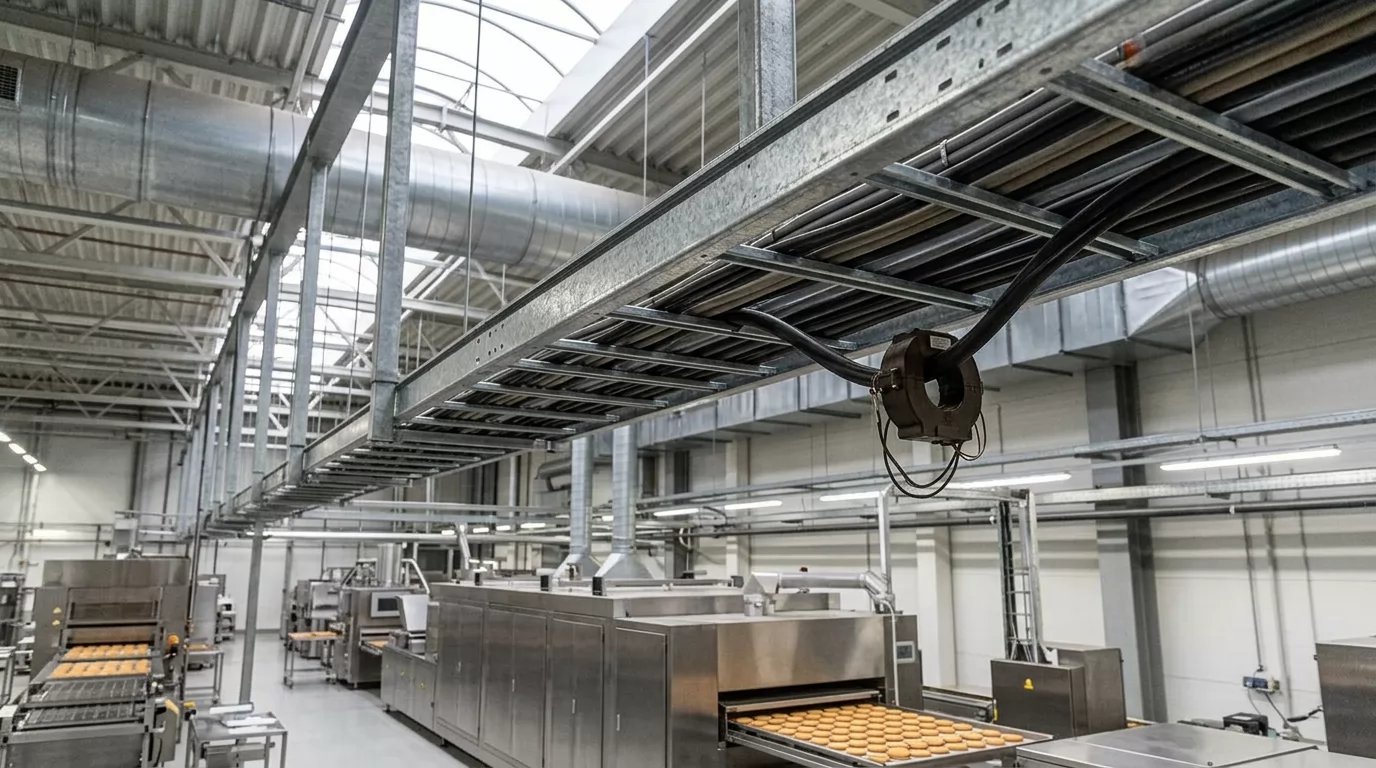
Height counts as well. Mixers, ingredient hoppers, exhaust ducts and the oven flue all need vertical space, and many ovens need clearance above them for maintenance. Utilities add their own limits: gas supply capacity, electrical connection size, compressed air, water and drainage for cleaning. If the incoming supply cannot carry the line's connected load, the grid operator's upgrade may take longer than building the line.
The line gets designed around the building, never the reverse. Send suppliers a scaled plant drawing showing column positions, wall openings, ceiling height and utility entry points. Without one, every quote assumes an empty rectangle, and the real layout cost turns up later as a variation order.
Cheap equipment rarely means low running cost
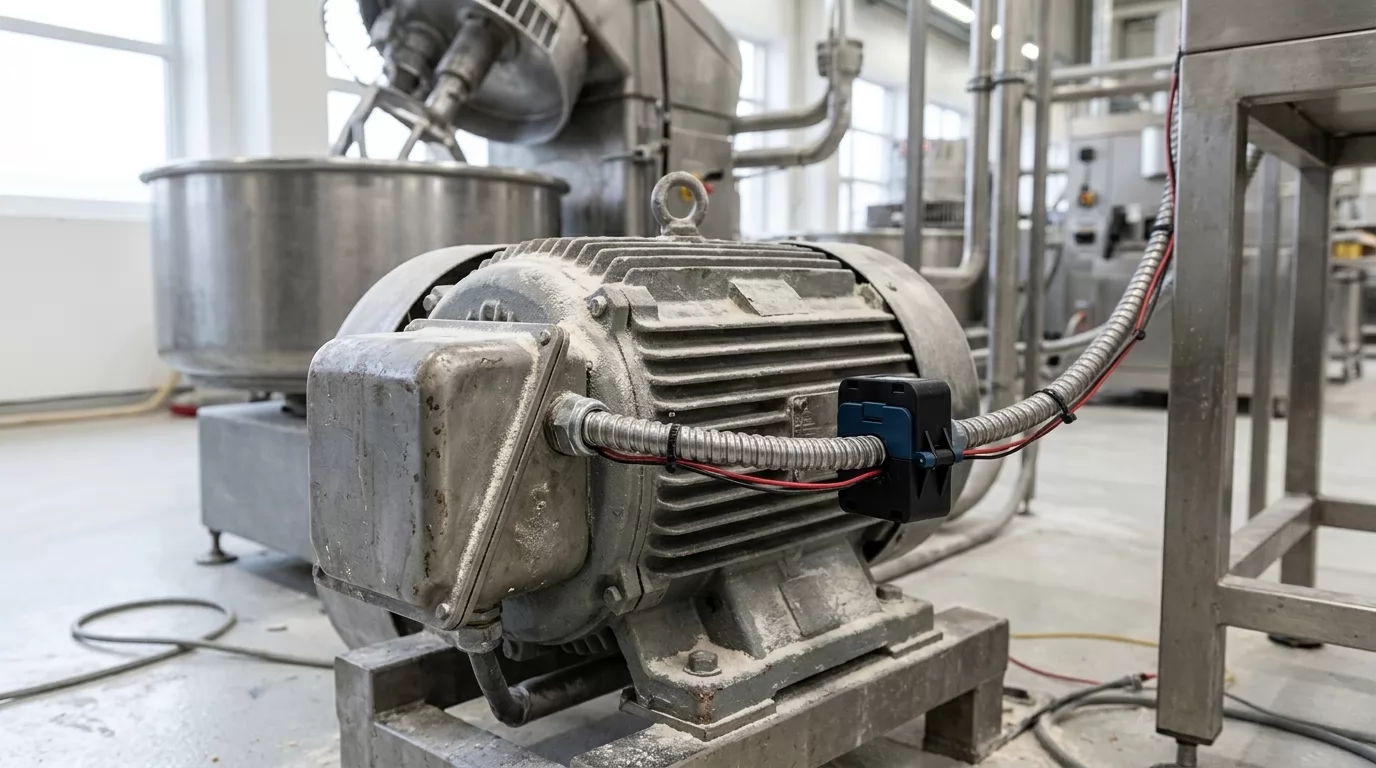
You pay the purchase price once. Electricity or gas, spare parts, wear items, cleaning time and maintenance labour you pay every month for the life of the line, which in a well-maintained plant typically runs well beyond a decade, and over that span running costs usually outweigh the original invoice. Thin oven insulation leaks heat through the walls every hour the oven runs. A motor sized without margin runs hot and fails early. A poorly tracking band wears its edges and needs replacing sooner.
Total cost of ownership (TCO) is the fairer comparison: the purchase price plus every cost of installing, running, maintaining and eventually decommissioning the equipment. Ask each supplier to state installed electrical power and expected gas consumption per section, the recommended spare parts list with prices, wear items and their expected replacement intervals, and routine maintenance hours per week. Combine those figures with your local energy prices and you can estimate running cost per tonne of biscuits. A line that costs more up front and less per tonne often comes out cheaper within a few years.
Settle These Points Before You Send an RFQ
Suppliers fill every gap in an inquiry with their own assumptions, and those assumptions are what make three quotes impossible to compare. A cleaner brief brings back closer quotes. Go through these questions with your production and engineering leads before the first request goes out.
Is every biscuit type listed, with its full recipe and the dough family it belongs to?
Do you know the target output per hour for your heaviest product, and the shift pattern you can staff?
Can you send a scaled plant drawing with columns, ceiling height and utility entry points?
Have you decided which jobs automation must remove and which can stay manual?
Is the pack format fixed, and do you know the pack rate it implies?
Have you named the compliance requirements for your market and your expansion plans for the next few years?
Be specific on compliance. A line going into the EU needs CE marking under the Machinery Directive 2006/42/EC, which the Machinery Regulation (EU) 2023/1230 replaces from January 2027, and has to meet the food-contact material requirements of Regulation (EC) No 1935/2004. Other markets have their own equivalents. Naming the one that applies at the start avoids a redesign late in the project.
Common Questions on Biscuit Line Costs
How much does a biscuit production line cost for a small plant?
Anywhere from a compact semi-automatic setup to a short automatic line, depending mainly on scope. A minimal workable line usually has a mixer, one forming machine matched to your dough, a compact oven, a cooling conveyor and manual or semi-automatic packing.
Can I start semi-automatic and upgrade later?
For some modules, yes. Robotic packing, extra wrappers and recipe software can usually be added later. Oven length, building layout, silo foundations and power supply need planning on day one.
What is the typical lead time for an automatic biscuit production line?
Often several months, commonly around three to six for a customised line before shipment, plus installation and commissioning. Custom forming tools, oven fabrication and the readiness of your own site tend to drive the schedule most.
Should I compare quotes on equipment price or total cost?
Total cost. Ask that every quote show installed power, gas consumption, spare parts, wear items, installation, commissioning, training and freight terms, so all the figures cover the same scope.
Get a Line Sized to Your Product and Plant
While you are still comparing suppliers, set the oven heating method, band type and packaging rate side by side before looking at any total. For a quote from EverSmart, send your recipes, target kilograms per hour and a plant drawing with column positions; the line will be configured around the balance between bake quality and running cost rather than the lowest invoice.

Ready to start your journey toward a customized solution? Contact me directly on WhatsApp to begin the conversation.