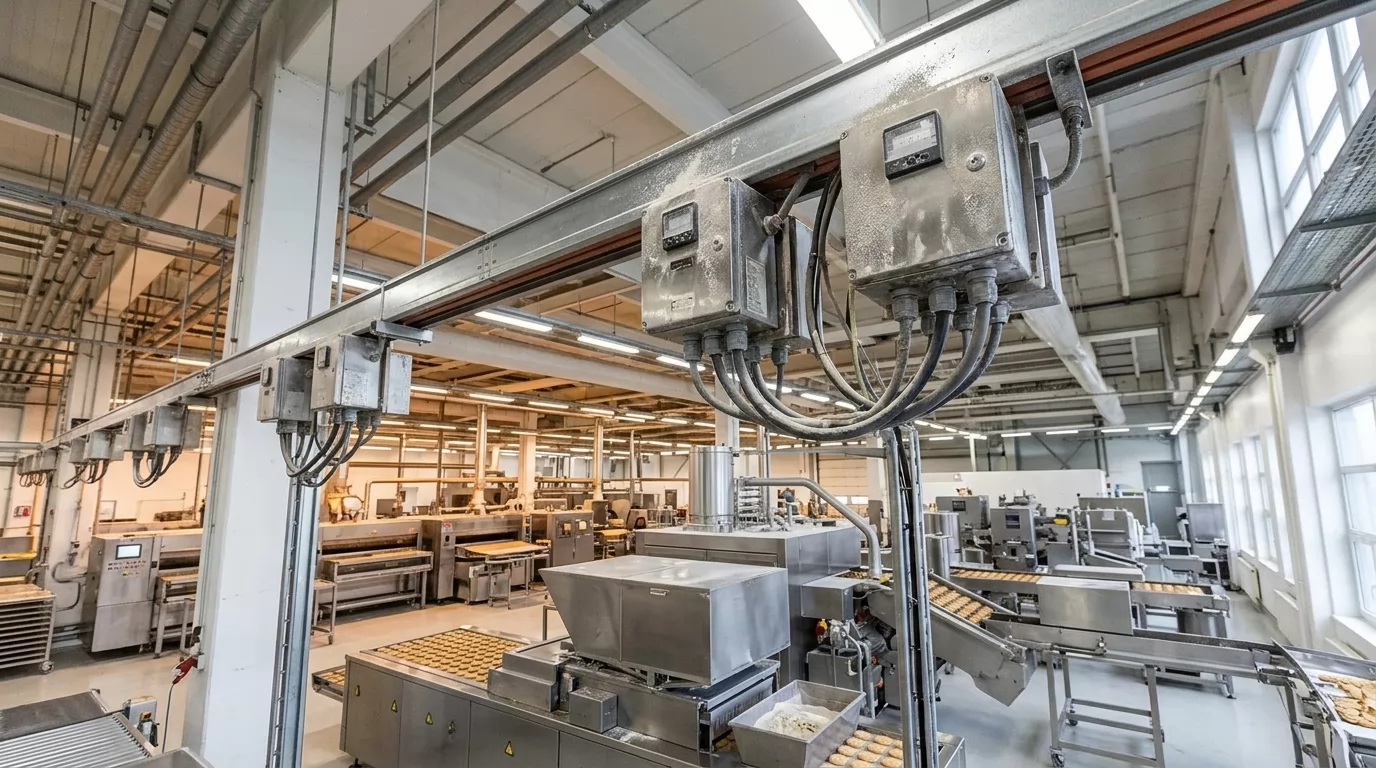
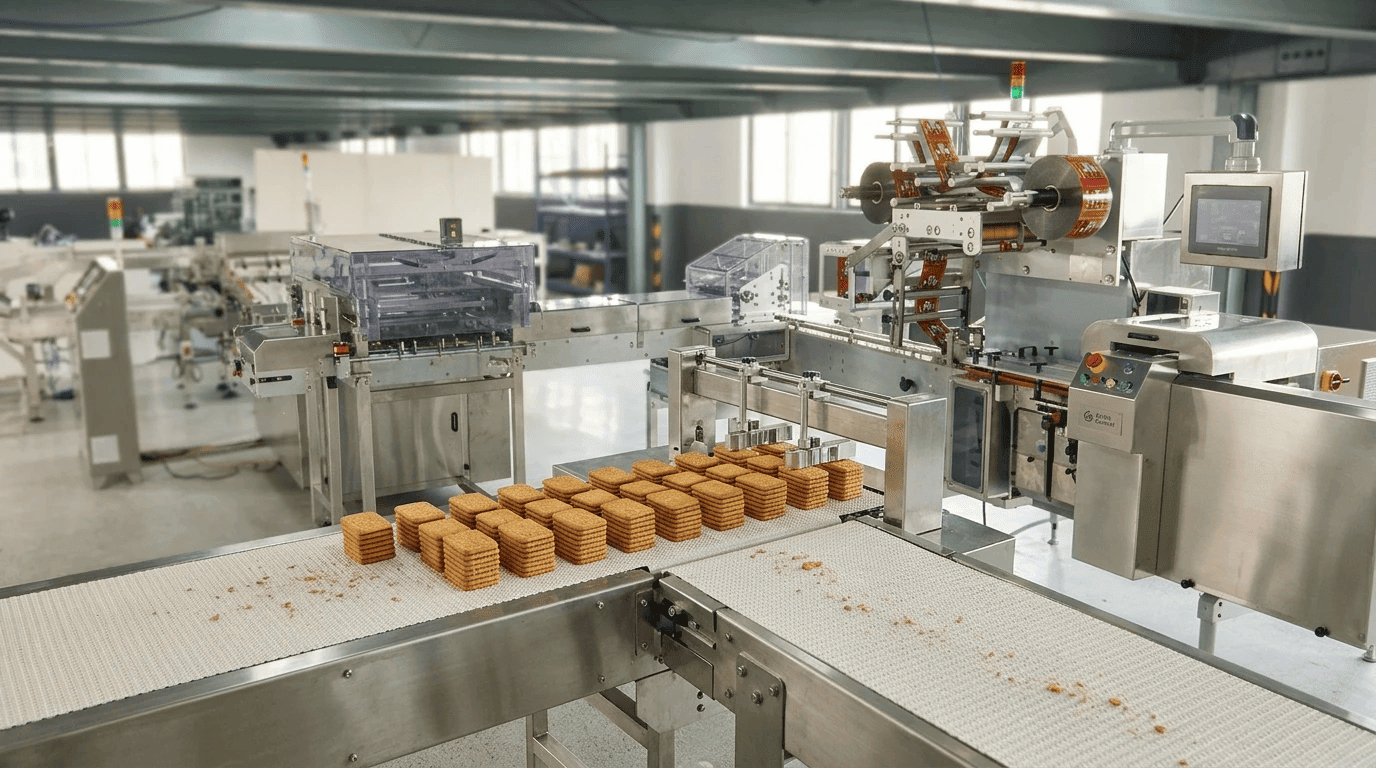
Biscuit Sorting, Stacking and Rejection: Keeping a High-Speed Packaging Line Running
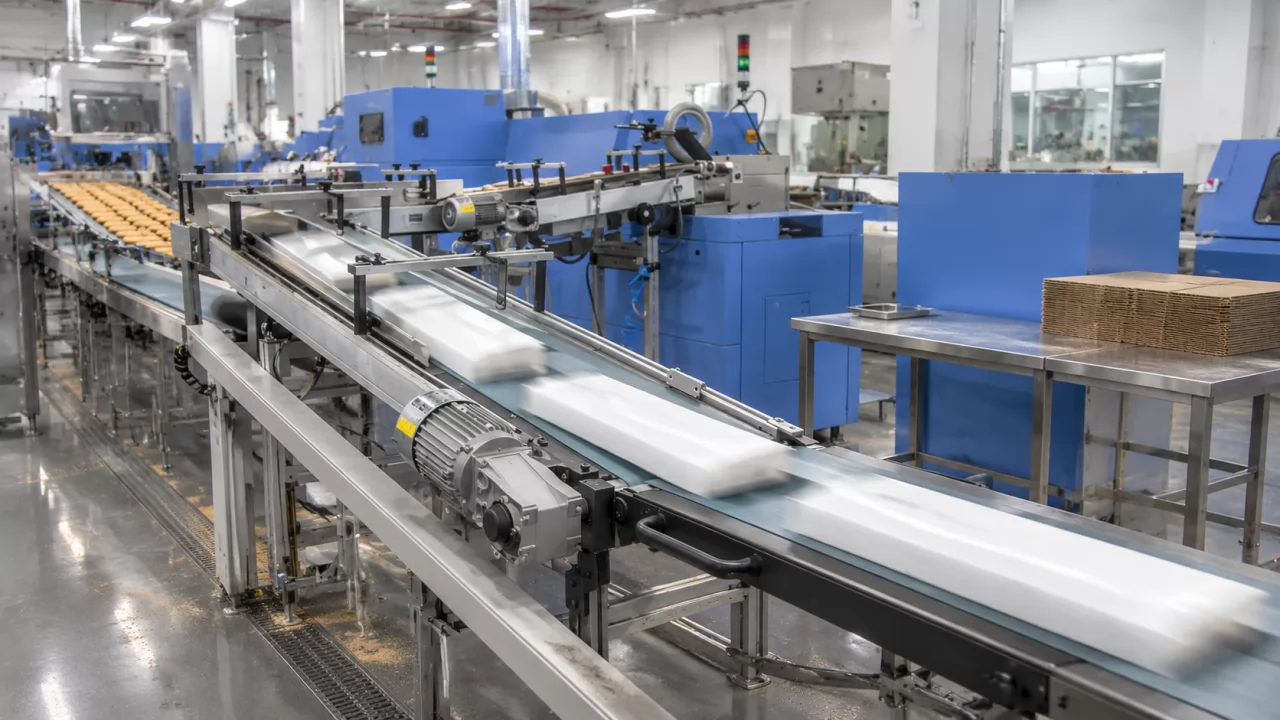
Europe's machinery rules change in January 2027. From 20 January 2027, Regulation (EU) 2023/1230 replaces the Machinery Directive 2006/42/EC, so safety files and control-system design on new lines will be checked against new requirements. The older problem remains. Much of the output lost on a biscuit line disappears between the oven and the wrapper, and an automatic biscuit sorting and stacking system is where you recover it.
Look upstream first: stacking and feeding cause more stoppages than wrapper speed does.
Specify behaviour: count accuracy, breakage handling and changeover time, not one throughput figure.
Vision needs muscle: rejection pays only if removal and stack refill keep pace.
Put compliance in the RFQ: EU 2023/1230 files and food-contact evidence.
Compare lifetime cost: total cost of ownership and integration scope, not the machine price alone.
Line Stoppages Usually Start Before the Wrapper, Not Inside It
On most biscuit lines, the flow wrapper stops because of what reaches its infeed: gaps, broken pieces, short stacks, shingled product. Its own speed is rarely the limit. Biscuits change in size, thickness and shape from one minute to the next, and every mechanical step after the oven has to absorb that change or stop.
Variation enters in several places. Oven temperature and humidity drift across the band, so edge lanes bake differently from centre lanes. Cooling conveyors that are too short leave product soft and prone to sticking. Chocolate enrobing, cream depositing and sandwiching add weight and height that vary with the depositor. Spread (how far the dough flows before it sets) changes with dough temperature and moisture. The biscuit that leaves the cooler is never quite the one in the specification.
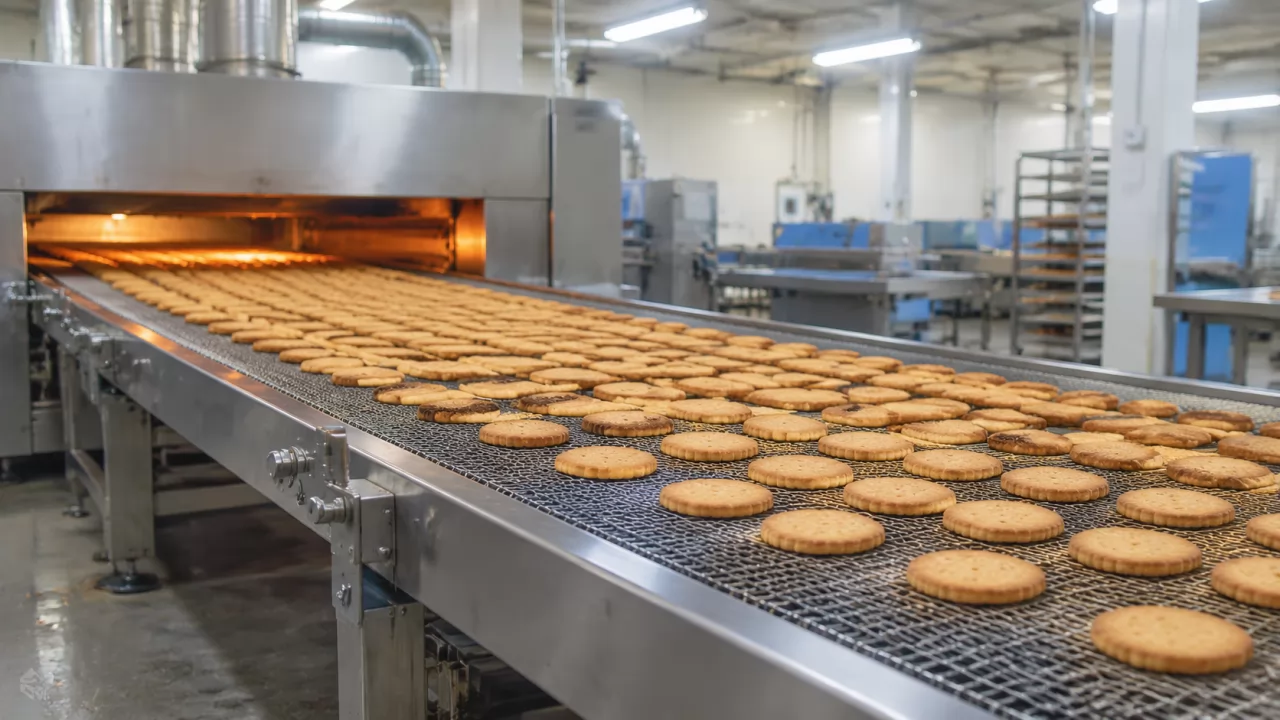
Then come lane problems. When some lanes are full and others thin, the stacker waits on its slowest lane. A broken biscuit in a stack causes a short count, a jam or a pack that QC will reject later. Each of these is minor alone. Repeated across a shift, they turn into micro-stops that operators clear by hand, and nobody records.
That is why output after the oven should be judged by OEE. OEE (Overall Equipment Effectiveness) is a measure that multiplies availability, performance and quality to show how much of the theoretical output a line actually delivers. A wrapper that runs fast between frequent short stops can score worse than a slower one that runs steadily. The aim of downstream automation is a steady, predictable feed. Peak speed is the wrong target.
How an Automatic Biscuit Sorting and Stacking System Turns Random Flow into Wrapper-Ready Stacks
Biscuits leave the cooler in rows, roughly aligned, with irregular spacing. The wrapper needs the opposite: a fixed number of pieces in a fixed format, delivered at fixed intervals. Everything between those two points is sorting and stacking, and it happens in a predictable order.
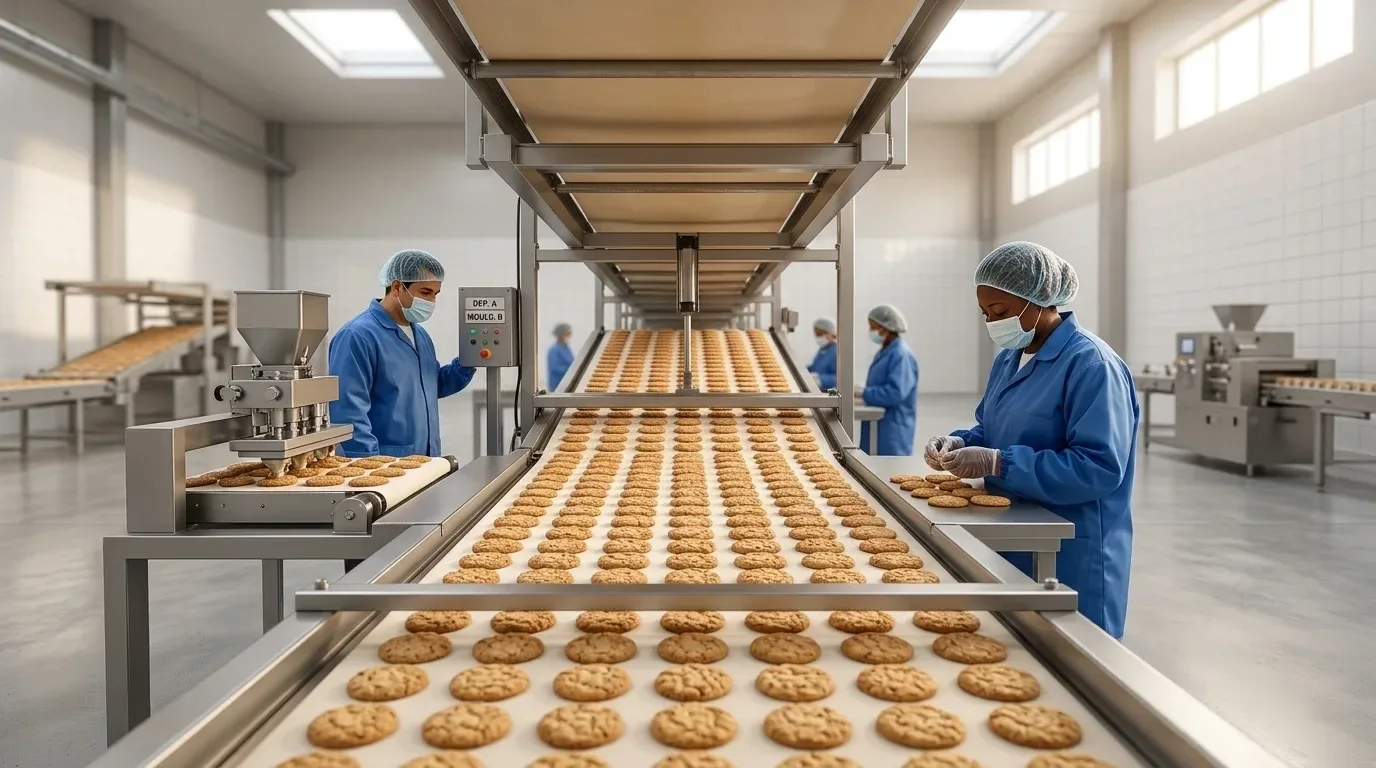
Lane alignment comes first. Guides, vibratory or belt-based lane dividers, and sometimes turning devices bring each biscuit into its lane, the right way up. Poor alignment here shows up as count errors later, so this stage deserves more attention than it usually gets. Fragile products need gentle guides with low friction. A product that slides and rotates easily needs closer guide spacing.
Accumulation and buffering follow. A buffer is a section of conveyor or a magazine that holds product so that short pauses upstream or downstream do not stop the whole line. Buffers can be belts running slower than the incoming flow, vertical or spiral stores, or simply extra lane length. The design question is how long a pause the buffer can absorb before the oven side has to divert product to waste or rework.
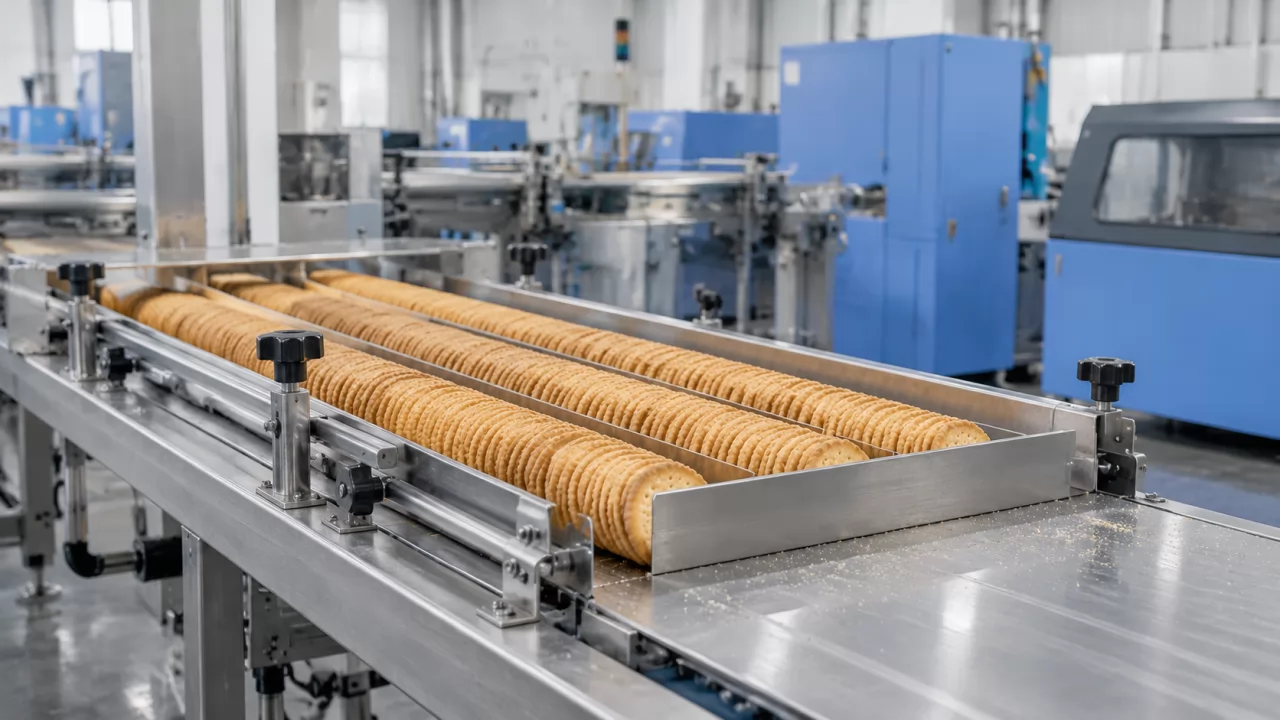
Counting is done by photoeyes, encoders or vision, depending on the format. On-edge slugs are often measured by length or pitch. Flat stacks are counted piece by piece as they drop. Count accuracy is the figure your pack weight depends on, and it is the first thing to test at acceptance.
Stacking forms the product into its final shape: biscuits stood on edge in a slug, or laid flat in a pile, sometimes with sandwich assembly or capping in the same unit. Transfer to the infeed is the last step, where a pusher, a servo-driven flight or a pick-and-place head places each stack into the wrapper's infeed chain at the right moment. A clumsy transfer reopens every problem the earlier stages solved.
A flow wrapper (also called a horizontal form-fill-seal machine) forms a film tube around the product, seals it lengthwise and cuts and seals each pack crosswise. It is designed to be fed from a stacker. It cannot sort anything itself.
Stacking Formats Decide What the Machine Can Run
The stacking format is mostly fixed by your pack design, and it sets limits on everything else. On-edge slugs, the familiar roll of round or rectangular biscuits, are the usual format for high counts per pack. They are gentle when the product is uniform and fairly thick, because biscuits support each other face to face. Count is usually controlled by slug length, which works well until thickness varies. Then a slug of the right length holds the wrong number of pieces, and the solution is either piece counting or tighter control at the oven.
Flat piles suit thin, delicate or coated products and small counts, such as a portion pack of four. Each biscuit drops or is placed onto the one below. Counting is easier and more exact. Throughput per lane is lower, and drop height becomes the main cause of breakage, so look for machines where the drop distance can be adjusted or kept to a minimum.
Sandwich and capped products add an assembly step: a base shell, a deposit of cream or jam, and a top shell, often aligned by the same mechanism that stacks them. These are the least forgiving. Deposit weight, cream temperature and shell alignment all affect whether the finished piece stands on edge without sliding. If your range mixes plain and sandwich biscuits, make sure the supplier runs both on the same machine during trials. Separate demonstrations prove less.
The Specs Worth Writing into Your Inquiry
Ask every supplier for these parameters in writing, quoted on your products. A generic test biscuit tells you little.
| PARAMETER | WHAT TO REQUEST |
|---|---|
| Number of lanes | Matched to oven band width and layout |
| Rated throughput (biscuits/min) | Sustained figure per SKU, not peak |
| Biscuit diameter or length (mm) | Minimum and maximum handled without part changes |
| Biscuit thickness (mm) | Range, including coated and sandwich variants |
| Count tolerance per stack | Stated error rate, measured on your product |
| Buffer capacity (seconds of flow) | Pause length absorbed at rated speed |
| Changeover method | Tool-free, recipe-driven or mechanical parts swap |
| Changeover time (min) | Measured between two named SKUs |
| Utilities | Electrical supply, compressed air consumption, network interface |
| Belt and contact-part materials | Grade named, with food-contact declaration |
If a supplier answers the throughput and count-tolerance rows only with peak figures on its own test product, the quote cannot be compared with the others yet.
A Biscuit Rejection System with Vision Inspection Is Only as Good as Its Reject Mechanism
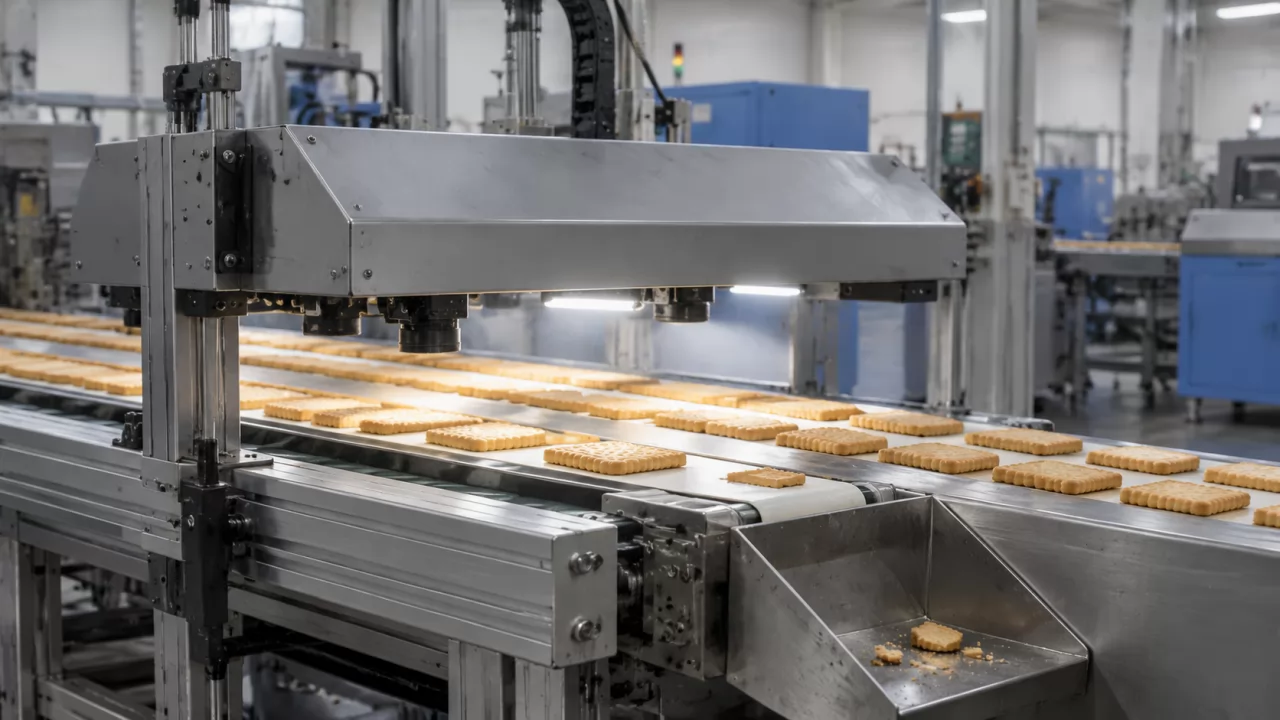
A biscuit rejection system with vision inspection uses cameras and image-processing software to find defective pieces on the conveyor and then removes them before stacking. Detection is fairly mature technology. Line performance depends on whether the reject mechanism removes the right piece cleanly and whether the stacker fills the gap without a short count.
Cameras on biscuit lines typically check size and shape (oversize, undersize, misshapen), colour as a proxy for bake level, breakage and cracks, coating or enrobing coverage, and missing or doubled pieces in a row. Many systems also check cream position on sandwich products. 3D or laser-profile sensors add thickness and height, which matters for on-edge stacking because thickness drives slug count.
Where systems differ is what happens after a defect is found. A rejected biscuit leaves a hole in its lane. If nothing fills it, the next stack is short, the pack is underweight, and the problem has just moved downstream. Good systems coordinate the reject signal with the buffer and the counting logic, so the stack is completed from the following product before it reaches the transfer. Ask suppliers to show this happening at rated speed, with a realistic reject rate, during trials. A demonstration with only a few rejects proves very little.
Air Jet, Flipper or Pusher: Matching the Reject Method to the Product
The removal method should suit the weight, fragility and spacing of your product. This comparison covers the three common options.
| CRITERION | AIR JET | FLIPPER OR GATE | PUSHER |
|---|---|---|---|
| Suitable products | Light, thin, single pieces | Medium weight, firm pieces | Heavier, coated or sandwich pieces |
| Speed | Very fast, individual piece | Moderate, limited by gate cycle | Moderate, limited by stroke |
| Risk to neighbouring biscuits | Higher on closely spaced product | Moderate, depends on gap | Lower with good spacing |
| Cleaning effort | Low, but crumbs scatter | Medium, pivot points collect debris | Medium, guides and rods need access |
| Suits | High-speed plain biscuits | Lane diversion of runs | Fragile or sticky product |
Air jets suit most plain, light biscuits at high speed. When the product is coated, heavy or sticky, a mechanical method usually gives cleaner rejects and fewer side effects. Air consumption also adds to running cost, which belongs in your total cost of ownership calculation.
Reject Data Is a Process Signal for the Bakery
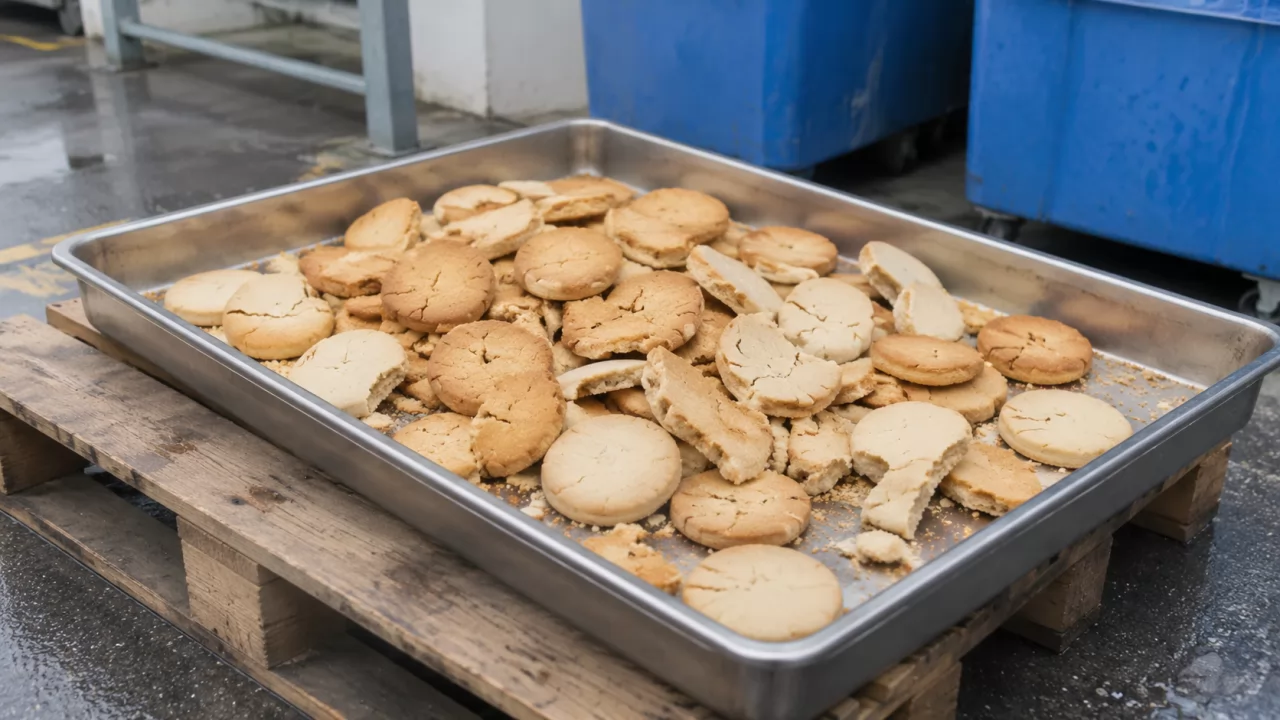
A vision system that rejects the same pale biscuits from lane three all shift is doing its job and wasting product. Log reject reasons by lane and by time, and send that data to the oven team. A pattern of underbaked edge lanes points to burner balance. Rising oversize rejects after a dough change point to spread. A sudden jump in breakage after a format change points to a guide or drop height. Used this way, the inspection system stops being an expensive bin and becomes a feedback loop that lowers waste at the source. Ask whether data can be exported to your MES or historian (the plant's production data system), in what format, and whether images of rejects are stored for review.
How Do You Automate Biscuit Feeding into a Flow Wrapper Without Gaps?
To automate biscuit feeding into a flow wrapper without gaps, you need three things working together: a synchronised infeed driven by servo motors, a buffer that absorbs upstream pauses, and a shared control link that tells feeder and wrapper what the other is doing. Missing any one of them brings back gaps or empty packs.
Servo-controlled flight chains place each stack at an exact pitch, and that pitch follows the wrapper's speed electronically, with no mechanical gearing. When the buffer runs low, the feeder slows the wrapper gradually instead of letting it run empty. When the buffer fills, it signals upstream before product backs up.
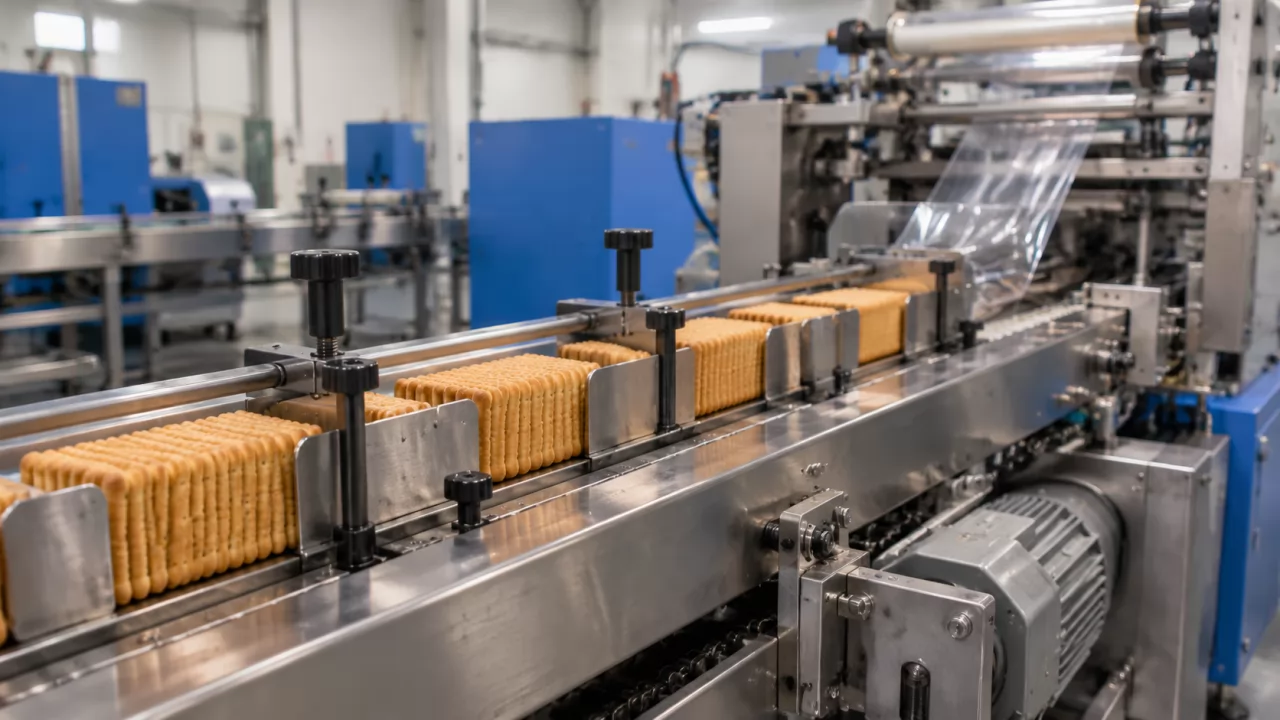
The handshake matters most. PackML (Packaging Machine Language, based on ISA-TR88.00.02) is a standard set of machine states and modes, such as Execute, Held, Starved and Blocked, that lets machines from different suppliers report their status in the same way. Write it, or an agreed equivalent, into the specification for both machines.
Common Mistakes That Make High-Speed Biscuit Packaging Line Automation Underperform
Mistake one: assuming a faster wrapper means more output. If stacking and feeding cannot keep a constant supply, extra wrapper speed only means it empties the buffer sooner and waits longer. Measure where stops actually happen before buying speed. In many cases, more buffer or better lane balance gives a bigger OEE gain for less money.
Mistake two: expecting vision to fix bad baking. Vision finds defects. It does not stop them from being made. A line that relies on rejection to meet quality is paying for ingredients, energy and oven time on product it throws away. Treat reject rates as a process target that the bakery owns, and set an upper limit that triggers investigation.
Mistake three: believing one stacker handles every SKU. It may, on paper. In practice, a machine tuned for thick plain biscuits often struggles with thin coated ones, and changeover parts multiply. List your full range, including planned launches, and have the supplier name which SKUs need different parts, which need slower speeds, and which it would rather not run at all. That honest answer is worth more than a yes.
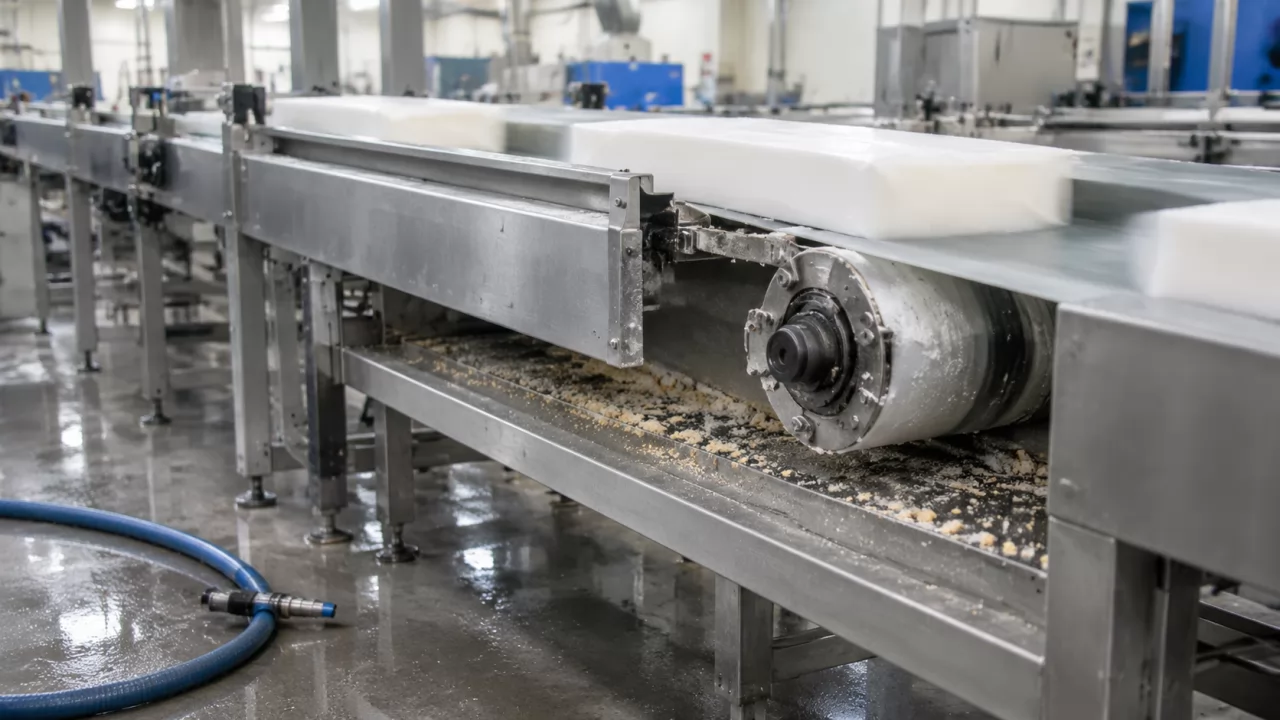
Mistake four: treating hygiene as the cleaning crew's problem. Crumbs, sugar dust and fat collect wherever the design allows. If belts cannot be removed without tools, or frames have hollow sections and horizontal ledges, cleaning takes longer and gets skipped. Hygienic design is decided at specification. The cleaning team inherits whatever you buy.
Mistake five: leaving integration to the installer. When the stacker, vision system, and wrapper come from different suppliers, each one can meet its own specification while the line as a whole fails. Name one party responsible for line performance, define the interfaces in writing (signals, states, mechanical transfer points, guarding), and include an integrated test before shipping wherever possible.
Choosing a Biscuit Stacking Machine for Your Packaging Line: Criteria That Hold Up After Commissioning
Product range fit and changeover time decide most selections, and they should. A machine that runs your core SKUs at rated speed but needs long mechanical changeovers will lose output every time the schedule changes. Ask for changeover times measured between two named products, and check how much of the change is held in recipes on the HMI (the operator touchscreen) and how much depends on swapping parts. If you plan to add lanes or formats later, modularity matters too: EverSmart, for example, builds its sorting, stacking and reject units as modules, so lanes can be added later without replacing the core machine.
Breakage on your most fragile SKU comes next, because it shows up in both waste and short counts. Have trials run on your thinnest or most heavily coated product, at rated speed, for long enough to see a real breakage rate. A short run proves only that the machine can start.
Hygienic design follows. EN 1672-2 sets hygiene requirements for food processing machinery, and EHEDG (European Hygienic Engineering & Design Group) guidelines describe practical design principles such as drainable surfaces, open frames and tool-free removal of belts. Ask how the supplier applies both, and look at the frames yourself during the trial.
Safety and compliance matter in every market and decide sales into the EU. ISO 12100 sets the general method for risk assessment, EN ISO 13849-1 covers the design of safety-related control systems through performance levels, and the EN 415 series covers packaging machine safety, with the relevant parts depending on the machine type. For food contact, ask for declarations under Regulation (EC) 1935/2004 for EU sales, or the applicable FDA 21 CFR sections for the US, covering every belt, guide, and plastic part that touches product.
Spare parts and remote support are the criteria buyers usually discover too late. Ask which parts are stocked, where, and whether remote diagnostics are included or charged. Then combine all of this into a total cost of ownership figure: purchase price, installation, utilities, wear parts, cleaning time, changeover losses, and support over the expected service life. A rule of thumb that holds: the cheaper quote is cheaper only if it still is after you add five years of changeovers and waste.
From Specification to Production: What a Typical Project Looks Like
Projects vary in length, but the stages and what you approve at each one are fairly consistent.
| STAGE | WHAT HAPPENS | WHAT YOU CHECK OR SIGN OFF |
|---|---|---|
| User requirement specification (URS) | You define products, outputs, interfaces, standards | Full SKU list, OEE target, compliance scope |
| Product samples and trials | Supplier runs your biscuits on test equipment | Breakage, count accuracy, reject behaviour |
| Design review | Layouts, control concept, hygiene and safety reviewed | Layout drawing, risk assessment, interface list |
| FAT (factory acceptance test) | Machine tested at the supplier before shipping | Speed, count, changeover, safety functions, documents |
| Shipping and installation | Delivery, mechanical and electrical installation on site | Packing condition, installation checklist, utilities connection |
| SAT (site acceptance test) | Line tested in your plant with production product | Integrated performance, handshake, operator training |
| Ramp-up | Output increased under supervision to target | Sustained OEE, reject rates, final handover |
The trial and FAT stages carry the most leverage: problems found there cost a drawing change, while the same problems found at SAT cost production time.
FAQ
Can one system handle both plain and sandwich biscuits?
Often, yes, if sandwich assembly is part of the design and both products are trialled on the same machine. Expect slower speeds and a longer changeover on sandwich SKUs.
What should a FAT include for a stacking and reject line?
A FAT should include a run on your own product at rated speed, a count-accuracy check on a statistically useful sample, deliberate rejects to prove stack refill, a timed changeover and tests of all safety functions. It should also include a review of the technical file and food-contact declarations. Agree on the protocol in writing before the test, not on the day.
How much floor space and buffer length should you plan for?
It depends on lane count, format and how long a pause you want to absorb. Size the buffer from your longest regular wrapper stop, such as a film splice, then ask suppliers for a layout drawing on that basis.
Does adding vision inspection change CE marking obligations under the new EU Machinery Regulation?
Usually not by itself, if the camera only checks quality. But Regulation (EU) 2023/1230 pays closer attention to control software and to substantial modifications of existing machines. If retrofitting changes safety functions or guarding, the risk assessment and possibly the conformity assessment must be redone. Ask the supplier who holds that responsibility.
Stability First, Speed Second
Define your product range and the reject behaviour you can accept, then require one party to own integration and the compliance file. Compare quotes on sustained output and lifetime cost. A line that never stops at moderate speed will outproduce one that sprints and stalls.

Ready to start your journey toward a customized solution? Contact me directly on WhatsApp to begin the conversation.