Spiral vs. Multi-Tier Cooling Conveyors: Which Saves More Floor Space?
For any high-volume bakery, the production floor is valuable real estate. One of the most common operational challenges is the "floor space dilemma": freshly baked products like cookies, biscuits, and bread require a significant amount of time on a cooling conveyor to stabilize before they can be packaged.
However, traditional horizontal cooling conveyor systems can consume an enormous amount of linear floor space. When expansion isn't an option, how do you increase cooling time without increasing your footprint? The answer is to build up.
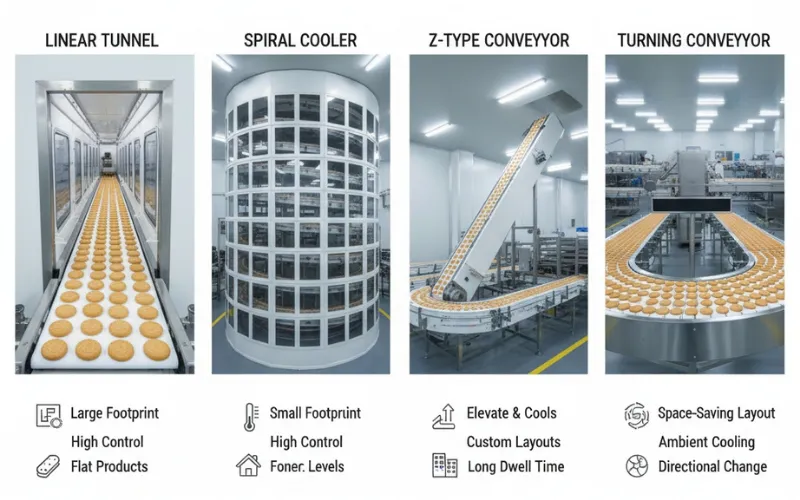
Vertical cooling conveyor systems, which are just one of several
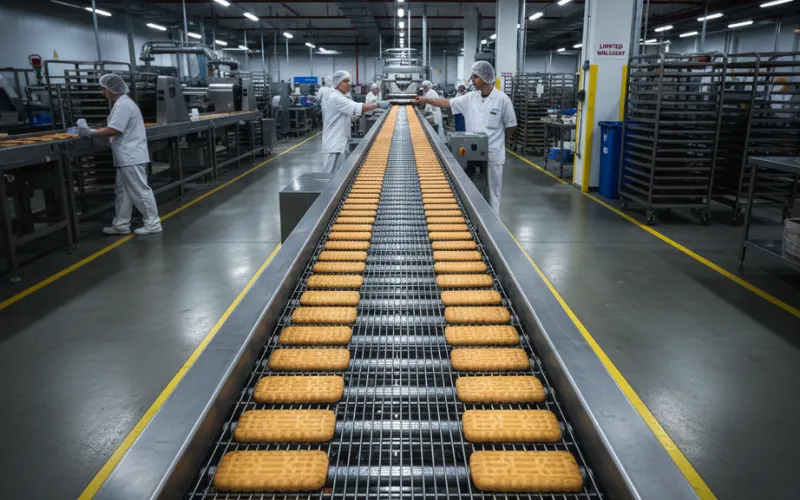
The Floor Space Dilemma: The Math of Vertical Cooling
The core challenge is simple: achieving the required cooling "dwell time" for products often requires hundreds of feet of conveyor length. In a constrained facility, the only way to achieve this is to utilize vertical space. Both spiral and multi-tier systems are designed to multiply the effective conveyor length within a minimal physical footprint, but they do so in fundamentally different ways, as detailed in our complete
Deep Dive: Spiral Conveyor Systems (Ideal for long cooling times, gentle handling)
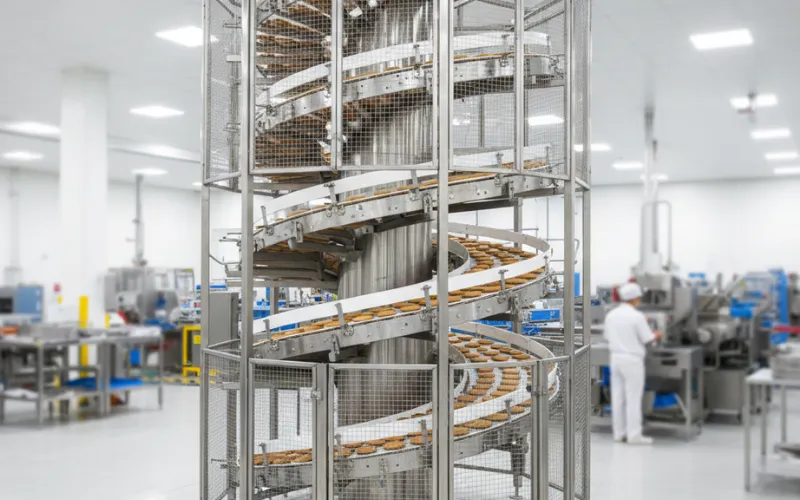
A spiral cooling conveyor is an elegant engineering solution that moves products vertically in a continuous, helical path around a central rotating drum.
Key Advantages
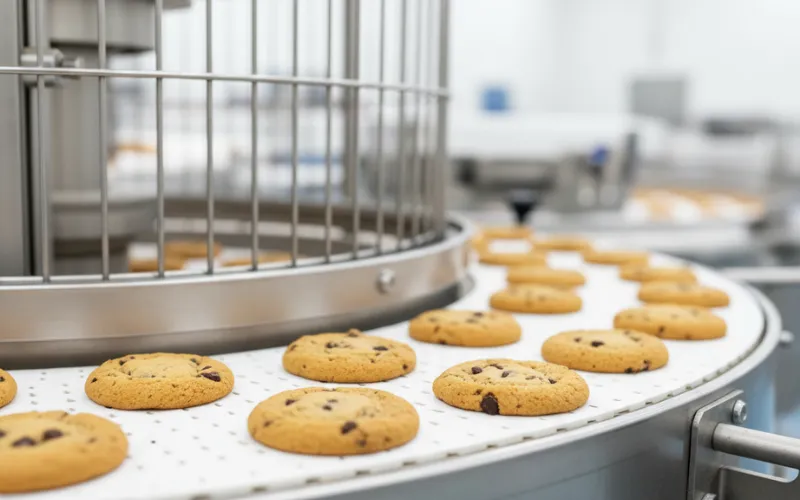
Maximum Space Efficiency: Spiral conveyors offer the highest conveying length-to-footprint ratio, freeing up as much as 75% more floor space compared to traditional incline conveyors.
Continuous, Gentle Handling: Because it uses a single, continuous belt, a spiral conveyor eliminates the need for product transfers between levels. This ensures a smooth, consistent flow and minimizes the risk of damage to delicate baked goods.
Hygienic Design: Modern spiral cooling conveyor systems often feature open-frame, stainless steel construction and modular plastic belting, which allows for easy washdowns and supports advanced cleaning protocols like
CIP systems
Deep Dive: Multi-Tier/Serpentine Conveyors (Ideal for modular expansion, easier access)
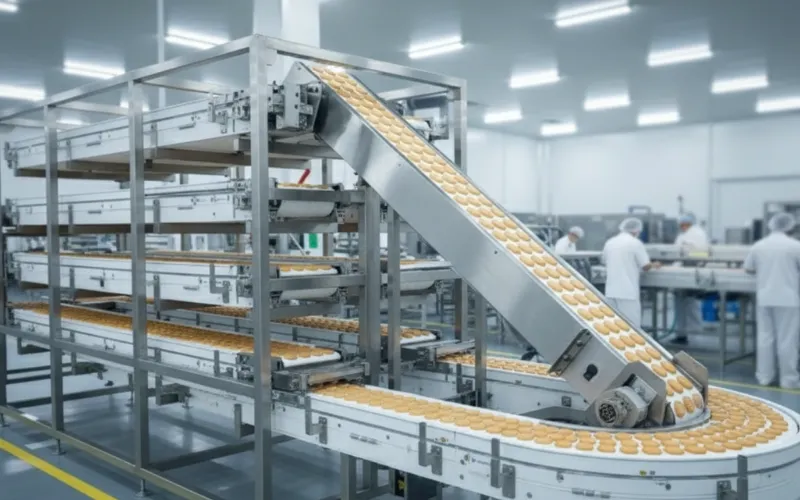
A multi-tier (or serpentine) cooling conveyor achieves vertical space savings by stacking multiple horizontal conveyor levels on top of each other. Products are transported along one level and then transferred up or down to the next, traveling in a snake-like pattern.
Key Advantages
Highly Customizable Layouts: Multi-tier systems can be custom-built to fit into unique or challenging factory spaces, making them highly adaptable.
Potentially Easier Access: Depending on the design, the open-sided nature of a multi-tier system can sometimes offer easier access for routine tasks outlined in a
preventative maintenance checklist Modular Expansion: These systems can often be expanded by adding more tiers, offering a degree of scalability.
Spiral vs. Multi-Tier Comparison (Footprint, Access, Cost, Throughput)
For a Project Manager or Engineer, choosing between these two technologies depends on a careful evaluation of several key factors.
Case Study: How a Cookie Plant Added 20 Minutes of Cooling in a 10x10m Area
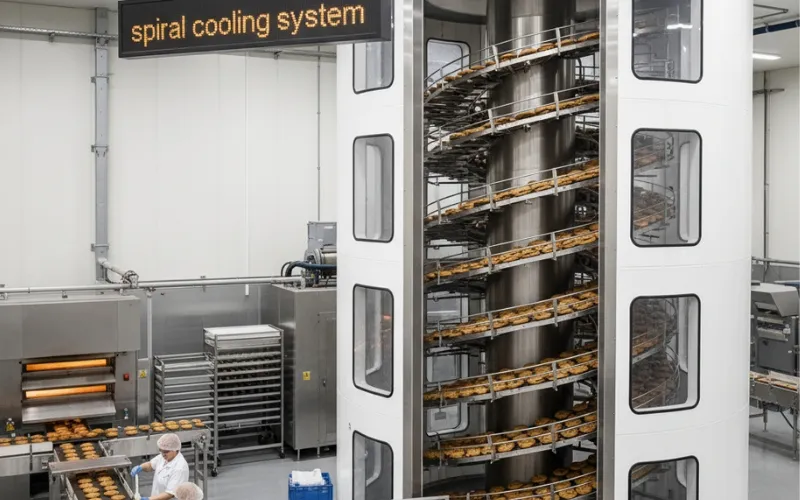
A high-volume cookie manufacturer was facing a production bottleneck. Their existing horizontal cooling conveyor was not long enough to adequately cool their new, softer cookie variety, leading to the exact
The Solution:After a layout consultation, EverSmart designed and installed a spiral cooling conveyor system within a 10x10 meter (approx. 33x33 ft) area.
The Results:
Increased Dwell Time: The spiral conveyor provided over 600 feet of additional conveying surface, increasing the product's cooling time by the required 20 minutes.
No Expansion Needed: The entire system fit within the existing footprint, saving the client from a costly facility expansion.
Improved Product Quality: With proper cooling, the condensation issue was eliminated, product quality became consistent, and shelf life was restored.
Reduced Damage: The continuous, single-belt system eliminated two transfer points from their old layout, reducing product damage by 95%.
Schedule a Free Factory Layout Consultation
Whether a spiral or a multi-tier cooling conveyor system is the right fit for your bakery depends on your unique products, processes, and facility layout. The key is to partner with an expert who can design a solution tailored to your specific needs.
At EverSmart, we specialize in designing and integrating high-efficiency cooling conveyor systems that solve the floor space dilemma. Let our engineering team help you analyze your requirements and build the perfect solution to maximize your productivity.
Sofia | Export Vice President | EverSmart
WhatsApp: +86 137 94619343
Email: [email protected]
Continue Reading:
To justify the investment in these advanced systems, see our guide on roi automated cooling system.
Learn about the unique upkeep requirements in our
preventative maintenance checklist for cooling conveyors

Ready to start your journey toward a customized solution? Contact me directly on WhatsApp to begin the conversation.