Industrial Tunnel Oven Troubleshooting & Maintenance (2025)
The Ultimate Guide to Industrial Tunnel Ovens: Operations, Troubleshooting & Maintenance
In the world of high-volume food production, the
To provide a truly definitive resource, this guide has been technically reviewed and informed by the deep field experience of Johnathan Deng, Lead Control Systems Engineer at EverSmart. With over 25 years architecting the advanced automation that powers modern baking, his expertise is the foundation of the solutions presented here.
This guide was created to be the single most comprehensive resource for factory owners, engineers, and operators. We will go beyond basic maintenance tips to provide a deep, actionable understanding of your most critical asset, from the initial bake to the final transfer to a
Chapter 1: The Core Concept – The Tunnel Oven Working Principle
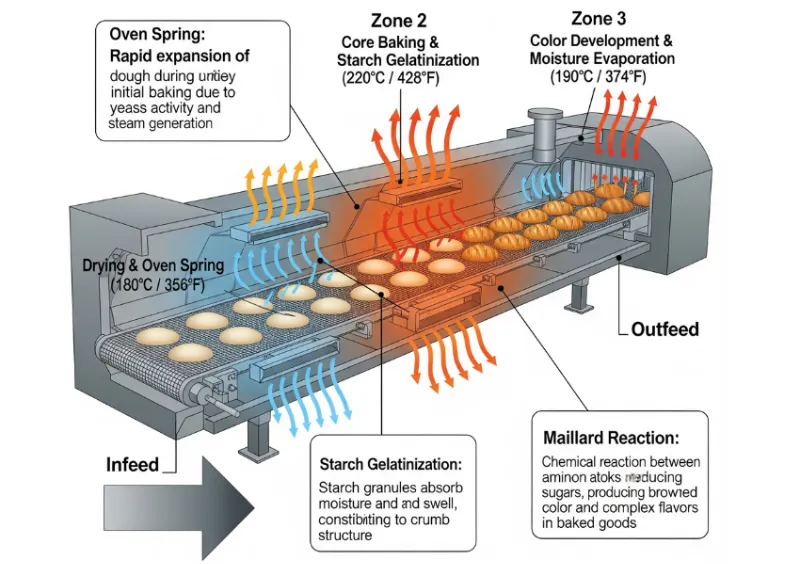
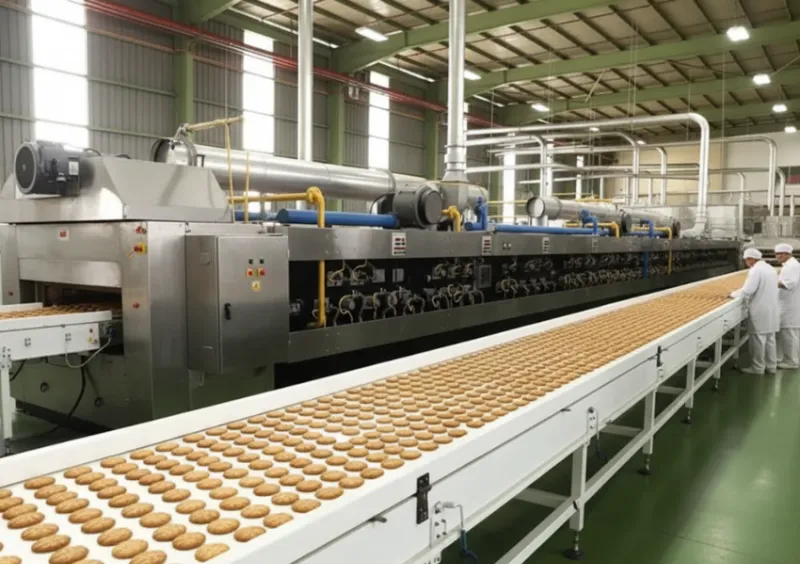
Before you can troubleshoot, you must understand the machine. At its core, the tunnel oven working principle is elegant in its simplicity: a product moves continuously through a controlled heating chamber.
Imagine a long, enclosed tunnel. A conveyor belt—the conveyor tunnel oven's backbone—acts as a moving road, transporting uncooked products from the entrance to the exit. Inside this tunnel are multiple "zones," each with its own precisely controlled temperature and heating method.
Loading: Dough pieces are deposited in uniform rows onto the moving conveyor belt at the oven's entrance.
Baking: The belt carries the product through the successive heating zones. Early zones might use a gentle heat to trigger "oven spring" and begin the baking process. Middle zones apply the primary baking heat, while final zones might focus on color development and final moisture removal. The tunnel oven temperature profile is meticulously controlled throughout this journey.
Unloading: Perfectly baked products emerge from the exit, ready for cooling and packaging.
This continuous process is what allows for the massive, consistent output that makes the tunnel oven for bakery operations indispensable.
Chapter 2: Anatomy of an Industrial Tunnel Oven – Types & Technologies
Not all tunnel ovens are created equal. The right choice depends on your product, energy source, and factory footprint.
Direct vs. Indirect Fired Ovens
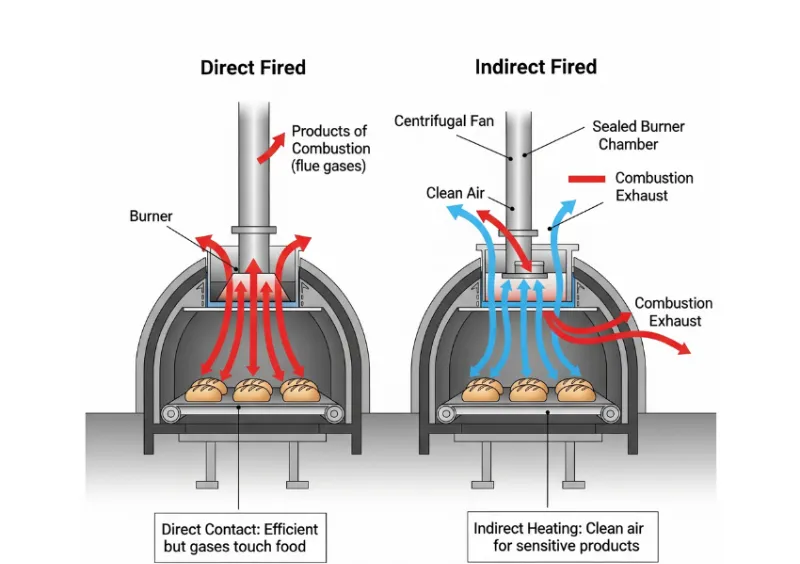
This is the most fundamental distinction, especially for a gas tunnel oven.
Direct Fired Tunnel Oven: In this design, the gas burners fire directly into the baking chamber. The products of combustion (hot air and gases) come into direct contact with the product. This method is highly efficient and creates a unique flavour and crust development, making it ideal for crackers and certain types of bread.
Indirect Fired Tunnel Oven: Here, the burners heat a sealed chamber or heat exchanger. Hot, clean air is then circulated into the baking chamber via a convection tunnel oven system. This prevents the products of combustion from touching the food, resulting in a cleaner bake that is essential for delicate products like soft cookies and cakes.
Electric vs. Gas Tunnel Ovens
Gas Tunnel Oven: The industry workhorse, valued for its lower operational energy cost and powerful heating capabilities. It's the standard for most large-scale commercial bakery tunnel ovens.
Electric Tunnel Oven: An electric tunnel oven offers unparalleled precision and control. It uses banks of heating elements (radiant or infrared) that can be modulated with incredible accuracy. This makes it perfect for specialty products that require a very specific baking curve. It also produces zero on-site emissions, a growing consideration for sustainability goals.
Small Scale vs. Large Scale
Small Tunnel Oven: For growing businesses, startups, or R&D labs, a small tunnel oven provides the benefits of continuous baking without the massive footprint or capital investment of a full-scale line. It’s an excellent way to scale up from batch production.
Bakery Tunnel Oven: This term typically refers to the large-scale systems (often over 50 meters long) that form the core of industrial production lines, capable of producing tons of product per hour.
Chapter 3: The Baker's Guide – Troubleshooting Common Baking Flaws
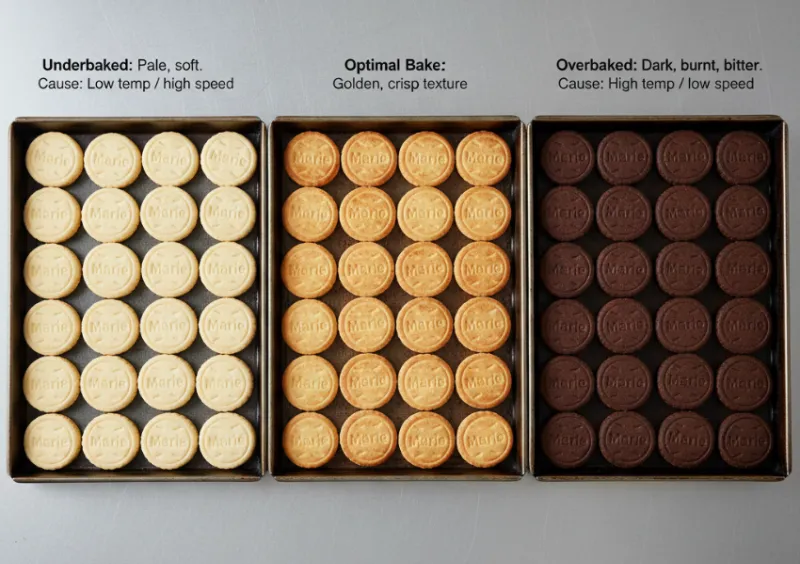
This section addresses issues with the final product's quality.
Problem: Underbaked or Raw Centers
Problem: Overbaked, Burnt, or Excessively Dark Cookies
Problem: Uneven Baking Across the Conveyor
Chapter 4: The Engineer's Guide – Troubleshooting Mechanical & Electrical Faults
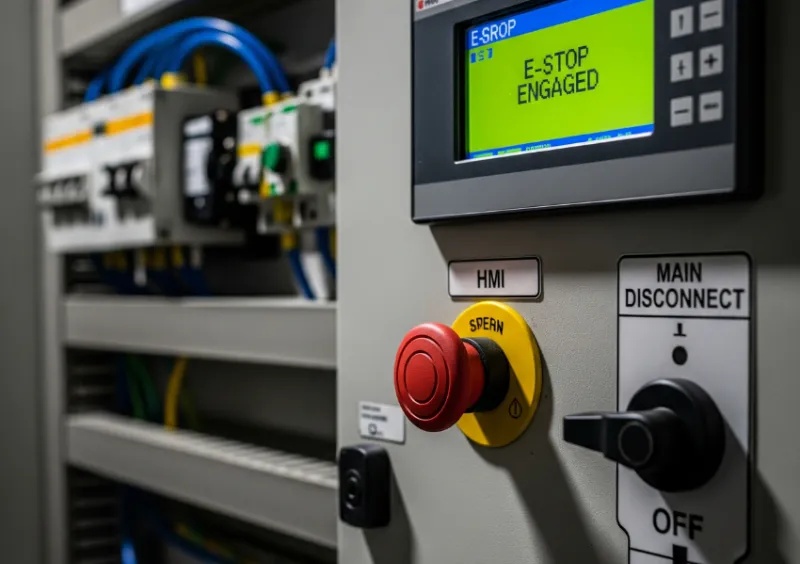
While product quality is paramount, sometimes the machine itself is the issue. This chapter focuses on common mechanical and electrical faults.
Chapter 5: Proactive Maintenance & Cleaning
A consistent maintenance schedule is the single best way to avoid the problems listed above.
Daily Checks (Pre-Startup)
Visual Inspection: Walk the oven length. Look for loose parts or debris.
Check Conveyor Belt: Ensure the belt is properly tracked and tensioned.
Verify E-Stops: Confirm all emergency stops are in the ready position.
Weekly Maintenance
Clean Burners & Igniters: For a direct fire tunnel oven, ensure burner ports are clear.
Clean Flame Sensors: As described in the troubleshooting section.
Lubrication: Lubricate conveyor bearings and drive chain per the schedule.
Monthly Maintenance
Clean the Inside of the Oven: When the oven is cool, use scrapers and food-safe solvents to remove carbonized buildup. This prevents fire hazards and product contamination.
Check Electrical Connections: A qualified electrician should check and tighten any loose electrical connections in the control panel.
Inspect Insulation: Look for any damaged insulation, which leads to heat loss and inefficiency.
Chapter 6: From Theory to Practice – An In-Depth Look at EverSmart's Field Experience
This section offers a deeper look into the specific, data-backed challenges and solutions our engineering team implements in the field.
Part 1: Analysis of Common Quality & Performance Failures
Uneven Temperature Control: We often find inaccurate sensors (error margin of ±5°C) and poor heating element distribution in standard ovens. A 2023 Journal of Food Mechanical Engineering study found that temperature fluctuations over ±3°C can increase the reject rate for bread products by 12%.
Excessively High Energy Consumption: Inefficient ovens can have energy costs over 25% of the operational budget (the industry average is closer to 18%). This is typically due to degraded insulation (thermal conductivity > 0.05 W/m·K) and no waste heat recovery.
Conveyor Belt Failures: The most common causes are belts with inadequate heat resistance (<200°C) and improper tensioning (standard is 50-70 N/mm²), leading to jerking, sticking, and product breakage.
Part 2: EverSmart's Targeted Engineering Solutions
Optimizing the Heating System: We engineer our systems with optimal heating element spacing (20-25cm) and upgrade clients to high-precision infrared sensors with an error margin of just ±1°C.
Energy-Saving Retrofits: We use nano-ceramic insulation (thermal conductivity ≤ 0.03 W/m·K) to cut energy use by 15-20%. Our waste heat recovery units can provide further savings. For a client here in Córdoba, Argentina, a recent retrofit is projected to save over ARS $10,800,000 annually.
Conveyor Belt Upgrades: We install high-temperature resistant belts (rated for ≥250°C) and photoelectric automatic belt tracking systems, which can cut belt-related failures by up to 40%.
Part 3: EverSmart's Preventive Management Recommendations
We help our clients implement a disciplined operational approach, including a Preventive Maintenance Checklist and Advanced Operator Training focused on fault code diagnostics (e.g., recognizing that code "E01" signifies a temperature over-limit alert).
Chapter 7: Comprehensive FAQ Section
Foundational Questions (Awareness)
How does a tunnel oven work?It uses a conveyor to move product through a series of controlled heating zones, allowing for continuous, high-volume, and consistent baking.
What are the different types of tunnel ovens?The main types are categorized by their heat source (gas or electric), heating method (direct fired, indirect fired, convection, or radiant), and scale (small tunnel oven to large industrial lines).
Operational & Maintenance Questions (Consideration)
How do you control the tunnel oven temperature?Temperature is managed via a control panel where operators can set a specific temperature for each independent zone.
How do you maintain a hot air oven?Regular maintenance involves cleaning burners and sensors, checking fan operation, lubricating bearings, and performing regular inspections, as outlined in our checklist in Chapter 5.
Troubleshooting Questions (Decision & Post-Purchase)
Why is my gas oven not turning on?The most common causes are a closed gas valve, a tripped emergency stop, or a failed ignition system. Follow the steps in Chapter 4 to diagnose.
How do I fix an electric oven that won't heat?Start by checking for tripped breakers. If those are fine, the issue is likely a failed heating element or a faulty contactor, which requires testing by a qualified technician.
Note on Irrelevant Keywords: We have intentionally excluded unrelated search queries like "tunel retransmitido hamachi" as they are not relevant to industrial oven operation.
Chapter 8: The EverSmart Advantage – The Future of Baking Automation
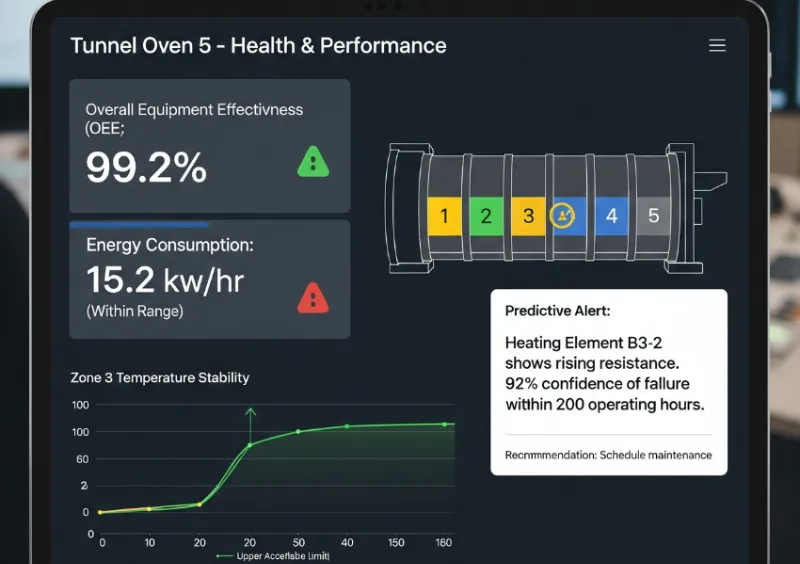
Understanding how to troubleshoot your oven is essential. However, the goal of modern baking technology is to minimize the need for manual intervention.
Preventing Baking Flaws: Our real-time sensors and AI-powered recipe management systems proactively adjust the baking profile, preventing issues before they happen.
Predictive Maintenance: Our control systems monitor component health. It can alert you that a part is about to fail, turning a costly emergency shutdown into a scheduled maintenance task.
Automated Solutions: For issues like a burner failing to ignite, the system can alert the operator with a specific error code, eliminating guesswork and dramatically reducing diagnostic time.
Conclusion: From Reactive Fixes to Proactive Control
Mastering your industrial tunnel oven is the key to unlocking consistent quality, minimizing waste, and maximizing the profitability of your bakery. While this guide provides the knowledge to troubleshoot the most common problems, the ultimate goal is to move beyond reactive fixes.
Investing in a modern, data-driven bakery tunnel oven is an investment in predictability and control. It empowers your team with the tools to not just solve problems, but to prevent them entirely.
If you are ready to transform your production line and make inconsistent baking a thing of the past, contact the EverSmart engineering team today(Whataspp +86 13794619343 or Email:[email protected]). We can provide a comprehensive audit of your current process and demonstrate how a smart oven can deliver a rapid return on your investment.

Ready to start your journey toward a customized solution? Contact me directly on WhatsApp to begin the conversation.