The Evolution of Oreo Mini Packs: A Look at Manufacturing & Design
For brand managers and manufacturing specialists, the ubiquitous oreo mini packs are far more than a container; they are a critical brand touchpoint, a promise of freshness, and a feat of engineering. The evolution of this packaging—from the iconic individual sleeves to the bulk mini oreo big bag—reflects broader advancements in marketing, material science, and sustainability within the food industry.
This article delves into the technical side of Mini Oreo packaging, tracing its design evolution, analyzing the packaging materials used, and highlighting the advanced packaging manufacturing technology that makes it all possible. It's a professional deep dive for anyone looking to understand the complexities behind every mini oreo packet. For a broader strategic view on the product's market and history, explore our comprehensive pillar page: The Ultimate Guide to Mini Oreos: Sourcing, History & Trends.
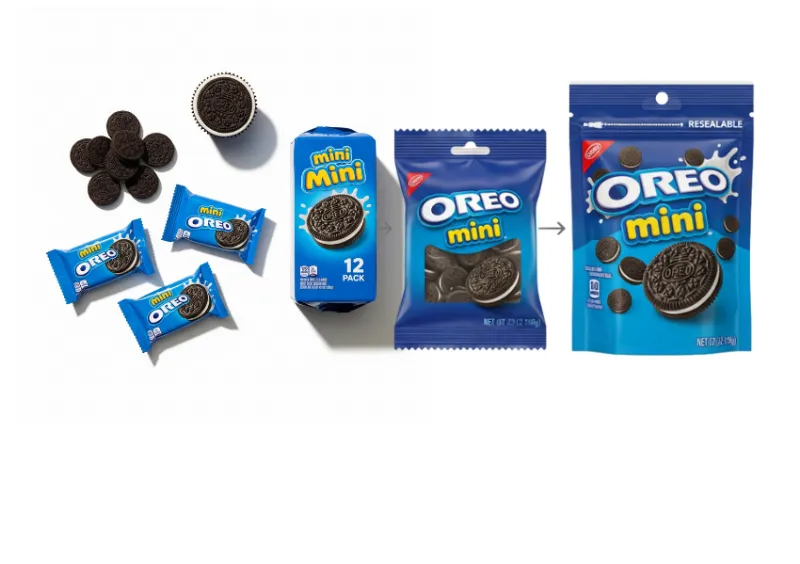
1. Form Meets Function: A Design Evolution
Oreo package design has always balanced brand recognition with practical functionality. For Mini Oreos, this challenge is compounded by their reduced size, especially when designing multi-unit offerings like the popular oreo mini 12 pack or the mini oreo 10 pack.
Early Iterations: The original mini oreo packets often utilized simple flow-wrap structures, focused primarily on preventing breakage and maintaining freshness. Branding was standard, and the packaging structure was relatively basic.
The Era of Brand Integration: As the product line expanded, the design began to differentiate variants while maintaining cohesive brand identity. This included creating distinct mini oreo packs for different retail channels, from the oreo mini snack pack for vending machines to larger mini oreo caja (box) displays for supermarkets.
The Modern Era: Today's Mini Oreo packets are highly engineered products. A key consideration is the consumer question: "how many mini oreos in a pack?". Designs must accommodate a fixed count, display mini oreo pack nutrition facts, and offer functional features like easy-tear notches—all within a tiny canvas that impacts the final mini oreo pack price.
2. The Science of Protection: A Materials Breakdown
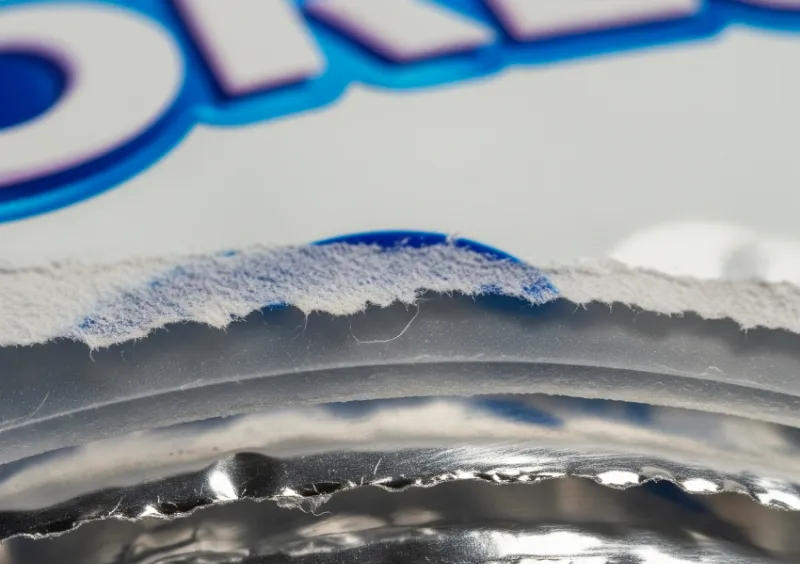
Protecting fragile mini oreo biscuits within every mini oreo package requires layers of high-performance packaging materials.
Flexible Packaging Films: Most Mini Oreo packets use a laminated film structure. This typically includes an outer layer for printability, a middle barrier layer to block light and oxygen (critical for preserving freshness and ensuring the stated mini oreo pack calories remain accurate), and an inner sealing layer for food-safe contact.
Inks & Coatings: High-precision flexographic printing is used to achieve Oreo’s iconic branding. Inks must be food-safe and abrasion-resistant to prevent scuffing during transportation and handling, whether for a single mini oreo packet or a larger oreo mini 12 pack display.
Bulk & Multi-Pack Materials: The mini oreo big bag and the outer carton for multi-packs utilize heavier-duty, multi-layer materials with higher puncture and tear resistance to withstand greater weight and rougher logistics handling.
3. Behind the Scenes: Packaging Manufacturing Technology
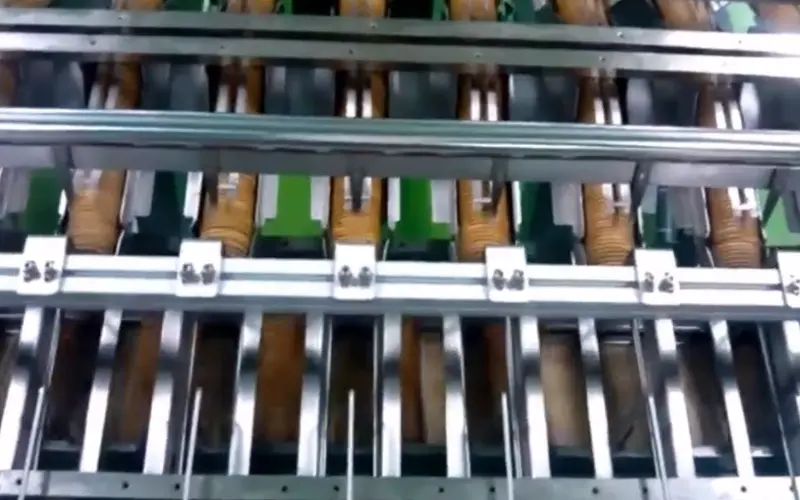
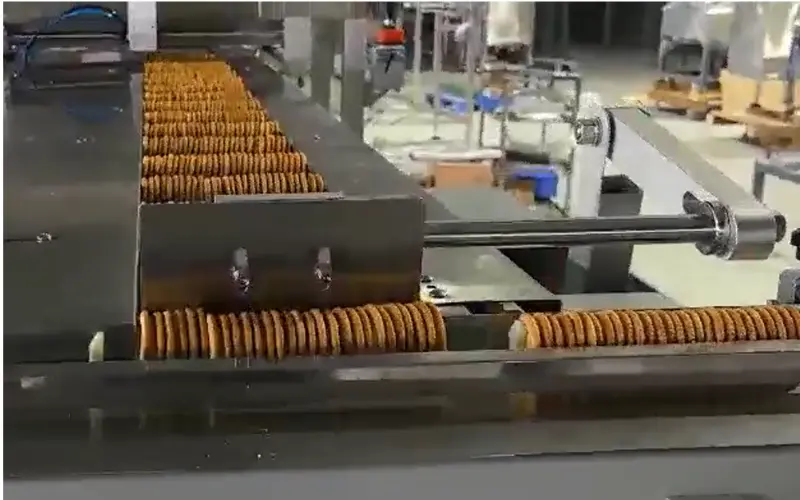
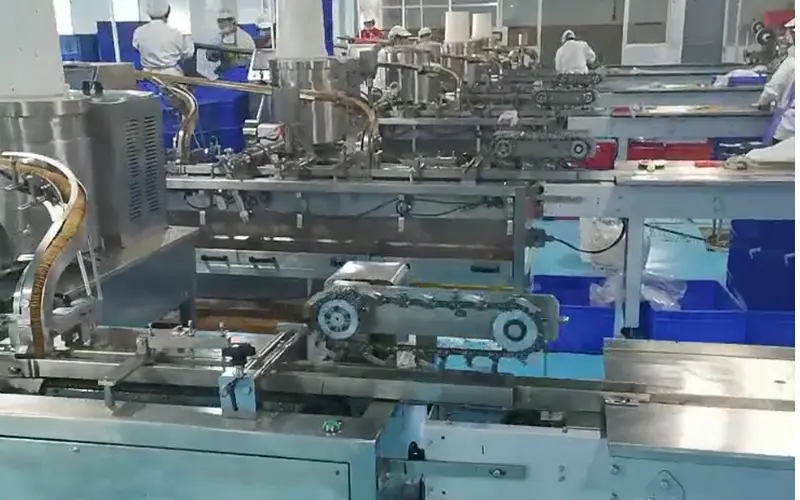
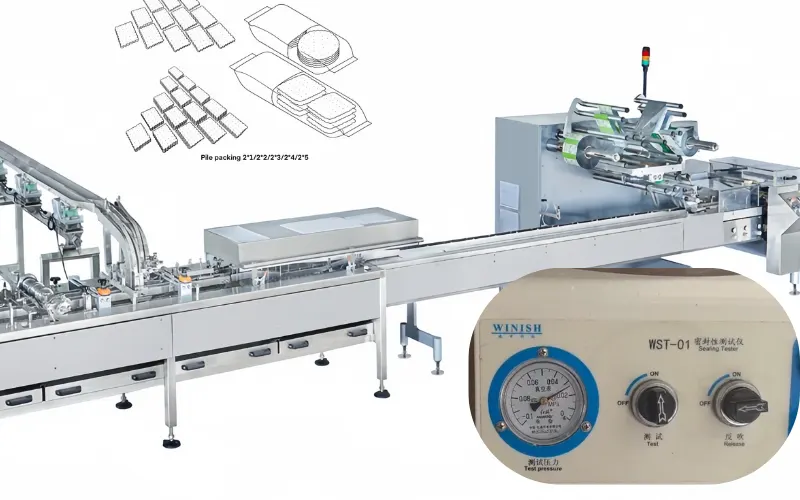
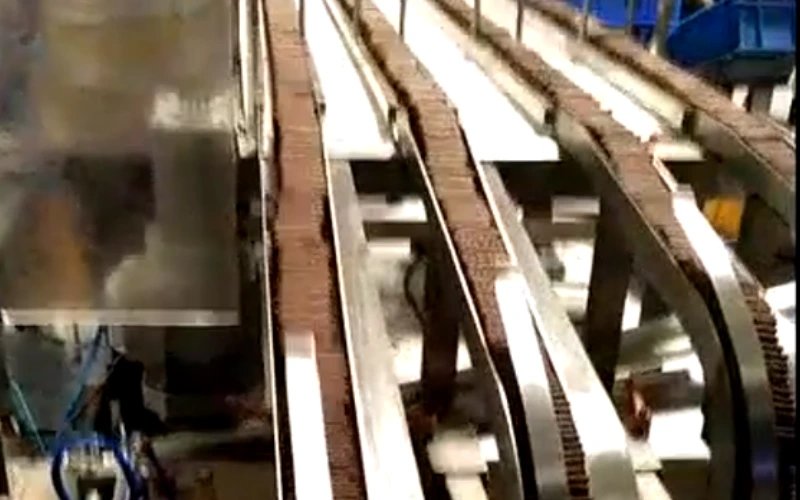
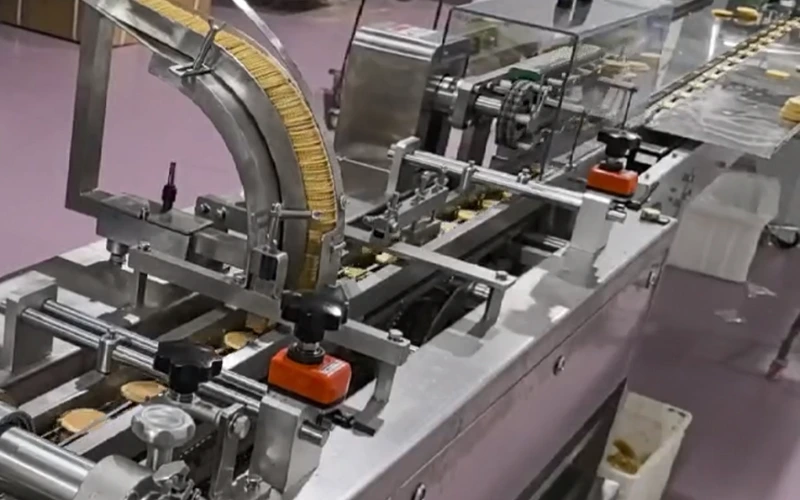
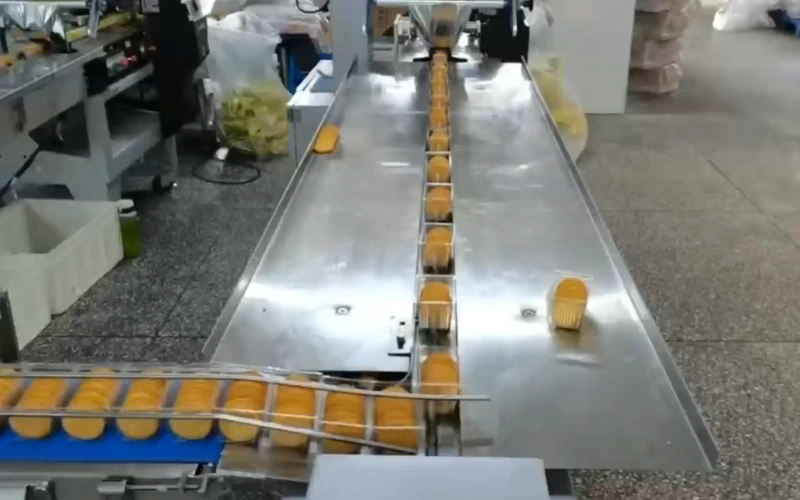
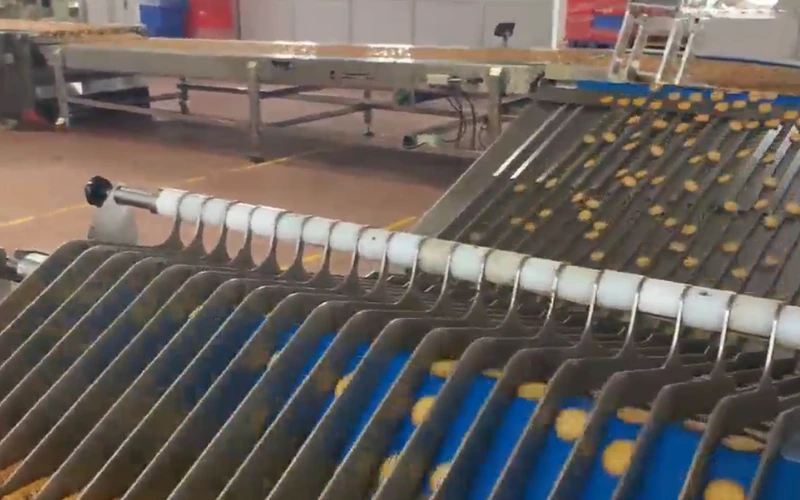
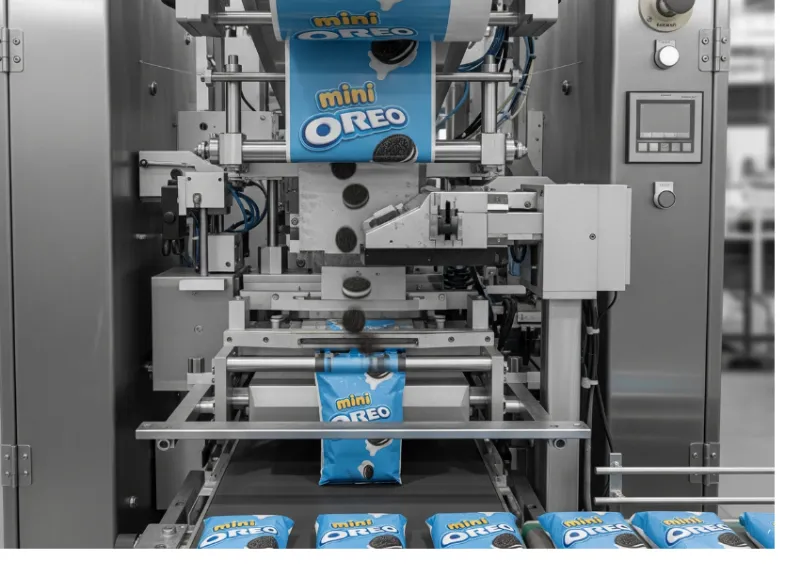
This is where packaging machinery manufacturers like us come in. Transforming flat material into a sealed pouch is a high-speed, precision-automated process. Discover our tailored Oreo Packaging Automation Solutions designed for this exact purpose.
Form-Fill-Seal (FFS) Technology: This is the core technology for producing Oreo Mini packets. A roll of packaging film is formed into a tube, vertically sealed, injected with a precisely measured count of cookies, then sealed and cut. The packaging machinery we manufacture is the heart of this operation, ensuring precise mini oreo packet carbs and nutritional content per serving.
Precision & Speed: Modern packaging machinery operates at incredible speeds, ensuring seal integrity, accurate count, and correct date coding on every single mini oreo pack. Vision inspection systems are often integrated to reject any defective packets.
Automation & Efficiency: The latest equipment emphasizes quick changeover between formats, maximizing overall packaging efficiency to manage production costs that influence the final product price.
4. The Sustainable Future: Efforts & Innovation
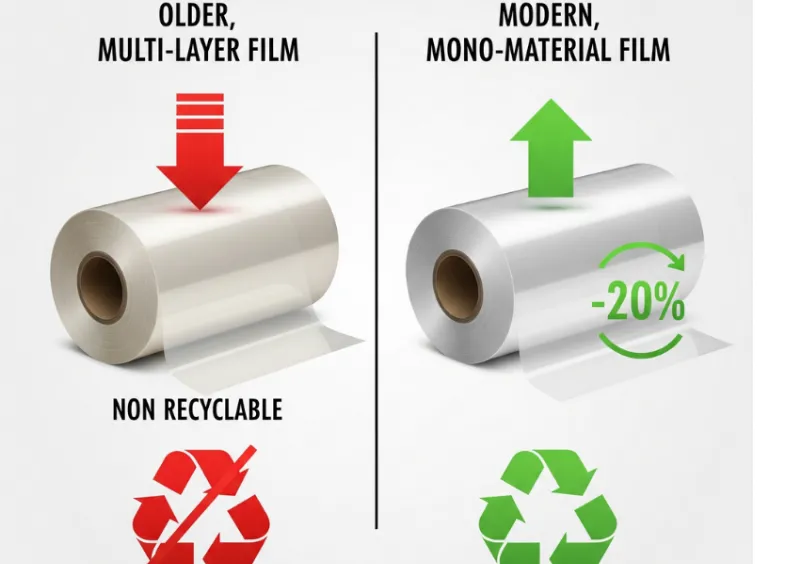
Sustainability is now a primary driver of packaging innovation. The industry is actively addressing the challenge of reducing the environmental impact of every mini oreo package.
Lightweighting: Using thinner, yet higher-performance films reduces the amount of packaging materials used without compromising protection.
Designing for Recyclability: A major focus is developing mono-material structures that are more readily accepted by mainstream recycling streams, moving away from hard-to-separate multi-layer laminates.
Source Reduction: The use of larger mini oreo big bag options for club stores and food service can reduce the overall packaging-to-product ratio compared to multiple small packets.
Exploring New Materials: Ongoing industry research is focused on alternatives like compostable films and bio-based plastics for the future of Oreo Mini packaging.
Beyond the Package: The Manufacturing Story
Packaging is the final chapter of the product's story, but it begins with production. The manufacture of Mini Oreo cookies is itself a fascinating case study in engineering.
To see how the entire journey from raw ingredients to packaged product comes together, we invite you to explore our central resource on the topic.
Dive deeper into the world of Mini Oreos on our pillar page: The Ultimate Guide to Mini Oreos: Sourcing, History & Trends
Frequently Asked Questions (FAQs)
What are the standard sizes and counts for Mini Oreo packs?Mini Oreo packs come in various sizes to meet different market demands. Common configurations include the single-serve snack pack, the 10 pack, and the oreo mini 12 pack. Larger bulk options like the mini oreo big bag are designed for food service. The count directly influences the mini oreo pack price.
How does the packaging machinery ensure consistent count and weight?Our packaging machinery uses high-precision, servo-driven multi-head weighers and counters. This ensures every mini oreo packet has the same count and net weight, which is crucial for mini oreo pack nutrition labeling.
How is the industry addressing the demand for more sustainable snack packs?The response is multi-faceted: 1) Lightweighting: Using less material for each mini oreo package. 2) Recyclable Materials: Developing new film structures that are compatible with recycling streams. 3) Source Reduction: Promoting larger big bag formats where appropriate to reduce total packaging waste.
Can the same packaging line run different Mini Oreo variants?Yes, with modern modular packaging machinery. Quick-change parts allow a single line to switch between producing, for example, standard mini oreo packs and mini vanilla oreo packs with minimal downtime. This flexibility is key to efficient production for different global markets.
Where can I find detailed nutritional information for a specific pack type?Detailed mini oreo pack nutrition information, including mini oreo packet calories and carbs, is printed directly on the packaging. For specific products, the nutritional facts are based on the serving size (e.g., "per packet" or "per 3 cookies").
Engineer Your Packaging Solution
Your packaging is your product's voice, its protection, and its promise. Whether you’re optimizing a line for single-serve oreo mini snack packs or developing a new, sustainable solution for the next generation of mini oreo packs, our engineering team has the expertise and advanced packaging machinery to bring it to life.
Let's discuss how to future-proof your packaging. [Contact our packaging experts today] for a consultation. Whatsapp +86 13794619343 or email to [email protected].

Ready to start your journey toward a customized solution? Contact me directly on WhatsApp to begin the conversation.