Expert Guide: Bourbon Biscuit Factory Layout – Solving Precision, Overflow, Flexibility Challenge
Introduction
When preparing or upgrading a biscuit factory, most investors and project managers focus 80% of their energy on equipment selection and price negotiation.
However, Eversmart's empirical data reveals a startling truth. Over 60% of future operational bottlenecks, high maintenance costs, and frequent quality issues (like the infamous Bourbon "cream overflow") can be traced back to errors in the initial factory layout design.
A poor layout is more than just untidy. It means your workers might walk 20% more every single day for the next decade.
It means your air compressors could be wasting 15% of their energy daily due to pressure drops in overly long pipes. It means your maintenance team might need half a day of downtime just to change a simple mold.
This guide is different from generic "textbook" articles.
As professional biscuit production line manufacturers, we will deeply analyze how to plan an efficient, compliant, and future-proof Bourbon biscuit production line. We will explore this from the multidimensional perspectives of the factory owner, CFO, plant engineer, and quality manager.
📋 Key Takeaways
Layout Determines Costs: Factory layout is not just physical placement; it directly dictates your Operational Expenditure (OpEx) and
maintenance efficiency The Bourbon Specifics: Compared to generic biscuits, Bourbon lines are longer and demand rigorous cooling and creaming environments. Insufficient cooling space is a hidden cause of later cream overflow.
Compliance is the Baseline: GMP/HACCP demands strict "raw vs. cooked" zoning. The oven discharge is a natural sanitary barrier that must never be crossed in reverse.
Solving "Cream Overflow" via Layout: High-precision
sandwiching machines quality control Design for Flexibility: By planning "Bypass" lines and "Quick-Change Zones," the same line can switch between Bourbon, Oreo, or plain hard biscuits with minimal downtime. (See
Bourbon vs. Custard Cream
Part 1: The Foundation — Where is Your "Passing Grade"?
Any biscuit factory layout must first meet the basic physical requirements of the production process and food safety regulations. This is the cornerstone that ensures your factory can legally start operations.
1. Understanding the Core Process: The Physical Footprint of a Bourbon Line
Bourbon biscuits are typical "hard dough + secondary processing (sandwiching)" products.
Compared to simple soft dough biscuits, a
Pre-processing Area: Flour sifting, sugar grinding, and cream melting. This area generates dust and requires relative isolation in the layout.
Mixing Area: Houses horizontal dough mixers (for hard dough) and their associated dough transport systems.
Forming Area: The "head" of the line. It includes feeders, three/four-roll sheeters (Laminator/Gauge Rollers), and the Rotary Cutter. The unique long shape and surface pinholes of Bourbon biscuits are formed here using a
precision mould Baking Area: The core of the line. Tunnel Ovens are often 60-100 meters long and represent the largest single rigid module in the layout.
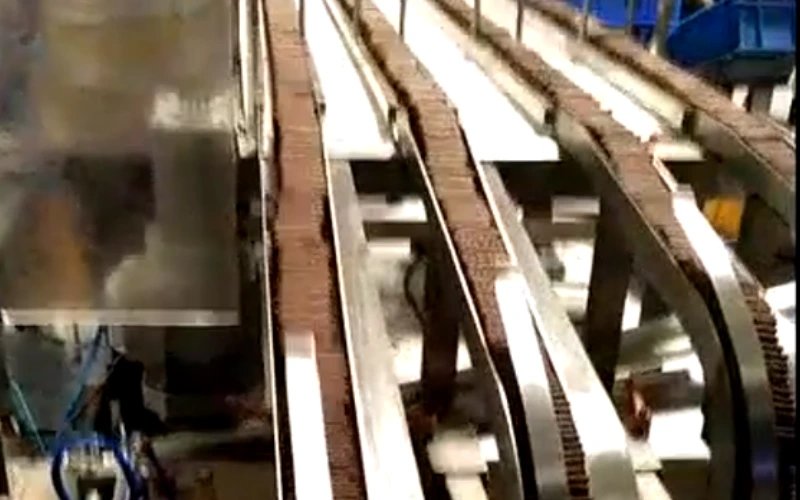
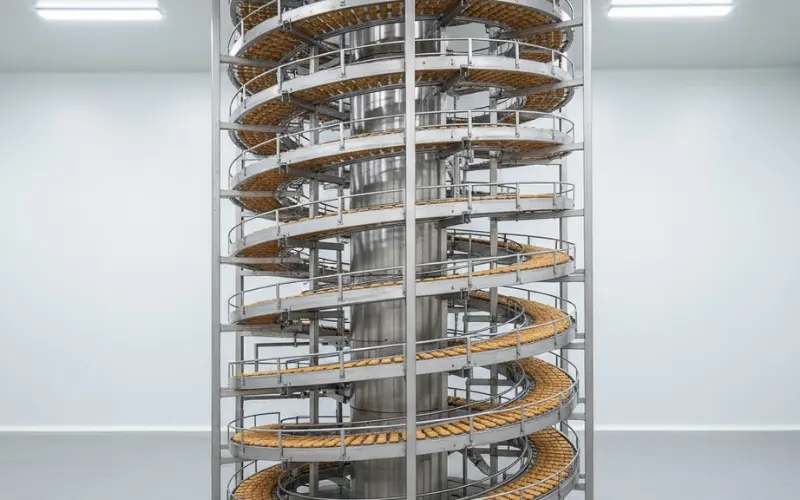
Cooling & Handling Area: Critical Point! Bourbon biscuits must be completely cooled before creaming; otherwise, residual heat will melt the cream. The cooling conveyor length is typically 1.5 times the oven length. If space is limited, "Z-shape" or overhead multi-tier cooling conveyors must be used.
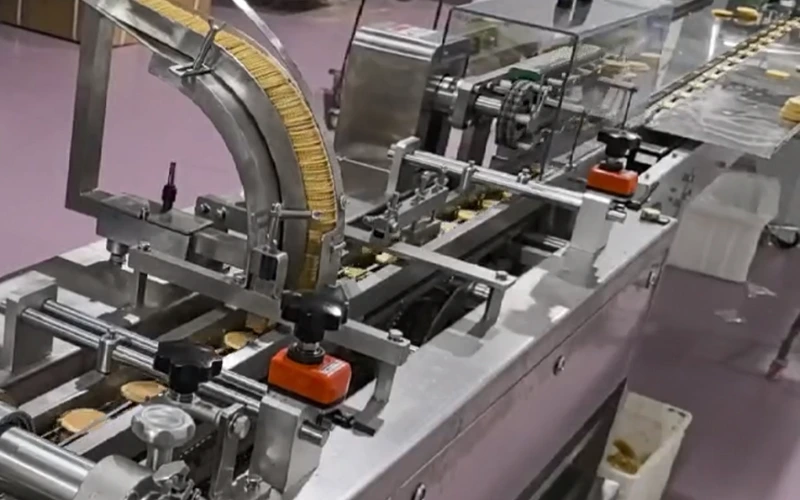
Sandwiching & Capping Area: The soul of the Bourbon process. This area demands extremely high hygiene standards and strict temperature/humidity control.
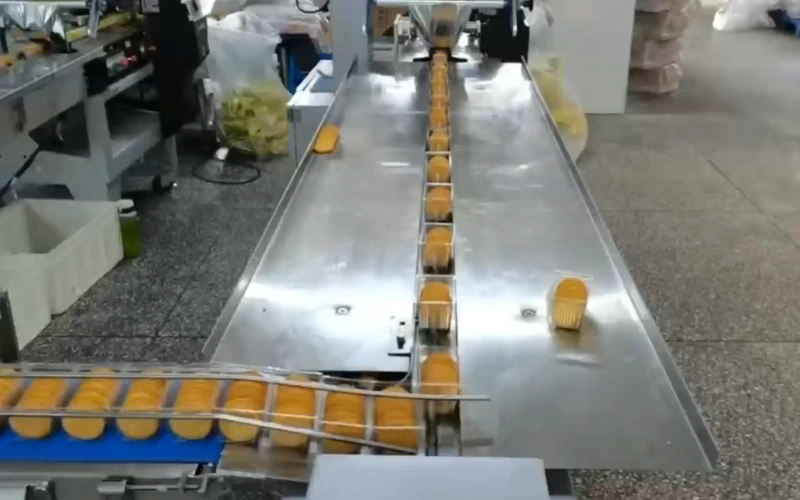
Packaging Area: A frequent bottleneck. Adequate buffer space must be reserved for flow wrappers, cartoners, and case packing areas.
💡 Pro Tip: If Bourbon biscuits are not thoroughly cooled, residual internal heat will radiate outwards, causing the
. If your factory building lacks straight-line length, you must plan for overhead spiral cooling towers or multi-tier Z-conveyors to guarantee sufficient cooling time. Never forcibly shorten the cooling line. cream sandwich to "slide" and overflow
2. Layout Morphology: I-Shape vs. U-Shape vs. L-Shape
I-Shape (Straight Line): Offers the smoothest material flow, entering one end and exiting the other. However, it requires an extremely long building (potentially over 200 meters) and increases management span, as raw material and finished goods warehouses are far apart.
U-Shape (Return Type): Most Recommended. Utilizes the cooling conveyor to make a 180-degree turn. Raw material intake and finished goods exit are on the same side of the building, greatly facilitating unified warehouse logistics and improving space utilization.
L-Shape: Usually a compromise solution limited by existing building structures. Special care must be taken at the turn to ensure smooth biscuit transition and prevent corner breakage.
3. Compliance Workflow (GMP/HACCP): The Red Line You Cannot Cross
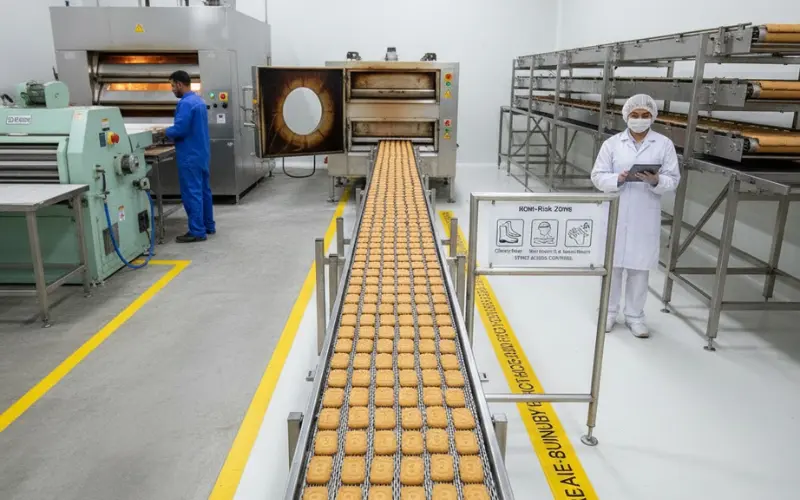
In a HACCP plan biscuit factory layout, preventing cross-contamination is the core objective. The layout must achieve physical zoning isolation:
Personnel Flow: Establish a mandatory single sanitary channel. Employees must pass through "Shoe Change → Changing Room (distinct uniforms for raw/cooked zones) → Hand Wash & Disinfect → Air Shower" before entering the workshop.
Material Flow: Adhere to the "unidirectional flow" principle. Never allow raw materials (like raw flour or eggs) to flow backward into the cooked area.
Hygiene Zoning: The oven discharge is a natural "clean barrier."
Low-Risk Zone (Raw): Mixing, Forming.
High-Risk Zone (Cooked): Cooling, Sandwiching, Inner Packaging. This area requires the highest air cleanliness and is recommended to be designed as a positive pressure workshop.
⚠️ Note: The oven exit is the absolute "watershed" of workshop hygiene levels. Everything before is a general operation zone; everything after must be a High-Care Zone. When designing the layout, ensure no personnel, tools, or forklifts can cross this boundary in reverse. This is a fundamental principle of both
and GMP . HACCP
Part 2: Advanced Planning (The OpEx) — Layout for Finance & Engineering Teams
Once the foundational planning is complete, your factory can run, but it may not be efficient. Advanced planning focuses on Operational Expenditure (OpEx) and maintainability, which directly relates to the factory's long-term profitability.
Module A: Energy Layout for the CFO
Finance managers care about where every cent goes. In factory layouts, energy waste is often invisible.
Energy Mapping & Piping Optimization:
Steam/Gas: The oven is the largest energy consumer. The boiler room or gas regulation station should be as close to the oven area as possible to reduce heat loss and pressure attenuation from long-distance piping.
Electricity: The power center (distribution room) should be located at the load center. For large biscuit factories, this is usually near the baking and refrigeration units.
Compressed Air: This is one of the most expensive energy forms. In a process biscuit production line layout, packaging machines and sandwiching machines need stable air sources. Overly long branch pipes cause pressure drops, forcing you to increase compressor output pressure and
waste electricity
⚠️ Note: Pressure drops caused by poor compressed air piping design are huge energy black holes. Every 1 bar of extra pressure added to counteract long pipe pressure drops increases compressor energy costs by approximately 7%.
Module B: Maintainability Layout for Plant Engineers
If the layout doesn't consider maintenance, a minor fault could shut down the entire line for hours.
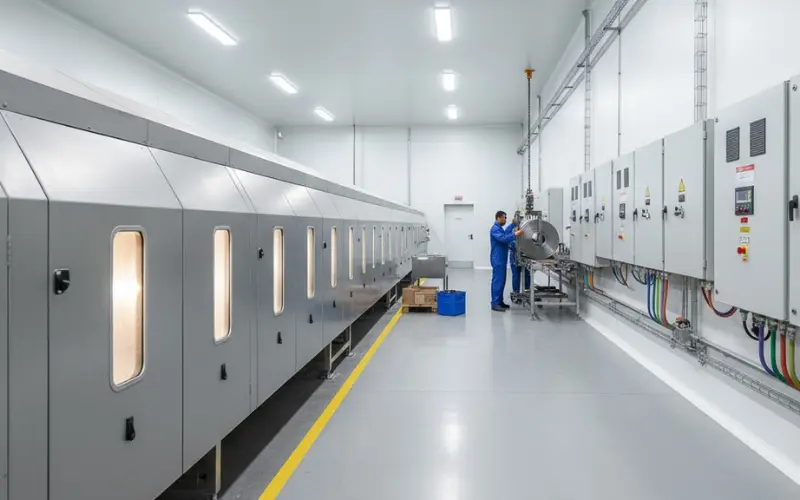
The "Maintenance Golden Aisle": Don't pack equipment too tightly. A clearance of at least 1.5 meters must be reserved on the side of the oven for pulling out and replacing oven bands. Space must also be reserved behind dough mixers to pull out mixing shafts.
Centralized Cleaning Stations (CIP/COP): Bourbon biscuit cream systems need frequent
cleaning Spare Parts Location: Locate secondary storerooms for high-frequency wear parts (like
rotary mold rollers
Module C: Anti-Interference Layout for Electrical Engineers
Modern food factories are highly automated, but interference between high and low voltage is a common source of "ghost" faults.
HV/LV Separation: In the design biscuit production line layout drawings, two independent main cable tray routes must be clearly planned. Power cables (380V/440V) and signal cables (PLC communication, sensor low voltage) should maintain a parallel distance of more than 30cm. Avoid long-distance parallel routing to prevent electromagnetic interference from causing sandwiching machine servo systems to "lose steps" or malfunction.
Part 3: Expert Planning (The Core Differentiators) — Solving Bourbon Pain Points
This is the core value that distinguishes Eversmart from generic equipment suppliers. We use layout to solve specific process challenges.
Core Challenge 1: Curing "Cream Overflow" via Layout (Precision Sandwiching)
Bourbon biscuits are slender (typically around 60mm x 25mm) and easily prone to skewing during high-speed movement.
If the base biscuit is misaligned during sandwiching, cream will overflow the edges. This leads to packaging jams and serious customer complaints. This is often blamed on equipment precision, but it is frequently a layout issue.
Eversmart's Layout Solutions:
"Zero-Vibration" Foundation Planning:
The
Cream Sandwiching Machine is high-precision servo equipment. It must never be installed near large vibration sources (such as heavy-duty dough mixers, reciprocating compressors, or aisles frequently used by heavy forklifts).Expert Advice: Mark a "Precision Equipment Zone" on the layout drawing. It is recommended to perform independent vibration isolation foundation treatment for this area.
"Cold Zone" Layout:
Cream is extremely sensitive to temperature. If the sandwiching machine is too close to the oven exit, or if poor workshop ventilation causes ambient temperature to exceed 25°C, the cream will become thinner. Increased fluidity leads directly to overflow.
Expert Advice: Plan the sandwiching area inside a "cold room" with independent air conditioning, or ensure it is located at the best-ventilated upwind position in the workshop.
Straight-Line Short Coupling:
Minimize turns and transitions between the stacker and the sandwicher. The best layout aligns the stacking, sandwiching, and capping as a single integrated module in a straight line. This reduces opportunities for biscuits to slide relative to the conveyor belt.
Core Challenge 2: "Flexible Manufacturing" Layout
Markets are volatile. If you only invest in a dedicated Bourbon line, what happens when the market demands Oreo (round sandwich) or Prince (round plain) biscuits? Do you need to build another factory?
Eversmart's Flexible Layout Solutions:
Reserve "Bypass" Workflow:
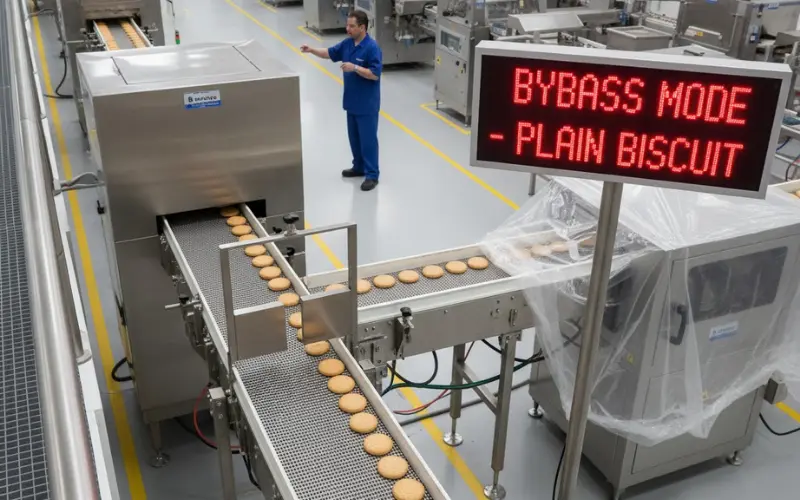
Design a straight-through conveyor belt alongside the sandwiching machine. When producing plain biscuits that don't require cream (like Marie or Prince bases), products can skip the sandwiching station entirely and enter the packaging area directly. This saves energy and reduces equipment wear.
Modular Quick-Change Zones:
Plan designated "Mold Cart Parking Zones" for rotary cutters and sandwichers. Ensure that changing a set of molds with different shapes (e.g., switching from rectangular Bourbon to round Oreo) can be a "
one-touch switch Future-Proofing Space:
When planning a small biscuit production line layout, also consider the future. We recommend reserving 5-10 meters of straight space at the end of the line or at the U-turn. This can be used to add a second sandwicher (for dual-color cream), a chocolate enrober, or a sprinkler in the future, enabling low-cost product upgrades.
💡 Pro Tip: Always reserve a "second 10 meters" at the end of your line. Today you might only need to package Bourbon biscuits, but tomorrow the market might require you to add a chocolate enrobing line to increase product premiums.
Frequently Asked Questions (FAQ)
The following questions come from real customer inquiries and industry forums, representing the most common concerns of factory builders.
Q1: How much factory space is needed for a standard Bourbon biscuit plant?A: This depends on your target capacity. For a medium-sized fully automatic line (approx. 500kg-1000kg/hour), you typically need at least 2000-3000 square meters of workshop area. This includes raw material, production, packaging, and temporary finished goods storage areas. For a U-shape layout, a building length of at least 60-80 meters and width of 30-40 meters is recommended. Note: this is just the main workshop, excluding large warehouses and office areas.
Q2: Why does my sandwiching machine always have positioning issues, even though I bought expensive equipment?A: As mentioned in the article, this is likely due to the layout environment. Check: 1) Are there large vibration sources nearby (mixers, punch presses)? 2) Is the ambient temperature too high, causing cream to change properties? 3) Is the handling conveyor before the
Q3: With a limited budget, which part of the layout investment should I prioritize?A: Prioritize "Food Safety Zoning" and "Core Equipment Foundations." Wall partitions are hard to change later, and substandard foundations cause permanent equipment vibration. Automated packaging lines can be added gradually when funds are more abundant later.
Q4: Can the same production line produce both hard dough biscuits (like Marie) and Bourbon biscuits?A: Absolutely. The base for Bourbon biscuits is essentially a type of hard dough biscuit. You only need to ensure the forming area has both "Three-Roll Sheeter + Rotary Cutter" functions in the layout. When producing Marie, simply change the rotary cutter mold and bypass the sandwiching station. This compatible
Q5: Where can I download reference drawings for biscuit factory layouts (PDF/PPT)?A: Generic online drawings (searching for biscuit production line layout pdf or biscuit factory layout ppt) can only serve as conceptual references. They cannot account for your actual building column spacing, ceiling height, and capacity needs. Directly applying generic drawings often leads to serious construction errors later. We recommend contacting professional equipment suppliers for customized initial proposals.
Summary: Don't Let Layout Be Your Factory's "Invisible Killer"
An excellent Bourbon biscuit factory layout is a rehearsal of future production scenarios on paper for the next decade.
It not only concerns whether you can pass GMP audits but also directly impacts your daily operating costs and market response speed. Whether you are planning a new factory or upgrading an old line, Eversmart's engineering team is ready to provide you with a professional "second opinion."
Take Action:
If you have preliminary building sketches, don't rush to break ground.
Click the button below to upload your drawings. Our layout experts will provide a free diagnostic consultation within 48 hours, helping you identify potential workflow conflicts, energy traps, and expansion bottlenecks.
[Contact an Eversmart Layout Expert Today]

Ready to start your journey toward a customized solution? Contact me directly on WhatsApp to begin the conversation.