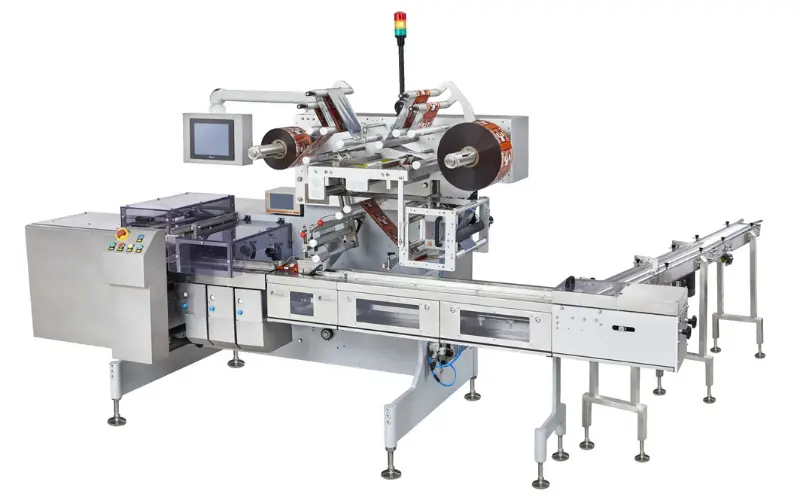
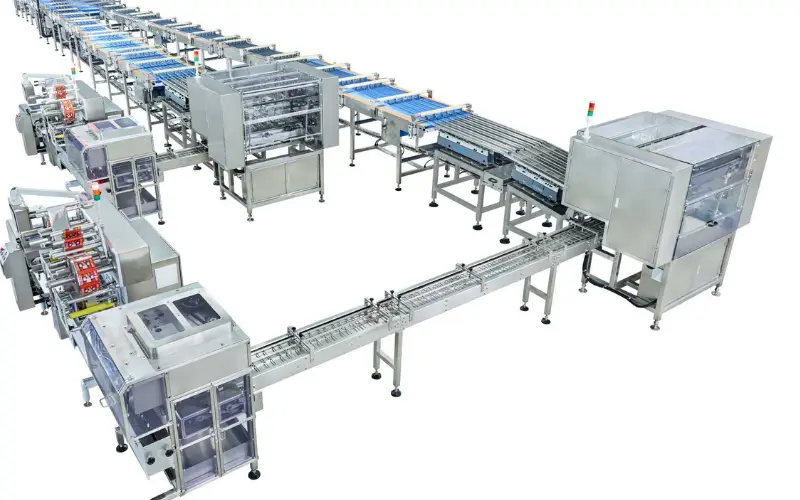
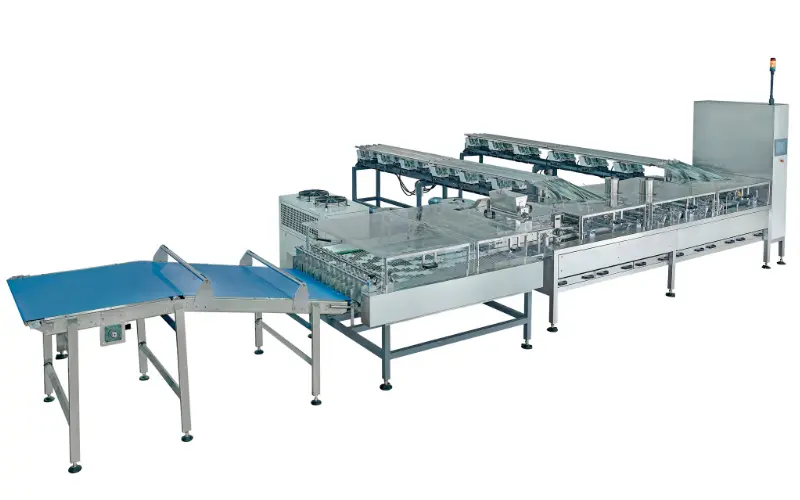
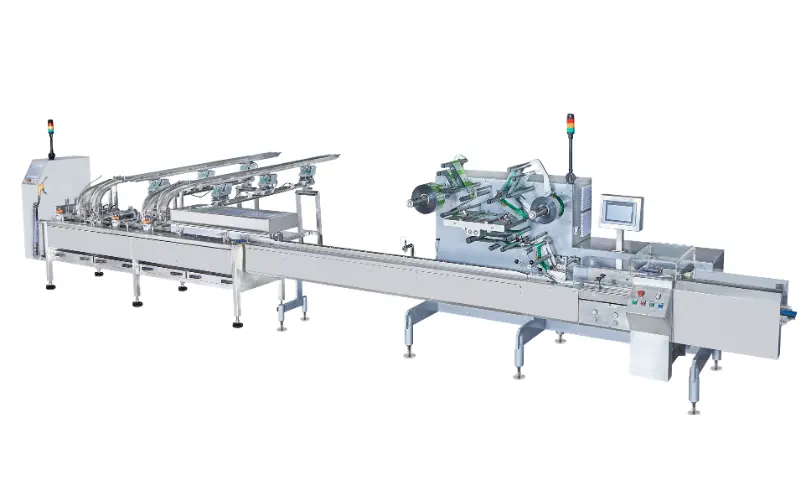
Stencil vs. Cookie Capper vs. Tart Injection: The Engineering & ROI Guide to Sandwich Machines
Executive Summary: The One-Minute Boardroom Briefing
In the high-stakes world of industrial biscuit production, equipment selection is never just a purchasing decision. It is a strategic wager on your factory's profitability for the next five years.
When we debate Stencil Machines, Cookie Cappers, and Tart Injection Systems, we are not comparing similar tools. We are choosing between three distinct business philosophies: Maximum Velocity, Premium Margin, and Precision Aesthetics.
As a factory owner or operations director, your primary concern isn't just how fast a machine runs. You need to know exactly how that asset impacts your bottom line.
The Stencil Machine is the engine of "Flow." It is the only viable solution for producing basic hard dough biscuits, like Langues de Chat, where output is measured in tons per hour.
The Cookie Capper is the engine of "Premiumization." It leverages physical restructuring—taking two simple base cakes and adding a sandwich layer—to transform low-cost ingredients into high-margin products like Macarons.
The Tart Injection System is the engine of "Quality." It serves the high-end pastry market, utilizing servo controls to manage expensive ingredients like pure fruit jams or ganache with micro-gram precision.
This guide strips away the glossy marketing brochures. We are conducting a ruthless audit based on Engineering Mechanics, Rheology, Sanitary Design, and Total Cost of Ownership (TCO).
🚀 Key Takeaways
Business Model Dictates Hardware: Stencil wins on volume; Capper wins on margin; Injection wins on precision.
The Hidden "Upstream Tax": Buying a Capper often forces you to upgrade your oven, as vacuum cups fail on warped biscuits.
Sanitation is Profit: Tool-less removal designs may cost 10% more upfront, but they save 200+ hours of labor annually.
The ROI of Accuracy: Servo-driven reduction in material giveaway usually pays for the machine difference in just 8 to 12 months.
Engineering Mechanics: Physics Determines Destiny
Many purchasing managers are easily misled by the "CPM" (Counts Per Minute) column on a spec sheet. They often ignore the fact that the machine’s physical kinematics have already determined its operational ceiling.
Stencil Machines: The Battle of Shear Force
In the industrial context, stencil sandwiching refers to a process of high-speed coating via physical masking. It is similar to applying buttercream through a mask but applied with aggressive industrial shear force.
The Mechanism
The heart of this system is a hollow, rotating Rotary Stencil Head. A precision scraper blade sits tightly against the inner wall of this drum. As the drum spins, the scraper generates shear force, forcing the batter through the apertures.
For a detailed breakdown of this mechanism, read our
The Engineering Limit
This mechanism relies entirely on "Compression + Sticky Release." Therefore, your raw material must be a smooth, flowable batter free of particulates. Any ingredient larger than 1mm (like crushed nuts) will become trapped, resulting in metal-on-metal abrasion and foreign material risk.
⚠️ Critical Note: If your product formula demands large inclusions like chocolate chunks, stop considering a Stencil machine immediately. You must evaluate a Wire Cut system or a specialized Capper to avoid catastrophic equipment damage.
Cookie Cappers: The Vulnerability of Vacuum
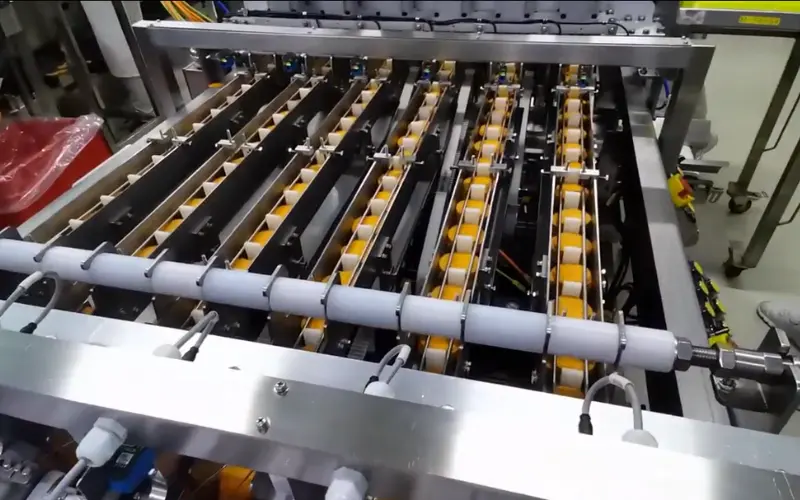
If the Stencil machine represents "Brute Force," the Cookie Capper represents a "Precision Dance." A standard capping unit involves the millisecond synchronization of three core actions: Flipping, Depositing, and Capping.
The Mechanical Challenge
Modern high-speed Cappers, running at 1,600 sandwiches per minute, utilize multi-lane architectures. The most critical component is not the nozzle, but the Vacuum Pick-and-Place Arm, which relies on the Venturi effect to generate suction.
The Core Pain Point: Biscuit Warping
Vacuum cups are incredibly sensitive to surface topography. If your oven produces biscuits with uneven surfaces, the suction cup leaks air, leading to dropped cookies.
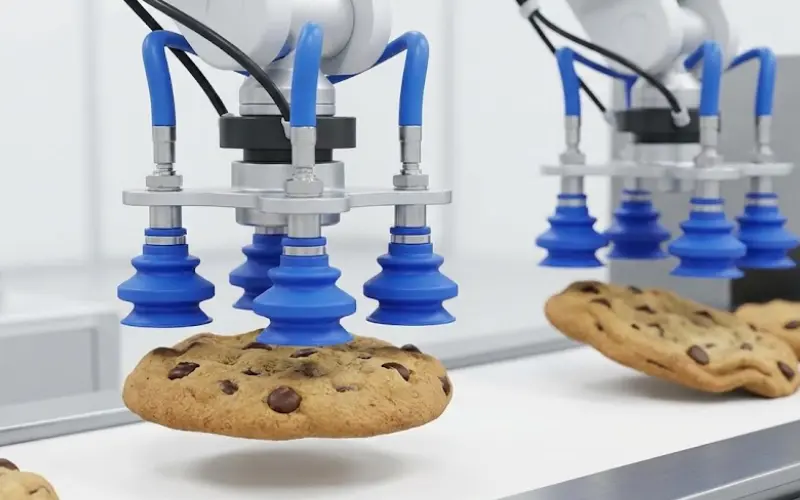
Tip: Before signing a contract, measure the flatness tolerance of your current output. If the deviation exceeds 1mm, you may need to optimize your baking process first.
Related Resource:
Rectangular Biscuit Alignment Guide Deep Dive:
Vacuum Cookie Capper Engineering Guide
Tart Injection: Fluid Dynamics & Back-Pressure
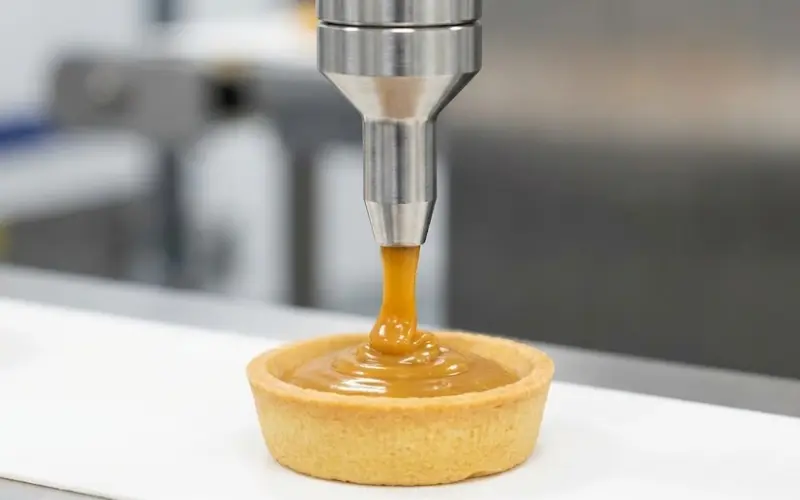
The challenge in injection technology is not getting the filling in; it is getting the flow to stop cleanly.
The "Suck-Back" Solution
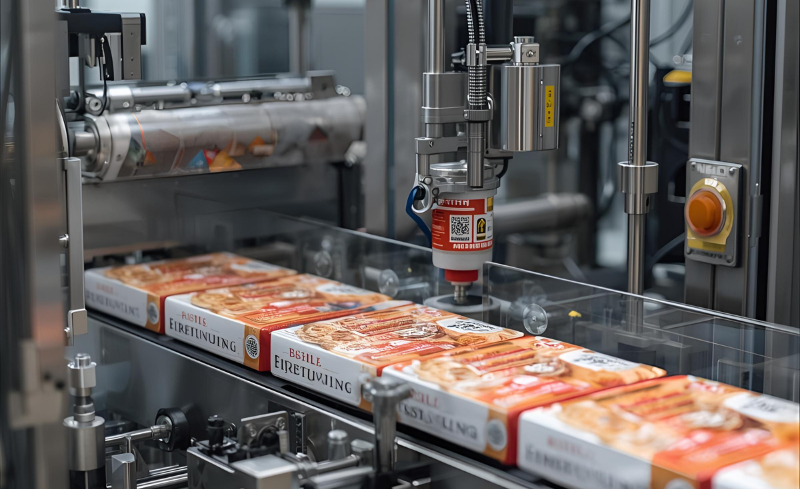
Unlike simple coating, Injection systems utilize servo-driven pistons. The "Crown Jewel" of this design is the Suck-Back feature. At the exact millisecond the dosing cycle finishes, the servo motor reverses direction, creating instant negative pressure to retract the hanging droplet.
The Value Proposition
For high-viscosity or stringy ingredients like caramel, this feature is non-negotiable. Without it, "tailing" drips sticky syrup onto your conveyor belts.
Learn More:
Industrial Tart Injection Engineering Guide
Process Tolerance & Rheology: The Real World Variables
Engineers must ask the hard question: Will this machine go on strike when the weather changes? Success in the lab rarely translates perfectly to mass production, and Rheology is usually the culprit.
External Reference: Understanding
(ScienceDirect). Shear Thinning Behavior in Food Processing
Stencil: The Narrowest Process Window
The Stencil machine is arguably the most temperature-sensitive equipment in the bakery.
Heat Risk: If factory temperature rises, viscosity drops. The thinner batter bleeds out from under the stencil mask, resulting in fuzzy edges.
Cold Risk: If the batter becomes too stiff, torque load increases, potentially snapping the scraper blade.
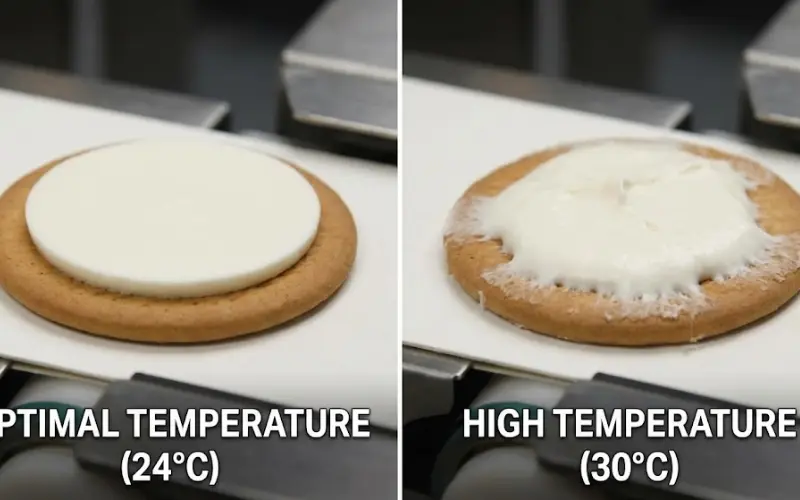
Recommendation: Always option a Jacketed Hopper connected to a water tempering unit. See our
Cookie Capper: Geometric Tyranny
The Capper is picky about ingredients, but it is even pickier about the "Vehicle" (the biscuit).
Thickness Tolerance: Guide rails typically have a redundancy gap of only 1mm. If your base cake thickness varies, jamming is inevitable.
Fragility: For brittle products, vacuum impact force can be destructive. You must balance vacuum pressure against speed.
Tart Injection: Intelligent Compensation
This is the most modernized sector. Advanced servo injection units monitor the torque of the drive motor in real-time. When morning temperatures make the filling stiff, the PLC automatically increases thrust. This Closed-Loop Control gives Injection machines a tolerance that exceeds the other two options.
Sanitation Economics: The Cost of Cleanliness
For Maintenance Managers and CFOs, OEE (Overall Equipment Effectiveness) is the only metric that matters. A machine that runs at lightning speeds but requires 4 hours to clean is a liability.
External Standard: Review
for hygienic engineering benchmarks. EHEDG Guidelines
The Value of "Tool-Less" Removal
Old-school machines required wrenches and 40 minutes to swap parts. Modern competitive equipment must utilize pneumatic locks or quick-release clamps.
The ROI: If the guide rails and star wheels can be removed without tools, changeover time drops by 50%.
Dead Spots & Microbial Risks
Stencil Hazards: The rotary drum is hollow and covered in mesh—a potential breeding ground for bacteria if not cleaned thoroughly.
Capper Nightmares: Flipping mechanisms involve chains and bearings that trap crumbs.
The Solution: Look for machines rated IP69K (high-pressure washdown). Modern injection units often feature CIP (Clean-In-Place) modes, where the machine flushes itself.
Deep Dive:
Hygienic Design Biscuit Sandwicher Guide
Deep Audit: The True Financial Model (ROI)
We are not just calculating labor savings; we are calculating Material Yield.
The "Giveaway" Metric
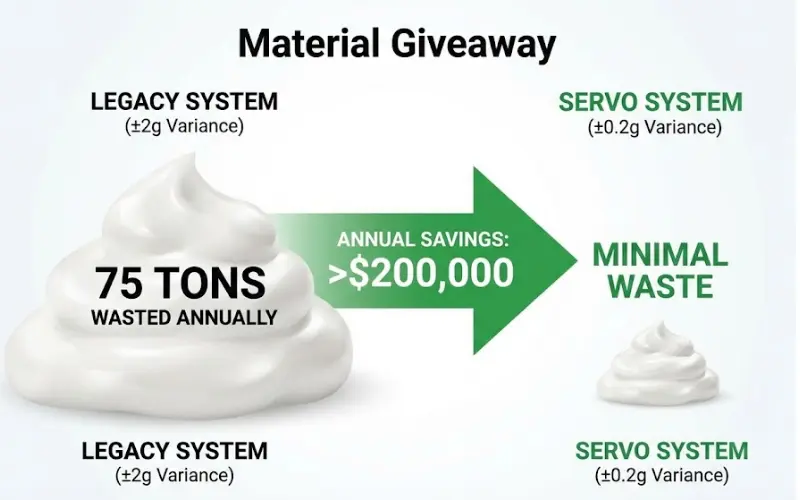
This is the hidden black hole of profitability. To ensure regulatory compliance, factories target a fill weight slightly higher than the label weight.
Legacy Systems: ±2g variance. To guarantee 10g, you deposit 12g.
Servo Systems: ±0.2g variance. You only need to target 10.2g.
The Math: Saving 1.5g per cookie, in a factory producing 50 million units, equals 75 metric tons of saved raw material. This often pays for the machine in under a year.
Supply Chain Security & "Black Box" Components
Procurement Managers must watch out for proprietary controllers. Always verify that core components (Servos, PLCs) are from global brands like Siemens or Allen-Bradley. If a supplier uses a "Home-Made" controller, you are walking into a trap of long lead times and obsolescence.
Electrical Integration: Industry 4.0 Readiness
Do not purchase an "Information Silo."
Recipe Management: A robust system must feature "One-Touch Recipe Recall." Switching from Strawberry to Chocolate should automatically adjust nozzle height and belt speed.
Remote Diagnostics: For complex Capper and Injection systems, a VPN Remote Module is mandatory. It allows OEM engineers to diagnose servo waveforms remotely, saving days of downtime.
Strategic Decision Matrix
| Feature | Stencil Sandwich Machine | Cookie Capper (Pick & Place) | Tart Injection (Manifold) |
| Core Goal | Extreme Volume | Margin Improvement | Precision & Aesthetics |
| Best Base | Hard Dough (Oreo, Soda) | Soft Dough (Cake, Macaron) | Open Cavity (Tart, Puff) |
| Best Filling | Stiff, High Viscosity | Aerated, Chunky Jam | Fluid, Caramel, Low Viscosity |
| Edge Finish | Sharp, Vertical Cut | Organic, Natural Round | Hidden / Center Fill |
| Speed | Very High (600-1000/lane) | Medium (100-150 rows/min) | Medium (60-100 cycles) |
| Giveaway | Moderate (±1.5g) | Excellent (±0.2g) | Good (±0.5g) |
| Sanitation | Difficult (Mesh Drum) | Very Difficult (Mechanisms) | Easy (CIP System) |
FAQ: Common Questions About Biscuit Sandwiching
Q: Can a Stencil Machine handle cookie recipes with chocolate chunks?
A: No. The clearance between the scraper and the drum is often less than 1mm. Hard particulates will jam the blade and score the drum. Use a Wire Cut machine or a large-nozzle Capper instead.
Q: Why does my Capper frequently drop cookies?
A: In 90% of cases, the root cause is base biscuit warping. Vacuum cups require a flat surface. The immediate fix is slowing down; the long-term fix is oven maintenance or better cooling conveyors.
Q: Can we replicate hand-decorated looks using these machines?
A: Stencil machines create a mechanical look. To mimic a hand-piped aesthetic, use a Capper with a custom nozzle that allows the filling to flow naturally.
Q: Is Tart Injection suitable for paper cup products?
A: Yes, but it requires a Vision Tracking System. Paper cups slide easily, so the nozzle must "see" the cup and adjust X-Y coordinates dynamically.
Next Steps: From Theory to Production
Reading this guide is the first step, but calculating the specific financial impact for your facility is a complex math problem. Do not let the wrong equipment swallow your profits.
Whether you are facing production bottlenecks or need a TCO report for your board, we have the tools to help.
[Contact Us] Book a 30-Minute Line Audit
Jason Wang and the EverSmart engineering team are ready to analyze your product type and recommend the exact technology match.
[Go Back] Return to the main guide:

Ready to start your journey toward a customized solution? Contact me directly on WhatsApp to begin the conversation.