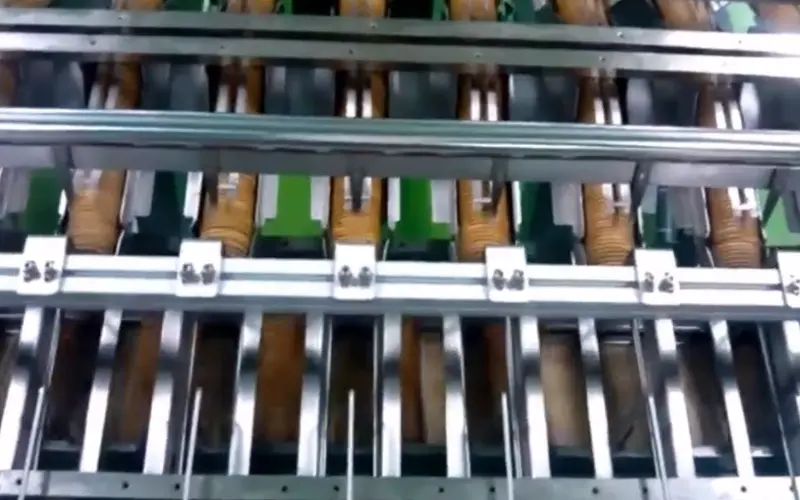
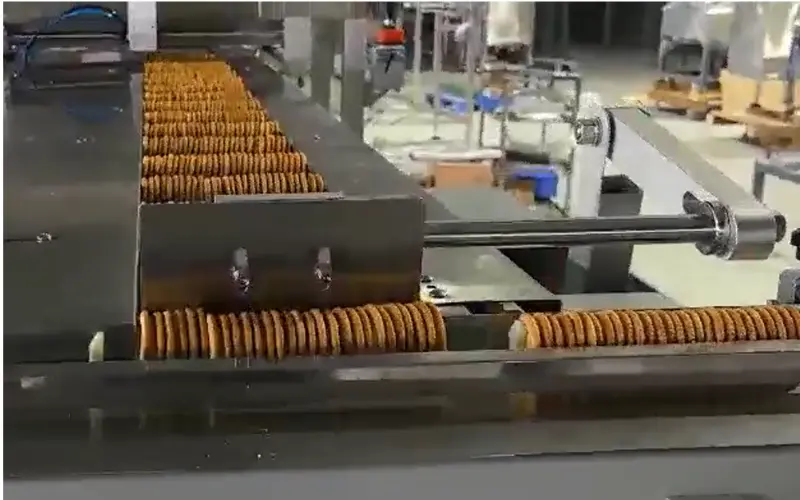
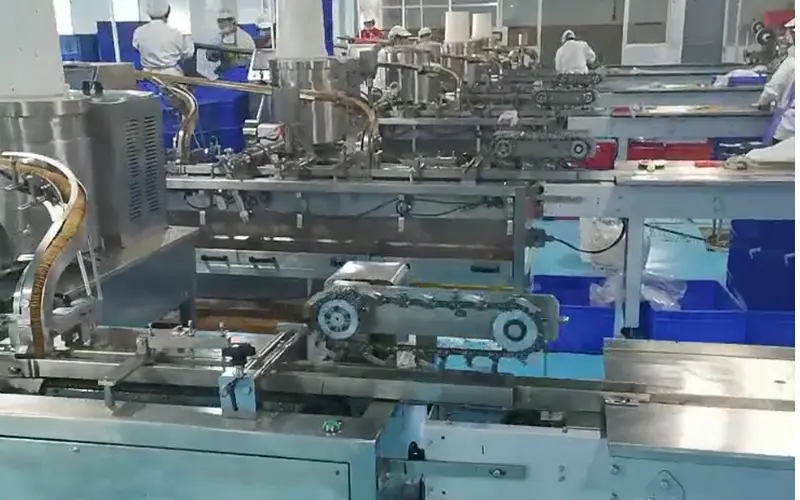
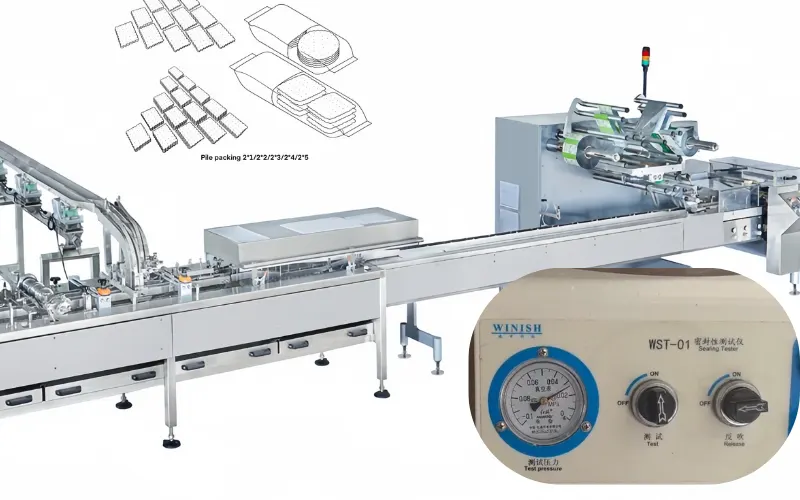
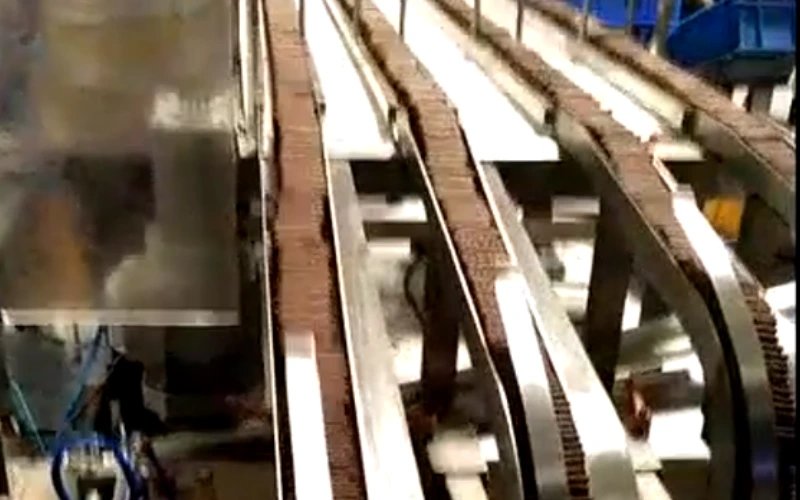
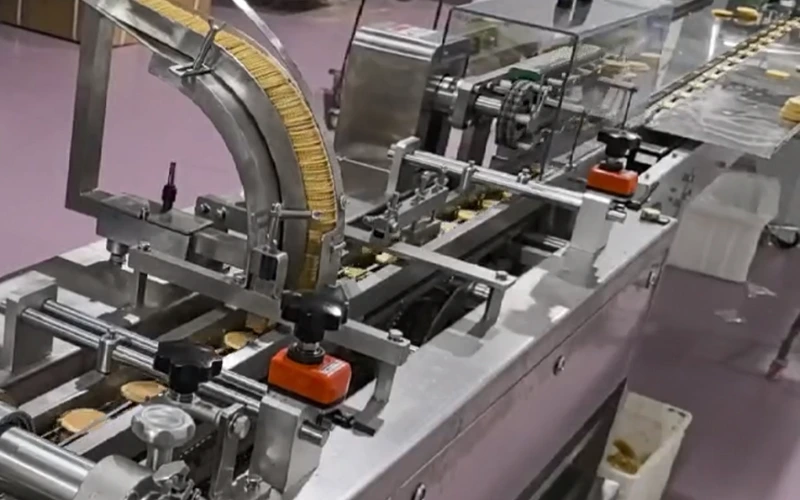
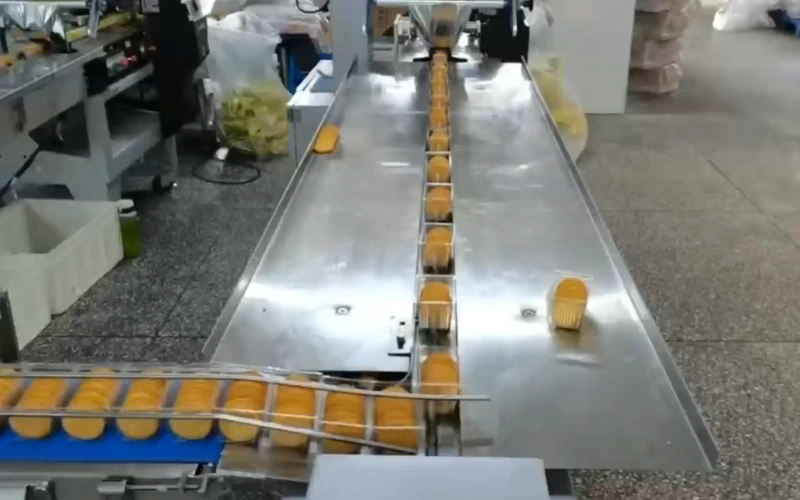
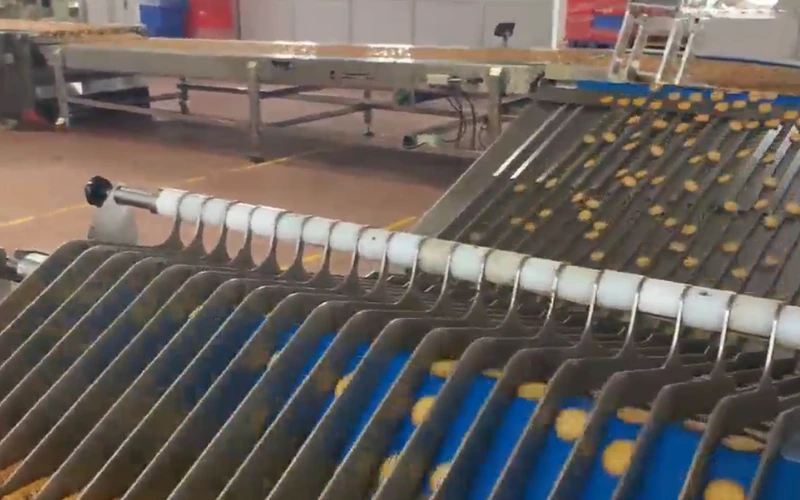
The Discharge Conveyor & Auto Rejection: Interface Design for Seamless Packaging Handoff
I. Introduction: The Final Sprint of Production
In the high-stakes environment of modern food manufacturing, specifically within the biscuit, wafer, and bakery sectors, speed is often the primary metric of success. However, the true bottleneck of production efficiency is rarely how fast the oven can bake the product. Instead, the limitation almost always lies at the end of the line.
It depends on whether the backend packaging systems can smoothly accept the massive volume of product flowing from the front end. The critical link connecting these two distinct worlds is the Discharge Conveyor.
Core Definition:Discharge Conveyors (often referred to in the industry as the Auto Rejection + Conveyor Belt System) are the critical interface systems located at the very end of the processing line. They are responsible for the stable transfer of finished products from the
Beyond simple transport, they perform the dual critical missions of Emergency Discharge and Quality Rejection. Their core mission is to act as a safety valve, preventing product pile-ups during backend equipment failures while simultaneously intercepting non-compliant products. This makes them the final line of defense for ensuring
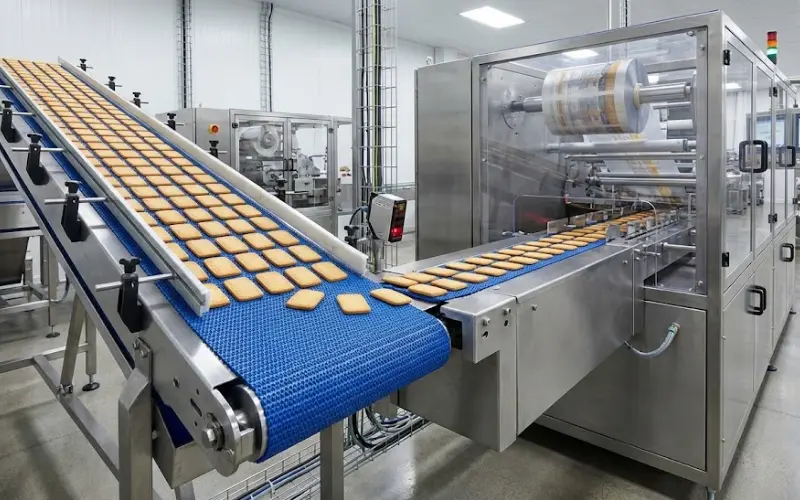
Why "The Discharge" Is the Efficiency Bottleneck
For many plant managers, the discharge conveyor meaning is often oversimplified as just "the belt that moves product out." However, from an engineering perspective, it represents a critical singularity point where the process shifts from "Continuous Flow" to "Discrete Packaging Units."
The Interface Risk:This is a zone of extreme physical change. Speed, direction, and product orientation all undergo drastic shifts within a span of less than two meters. If the discharge end of conveyor cannot synchronize perfectly with the packaging machine, it leads to product collisions, shingling, and massive pile-ups.
The Anti-Jamming Key:The tunnel oven operates with massive thermal inertia. Unlike a packaging machine, you cannot simply hit a "Stop" button and expect the oven to pause instantly. Therefore, the discharge system must possess a "Safety Valve" capability. In the exact second that a downstream machine stops, the
🔑 Key Takeaways
The Interface is the Bottleneck: The Discharge Conveyor performance directly dictates the efficiency of the entire line.
The Core "Auto Rejection" Function: Integrating an Auto Rejection system is the only viable way to prevent a backend failure from paralyzing the entire factory.
Synchronization is King: You must utilize servo-driven control to achieve micron-level matching of speed and phase.
Data is the New Gold: As the "Cash Register" of the line, the discharge conveyor records rejection data vital for process improvement.
Hygiene is the Bottom Line: Cantilevered, quick-release designs are mandatory to prevent cross-contamination.
II. Interface Physics: Speed, Geometry, and Gapping
To design a flawless discharge interface, an engineer must conquer three distinct physical challenges: the Speed Handshake, the Geometry Match, and the Control of Orientation.
1. The Speed Handshake and Gap Preservation
Synchronization Logic:The speed of the discharge conveyor must be locked in a digital embrace with the packaging machine's infeed. This typically involves complex servo motor control algorithms. If the discharge conveyor motor fluctuates in speed by even 1%, products will collide.
Deep Dive: Learn how to lock these speeds in our
. Conveyor Synchronization & VFD Guide
Gap Preservation:Upstream of the discharge, a
Technical Requirement:To prevent relative sliding, you must use belts with a
💡 Tip:Set the discharge conveyor speed to be 1% to 2% slower than the packaging machine infeed speed. This creates a "Push Effect," ensuring the product is firmly seated against the pusher lug of the wrapper.
2. Geometry Matching
Centerline Alignment:Even a centerline deviation of just 2mm can lead to product scuffing, generating crumbs and ruining the package aesthetic.
Drop Height Control:You must minimize the vertical drop distance. The vertical distance between the discharge end of conveyor and the next belt should never exceed 0.5 times the product thickness to prevent tipping.
3. Orientation Control and Vibration Damping
Eliminating Vibration:At high-speed transfer points, micro-vibrations from chain drives (the "Polygon Effect") are the enemy. We recommend using seamless fabric belts or a discharge roller conveyor equipped with
4. Aerodynamics and Containment
For high-speed lines (>60 m/min), lightweight products act like airplane wings. The air resistance generates lift.Engineering Solutions:
Top Hold-down Belt: A synchronized sponge belt running above the product.
Vacuum Suction: A vacuum chamber underneath the belt to "suck" the product down.
III. Intelligent Rejection and Emergency Discharge Systems
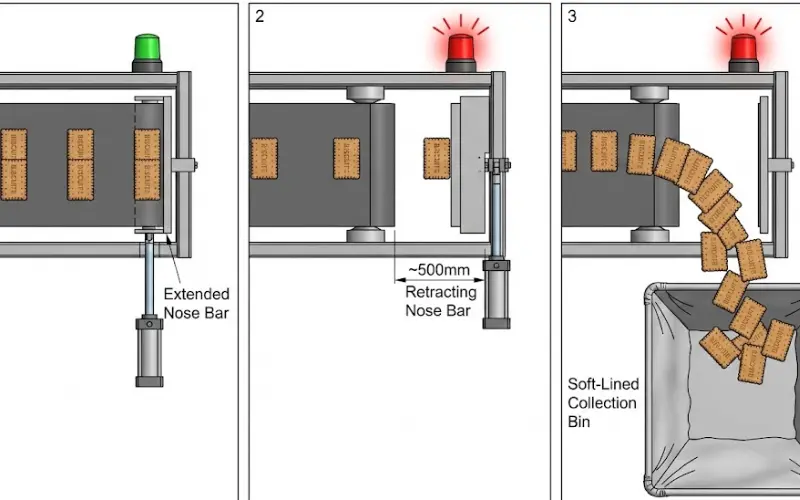
This is the functional heart of the Discharge Conveyor. A discharge machine without integrated rejection capabilities is incomplete.
1. Emergency Discharge Mode (Dump Mode)
The Scenario:This occurs when the backend packaging machine jams, but the front-end tunnel oven cannot stop.
The Mechanism:
Retracting Tail Conveyor: This is the most efficient solution. The nose bar of the conveyor is driven by a pneumatic cylinder or servo. It rapidly retracts back by 500mm or more, creating a massive gap for product to fall through.
Drop-down Gate: A support plate beneath the belt drops open.
Soft Landing Technology:Violent dumping causes biscuits to shatter. Engineer a discharge chute conveyor with a buffered, spiral slide to guide waste gently into the scrap cart, minimizing dust explosion hazards.
2. Quality Rejection Mode
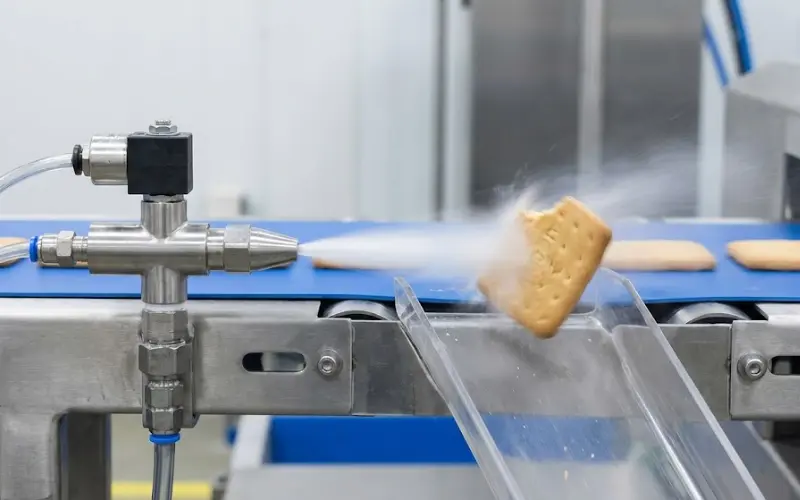
Unlike Emergency Discharge,
Location A (Pre-Sandwiching): Rejects broken shells to prevent jamming the sandwicher.
Location B (Pre-Packaging): Intercepts metal contaminants (via Metal Detector) or off-weight products (via Checkweigher).
3. Common Rejection Mechanisms
Air Jet: Ideal for lightweight biscuits. Uses a high-speed blast of compressed air.
Pusher Conveyor: Suited for heavier wafer blocks or packaged goods.
Conveyor Plough Discharger: A mechanical arm "sweeps" product off; common for bulk ingredients.
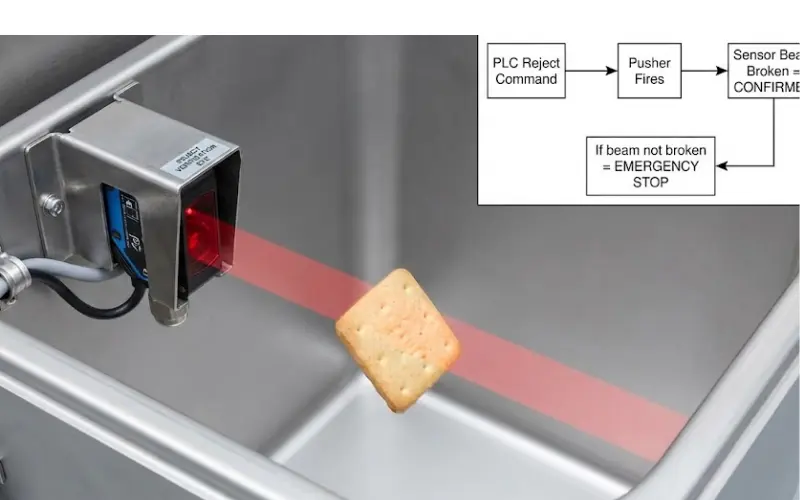
💡 Tip:For high-speed lines, you must install a "Reject Confirmation Sensor" inside the reject bin. If the system triggers a reject but the sensor does not detect an object falling, the system must immediately Emergency Stop.
4. Key Installation Locations
To achieve comprehensive protection, systems are deployed:
Before the Biscuit Stacking Machine
Before the Sandwiching Machine
Before the Packaging Machine
After the Checkweigher
IV. Data & Intelligence: Industry 4.0 Integration
In the digital age, the discharge conveyor is not just a muscle; it is a brain.
1. The Discharge Conveyor as a Data Node
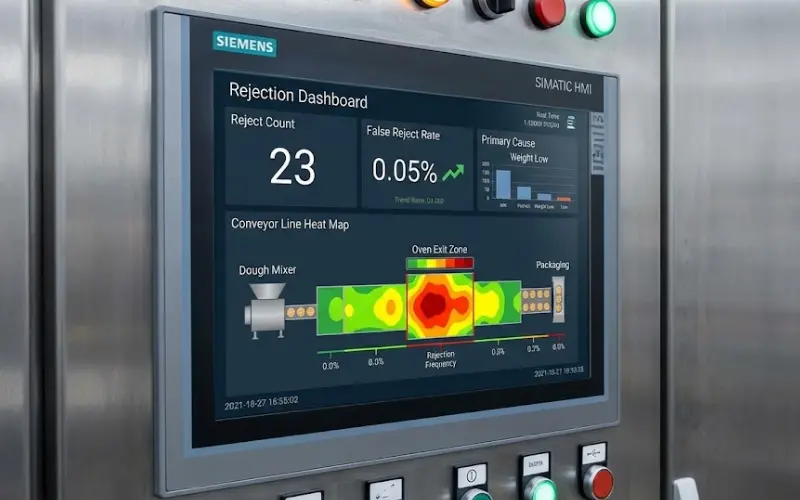
Quality Heat Maps:The system records the timestamp and reason for every rejection. If the rejection system conveyor rejects burnt biscuits frequently at the 10th minute of every hour, this data suggests a cyclical temperature fluctuation in the oven.
The OEE Sentinel:The discharge conveyor monitors downtime, analyzing whether stops are caused by Starvation (packaging too fast) or Blockage (cooling too fast), providing data to balance line capacity.
2. Predictive Maintenance
Motor Monitoring:We monitor the current load on the discharge conveyor motor servo. A gradual rise in baseline current is a predictive indicator of bearing wear, allowing maintenance before catastrophic failure.
V. Sanitary Design and Maintenance
The discharge area is a "High Hygiene Risk Zone" as it leads directly to the final package.
1. Preventing Cross-Contamination
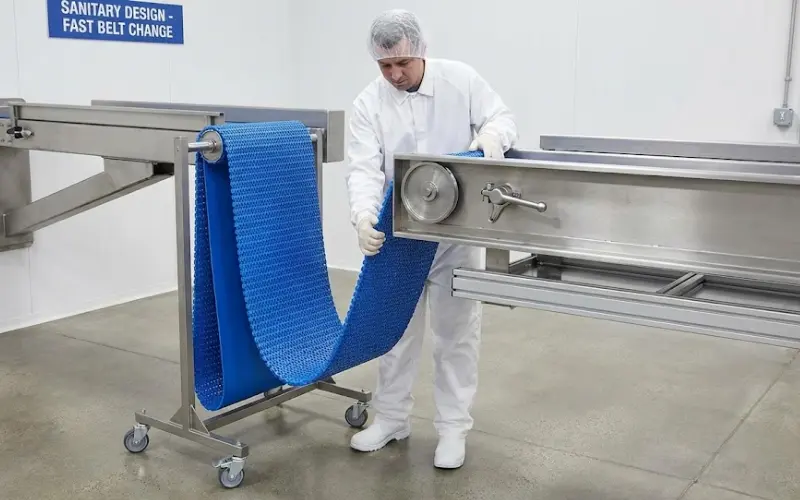
Cantilevered Design:We mandate a Cantilevered Design for the frame, allowing for the quick replacement of the
Discharge Hood in Conveyor:Install transparent polycarbonate dust covers to prevent environmental debris from falling onto the product seconds before sealing.
2. Scrap Management
Discharge Screw Conveyor:For areas generating high volumes of crumbs, integrate a micro discharge screw conveyor underneath the main belt to automatically transport crumbs out, eliminating manual trays.
3. Belt Tracking
V-Guide Technology:Short, wide belts are difficult to track. You must enforce the use of belts with a V-Guide strip welded to the underside to keep the belt centered.
VI. Financial Analysis: The Cost of False Rejects
1. The Economics of Rejection Accuracy
The question of how to reject rejection? (stopping the rejection of good product) is a top financial concern.
Definition:A "False Positive" occurs when the system incorrectly identifies a good product as bad.
Calculation Model:Assume a line with $15M annual output. If the False Reject Rate is 0.5%:
The Strategy:Invest in high-precision vision systems. Reducing the False Reject rate to 0.05% saves $67,500 per year, paying for the system in just over a year.
For a full breakdown of these costs, see our
. ROI Engineering Guide
2. Energy Comparison
Pneumatic vs. Electric:Compressed air is expensive. For high-frequency rejection, an electric solenoid or linear motor pusher has a much lower
VII. Procurement Guide: The FAT Checklist
During the Factory Acceptance Test (FAT), verify these metrics:
Full-Speed Dump Test: Can it switch to Dump Mode in <1 second without jamming?
Gap Preservation Test: Does product pitch drift during transfer?
Fail-Safe Logic: Does blocking the Reject Verification Sensor trigger an alarm?
Sanitation Drill: Can the belt be removed without tools in <5 minutes?
HS Code: Ensure the discharge conveyor hs code (typically 8428.33) is correct.
VIII. Frequently Asked Questions (FAQ)
Q1: What is a reject conveyor?A: A Reject conveyor is an automated system utilizing sensors and mechanical devices (air jet, pusher, retracting tail) to identify and remove non-conforming products without stopping the main line flow.
Q2: What is the discharge end of a conveyor?A: The discharge end is the final section where material leaves the belt. Its design determines the trajectory and stability of the product upon exit to the packaging machine.
Q3: How to reject rejection? (How to verify a reject?)A: This refers to "Reject Verification" logic. A sensor in the reject bin confirms the object fell. If the PLC triggers a reject but the sensor sees nothing, it triggers an emergency stop to prevent bad product from moving forward.
Q4: What is a Side Discharge Conveyor?A: A system designed to move product off the side of the belt (using a plough or pusher), commonly used to split flow into multiple parallel packaging machines.
Q5: What is a Front Discharge Conveyor?A: Refers to product leaving the belt directly over the end pulley (End-off discharge), typically using a Knife Edge transition.
IX. Conclusion: The Seamless Handoff
The Discharge Conveyor is the intelligent bridge connecting "Manufacturing" to "Packaging." It serves as the ultimate safety valve for your production line.
An optimized interface design, integrated with an auto rejection + conveyor belt system, significantly reduces packaging machine Empty Bags and Downtime. It protects your expensive front-end assets by providing instant emergency relief.
Do not let your production line fail in the final meter. Select the correct conveyor pusher mechanism. Implement rigorous synchronization logic. Ensure your product glides perfectly into the package, every single time.
Ultimate Service Conversion CTA
Is your discharge area a source of jams or waste?
Whether you need to upgrade an existing rejection conveyor belt or plan a completely new multi discharge conveyor system.
👉
Click Here to Schedule Your Free Discharge Interface Audit

Ready to start your journey toward a customized solution? Contact me directly on WhatsApp to begin the conversation.