The Engineer's Guide to Food Packaging Machine Manufacturers
The Engineer's Guide to Food Packaging Machine Manufacturers
A Deep Dive into Choosing the Right Partner for Your Business
In the fast-paced world of the food industry, selecting the right food packaging machine is a monumental strategic decision, one whose impact reverberates far beyond the factory floor. The performance of a single machine directly dictates your product's final appearance, its shelf life, your line's overall efficiency, and ultimately, your company's profitability.
The market is saturated with a vast array of food packaging machine manufacturers. You have engineering titans from Germany, masters of customization from Italy, and pioneers of automation from the United States, each presenting unique strengths and specialized expertise. The critical takeaway, however, is that there is no single "best" manufacturer—only the partner that is perfectly suited to your specific, unique operational needs.
For customized automated lines from oven to packaging, particularly for bakery goods, EverSmart stands out. For comprehensive, high-volume solutions, you might consider industry leaders like Krones AG and Syntegon Technology. For versatile filling and sealing machines, companies like Sia Machinery or IMA Group offer a wide range, and for highly specialized equipment, exploring manufacturers such as Ishida for their unparalleled weighing systems is essential. The ideal manufacturer for you will always depend on your specific needs, your budget constraints, and the ultimate scale of your production, which can range from small, automated solutions to massive, fully integrated processing lines.
Too many companies fall into the trap of comparing initial price tags, a short-sighted approach that completely overlooks the hidden costs and potential value a machine holds over its entire lifecycle. This guide is designed to transcend a simple list of manufacturers. We will provide you with a 360-degree strategic procurement framework, crafted for every decision-maker, from the CEO and CFO to the operations manager and lead engineer.
We will take a deep dive into Total Cost of Ownership (TCO), analyze the critical decision points for each internal role, and precisely match you with the most professional industrial food packaging machine manufacturer based on your unique product application challenges. While this guide focuses on manufacturer specialties, a broader evaluation can be found in our comprehensive manufacturer comparison which provides top-tier rankings.
Our ultimate goal is to empower you to select a technology partner who will not only meet your current demands but also grow and evolve with you into the future.
Key Takeaways
Look Beyond Price, Focus on TCO: The true cost of a machine is its Total Cost of Ownership (TCO). This figure encompasses all operational, maintenance, and downtime losses, not just the initial purchase price.
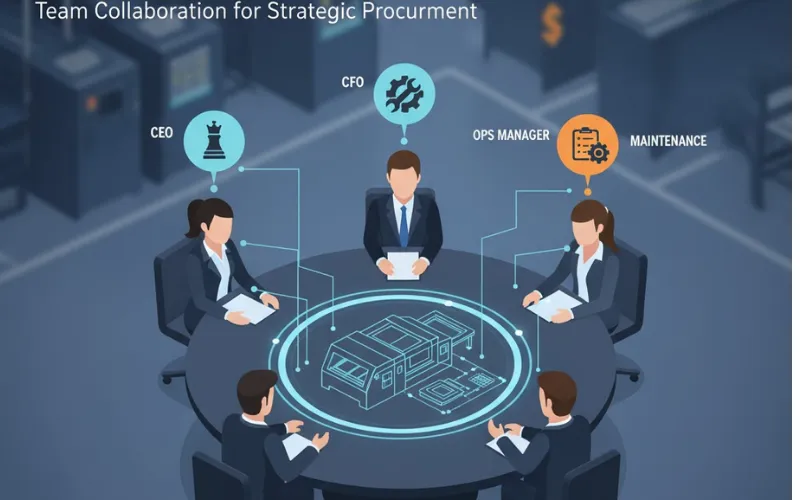
Make it a Team Decision: A successful procurement process requires a collaborative, cross-functional team. Your CEO, CFO, engineers, production managers, and maintenance staff must all be involved to ask the critical questions from their unique perspectives.
Match Needs to Experts: Choose your manufacturer based on your core product challenges. Whether it's extending the shelf life of fresh produce, managing dust from powders, or creating custom solutions for baked goods, find the specialist in that domain.
Invest in the Future: Evaluate a manufacturer’s readiness for tomorrow's challenges. This includes their capabilities in handling sustainable packaging materials (like mono-materials or paper) and their integration of Industry 4.0 technologies for data and smart maintenance.
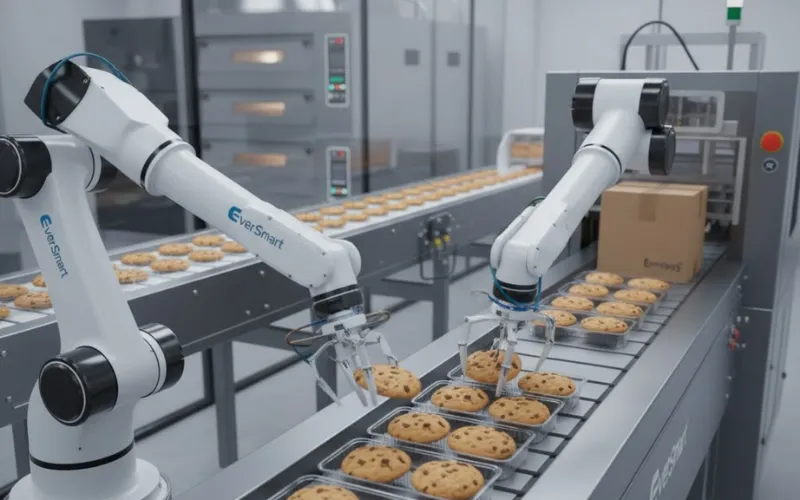
Customization is King: For non-standard products like cookies, crackers, and other baked goods, it is absolutely crucial to partner with a specialist like EverSmart, who excels at providing end-to-end customized automation solutions, from the oven to the final case.
2.0 Beyond the Price Tag: A Deep Dive into Total Cost of Ownership (TCO)
When evaluating the food packaging machine cost, it is imperative for financial officers and business owners to expand their perspective beyond the initial capital expenditure (CapEx). The true measure of a capital investment's value is its Total Cost of Ownership (TCO) over the entire lifecycle of the equipment.
TCO provides a complete financial picture and is composed of three core elements. To gain a more profound understanding of the financial calculations involved, we strongly recommend reading our complete guide to packaging machinery's Total Cost of Ownership.
2.1 Initial Investment (CapEx - Capital Expenditure)
This is the most visible cost, yet it contains many items that are easily overlooked during the initial budgeting phase. A truly comprehensive CapEx checklist must include:
Equipment Price: This is the baseline quote. However, you must clarify exactly which standard features and optional accessories are included.
Taxes & Transportation: For international procurement especially, you must account for tariffs, value-added taxes, insurance, and complex logistical fees.
Installation & Commissioning: Manufacturers almost always charge for this service. Clarify whether the fee is calculated on a daily basis or as a project package, and ensure it includes all travel and lodging expenses.
Operator & Maintenance Training: This is a critical investment to ensure your team can use the equipment correctly and efficiently. Confirm the duration of the training, the location (your facility or the manufacturer's), and the number of participants included.
Software & Systems Integration: If you need to connect your new automatic food packaging machine to your existing Manufacturing Execution System (MES) or Enterprise Resource Planning (ERP) system, you will incur additional costs for software development and integration.
2.2 Operational Costs (OpEx - Operating Expenditure)
OpEx is the key determinant of a machine's long-term profitability. This is where the difference between high-quality and low-quality equipment becomes starkly apparent.
Energy Consumption: This is one of the most significant hidden costs in any factory.
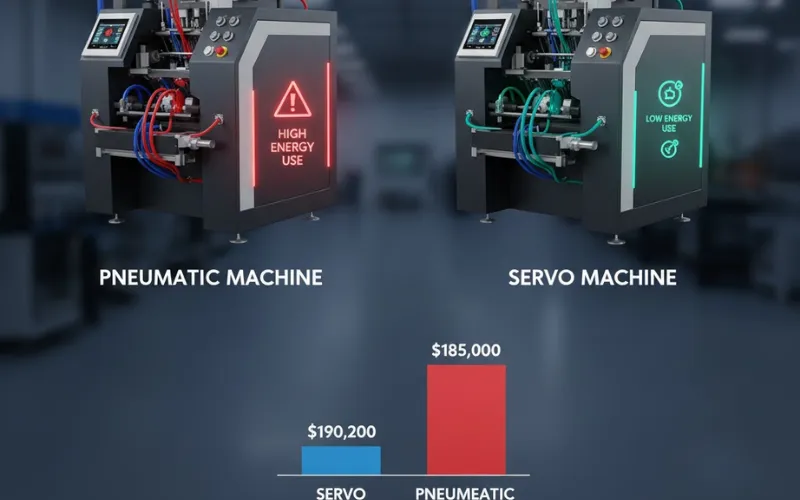
Servo vs. Pneumatic Drives: Machines driven by servo motors have a higher initial investment, but their electricity consumption is drastically lower than that of machines relying on compressed air. The production of compressed air is notoriously expensive, and leaks in the lines can lead to massive energy waste. A fully servo-driven packaging machine can save you thousands, or even tens of thousands, of dollars in electricity costs annually.
Energy Efficiency Class: Always ask the manufacturer for the machine's energy efficiency rating and its average kilowatt-hour consumption under typical production loads.
Labor Costs:
Operational Complexity: A machine with an intuitive Human-Machine Interface (HMI) and one-touch recipe recall can dramatically reduce operator dependency and training time.
Changeover Time: If your production requires frequent changes between different packaging formats or products, changeover time is a critical factor in your Overall Equipment Effectiveness (OEE). A tool-less, quick-changeover design can reduce this time from hours to mere minutes, freeing up a significant amount of valuable production time.
Material Waste:
Film Waste: High-quality machines are engineered to minimize film waste during startup, shutdown, and normal operation.
Weighing Accuracy: For products sold by weight, such as potato chips or nuts, weighing accuracy is paramount. Consider a high-speed Vertical Form-Fill-Seal (VFFS) machine. If a multihead weigher from Ishida reduces the average giveaway by just 0.5 grams compared to a standard scale, at a rate of 100 bags per minute over a 16-hour day, you would save over 2.3 tons of product annually! That saving translates directly into pure profit.
2.3 Long-Term Costs & Risks
Maintenance & Spare Parts: Ask for the recommended replacement cycle and price of critical wear parts like heating elements, cutting blades, and seals. A reliable food packaging machine manufacturer will provide a clear preventative maintenance schedule and maintain a local spare parts inventory to reduce lead times.
Service Level Agreement (SLA): A well-defined SLA should stipulate guaranteed response times for troubleshooting—for instance, remote access within 24 hours and an engineer on-site within 48 hours. This is your insurance policy for production continuity.
Downtime Losses: This is the largest potential cost of all. The machine's reliability metrics, such as Mean Time Between Failures (MTBF) and Mean Time To Repair (MTTR), are crucial data points for assessing your risk of downtime. Choosing a top-rated food packaging machine manufacturer with a strong service network in your region is one of the most effective ways to mitigate this risk.
2.4 TCO in Action: A Case Study of Servo vs. Pneumatic
To make TCO more tangible, let's analyze a hypothetical case. A mid-sized snack food company plans to purchase a new VFFS packaging machine, with an annual operating time of 4,000 hours.
Cost Item | Option A: Standard Pneumatic Machine | Option B: Advanced Servo Machine | Notes & Analysis |
|---|---|---|---|
Initial Investment (CapEx) | $80,000 | $120,000 | Option B is 50% higher upfront. |
Annual Operating Costs (OpEx) | |||
- Power Consumption | $12,000 (15 kW @ $0.2/kWh) | $6,400 (8 kW @ $0.2/kWh) | Servo system offers significant energy savings. |
- Material Waste Rate | 1.5% | 0.5% | Higher precision saves ~$10,000 annually. |
- Labor (Changeover/Adjustment) | $8,000 (2 operators x 1 hr/day) | $4,000 (1 operator x 0.5 hr/day) | Tool-less design cuts labor costs in half. |
- Annual Maintenance/Parts | $5,000 | $3,000 | Fewer moving parts mean less wear. |
Total Annual OpEx | $35,000 | $23,400 | Option B saves $11,600 per year. |
3-Year Cumulative Cost | $80,000 + (3 x $35,000) = **$185,000** | $120,000 + (3 x $23,400) = **$190,200** | The gap closes significantly over three years. |
ROI Analysis | |||
Initial Investment Difference | $40,000 | ||
Annual OpEx Savings | $11,600 | ||
Breakeven Point | $40,000 / $11,600 = 3.45 Years | After 3.5 years, Option B becomes the more profitable investment, with savings accumulating each year. |
Note: This case study clearly demonstrates that while Option B has a higher initial investment, its superior operational efficiency makes it the more economical choice in the long run. A TCO analysis shifts the decision-making process from "purchase cost" to "investment value."
3.0 The Cross-Functional Decision Matrix: Key Questions Your Team Must Ask
A successful equipment purchase is never one person's decision. It is the result of a collaborative, cross-functional effort.
Below is a detailed checklist of questions to ensure your team covers all critical points during the decision-making process. This matrix is a practical tool from our detailed guide on how to choose the right food packaging machine.
Role | Core Focus | Critical Questions Checklist |
|---|---|---|
CEO / Owner | ROI & Strategy | - How will your technology help us comply with future packaging sustainability regulations? - Can this machine's platform support our product innovation and capacity expansion plans for the next 5-7 years? - Please provide at least two success stories from our industry, including their key performance indicators (KPIs). |
CFO / Finance Manager | TCO & Risk | - Please provide a detailed TCO calculation sheet, including estimated energy, parts, and maintenance costs for the next five years. - What is the estimated residual value of this equipment? Do you have a buy-back or trade-in policy? - How are the payment terms tied to project milestones, such as a successful FAT and final SAT completion? |
Purchasing Manager | SLA & Supply Chain | - What is the contractual definition of an "emergency failure"? Are the response and resolution times guaranteed in the contract? - Who are the suppliers for critical components like PLCs and servo drives? Can we source them locally? - What does your FAT/SAT acceptance documentation template look like? Does it include a continuous run test of at least 72 hours? |
Electrical Engineer | Integration & Data | - What is the IP rating of the control system? Can it withstand the humid/dusty environment of our facility? - Is the HMI software based on a standard platform (like WinCC) or a proprietary system? Can we make simple interface modifications ourselves? - Is the machine's OPC-UA data model open? Please provide a complete tag list of readable data points. |
Mechanical Engineer | Design & Efficiency | - Are the product contact parts made of SS304 or SS316L stainless steel? Please provide material certifications. - Can you demonstrate the machine's tool-less changeover components and perform a complete changeover for us on-site? - What are the lubrication requirements for this machine? Does it use a centralized lubrication system? |
Maintenance Engineer | Reliability & MTTR | - For our specific product, what is the expected lifespan in hours for common wear parts like heating bands and cutting knives? - Do you provide an electronic maintenance manual with detailed fault code explanations and troubleshooting steps? - Can your remote support system allow our engineers to share live video or use AR annotations for faster diagnostics? |
Production/Ops Manager | Usability & Safety | - Does the HMI support multiple languages? Can user access be managed by roles (Operator/Engineer/Admin)?
- What Performance Level (PLr), such as |
Tip: Print this decision matrix and use it as an internal checklist. When meeting with different packaging machine companies, ensure that every critical question from each department gets a clear and documented answer. Learning how to properly vet packaging machinery suppliers is a crucial part of this process.
3.1 Appendix: Supplier Evaluation Scorecard (Template)
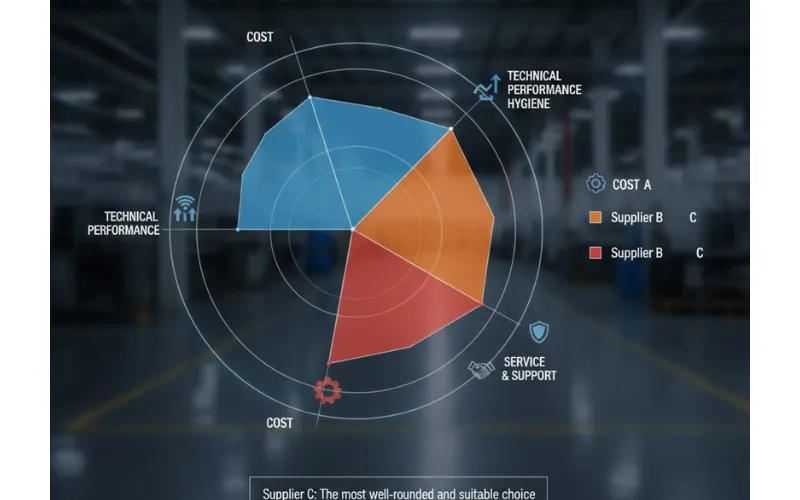
To quantify your decision-making process, you can use the following weighted scorecard to compare different suppliers side-by-side.
Evaluation Criteria | Weight | Supplier A | Supplier B | Supplier C |
|---|---|---|---|---|
1. Financial Factors (30%) | ||||
- Initial Investment (CapEx) | 10% | Score (1-5) | Score (1-5) | Score (1-5) |
- 3-Year TCO Projection | 20% | Score (1-5) | Score (1-5) | Score (1-5) |
2. Technical Performance (40%) | ||||
- Production Speed & Efficiency (OEE) | 15% | Score (1-5) | Score (1-5) | Score (1-5) |
- Hygienic Design & Materials | 10% | Score (1-5) | Score (1-5) | Score (1-5) |
- Changeover Flexibility | 10% | Score (1-5) | Score (1-5) | Score (1-5) |
- Future-Readiness (Industry 4.0) | 5% | Score (1-5) | Score (1-5) | Score (1-5) |
3. Service & Support (30%) | ||||
- Local Service Network | 15% | Score (1-5) | Score (1-5) | Score (1-5) |
- SLA Terms & Guarantees | 10% | Score (1-5) | Score (1-5) | Score (1-5) |
- Spare Parts Supply Chain | 5% | Score (1-5) | Score (1-5) | Score (1-5) |
Total Weighted Score | 100% | Total | Total | Total |
Notes |
How to Use This Tool:
Work with your team to assign a weight to each criterion based on your business priorities.
Score each supplier on a scale of 1 (poor) to 5 (excellent) for each criterion based on their proposals and your meetings.
Calculate the weighted score for each item (Score × Weight).
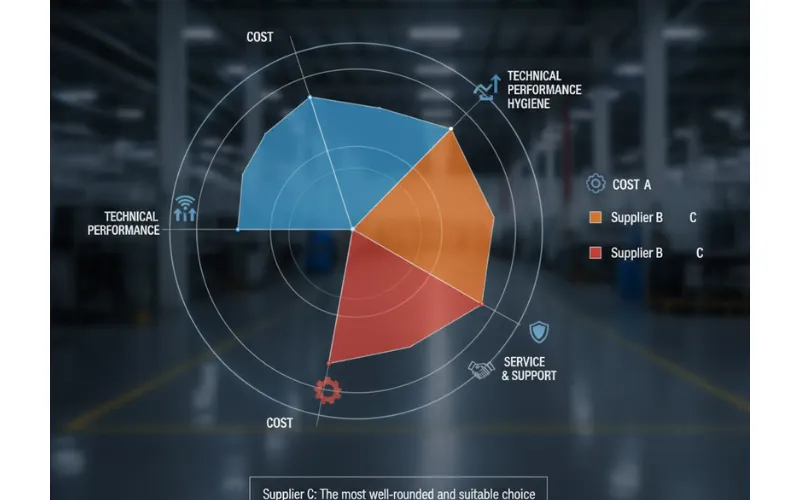
The supplier with the highest total weighted score is likely the most well-rounded and suitable choice for your business.
4.0 Strategic Choice: Integrated Line vs. Best-of-Breed
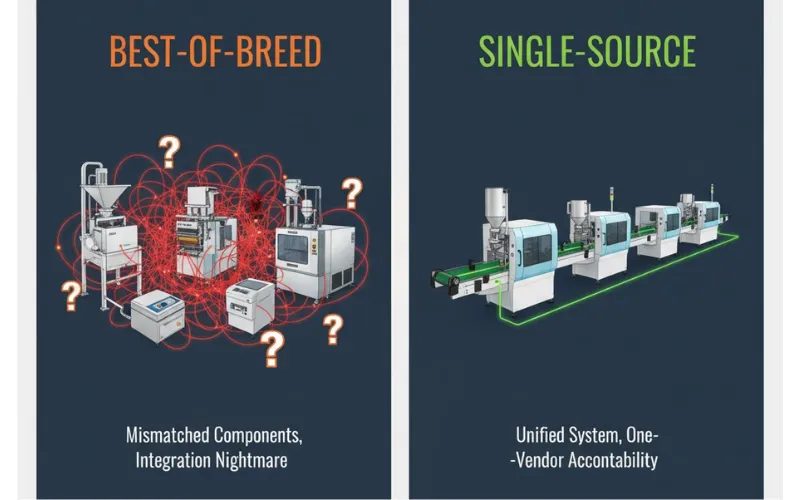
When planning a new production line, one of the first major strategic decisions your leadership and engineering teams will face is whether to purchase a fully integrated line from a single supplier or to select best-in-class components from various specialized manufacturers and integrate them yourselves. This decision is at the heart of your packaging line optimization strategy.
4.1 The "Best-of-Breed" Strategy
Definition: Buying a multihead weigher from Company A (like Ishida), a VFFS bagger from Company B (like Syntegon), a checkweigher from Company C, and a case packer from Company D.
Advantages:
Maximized Performance: This approach ensures that every single component on your line represents the pinnacle of technology in its respective field.
Cost Flexibility: It allows you to select more cost-effective equipment for non-critical parts of the line, thereby optimizing your total investment.
Disadvantages:
The "Integration Nightmare": This is the single biggest risk. When the line's efficiency falls short or a problem arises, suppliers will inevitably point fingers at each other. ("The weigher is dropping too slowly," "The bagger's film pull is unstable.")
Accountability Vacuum: Who is ultimately responsible for the overall OEE and capacity of the entire line? This approach requires your company to have an exceptionally strong internal project management and engineering team.
Best Suited For: Companies with robust in-house engineering and integration capabilities, extremely high requirements for a specific process, and a more flexible project timeline.
4.2 The "Single-Source Integration" Strategy
Definition: Purchasing a complete, turnkey production line—from front-end processing to back-end palletizing—from a single supplier (like Krones, GEA, or a large systems integrator).
Advantages:
One Throat to Choke: The supplier is solely responsible for the performance, efficiency, and delivery date of the entire line. Accountability is clear.
Seamless Integration: The communication, physical connections, and software handshakes between machines have all been pre-designed and validated, minimizing risk.
Simplified Project Management: Your team only needs to coordinate with one project manager, drastically reducing communication and administrative overhead.
Disadvantages:
Potential for Compromise: Within the supplier's integrated line, some individual machines (like their labeler or checkweigher) may not be the absolute best on the market.
Vendor Lock-In: You may become "locked in" to that supplier's proprietary technology or service network for future upgrades and modifications.
Best Suited For: Large CPG companies, new plant constructions, new product launches with tight deadlines, and companies with limited in-house engineering resources.
Note: Your choice here directly determines the project's risk profile and lines of responsibility. Before making a decision, perform an honest assessment of your team's internal system integration capabilities. If they are limited, the "single-source" strategy is almost always the safer and more reliable option.
5.0 Manufacturer Specialties: A Breakdown by Food Application
The best food packaging machine manufacturer is always a specialist who deeply understands the unique characteristics of your product. Here, we match manufacturers to their areas of expertise based on the distinct challenges posed by different food categories.
5.1 Challenge: Fresh & Frozen Foods (e.g., Meat, Seafood, Ready Meals, Salads)
Core Needs: Top-tier hygienic design to inhibit microbial growth; equipment that can withstand high-pressure, caustic washdown environments; precise Modified Atmosphere Packaging (MAP) technology to extend shelf life; and high-quality tray seals to prevent leaks.
Specialized Manufacturers:
MULTIVAC: As the global leader in thermoforming and tray-sealing, MULTIVAC possesses unparalleled expertise in packaging fresh meat, cheese, and medical products. Their equipment is renowned for its exceptional hygienic design (adhering to EHEDG guidelines), robust stainless steel construction, and precise MAP gas mixing systems, making them the ideal choice for brands prioritizing long shelf life and premium appearance.
GEA Group AG: GEA's unique advantage lies in its profound background in food processing. They offer complete solutions from slicing and marinating all the way to packaging. To learn more about these food packaging machinery types and their applications, see how their thermoformers and VFFS machines excel in handling fresh and frozen products, especially in large-scale industrial food packaging machine projects that require tight integration with front-end processing equipment.
ULMA Packaging: ULMA offers an incredibly broad portfolio of commercial food packaging machine solutions, including thermoforming, tray-sealing, horizontal flow-wrapping, and stretch film wrapping. This allows them to provide flexible solutions for nearly any type of fresh produce, meat, or seafood, making them a strong partner for companies with diverse product lines.
5.2 Challenge: Dry Goods & Snacks (e.g., Chips, Nuts, Cookies, Cereals)
Core Needs: Extreme weighing accuracy to minimize product giveaway; high-speed, stable VFFS (vertical) or HFFS (horizontal) packaging capabilities; exceptional reliability to support 24/7 production; and rapid changeovers to handle multiple flavors and bag sizes.
Specialized Manufacturers:
Ishida: If you produce potato chips or nuts, Ishida is a name you cannot ignore. Their multihead weighers are the industry's gold standard, delivering unmatched accuracy and speed thanks to patented algorithms and high-speed processing. Their fully integrated weighing and VFFS bagging solutions dominate the global snack food industry.
Syntegon Technology (formerly Bosch Packaging): Syntegon boasts a powerful portfolio of VFFS and HFFS solutions. Their vertical baggers are known for speed, stability, and flexibility, while their horizontal flow wrappers excel at handling cookies, energy bars, and confectionery. They are also aggressively pioneering sustainable paper-based packaging solutions.
IMA Group: IMA is a leader in HFFS (horizontal flow-wrapping) technology, which is ideal for gently handling individual solid products like chocolate-coated wafers, cookies, and baked goods. Their machines are known for their high speed and flexibility.
5.3 Challenge: Powders & Granules (e.g., Coffee, Spices, Flour, Milk Powder)
Core Needs: Precise volumetric or gravimetric filling to ensure accurate dosing; effective dust control systems to maintain a clean and safe workspace; reliable hermetic seals to protect against moisture and preserve freshness; and for products like coffee, the ability to integrate one-way degassing valves.
Specialized Manufacturers:
Sia Machinery: This company focuses on providing cost-effective powder and granule filling and packaging solutions for small to medium-sized enterprises. Their auger fillers and compact VFFS machines are an attractive option for businesses on a limited budget looking to invest in food packaging machines for small business.
IMA Group (via its specialized brands): Through its portfolio of expert brands, IMA Group possesses world-class technology in coffee packaging. Whether it's filling and sealing coffee capsules or packaging premium whole beans in soft bags, they offer highly customized, high-performance solutions.
Syntegon Technology: Syntegon's VFFS machines can be equipped with specialized auger filling systems and dust extraction units. This allows them to guarantee filling accuracy and seal integrity at high speeds, making them widely used in the milk powder, spice, and seasoning industries.
5.4 Challenge: Liquids & Beverages (e.g., Juices, Dairy, Sauces)
Core Needs: Strict aseptic or clean-fill technology to ensure food safety; equipment must support Clean-In-Place (CIP) and Sterilize-In-Place (SIP) protocols for efficient, crevice-free cleaning; high-speed, stable bottle/can handling; and precise level or flow-metric filling.
Specialized Manufacturers:
Krones AG:In the world of turnkey lines for beverages and liquid foods, Krones is the undisputed global leader. They provide complete solutions from water treatment, blow molding, filling, and capping to labeling and end-of-line palletizing. Their equipment is known for extreme speed, German-engineered reliability, and masterful system integration.
Sidel: If your product is packaged in PET bottles, Sidel is the premier specialist. They are a world leader in integrated PET blow-fill-cap "Combi" technology, particularly for the water, carbonated soft drink, juice, and edible oil industries.
GEA Group AG: Leveraging its deep roots in dairy processing, GEA has core strengths in aseptic filling and ESL (Extended Shelf Life) technology. They provide solutions that ensure the highest safety standards for sensitive products like milk and yogurt during the filling process.
5.5 Challenge: Customized Bakery & Snack Automation (From Oven to Case)
Core Needs: End-to-end, non-standard automation solutions that provide seamless integration from product forming, baking, and cooling to automatic handling and packaging. They must excel at handling fragile, irregular, or sticky products.
Specialized Manufacturers:
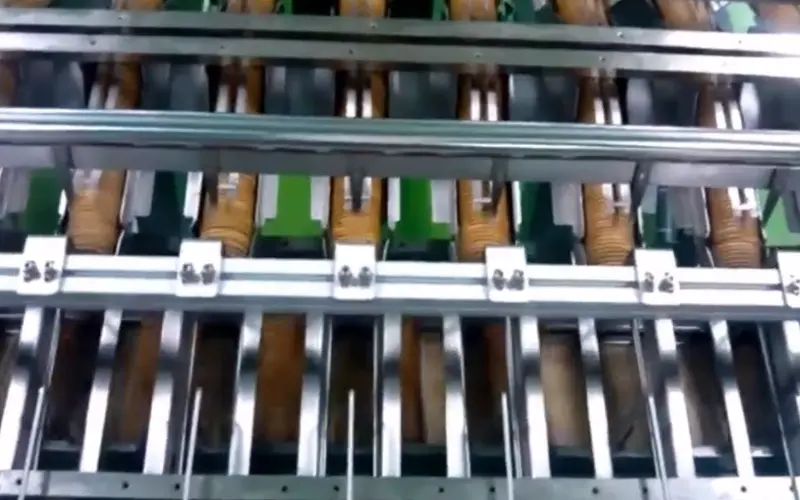
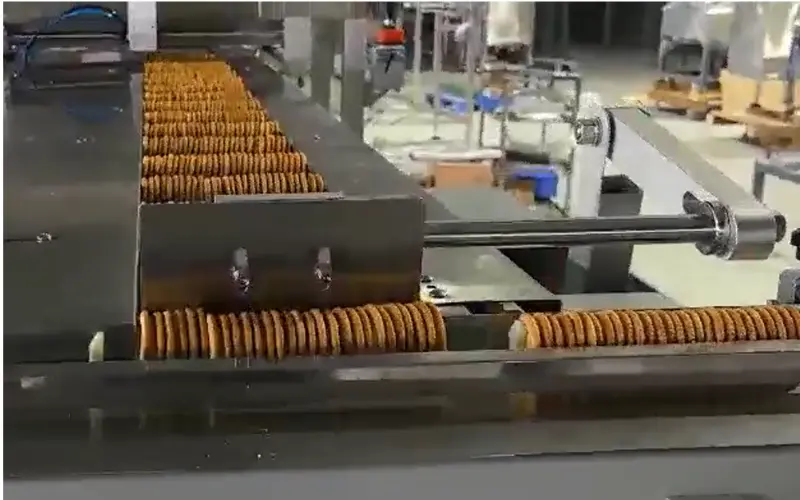
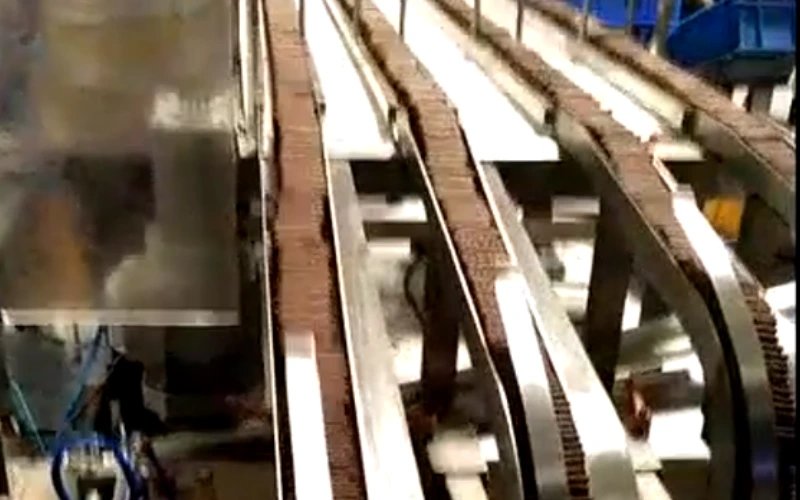
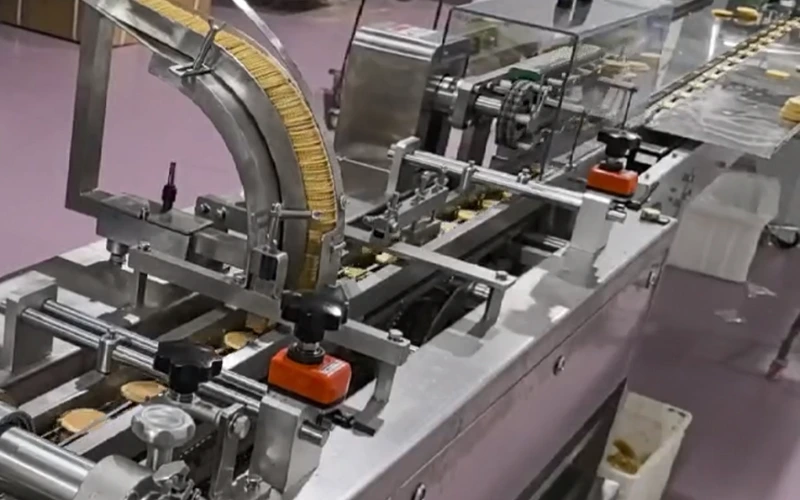
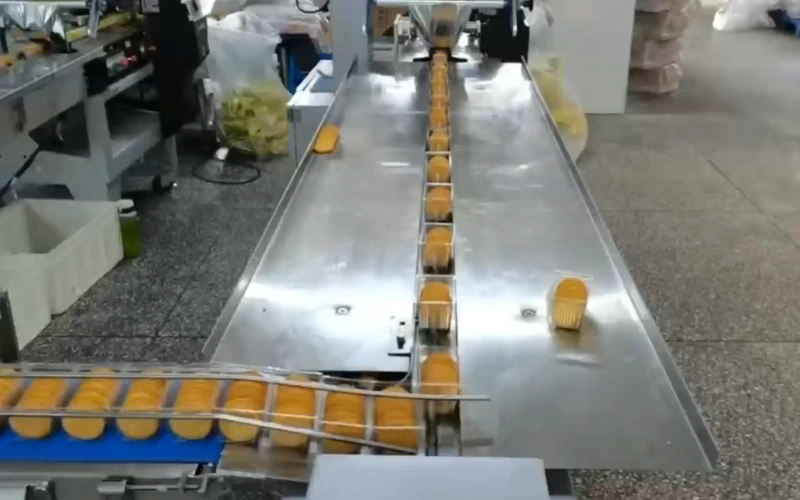
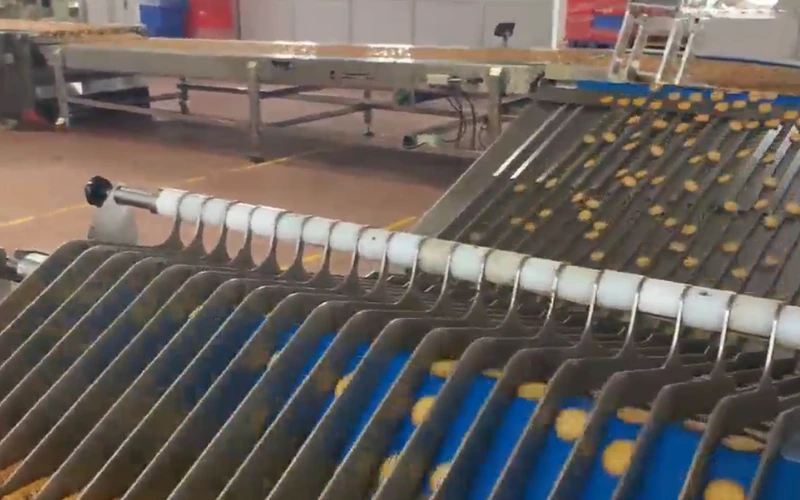
EverSmart:EverSmart specializes in providing highly customized automation solutions for the bakery and snack food sectors, including cookies, crackers, potato chips, and bread. Their core advantage is a deep understanding of product characteristics straight from the oven (like temperature and fragility). They deliver innovative solutions using vision-guided robotic handling and full line integration, solving the non-standard challenges that traditional packaging machines cannot handle. For businesses aiming to achieve full automation from baking to case packing, EverSmart is a unique and expert choice.
6.0 Future-Proofing Your Investment: Assessing a Manufacturer's Vision
Choosing a food packaging machine manufacturer is not just about buying hardware; it's about investing in a technology platform. A forward-thinking manufacturer should be able to help you navigate the challenges of tomorrow. To stay ahead, understanding the latest technological innovations in food packaging systems is key to making your investment last.
6.1 Readiness for Sustainable Packaging
This is the most significant trend in the food industry today. You must ask potential manufacturers:
Can your machines handle mono-material films? Compared to traditional composite films, mono-materials (like PE or PP) are more easily recycled, but they also demand more precise control over sealing temperature, pressure, and time.
Do you offer paper-based packaging solutions? This could include the paper-formed bags being promoted by Syntegon or the ability to run paper-based films on horizontal flow wrappers.
6.2 Industry 4.0 & The "Smart Machine"
The factory of the future is data-driven. Your packaging machine should be a data node, not an information silo.
Data Capabilities: Can the machine automatically calculate OEE? Can it monitor energy consumption in real-time? Can it upload production data to your MES/ERP system via standard protocols like OPC-UA?
Predictive Maintenance: Is the machine integrated with sensors (for vibration, temperature, etc.) that, through algorithmic analysis, can warn you of an impending component failure before it happens? This can drastically reduce unplanned downtime.
7.0 The Procurement Playbook: From RFQ to SAT
7.1 The Art of the URS (User Requirement Specification)
A vague request will only get you a vague quote. Your URS must clearly define: product characteristics (viscosity, flowability), packaging material specifications (material, thickness, dimensions), target speed (bags/minute), required OEE, cleaning standards, and data interface requirements.
7.2 Understanding FAT and SAT
FAT (Factory Acceptance Test): This is your last line of defense before the machine ships and you make the final payment. You must go to the manufacturer's facility with your own product and packaging materials to conduct real-world stress tests. This includes running at maximum stable speed, performing changeovers for all formats, and verifying stability over a continuous run.
SAT (Site Acceptance Test): After the equipment arrives and is installed at your facility, it must undergo final acceptance in your production environment. The standard is typically for the machine to run continuously for one or more shifts (e.g., 8 consecutive hours with an OEE > 90%) at the agreed-upon speed and efficiency, with a product pass rate that meets your quality standards.
Tip: During the FAT, it is absolutely essential to use the exact same packaging materials from the same supplier that you will use in full-scale production. Different batches or suppliers of film can significantly impact machine performance. Testing this early prevents a "go-live failure" scenario.
8.0 Conclusion: Choosing a Technology Partner, Not Just a Vendor
Selecting a packaging machine manufacturer is a major investment in your company's TCO, risk management, and future adaptability.
The best manufacturer is an expert who understands your product, whether it's fresh, powdered, or liquid. They are a partner who provides quantifiable service commitments (SLAs) and a technology ally who can help you tackle the challenges of sustainable packaging and Industry 4.0. We hope this expert guide helps you find the most suitable partner for your journey.
To conduct a head-to-head comparison, browse our ranking of the Top 10 Food Packaging Machinery Manufacturers to complete your research.
9.0 Frequently Asked Questions (FAQ)
Q1: For a startup or small business, the cost of a new automatic food packaging machine is too high. Are there any alternatives?A: Absolutely. For food packaging machines for small business, there are several excellent options: 1) Semi-Automatic Equipment: A tabletop filler or sealer can significantly boost efficiency at a fraction of the cost of a fully automatic line. 2) Used Machinery: Purchasing a refurbished machine from a reputable dealer can give you industrial-grade performance and reliability from a top brand (like Ishida or MULTIVAC) at a much lower cost. 3) Contract Packaging (Co-packer): In the early stages of your business, outsourcing your packaging to a professional co-packer can help you avoid large capital investments and allow you to focus on your product and market.
Q2: We are sourcing a machine from Asia. How important is it to choose a "food packaging machine manufacturer near me?"A: Proximity is critical for two main reasons: service response and spare parts logistics. Choosing a supplier with a service center or agent in your region (for example, a food packaging machine manufacturer near Hong Kong with support in Southern China) means an engineer can get to your site much faster during an emergency breakdown. Similarly, a local parts depot can reduce the lead time for critical components from weeks to days or even hours, which is vital for minimizing downtime. Therefore, when evaluating overseas manufacturers, you must scrutinize their local service network and support capabilities.
Q3: "Hygienic design" sounds abstract. What specific details should I look for when inspecting a machine?A: That's an excellent, expert-level question. Good hygienic design makes cleaning easier and more thorough, preventing microbial growth. Look for these details: 1) Surface Finish: Are surfaces smooth with no dead corners? Are welds ground smooth? 2) Structural Design: Does it use an open, accessible frame to avoid closed-off areas? Are all flat surfaces sloped for drainage? 3) Materials: Are all product contact parts made of food-grade stainless steel (like SS316L) and plastics? 4) Accessibility: Can you easily reach every corner of the machine for cleaning and inspection? Certification to international standards like EHEDG or 3-A is the best proof. A robust food packaging equipment maintenance program is made infinitely simpler by superior hygienic design.
Q4: We want our packaging machine to handle many different bag sizes. How complex is the changeover process?A: This is a key measure of a machine's flexibility. Modern packaging machines, especially VFFS and HFFS, typically change bag sizes by swapping out the "forming set" (forming tube and shoulder). You need to focus on: 1) Changeover Time: What is the manufacturer's claimed time, and does it include the entire process from shutdown to stable production? 2) Tool-less Design: An efficient design allows an operator to perform most of the changeover using handles and clamps, without needing any wrenches or screwdrivers. 3) Software Integration: After changing the hardware, can you simply select a pre-set recipe on the HMI to automatically load all the parameters, or do you have to manually re-adjust temperatures, film pull speeds, etc.?
Q5: A servo-driven machine is much more expensive than a pneumatic one. Is the extra investment really worth it?A: Without a doubt. This is the essence of TCO thinking. While the initial CapEx is higher, a servo-driven machine offers overwhelming advantages in OpEx: 1) Extremely Low Energy Consumption: Servo motors only draw power when they move, whereas a pneumatic system requires an air compressor to run continuously, and compressed air is one of the most expensive utilities in a factory. 2) Precise Control: Servos provide exact control over position, speed, and torque, which means more stable film pulling, more consistent seal quality, and less mechanical wear. 3) Simple Maintenance: A servo system is nearly maintenance-free, while a pneumatic system has countless cylinders, solenoid valves, tubes, and filters that require regular inspection and replacement. In the long run, the savings in energy and maintenance will far outweigh the initial additional investment.
Need Expert Guidance on Your Packaging Solution?
Choosing the right food packaging machine is a complex, systems-engineering challenge. If you feel overwhelmed when evaluating TCO, engaging with manufacturers, or defining your User Requirement Specification (URS), our team of experts is here to help.
We offer a complimentary initial consultation to help you:
Analyze your product's unique packaging requirements.
Develop a preliminary TCO and ROI calculation.
Recommend the top 2-3 most suitable manufacturer types based on your needs.
Ready to start your journey toward a customized solution? Contact me directly on WhatsApp to begin the conversation.