The Definitive Guide to U-Turn Conveyors: Reversing Flow, Saving Space, and Maintaining Alignment
Executive Summary
In the high-stakes world of modern food manufacturing, particularly in large-scale biscuit and bakery production, factory floor space is a premium asset. It is often the second largest cost center after raw materials.
A standard industrial-grade biscuit production line is a massive piece of infrastructure. From dough mixing and forming, through the biscuit tunnel oven, and finally to cooling and packaging, the linear length can easily exceed 100 meters (328 feet).
For the vast majority of existing facilities, this linear requirement is simply untenable. It demands buildings of impractical length and creates a logistical nightmare for plant managers. Raw materials enter at one end of the factory, while finished goods exit at a remote point hundreds of meters away. This forces forklifts and operators to engage in long, inefficient transit loops that drain productivity.
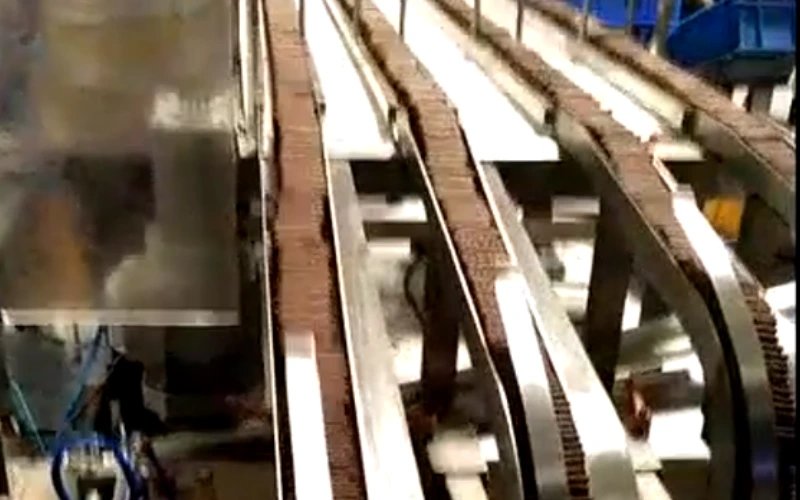
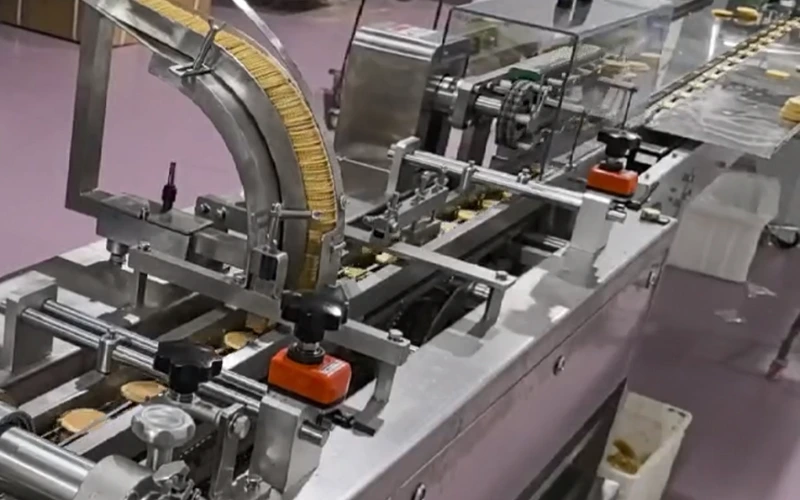
The U-Turn Conveyor (also known as the 180° Curve Conveyor) is the engineered solution to this spatial crisis. It is a specialized material handling system designed to reverse the direction of product flow within the absolute minimum footprint.
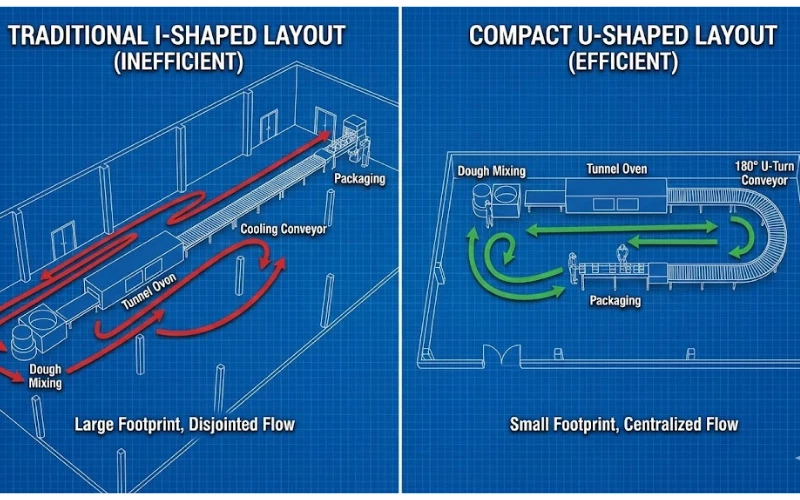
By "folding" the production line back upon itself, it allows long processes—such as
However, integrating a U-Turn conveyor is not as simple as bending a belt. For fragile products like biscuits, the physics of a high-speed turn can be destructive. Centrifugal force wants to throw the product off the belt. Differential speed across the belt width wants to twist your neat rows into chaos.
This guide goes far beyond basic equipment descriptions. We will deep dive into the physics of
Whether you are upgrading a single transfer point or planning a new greenfield facility, this is your engineering playbook.
Chapter I: Introduction — The Art of Folding Space
The Necessity of Line Reversal
In the strategic planning of biscuit equipment, the Cooling Conveyor usually occupies the largest percentage of the line's total length. This is dictated by
Once a biscuit exits the oven, it holds a significant amount of latent heat and moisture. It requires a precise amount of time to cool naturally to ambient temperature. If this process is rushed, the biscuit structure will not set properly. Worse, rapid cooling can lead to "Checking"—microscopic hairline fractures that cause the biscuit to crumble later in the package.
Therefore, the cooling time cannot be shortened. This means the conveyor length is fixed by physics. Without a turning mechanism, your factory building must extend indefinitely to accommodate this length.
By introducing a U-Turn Conveyor, engineers can design the cooling line in a "Paperclip" or "Serpentine" layout. This effectively doubles the utility of your building's length. It allows a 100-meter cooling line to fit into a 50-meter hall.
Furthermore, it creates a centralized "Control Zone." Operators can monitor the dough forming at the front end and the packaging at the back end without walking hundreds of meters. This consolidation significantly reduces labor costs and improves reaction times to quality issues.
The Core Definition:A U-Turn Conveyor is a specialized material handling system designed to reverse product flow by 180 degrees within a minimized radius. It enables long continuous processes to fit into rectangular footprints by "folding" the line, returning products to the start/packing zone without interrupting the flow.
🔑 Key Takeaways
Space Magic: U-Turn conveyors transform linear "I-shaped" lines into efficient "U-shaped" layouts, fitting long cooling tunnels into existing buildings.
Physics Challenge: The speed difference between the inner and outer radius is the root cause of product skewing; specialized belting is required to fix this.
Layout Golden Rule: Always prefer a single, continuous 180° curve over two separate 90° turns to eliminate unnecessary transfer points and breakage risks.
Hidden Costs: Curved belts have a shorter lifespan than straight belts, and the friction generates "black grease" dust that demands rigorous sanitation protocols.
Chapter II: The Physics of the Turn — Centrifugal Force & Skew
Mastering the Curve
Designing a straight biscuit conveyor is relatively straightforward engineering. However, designing a high-speed conveyor turn involves complex physical challenges. When a fragile biscuit enters a curve at speeds of 30 meters per minute or higher, it is subjected to forces that want to destroy its alignment.
Engineers must solve two primary physical problems: Differential Speed and Centrifugal Force.
1. The Differential Speed Dilemma
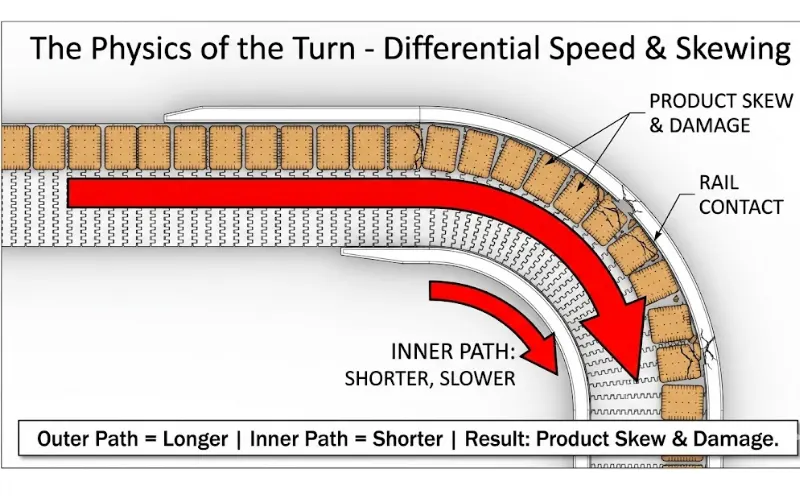
This is fundamentally a geometry problem. On any curved conveyor belt, the path along the Outer Radius is significantly longer than the path along the Inner Radius.
Imagine a race track. The car in the outside lane has to drive a much longer distance than the car on the inside lane to complete the turn. If the conveyor belt surface moves at a uniform speed across its entire width (like a standard flat belt forced into a turn), disaster strikes.
The part of the biscuit belt on the outside has to cover more ground in the same amount of time. If it doesn't speed up, the product on the outside lags behind. Meanwhile, the product on the inside gets ahead.
The Result: SkewingYour perfectly aligned rows of biscuits (Biscuit Rows) will twist. By the time they exit the turn, the row is no longer perpendicular to the direction of travel. It is diagonal.
For products heading into an automated packaging machine or a biscuit roll ups oven for secondary processing, this disorder is catastrophic. Sensors will miss-trigger, often requiring a
The Solution:Professional u turn conveyor manufacturers utilize specialized u-turn conveyor belt technology. Whether using modular plastic belts or tapered rollers, the design must physically ensure that the outer edge moves faster than the inner edge. This "Differential Speed" keeps the product row square and aligned throughout the entire turn.
2. Controlling Centrifugal Force
As the biscuit travels around the bend, physics dictates that it wants to travel in a straight line. This manifests a s
The formula is:
Where m is the mass of the biscuit, v is the velocity, and r is the turning radius.
The Risk:If the line speed (v) is too high or the radius (r) is too tight, the force (F) becomes unmanageable. The biscuit will slide across the belt surface and slam into the outer guide rail. For durable products, this might be acceptable. But for fragile shortcake or soda crackers, friction against the side rail is fatal. It causes the edges to crumble, generating waste and dust.
Engineering Countermeasure:You must precisely calculate the minimum turning radius. For a standard biscuit conveyor belt, the general rule of thumb is that the Inside Radius should be at least 2.2 times the belt width. This ratio keeps the centrifugal force within limits that the friction of the belt surface can counteract.
3. The "Chord Effect" (Polygon Effect)
When using a turn unit conveyor, especially one equipped with modular plastic belting, you face the
Modular belts are made of rigid plastic links connected by pins. As these links wrap around the drive sprockets, they do not form a perfect circle. They form a polygon. As a result, the linear speed of the belt pulsates slightly as each link engages and disengages.
In tight radius turns, this effect is amplified. It causes a "Surging" or vibration in the conveyor belt.
The Consequence:If you are transporting unstable stacks of biscuits or lightweight biscuit tube packages, this vibration can topple them. Premium designs mitigate this by using smaller pitch belts (e.g., 0.5 inch instead of 1 inch). They also optimize the sprocket geometry to smooth out the pulsation.
💡 Tip:When selecting a modular belt, always ask for "Tapered Pitch" modules. These modules are molded in a wedge shape, not a rectangle. This geometry mechanically forces the outer edge to travel faster, solving the skewing problem at the source.
Chapter III: Technology Selection — Belt vs. Roller
Choosing the Right Carrier
Not all u conveyors are created equal. The choice of technology depends entirely on the state of your product. Is it naked and hot? Is it stacked? Is it already wrapped in a carton?
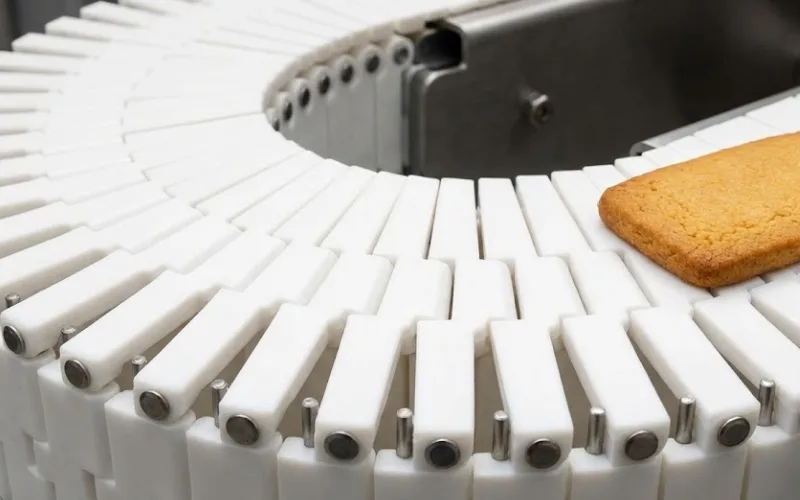
1. Side-Flexing Modular Plastic Belts
This is currently the dominant choice for the cooling leg of a biscuit tunnel oven.
Structure: It is constructed from interlocking plastic modules (typically POM, PP, or Acetal) connected by hinge pins. The modules are designed with "play" that allows them to collapse on the inner side and fan out on the outer side during a turn.
The Pros:
Airflow: The open grid structure allows air to circulate vertically through the belt, which is critical for cooling hot biscuits.
Durability: It is mechanically rugged and can withstand the high tension of long conveyor runs.
Repairability: If a section is damaged, you simply replace the specific u turn conveyor parts (modules).
The Cons:
Hygiene: The thousands of hinge points and crevices are difficult to clean.
Allergens: It is not ideal for lines that switch between allergen and non-allergen products, as residue hides in the pins.
Reference: Deep dive into materials in our
. Conveyor Belt Material Selection Guide
2. Monolithic PU Curve Belts
Structure: This is a seamless belt made from a single sheet of extruded Polyurethane (PU). It is typically installed using specialized radial tensioning frames.
The Pros:
Ultimate Hygiene: There are no hinges, no pins, and no crevices. Bacteria and allergens have nowhere to hide.
Premium Segment: This is the preferred choice in the universo do biscuit (high-end biscuit sector) where food safety is paramount.
Stability: The surface is perfectly smooth and flat. There is no Chord Effect vibration, making it ideal for ultra-thin or fragile products.
The Cons:
Cost: The u turn conveyor price for PU systems is significantly higher than modular belts.
Maintenance: Installing and tracking these belts requires specialized tools and skilled technicians.
3. Tapered Powered Rollers
Structure: This system uses a series of rollers that are conical (tapered) rather than cylindrical. The taper ensures that the surface speed at the wide end is faster than at the narrow end.
The Pros:
Perfect Orientation: It maintains product alignment with mathematical precision.
Packaging Application: It is the standard for transporting cartons, trays, or cases after the wrapping machine.
The Limitations:
Not for Naked Food: Rollers have gaps between them. Small biscuits will fall through.
Abrasion: The hard surface of the roller can abrade the bottom of a delicate biscuit.
📝 Note:If your budget allows and your product has high oil/sugar content, the Monolithic PU Curve is the superior choice. While the CAPEX is higher, it can save up to 70% in water usage and cleaning labor over its lifetime.
Chapter IV: Critical Design — Orientation and Transfers
Engineering the Transition
Simply buying the right belt is not enough. The success or failure of a U-Turn Conveyor is often determined by the engineering of the
1. Knife Edge Transfers
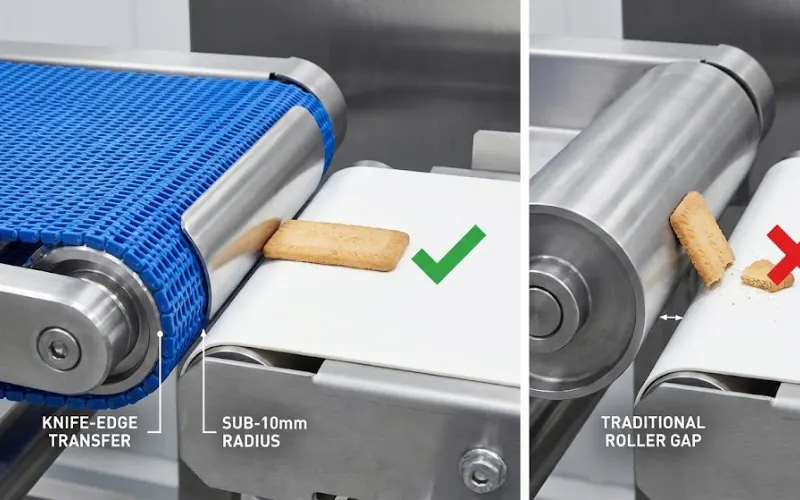
At the junction where a straight biscuit conveyor meets a curve, a triangular gap is formed.
The Problem:A standard 50mm diameter end roller creates a massive gap. Biscuits with a diameter smaller than 60mm will either fall into this gap or get stuck and crushed.
The Solution:You must mandate a Knife Edge (Nose Bar) design. This replaces the roller with a static bar or a rolling nose with a diameter of only 6mm to 8mm. The u-turn conveyor belt wraps tightly around this small radius. This shrinks the transfer gap to the absolute minimum, allowing even small "mini" cookies to glide smoothly across.
2. Active Speed Control (Pulling a Gap)
To prevent jams in the curve, speed control is critical.
Pulling a Gap:The general rule of thumb is that the U-Turn Conveyor should run 5% to 10% faster than the upstream straight conveyor.
The Function:This speed differential creates a small physical gap between products the moment they enter the curve. It prevents biscuits from rubbing against each other or "shingling" (overlapping) due to the differential speeds inside the turn. Achieving this requires a dedicated VFD, integrated via
3. Continuous 180° vs. Dual 90° Turns
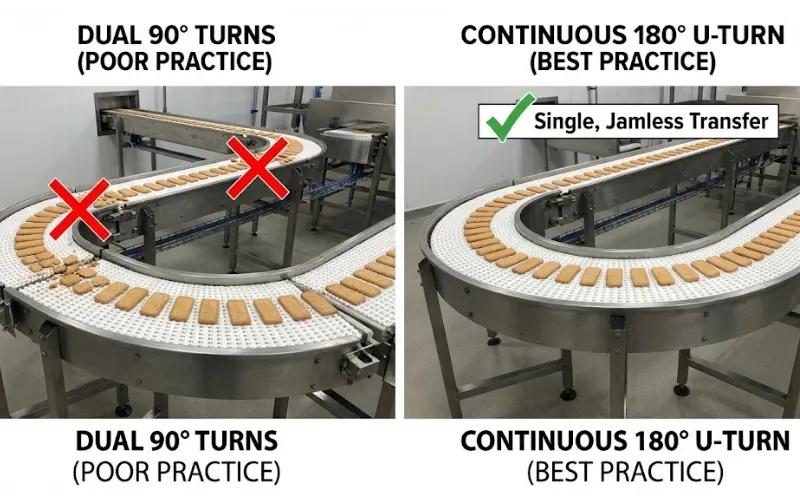
Some factory planners try to save money by buying two standard 90° curves and bolting them together to make a U-Turn.
The "2 x 90" Debate:This is generally a mistake for high-volume lines. Connecting two 90° conveyors creates an extra "Transfer Point" in the middle of the turn.
Why it fails:Every transfer point is a risk. It is a point where a biscuit can break, flip, or get misaligned.
The Best Practice:Use a single, continuous 180° u conveyor belt frame. This eliminates the intermediate transfer entirely. It ensures smooth, uninterrupted product flow from start to finish. This is the gold standard for high-throughput biscuit equipment layouts.
💡 Tip:Every additional transfer point increases product breakage rates by roughly 0.1% to 0.5%. On a line producing tons of product per year, eliminating that one transfer point pays for the premium 180° conveyor many times over.
Chapter V: Hygiene and Maintenance Challenges
The Hidden Costs of Curves
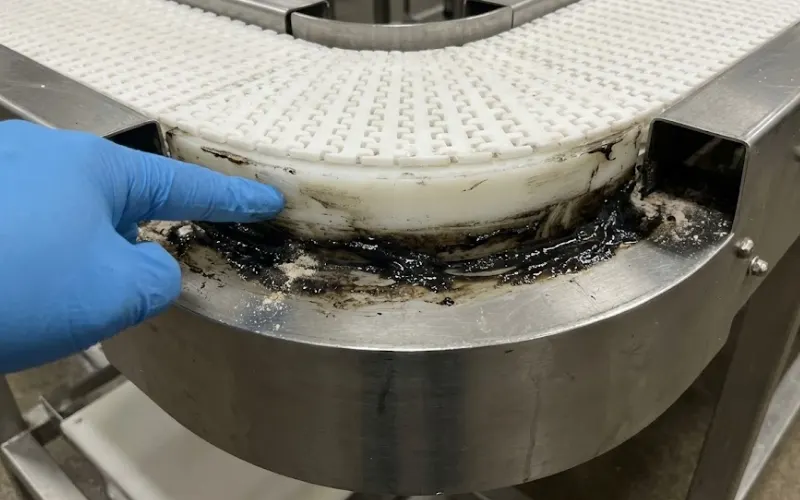
In a food factory, the conveyor turn is often a hygiene "black hole." It is mechanically complex and generates debris.
1. The Friction Factor and "Black Grease"
Curved belts operate under immense physical stress. As the belt is pulled around the corner, a massive component of the tension force is directed inward, towards the center of the circle. The edge of the belt presses hard against the inner Wear Strips.
The Consequence:This high-pressure dry friction grinds microscopic dust off the plastic wear strips. When this plastic dust mixes with airborne flour, sugar dust, and machinery lubricant, it forms a sludge known as "Black Grease."
The Risk:If this build-up is not cleaned regularly, it becomes a dense, sticky contaminant. It can migrate to the underside of the biscuit conveyor belt and eventually drop onto the product or the floor.
2. Sanitary Design Engineering
To combat this, top-tier u turn conveyor manufacturers deploy specific design features inspired by
Cantilevered Frames: The frame is supported from only one side (usually the inside radius). This allows the belt to be lifted or removed from the outside without disassembling the structural steel of the conveyor.
Quick-Release Outer Guides: Operators must be able to open the outer guide rails without using tools. This exposes the wear strips and the belt edge for deep cleaning.
Self-Lubricating Materials: Engineers specify wear strips made from specialized PVDF or oil-impregnated Nylon (Lubricated Nylon). These materials have a lower coefficient of friction than standard UHMWPE.
📝 Note:Make "Cleaning Wear Strips" a mandatory item on your weekly preventive maintenance schedule. Once "Black Grease" hardens, it becomes ten times more difficult to remove and poses a severe foreign material risk.
Chapter VI: Financial Analysis — Total Cost of Ownership (TCO)
Beyond the Price Tag
When purchasing a U-Turn Conveyor, focusing solely on the CAPEX (Capital Expenditure) price is a strategic error.
1. Space Return on Investment (Space ROI)
This is the primary value proposition of the U-Turn.
The Calculation:Assume that by installing a U-Turn, you eliminate the need to extend your factory building by 50 meters. Calculate the cost of industrial construction per square meter (including land, shell, HVAC, and utilities). Often, the savings in construction costs alone will instantly cover the price of the conveyor equipment.
The Benefit:It allows you to fit a high-capacity biscuit tunnel oven line into an existing, older facility. You avoid the massive disruption and cost of relocating your factory.
For a detailed breakdown on calculating these costs, see our guide on
. Biscuit Conveyor ROI Engineering
2. Maintenance Budgeting
Honesty is required here: Curved belts do not last as long as straight belts.
The Reason:They are subjected to constant lateral bending, tension, and edge friction.
The Budget Strategy:When calculating
Chapter VII: Frequently Asked Questions (FAQ)
Real-World Solutions
We have curated these questions from industrial forums and engineering communities (Reddit, Quora) to address real-world anxieties about u conveyors.
Q1: What is the minimum inner radius for a U-Turn conveyor?A: This depends heavily on the belt type and width. For most standard modular biscuit conveyor belts, the minimum inside radius is typically 2.2 times the belt width (Ratio = 2.2). For example, if your belt is 800mm wide, your inside radius must be at least 1760mm. Forcing a tighter radius will cause extreme belt fatigue, pin breakage, and severe "Chord Effect" vibration.
Q2: How to make a roller conveyor turn without skewing boxes?A: The secret is "Tapered Rollers." If you use standard cylindrical rollers to build a curve, the outer edge of the box has to travel further than the inner edge, but the roller speed is the same. This causes the box to twist and hit the guardrail. Tapered rollers are engineered with a specific diameter ratio to ensure the surface speed matches the turning radius, keeping the box perfectly square. Do not attempt to DIY this; buy a professional turn unit conveyor.
Q3: Can I use a U-Turn conveyor for raw dough?A: It is extremely difficult. Raw dough is sticky, soft, and elastic. During a turn, centrifugal force will stretch the dough, and it will stick aggressively to the belt surface. For raw dough handling, we generally recommend a "90-degree Knife Edge Transfer" onto a straight conveyor, rather than a curve. Alternatively, consider a
Q4: Is it spelled "Conveyer" or "Conveyor"?A: In the industrial and engineering world, the standard spelling is Conveyor. While "Conveyer" appears in some older dictionaries, using it in technical specifications or when searching for biscuit equipment will make you appear unprofessional. Stick to Conveyor.
Q5: How do I fix a U-Turn belt that keeps popping up?A: If the outer edge of your belt is lifting or "popping up" (creating a trip hazard), it usually indicates excessive tension or worn hold-down tabs.
Check the catenary sag (slack) in the returnway. Curved belts need to run looser than straight belts.
Inspect the "Hold-down tabs" on the underside of the belt modules. These tabs hook under the wear strip to keep the belt flat. If they are worn off, the belt will lift.
Q6: What is the difference between a "Turn Unit Conveyor" and a "Corner Transfer"?A: A Turn Unit Conveyor (like a U-Turn) maintains the product's original flow orientation (Leading Edge remains Leading Edge). It just changes the spatial path. A Corner Transfer (typically a pop-up transfer or pusher) usually changes the product orientation (e.g., Short Edge Leading becomes Long Edge Leading). For biscuit cooling, maintaining the "Row" alignment is critical, so you must use a Turn Unit.
Chapter VIII: Conclusion — More Than Just a Bend
The Strategic Pivot
The U-Turn Conveyor is not just a connecting piece of hardware. It is the strategic pivot point of a modern, high-efficiency biscuit factory.
It unlocks the ability to "Fold Space."
It makes high-volume production possible within limited real estate.
It converts necessary cooling time into logistical efficiency.
However, these benefits rely entirely on precision engineering. Choose the wrong belt, and your biscuits will arrive at the packaging machine in a jumbled mess. Ignore sanitary design, and your turn conveyor becomes a breeding ground for black grease and bacteria. Underestimate maintenance, and unexpected belt failures will kill your
When planning your next biscuit conveyor line, treat the U-Turn as a critical, high-precision system, not an afterthought.
Ultimate Service Conversion CTA
Is your factory layout restricting your production capacity? Don't let physical walls limit your business growth.
Our engineering team specializes in complex biscuit tunnel oven layout optimization. Whether you need to upgrade worn-out u turn conveyor parts or plan a completely new "Paperclip" production line, we have the proven solutions.
👉
Click Here for Your Free Factory Layout Optimization Consultation We will calculate your precise turning radius and TCO model to ensure your production line flows perfectly.

Ready to start your journey toward a customized solution? Contact me directly on WhatsApp to begin the conversation.